BIS Hallmark Registration for Jewellers
Get BIS hallmark registration to sell hallmarked gold and silver jewellery and artefacts in India. RegisterKaro helps jewellers with the online registration process, multi-outlet coverage, and hallmarking compliance.
 End-to-End BIS Jeweller Registration FilingMulti-Outlet & Corporate Registration CoverageCertificate Download & Registration Number SupportOutlet, Address & Firm-Detail Update AssistanceHallmarking Compliance & BIS Query Support

 What Sets Us ApartWhat Sets Us Apart
What is BIS Hallmark Registration?
BIS hallmark registration is the Certificate of Registration issued by the Bureau of Indian Standards (BIS) to jewellers engaged in selling hallmarked gold and silver jewellery and artefacts. Registered jewellers can get their articles hallmarked through BIS-recognized Assaying and Hallmarking Centres.
BIS started the Gold Hallmarking Scheme in April 2000 and the Silver Hallmarking Scheme in 2005. Hallmarking helps verify the purity or fineness of precious-metal articles and protects consumers against purity-related issues.
The framework is governed by the BIS Act, 2016, and the BIS (Hallmarking) Regulations, 2018. Mandatory hallmarking of gold jewellery and artefacts is implemented in phases across specified districts, with the coverage updated through subsequent government notifications. For hallmarked gold jewellery, carat and fineness indicate the gold content. For example, 22K gold has a fineness of 916.
Types of BIS Hallmarking Registration Schemes
BIS has separate hallmarking-related schemes for jewellers, Assaying and Hallmarking Centres, and refineries or mints. Each category applies to a different stakeholder and activity in the precious metals industry.
- Jewellers Registration Scheme: For manufacturers, wholesalers, distributors, and retailers selling hallmarked gold or silver jewellery and artefacts, subject to applicable exemptions.
- AHC Recognition Scheme: For Assaying and Hallmarking Centres (AHCs) recognized by BIS to test precious metal articles and carry out hallmarking activities.
- Refinery/Mint License Scheme: For eligible refineries and mints involved in refining precious metals or producing gold bullion and coins covered by applicable BIS standards and licensing requirements.
For most businesses that sell hallmarked gold or silver jewellery and artefacts, the Jewellers Registration Scheme is the relevant category. AHC recognition and refinery or mint licensing apply to businesses performing testing, hallmarking, refining, or bullion-related activities.
Importance of Hallmarking for Gold and Silver in India
Hallmarking provides independent assurance of the purity or fineness of gold and silver articles. It also gives consumers a way to verify hallmark details and seek redressal when required.
Key benefits of hallmarking include:
- Verifies purity: Assures that the article has been tested against the applicable purity or fineness standard.
- Protects consumers: Helps prevent adulteration and misrepresentation of precious-metal purity.
- Enables HUID verification: Consumers can verify the HUID of hallmarked jewellery through the BIS Care App.
- Improves transparency: Standardized hallmarking makes the purity and fineness of an article easier to verify.
- Supports consumer redressal: Consumers can get hallmarked jewellery tested at a BIS-recognized A&H Centre. Where the article has lower purity than marked, applicable compensation is provided under the BIS framework.
- Promotes standardized quality: Hallmarking requires precious-metal articles to meet the applicable standards before they are marked.
- Supports fair trade: Common purity standards create greater consistency in transactions between jewellers and consumers.
What is Covered Under BIS Hallmarking?
BIS hallmarking covers gold and silver jewellery and artefacts under the applicable Indian Standards. Gold and silver articles are tested and hallmarked through BIS-recognized Assaying and Hallmarking Centres.
1. Gold Hallmarking Grades
Under IS 1417, the applicable gold grades include:
- 24KF: 999 and above fineness
- 24KS: 995 and above fineness
- 23K: 958 fineness
- 22K: 916 fineness
- 20K: 833 fineness
- 18K: 750 fineness
- 14K: 585 fineness
- 9K: 375 fineness
Note: K stands for karat, which indicates the proportion of pure gold in an alloy. KF stands for Karat Fineness, while KS stands for Karat Standard. 24KF is strictly applicable to gold bullion, including bars and coins, only. 9K gold was added to the hallmarking framework from 1 July 2025.
2. Silver Hallmarking Grades
Under IS 2112, silver jewellery and artefacts can be hallmarked at the following grades:
- 800 fineness
- 835 fineness
- 925 fineness
- 958 fineness
- 970 fineness
- 990 fineness
- 999 fineness
3. Hallmark Identification
For hallmarked gold jewellery, the hallmark includes the BIS Standard Mark, purity and fineness mark, and a six-digit alphanumeric HUID. Consumers can verify the HUID through the BIS Care App.
White gold and jewellery containing other metals mixed with gold can also fall under the applicable mandatory hallmarking requirements.
What are the Different Marks of a BIS Hallmark?
Under the current HUID-based hallmarking system, hallmarked gold jewellery and artefacts carry three mandatory marks:
- BIS Standard Mark: The BIS logo indicates that the article has been hallmarked under the BIS hallmarking scheme. For silver, the mark also includes the word "SILVER".
- Purity and Fineness Mark: This indicates the gold's purity in carat and fineness terms, such as 22K (916), 18K (750), 14K (585), and 9K (375). For silver, it indicates the applicable purity grade.
- Six-Digit Alphanumeric HUID: The Hallmark Unique Identification (HUID) is a unique six-digit alphanumeric code assigned to each hallmarked article. It is laser-marked on the jewellery to identify the jeweller and the Assaying and Hallmarking Centre. HUID-based hallmarking is also available voluntarily for silver articles under IS 2112:2025.
Consumers can use the Verify HUID feature in the BIS Care App to verify the HUID and access information associated with the hallmarked jewellery. For silver, the BIS Standard Mark and purity grade apply, while HUID-based hallmarking is currently voluntary.
Note: A manufacturer or jeweller may additionally place their own mark on hallmarked jewellery or artefacts.
Who Needs BIS Hallmark Registration in India?
BIS jeweller (hallmark) registration applies to businesses that sell hallmarked gold or silver jewellery and artefacts. The requirement covers manufacturers, wholesalers, distributors, and retailers, subject to applicable exemptions.
The following businesses require BIS Hallmark registration:
- Jewellery retailers selling hallmarked gold or silver jewellery through physical stores.
- Jewellery manufacturers selling gold or silver jewellery or artefacts.
- Wholesalers and distributors selling hallmarked precious-metal articles.
- Online jewellery sellers offering hallmarked gold or silver jewellery through e-commerce channels.
- Jewellery chains operating multiple outlets that sell hallmarked articles.
- Proprietorships, partnership firms, LLPs, private limited companies, and other business entities engaged in selling hallmarked gold or silver jewellery.
BIS states that jewellers with annual turnover up to ₹40 lakh are outside mandatory hallmarking but may voluntarily obtain BIS registration.
Job-work artisans and manufacturers making gold jewellery for jewellers may be exempt from registration, subject to applicable conditions.
Hallmarking is required at the first point of sale, and the seller making that sale is responsible for getting the article hallmarked.
Businesses dealing only in imitation jewellery or fashion accessories that do not contain covered gold or silver do not require BIS jeweller registration for hallmarking purposes.
Documents and Information to Keep Ready for BIS Hallmark Registration
BIS currently grants jeweller registration online through the National Single Window System (NSWS), which can be accessed directly or through the BIS portal. The registration is granted instantly, with no registration fee and without requiring document uploads.
However, jewellers should keep their business and compliance records ready for verification and future BIS requirements. The following information may be relevant based on the business structure and operations:
| Category | Documents or Information to Keep Ready |
| Business Constitution | Certificate of Incorporation (CoI), Partnership Deed, LLP Agreement, or applicable proof of business constitution |
| Business Address | GST Registration Certificate, rent or lease agreement, sale deed, trade license, or other applicable address proof |
| Authorized Signatory | PAN, Aadhaar or other valid government-issued identity document and applicable authorization |
| Annual Turnover | Previous financial year's turnover details or applicable declaration for a new business |
| Business Outlets | Details of jewellery outlets covered under the registration |
| Jeweller Identification | Logo or identification mark used by the jeweller, where applicable |
Keeping these records updated helps jewellers respond to BIS verification, inspections, or other compliance requirements when applicable.
How to Obtain a BIS Hallmark License / Registration for Jewellers?
BIS Hallmark registration (also commonly called a BIS hallmark license) allows eligible jewellers to sell hallmarked gold and silver jewellery and artefacts.
Step 1: Access the BIS Manak Online Portal
Visit the BIS Manak Online portal or the National Single Window System (NSWS) to access the jeweller registration service. NSWS can be accessed directly or through the BIS portal. Enter the required applicant and business details to begin the registration process.
Step 2: Submit the Registration Application
Provide the required details, including:
- Business name and constitution
- Registered address
- Contact details
- Authorized signatory details
- Applicable sales outlet details
The current BIS process does not require supporting document uploads for granting the registration.
Step 3: Receive the Registration Certificate
BIS grants the Certificate of Registration instantly after submission. The registration number and certificate are provided through the online system. The certificate remains valid for the lifetime of the registration.
Step 4: Submit Jewellery to a BIS-Recognized AHC
After registration, the jeweller can submit eligible jewellery or artefacts to a BIS-recognized Assaying and Hallmarking Centre (AHC). The centre tests the articles and applies the applicable hallmark if they meet the required standard. Articles that do not meet the declared purity may be rejected and returned to the jeweller.
For gold jewellery, the hallmark includes the BIS Standard Mark, purity and fineness, and a six-digit alphanumeric HUID. The HUID is laser-marked on the article.
Step 5: Sell the Hallmarked Jewellery
Once the jewellery is hallmarked, it can be sold in accordance with the applicable BIS requirements. The invoice must include the description of each article, net precious-metal weight, purity in carat and fineness, and hallmarking charges. Mentioning the HUID on the invoice is currently voluntary.
Step 6: Maintain BIS Compliance
Registered jewellers must follow applicable BIS hallmarking and outlet requirements. The jewellery outlet should:
- Display the BIS logo with the wording “Hallmarked Jewellery Available for Sale” outside the outlet.
- Display the Certificate of Registration prominently at the outlet.
- Display the components of the hallmark and the relationship between fineness and caratage.
- Keep a 10X magnifying glass available for customers to inspect hallmark details.
- Keep a weighing balance with 0.01 g accuracy available for customers.
- Display the contact details of the relevant BIS office and Facilitation Centre.
- Display the applicable hallmarking charges of ₹75 per gold article (previously ₹45) and ₹35 per silver article.
- Display the BIS Care App Verify HUID poster for customers.
Consumers can use the Verify HUID feature in the BIS Care App to verify the HUID of applicable hallmarked gold jewellery.
Note: BIS registration and hallmarking are separate steps. Registration applies to the jeweller, while eligible articles must undergo testing and hallmarking at a BIS-recognized AHC where required.
Hallmark Registration Fees in India
BIS jeweller registration is free, with no government registration fee, while hallmarking charges are ₹75 per gold article (revised from ₹45 via the BIS (Hallmarking) Amendment Regulations, 2026, dated 14 September 2026) and ₹35 per silver article, payable to the BIS-recognized Assaying and Hallmarking Centre (AHC). The registration is valid for the lifetime of the certificate, so there is no renewal fee.
The applicable charges are:
| Particulars | Charges |
| BIS Jeweller Registration Fee | Nil |
| Registration Renewal | Not applicable |
| Registration Validity | Lifetime |
| Hallmarking Charges for Gold Articles | ₹75 per article |
| Minimum Charge per Gold Consignment | ₹200 |
| Hallmarking Charges for Silver Articles | ₹35 per article |
| Minimum Charge per Silver Consignment | ₹150 |
Hallmarking charges are calculated per article, regardless of its weight. Making and wastage charges are not included. Applicable taxes and other levies are charged separately.
Jewellers should also display the applicable ₹75 gold and ₹35 silver hallmarking charges at their sales outlets.
Renewal and Validity of Hallmark Registration
BIS hallmarking does not have a separate validity period. Once an article is hallmarked, the hallmark remains associated with that article and can be verified through its HUID.
Validity of BIS Hallmark Registration
A BIS Hallmark Certificate of Registration remains valid for the lifetime of the registration. However, BIS may cancel the registration if the jeweller violates the applicable terms and conditions or other hallmarking requirements.
Renewal of BIS Hallmark Registration
Jewellers do not need to renew their BIS Hallmark registration or pay a renewal fee. They should keep their registration and outlet details updated with BIS whenever applicable.
BIS may cancel the registration if a jeweller:
- Provides a false or incorrect declaration
- Violates the terms and conditions of registration
- Sells or offers hallmarked articles with purity or fineness below the marked or claimed level
- Fails to cooperate with BIS during surveillance or complaint investigation
- Engages in unfair practices involving misuse of the BIS hallmark
BIS Hallmark Registration Certificate
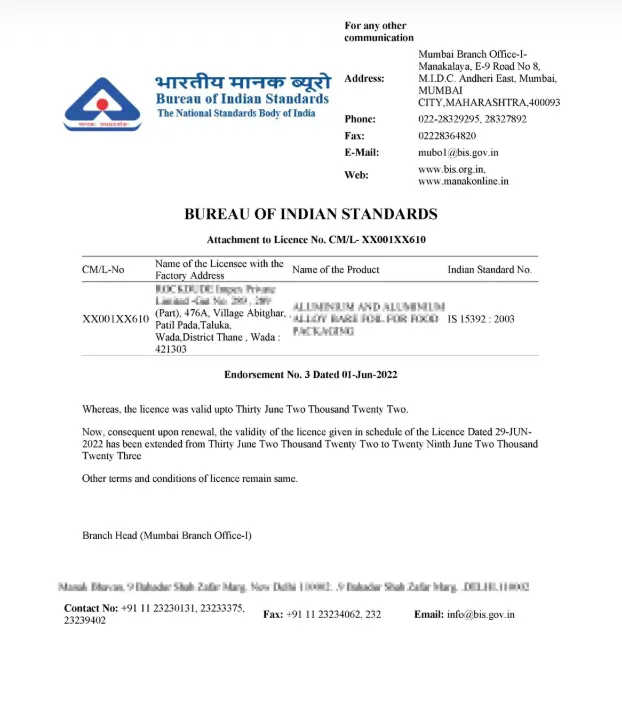
The BIS Hallmark Certificate of Registration (CoR) is issued to jewellers registered under the BIS Jewellers Registration Scheme. It confirms the jeweller's registration for selling hallmarked gold and silver jewellery and artefacts. The certificate is granted instantly, without a registration fee, and remains valid for the lifetime of the registration.
What Does a BIS Hallmark Registration Certificate Contain?
The certificate issued by BIS contains registration and outlet-related details, which may include:
- Name of the registered jeweller or business
- BIS registration number
- Registered business or outlet address
- Details of the covered retail outlet, where applicable
For corporate registrations covering multiple outlets, BIS issues an independent certificate for each covered retail outlet with the address of that outlet.
Registered jewellers are listed on the official BIS website, allowing consumers to check whether a jeweller has BIS jeweller registration. Consumers can separately verify the HUID of hallmarked gold jewellery through the Verify HUID feature in the BIS Care App.
How to Download the BIS Hallmark Registration Certificate?
Once BIS grants the registration, the jeweller receives the registration number through email and SMS. The Certificate of Registration can then be downloaded and printed using the registration number.
The certificate download process involves the following steps:
- Access the BIS Manak Online portal: Visit the BIS Manak Online portal used for jeweller registration.
- Use the registration number: Enter the registration number received from BIS through email or SMS.
- Access the certificate: Retrieve the Certificate of Registration associated with the registration number.
- Download and print: Download the certificate and keep a digital copy for your records. Print a copy for display at the jewellery shop.
Registered jewellers must display the Certificate of Registration at their jewellery shop. For corporate registrations covering multiple retail outlets, BIS issues an independent certificate for each covered outlet.
BIS Hallmark Compliance Requirements for Jewellers
BIS-registered jewellers must follow the applicable hallmarking requirements when selling hallmarked gold and silver jewellery and artefacts. The key requirements cover hallmarking, outlet displays, invoices, customer verification, records, and changes to registration details.
- Sell hallmarked jewellery where required: Follow the applicable mandatory hallmarking requirements for gold and silver articles covered by the current BIS framework.
- Use BIS-recognized AHCs: Get eligible jewellery and artefacts assayed and hallmarked only through a BIS-recognized Assaying and Hallmarking Centre (AHC).
- Use prescribed hallmark marks: Ensure applicable hallmarked gold jewellery carries the prescribed hallmark components, including the six-digit HUID.
- Cover registered outlets: Ensure the sales outlets are included under the applicable BIS Hallmark registration.
- Display the registration certificate: Display the Certificate of Registration prominently at the jewellery shop.
- Display the BIS sales notice: Display the BIS logo with the wording “Hallmarked Jewellery Available for Sale” outside the sales outlet.
- Provide a 10X magnifying glass: Keep a magnifying glass with at least 10X magnification available for customers to inspect hallmark details.
- Provide a weighing balance: Keep a weighing balance with 0.01 g accuracy available for customers to verify the weight of jewellery or artefacts.
- Display hallmark information: Display the components of the hallmark and the relationship between fineness and caratage.
- Display BIS contact details: Display the contact details of the relevant BIS office and Facilitation Centre for customer queries or complaints.
- Display hallmarking charges: Display the applicable hallmarking charges at the sales outlet.
- Display HUID verification information: Display the BIS Care App poster so customers can use the Verify HUID feature for applicable hallmarked gold jewellery.
- Issue compliant invoices: Include the article description, net precious-metal weight, purity in carat and fineness, and hallmarking charges in the invoice.
- Maintain applicable records: Maintain records required under the applicable BIS requirements and make them available during verification or surveillance when required.
- Maintain declared purity: Ensure the purity of hallmarked jewellery conforms to the purity and fineness marked on the article.
- Update registration details: Apply through the BIS online portal when there is a relevant change in the firm's name, management, sales outlet address, or contact details.
- Cooperate with BIS: Cooperate with BIS inspections, surveillance, complaint investigations, and sample testing when required.
- Follow current requirements: Comply with the latest applicable BIS standards, hallmarking orders, regulations, and amendments.
What Would Happen if Jewellery is Sold Without Proper Hallmarking?
BIS hallmarking requirements are enforced under the BIS Act, 2016, the BIS Rules, 2018, and the BIS (Hallmarking) Regulations, 2018. Depending on the nature of the violation, non-compliance may result in:
- Fines: Certain contraventions under Section 29(2) may attract a fine of at least ₹1 lakh that may extend up to five times the value of the goods or articles involved, along with possible imprisonment of up to one year.
- Higher penalties for certain offences: Contravention of Section 17, penalised under Section 29(3), may attract imprisonment of up to two years. The fine is at least ₹2 lakh for the first contravention and ₹5 lakh for subsequent contraventions. It may extend to ten times the value of the goods or articles involved.
- Search and seizure: Authorized BIS officers may search and seize non-compliant goods, articles, materials, or documents in accordance with the BIS Act.
- Cancellation of registration: BIS may cancel a jeweller's Certificate of Registration for specified violations, including selling hallmarked articles with purity or fineness below the marked or claimed level.
- Consumer compensation: A consumer may be entitled to compensation if a hallmarked precious-metal article is found to have lower purity than declared.
- Action for misuse of hallmark: Unauthorized use or misuse of a BIS Standard Mark, including a hallmark, can attract action under the BIS Act.
Consumer Compensation for Purity Shortfall
If a hallmarked precious-metal article is found to have lower purity than the purity marked or declared, Rule 49 of the BIS Rules, 2018 provides for compensation. The compensation is two times the amount of the difference calculated based on the purity shortfall for the weight of the article sold, along with the testing charges.
The registered jeweller who gets the article hallmarked is responsible for its purity and fineness. The registered jeweller who makes the sale is liable to pay compensation for any shortage in purity or fineness as prescribed under the rules.
Latest BIS Hallmarking Updates in India 2026
BIS has introduced several recent changes to the hallmarking framework for gold and silver jewellery. The key updates include changes to gold purity grades, HUID-based identification, silver hallmarking, and mandatory hallmarking requirements.
- 9K Gold Added to the Hallmarking Scheme: BIS added 9K gold with 375 fineness to the permitted gold hallmarking grades from 1 July 2025.
- Six-Digit HUID for Gold Jewellery: Applicable hallmarked gold jewellery carries a six-digit alphanumeric Hallmark Unique Identification (HUID) along with the BIS Standard Mark and purity or fineness mark. Consumers can use the Verify HUID feature in the BIS Care App to check the HUID and related jewellery information.
- Revised Silver Hallmarking Standard: BIS introduced IS 2112:2025 for silver jewellery and artefacts, replacing the earlier IS 2112:2014 standard. The revised standard introduced HUID-based hallmarking for silver voluntarily from 1 September 2025.
- Updated Silver Purity Grades: The revised silver standard changed the permitted grades. The current grades are 800, 835, 925, 958, 970, 990, and 999. The revised standard added 958 and 999 and removed 900 from the earlier list.
- Re-Hallmarking of Old Hallmarked Jewellery: Old hallmarked jewellery without the six-digit HUID must be re-hallmarked before being sold, in accordance with the applicable Mandatory Hallmarking Order amendments.
- Ongoing Changes to Mandatory Hallmarking Coverage: BIS continues to update the Mandatory Hallmarking Order through amendments and phase-wise district coverage. The current BIS page lists amendments through 3 August 2026, so jewellers should check the latest applicable district and article requirements before sale.
Connect with RegisterKaro and let our experts handle the legal hassle while you grow your business.
Frequently Asked Questions (FAQs)
Is BIS hallmark registration mandatory for jewellers?
Manufacturers, wholesalers, distributors, and retailers selling hallmarked gold or silver articles must generally obtain BIS Jewellery registration. Jewellers with annual turnover up to ₹40 lakh are outside mandatory hallmarking but may voluntarily register to sell hallmarked jewellery.
How much does BIS hallmark registration cost?
BIS does not charge a fee for jeweller registration. However, hallmarking charges apply separately at BIS-recognized Assaying and Hallmarking Centres. Current charges are ₹75 per gold article and ₹35 per silver article, subject to applicable minimum consignment charges and taxes.
How long does BIS hallmark registration take?
BIS states that jeweller registration is granted instantly after submitting the online application. The registration number is sent through email and SMS, after which the Certificate of Registration can be downloaded and printed.
What documents are required for BIS hallmark registration?
BIS currently grants jeweller registration without document uploads. However, jewellers should keep relevant business, address, constitution, outlet, and authorization records available for verification or future compliance requirements.
Can a jeweller operate multiple outlets under one BIS Hallmark registration?
Corporate jewellers can apply for registration covering multiple retail outlets. Each covered outlet receives an independent Certificate of Registration mentioning its outlet address.
What is the difference between BIS Hallmark registration and jewellery hallmarking?
BIS Hallmark registration applies to the jeweller, while hallmarking applies to eligible precious-metal articles. A registered jeweller submits jewellery to a BIS-recognized Assaying and Hallmarking Centre, where compliant articles are tested and hallmarked.
Who is responsible for getting jewellery hallmarked?
In the manufacturer, wholesaler, distributor, and retailer chain, the first point of sale is responsible for getting the article hallmarked. Hallmarking is generally required only once before subsequent sales within the chain.
What is a HUID number in hallmarking?
HUID stands for Hallmark Unique Identification. For hallmarked gold jewellery, it is a unique six-digit alphanumeric code that supports traceability. Consumers can verify the HUID using the Verify HUID feature in the BIS Care App.
What are the mandatory marks on hallmarked gold jewellery?
Hallmarked gold jewellery carries three mandatory components: the BIS Standard Mark, purity or fineness mark, and six-digit alphanumeric HUID. These marks help identify the BIS hallmark and declared purity of the article.
Is 9K gold covered under BIS hallmarking?
Yes, the 9K gold grade, with a fineness of 375, was added to the permitted gold hallmarking grades with effect from July 1, 2025.
Does BIS hallmarking apply to silver jewellery?
Yes, silver jewellery and artefacts are covered under the BIS hallmarking framework. The current IS 2112:2025 specifies seven silver grades. HUID-based silver hallmarking has been available voluntarily since September 1, 2025.
Is silver HUID mandatory?
No, HUID-based hallmarking for silver jewellery and articles under IS 2112:2025 has been available on a voluntary basis since September 1, 2025.
How can consumers verify a HUID?
Consumers can use the Verify HUID feature in the BIS Care App to check the HUID of hallmarked jewellery and access relevant jeweller or article information provided through the BIS system.
What happens if a hallmarked article fails the purity test?
If a hallmarked article has lower purity than declared or marked, the consumer can seek redressal. Rule 49 provides compensation based on twice the purity-shortfall amount calculated for the article's weight, along with testing charges.
Can consumers get hallmarked jewellery tested for purity?
Yes, consumers can have jewellery or samples tested at a BIS-recognized Assaying and Hallmarking Centre on a chargeable basis. The centre issues an assay report identifying the tested article.
What details must be included in a jewellery invoice?
The invoice for a hallmarked precious-metal article should include the description of each article, net precious-metal weight, purity in carat and fineness, and hallmarking charges.
Is HUID mandatory on the jewellery invoice?
No, BIS currently states that mentioning the HUID number on the invoice is voluntary. Jewellers are also not required to maintain records of HUID numbers.
What are the penalties for selling non-hallmarked jewellery?
Penalties depend on the specific violation under the BIS Act and related regulations. They can include fines, imprisonment for certain contraventions, cancellation of jeweller registration, seizure where legally permitted, and consumer compensation.
Can old hallmarked jewellery without HUID be sold?
No, old hallmarked jewellery without the six-digit HUID must be re-hallmarked before sale in accordance with the applicable Mandatory Hallmarking Order amendments. The jewellery can be re-hallmarked with a new HUID through a BIS-recognized AHC.
Who is exempt from mandatory hallmarking?
Exemptions under the applicable Mandatory Hallmarking Order include certain export articles, articles below the specified weight, industrial or medical articles, gold bullion, special jewellery categories such as Kundan, Polki and Jadau, gold watches and fountain pens, and jewellers with annual turnover up to ₹40 lakh, subject to applicable conditions.
Can a jeweller in a non-mandatory district sell hallmarked jewellery?
Yes, a jeweller in a non-mandatory district can sell hallmarked gold or silver jewellery. The jeweller must be registered with BIS to sell hallmarked articles and can purchase already hallmarked jewellery or get jewellery hallmarked through a BIS-recognized Assaying and Hallmarking Centre.
Can imported jewellery be sold in India?
Yes, imported gold or silver jewellery can be sold in India after it is tested and hallmarked by a BIS-recognized Assaying and Hallmarking Centre. The sale must be made by a BIS-registered jeweller, subject to applicable hallmarking requirements and exemptions.

Reviewed by
Joel DsouzaJoel Dsouza is a Chartered Accountant (CA) and compliance expert with over 7 years of hands-on experience in company registration, tax structuring, GST, ROC filings, and MCA compliance. As a qualified member of the Institute of Chartered Accountants of India (ICAI) and Co-Founder at RegisterKaro, he has personally advised more than 1,000 startups and SMEs across India, helping founders navigate incorporation, regulatory frameworks, and financial planning from Day 1. With deep expertise across all three levels of Finance and Portfolio Management, Joel is committed to promoting financial literacy and simplifying India's startup ecosystem through clear, actionable guidance that entrepreneurs can act on immediately.
Why Choose RegisterKaro for BIS Hallmark Registration?
BIS hallmarking requires compliance with applicable purity, marking, and outlet requirements. RegisterKaro provides support with Hallmark registration, hallmarking requirements, outlet updates, and related compliance.
- Jewellery Business Registration Support: Assistance for jewellery manufacturers, wholesalers, distributors, retailers, and multi-outlet businesses applying for BIS Hallmark registration.
- Multi-Outlet Registration Assistance: Support in covering eligible retail outlets under the applicable BIS Jewellery registration and managing outlet-specific registration requirements.
- Business Information Review: Review of key business and registration details before submission to help identify inconsistencies in the application.
- Support for New Outlets and Changes: Assistance with updating applicable firm, management, address, contact, and outlet details through the BIS portal.
- BIS Query and Notice Assistance: Support in preparing responses to BIS clarification requests, discrepancies, and compliance-related communications.
- Ongoing Hallmarking Compliance Support: Guidance on applicable BIS requirements for outlet displays, invoices, hallmarking, and other jeweller obligations.

What Our Clients Say
View All
SwiftBooks
 Verified
The team from register karo is very supportive and quick. The entire incorporation process done by them was very efficient. Swayam Sagar from their te... Read more

Mrityunjay Sharma
VerifiedRegisterKaro offers excellent company registration, compliance, and CA services in Jaipur. Manish Tiwari provided professional guidance throughout the... Read more

Siddhesh Shrivastav
VerifiedIt was Great Experience working with This firm Also Khushi Chandra Our Co-ordinator helped us In all way For the registration and successful Incorpor... Read more

KUNAL VERMA
VerifiedAt starting it was clumsy but later i got an executive named khushi chandra she helped me a lot during incorpation now waiting for other process to be... Read more

Arpit Bhardwaj
VerifiedReally loved the experience with RegisterKaro , I will surely recommend it to others the SPOC’s are so professional and guided me thoroughly through t... Read more

Neha Lakra
VerifiedI just completed the registration process by the help of RegisterKaro, who helps me shamelessly and guided me throughout the process. The company is h... Read more

PRADIP VERNEKAR
VerifiedI had an excellent experience with RegisterKaro. Atisha Jain and the team made the process of getting my GST certificate seamless and hassle-free. The... Read more

Nawab Moazam Khan
VerifiedI had the pleasure of working with Muskan Jain from RegisterKaro, who assisted in incorporating my company. She was professional, efficient, and made... Read more

Samrat seeds Agricul...
VerifiedThis is the best destination for company registration miss palak bansal helped the best and very cooperative and expert of the field and finished ever... Read more

Hari
VerifiedEverything was handled exactly as promised. The team was transparent throughout the process, kept me updated at every stage, and ensured a smooth expe... Read more
Related Blogs
View All
How to Check GST Active Status Online?

How to Start a Masala Business in India?

How to Start a Coaching Institute in India?

How to Start a Bottled Water Business in India?

Compliance Calendar for Producer Company in India
How to Apply for DIN Number: DIR-3 Process & SPICe+ for Directors

Virtual CFO Cost in India for Startups: Fees & Pricing

Accounting Outsourcing Cost in India: Complete Pricing Guide

Documents Required for GST Registration in India (Checklist)

How to Start a Scrap Business in India: Setup & Profit