LLP Compliance in India
Stay on top of your LLP compliance in India with RegisterKaro. We manage annual filings, ROC compliance, Form 11, Form 8, ITR-5 & DIR-3 KYC to keep your LLP penalty-free.
 Form 11, Form 8 & ITR-5 Annual FilingROC Compliance & MCA Form PreparationLLP Compliance Checklist & Profile ReviewStatutory Due-Date Tracking & RemindersPost-Incorporation Compliance Support

 What Sets Us ApartWhat Sets Us Apart
What is LLP Annual Compliance?
LLP annual compliance refers to the mandatory statutory and legal requirements that every registered LLP must complete each financial year. These include filing Form 11 (Annual Return) and Form 8 (Statement of Account & Solvency) with the MCA, along with filing the Income Tax Return (ITR-5) with the Income Tax Department. Every LLP must complete these filings, regardless of its turnover, profit, or business activity.
These requirements are prescribed under the Limited Liability Partnership Act, 2008, and the Income Tax Act, 2025 (replacing the Income Tax Act of 1961, from April 1, 2026). Even an inactive LLP or one with no income during the financial year must file the required returns unless the MCA has officially struck it off. Timely compliance helps maintain the LLP’s legal status and ensures compliance with MCA and Income Tax Department requirements.
Why is LLP Annual Compliance Important?
Every LLP must also complete these annual compliance requirements prescribed under the Limited Liability Partnership Act, 2008, and the Income Tax Act, 2025, to remain legally compliant.
- Remain legally active and avoid being classified as non-compliant by the MCA.
- Avoid late filing fees and penalties, which can accumulate without any upper limit for certain MCA filings.
- Prevent legal action against the LLP and its designated partners for non-compliance.
- Maintain transparency with regulators, lenders, investors, customers, and business partners.
- Build business credibility, making it easier to secure loans, attract investment, and win contracts.
- Ensure smooth access to financial services, such as bank loans, overdrafts, and credit facilities, where compliance documents are often required.
- Support future business transactions, including fundraising, partner induction, mergers, conversions, or closure of the LLP.
- Keep MCA records up to date, ensuring that information about partners and financial statements remains accurate and publicly available.
- Reduce the risk of compliance disputes and regulatory notices from the MCA or the Income Tax Department.
Post-Incorporation Compliances for LLP (Compliance Checklist)
Post LLP incorporation, ensure to complete these compliance requirements:
1. Execute and File the LLP Agreement
- Draft the LLP Agreement on the applicable stamp paper within 30 days of incorporation.
- File Form 3 with the MCA within the prescribed timeline.
- Include details such as partners' rights and duties, capital contribution, profit-sharing ratio, and management structure.
- Update and file the agreement whenever any material changes occur.
2. Ensure PAN and TAN Are Available
- Verify that your LLP has been allotted a PAN and TAN.
- Apply separately only if they were not issued during incorporation.
- Use these registrations for tax compliance, banking, and statutory filings.
3. Maintain Proper Books of Accounts
- Maintain proper books of accounts as required under Section 34 of the LLP Act, 2008.
- Record all business transactions accurately from the date of incorporation of the LLP.
- Preserve invoices, receipts, bank statements, and other supporting documents.
- Maintain records to support annual filings, audits (where applicable), and tax compliance.
4. Open a Current Bank Account
- Open a bank account in the LLP's name using the incorporation documents.
- Deposit the agreed capital contribution, if applicable.
- Route all business receipts and payments through this account.
5. Obtain Applicable Business Registrations
Depending on your business activities, obtain registrations such as:
- GST Registration
- Import Export Code (IEC)
- Shops and Establishments Registration
- Professional Tax Registration
- FSSAI Licence
- Any industry-specific approvals
6. Complete Employee-Related Registrations (If Applicable)
If your LLP hires employees, obtain registrations under applicable labor laws, such as:
- Employees' Provident Fund (EPF)
- Employees' State Insurance (ESI)
- Other state-specific labour registrations
7. Complete DIR-3 KYC for Designated Partners
Ensure every designated partner holding a DIN completes DIR-3 KYC. From FY 2026–27 onwards, DIR-3 KYC is required once every three financial years, unless KYC details change earlier.
- Update KYC details promptly whenever there is a change in personal information.
Key LLP Annual Compliance Forms: Purpose & Due Date for FY 2026-27
Every LLP must file the following statutory forms each financial year:
1. Form 11 – Annual Return
Purpose: Reports the LLP's constitution as of 31 March.
Form 11 includes:
- Details of partners and designated partners
- Partners' contributions
- Changes in the LLP's structure during the year
How to file:
- File e-Form 11 through the MCA V3 portal (mca.gov.in).
- Digitally sign the form using the designated partner's DSC.
- Pay the applicable government filing fee (₹50 to ₹600, depending on the LLP's total contribution).
Due date: 30 May 2027 (within 60 days from the end of FY 2026-27).
2. Form 8 – Statement of Account and Solvency
Purpose: Reports the LLP's financial position and confirms its solvency (Section 34 of the LLP Act, 2008).
Form 8 includes:
- Statement of assets and liabilities
- Statement of income and expenditure
- Declaration of solvency by the designated partners
How to file:
- File e-Form 8 through the MCA V3 portal.
- Digitally sign the form and obtain professional certification, where required.
- Pay the applicable government filing fee, ranging from ₹50 to ₹600.
Due date: 30 October 2027 (within 30 days after the end of six months of FY 2026–27).
3. ITR-5 – Income Tax Return
Purpose: Reports the LLP's income and tax liability to the Income Tax Department under the Income Tax Act, 2025.
It includes:
- Income and expenditure
- Deductions claimed
- Tax liability
- Taxes paid during the financial year
How to file:
- File ITR through the Income Tax e-Filing portal (incometax.gov.in).
- Verify the return electronically using the prescribed verification method.
- Pay any outstanding tax liability before or at the time of filing, if applicable.
Due date:
- 31 July 2027 for non-audit cases.
- 31 October 2027 for audit cases.
- Where a tax audit applies, file the audit report (Form 3CA/3CB-3CD) by 30 September 2027.
4. Tax Audit Report (Form 3CA/3CB-3CD) (If Applicable)
Purpose: Reports the LLP's audited financial statements and tax audit particulars where a tax audit is required under the Income-tax Act, 2025.
How to file:
- Get the accounts audited by a Chartered Accountant.
- File Form 3CA or Form 3CB along with Form 3CD through the Income Tax e-Filing portal.
- Complete the filing before submitting ITR-5.
Due date: 30 September 2027, unless extended by the Government.
5. DIR-3 KYC – Designated Partner KYC
Purpose: Keeps the Director Identification Number (DIN) of designated partners (at least two) active.
How to file:
- Complete the prescribed DIR-3 KYC filing through the MCA portal.
- Verify the details using the designated partner's DSC or OTP, as applicable.
- Complete the filing within the applicable MCA timeline.
6. TDS Return Filing – Section 194T
Purpose: Ensures that LLPs deduct, deposit, and report Tax Deducted at Source (TDS) on specified payments made to partners under Section 393(3), Table: Serial No. 7 of the Income Tax Act, 2025 (corresponding to Section 194T of the Income Tax Act, 1961).
Section 194T applies when an LLP pays:
- Salary or remuneration to partners
- Commission or bonus to partners
- Interest on partners' capital or loans
If the aggregate of these payments to a partner exceeds ₹20,000 during the financial year, the LLP must deduct TDS at 10% at the time of credit or payment, whichever is earlier.
How to comply:
- Deduct TDS at the prescribed rate.
- Deposit the TDS with the Central Government within the prescribed time.
- File the quarterly TDS Return (Form 26Q).
- Issue Form 16A to the partner within the prescribed timeline.
Due dates: Deposit TDS by the prescribed due date (generally the 7th of the following month, or 30 April for deductions made in March).
File Form 26Q by:
- 31 July 2026 (Q1)
- 31 October 2026 (Q2)
- 31 January 2027 (Q3)
- 31 May 2027 (Q4)
Note: Depending on the LLP's turnover, business activities, and registrations, additional compliances such as annual GST returns (GSTR-9), TDS returns, periodic GST returns (GSTR-1 and GSTR-3B), tax audit reports, or other regulatory filings may also apply.
Documents Required for LLP Annual Compliance
Keep the following documents ready before filing your LLP annual compliance forms:
- LLP Agreement and any supplementary agreements or amendments made during the financial year.
- Company Incorporation Certificate and LLPIN details.
- PAN card of the LLP.
- Details of all partners and designated partners, including their DIN/DPIN, capital contribution, profit-sharing ratio, and any changes during the financial year.
- Bank statements for all LLP bank accounts and a summary of income and expenses.
- GST returns and records, if the LLP is registered under GST.
- Details of charges (if any) created, modified, or satisfied during the financial year, along with supporting documents.
- Professional certification details, where applicable, for Form 8 and Form 11.
- TDS certificates, TDS returns, and challans, if tax was deducted at source.
- Tax Audit Report (Form 3CA/3CB and Form 3CD), if the LLP is subject to a tax audit.
- Class 3 Digital Signature Certificate (DSC) of the designated partner(s) for signing MCA forms and the income tax return.
- Previous year's financial statements and filed returns, if required for reconciliation or reference.
ROC Compliance for LLP: How to File Annual Returns Step-by-Step
ROC compliance for an LLP means filing Form 11 (Annual Return) and Form 8 (Statement of Account & Solvency) with the MCA each year, alongside the LLP's ITR-5. Here's the step-by-step process:
Step 1: Close the Books of Accounts
Finalize your accounting records before preparing the annual filings.
This includes:
- Recording all income and expenses.
- Reconciling bank accounts.
- Verifying invoices and receipts.
- Closing the books for the financial year.
Step 2: Prepare the Financial Statements
Prepare the LLP's annual financial statements based on the finalized books of accounts. If your LLP's annual turnover exceeds ₹40 lakh or the partners' contribution exceeds ₹25 lakh during the financial year, complete a statutory audit before proceeding with the filings.
The financial statements prepared at this stage are used for both MCA filings and the Income Tax Return.
Step 3: Verify the Compliance Information
Before filing, review all statutory information to ensure it is accurate and up to date. Verify:
- Partner and designated partner details
- Capital contribution records
- LLP Agreement amendments made during the year
- Class 3 DSCs
- Financial information to be reported
Step 4: File the MCA Forms
- Log in to the MCA V3 portal.
- Complete and submit the applicable annual forms.
- Get Form 8 certified by a practicing Chartered Accountant, Company Secretary, or Cost Accountant, where required.
- Get Form 11 certified by a practicing Company Secretary if the LLP's contribution exceeds ₹50 lakh or the turnover exceeds ₹5 crore. Otherwise, a designated partner may certify the form.
- Digitally sign the forms and pay the prescribed government fees.
- Note the generated Service Request Number (SRN) for each filing.
Step 5: File the Income Tax Return
Once the MCA filings are complete, file ITR-5 through the Income Tax e-Filing portal.
During this step:
- Report the LLP's income and deductions.
- Calculate the tax liability.
- Pay any outstanding taxes and interest, if applicable.
- Verify the return using the LLP's DSC.
The information reported in the income tax return should match the LLP's financial statements.
Step 6: Complete Remaining Compliance Requirements
- Complete DIR-3 KYC, if applicable.
- Ensure all event-based compliances have been filed.
- Verify that no statutory filings remain pending.
Step 7: Download and Preserve the Filing Records
After completing all filings, download and securely store:
- MCA acknowledgment receipts and SRNs
- Government payment challans
- Filed copies of Form 11 and Form 8
- ITR acknowledgment
- Financial statements and audit reports, where applicable
LLPs that do not require an audit can usually complete the annual compliance process within 1–2 weeks. If a statutory audit is required, the process generally takes 2–4 weeks.
Tip: Start preparing your books and financial statements soon after the financial year ends on 31 March. This gives you enough time to complete the audit (if applicable) and file all statutory forms well before the due dates, reducing the risk of last-minute errors or additional filing fees.
LLP Compliance Fees and Government Charges
LLP annual compliance fee in India starts from ₹5,000 per year. Here is a detailed breakdown:
| Category | Details | Estimated Cost |
| Government Filing Fees | ||
| Form 8 Filing Fee | LLP contribution up to ₹1 lakh | ₹50 |
| LLP contribution above ₹1 lakh to ₹5 lakh | ₹100 | |
| LLP contribution above ₹5 lakh to ₹10 lakh | ₹150 | |
| LLP contribution above ₹10 lakh to ₹25 lakh | ₹200 | |
| LLP contribution above ₹25 lakh to ₹1 crore | ₹400 | |
| LLP contribution above ₹1 crore | ₹600 | |
| Form 11 Filing Fee | Same fee structure as Form 8 | ₹50–₹600 |
| Income Tax Return (ITR-5) | Government filing fee | Nil (late filing fees may apply under the Income Tax Act) |
| DIR-3 KYC | Filed within the prescribed timeline | Nil |
| Reactivation of deactivated DIN/DPIN (delayed KYC) | ₹5,000 | |
| Professional Fees (Indicative) | ||
| Bookkeeping & Financial Statements | Preparation of books and annual financial statements | ₹3,000–₹15,000+ |
| Statutory Audit (if applicable) | Audit by a Chartered Accountant | ₹5,000–₹30,000+ |
| MCA Annual Filings | Preparation and filing of Form 8 and Form 11 | ₹2,000–₹8,000+ |
| Income Tax Return (ITR-5) | Preparation and filing of ITR-5 | ₹2,000–₹7,500+ |
| Other Costs | ||
| Class 3 DSC | New issue or renewal (generally valid for 2 years) | ₹2,500 per DSC |
| PAN/TAN Correction or Update (if required) | Government fees and service charges | ₹110–₹500+ |
Note: Small LLPs (capital contribution up to ₹25 lakh and turnover up to ₹40 lakh) enjoy lower government filing fees and reduced additional fees for certain filings under the LLP Act.
Penalties for Late Compliance of an LLP
Missing LLP compliance deadlines can become expensive, especially for MCA filings.
| Compliance | Financial Penalty | Other Consequences |
| Form 11 (Annual Return) | ₹100 per day of delay, with no upper limit | The additional fee continues until the LLP files the form. |
| Form 8 (Statement of Account and Solvency) | ₹100 per day of delay, with no upper limit | The additional fee continues until the LLP files the form. |
| Event-based LLP Forms (Form 3, Form 4, Form 15, etc.) | 1× to 25× of the normal filing fee for Small LLPs; 1× to 50× for other LLPs, depending on the delay period | Delayed filing may postpone approval of partner changes, LLP agreement amendments, registered office changes, and other statutory updates. |
| ITR-5 (Income Tax Return) | Late filing fee under Section 234F of up to ₹5,000 (or ₹1,000 if total income does not exceed ₹5 lakh), plus applicable interest | The LLP may lose the benefit of carrying forward certain business losses and face other consequences under the Income Tax Act. |
| DIR-3 KYC / DIR-3 KYC Web | ₹5,000 government fee to reactivate a deactivated DIN/DPIN | The designated partner cannot sign MCA forms until the DIN/DPIN is reactivated, delaying other LLP filings. |
| Tax Audit Report (if applicable) | Penalty under Section 271B of 0.5% of turnover or gross receipts (maximum ₹1,50,000), whichever is lower | The Income Tax Department may initiate further action unless the LLP has a reasonable cause for the delay. |
Other Consequences of Non-Compliance
Repeated or prolonged non-compliance can lead to additional regulatory issues, such as:
- Strike-off proceedings: The ROC may initiate action to strike off an LLP that continuously fails to meet its statutory compliance requirements.
- Loss of legal standing: A struck-off LLP cannot legally carry on business until it is restored.
- Difficulty accessing financial services: Banks, lenders, and investors often review MCA compliance records before approving loans or investments.
- Delays in business transactions: Pending compliances can delay partner changes, fundraising, mergers, conversions, or closure of the LLP.
- Regulatory notices and legal action: The LLP and its designated partners may receive notices or face proceedings for persistent non-compliance.
LLP Compliance Checklist for Event-Based Filings
An LLP must report these event-based compliances to the MCA as and when they occur:
- Change in partners or designated partners: File Form 4 within 30 days to report the appointment, resignation, cessation, death, or change in the details of a partner or designated partner.
- Change in the LLP Agreement: File Form 3 within 30 days whenever you amend the LLP Agreement, such as changing the profit-sharing ratio, business activities, or partners' rights and responsibilities.
- Change in the registered office: File Form 15 within 30 days after shifting the LLP's registered office.
- Change in the LLP's name: Obtain approval for the new name and file Form 5 with the ROC within 30 days of the name approval.
- Change in partners' contribution: If the partners increase or modify their capital contribution, update the LLP Agreement and file Form 3. If the change also affects partner details, file Form 4, wherever applicable.
Note: If you miss these deadlines, event-based forms attract graded additional filing fees, calculated as a multiple of the normal filing fee based on the length of the delay. Small LLPs pay one to twenty-five times the normal filing fee, while other LLPs pay one to fifty times the normal fee, depending on the period of delay.
LLP Compliance Calendar for FY 2026-27
Use this LLP compliance checklist to track your statutory obligations for the Financial Year (FY) 2026-27:
| Timeline / Due Date | Compliance | Applicable To |
| Throughout FY 2026–27 | Maintain books of accounts, supporting documents, and statutory records. | All LLPs |
| Within 30 days of any event | File the applicable MCA forms for changes in partners, designated partners, LLP Agreement, registered office, name, or other reportable changes. | LLPs with applicable changes |
| 15 June 2026 | Pay the first advance tax installment (15%). | LLPs with an advance tax liability of ₹10,000 or more |
| 31 July 2026 | File Form 26Q for Q1 (Apr–Jun 2026). | LLPs liable to deduct TDS |
| 15 September 2026 | Pay the second advance tax installment (45%). | LLPs with an advance tax liability of ₹10,000 or more |
| 31 October 2026 | File Form 26Q for Q2 (Jul–Sep 2026). | LLPs liable to deduct TDS |
| 15 December 2026 | Pay the third advance tax installment (75%). | LLPs with an advance tax liability of ₹10,000 or more |
| 31 January 2027 | File Form 26Q for Q3 (Oct–Dec 2026). | LLPs liable to deduct TDS |
| 15 March 2027 | Pay the final advance tax installment (100%). | LLPs with an advance tax liability of ₹10,000 or more |
| 30 May 2027 | File Form 11 (Annual Return) with the MCA. | All LLPs |
| 31 May 2027 | File Form 26Q for Q4 (Jan–Mar 2027). | LLPs liable to deduct TDS |
| 31 July 2027 | File ITR-5 (non-audit cases). | Non-audit LLPs |
| 31 October 2027 | File ITR-5 (audit cases). | LLPs requiring a tax audit |
| 30 September 2027 | File the Tax Audit Report (Forms 3CA/3CB and 3CD), if applicable. | LLPs requiring a tax audit |
| 30 October 2027 | File Form 8 (Statement of Account and Solvency). | All LLPs |
| 31 December 2027 | File GSTR-9 (Annual Return), if applicable. | GST-registered LLPs |
Note: The above due dates are based on the standard deadlines prescribed under the Limited Liability Partnership Act, 2008, and the Income Tax Act, 2025. The Central Government may extend certain due dates through notifications or circulars (issued by MCA or CBDT). Always verify the latest due dates before filing using the compliance calendar or official government updates.
Differences Between LLP and Private Company Compliances
While both LLPs and Private Limited Companies are widely used business structures in India, their compliance requirements vary due to regulatory obligations and governance structure. Here’s how they differ:
| Aspect | LLP Compliance | Annual Compliance for Private Limited Company |
| Governing Law | Limited Liability Partnership Act, 2008 | Companies Act, 2013 |
| Regulatory Structure | Simple and flexible | Structured and more stringent |
| Annual Filings | Form 8 (Statement of Account & Solvency) and Form 11 (Annual Return) | AOC-4, MGT-7/MGT-7A, and other filings as applicable |
| Audit Requirement | Mandatory only if turnover of business exceeds ₹40 lakhs or partners’ contribution crosses ₹25 lakhs | Mandatory statutory audit every financial year, irrespective of turnover |
| Board/Meetings Requirement | No mandatory board meetings | At least 4 board meetings per year required |
| ROC Compliance | Limited annual ROC filings | Extensive ROC filings throughout the year |
| Statutory Registers | Minimal maintenance required | Mandatory maintenance of multiple statutory registers and records |
| Bookkeeping | Basic bookkeeping sufficient | Detailed accounting and statutory records required |
| Compliance Frequency | Mostly annual | Annual + periodic (quarterly/monthly in some cases) |
| Compliance Cost | Generally lower | Comparatively higher due to audits and multiple filings |
| Taxation | 30% + surcharge and cess (flat rate for LLPs) | 22% under Section 115BAA + surcharge and cess (the 15% rate under Section 115BAB closed for units that began manufacturing after 31 March 2024). |
| Foreign Investment (FDI) | Allowed under the automatic route in permitted sectors | Allowed under an automatic route with stricter RBI and compliance monitoring |
| Credibility & Funding | Moderate acceptance; limited VC preference | High credibility; preferred by banks, investors, and VCs |
| Minimum Members/Partners | Minimum 2 partners (including 2 designated partners, with at least 1 resident in India); no maximum limit | Minimum 2 directors and 2 shareholders; maximum 200 shareholders |
| Ownership & Management | Partners directly manage the business | Separation between shareholders and directors |
| Conversion Flexibility | Easier to convert into a Private Limited Company | Conversion into an LLP is comparatively complex |
| Additional Annual Compliance | DIR-3 KYC for designated partners | DIR-3 KYC, DPT-3, ADT-1, and other applicable filings |
Connect with RegisterKaro and let our experts handle the legal hassle while you grow your business.
Frequently Asked Questions (FAQs)
What is LLP annual compliance?
LLP annual compliance refers to the mandatory filings and legal obligations that every Limited Liability Partnership (LLP) must complete each financial year. These typically include Form 11 (Annual Return), Form 8 (Statement of Account and Solvency), ITR-5 (Income Tax Return), and DIR-3 KYC, where applicable. Completing these filings keeps the LLP compliant with the Ministry of Corporate Affairs (MCA) and the Income Tax Department.
Is annual compliance mandatory for an LLP with no business activity?
Yes. Every LLP must complete its annual compliance, even if it has not carried out any business or earned any income during the financial year. Unless the LLP has been officially struck off by the MCA, it must file the prescribed annual returns and tax filings.
What are the annual compliance requirements for an LLP?
The key annual compliances for an LLP include:
- Filing Form 11 (Annual Return) with the MCA.
- Filing Form 8 (Statement of Account and Solvency) with the MCA.
- Filing ITR-5 with the Income Tax Department.
- Completing DIR-3 KYC, where applicable.
- Maintaining proper books of accounts and getting them audited, if required by law.
What are the due dates for LLP annual compliance?
The standard due dates are:
- Form 11: 30 May
- ITR-5 (Non-audit cases): 31 July
- Tax Audit Report (if applicable): 30 September
- Form 8: 30 October
- ITR-5 (Audit cases): 31 October
- DIR-3 KYC: As per the applicable MCA timeline for the designated partner's triennial (every 3 years) compliance cycle.
The Government may extend these dates through official notifications in certain years.
What is the penalty for late LLP compliance?
Late filing of Form 8 and Form 11 attracts an additional fee of ₹100 per day per form, with no maximum limit. Delayed filing of the Income Tax Return may attract late filing fees, interest, and other consequences under the Income Tax Act. Failure to complete DIR-3 KYC can deactivate the designated partner's DIN/DPIN until it is reactivated.
What is the difference between Form 8 and Form 11?
Form 11 is the LLP's Annual Return. It reports details such as the LLP's partners, designated partners, and capital contributions.
Form 8 is the Statement of Account and Solvency. It reports the LLP's financial position, including its assets, liabilities, income, expenditure, and declaration of solvency.
Both forms are mandatory for every LLP.
Is a statutory audit mandatory for every LLP?
No. A statutory audit is mandatory only if the LLP's annual turnover exceeds ₹40 lakh or the partners' contribution exceeds ₹25 lakh during the financial year. LLPs below these thresholds are generally exempt from a statutory audit unless required under any other law.
Which Income Tax Return should an LLP file?
Every LLP must file its Income Tax Return using Form ITR-5, irrespective of whether it has earned a profit, incurred a loss, or remained inactive during the financial year.
Can I file LLP annual compliance myself?
Yes. You can file the required forms through the MCA and Income Tax portals if you have the necessary documents, valid Digital Signature Certificates (DSCs), and a clear understanding of the filing requirements. However, many LLPs engage professionals to ensure accurate filings, avoid rejections, and prevent additional fees due to missed deadlines.
What happens if an LLP fails to complete annual compliance for multiple years?
Continuous non-compliance can result in substantial additional fees, regulatory notices, prosecution under applicable laws, and the LLP being struck off by the MCA. It may also create difficulties in obtaining loans, attracting investors, opening bank accounts, admitting new partners, or carrying out other business transactions.
What are the due dates for LLP annual compliance?
The standard due dates for FY 2026–27 are:
- Form 11 (Annual Return): 30 May 2027
- ITR-5 (Non-audit cases): 31 July 2027
- Tax Audit Report (Forms 3CA/3CB and 3CD), if applicable: 30 September 2027
- Form 8 (Statement of Account and Solvency): 30 October 2027
- ITR-5 (Audit cases): 31 October 2027
- DIR-3 KYC: Once every three years
The Government may extend these due dates through notifications issued by the MCA or CBDT. Always verify the latest deadlines before filing.
Does an LLP with no business activity still need to meet annual compliance requirements?
Yes, an LLP must file its annual compliance even if it has no business activity, turnover, or income during the financial year. It must file Form 11 (Annual Return) and Form 8 (Statement of Account and Solvency) with the MCA. The LLP must also file ITR-5 with the Income Tax Department, as applicable, unless it has been formally closed or struck off.
What is the penalty for late LLP compliance?
The penalty for late LLP compliance depends on the missed requirement. Late filing of Form 8 and Form 11 attracts additional filing fees under the LLP Rules. Delayed filing of ITR-5 may result in a late filing fee, interest, and the loss of certain tax benefits under the Income-tax Act, 2025. Failure to complete DIR-3 KYC can deactivate the designated partner's DIN, requiring payment of a ₹5,000 government fee for reactivation.
What is ROC compliance for an LLP?
ROC compliance for an LLP is the annual filing of Form 11 (Annual Return, due 30 May) and Form 8 (Statement of Account & Solvency, due 30 October) with the Registrar of Companies through the MCA V3 portal. Every LLP must file both, regardless of turnover or activity, to stay active and penalty-free.

Reviewed by
Joel DsouzaJoel Dsouza is a Chartered Accountant (CA) and compliance expert with over 7 years of hands-on experience in company registration, tax structuring, GST, ROC filings, and MCA compliance. As a qualified member of the Institute of Chartered Accountants of India (ICAI) and Co-Founder at RegisterKaro, he has personally advised more than 1,000 startups and SMEs across India, helping founders navigate incorporation, regulatory frameworks, and financial planning from Day 1. With deep expertise across all three levels of Finance and Portfolio Management, Joel is committed to promoting financial literacy and simplifying India's startup ecosystem through clear, actionable guidance that entrepreneurs can act on immediately.
Why Choose RegisterKaro for LLP Compliance?
Missing LLP compliance requirements can lead to daily penalties, delayed filings, and unnecessary regulatory issues. RegisterKaro simplifies the entire compliance process with expert support, timely filings, and proactive compliance management. Here’s what we offer:
- End-to-end annual compliance: We handle Form 11, Form 8, ITR-5, and DIR-3 KYC from preparation to successful filing.
- Dedicated compliance expert: Get a single point of contact to manage your LLP's annual compliance and answer your queries.
- Deadline tracking and reminders: We monitor every statutory due date and notify you well before the filing deadlines.
- Accurate document review: Our experts verify your financial and statutory information before filing to minimize errors and resubmissions.
- Audit coordination: If your LLP requires a statutory audit, we coordinate with experienced Chartered Accountants for a smooth filing process.
- Industry-specific guidance: Whether you run a consultancy, startup, trading business, agency, or manufacturing LLP, we tailor the compliance process to your business.

What Our Clients Say
View All
Vikrant Singh
 Verified
We used register karo for GST filing and LLP compliance has been very good. The team completed all filings and compliance work on time and handled eve... Read more

Vinay Chauhan
VerifiedWe used Registerkaro for GST filling and LLP compliance services, and our experience has been very good.The team completed all fillings and compliance... Read more

Shreya Sharma
VerifiedKrishna bhatt handled the Shops and Establishment registration process proficiently and efficiently. The team at RegisterKro was very supportive throu... Read more

Chandrashekar Reddy...
VerifiedFast and hassle free to register your company. I personally suggest that miss vandant ravant well coordinated with me for smooth processing the whole... Read more

Arindam Mookherjee
VerifiedShruti came on board and did a great job and the work was done in a short time. Before that there was delay as the work shifted from person to person,... Read more

LEQUAS SOLUTION
VerifiedFrom the first call to the final update, everything was handled professionally. Shubham Bharti made sure I always knew the status of my application an... Read more

Stuti Jain
VerifiedEverything went well and hassel- free. They helped us with all the processes decently and supported us at every step. Special thanks to Aakash Bhardwa... Read more

deepu star
VerifiedRegisterKaro has been handling my GST filing for 6 months now and all filings have been on time without delays. Purvi Gupta is responsive and provides... Read more

Sameer Parihar
VerifiedOperations team of Register Karo is quite good & decently prompt with their responses. However, their sales team is all about agressive selling, want... Read more

Afzal Khan
VerifiedThe process and support was smooth for Incorporation of the company. Team especially Ms. Harshita coordinated at every step efficiently. Regular updat... Read more
Related Blogs
View All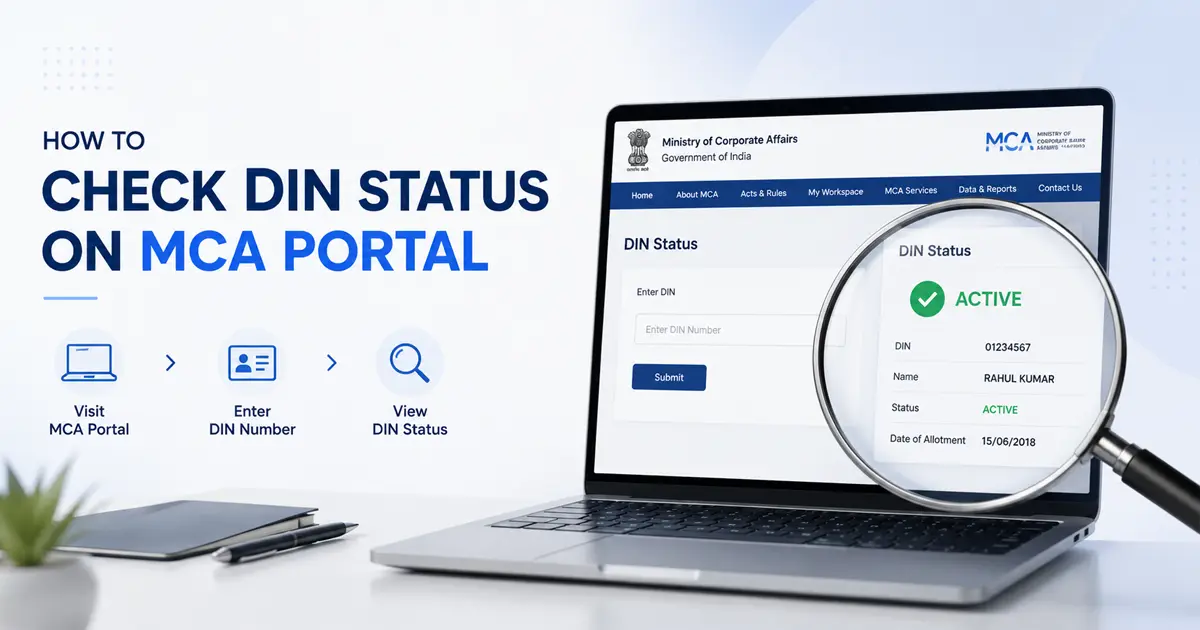
How to Check DIN Status on MCA Portal: Step-by-Step

One Person Company (OPC) Tax Benefits in India 2026
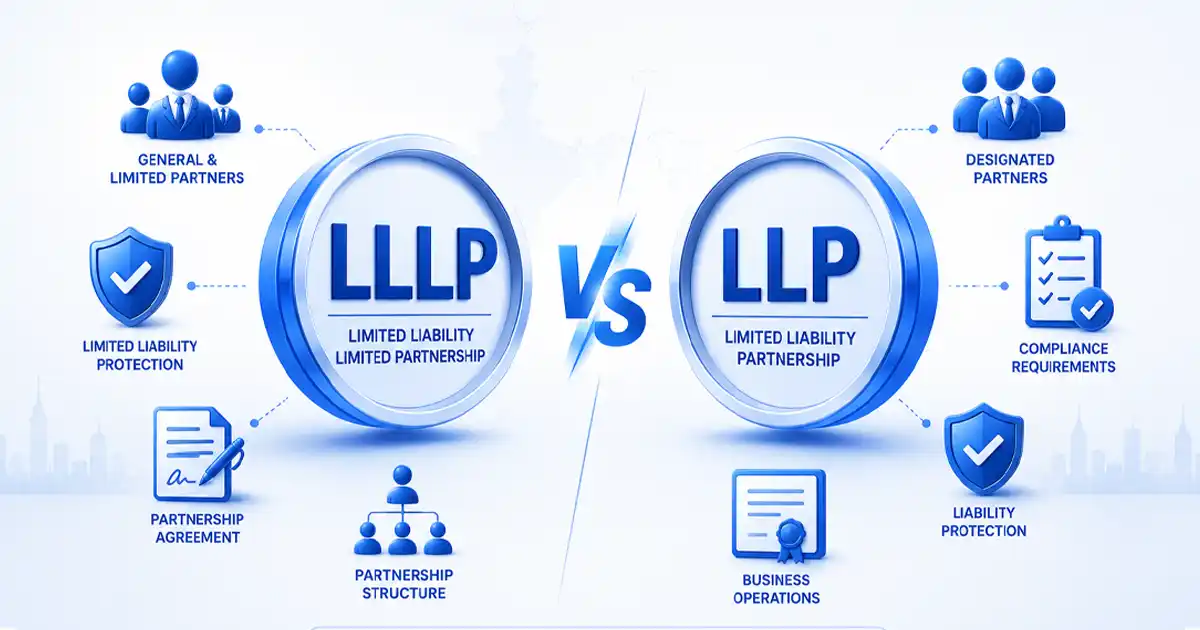
LLLP vs LLP: Key Differences, Liability, Taxation & Structure 2026
LLP Amendment Rules 2017: Form 24, Rule 37 & Strike-Off Process
LLP Rules 2009: Rule 24, Rule 37, Forms & Compliance 2026
How to Change Director in OPC: DIR-12 Process & Compliance 2026
10 Startup Compliance Mistakes Founders Must Avoid in 2026
How to Avoid MCA Notices: Top Causes, Penalties & Prevention
Dormant Company vs Active Company: Difference & Comparison Table
How to Change Company Status from Dormant to Active (MSC-4)