CDSCO Registration for Medical Devices in India
CDSCO registration is the mandatory approval for importing or selling medical devices, drugs, and cosmetics in India. RegisterKaro provides end-to-end CDSCO registration, from device classification and documentation to license approval.
 Accurate Medical Device ClassificationIndian Authorized Agent (IAA) Support for Foreign ManufacturersComplete DMF, PMF & Dossier PreparationSUGAM Portal Filing & Query HandlingEnd-to-End Support Up to License Grant

 What Sets Us ApartWhat Sets Us Apart
What is CDSCO Registration?
The Central Drugs Standard Control Organization (CDSCO) is India's national regulatory authority for drugs, medical devices, cosmetics, and clinical trials. It operates under the Directorate General of Health Services (DGHS) within the Ministry of Health and Family Welfare. It regulates the import, manufacture, sale, and distribution of these products to ensure they meet the required standards of safety, quality, and performance.
CDSCO registration refers to the regulatory approval or license required to legally manufacture, import, or market regulated healthcare products in India. The type of approval depends on the product category and its risk classification:
- Medical devices are regulated under the Medical Devices Rules, 2017 (MDR 2017).
- Drugs and cosmetics are regulated under the Drugs and Cosmetics Act, 1940, and the rules framed under it.
Manufacturers, importers, and Indian Authorized Agents submit their applications through the CDSCO SUGAM portal (cdscoonline.gov.in). They must obtain the required approval before manufacturing, importing, or marketing regulated products in India.
Regulatory References for CDSCO
The following regulatory bodies govern the approval, regulation, and compliance of medical devices in India:
- Medical Devices Rules, 2017 (MDR 2017): The primary regulatory framework governing medical device classification, licensing procedures, and applicable fees under the Second Schedule, along with relevant application forms.
- Drugs and Cosmetics Act, 1940: The parent legislation governing drugs, cosmetics, and regulated medical devices under CDSCO in India.
- Medical Devices (Amendment) Rules: Including the Sixth Amendment Rules, 2022 (G.S.R. 777(E)), which introduced key changes such as an exemption for Class A non-sterile, non-measuring devices.
- Central Drugs Standard Control Organization (CDSCO): The national regulatory authority responsible for approval, regulation, and enforcement of drugs and medical devices in India.
CDSCO SUGAM Portal: The official online platform used for application submission, document upload, fee payment, tracking, and licence issuance. - Ministry of Health and Family Welfare (MoHFW): The central government ministry under which CDSCO functions and which issues regulatory amendments and notifications.
Benefits of CDSCO Registration for Medical Device Manufacturers and Importers
Major benefits of CDSCO registration include:
- Ensures legal compliance: It allows you to legally manufacture, import, distribute, and sell regulated drugs, medical devices, and cosmetics in India.
- Provides access to the Indian market: Registration is mandatory for introducing regulated healthcare products into India and expanding your business.
- Protects public health: CDSCO evaluates regulated products against prescribed safety, quality, and performance standards before they reach patients and consumers.
- Maintains uniform regulatory standards: CDSCO and State Drug Control Authorities enforce consistent regulatory requirements across India, creating a predictable compliance framework for businesses.
- Builds trust and credibility: CDSCO approval reassures hospitals, healthcare professionals, distributors, and consumers that your product meets Indian regulatory standards.
- Supports government and institutional procurement: Many government tenders and healthcare institutions require suppliers to hold valid CDSCO approvals.
- Facilitates smoother imports: CDSCO licenses help simplify customs clearance and reduce delays for imported medical devices.
- Creates a competitive advantage: Regulatory compliance makes your products more attractive to distributors, procurement agencies, and healthcare providers.
- Enhances export credibility: Compliance with Indian regulatory standards can strengthen your reputation in international markets and support expansion into other regulated jurisdictions.
- Reduces regulatory risks: Maintaining CDSCO compliance helps avoid penalties, product seizures, license suspension, recalls, and other enforcement actions.
Products Regulated by CDSCO
CDSCO regulates healthcare products to ensure their safety, quality, and effectiveness before they enter the Indian market. These products include:
| Product Category | What It Includes | Regulatory Scope |
| Drugs & Pharmaceuticals | New drugs, formulations, APIs (bulk drugs), biologics, vaccines, biosimilars, IV fluids, sera, and fixed-dose combinations | Requires approval for manufacture, import, clinical trials, and marketing under the Drugs and Cosmetics Act, 1940 |
| Medical Devices | Surgical instruments, implants, diagnostic equipment, hospital machinery, digital health devices | Risk-based classification (Class A, B, C, D) under the Medical Devices Rules, 2017, with licensing for manufacture and import |
| In-Vitro Diagnostics (IVDs) | Blood test kits, pregnancy kits, COVID-19 tests, reagents, and diagnostic tools | Regulated as medical devices with separate performance evaluation and approval requirements |
| Cosmetics | Skincare products, hair care items, makeup, perfumes, and imported cosmetic products | Regulated under Cosmetics Rules, 2020, ensuring the safety of ingredients and product usage |
| Biologicals | Vaccines, blood products, sera, recombinant products, and immunologicals | Subject to strict evaluation due to high risk and public health sensitivity |
| Clinical Trial Materials | Investigational drugs and medical devices used in human clinical trials | Require prior CDSCO approval for ethical, scientific, and safety compliance |
| Active Pharmaceutical Ingredients (APIs) | Bulk drugs used as raw materials in pharmaceutical formulations | Must comply with quality standards and be registered for manufacture or import |
| Clinical Research Activities (CROs) | Clinical trial sites, BA/BE studies, and research involving human subjects | Require CDSCO approval to ensure ethical and regulatory compliance |
Medical devices and IVDs form one of the most structured and heavily regulated categories under CDSCO, with detailed classification, licensing forms, and compliance requirements. As a result, medical device registration and approval processes form a major part of CDSCO regulatory applications in India.
Types of CDSCO Registration and Licenses
CDSCO issues different licenses based on product type, activity, and risk classification under the Drugs and Cosmetics Act, 1940, the Medical Devices Rules, 2017, and the Cosmetics Rules, 2020. These include:
1. Drug Manufacturing License
This license is required to manufacture drugs and pharmaceuticals in India. It ensures compliance with GMP standards, safety norms, and quality control requirements under the Drugs and Cosmetics Act, 1940.
- Purpose: Manufacturing of drugs and formulations in India
- Application forms: Form 24 (application) → Form 25 (license) for non-loan manufacturing; Form 24A → Form 25A for loan licenses
- Authority: State Licensing Authority (with CDSCO oversight for new drugs)
- Key requirement: GMP compliance (Schedule M) and a qualified quality control system
2. Import License
This license is required to import drugs, medical devices, or cosmetics into India. It ensures only safe and compliant products enter the market.
- Purpose: Import of regulated healthcare products
- Medical device forms: MD-14 (application) + MD-15 (license)
- Cosmetics import: COS-1 under Cosmetics Rules, 2020
- Key requirement: Product must meet Indian regulatory standards
3. Drug Registration Certificate
This certificate is required for foreign manufacturers before their products can be sold or imported in India.
- Purpose: Legal marketing of imported drugs
- Application form: Form 40
- Approval form: Form 41
- Issued after: CDSCO product evaluation and review
4. Medical Device Registration and License
Medical devices are classified as Class A, B, C, or D based on risk level. Approval depends on this classification:
- Risk-based classification: A (low risk) to D (high risk)
- Manufacturing license:
- Class A & B → MD-3 (application) + MD-5 (license), by State Licensing Authority
- Class C & D → MD-7 (application) + MD-9 (license), by Central Licensing Authority
- Loan license:
- Class A & B → MD-4 (application) + MD-6 (license)
- Class C & D → MD-8 (application) + MD-10 (license)
- Import/testing: MD-16 (application) + MD-17 (license)
5. Clinical Trial Approval
This approval is required before conducting clinical trials in India. It ensures ethical and scientific compliance.
- Purpose: Human trials for drugs or medical devices
- Application form: CT-06
- Platform: SUGAM portal
- Key focus: Safety, ethics, and study validity
6. Test License
This license allows limited import or manufacture before full approval.
- Purpose: Testing, analysis, or research use
- Form used: Form 29
- Scope: Limited quantity only
- Use case: Pre-approval evaluation
7. Wholesale and Distribution License
This license is required to sell, store, or distribute drugs and medical devices in India.
- Purpose: Legal sale and distribution
- Device forms: MD-41 (application) + MD-42 (license)
- Key requirement: Proper storage and supply chain compliance
8. Good Manufacturing Practice (GMP) Certification
GMP certification ensures manufacturing quality and safety standards are maintained.
- Standard followed: Schedule M
- Focus areas: Hygiene, infrastructure, documentation, quality systems
- Outcome: Consistent product safety and effectiveness
9. Certificate of Pharmaceutical Product (COPP)
This certificate is required for exporting medicines from India.
- Purpose: Export approval for pharmaceuticals
- Requirement: Product must be approved in India
- Condition: Manufacturing must follow GMP standards
- Use: International regulatory acceptance
Medical Device Classification Under CDSCO
Under the Medical Devices Rules, 2017, medical devices are grouped into four risk-based classes based on invasiveness, duration of body contact, and life-support function:
1. Class A (Low Risk)
These are simple, non-invasive devices with minimal risk to patients or users. They follow the least complex regulatory pathway and, in many cases, involve lighter scrutiny.
- Examples: Thermometers, surgical dressings, alcohol swabs
- Authority: State Licensing Authority
- Key detail: Non-sterile and non-measuring Class A devices generally follow a simplified approval route with lighter compliance requirements
Important 2026 Update: Class A Non-Sterile and Non-Measuring (NSNM) medical devices are exempt from mandatory licensing. Manufacturers and importers only need to self-certify compliance and obtain a registration number through the CDSCO portal. They do not need an import or manufacturing license, Device Master File (DMF), or Plant Master File (PMF).
2. Class B (Low to Moderate Risk)
These devices carry a slightly higher risk than Class A but are still considered relatively low risk.
- Examples: Hypodermic needles, suction equipment, blood pressure monitors
- Authority: State Licensing Authority
- Key detail: Requires basic regulatory review and compliance with essential safety and quality standards
3. Class C (Moderate to High Risk)
These devices are used in critical medical situations and require stricter regulatory control due to higher patient risk.
- Examples: Ventilators, infusion pumps, orthopedic implants
- Authority: Central Licensing Authority
- Key detail: Requires detailed technical documentation, performance data, and safety evaluation
4. Class D (High Risk)
These are life-supporting or life-sustaining devices where failure can result in serious harm or death.
- Examples: Pacemakers, heart valves, implantable devices, dialysis machines
- Authority: Central Licensing Authority
- Key detail: Subject to the most stringent review, including extensive clinical evidence and risk assessment
This classification determines the applicable regulatory pathway. It also decides the required forms, licensing authority, documentation, fees, and approval timelines.
Who Needs CDSCO Registration in India?
CDSCO registration applies to any entity involved in manufacturing, importing, distributing, testing, or marketing regulated healthcare products in India. These include:
| Category | Who It Includes | Requirement |
| Medical Device Manufacturers (India) | Indian companies manufacturing medical devices or IVDs | Must obtain CDSCO manufacturing approval before production and sale |
| Domestic Pharmaceutical Companies | Manufacturers of drugs, formulations, APIs, vaccines, and biologics in India | Must comply with CDSCO licensing before marketing products |
| Importers | Any Indian entity importing drugs, medical devices, or cosmetics | Must obtain an import license before sale or distribution in India |
| Foreign Manufacturers | Overseas companies manufacturing regulated healthcare products | Must appoint an Indian Authorized Agent to apply for CDSCO registration and approvals |
| Indian Subsidiaries of Foreign Companies | Foreign companies operating through an Indian entity | Can apply for CDSCO registration through the subsidiary with assigned regulatory responsibility |
| Wholesalers and Distributors | Entities involved in the storage, supply, or distribution of regulated products | Must hold valid CDSCO wholesale/distribution licenses |
| Clinical Research Organizations (CROs) and Sponsors | Companies conducting clinical trials or handling investigational products | Must obtain prior CDSCO approval before initiating trials |
| R&D and Testing Entities | Organizations involved in research, testing, or importing for analysis | Require specific CDSCO permissions for limited use or testing purposes |
Documents Required for CDSCO Registration in India
CDSCO requires a structured set of technical, legal, and quality documents to assess the safety, performance, and compliance of a medical device before approval. These include:
- Device Master File (DMF): Provides complete product-specific technical details, including design, specifications, intended use, materials, and risk classification.
- Plant Master File (PMF): Covers details of the manufacturing facility, infrastructure, production processes, quality systems, and compliance controls.
- Free Sale Certificate (FSC): Issued by the regulatory authority of the country of origin or a recognised reference market (such as the USA, EU, UK, Canada, Japan, or Australia). It confirms that the product is freely sold in that country.
- ISO 13485 Certificate: Demonstrates that the manufacturer follows a compliant Quality Management System (QMS) for medical devices.
- Power of Attorney (PoA): Authorizes the Indian Authorized Agent to act on behalf of the foreign manufacturer. It must be notarised and apostilled or properly authenticated.
- Details of Indian Authorized Agent (IAA): include a valid wholesale/manufacturing license (such as Form 20B/21B or equivalent), along with business registration and contact details.
- Test and Performance Reports: Include safety, performance, and validation test reports from recognised or accredited laboratories.
- Labelling and Packaging Details: Must comply with MDR 2017 labelling requirements, including manufacturer details, device name, batch/lot number, manufacturing and expiry dates, and usage instructions.
- Quality Management System (QMS) Documents: Include SOPs, validation records, process controls, and quality assurance procedures followed by the manufacturer.
- Clinical Data (if applicable): May be required for Class C and D devices or new/high-risk devices. Includes clinical evaluation reports, study data, or published evidence supporting safety and performance.
- Biocompatibility and Sterilisation Reports (for higher-risk devices): Required for implantable or sterile devices to confirm material safety and sterilization effectiveness.
- Regulatory Approval History (if available): Previous approvals or registrations in other countries may be required as supporting evidence for evaluation.
A complete and consistent dossier is critical for CDSCO approval, as incomplete documentation often leads to queries, delays, or rejection.
CDSCO Registration Process for Medical Devices
The medical device registration procedure is fully online and is carried out through the CDSCO SUGAM portal under the Medical Devices Rules, 2017. The exact pathway depends on the device classification (Class A, B, C, or D) and whether it is being manufactured or imported. Here’s how it works:
Step 1: Classify Your Device
- Determine the risk class (A, B, C, or D) using the CDSCO classification system.
- Classification depends on invasiveness, usage, and patient risk.
This decides the applicable forms, authority, fees, and approval route.
Step 2: Appoint an Indian Authorized Agent – For Foreign Manufacturers
- Foreign manufacturers must appoint an Indian Authorized Agent (IAA).
- The IAA must hold a valid license and act as the legal representative in India.
- The agent handles all communication with CDSCO and compliance obligations.
Step 3: Create an Account on SUGAM Portal
- Register on the CDSCO SUGAM portal for online filing.
- The portal is used for application submission, fee payment, query response, and license download.
- Ensure correct entity details and business information during registration.
Step 4: Prepare Regulatory Documentation
- Compile the complete technical and regulatory dossier.
- Key documents include:
- Device Master File (DMF)
- Plant Master File (PMF)
- ISO 13485 certification
- Free Sale Certificate (FSC)
- Performance and safety test reports
Ensure documents are consistent and comply with CDSCO format requirements.
Step 5: File Application and Pay Fees
- Submit the relevant application form (e.g., MD-14 for import, MD-3/MD-7 for manufacture).
- Upload all supporting documents on the SUGAM portal.
- Pay applicable government fees online.
Step 6: CDSCO Review and Query Handling
- CDSCO reviews the application for completeness and compliance.
- Queries may be raised for clarification or additional documents.
- Timely and complete responses are required to avoid delays in processing.
Step 7: Inspection (If Applicable)
- For Class C and D devices, authorities may inspect the manufacturing site.
- Inspection focuses on GMP compliance, infrastructure, and quality systems.
- Observations must be resolved before approval is granted.
Step 8: Grant of License
- Once satisfied, CDSCO issues the final approval (e.g., MD-15 for an import license).
- The device can then be legally manufactured, imported, and marketed in India.
- Ongoing compliance must be maintained to keep the license valid.
How Long Does CDSCO Registration Take?
The CDSCO approval timeline varies based on device risk class, documentation quality, and whether the application is for import or manufacturing under the Medical Devices Rules, 2017. Below is the typical stage-wise timeline:
| Stage | Class A & B | Class C & D |
| Document preparation (DMF, PMF, ISO, FSC, etc.) | 2–4 weeks | 4–8 weeks |
| SUGAM portal submission & acknowledgement | 1–3 days | 1–3 days |
| Initial scrutiny & deficiency review | 30–45 days | 60–90 days |
| Regulatory review & evaluation | 30–60 days | 90–180 days |
| Inspection (if required) | Rare / selective | Common for C & D devices |
| Final approval & license issuance | 2–4 weeks | 2–6 weeks |
| Total estimated timeline | 3–5 months | 6–12 months |
Timelines may vary depending on product complexity, regulatory queries, inspection requirements, and completeness of the application.
CDSCO Registration Fees in India
CDSCO fees are prescribed under the Second Schedule of the Medical Devices Rules, 2017, and are paid online through the SUGAM portal. Import fees are officially specified in US dollars and paid in the rupee equivalent. The figures below are approximate and depend on the prevailing exchange rate.
| Fee Type | Class A | Class B | Class C & D |
| Import License – Per Manufacturing Site (MD-14/MD-15) | ₹94,000 | ₹1,88,000 | ₹2,82,000 |
| Import License – Per Device | ₹4,700 | ₹94,000 | ₹1,41,000 |
| Manufacturing License – Per Site | ₹5,000 | ₹5,000 | ₹50,000 |
| Manufacturing License – Per Device | ₹500 | ₹500 | ₹1,000 |
| Test License (per device) | ₹9,400 | ₹9,400 | ₹9,400 |
| Overseas Inspection Fee (if applicable) | ₹4,70,000 | ₹4,70,000 | ₹4,70,000 |
Note: Import fees and inspection fees are set in US dollars under MDR 2017 and are payable in the rupee equivalent at the current exchange rate. Manufacturing license fees are fixed in rupees.
Validity and Renewal of CDSCO License
CDSCO licenses are not permanently “renewed” in the traditional sense anymore. The system now works on a perpetual validity model, supported by periodic retention payments and continuous compliance. This ensures that only safe and compliant products remain in the Indian market.
Validity of CDSCO License
CDSCO licenses, including import licenses (Form MD-15) and manufacturing licenses, have perpetual validity. However, applicants must continue to comply with the Medical Devices Rules, 2017, to keep the license valid. The license remains active only if the applicant:
- Maintains full compliance with applicable regulatory requirements.
- Continues to meet quality and safety standards.
- Pays the required retention fee every 5 years within the prescribed timeline.
If the applicant fails to comply, CDSCO may suspend or cancel the license.
CDSCO License Renewal
Instead of renewal, the applicant must now follow a retention-based system. The applicant must pay a retention fee to keep the license active for the next 5-year block. The process includes the following steps:
- Log in to the SUGAM portal and access the existing license.
- Pay the retention fee before the completion of every 5 years.
- Ensure the retention fee equals the original license fee.
- Pay applicable late fees if the applicant misses the due date.
- Update CDSCO with any additional product or license changes, if applicable.
- Maintain continuous compliance with MDR 2017 throughout the validity period.
If the applicant fails to pay the retention fee on time, CDSCO may impose late fees per month of delay. Continued non-payment may result in suspension or deactivation of the license.
Latest CDSCO Updates for 2026
CDSCO introduced several regulatory updates in 2026 to simplify licensing, strengthen compliance, and improve India's medical device regulatory framework. Key developments include:
- Draft amendments to the Medical Devices Rules, 2017: In June 2026, the Ministry of Health and Family Welfare published draft amendments to simplify the licensing process. The proposal aims to reduce manufacturing license timelines while maintaining safety and quality standards.
- Draft revision of medical device testing fees: In April 2026, CDSCO issued Draft Notification G.S.R. 269(E). The draft proposes changes to the medical device testing fee structure under the Medical Devices Rules, 2017.
- Revised sampling guidelines: In May 2026, CDSCO issued revised guidelines for sampling drugs, cosmetics, and medical devices. The new guidelines help Central and State Drug Inspectors conduct inspections more consistently and strengthen quality surveillance.
- Additional Medical Device Testing Officers notified: In February 2026, CDSCO notified additional Medical Device Testing Officers (MDTOs) for designated laboratories. The move strengthens medical device testing and regulatory oversight.
Challenges in CDSCO Registration and Their Solutions
Businesses often face several challenges during the CDSCO registration process. However, proper planning and compliance can help overcome them. Here are some common challenges and their solutions:
- Incorrect device classification: Misclassifying a medical device can result in the wrong application or license category. Classify the device according to the Medical Devices Rules, 2017, before applying.
- Incomplete documentation: Missing or inaccurate technical documents, quality certificates, or declarations can delay approval. Prepare and verify all required documents before submission.
- Errors in the application: Incorrect information on the CDSCO portal may lead to deficiency letters or rejection. Review the application carefully before filing.
- Delays in responding to CDSCO queries: CDSCO may seek additional information or clarifications during the review process. Respond promptly with complete and accurate documents to avoid delays.
- Meeting quality and regulatory requirements: Manufacturers must maintain applicable quality standards and regulatory compliance throughout the product lifecycle. Implement a robust Quality Management System (QMS), such as ISO 13485, where applicable.
- Keeping up with regulatory changes: CDSCO regularly updates its rules, notifications, and guidance documents. Monitor regulatory updates to ensure continued compliance.
- Complying with foreign manufacturer requirements: Overseas manufacturers must appoint an Indian Authorized Agent (IAA) and submit properly legalized or apostilled documents wherever required.
- Maintaining post-approval compliance: Registration is not a one-time requirement. Renew licenses on time, maintain regulatory records, report significant changes, and comply with post-market surveillance obligations.
Connect with RegisterKaro and let our experts handle the legal hassle while you grow your business.
Frequently Asked Questions (FAQs)
What is CDSCO registration?
CDSCO registration is the approval from the Central Drugs Standard Control Organization that lets you legally import, manufacture, or sell drugs, medical devices, or cosmetics in India. For medical devices, it is governed by the Medical Devices Rules, 2017, and applied for through the SUGAM portal.
What are Form MD-14 and Form MD-15?
Form MD-14 is the application for an import license for medical devices, and Form MD-15 is the import license issued by CDSCO after approval. Most imported medical devices require an MD-15 license before they can be legally imported into India. However, Class A non-sterile and non-measuring (NSNM) devices are exempt from this requirement and only need registration through the CDSCO portal.
Do foreign manufacturers need an Indian agent for CDSCO registration?
Yes, under the Medical Devices Rules, 2017, foreign manufacturers cannot hold a CDSCO license directly. They must appoint an Indian Authorized Agent (IAA) with a valid wholesale or manufacturing license, who applies for and holds the license on their behalf.
What are the four classes of medical devices under CDSCO?
CDSCO classifies medical devices into four risk-based classes: Class A (low risk), Class B (low-moderate risk), Class C (moderate-high risk), and Class D (high risk). The class determines the licensing authority, forms, fees, and overall registration pathway.
How much does CDSCO registration cost?
Fees depend on the device class and license type. Import fees combine a per-site fee (USD 1,000 to 3,000) and a per-device fee (USD 50 to 1,500). Manufacturing fees range from ₹5,000 + ₹500 per device (Class A/B) to ₹50,000 + ₹1,000 per device (Class C/D).
How long does CDSCO registration take?
CDSCO registration typically takes 1 to 9 months. Class A non-sterile devices can be quicker, while Class B, C, and D import or manufacturing licenses usually take 6 to 9 months. Complete documentation is the best way to avoid delays.
Is a CDSCO import license valid permanently?
The CDSCO import license in Form MD-15 is now perpetual and does not expire automatically. However, you must pay a retention fee before the end of every five years to keep it valid. Missing the retention fee can invalidate the license.
Which documents are required for CDSCO medical device registration?
Key documents include the Device Master File (DMF), Plant Master File (PMF), Free Sale Certificate (FSC), ISO 13485 certificate, the Indian Authorized Agent's wholesale license, a Power of Attorney, and labelling and test reports compliant with MDR 2017.
What is the SUGAM portal?
SUGAM is CDSCO's official online portal for regulatory submissions. Applicants use it to register, submit applications, pay fees, respond to queries, and download licenses and certificates for drugs, medical devices, and cosmetics.
Is CDSCO registration mandatory for all medical devices?
Yes, CDSCO registration is mandatory for all medical devices, with one exception: Class A non-sterile and non-measuring devices, which require self-certification rather than a full license. All other devices need a license before import, manufacture, or sale in India.
What is the difference between CDSCO and DCGI?
CDSCO is the national regulatory organization for drugs and medical devices. The DCGI (Drugs Controller General of India) is the head of CDSCO and the highest authority for approving new drugs, clinical trials, and high-risk medical devices. In short, DCGI leads CDSCO.
Can I import a medical device without CDSCO registration?
No, importing a medical device without a valid CDSCO import license (Form MD-15) is illegal under the Medical Devices Rules, 2017. Doing so can lead to seizure of goods, penalties, and legal action. You must obtain the license before importing.
Is CDSCO registration mandatory for imported medical devices?
Yes, most imported medical devices require CDSCO import approval before entering India. However, Class A non-sterile and non-measuring devices are exempt and only need online registration through the CDSCO portal for compliance.
Can one license cover multiple medical devices?
Yes, one CDSCO license can cover multiple medical devices if they belong to the same manufacturer, site, and approved scope. The coverage depends on product classification and compliance with the Medical Devices Rules, 2017.
What is an Indian Authorized Agent (IAA)?
An Indian Authorized Agent (IAA) is an India-based representative appointed by a foreign manufacturer. The IAA handles CDSCO applications, submissions, regulatory communication, and ensures compliance with Indian medical device regulations.
Can foreign companies apply directly for CDSCO registration?
No, foreign manufacturers cannot apply directly for CDSCO registration. They must appoint an Indian Authorised Agent (IAA) to submit applications, manage documentation, and communicate with CDSCO on their behalf.
What happens if CDSCO rejects an application?
If CDSCO rejects an application or raises deficiencies, it provides reasons for the decision. Applicants can correct errors, submit clarifications, or reapply depending on the stage of the review under applicable rules.
How do I check the CDSCO application status?
Applicants can track CDSCO application status online through the SUGAM portal. By logging in with credentials and application reference number, they can view updates, queries, approvals, or rejection status.
What is the difference between Form MD-14 and Form MD-16?
Form MD-14 is the application for a CDSCO import license. Form MD-15 is the issued license. Form MD-16 is used for importing devices for testing, evaluation, demonstration, or training, not for commercial sale.
How long is a CDSCO manufacturing license valid?
A CDSCO manufacturing license is valid indefinitely, provided the applicant maintains compliance with the Medical Devices Rules, 2017, and pays the applicable retention fee, ensuring continued regulatory adherence.

Reviewed by
Joel DsouzaJoel Dsouza is a Chartered Accountant (CA) and compliance expert with over 7 years of hands-on experience in company registration, tax structuring, GST, ROC filings, and MCA compliance. As a qualified member of the Institute of Chartered Accountants of India (ICAI) and Co-Founder at RegisterKaro, he has personally advised more than 1,000 startups and SMEs across India, helping founders navigate incorporation, regulatory frameworks, and financial planning from Day 1. With deep expertise across all three levels of Finance and Portfolio Management, Joel is committed to promoting financial literacy and simplifying India's startup ecosystem through clear, actionable guidance that entrepreneurs can act on immediately.
Why Choose RegisterKaro for CDSCO Registration?
CDSCO registration can be challenging, with complex regulations and extensive documentation. RegisterKaro simplifies the process and supports you at every step.
- Get your classification right the first time: We identify the correct risk class and licensing pathway for your medical device, reducing the chances of delays or rejections.
- End-to-end regulatory support: From eligibility assessment and documentation to license approval and post-registration compliance, we manage the entire process under one roof.
- Dedicated support for foreign manufacturers: We assist overseas companies with IAA appointments, document legalization, and compliance with Indian import regulations.
- Faster application processing: Our team files your application accurately through the SUGAM portal, tracks its progress, and responds promptly to CDSCO queries to avoid unnecessary delays.
- Compliance beyond license approval: We help you stay compliant with license renewals, product modifications, reporting obligations, and other post-market regulatory requirements.

What Our Clients Say
View All
HR MOTIVATION
 Verified
I had a great experience with RegisterKaro. The entire registration process was smooth, and the team was professional, responsive, and supportive thro... Read more

sindhu n
VerifiedI Would like to appreciate support of Muskan and the funding Ops team to get seed funding. There is no friction Muskan is knowledgable and talented mo... Read more

Dharmendra Verma
VerifiedI had a great experience with RegisterKaro, especially with Diksha. She was professional, supportive, and always on time with the compliance work. She... Read more

Anu Jikku
VerifiedRegisterKaro was instrumental in settling up my company without any stress. PIYUSH JAMWAL at RegisterKaro was a very attentive and resourceful person... Read more

PRIMART AYURVEDA
VerifiedI had a great experience with RegisterKaro while registering my new company. A special thanks to Garima Sharma for her excellent support throughout th... Read more

Raghu Singh
VerifiedThe best part wasn't that my work got done—it was that I never had to worry about whether it would get done. Archana kept everything on track, and tha... Read more

Savitri Jaiswal
VerifiedI had a great experience. The quality exceeded my expectations, and everything was handled professionally. The service was prompt, and the overall pro... Read more

Sachin Gaikwad
VerifiedGood Service Provide by Registered Karo ...Mr Manish has coordinated well in just 7 Days my Private Limited company incorporated by team .Thanks Regis... Read more

shanish kumar
VerifiedI've had a great experience with RegisterKaro. A special thanks to Surbhi for her continuous support and timely updates throughout the process. My GST... Read more

Vrushab Kumar
VerifiedThe company incorporation process and related compliances were carried out smoothly. Among all the individuals I interacted with, Aryan from the compl... Read more
Related Blogs
View All
ITR Filing Cost for Companies in India
Consequences of Not Filing Company Compliance – Penalties, Disqualification, and Strike-Off
Company Annual Compliance Cost – GST, and ITR Charges for a Private Limited Company
How to Close an LLP With Pending Annual Compliance in India?
How to Improve Company Compliance?
Company Name Reservation in India: Rules, Process & Fees
How to Start a Chocolate Business From Home in India (2026)?
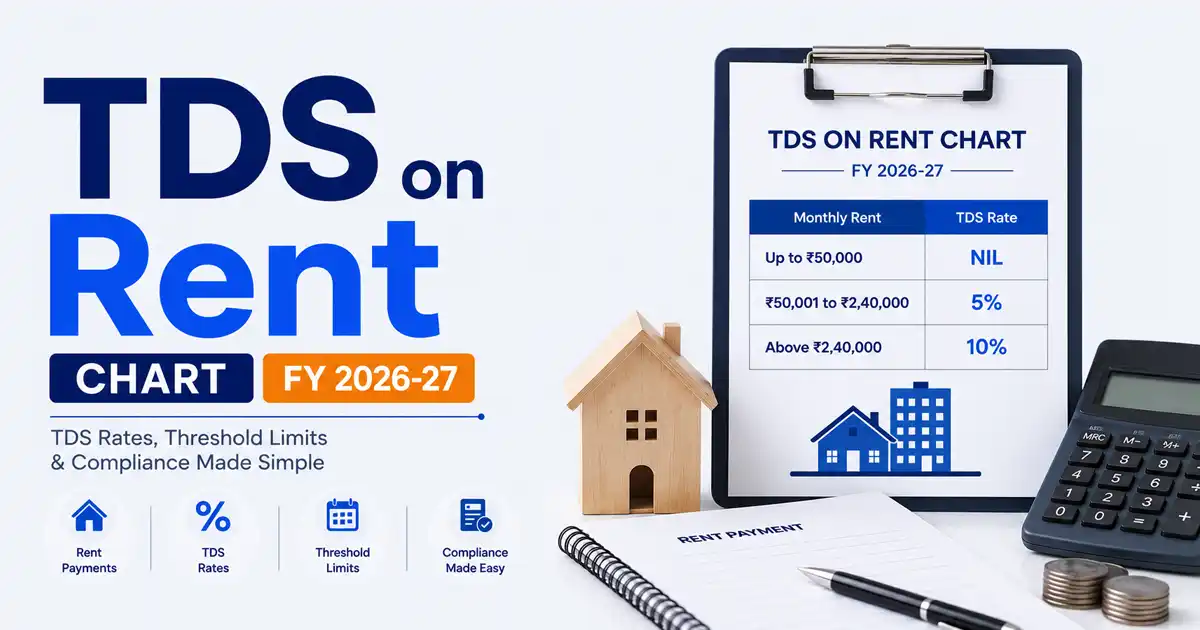
TDS on Rent Chart FY 2026–27: Rates, Limits, Sections and Complete Guide
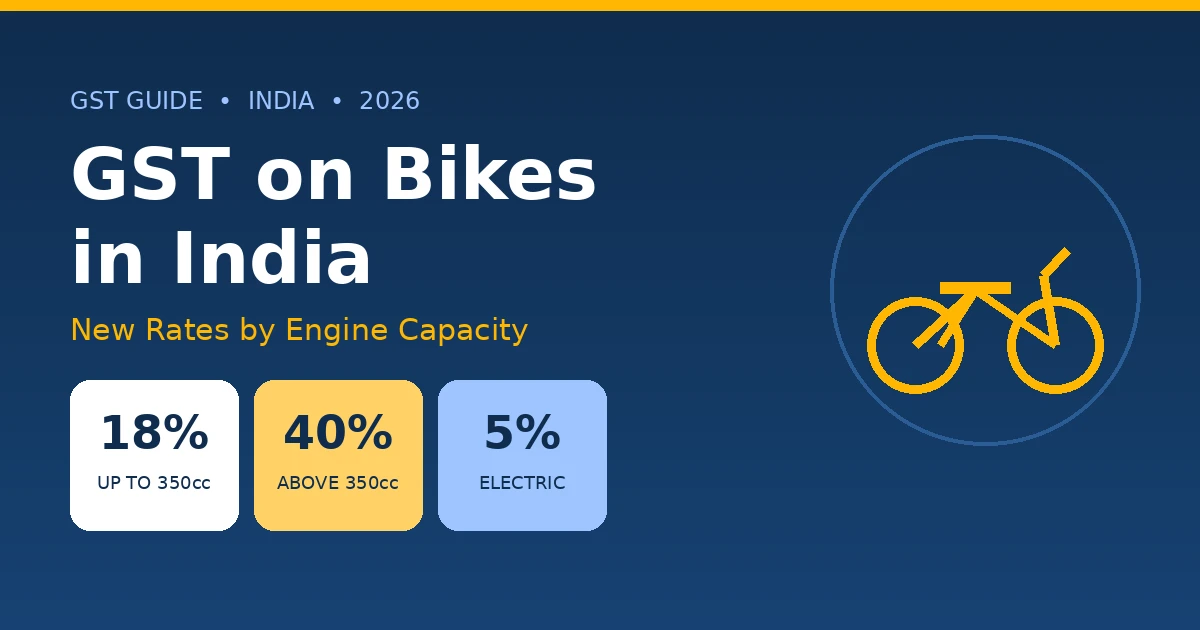
GST on Bikes in India: New Rates by Engine Capacity
GST for Electrical Items in India: Rates & HSN Codes