Nidhi Company Compliances
Stay on top of your Nidhi Company compliances, NDH-1, NDH-3, AOC-4, MGT-7, and ITR-6, with RegisterKaro. Get expert support to meet Nidhi Rules requirements, avoid penalties, and protect your Nidhi status.
 Complete NDH-3 and NDH-4 Filing SupportNOF and Deposit Ratio MonitoringStatutory Audit CoordinationTimely Filings and Deadline RemindersEnd-to-End Documentation and ROC Liaison

 What Sets Us ApartWhat Sets Us Apart
What is a Nidhi Company in India?
A Nidhi Company is a type of Non-Banking Financial Company recognized under Section 406 of the Companies Act, 2013. The term “Nidhi” means “treasure” in Hindi. It reflects the company’s core purpose of promoting savings among its members and providing them with access to credit.
The following features define the structure and regulatory framework of a Nidhi Company:
- Members-only structure: A Nidhi Company accepts deposits only from its members and lends only to its members. It cannot transact with outsiders.
- Governing framework: Nidhi companies operate under the Nidhi Rules, 2014, as amended in 2019 and 2022.
- RBI exemption, with conditions: Nidhi companies are exempt from RBI registration as an NBFC under Section 45-IA of the RBI Act, 1934. This exemption comes with strict conditions, including a minimum of 200 members and Net Owned Funds of at least ₹20 lakh.
- Public company by nature: A Nidhi Company must be incorporated as a public limited company, even though it functions like a member-based mutual benefit society.
Key Nidhi Company Compliances in India
A Nidhi Company must meet specific compliance requirements before and after incorporation to remain compliant with the applicable rules.
1. Pre-Incorporation Compliances
Before starting Nidhi company registration, the proposed company must meet certain requirements related to its structure, directors, name, and capital. The key requirements include:
- Company Structure: Form a public limited company with a minimum of 3 directors and 7 members.
- Members and Directors: Directors must have a Director Identification Number (DIN). At least one director must meet the resident-director requirement under the Companies Act, 2013.
- Company Name: Must end with "Nidhi Limited" and be unique.
- Minimum Capital: Maintain at least ₹10 lakh as paid-up equity share capital at incorporation. This is separate from the ₹20 lakh Net Owned Funds requirement applicable to companies incorporated on or after 19 April 2022 seeking declaration as a Nidhi under Rule 3B.
Nidhi companies do not require RBI approval to operate, since they are exempt under the RBI Act, 1934. They must, however, strictly comply with the Nidhi Rules, 2014, and their subsequent amendments.
2. First-Year Compliance After Incorporation
A Nidhi Company incorporated on or after 19 April 2022 must meet specific requirements within 120 days of incorporation to apply for declaration as a Nidhi. The key requirements include:
- Minimum Members: The company must have at least 200 members within 120 days of incorporation.
- Net Owned Funds (NOF): The company must have at least ₹20 lakh in Net Owned Funds within 120 days of incorporation.
- Form NDH-4: The company must file Form NDH-4 within 120 days of incorporation to apply for declaration as a Nidhi. The application must also include the required declarations for the promoters and directors.
- Nidhi Declaration: The company can operate as a Nidhi only after meeting the applicable requirements and obtaining the required declaration from the Central Government.
These requirements are separate from the older Rule 5 compliance framework on/after 19 April 2022.
Nidhi Company Compliance Calendar: Key Filings and Due Dates
A Nidhi Company must comply with the applicable MCA, Companies Act, Nidhi Rules, and income tax filing requirements. The applicable forms and due dates depend on the company's incorporation date and the nature of the compliance.
Here's the complete compliance calendar to keep your Nidhi Company on track:
| Filing | Form | Frequency | Due Date |
| Nidhi Compliance Return for Nidhis to which Rule 5 applies | NDH-1 |
Yearly (check Note below) | Within 90 days of the close of the first financial year and, where applicable, the second financial year |
| Declaration as Nidhi Company | NDH-4 | One time | Within 120 days of incorporation |
| Half-Yearly Return | NDH-3 | Twice a year | 30 April for the October–March half-year and 30 October for the April–September half-year |
| Financial Statements | AOC-4 | Yearly | Within 30 days of the AGM |
| Annual Return | MGT-7 | Yearly | Within 60 days of the AGM |
| Auditor Appointment | ADT-1 | As applicable | Within 15 days of appointment |
| Director KYC | DIR-3 KYC | Once every 3 consecutive financial years | Triennial, by 30 June of the immediate next financial year for directors required to complete DIR-3 KYC |
| Income Tax Return | ITR-6 | Yearly | 31 October for companies covered by the applicable audit-related due date |
Note: The amended Nidhi Rules changed the applicability of Rule 5 for Nidhis incorporated on or after 19 April 2022. Therefore, NDH-1 should not be presented as a routine annual return for every Nidhi Company. The applicable requirements should be checked based on the company's incorporation date and the relevant rules.
Nidhi-Specific Forms: NDH-1, NDH-2, NDH-3, and NDH-4
Beyond standard MCA filings, Nidhi companies must file forms unique to their regulatory status. Here's what each one covers, and when it applies:
1. Form NDH-1
Within 90 days of the first financial year-end and, where applicable, the second financial year-end. NDH-1 reports the company's membership, deposits, loans, Net Owned Fund position, and compliance with the Nidhi Rules during the year.
2. Form NDH-2: Application for Extension or Special Approval
Form NDH-2 is filed with the Regional Director for specific applications and approvals under the Nidhi Rules, 2014.
- Extension of Time: For Nidhis to which Rule 5 applies, NDH-2 may be filed within 30 days from the close of the first financial year if the company has not met the 200-member requirement or 1:20 NOF-to-deposit ratio under Rule 5 requirements. The Regional Director may grant an extension of up to one year.
- Branch Expansion: Prior Regional Director approval through NDH-2 is required to open more than three branches within the district or any branch outside the district.
- Temporary Withdrawal of Deposits: A Nidhi may apply through NDH-2 for prior Regional Director approval to temporarily withdraw from its unencumbered term deposits in case of unforeseen commitments for repayment to depositors.
- Acquisition or Control: A Nidhi cannot acquire or purchase securities of another company, control its Board of Directors, or enter into an arrangement to change its management. This is a restriction under Rule 6(d), not an approval that can be obtained through NDH-2.
3. Form NDH-3: Half-Yearly Return
Filed twice a year, within 30 days of each half-year's close, by 30 October for the April-September period, and by 30 April for the October-March period. NDH-3 is your compliance health check every six months, covering membership changes, deposits, loans, and ratio maintenance for that specific half.
4. Form NDH-4: Application for Declaration as a Nidhi Company
A one-time application, filed with the Central Government under Section 406 of the Companies Act, 2013, to formally seek recognition as a Nidhi Company. Companies incorporated after the Nidhi (Amendment) Rules, 2022, must file this within 120 days of incorporation. Without NDH-4 approval, your company cannot accept deposits or disburse loans, and it cannot file Form SH-7 or Form PAS-3 either.
Standard MCA Filings: AOC-4 and MGT-7 for Nidhi Companies
Beyond the Nidhi-specific forms, every Nidhi Company must also file the standard company filings required under the Companies Act, 2013.
1. Form AOC-4: Financial Statements
Filed within 30 days of the AGM. Nidhi companies are public companies with 200+ members. Therefore, they do not qualify for small-company exemptions. The Cash Flow Statement is mandatory, along with the Balance Sheet, Profit and Loss Account, notes to accounts, auditor's report, and Board's Report.
2. Form MGT-7: Annual Return
Filed within 60 days of the AGM. MGT-7 has a separate statutory due date of 60 days from the AGM and should be prepared using the company's applicable financial and corporate records.
Nidhi companies must file the full Form MGT-7, not the simplified MGT-7A. MGT-7A is reserved for OPCs and small companies. A Nidhi Company, being a public company, does not qualify as a small company under Section 2(85), regardless of its size.
3. Form NDH-5: Notice of Branch Closure
Form NDH-5 is the prescribed format for the advertisement published when a Nidhi Company closes a branch. It is not a form filed with the Regional Director. The branch closure process includes:
- Regional Director Approval: Obtain prior approval from the Regional Director through Form NDH-2, where required, before closing the branch.
- Newspaper Advertisement: Publish the closure notice in the NDH-5 format in a newspaper in the vernacular language at the place where the Nidhi operates. The advertisement must be published at least 30 days before the closure.
- Notice Board Display: Display the closure notice on the notice board of the Nidhi and the concerned branch for at least 30 days.
- Registrar Intimation: Inform the Registrar about the closure within 30 days after the branch is closed.
An English daily is not separately prescribed under Rule 10(6). The rule specifically refers to a newspaper in the vernacular language at the place where the Nidhi carries on business.
Statutory Audit Requirements for Nidhi Companies
Every Nidhi Company must have its financial statements audited annually by a qualified Chartered Accountant before the AGM. This audit goes beyond a standard financial review.
- Deposit and loan verification: The auditor checks deposit records and confirms loan limits comply with Rule 15 of the Nidhi Rules, 2014.
- NOF-to-deposit ratio: For Nidhis to which Rule 5 applies, the auditor verifies compliance with the prescribed 1:20 NOF-to-deposit ratio.
- Timeline: A Nidhi-specific audit typically takes 5 to 15 working days, though this can extend depending on the volume of deposits and loans.
- Presentation at AGM: The audit report is presented to members at the AGM and forms part of the company's financial statements and annual filing process. It should not be treated as a separate ROC filing by the auditor.
Income Tax Return Filing for Nidhi Companies
A Nidhi Company must file its income tax return and meet the applicable tax compliance requirements each year. The key income tax filing requirements include:
- ITR Form: File the income tax return using Form ITR-6 through the Income Tax e-Filing portal.
- Tax Audit: Nidhi companies are subject to statutory audit under the Companies Act. A tax audit may also apply under the Income Tax Act based on the applicable conditions.
- ITR Filing Due Date: Where a tax audit is applicable, the return is generally due by 31 October of the relevant assessment year.
- Tax Audit Report: Where applicable, the tax audit report is generally required to be furnished by 30 September.
Tax Treatment of Nidhi Company Income
The primary source of income for a Nidhi Company is the interest spread. This is the difference between the interest earned on loans to members and the interest paid on member deposits. This income is generally taxable as business income.
The key tax obligations for a Nidhi Company include:
- Corporate tax rate: For AY 2026-27, 25% where the company's total turnover/gross receipts in FY 2023-24 did not exceed ₹400 crore, subject to applicable provisions. A company may instead opt for the 22% concessional regime, subject to conditions.
- TDS obligations: A Nidhi Company must deduct TDS under Section 194A on interest paid or credited to members when the aggregate interest exceeds ₹10,000 in a financial year. The higher thresholds applicable to banks, cooperative banks, and post offices do not apply to Nidhi Companies.
- Advance tax: Advance tax is required in four installments if the estimated tax liability exceeds ₹10,000.
- Late filing penalty: Section 234F provides a late filing fee of ₹5,000, reduced to ₹1,000 if total income does not exceed ₹5 lakh. Interest may also apply on unpaid tax, and certain business losses may not be available for carry-forward if the return is filed late.
Financial Ratio and Interest Rate Requirements for Nidhi Companies
Nidhi companies must follow specific financial ratios and interest rate limits. These requirements help regulate deposits, loans, and the use of member funds. The main financial requirements for a Nidhi Company include:
- Net Owned Fund (NOF): A company incorporated on or after 19 April 2022 seeking declaration as a Nidhi must have Net Owned Funds of at least ₹20 lakh within the prescribed period under Rule 3B.
- NOF-to-deposit ratio: For Nidhis to which Rule 5 applies, the ratio of Net Owned Funds to deposits must not exceed 1:20.
- Unencumbered Term Deposits (10%): At least 10% of outstanding deposits must be kept as unencumbered term deposits with a scheduled commercial bank, subject to the applicable rules. This requirement is checked as part of the company's compliance and audit process.
Nidhi Company Interest Rate Rules and Limits
Nidhi Companies must also follow prescribed limits when paying interest on deposits and charging interest on loans. The key limits are as follows:
- Fixed and recurring deposits: Interest cannot exceed the maximum rate prescribed by the RBI for public deposits accepted by NBFCs.
- Savings deposits: The maximum balance qualifying for interest is ₹1 lakh. The interest rate cannot exceed 2% above the rate offered by nationalized banks on savings accounts.
- Loans: The interest rate on loans cannot exceed 7.5% above the highest interest rate offered by the Nidhi on its deposits. The rate is calculated using the reducing balance method. For example, if the highest deposit rate is 8%, the maximum loan rate would be 15.5%.
- Premature withdrawal: If a member withdraws a fixed or recurring deposit before maturity, the applicable interest rate is generally reduced by 2% from the rate that would otherwise have applied. Certain conditions apply to premature repayment.
Restrictions on Nidhi Company Operations
A Nidhi Company can conduct business only within the activities permitted under the Nidhi Rules, 2014. Certain activities and transactions are specifically restricted to protect the interests of its members. The key restrictions on a Nidhi Company include:
- Prohibited Activities: A Nidhi Company cannot conduct chit fund, hire-purchase, leasing, or insurance business.
- Investment Restrictions: It cannot acquire shares or securities of another company. It also cannot issue preference shares or debentures.
- Transactions with Non-Members: A Nidhi Company cannot accept deposits from or lend money to persons other than its members, subject to the specific exceptions provided under the Nidhi Rules, 2014.
- Branch Restrictions: A Nidhi Company cannot open branches outside its district without prior approval from the Regional Director. It can open up to three branches within the same district without prior approval, subject to conditions, including continuous net profits after tax for the preceding three financial years, and other filing requirements.
- Maximum Loan Amount: Subject to the applicable Nidhi Rules and conditions, the maximum loan amount depends on the company's total deposits: ₹2 lakh where deposits are below ₹2 crore, ₹7.5 lakh where deposits are ₹2 crore or more but below ₹20 crore, ₹12 lakh where deposits are ₹20 crore or more but below ₹50 crore, and ₹15 lakh where deposits are ₹50 crore or more. Additional restrictions may apply where the Nidhi has not earned profits continuously for the preceding three financial years.
- Loan Security: Loans must be secured against the member's deposits, gold, silver, or specified government securities, such as National Savings Certificates.
Nidhi Company Penalties for Non-Compliance
A Nidhi Company must comply with the Nidhi Rules, 2014, and the Companies Act, 2013. Failure to meet these requirements can result in fines, additional fees, or other regulatory action.
The consequences depend on the type of non-compliance and the provision that has been violated.
1. Penalties Under the Nidhi Rules, 2014
Rule 24 provides a specific penalty for contraventions of the Nidhi Rules. The company and every officer in default may be subject to:
- Fine of up to ₹5,000: This applies to a contravention of the Nidhi Rules.
- Additional fine of up to ₹500 per day: If the contravention continues, an additional fine may apply for each day after the first day until the default is rectified.
These provisions can apply to violations of requirements relating to membership, Net Owned Funds, deposit limits, and other Nidhi-specific conditions.
2. Penalties for Companies Act Filing Defaults
A Nidhi Company must also comply with the regular filing and governance requirements under the Companies Act, 2013.
Late filing or other defaults can result in additional fees or penalties, depending on the applicable provision. These requirements may include:
- Annual filing defaults: Late filing of financial statements and annual returns can attract additional fees and statutory penalties.
- Statutory records: Failure to maintain required registers and records can result in penalties under the applicable provisions.
- Board meeting requirements: Non-compliance with statutory meeting requirements may also attract penalties for the company and officers in default.
The exact amount depends on the specific provision and nature of the default. For example, Section 137 provides penalties for failure to file financial statements within the prescribed period.
3. Regulatory Consequences for Nidhi Companies
Repeated or serious non-compliance can lead to further regulatory action. The Nidhi Rules allow the Central Government to take action against a Nidhi that fails to comply with the applicable requirements. In certain cases, a Special Officer may also be appointed to manage the Nidhi after providing the company an opportunity to be heard.
A Nidhi that does not meet the applicable requirements for declaration under Rule 3A or Rule 3B, as applicable, may face restrictions on filing certain forms, including SH-7 and PAS-3.
4. Risk of Company Strike-Off
Separate from Nidhi-specific penalties, a company may also face strike-off proceedings under Section 248 of the Companies Act, 2013 for specified defaults, including failure to file financial statements or annual returns for the prescribed period.
Therefore, a Nidhi Company should monitor its annual filings, membership, Net Owned Funds, deposit limits, and other statutory requirements throughout the year.
AGM and Board Meeting Requirements for Nidhi Companies
A Nidhi Company must follow the applicable rules for general meetings and board meetings. The key requirements cover meeting timelines, notice, quorum, and statutory business:
1. Annual General Meeting (AGM)
The AGM allows members to review the company's financial performance and other statutory matters. A Nidhi Company must follow the prescribed requirements for holding its AGM:
- First AGM: Must be held within 9 months of the close of the company's first financial year.
- Subsequent AGMs: Must be held within 6 months of the close of each financial year. For a company with a 31 March year-end, the AGM is generally held by 30 September.
- Notice Period: At least 21 clear days' notice must be given to members, directors, and auditors.
- Quorum: For a public company with up to 1,000 members, at least 5 members personally present are required.
- Timing: The AGM must be held during business hours. It cannot be held on a national holiday.
2. AGM Agenda for a Nidhi Company
The AGM covers the company's financial results and other matters required under company law. The agenda may include the following items:
- Adoption of the audited financial statements.
- Consideration of the Board's Report and Auditor's Report.
- Declaration of dividend, if any, subject to the applicable limits and conditions.
- Appointment or re-appointment of the statutory auditor.
- Review of membership against the 200-member minimum.
- Review of the NOF position and compliance with the 1:20 deposit-to-NOF ratio.
3. Board Meetings
Board meetings help the directors review the company's operations and compliance. A Nidhi Company must follow the prescribed schedule and quorum requirements:
- First Board Meeting: Must be held within 30 days of incorporation.
- Ongoing Requirement: A minimum of 4 Board meetings must be held each year. The gap between two consecutive meetings must not exceed 120 days.
- Quorum: The quorum is one-third of the total strength of the Board or 2 directors, whichever is higher.
4. Non-Compliance Consequences
Failure to comply with meeting requirements can result in statutory penalties. The applicable penalty depends on the nature of the default and the relevant provision of the Companies Act, 2013.
- Failure to hold an AGM: Section 99 provides a penalty of ₹1,00,000 for the company and a further fine of up to ₹5,000 for every officer in default for each day the default continues, subject to the maximum limits prescribed under the section.
Annual Compliance Cost for a Nidhi Company
Total compliance cost varies by company size, but here's a realistic breakdown.
| Component | Estimated Cost |
| Government fees (NDH-1, NDH-3, AOC-4, MGT-7, combined) | ₹4,400-₹6,000/year |
| Professional fees (all filings, excluding audit) | ₹10,000-₹25,000/year |
| Statutory audit (varies by deposit base) | ₹15,000-₹50,000/year |
| Estimated Total (including audit) | ₹25,000-₹75,000/year |
Audit costs generally increase with the deposit base and transaction volume. A Nidhi Company with deposits above ₹10 crore will typically incur audit fees toward the higher end of the range.
Note: These are recurring annual compliance costs. For one-time incorporation/registration costs, see our Nidhi Company Registration Fees guide.
Connect with RegisterKaro and let our experts handle the legal hassle while you grow your business.
Frequently Asked Questions (FAQs)
What is a Nidhi Company under Indian law?
A Nidhi Company is a type of Non-Banking Financial Company recognized under Section 406 of the Companies Act, 2013. It cultivates savings among its members, accepting deposits from and lending only to them, and is governed by the Nidhi Rules, 2014.
What is the minimum membership requirement for a Nidhi Company?
A Nidhi Company must have at least 7 members at incorporation. A company incorporated on or after 19 April 2022 must have at least 200 members within 120 days of incorporation to apply for declaration as a Nidhi under Rule 3B.
What is the difference between Form NDH-1 and Form NDH-3?
NDH-1 is a return of statutory compliances applicable to Nidhis covered by Rule 5. It is filed within 90 days of the close of the first financial year and, where applicable, the second financial year. NDH-1 does not apply to Nidhis incorporated on or after 19 April 2022 under the amended Rule 5 framework.
Does a Nidhi Company file MGT-7 or MGT-7A?
A Nidhi Company must file the full Form MGT-7, not MGT-7A. Since Nidhi companies are legally required to be public companies, they can never qualify as "small companies" under Section 2(85), regardless of their actual size.
What is Net Owned Fund and why does it matter?
For a company incorporated on or after 19 April 2022 seeking declaration as a Nidhi, the required NOF is at least ₹20 lakh under Rule 3B. For Nidhis to which Rule 5 applies, the applicable NOF-to-deposit ratio also limits the deposits the company may accept.
What is the NOF-to-deposit ratio for Nidhi companies?
For Nidhis to which Rule 5 applies, the NOF-to-deposit ratio must not exceed 1:20 under Rule 5(1)(d). A Nidhi with ₹20 lakh NOF could therefore accept deposits up to ₹4 crore, subject to the applicable rules.
When must a Nidhi Company file its Income Tax Return?
A Nidhi Company files ITR-6, with the applicable due date depending on whether a tax audit or other extended due-date provision applies. Where a tax audit is applicable, the return is generally due by 31 October of the relevant assessment year.
What is Form NDH-2 used for?
NDH-2 is filed with the Regional Director for applicable matters under the Nidhi Rules, including seeking an extension where permitted under Rule 5, approval for certain branch-related matters, or permission for temporary withdrawal from unencumbered term deposits in specified circumstances. It is not a route for acquiring or controlling another company.
What penalties apply for non-compliance with Nidhi Rules?
Violations of the Nidhi Rules themselves carry a ₹5,000 fine, plus ₹500 per day for continuing violations. Standard Companies Act defaults, like late AOC-4 or MGT-7 filing, carry separate, generally higher penalties.
Can a Nidhi Company lose its status?
Persistent non-compliance with the applicable Nidhi requirements can result in restrictions on accepting deposits or granting loans and may lead to regulatory action under the Companies Act and Nidhi Rules. The consequences depend on the specific requirement breached and the company's regulatory status.
How much does annual compliance cost for a Nidhi Company?
Indicative annual compliance costs can vary significantly based on applicable filings, professional fees, audit scope, transaction volume, and company size. A professional-services budget of ₹25,000–₹75,000 may apply in some cases, but actual costs can be higher or lower.
Can a Nidhi Company open branches freely?
No, a Nidhi Company can open up to 3 branches within its own district without prior approval. Opening branches outside the district, or beyond that limit, requires Regional Director approval via Form NDH-2.
How many board meetings must a Nidhi Company hold each year?
A minimum of 4 board meetings, with no more than 120 days between consecutive meetings. Nidhi companies don't qualify for the relaxed 2-meeting schedule available to OPCs or small companies, since they're always public companies.

Reviewed by
Joel DsouzaJoel Dsouza is a Chartered Accountant (CA) and compliance expert with over 7 years of hands-on experience in company registration, tax structuring, GST, ROC filings, and MCA compliance. As a qualified member of the Institute of Chartered Accountants of India (ICAI) and Co-Founder at RegisterKaro, he has personally advised more than 1,000 startups and SMEs across India, helping founders navigate incorporation, regulatory frameworks, and financial planning from Day 1. With deep expertise across all three levels of Finance and Portfolio Management, Joel is committed to promoting financial literacy and simplifying India's startup ecosystem through clear, actionable guidance that entrepreneurs can act on immediately.
Why Choose RegisterKaro for Nidhi Company Compliance?
Nidhi companies have a higher compliance burden due to NDH forms, financial ratio monitoring, and MCA filings. Here's how we help you stay on top of it:
- Complete NDH form coverage: We handle applicable Nidhi forms, including NDH-1, NDH-2, NDH-3, NDH-4, and NDH-5, based on your company's compliance requirements.
- Ratio monitoring, not just filing: We track your NOF, deposit ratio, and membership count throughout the year, not just at filing deadlines, so breaches get caught early.
- Coordinated audit and filing: We work with your statutory auditor to ensure the audit report specifically addresses Nidhi Rules compliance, then reconcile that data across NDH-3, AOC-4, and MGT-7 before filing.
- Full MGT-7 expertise: We know Nidhi companies must file the full MGT-7, not MGT-7A, avoiding a common filing error.
- Transparent, all-inclusive pricing: One clear annual fee covering every filing, no hidden surprises when a Nidhi-specific form comes due.

What Our Clients Say
View All
Aishwarya Bhardwaj
 Verified
Excellent experience from start to finish. The team handled my wind-up process efficiently and kept me informed at every stage. Sabhya Chauhan was ver... Read more

Evolaya Consumer
VerifiedPrompt and effective communication and action taking. Jatin worked well and was clear and confident in communicating the updates when required. Recomm... Read more

rajiv kuamr
VerifiedWe had a very good experience with the Registerkaro team , Special Thanks to Parul who helped me throughout the process and make the incorporation p... Read more

Ansari
VerifiedI recently used to Registerkaro's services for my business registration, and I am thoroughly impressed . Aryan Kumar was my dedicated representative a... Read more

H2K
VerifiedI sincerely appreciate Adarsh Jaiswal for his excellent support with my company incorporation. He made the entire process smooth, efficient, and hassl... Read more

sanyam rawat
VerifiedAshutosh has been helpful since the start and highly responsive as well regarding any assistance throughout. I look forward to working with him and re... Read more

SUNNY AYEKPAM
VerifiedPragyan has been very professional and helpful throughout the process. He completed our work well before time and we are very grateful for his service... Read more

Roshani Parmar
VerifiedI had an exceptional experience with the Register Karo team. Their services are not only efficient and affordable but also handled with a high degree... Read more

Sandeep Singh Bhatti
VerifiedConnected with RegisterKaro team for LLP incorporation. The team led by Aryan Kumar was swift with their actions and got the company incorporated with... Read more

Bilal Merchant
VerifiedOutstanding service from start to finish. The closure process was managed seamlessly, and I received regular updates. Special appreciation to Sabhya C... Read more
Related Blogs
View All
Compliance Calendar for Producer Company in India

Can You Run Multiple Businesses Under One GST Number?

How to Pay ESIC Contribution Online: Rates, Due Date, Process, and Penalties

Consequences of Not Filing Company Compliance – Penalties, Disqualification, and Strike-Off

Statutory Compliance Checklist India 2026-27: ROC, GST, TDS, PF & ESIC

Company Annual Compliance Cost – GST, and ITR Charges for a Private Limited Company

How to Improve Company Compliance?

Companies Auditor’s Report Order 2020: Complete Guide for Companies
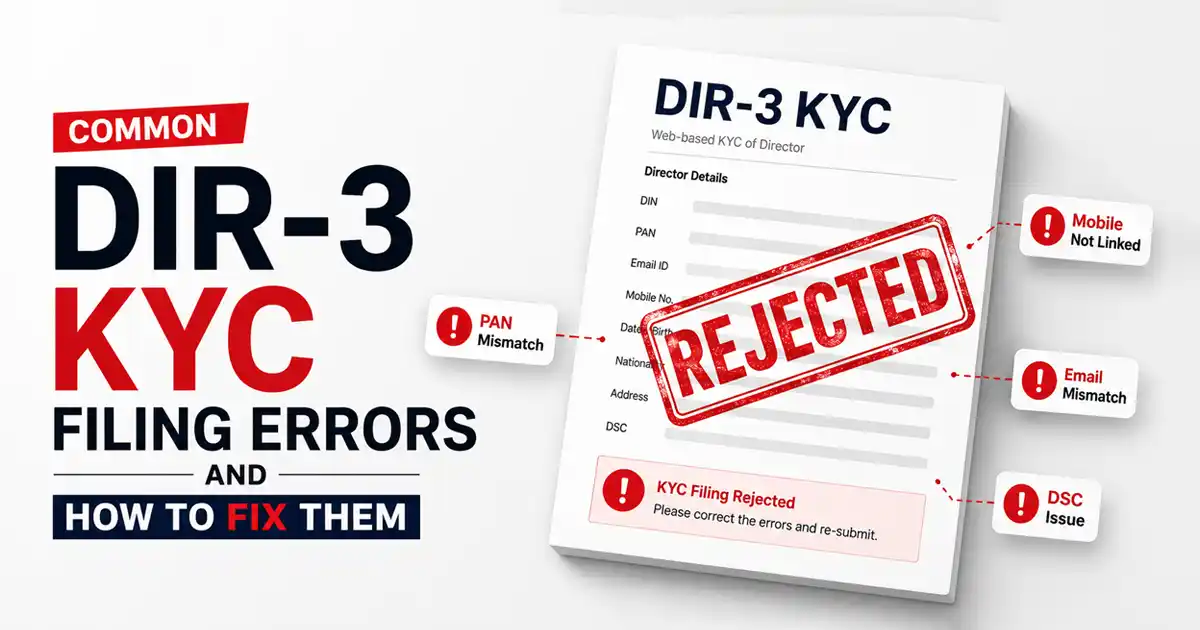
DIR-3 KYC Filing Errors: Common Mistakes & How to Fix Them
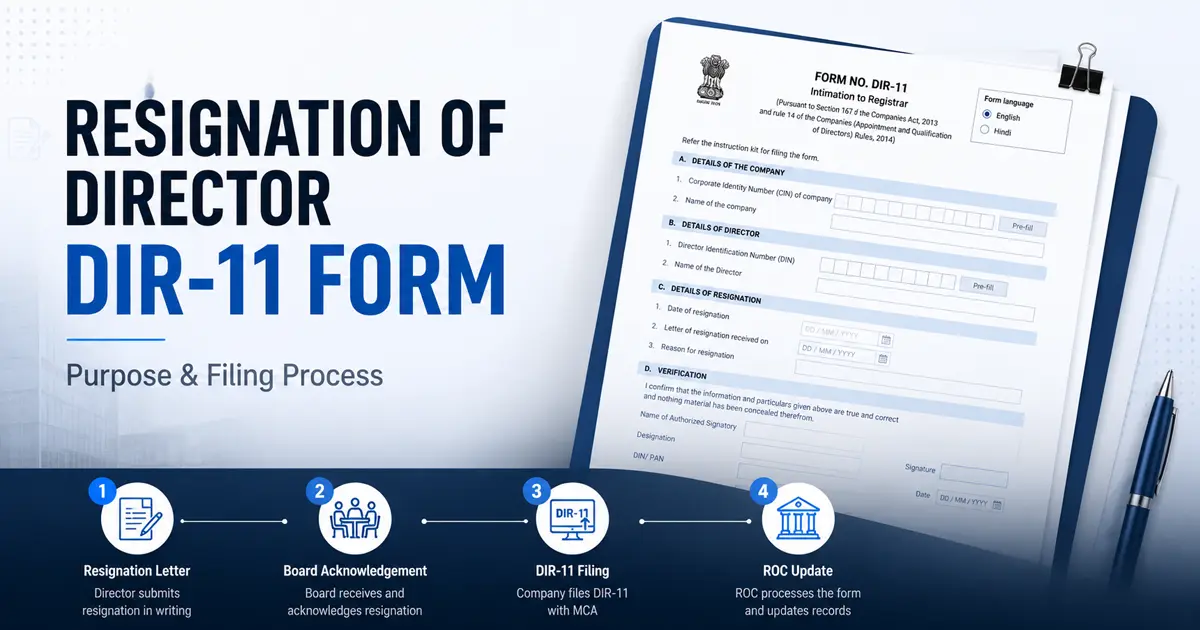
DIR-11 Form for Resignation of Director 2026: Filing Process & Procedure