

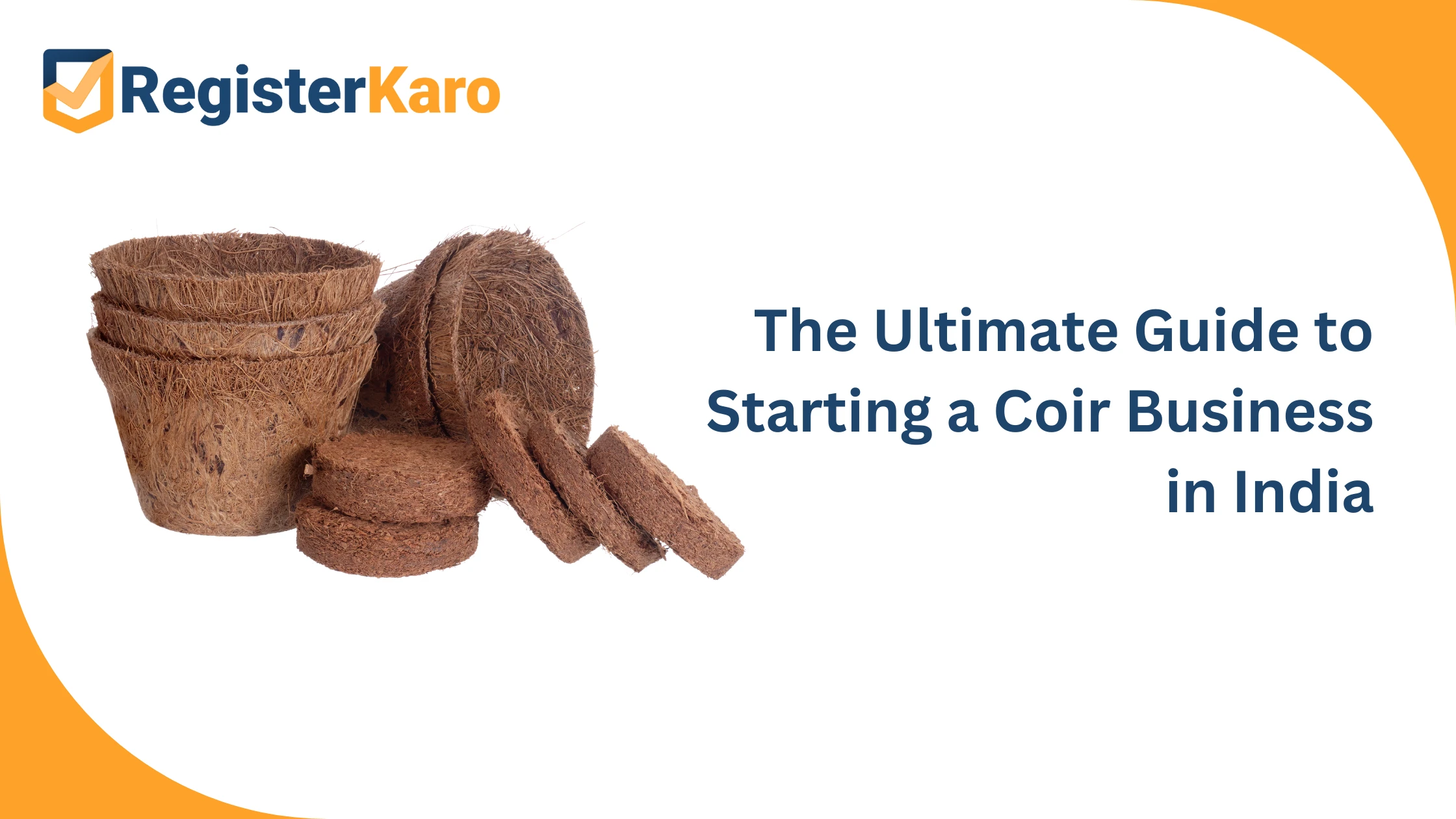
Coir is made from coconut husks. It is used to manufacture products such as mats, ropes, yarn, brushes, cocopeat, and other eco-friendly goods. India has a well-established coir sector, supported by the Coir Board under the Ministry of Micro, Small and Medium Enterprises (MSME).
The Coir Industry (Registration) Rules, 2008 provide the registration framework for coir industrial establishments. The Coir Board also offers schemes such as Coir Udyami Yojana and Coir Vikas Yojana to support eligible coir units.
Starting a coir business involves choosing the right product and arranging machinery and raw materials. You also need to complete the applicable registrations and explore available government financial assistance.
Key Takeaways
- Coir businesses can manufacture products such as coir fibre, yarn, ropes, mats, cocopeat, and geotextiles.
- Coir industrial establishments must follow the applicable Coir Board registration requirements under the Coir Industry (Registration) Rules, 2008.
- Coir Udyami Yojana (CUY) offers a credit-linked subsidy of up to 40% of the eligible project cost, subject to the scheme’s limits and conditions.
- Coir Vikas Yojana supports eligible coir units through assistance for production infrastructure and related activities.
- Udyam Registration gives eligible businesses official MSME recognition and can support access to government schemes and benefits.
- GST, local trade licences, pollution control approvals, factory-related registrations, and other compliances depend on the business activity, location, size, and applicable laws.
- Businesses planning to export coir products need to consider Importer Exporter Code (IEC) and applicable Coir Board exporter registration requirements.
What is a Coir Business?
A coir business uses coconut husks to manufacture fibre and finished products. Entrepreneurs can choose different business models based on their investment, available raw materials, machinery, and target market.
Common coir products include:
- Coir fibre: Used as a raw material for yarn, ropes, mats, and other products.
- Coir yarn: Used in mats, carpets, ropes, and geotextiles.
- Coir ropes: Used in agriculture, gardening, packaging, and other applications.
- Coir mats and carpets: Sold for homes, offices, hotels, and commercial spaces.
- Cocopeat: Used as a growing medium in horticulture and agriculture.
- Coir geotextiles: Used for soil erosion control and landscaping.
- Other coir products: Brushes, rubberised coir products, and other value-added goods.
The right product depends on raw material availability, machinery requirements, local demand, investment capacity, and potential markets.
Why Start a Coir Business in India?
India has a large coconut-growing base, which provides access to the main raw material required for coir production. The industry also supports a wide range of traditional and modern products for domestic and international markets.
Some key reasons to consider this business include:
- Raw material availability: Coconut husks are widely available in major coconut-producing regions.
- Product variety: You can manufacture fibre, yarn, mats, cocopeat, geotextiles, and other value-added products.
- Growing demand: Coir products are used in agriculture, horticulture, home furnishings, landscaping, and other industries.
- Export potential: Indian coir products have established international markets.
- Government support: The Coir Board operates schemes that provide financial and infrastructure support to eligible coir units.
- Employment opportunities: Coir manufacturing can create employment, particularly in rural and coconut-producing areas.
These factors make coir a potential business opportunity, but profitability still depends on product selection, production costs, market demand, and effective distribution.
What Licences and Registrations Are Required for a Coir Business?
The exact compliance requirements depend on the business structure, manufacturing activity, location, workforce, and whether the business sells products domestically or internationally.
Common registrations and approvals may include:
- Coir Board Registration: Required for eligible coir industrial establishments under the applicable registration framework.
- Udyam Registration: Eligible businesses can obtain MSME recognition through the Udyam portal.
- GST Registration: Required when the business meets the applicable turnover threshold or falls under compulsory-registration provisions.
- Trade Licence: May be required from the relevant local authority to operate the business.
- Pollution Control Board Consent: May apply to manufacturing units based on their activities and environmental impact.
- Factory Registration: May be required if the unit falls within the applicable factory-law requirements.
- Fire Safety Approval: May apply depending on the premises, building, and local requirements.
- IEC: An Importer Exporter Code is required for businesses undertaking exports, subject to applicable exemptions.
- Coir Board Exporter Registration: Exporters of coir products must follow the applicable Coir Board registration requirements.
Not every coir business needs all these registrations. Check the requirements applicable to your specific business and location before starting operations.
Coir Board Registration for a Coir Business
Coir businesses must follow the registration requirements prescribed under the Coir Industry (Registration) Rules, 2008. The Coir Board provides registration facilities for eligible coir industrial establishments and exporters.
The registration requirements depend on the nature of your coir activity. Common categories include:
- Industrial establishment registration: Applies to eligible establishments engaged in coir-related manufacturing activities.
- Exporter registration: Applies to businesses exporting coir fibre, yarn, or coir products.
- Registration renewal: Registered establishments and exporters must follow the applicable renewal requirements.
- Changes in ownership or possession: The rules also provide a process for reporting or registering such changes.
Businesses should identify the correct registration category before applying. The Coir Board provides the prescribed forms and procedures for these registrations.
How to Register a Coir Business With the Coir Board?
After choosing the business structure and coir activity, complete the applicable Coir Board registration. The Coir Industry (Registration) Rules, 2008 prescribe the registration framework for eligible coir industrial establishments.
Step 1: Identify the Registration Category
Determine whether you need industrial establishment registration or exporter registration based on your business activity.
Step 2: Prepare the Required Details
Keep your business, ownership, premises, machinery, and activity-related information ready. The exact documents depend on the registration category.
Step 3: Submit the Application
Complete the prescribed application form and submit it to the Coir Board through the applicable process.
Step 4: Pay the Applicable Fee
Pay the prescribed registration fee, if applicable, according to the relevant registration category and current Coir Board requirements.
Step 5: Verification and Registration
The Coir Board reviews the application and supporting information. Once the requirements are satisfied, it issues the applicable registration certificate.
The Coir Board provides separate forms for industrial establishment registration, renewal, ownership changes, and exporter registration. Always use the latest prescribed form and requirements when applying.
Udyam Registration for a Coir Business
Udyam Registration gives eligible coir businesses official MSME recognition. It can also help eligible enterprises access government schemes and other MSME benefits.
The official Udyam portal states that registration is free, paperless, based on self-declaration, and does not require renewal.
The current MSME classification is:
| Enterprise Category | Investment Limit | Annual Turnover Limit |
|---|---|---|
| Micro | Up to ₹2.5 crore | Up to ₹10 crore |
| Small | Up to ₹25 crore | Up to ₹100 crore |
| Medium | Up to ₹125 crore | Up to ₹500 crore |
The applicable classification depends on both investment in plant and machinery or equipment and annual turnover. A coir business should register under the appropriate category based on its current financial details.
Coir Udyami Yojana Subsidy for Coir Businesses
The Coir Udyami Yojana (CUY) provides credit-linked financial assistance to eligible entrepreneurs for setting up coir units. The scheme can reduce the initial funding burden for new projects.
Key funding details include:
- Maximum project cost: ₹10 lakh, plus eligible working capital.
- Government subsidy: 40% of the project cost.
- Bank finance: 55% of the project cost.
- Beneficiary contribution: 5% of the project cost.
- Working capital: Can be included up to 25% of the project cost, subject to the scheme conditions.
- Nature of support: The subsidy is linked to bank credit and is subject to the applicable eligibility and scheme requirements.
The scheme is intended to support the establishment of coir units. Applicants should verify the latest eligibility conditions and application requirements with the Coir Board before applying.
Coir Vikas Yojana for Coir Businesses
The Coir Vikas Yojana (CVY) supports the development and modernisation of coir production infrastructure. It can help eligible entrepreneurs establish new units or improve existing production facilities.
The Development of Production Infrastructure component assists eligible machinery and infrastructure costs. The assistance varies according to the type of coir unit.
For example, the Coir Board assists, subject to prescribed limits, for units such as:
- Defibering units
- Automatic spinning units
- Other eligible coir production units
The assistance can cover 25% of eligible equipment and infrastructure costs, subject to the maximum limits prescribed for the particular unit. Check the latest Coir Board guidelines before applying, as eligibility, ceilings, and conditions may vary by activity.
Machinery Required for a Coir Manufacturing Business
The machinery you need depends on the type of coir product you plan to manufacture. Start with equipment that matches your production capacity and target market.
| Coir Product or Activity | Common Machinery |
|---|---|
| Coir fibre | Defibering or decorticating machinery |
| Coir yarn | Spinning machinery |
| Coir ropes | Rope-making machinery |
| Coir mats and carpets | Looms and related equipment |
| Cocopeat | Coir pith processing equipment |
| Coir geotextiles | Weaving and related machinery |
| Finished coir products | Product-specific manufacturing equipment |
| Packaging | Weighing, packing, and sealing equipment |
You do not need all these machines for every coir business. Select equipment based on your product, production capacity, available space, labour, and budget.
Raw Materials Required for a Coir Business
Coconut husk is the primary raw material used to produce coir. Your raw material requirements will vary depending on the product you manufacture.
Common materials include:
- Coconut husks: Used to extract coir fibre and coir pith.
- Water: Required for processes such as soaking and fibre extraction.
- Dyes: Used for colouring yarn, mats, carpets, and other finished products.
- Binding materials: May be required for certain finished coir products.
- Latex or rubber: Used in rubberised coir products.
- Packaging materials: Required for packing and transporting finished products.
Setting up near coconut-producing areas can help improve access to coconut husks. It can also reduce transportation costs and support a more reliable supply chain.
Cost of Starting a Coir Business in India
The investment required depends on the product, production capacity, machinery, premises, labour, and working capital. A small coir unit will require less capital than a larger manufacturing or export-oriented setup.
Consider these major costs:
- Business setup: Entity formation and applicable registration costs.
- Premises: Rent, lease, construction, or site development costs.
- Machinery: Cost varies based on the type and capacity of the equipment.
- Raw materials: Coconut husks and other product-specific materials.
- Labour: Wages, training, and related employment costs.
- Utilities: Electricity, water, and other operating expenses.
- Packaging: Materials and equipment for packing finished products.
- Working capital: Funds required for day-to-day operations.
- Licences and approvals: Applicable government and local compliance costs.
- Marketing and distribution: Expenses for reaching customers and transporting products.
There is no single startup cost for every coir business. Prepare a project report based on your chosen product and production capacity before arranging funding.
Where Should You Set Up a Coir Business in India?
Choosing the right location can reduce production and transportation costs. It can also improve access to raw materials and workers.
Consider these factors when selecting a location:
- Coconut availability: Choose an area with reliable access to coconut husks.
- Transport connectivity: Good roads and logistics help move raw materials and finished products.
- Electricity and water: Manufacturing units need reliable access to essential utilities.
- Labour availability: Consider the availability of workers with relevant skills or training potential.
- Market access: Proximity to customers, distributors, ports, or major cities can support sales and distribution.
- Land and operating costs: Compare rent, land prices, utilities, and other local expenses.
- Government support: Check whether your location qualifies for applicable state or Coir Board incentives.
Coconut-producing states can offer better access to raw materials. However, the best location ultimately depends on your product, supply chain, production requirements, and target market.
Exporting Coir Products From India
India exports a wide range of coir products to international markets. Businesses planning to export should complete the required registrations and understand the applicable customs and shipping requirements.
Key requirements include:
- Importer Exporter Code (IEC): Obtain an IEC from the Directorate General of Foreign Trade (DGFT) before undertaking exports, subject to applicable exemptions.
- Coir Board registration: Exporters of coir fibre, yarn, and coir products must follow the applicable Coir Board exporter registration requirements.
- Registration-Cum-Membership Certificate (RCMC): Obtain an RCMC where applicable for export-related benefits and procedures.
- Export documents: Maintain invoices, packing lists, shipping documents, and other documents required for the specific shipment.
- Product requirements: Check the destination country’s quality, packaging, labelling, and other import requirements before shipping.
Exporters should verify the latest DGFT and Coir Board requirements before starting international sales.
Marketing and Sales Channels For a Coir Business
A coir business needs reliable sales channels to turn production into consistent revenue. Choose channels based on your product, target customers, and production capacity.
- Local retailers: Supply mats, ropes, brushes, and other products to nearby stores.
- Home and furnishing businesses: Partner with furniture stores, interior businesses, hotels, and resorts.
- Agriculture and horticulture buyers: Sell cocopeat, coir pith, and related products to nurseries, farmers, and landscaping businesses.
- Institutional buyers: Approach businesses, contractors, and organisations that purchase coir products in bulk.
- E-commerce platforms: Sell finished products directly to customers through online marketplaces and your own website.
- Distributors: Work with distributors to reach wider domestic markets without managing every sale directly.
- Export markets: Target international buyers after completing the applicable export registrations and requirements.
- Coir Board events: Explore trade fairs, buyer-seller meets, and other market-promotion opportunities supported by the Coir Board.
Focus on consistent product quality, competitive pricing, reliable delivery, and repeat customers when building your sales network.
