NSDC Registration Online in India
Become a Skill India training partner with simple NSDC registration. Build credibility, scale nationally, and get complete support to grow your training institute under government-recognized programs.
 Accreditation & Compliance AssistancePMKVY & Skill India Affiliation SupportAccess to Government Funding & SchemesGuidance on Documentation & EligibilityTrusted by 10,000+ Training Providers

 What Sets Us ApartWhat Sets Us Apart
What is NSDC?
NSDC stands for National Skill Development Corporation, a public-private partnership organization under the Ministry of Skill Development and Entrepreneurship (MSDE), Government of India.
Its primary goal is to promote skill development by supporting private sector training providers. This enables them to deliver high-quality vocational training to India’s workforce. NSDC funds, accredits, and monitors training centers, helping them align with national standards like NSQF (National Skills Qualification Framework).
NSDC also plays a key role in implementing flagship schemes like:
- Skill India Mission.
- Pradhan Mantri Kaushal Vikas Yojana (PMKVY).
- Sector Skill Councils (SSCs) coordination.
How NSDC Works: Key Functions and a PPP Model
Here’s how NSDC works under the Public-Private Partnership (PPP) model:
- Promote and Finance Skill Training: Support the creation and expansion of vocational training centers through funding and capacity building, primarily via private partners.
- Public-Private Partnership Model: Operate under a 51:49 PPP structure, combining private innovation with government oversight.
- Curriculum and Standardization: Develop industry-aligned training curricula with Sector Skill Councils (SSCs) and ensure standardization through the NSQF.
- Quality Assurance and Certification: Monitor training quality via the SMART portal and audits, and facilitate uniform certification of skilled individuals.
- Scheme Implementation: Act as the implementing agency for flagship government schemes like PMKVY, UDAAN, and NAPS.
- Employment Linkages and Outcome Monitoring: Strengthen industry connections to enhance job placements and monitor training outcomes based on performance metrics.
What are the Benefits of NSDC Registration?
Getting an NSDC registration gives training providers several key advantages:
1. Credibility with Government Recognition
When you achieve NSDC registration, your organization gains significant credibility and trust. It signifies that your training programs meet government-approved standards and contribute to the national Skill India Mission.
2. Financial Support and Funding Opportunities
NSDC provides various forms of financial assistance and funding opportunities to eligible training partners. This support can help you scale your operations, invest in better infrastructure, and develop innovative training methodologies.
3. Part of National Missions like PMKVY
As an NSDC-affiliated partner, you become an integral part of national flagship programs like the Pradhan Mantri Kaushal Vikas Yojana (PMKVY). These missions are designed to provide free skill training to a large number of youth.
Your participation allows you to contribute directly to these initiatives, gain government support, and reach a wider audience.
4. World-Class Training with Standardized Curriculum
NSDC works closely with Sector Skill Councils to develop industry-aligned, standardized curricula. Obtaining NSDC registration ensures that your trainees receive education and skills that are relevant to current market demands.
5. Expand Reach to International Job Markets
Through NSDC International Limited, a 100% subsidiary, NSDC facilitates access to international job opportunities for skilled Indian youth. As an NSDC partner, your trainees may get the chance to connect with overseas employers, potentially expanding their career horizons beyond national borders.
Eligibility for NSDC Registration
Before you begin your NSDC online registration journey, it's essential to understand the eligibility criteria. NSDC welcomes various types of entities to partner in its mission.
| Eligibility Criteria | Details |
| Type of Organization | Private training providers, NGOs, educational institutions, and corporate training centers |
| Infrastructure | Must have adequate training infrastructure as per NSDC norms |
| Trainers | Qualified and certified trainers aligned with NSQF standards |
| Course Offerings | Vocational courses aligned with Sector Skill Councils (SSCs) and NSQF |
| Compliance | Must comply with NSDC quality standards and reporting requirements |
| Legal Status | Registered as a legal entity under Indian laws (e.g., Pvt Ltd, Trust, Society) |
| Financial Capability | Ability to sustain operations and manage funds efficiently |
| Geographic Reach | Willingness to operate within the geographical areas specified by NSDC |
Funded vs. Non-Funded Partnership
NSDC offers two primary partnership models: Funded and Non-Funded.
| Aspect | Funded Partnership | Non-Funded Partnership |
| Financial Support | Receives funding or grants from NSDC | No direct funding provided by NSDC |
| Infrastructure Setup | Funding helps build or upgrade training infrastructure | Must arrange infrastructure independently |
| Reporting Requirements | Regular, detailed reporting and compliance are mandatory | Reporting as per the agreement, but less stringent |
| Monitoring & Evaluation | Subject to strict audits and performance evaluation | Monitored but with comparatively relaxed oversight |
| Risk & Liability | NSDC shares some financial risk with the partner | The partner assumes full financial responsibility |
| Scope of Programs | Typically involved in government-sponsored skill schemes | May offer skill development programs independently |
| Eligibility Criteria | Must meet strict eligibility and capacity requirements | More flexible eligibility standards |
| Revenue Model | Mostly based on funding and outcome-based payments | Revenue generated through course fees and other means |
Documents Required for NSDC Affiliation
To ensure a smooth NSDC registration process, prepare a comprehensive set of documents. Here’s a general overview:
1. Legal and Business Documents
You will need the following foundational legal documents for your entity:
- Certificate of Incorporation/Registration (for companies, LLPs, NGOs, Trusts, Societies)
- Memorandum of Association (MoA) and Articles of Association (AoA)
- PAN Card of the organization
- GST Certificate.
2. Financial Documents
NSDC requires financial documentation to assess your organization's stability and capacity:
- Audited Financial Statements (Balance Sheets, Profit & Loss Statements) for the last three years.
- Income Tax Returns (ITR) for recent financial years.
- Bank statements.
3. Operational and Infrastructure Documents
These documents demonstrate your readiness to deliver quality training:
- Proof of ownership or lease agreement for the training centre premises.
- Detailed layout plan of the training centre, including classrooms, labs, and other facilities.
- List of training equipment and tools available.
- Resumes and qualification proofs of trainers and other staff.
- Affidavits and declarations as required by NSDC.
What is the NSDC Affiliation Process?
The NSDC affiliation process involves several distinct steps to ensure quality and compliance. Understanding each stage will help you do your NSDC partner registration smoothly.
Step 1: Training Provider (TP) Registration on the Skill India Portal
- Initiate Registration: Your organization, as a prospective Training Provider (TP), must first register on the Skill India Portal (SIP), now often referred to as the Skill India Digital Hub (SIDH). This is the central online platform for all skill development initiatives.
- Create Account: You'll create an account on the portal, providing basic organizational information.
- Fill NSDC Registration Form: Complete the initial NSDC registration form with details about your entity, including businesses established through Pvt limited company registration, LLPs, NGOs, Trusts, and Societies.
- Initial Document Submission: Upload foundational documents like your PAN card, certificate of incorporation/registration, and any other initial supporting papers.
- Desktop Assessment (TP): An NSDC-appointed inspection agency will conduct a preliminary desktop assessment of your TP registration to ensure basic compliance. Once "Deemed Ready," you can proceed.
Step 2: Training Centre (TC) Creation and CAAF Submission
- Create TC Profile(s): Once your TP registration is approved, you'll create detailed profiles for each Training Centre (TC) you intend to operate on the Skill India Portal.
- Submit CAAF: For each TC, you must complete and submit the Centre Accreditation Application Form (CAAF). This form requires:
- Detailed information about your proposed training infrastructure (classrooms, labs, equipment).
- Qualifications and resumes of your trainers and support staff.
- Specific skill development programs (job roles) you plan to offer, aligned with National Occupational Standards (NOS) and Qualification Packs (QPs).
- Desktop Assessment (TC): An independent agency will then conduct a desktop assessment of each submitted CAAF, thoroughly reviewing the provided information and documents to ensure they meet initial eligibility and quality standards.
Step 3: Scheme Application and Physical Inspection
- Scheme Application: Upon successful desktop assessment of your TC(s), you can apply for specific skill development schemes (e.g., PMKVY, fee-based programs, or state-funded schemes) through the Skill India Portal.
- Recommendation Letter (if applicable):
- For government-funded schemes (Central or State), you'll typically need a recommendation letter from the respective government scheme implementing agency.
- For fee-based (SSC) schemes, you will apply for affiliation, and the relevant Sector Skill Council (SSC) will provide a recommendation letter after their due diligence, provided you fulfill their affiliation norms.
- Physical Inspection: Following the scheme application, a critical physical inspection of your proposed training centre(s) will be conducted by an independent audit agency nominated by MSDE (through NSDC). They will verify:
- Physical infrastructure and facilities.
- Availability and functionality of required equipment and tools.
- Actual qualifications of trainers and their adherence to trainer standards.
- Overall readiness of your centre to deliver quality training as per NSDC guidelines.
Step 4: Training Centre Accreditation
- Report Review: After the physical inspection, the recommendations from the independent inspection agency are shared with the relevant Sector Skill Council (SSC).
- Accreditation Decision: The SSC reviews the inspection report and, if affirmative, grants the training centre either full accreditation or conditional accreditation status. This signifies that your centre meets the quality benchmarks for delivering vocational training.
Step 5: Final Affiliation and Certificate Registration
- Job Role Affiliation: Once your training centre receives accreditation from the SSC, it can apply for affiliation for specific NCVET (National Council for Vocational Education and Training) approved job roles. This affiliation is often automatically granted once accreditation is in place.
- Partnership Certificate: After completing all steps, your organization will be recognized as an NSDC-affiliated Training Partner. You will receive an official NSDC registration certificate and a Partnership Certificate.
This allows you to commence delivering training programs under the prestigious Skill India Mission. You are then authorized to use NSDC branding and participate in national skill development initiatives.
Costs of NSDC Registration
NSDC affiliation fees are crucial when planning your partnership. These costs can vary based on the type of partnership and the schemes you apply for.
| Fee Type | Description | Approximate Cost (INR) |
| Proposal Evaluation Fee | Non-refundable fee for evaluating initial proposals, mainly for non-funded partnerships. Covers admin costs. | Rs. 5,000 – Rs. 10,000 |
| General Processing Fee | Fee for overall NSDC partner registration and affiliation process, including administrative and assessment tasks. | Rs. 10,000 – Rs. 20,000 |
| Scheme-Specific Fees | Additional fees for applying to government-funded schemes like PMKVY, charged per candidate or batch. | Varies by scheme, approx. Rs. 500 – Rs. 2,000 per candidate or batch |
| Renewal Fee | Fee to renew NSDC affiliation annually to maintain partnership and accreditation. | Rs. 5,000 – Rs. 10,000 |
| Enabling Services Cost | Annual fee for non-funded partners covering services like co-branded certificates, skill loans facilitation, and market access. | Fixed or variable; approx. Rs. 10,000+ annually, depending on the candidates trained |
Note: Costs are approximate and may vary based on NSDC guidelines, type of partnership, location, and other factors. Consult an NSDC affiliation expert for the latest fees.
NSDC Registration Certificate
The NSDC Registration Certificate is an official recognition issued after successful registration and approval by the National Skill Development Corporation. It confirms your status as an authorized training provider eligible to participate in government-backed programs like Skill India and PMKVY.
The certificate typically includes your training center name, registration number, affiliated sector skill council (SSC), and validity period. It acts as a gateway to government tenders, funding opportunities, and standardized course delivery under NSQF guidelines.
How to Download the NSDC Registration Certificate?
- Visit the NSDC Partner Portal: Go to the official NSDC Partner or SMART portal where training partners are registered.
- Log in to Your Dashboard: Use your registered username and password to securely access your training partner account.
- Navigate to ‘Documents’ or ‘Certificates’: Go to the section where official NSDC approval and affiliation documents are made available.
- Download the Certificate: Click on the available certificate link to download it in PDF format for print or digital use.
How to Check NSDC Registration Status Online?
- Visit the NSDC Partner Portal: Open the official NSDC or SMART portal in your browser.
- Click on ‘Check Application Status’: Locate the status check option on the homepage or the login dashboard area.
- Enter Application Reference Number or Registered Email: Fill in your registered email or application ID and complete the CAPTCHA for verification.
- View Your Status: The portal will display your application progress, such as "Under Review," "Approved," or "Action Required."
Connect with RegisterKaro and let our experts handle the legal hassle while you grow your business.
Frequently Asked Questions (FAQs)
What is the full form of NSDC?
NSDC stands for the National Skill Development Corporation. It's a unique Public-Private Partnership (PPP) under the Ministry of Skill Development and Entrepreneurship, focused on boosting vocational training in India. Its core mission is to bridge the skill gap and establish India as a global skill hub.
Is an NSDC certificate valid for government jobs?
Yes, NSDC certificates are recognized by the Government of India. They are valuable for various government jobs, especially those requiring vocational or technical skills aligned with the National Skills Qualification Framework (NSQF), ensuring national recognition and industry relevance.
Are all NSDC courses free?
No, not all NSDC courses are free. Government-funded schemes like PMKVY offer free training for eligible candidates, with costs subsidized. However, many market-led courses offered by private training partners, while quality-aligned, typically require fee payments.
How long does the NSDC affiliation process take?
The NSDC affiliation process generally takes 4 to 8 weeks, but it can be longer. This duration depends on the completeness of your documentation, the promptness of your responses, and the readiness of your training infrastructure.
What is a Sector Skill Council (SSC) and what is its role?
A Sector Skill Council (SSC) is an industry-led body promoted by NSDC, dedicated to a specific economic sector. SSCs define National Occupational Standards (NOS), develop industry-relevant curricula, conduct assessments, and certify trainees, ensuring that training meets real job market needs.
Can a newly formed NGO apply for NSDC partnership?
Yes, a newly registered NGO can potentially apply for NSDC partnership, especially for non-funded initiatives. While experience is often preferred for funded projects, a clear mission, basic infrastructure, a strong team, and demonstrated capacity for quality training can help a new NGO qualify.
What is the difference between a Training Partner (TP) and a Training Centre (TC)?
A Training Partner (TP) is the legal entity that affiliates with NSDC and is responsible for overall program management. A Training Centre (TC) is the location operated by the TP where the skill development training takes place, and each TC undergoes separate accreditation.
Do I need to have my building to start a training centre?
No, owning a building is not mandatory for starting an NSDC-affiliated training centre. You can operate from a rented or leased space, provided it meets NSDC's infrastructure, safety, and accessibility standards, and you have a valid rental or lease agreement.
What is the minimum placement guarantee I need to provide?
While not a universal fixed percentage for all partnerships, NSDC strongly encourages high placement rates, especially for government-funded schemes like PMKVY. A minimum placement rate of 70% for certified candidates is often expected.
Can I get NSDC affiliation for a single course?
Yes, you can apply for NSDC affiliation for a single course or multiple courses, based on your expertise. The chosen course must align with an NSQF-approved Qualification Pack (QP) by the Skill Council (SSC). Your centre must meet all necessary infrastructure and trainer requirements for that specific program.
What is the Skill India Portal (SIP/SIDH)?
The Skill India Portal (SIP), now known as the Skill India Digital Hub (SIDH), is a unified digital platform by the Ministry of Skill Development and Entrepreneurship. It facilitates training partner registration, course monitoring, and connects all stakeholders in the skill ecosystem.
How can I find international job opportunities through NSDC?
NSDC promotes international job opportunities via NSDC International Limited. You can find them through the Skill India International initiative, specialized India International Skill Centres (IISCs) offering tailored training, and by checking the NSDC International website and the Skill India Digital Hub for listings and recruitment drives.

Reviewed by
Joel DsouzaJoel Dsouza is a Chartered Accountant (CA) and compliance expert with over 7 years of hands-on experience in company registration, tax structuring, GST, ROC filings, and MCA compliance. As a qualified member of the Institute of Chartered Accountants of India (ICAI) and Co-Founder at RegisterKaro, he has personally advised more than 1,000 startups and SMEs across India, helping founders navigate incorporation, regulatory frameworks, and financial planning from Day 1. With deep expertise across all three levels of Finance and Portfolio Management, Joel is committed to promoting financial literacy and simplifying India's startup ecosystem through clear, actionable guidance that entrepreneurs can act on immediately.
Why Choose RegisterKaro for the NSDC Registration Services?
The NSDC online registration process has many steps and can be complex. We simplify it for you.
- Expert Guidance: Our experts know the NSDC guidelines, eligibility criteria, and application process inside and out.
- Error-Free Documentation and Application: At RegisterKaro, we specialize in preparing and reviewing all your documents, ensuring an error-free NSDC registration form submission and a smooth process.
- Professional Liaison with Government Bodies: We act as a professional liaison between your organization and NSDC, handling communications, addressing queries, and ensuring that your application progresses efficiently.
- Complete End-to-End Support: From the initial consultation to the final NSDC certificate registration and affiliation, we offer complete support.
What Our Clients Say
View All
Invensun Packaging S...
 Verified
I had a great experience with Register Karo during the incorporation of my LLP, 'Invensun Packaging Solutions'. I would specifically like to thank Fah... Read more

ARSHAD ALI BAIG
VerifiedIt was really such a good experience with RegisterKaro I har so much doubt firstly and their executives explained me everything well Im also very worr... Read more

Gaurav Sharma
VerifiedThe experience was amazing, as Muskan facilitated every process of application very smoothly. I recommend her for the prospective endeavours in Regist... Read more

AYUSH SINGH
VerifiedSneha and the RegisterKaro team were extremely professional, responsive, and supportive throughout the process, Their guidance was clear, timely, and... Read more

Aman kumar
VerifiedExcellent support from RegisterKaro throughout the process. They explained everything clearly and handled the work in a timely and professional manner... Read more

Nitesh Choubey
VerifiedSimple Process, Transparent Pricing, Easy portal, and a very supportive Suhana, she helped from start to finish and help me get my company registered.

Aryan Agarwal
VerifiedRecently my PT registration got completed by RegisterKaro team. I am happy they completed the process smoothly. Each and every detail was conveyed to... Read more

Riyaz Salim
VerifiedOverall experience is excellent. Support from Tripti and Mananreet is outstanding. One of the suggestion I have is to have a proper project updates or... Read more

Shivani Nagwanshi
VerifiedI really appreciate register karo because I am new in company incorporation process I don't know the procedure but register karo help me a lot and mak... Read more

Yogesh Singh
VerifiedAmazing customer support and quick response. They handled all the paperwork professionally and made the entire registration process very easy. Thank y... Read more
Related Blogs
View All
Compliance Calendar for Producer Company in India
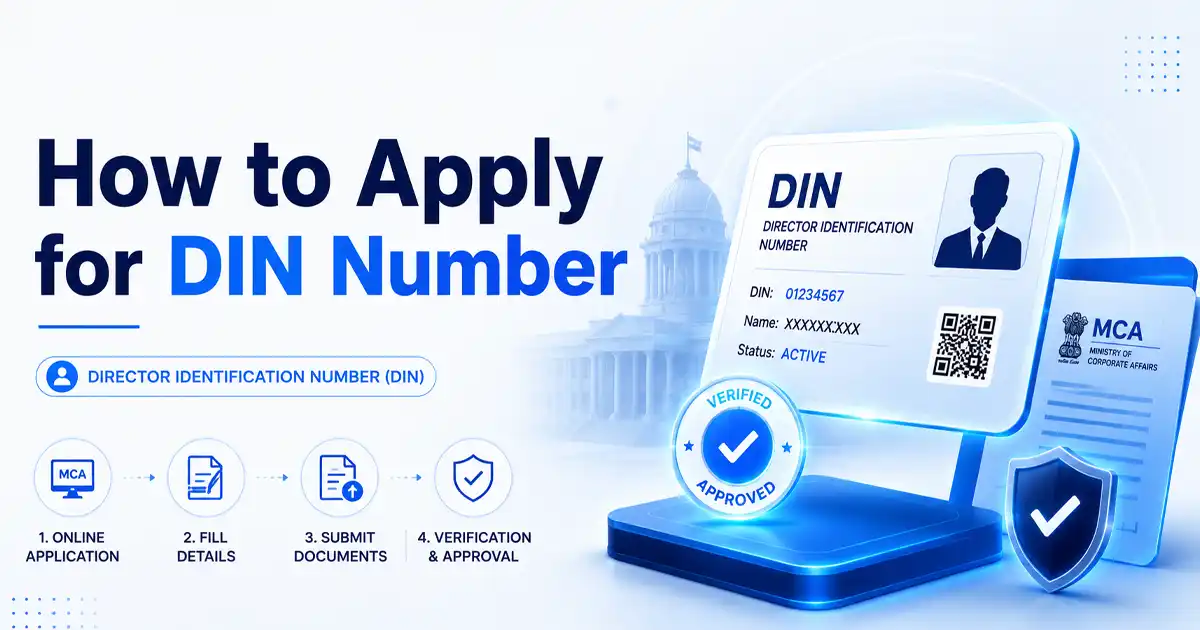
How to Apply for DIN Number: DIR-3 Process & SPICe+ for Directors
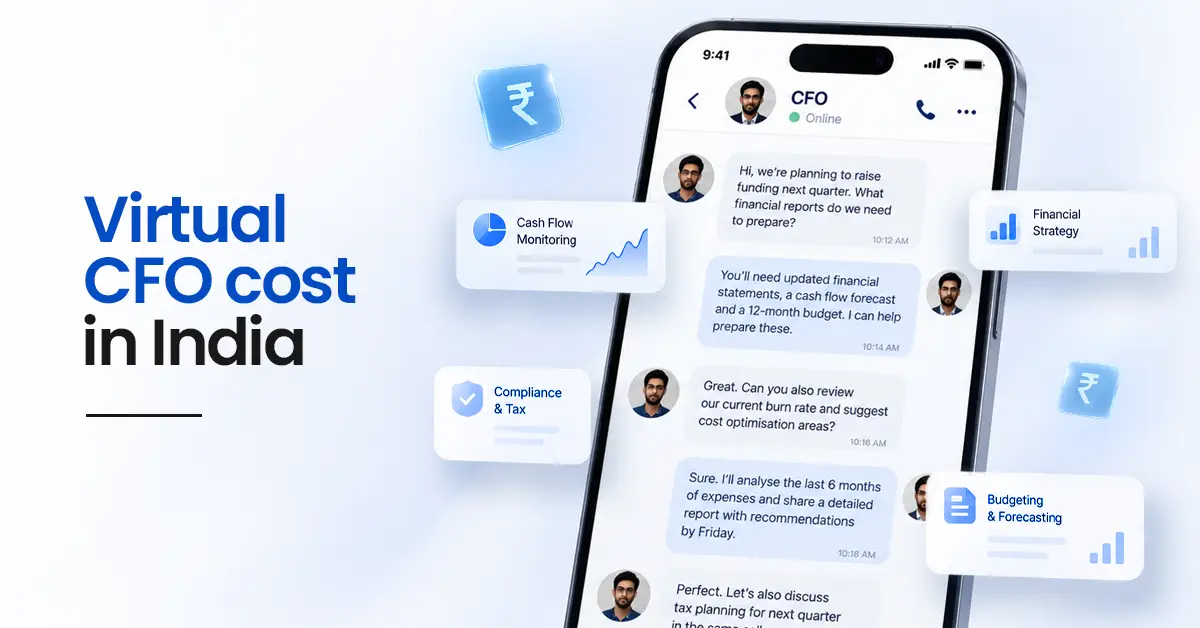
Virtual CFO Cost in India for Startups: Fees & Pricing
Accounting Outsourcing Cost in India: Complete Pricing Guide
Documents Required for GST Registration in India (Checklist)

How to Start a Scrap Business in India: Setup & Profit
How to Register a Media Company in India: Process & Licenses
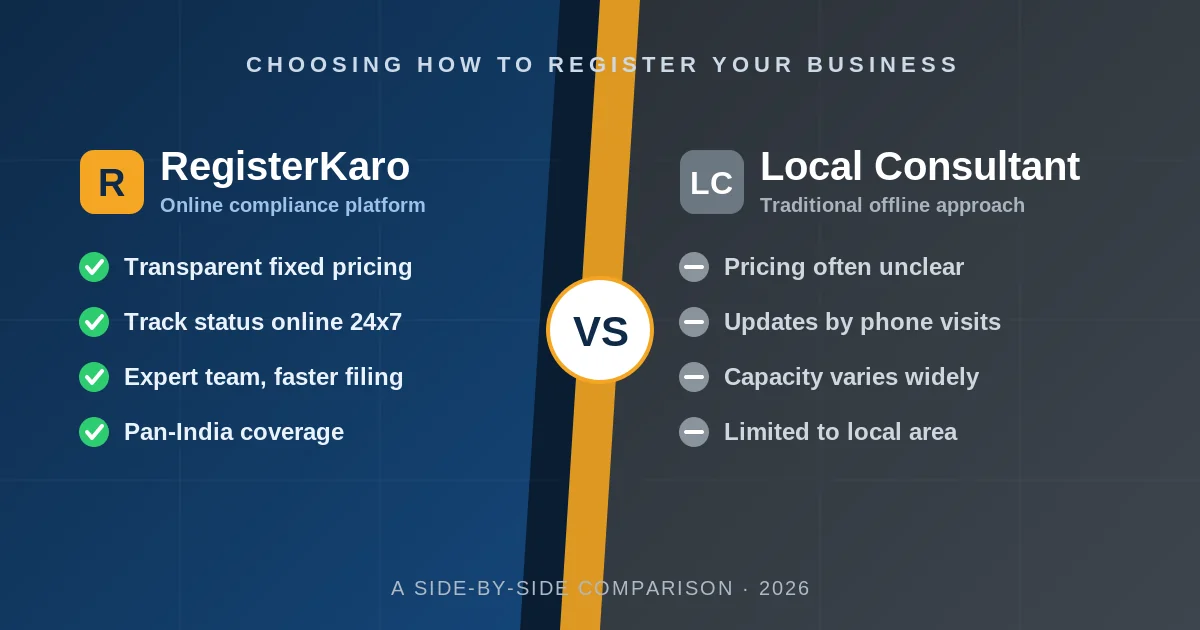
RegisterKaro vs Local Consultant: Which Compliance Partner Should You Pick?

Fees for Registration of a Private Limited Company in India

How to Start a Food Truck Business in India: Licenses & Cost