FCRA Registration Online for NGOs & Trusts
Get FCRA registration online to legally accept foreign donations for your NGO or trust. Ensure smooth MHA compliance with expert assistance through the required forms, documentation, and approval process.
 Compliant & Streamlined FCRA ApplicationFull MHA Compliance SupportLegally Accept Foreign DonationsForm FC-3A, FC-3B & FC-6 AssistanceNo Hidden Charges, Transparent Pricing

 What Sets Us ApartWhat Sets Us Apart
What is FCRA Registration?
FCRA registration is a mandatory license granted by the Ministry of Home Affairs (MHA) under the Foreign Contribution (Regulation) Act, 2010. It is a legal prerequisite for any 'person' in India, including individuals, associations, or companies, to accept and utilize foreign contributions for their objectives. This system regulates the flow of foreign funds to Indian entities, preventing misuse and ensuring their use aligns with national interests.
Without proper FCRA registration, an organization cannot receive foreign donations. This system aims to prevent the misuse of foreign funds and ensure their utilization aligns with national interests, while also providing transparency and accountability in the social sector.
FCRA Act: Legal Basis for Registration
The Foreign Contribution (Regulation) Act, 2010 (FCRA, 2010), and its subsequent amendments, have established a strict framework for foreign funds.
- It replaced the earlier FCRA, 1976, with stricter regulations on the receipt and use of foreign funds.
- The Act applies to individuals, associations, and companies receiving foreign contributions.
- Key amendments, including the FCRA Amendment Act, 2020, and the Amendment Rules, 2025, have tightened compliance.
- Changes affect eligibility criteria, fund utilization, designated bank accounts, and reporting obligations.
- Understanding and complying with these updates is essential for securing and maintaining FCRA registration.
Types of FCRA Registration
There are primarily two types of FCRA registration that an organization can apply for:
- FCRA Registration (Regular): This option suits organizations that have been actively engaged in social work for a minimum of three years. They must also have spent at least Rs. 15 lakhs on their core activities (excluding administrative expenses) in the last three financial years. This grants a five-year validity for receiving foreign contributions for a broad range of approved activities.
- Prior Permission (PP): This is ideal for newly registered organizations or those that do not meet the three-year activity and expenditure criteria for regular registration. Prior Permission is granted for receiving a specific amount from a specific foreign donor for a specific project or purpose. It's a one-time approval for a defined period.
Benefits of FCRA Registration
Obtaining FCRA registration offers numerous significant benefits for NGOs and Trusts striving to make a difference:
- Legal Acceptance of Foreign Funds: This is the most crucial benefit, allowing your organization to receive vital foreign contributions to fund your social projects.
- Enhanced Credibility and Trust: An FCRA registration certificate signifies government recognition and adherence to strict regulatory standards. Boosting your organization's credibility among international donors, government bodies, and the public.
- Access to a Wider Funding Pool: Many international donors and funding agencies specifically require Indian recipient organizations to have valid FCRA registration. This opens up a much broader spectrum of potential funding sources.
- Participation in National Development: With access to foreign funds, your organization can scale its impact and contribute to India's social and economic development goals.
- Assurance for Donors: For foreign donors, your FCRA registration provides assurance that their contribution is being made to an entity that is scrutinized and compliant with Indian law.
Eligibility Criteria for FCRA Registration
To successfully navigate the FCRA registration process, your organization must meet specific eligibility criteria set by the Ministry of Home Affairs:
- Registered Entity: The applicant must be a legally registered entity, such as a Trust under the Indian Trusts Act, 1882; a Society under the Societies Registration Act, 1860; or a Section 8 Company incorporated under the Companies Act, 2013.
- Definite Cultural, Economic, Educational, Religious, or Social Program: Your organization must have clearly defined objectives and ongoing activities in one or more of these areas.
- Minimum Three Years of Active Existence (for Regular FCRA): For regular FCRA registration, the organization must have been in existence and actively engaged in its chosen field for at least three years immediately preceding the date of application.
- Minimum Expenditure (for Regular FCRA): For regular FCRA registration, the organization should have spent a minimum of Rs. 15,00,000 over the last three financial years on its core activities, excluding administrative expenses.
Note: some sources may refer to Rs. 10 Lakhs, but Rs. 15 Lakhs is the generally cited higher benchmark for strong applications.
- No Prohibited Persons: The organization's office bearers, directors, or key functionaries must not fall under the categories of persons prohibited from receiving foreign contributions under Section 3 of the FCRA Act (e.g., public servants, members of legislatures, political parties, etc.).
- Dedicated FCRA Bank Account: The organization must open a designated FCRA account with the State Bank of India, Sansad Marg Branch, New Delhi, for receiving foreign contributions. Utilization accounts can be opened in other scheduled banks.
- Compliance with All Laws: The organization must have a good track record of compliance with all other relevant laws and regulations in India.
Documents Checklist Required for FCRA Registration
A comprehensive set of documents is crucial for a successful FCRA registration application. Here’s a general checklist:
| Document Name | Description |
| Registration Certificate/Trust Deed/MoA & AoA | Self-certified copy of the NGO’s legal registration document (e.g., Society, Trust, or Section 8 Company registration). |
| PAN Card | Copy of the organization’s Permanent Account Number (PAN). |
| Aadhaar Card | Aadhaar details of all key functionaries (President, Secretary, Treasurer, etc.); Passport/OCI card if any functionary is a foreign national. |
| Activity Report | Detailed report of the organization’s activities over the past 3 years (required for regular FCRA registration). |
| Audited Financial Statements | Audited Balance Sheet, Income & Expenditure, and Receipt & Payment Account for the last 3 financial years, certified by a Chartered Accountant. |
| FCRA Designated Bank Account Details | Details of the SBI account (Sansad Marg Branch, New Delhi) opened for foreign contribution as per the latest FCRA rules. |
| Board Resolution | Resolution passed by the governing body authorizing the Chief Functionary to apply for FCRA registration. |
| Darpan ID (NITI Aayog) | Valid Darpan ID from the NGO Darpan portal (recommended for smoother application, though not mandatory). |
| Justification Note | Detailed note explaining the NGO’s area of work, target beneficiaries, and purpose for receiving foreign funds. |
| Signature and Seal | Digital signature of the Chief Functionary and the official seal of the organization for submission through the online FCRA portal. |
Step-by-Step FCRA Registration Process
Applying for FCRA registration online involves a systematic series of steps on the Ministry of Home Affairs' FCRA portal.
Step 1: Check Eligibility
Ensure your NGO is legally registered as a Trust, Society, or Section 8 Company. For regular FCRA registration, the organization must have completed at least 3 years of charitable activities and have a proven track record of community service.
Step 2: Get NGO Darpan ID (Highly Recommended)
Register your organization on the NGO Darpan portal managed by NITI Aayog to obtain a Darpan ID. While not mandatory, it’s often required by ministries and speeds up FCRA approvals.
Step 3: Open a Designated FCRA SBI Bank Account
Open a bank account in the name of your organization exclusively at SBI, Sansad Marg Branch, New Delhi. This account is mandatory to receive foreign contributions under FCRA 2010.
Step 4: Prepare Required Documents
Gather all required documents (refer to the checklist section above for more details), including:
- Registration certificate or Trust Deed
- PAN card of the NGO
- Aadhaar of key office bearers
- Last 3 years’ audited financials
- Activity report
- Board resolution
- Justification note for foreign funds.
Step 5: Register on the FCRA Online Portal
Go to the official FCRA portal. Create a user login and access the Form FC-3A (Fresh Registration) or FC-3B (Prior Permission) depending on your situation.
Step 6: Fill the Application Form Carefully
Enter complete and accurate information about your NGO, office bearers, activities, fund usage plan, and beneficiaries. Ensure the information matches your documents.
Step 7: Upload Documents and Digital Signature
Upload scanned copies of the required documents in PDF format. The Chief Functionary must sign the application digitally using a valid DSC (Digital Signature Certificate).
Step 8: Pay the Application Fee Online
- Rs. 10,000 for FCRA Registration
- Rs. 5,000 for Prior Permission.
Make payment through the online payment gateway on the portal.
Step 9: Submit Application and Acknowledge Receipt
Once all details are filled and documents uploaded, apply. Download the acknowledgment receipt for tracking and future reference.
Step 10: Respond to Clarifications (If Any)
The MHA may raise queries. Regularly check your portal login for messages. Reply promptly and provide any additional documents or clarifications requested.
Step 11: Receive FCRA Certificate
If approved, you’ll receive the FCRA Registration Certificate via email. It will also be downloadable from your FCRA account. Your NGO is now authorized to legally receive foreign funds.
FCRA Registration Fees & Penalties
Understanding the FCRA registration fees and potential penalties is crucial for compliance.
Registration Costs
| Type | Fee Amount | Details |
| Fresh FCRA Registration | Rs. 10,000 | For NGOs applying for initial registration (Form FC-3A) |
| Prior Permission (PP) Application | Rs. 5,000 | For one-time foreign contribution approval (Form FC-3B) |
| FCRA Renewal Application | Rs. 5,000 | Renewal every 5 years, apply 6 months before expiry |
FCRA Penalties
| Type of Penalty | Penalty Amount | Details |
| Late Renewal Penalty | Rs. 5,000 to Rs. 50,000 (case-wise) | For filing renewal after EC expiry |
| Compounding of Offences | Rs. 1,00,000 to Rs. 10,00,000 | For violations like fund misuse or delayed filings |
| Late Filing of Annual Returns (Form FC-4) | Rs. 1,000 per day (max Rs. 1,00,000) | Delay in submitting annual returns beyond the deadline |
| Accepting Foreign Funds Without FCRA | Legal action & cancellation | A criminal offence may result in cancellation and prosecution |
FCRA Registration Validity and Renewal
FCRA registration must be renewed promptly to remain valid and continue legally receiving foreign contributions.
| Aspect | Details |
| Validity Period | 5 years from the date of registration |
| Renewal Timeline | Renewal application must be submitted at least 6 months before expiry |
| Renewal Process | Submit a renewal application online through the FCRA portal with updated documents |
| Consequences of Non-Renewal | Registration becomes invalid; the NGO cannot receive foreign funds legally |
| Extension of Validity | No automatic extension; must reapply if registration expires |
| Documents Required for Renewal | Updated audited financials, activity reports, and other compliance documents |
Note: NGOS must monitor their FCRA registration expiry date and initiate the renewal process well in advance. Connect with a professional to stay compliant with FCRA regulations.
Prohibitions under FCRA Registration
The FCRA Act strictly prohibits certain individuals and entities from accepting foreign contributions to prevent potential misuse or undue influence:
- Candidates for election
- Correspondents, columnists, cartoonists, editors, owners, printers, or publishers of registered newspapers
- Public servants (including judges, government servants, or employees of any corporation owned or controlled by the government)
- Members of any legislature
- Political parties or office-bearers thereof
- Organizations of a political nature
- Associations or companies engaged in the production or broadcast of audio news or audio-visual news, or current affairs programs
- Judicial officers.
Furthermore, as per the FCRA Amendment Act, 2020, the transfer of foreign contributions to any other person or organization is strictly prohibited. The funds must be utilized by the organization that originally received them.
Exceptions under FCRA
While FCRA regulates foreign contributions stringently, certain transactions are specifically excluded from the definition of "foreign contribution" and therefore do not require FCRA registration:
- Salaries, Wages, or Payments in Ordinary Course of Business: Amounts received by way of fee or cost instead of goods or services rendered in the ordinary course of business, trade, or commerce.
- Gifts for Personal Use: Articles given as gifts for personal use, provided their market value in India on the date of the gift does not exceed Rs. 1,00,000.
- Payments by Diplomats: Payments received by way of fees or otherwise from a foreign source by any person who is serving as a diplomatic or consular officer of a foreign government.
- Remittances from Relatives: Personal remittances received from relatives residing abroad are not considered foreign contributions. However, if the amount exceeds Rs. 10 lakhs in a financial year, it must be informed to the Central Government in Form FC-1 within three months.
- Scholarships and Stipends: Scholarships or stipends received from foreign sources for pursuing studies abroad, if they are received as part of a formal educational program.
FCRA Registration Certificate
The FCRA certificate is issued by the Ministry of Home Affairs upon successful approval of your application. It legally authorizes your organization to receive foreign contributions and donations under the FCRA Act, 2010.
It contains your unique FCRA registration number, validity period, and details of the approved bank account for fund receipt. This certificate is mandatory for all NGOs, societies, and trusts receiving international donations.
How to Download the FCRA Registration Certificate?
Once your FCRA registration is approved, you can download your FCRA registration certificate directly from the FCRA online portal:
- Log in to your organization's account on the FCRA website.
- Look for the "View/Print Certificate" or a similar option under the relevant application status.
- You can then download the digital copy of your registration certificate in PDF format. This serves as your official proof of FCRA registration validity.
How to Check the Status of the FCRA Registration Certificate?
You can easily check the FCRA registration status of your application online:
- Visit the official FCRA website.
- Navigate to the "Status of Application" section.
- Enter your File Number (the 10-digit number generated upon submission of your application) or other relevant details.
- The portal will display your FCRA registration application status, indicating whether it's pending, approved, or has queries.
Connect with RegisterKaro and let our experts handle the legal hassle while you grow your business.
Frequently Asked Questions (FAQs)
What is the full form of FCRA?
−FCRA stands for the Foreign Contribution (Regulation) Act. It's the primary law in India governing how individuals and organizations can accept and utilize foreign funds, ensuring transparency and preventing misuse for activities detrimental to national interests.
Can an organization receive foreign contributions without FCRA registration?
+How long does it take to obtain FCRA registration?
+Can FCRA registration be suspended or cancelled?
+Is it mandatory to have a designated FCRA bank account?
+What types of foreign contributions are prohibited under FCRA?
+Can foreign contributions be transferred to another organization?
+How can an organization ensure compliance with FCRA regulations?
+Are there any exemptions under FCRA for certain organizations or activities?
+
Reviewed by
Joel DsouzaJoel Dsouza is a Chartered Accountant (CA) and compliance expert with over 7 years of hands-on experience in company registration, tax structuring, GST, ROC filings, and MCA compliance. As a qualified member of the Institute of Chartered Accountants of India (ICAI) and Co-Founder at RegisterKaro, he has personally advised more than 1,000 startups and SMEs across India, helping founders navigate incorporation, regulatory frameworks, and financial planning from Day 1. With deep expertise across all three levels of Finance and Portfolio Management, Joel is committed to promoting financial literacy and simplifying India's startup ecosystem through clear, actionable guidance that entrepreneurs can act on immediately.
Why Choose RegisterKaro for the FCRA Registration Service?
RegisterKaro offers comprehensive support for FCRA Registration to simplify your journey:
- Expert Guidance: Our team comprises legal and compliance experts with deep knowledge of the FCRA Act and its latest amendments.
- Error-Free Documentation and Application: We prepare and review all your documents, ensuring they are accurate, complete, and in the prescribed format.
- Professional Liaison with Government Bodies: We act as your dedicated liaison with the Ministry of Home Affairs and other relevant authorities.
- Complete End-to-End Support: From initial eligibility assessment and document preparation to online submission, follow-ups, and helping you understand post-registration compliances like renewal of FCRA registration.
- Timely Processing: Our streamlined process and expertise help expedite your how to apply for FCRA registration online, aiming for the quickest possible approval.

What Our Clients Say
View All
Jit
 Verified
Register Karo is the best platform to register your company, @kajal chowhan helped me a lot, to make the process smoothly. Thank you team registerkaro

Guru
Verifiedprofessional work, good team work by the team allocated to us, on time delivery for incorporation of my company, Ankit followed a good workflow throug... Read more

yayati
VerifiedI reached out to registerkro for company windup. Would like to give shout out to Astha gupta who was extremly helpful throughout the process. Kudos to... Read more

Vijay Azad
VerifiedHi It was pleasure to contact you@alka for company registration .Happy with the dedication and support during process and working beyond timeline...

aravind raj
VerifiedWe did startup registeration with their team, it was point to point approach and they were clear in those procedures and their followup is too good...

vinay kumar
VerifiedYour staff Ankita Matta is a polite person the way of handling the issues was good. I hope in future register karo team handle the issues in a same wa... Read more

Riya Singh
VerifiedRegister karo demonstrated professionalism and expertise in navigating complex legal and regulatory issues related to our industry. Special thanks Ank... Read more

ganesh patil
VerifiedHad a great experience with Register Karo. The LLP registration process was handled smoothly and everything was explained clearly. Highly recommended!

Ayush
VerifiedReally impressed with the service provided by Prayansh Jindal. He handled everything efficiently and ensured that all my queries were answered promptl... Read more

Sanjeev Rai
VerifiedRegister karo Helped me A lot in ICEGATE Registration Process, Highly satisfied with their Service , Kind and polite staff Overall Excellent Experienc... Read more
Related Blogs
View All
Difference Between Brand and Trademark in India
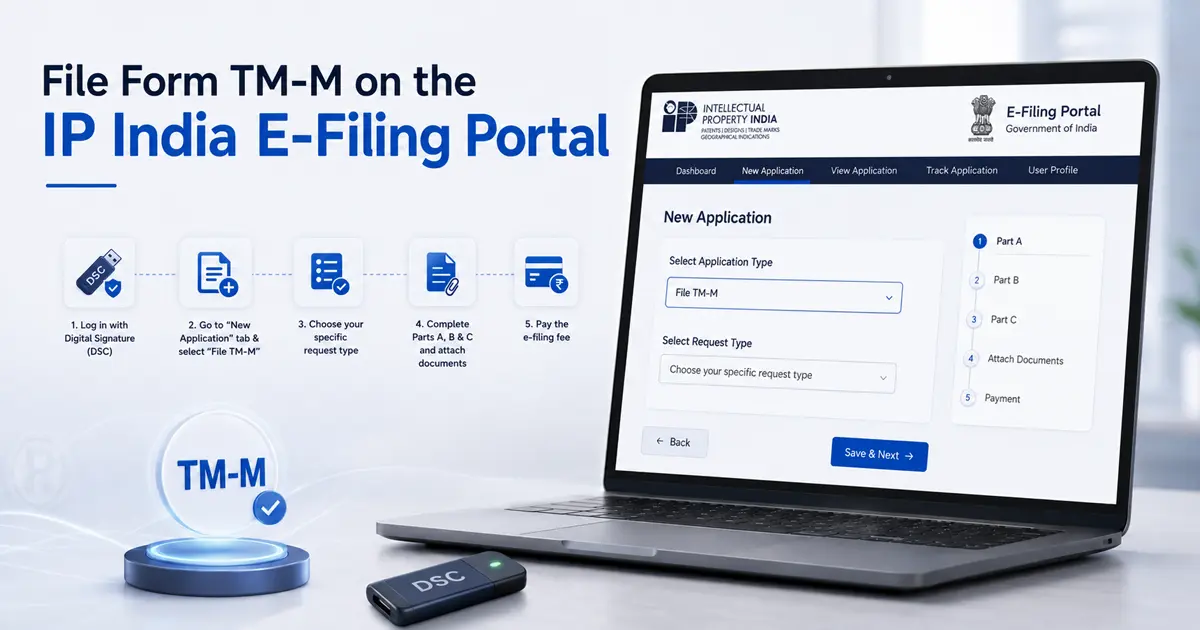
How to File Trademark Form TM-M: Purpose, Fees & Process
Duration of Design Protection in India: 10 to 15 Years
Design Registration Fees in India: 2026 Cost Breakdown
How to Check Design Registration Status Online in India?

How to Object to a Trademark Application in India?

How to Withdraw a Trademark Application in India?
How to Search a Trademark by Application Number on IP India?

How to Oppose a Trademark Application in India: Full Process

Principles of Trademark Registration in India (2026 Guide)