

To check your copyright status online in India, visit the official Copyright Office portal at copyright.gov.in. Search using the Diary Number issued when you filed your application.
Copyright is a legal right granted to creators under the Copyright Act, 1957. In India, the Copyright Office under the Department for Promotion of Industry and Internal Trade (DPIIT) manages all applications and records. Copyright exists automatically upon creation. However, monitoring your registration provides stronger legal proof and easier verification. It also supports smoother commercial use.
Key Takeaways
- You need your Diary Number to check your copyright status online. You receive it after filing your application.
- The Copyright Office operates under DPIIT, Ministry of Commerce and Industry. It was previously under the Ministry of Human Resource Development.
- Every application has a mandatory 30-day waiting period for public objections under Rule 70(10) of the Copyright Rules, 2013.
- Common status stages include Filed/Work Awaited, Waiting, Formality Check Failed, Scrutiny/Examination, Discrepancy Letter Issued, Hearing/Sub-Judice, Registered, and Abandoned/Refused.
- Regular status checks help you respond quickly to objections or missing documents. This can prevent months of delay.
Pre-requisites: What You Need Before Checking Copyright Status
Before you start your copyright status search, make sure you have a few important details ready. These details help you check your copyright application status smoothly on the official copyright portal. Some pre-requisites include:
1. Diary Number
When you file a copyright application online, you receive a Diary Number. It serves as your primary tracking ID. You need this number to check your copyright status. The portal uses it to identify your application.
You can use the Diary Number to track:
- Copyright diary status
- Examination updates
- Objection progress
- Final registration status
Keep this number safe. You may need it to respond to objections or download your certificate.
2. Basic Details of the Work
You may need additional details, especially for older offline applications. These details help the portal verify your record.
Keep the following information ready:
- Class of work, such as literary, artistic, software, sound recording, or film
- Title of the work
- Author or applicant name
- Date of filing, if available
3. Access to the Official Copyright Portal
Use the official Copyright Office website to check your status. You can track applications at different stages, including filing, waiting, examination, objection, and registration. Ensure you have a stable internet connection before starting the search.
4. Essential Documents and Records
Keep these documents stored securely:
- Filing acknowledgement
- Payment receipt
- Soft copies of the work
- Letters or emails from the Copyright Office
You may need these documents if you face an objection or need to respond to an examination report. They can also help you verify details during a copyright dispute.
How to Check Copyright Status Online: Step-by-Step
You can easily check your copyright status online using the official portal. This helps you track your copyright application status and understand what stage your file is in.
Below is a simple step-by-step process on how to check it:
Step 1: Visit the Official Copyright Portal
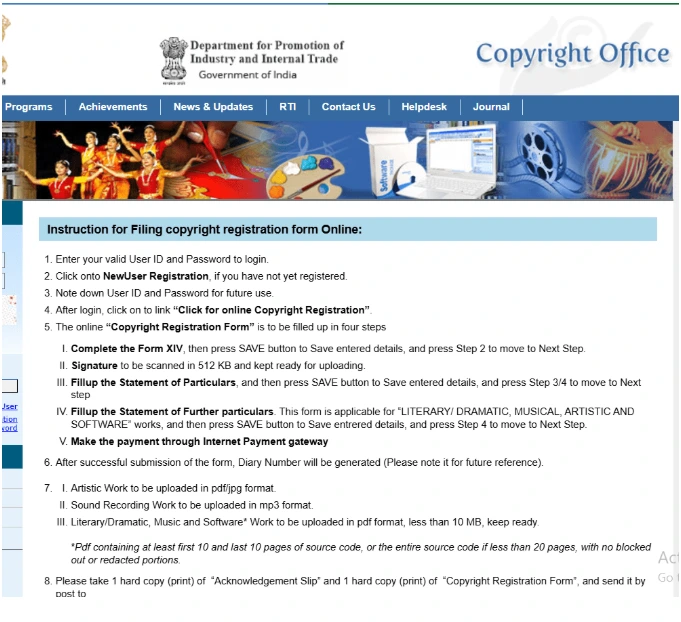
Go to the official website of the Copyright Office of India (copyright.gov.in). This is the main portal where you can see your online copyright applications and records.
Step 2: Open the “Status of Application” Page
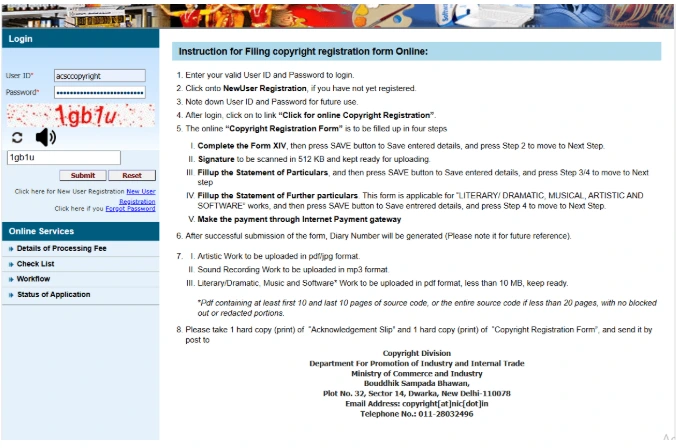
On the homepage, look for the “Status of Application” option. This page is used for copyright status search and works for both online and offline applications.
Step 3: Enter Your Details
Type your Diary Number in the search box. If your application was filed offline or you do not have the diary number, the portal may ask for details like:
- Class of work
- Title of work
Provide whatever information the page requires to continue.
Step 4: View Your Copyright Registration Status
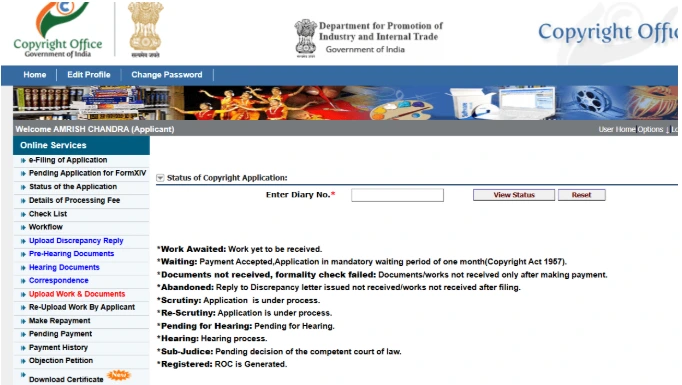
After submitting the details, the portal will show your current copyright registration status.
The page usually displays:
- Applicant name
- Title of work
- Category of work
- Date of filing
- Current stage of the application (Filed, Waiting, Under Examination, Objection, Hearing, Registered, etc.)
The status may show Filed, Waiting, Under Examination, Objection, Hearing, or Registered. This helps you understand the current stage of your application.
What Do Different Copyright Status Mean?
Knowing your copyright status helps you know what to do next. The table below explains the common statuses you may see during a copyright status search:
| Status | What It Means | What to Do |
|---|---|---|
| Filed / Work Awaited | Your application was received, but the work was not submitted. This mostly applies to older offline filings. | Submit the work as soon as possible. Keep proof of submission. |
| Waiting (30-Day Period) | Your application is open for public objections for 30 days. This is required under Rule 70(10) of the Copyright Rules, 2013. | No action is required. Monitor the status of objections. |
| Formality Check Failed / Documents Not Received | Some required documents or files are missing. | Submit the missing documents. Correct any discrepancies. |
| Scrutiny / Re-Scrutiny / Under Examination | An examiner is checking your application and supporting documents. | Monitor the status. Respond quickly to any requests for clarification. |
| Discrepancy Letter Issued | The Copyright Office or a third party has objected. | Submit the required clarification, proof, or corrections. |
| Pending for Hearing / Hearing / Sub-Judice | Your application requires a hearing due to an objection. Final approval is on hold. | Follow the hearing notice. Prepare the required documents. |
| Registered | Your copyright has been approved and registered. | Download and store your certificate safely. |
| Abandoned / Refused | Your application was rejected due to unresolved issues, missing documents, or other legal reasons. | Review the reason. Correct the issue and reapply if required. |
Why You Should Register and Track Your Copyright Status?
Registering your copyright provides stronger legal evidence of ownership. Tracking your application keeps you informed and helps you address issues on time.
- Stronger Legal Evidence: Registration provides proof of ownership. It can help you defend your work against copying or misuse.
- Public Record of Ownership: Your work becomes part of an official record. This makes ownership easier to verify.
- Supports Licensing and Commercial Deals: Registration can make publishing, selling, transferring, or licensing rights easier.
- Reduces Ownership Conflicts: Registration can clarify ownership when multiple people work on a project.
- Protects Valuable Brand Assets: You can register assets such as logos, software, designs, manuscripts, and content.
- Builds Trust: Registered rights can improve credibility with clients, partners, and investors.
- Increases Commercial Value: Registration can make your work easier to monetize and include in contracts.
- Prevents Missed Deadlines: Regular tracking helps you respond to objections, examination reports, and document requests on time.
- Enables Faster Responses: You can quickly respond if the Copyright Office requests additional information.
- Helps Monitor Progress: Tracking shows your application’s current stage.
- Supports Business Planning: Knowing the status helps you plan launches, licensing deals, and publishing timelines.
- Helps Manage Objections: Early updates allow you to address objections before they cause further delays.
- Simplifies Verification: Current status records can help when selling rights or working with corporate partners.
Regularly tracking your copyright status helps you stay informed. It also keeps your intellectual property ready for commercial use.
