ZED Certification for MSMEs in India
Boost your MSME's competitiveness by achieving Zero Defect Zero Effect (ZED) Certification. RegisterKaro ensures a seamless, expert-led process from pledge to certification. What you get:
 Assistance with ZED Pledge & Online RegistrationSupport for Document Collection & SubmissionCoordination with ZED Assessors & MSME AuthoritiesComplete Help with Quality, Safety & Environmental ComplianceEnd-to-End Guidance from Assessment to Certificate Renewal

 What Sets Us ApartWhat Sets Us Apart
What is ZED Certification?
The Zero Defect Zero Effect (ZED) Certification is an initiative by India's Ministry of Micro, Small, and Medium Enterprises designed to encourage MSMEs to implement Zero Defect Zero Effect principles. It seeks to boost the competitiveness of MSMEs by fostering high-quality production, minimizing waste, and reducing their environmental footprint.
The certification process includes assessment, expert guidance, and ongoing support to assist MSMEs in refining their operations and attaining superior ZED certification tiers.
- Zero Defect: This refers to the aim of producing goods with absolutely no defects. It emphasizes quality control, preventing errors at every stage of the manufacturing process, rather than just inspecting for defects at the end.
The goal is to ensure that products are of high quality, meet customer requirements, and are not returned or rejected in the market. This leads to customer satisfaction, reduced rework, and enhanced reputation.
- Zero Effect: This principle focuses on minimizing the negative impact of manufacturing processes on the environment. It promotes environmentally friendly practices, reducing waste, optimizing resource utilization, minimizing pollution (emissions, effluents), and adopting cleaner technologies.
The aim is to ensure sustainable production that contributes positively to the environment and reduces the carbon footprint.
Is ZED Certification Compulsory for Business?
No, ZED Certification is not mandatory for businesses. It is a voluntary scheme designed to help MSMEs improve their quality and competitiveness.
- Government Initiative: It's an optional government program, not a regulatory requirement for business operations.
- Incentive-Based: While not compulsory, achieving certification unlocks access to government subsidies, easier bank loans, and other benefits.
- Focus on Improvement: The primary goal is to encourage, not force, businesses to adopt higher standards for quality and sustainability.
Benefits of the ZED Certification Scheme for MSME
The ZED (Zero Defect Zero Effect) certification scheme provides a wealth of advantages for Micro, Small, and Medium Enterprises (MSMEs).
- Government Subsidies and Financial Support: MSMEs can receive subsidies on certification costs, financial assistance for testing and certification, and support for technology upgrades and cleaner production methods. There are also incentives for taking the ZED pledge.
- Trust and Enhanced Market Reputation: ZED certification signals a strong commitment to quality and sustainability, fostering trust with customers and partners. This can lead to greater brand recognition and a stronger foothold in the market.
- Improved Product Quality, Reduced Waste, and Increased Profits: The certification promotes the adoption of modern technologies and manufacturing practices, leading to better product quality, fewer defects, and lower production costs due to reduced waste.
- Easier Bank Loans and Lower Interest Rates: ZED certification can streamline the process for MSMEs to secure bank loans and may even qualify them for lower interest rates and reduced guarantee fees through programs like CGTMSE.
- Competitive Edge in Government Tenders and Global Supply Chains: ZED certification grants MSMEs a competitive advantage when bidding for government tenders and provides avenues for participation in global supply chains, where the demand for sustainable and quality-focused businesses is growing.
- Special Benefits from State Governments: Certain state governments offer additional incentives and support specifically for ZED-certified MSMEs.
ZED Certification Levels
Before an MSME can pursue any of the certification levels, a crucial initial step is the ZED Pledge.
ZED Pledge
This is a pre-commitment and solemn promise by the MSME to embrace the principles of "Zero Defect" (producing flawless goods) and "Zero Effect" (minimizing negative environmental impact) in their operations. Taking the pledge signifies the MSME's intent to embark on a journey of continuous improvement in quality and sustainability. It is typically an online process through the official ZED portal.
Upon taking the pledge, MSMEs gain immediate access to benefits, such as eligibility for assistance with risk preparedness (like MSME KAWACH, based on the WASH standard) and a limited-purpose joining reward of ₹10,000 to be used towards certification costs.
Following the ZED Pledge, MSMEs can then apply for one of the three progressive certification levels:
1. ZED Bronze Certification
- Focus: This is the foundational level, emphasizing basic quality management and environmental standards.
- Demonstration: MSMEs at this level show an initial commitment to improving processes, reducing fundamental defects, and taking preliminary steps towards environmental responsibility.
- Purpose: It helps businesses establish a baseline for their quality and sustainability journey.
2. ZED Silver Certification
- Focus: This level builds upon Bronze, signifying enhanced adherence to quality control and sustainable practices.
- Demonstration: MSMEs have implemented more stringent measures to minimize defects and waste, demonstrating significant improvements in operational efficiency and environmental footprint.
- Purpose: It indicates a stronger commitment to continuous improvement and a more robust system for quality and environmental management.
3. ZED Gold Certification
- Focus: This is the highest tier, demanding comprehensive excellence in quality management and sustainability.
- Demonstration: MSMEs achieving this level demonstrate an advanced commitment to "Zero Defect, Zero Effect" principles, positioning them at par with global leaders in terms of product quality, operational efficiency, and environmental responsibility.
- Purpose: It reflects a deeply ingrained culture of continuous improvement, innovation, and sustainable practices throughout the organization.
Eligibility for the ZED Certification Scheme
The ZED Certification Scheme is designed to be accessible to a wide range of enterprises in India. The primary eligibility criteria are:
- MSME Classification: The business must be classified as an MSME as per the criteria defined by the Ministry of MSME, Government of India.
- Udyam Registration: The MSME must be registered on the Udyam Registration portal of the Ministry of MSME. This registration is a prerequisite to participate in the ZED scheme and avail of its benefits and incentives.
- Taking the ZED Pledge: Before applying for any specific certification level (Bronze, Silver, or Gold), the MSME must first take the ZED Pledge. This signifies their commitment to adopting the "Zero Defect, Zero Effect" principles.
Documents Required for the ZED Application
The ZED (Zero Defect Zero Effect) certification scheme is an initiative by the Ministry of Micro, Small & Medium Enterprises (MSME) in India. It aims to encourage MSMEs to adopt quality production processes, reduce waste, and minimize environmental impact.
Core Business and Identification Documents
- Udyam Registration Certificate: This is mandatory for all MSMEs in India. It proves that your business is officially registered as a Micro, Small, or Medium Enterprise with the MSME Ministry. This certificate is crucial for availing of various government schemes and incentives.
- PAN Card: The Permanent Account Number (PAN) card is a 10-digit alphanumeric identifier issued by the Indian Income Tax Department. It's a unique identification number for both individuals and businesses.
- GST Registration Certificate: If your business is registered under the Goods and Services Tax (GST) regime, you'll need to provide your 15-digit GSTIN (Goods and Services Tax Identification Number) registration certificate.
- Business Address Proof: This can be a copy of your lease agreement, electricity bill, or any other official document that verifies your business address.
- Contact Information: This includes the name, phone number, and email address of the organization's primary point of contact for the ZED certification process.
- Organizational Chart: A visual representation of your company's structure, showing the reporting relationships between different departments and personnel.
Quality, Environmental, and Operational Documentation
These documents demonstrate your commitment to quality, efficiency, and sustainability. The depth and detail required for these might increase as you aim for higher ZED certification levels (Silver and Gold).
- Quality Policy: A formal statement outlining your organization's commitment to quality. It should include your quality objectives and the methods and procedures used to achieve them.
- Procedures for Quality Management (QMS Documentation): Detailed descriptions of the specific steps your company takes to ensure its products and services meet the required quality standards. This often includes:
- Records of Quality Audits: Documentation of internal or external audits conducted to evaluate your quality management system.
- Records of Corrective and Preventive Actions (CAPA): Documentation of actions taken to address non-conformities found during audits or other evaluations, and steps to prevent their recurrence.
- Environmental Management System (EMS) Documentation: This outlines your organization's commitment to environmental management and the steps taken to achieve environmental goals. This can include:
- Identification of all energy sources and targets for energy saving.
- Training records for employees in energy management.
- Records of periodic energy audits.
- Energy Management System (EnMS) Documentation: Specific to energy consumption and efficiency, this documentation details your energy policies, targets, and measures for improvement.
- Safety Management Documentation: This includes:
- A formal safety policy.
- Systems to identify and communicate safety aspects to employees and partners.
- Records of regular safety training.
- Ensuring appropriate Personal Protective Equipment (PPE) usage.
- Human Resource Management Documentation: Documents related to employee training, development, and overall HR policies that support ZED principles.
- Intellectual Property Rights (IPR) Documentation (if applicable): Proof of any intellectual property your business holds.
- Design Management Documentation (if applicable): Documents related to your product design processes.
- Self-Assessment Report: An internal report where your MSME assesses its compliance with ZED requirements based on the ZED maturity assessment model. This is usually done online through the ZED portal.
- Financial Statements: Audited financial reports for at least the last two financial years to demonstrate financial stability.
- Product or Service Catalogue: A document listing the products or services your MSME offers.
How to Get ZED Certification – Step-by-Step Guide
Follow these steps to get your ZED Certification:
1. Registration
The initial step involves creating your account and committing to the ZED principles.
- Visit the official ZED website (zed.msme.gov.in/).
- Register using your Udyam registration number and the linked mobile number.
- Complete the ZED Pledge, signifying a commitment to uphold the principles of Zero Defect Zero Effect.
2. Application for Certification
Once registered, proceed to select your desired certification level and submit all required documentation.
- Following registration and pledge completion, you can apply for any of the three certification levels: Bronze, Silver, or Gold.
- Submit the necessary documents and information online, including proof of registration, financial records, and other pertinent details.
- Pay the applicable certification fee.
- You might also need to download the ZED MSME Mobile app to submit basic information and documents.
3. Assessment
Your submitted information and implemented practices will undergo a thorough review and verification.
- Desktop Verification: An assessor will review the submitted documents and information remotely.
- Remote/Onsite Assessment: Depending on the chosen certification level, a remote (online) or an onsite (physical visit) assessment may be conducted to verify the implementation of ZED practices.
- Non-conformities: Should any non-conformities be identified during the assessment, you will be granted an opportunity to rectify them within a specified timeframe.
4. Certification
Upon successful assessment and rectification of any issues, your ZED certification will be officially granted.
- Based on the assessment findings and recommendations, the ZED certificate will be issued for the relevant level.
- The certificate will be accessible on your dashboard on the ZED website.
ZED Certificate Validity and Renewal
A ZED certificate, issued under the MSME Sustainable (ZED) Certification Scheme, is typically valid for 3 years from the date of issuance.
After this period, MSMEs need to apply for reassessment and renewal to maintain their certification status and continue accessing associated benefits.
Importance of Renewal
- Maintaining ZED certification is crucial for MSMEs to continue accessing various government schemes, benefits, and incentives associated with the program.
- Upgrading to a higher level during renewal can further improve the MSME's operational efficiency, quality standards, and environmental performance.
- The ZED certification process aims to encourage continuous improvement and sustainable practices among MSMEs.
Renewal Process
- MSMEs should apply for reassessment before the expiry of their current ZED certificate.
- The renewal process involves a re-evaluation to ensure continued adherence to the ZED standards.
- During renewal, MSMEs are encouraged to upgrade to a higher ZED certification level (Bronze, Silver, or Gold) to further enhance their systems and competitiveness.
- The reassessment process may include gap analysis, handholding, surveillance, and recommendations from Accredited Assessment Agencies.
- The Ministry of MSME may also conduct inspections of certified MSMEs to verify compliance.
ZED Certification Cost and Subsidy
The ZED Certification scheme offers significant subsidies to encourage MSMEs to adopt ZED practices. The costs and subsidies vary depending on the MSME classification and the chosen certification level.
Here's a breakdown of the typical costs and subsidies:
| Category | Activity | Normal Fee (Excl. GST) | GOI Subsidy (%) | MSME's Net Cost (Excl. GST) |
| ZED Pledge | Taking the Pledge | ₹10,000 | 100% | ₹0 |
| Bronze Certification | Assessment & Certification Fee | ₹10,000 | 80% | ₹2,000 |
| Silver Certification | Assessment & Certification Fee | ₹40,000 | 60% | ₹16,000 |
| Gold Certification | Assessment & Certification Fee | ₹90,000 | 50% | ₹45,000 |
| Handholding/Consultancy | (Optional, per day) | ₹10,000 | 80% | ₹2,000 |
ZED Registration Certificate
The ZED Certification is an initiative by the Ministry of Micro, Small, and Medium Enterprises, Government of India, to promote quality and environmental sustainability in MSMEs.
How to Download Your ZED Registration Certificate?
- Official ZED Portal: The primary platform for ZED certification is the official MSME ZED portal: zed.msme.gov.in/.
- Log in to your Dashboard: After successful registration and assessment, your ZED ID and login password will have been sent to your registered email ID. You need to log in to your dashboard on the ZED portal using these credentials.
- Access "My Documents" / Dashboard: Once logged in, you should be able to navigate to a section like "My Documents" or directly on your dashboard where your ZED certificate will be available for download.
- Pledge Certificate: Note that immediately after registration, you'll likely receive a ZED Pledge Certificate, which is a commitment to the ZED principles. The final ZED Certification is issued after the assessment process is completed successfully.
- User Manuals: The ZED portal also provides detailed user manuals (e.g., "User Manual for ZED Registration," "User Manual for Gold Certification") which often include step-by-step instructions with screenshots on how to navigate the portal and download certificates. You can usually find these in the "Documents" section of the website.
How to Check ZED Registration Certificate Status?
- Official ZED Portal: Go to the official ZED portal: zed.msme.gov.in/.
- Verify ZED Certificate Section: Look for a section or link titled "Verify ZED Certificate." You can find this on the homepage or under "Important Links."
- Enter Details: On the "Verify ZED Certificate" page, you will typically need to enter your:
- Udyam Number
- Certification Number (if you have one)
- Submit and View Status: After entering the required details, submit the form to view the status of your ZED certificate.
- Dashboard: If you have an ongoing application, you can also log in to your ZED dashboard, which will display the current status of your certification process. This might include information about assessment progress, non-conformities (if any), and final approval.
Connect with RegisterKaro and let our experts handle the legal hassle while you grow your business.
Frequently Asked Questions (FAQs)
What is the main objective of the ZED scheme?
The ZED scheme aims to promote quality, sustainability, and efficiency among Indian MSMEs by encouraging them to adopt best practices and become globally competitive.
How long does it typically take to get ZED certification?
On average, it takes around 15 to 30 working days to complete the ZED certification process, depending on the level chosen and the readiness of your documentation.
Can service-based businesses apply for ZED?
Yes, both manufacturing and service-based MSMEs can apply for ZED certification, provided they meet the eligibility criteria defined by the Ministry of MSME.
Does ZED certification replace other quality certificates like ISO 9001?
No, ZED certification does not replace ISO 9001 or other international standards. Instead, it complements them by emphasizing zero defect production and environmental responsibility.
How can I download my ZED certificate once it is approved?
Once your application is approved, you can log in to the ZED portal using your credentials and download the certificate directly from your dashboard.
What happens if my application has errors or non-conformities?
If your application has discrepancies, the system will notify you for corrections. You can resubmit the updated documents, and our experts at RegisterKaro can help you address and resolve these issues.
Is it possible to upgrade my ZED level from Bronze to Silver later?
Yes, MSMEs can upgrade their certification level (e.g., from Bronze to Silver or Gold) by fulfilling the higher-level parameters and reapplying for evaluation.
Which government body is in charge of the ZED scheme?
The Quality Council of India (QCI) implements the ZED scheme under the guidance of the Ministry of Micro, Small and Medium Enterprises (MSME), Government of India.
Are there special state-level benefits for ZED-certified MSMEs?
Yes, many state governments offer additional incentives and subsidies to MSMEs that hold a valid ZED certificate, apart from the central government benefits.
How many ZED parameters are there for each level?
The ZED scheme is based on 20 core parameters for Bronze, 30 for Silver, and 50+ parameters for Gold level certification, covering areas like quality, energy efficiency, waste management, and more.
Is there a fee for ZED registration itself?
Registration on the ZED portal is free of cost, but there may be a nominal fee for assessment or third-party evaluation, depending on the level chosen and applicable government subsidies.

Reviewed by
Joel DsouzaJoel Dsouza is a Chartered Accountant (CA) and compliance expert with over 7 years of hands-on experience in company registration, tax structuring, GST, ROC filings, and MCA compliance. As a qualified member of the Institute of Chartered Accountants of India (ICAI) and Co-Founder at RegisterKaro, he has personally advised more than 1,000 startups and SMEs across India, helping founders navigate incorporation, regulatory frameworks, and financial planning from Day 1. With deep expertise across all three levels of Finance and Portfolio Management, Joel is committed to promoting financial literacy and simplifying India's startup ecosystem through clear, actionable guidance that entrepreneurs can act on immediately.
Why Choose RegisterKaro for Your ZED Certification?
Getting ZED Certified doesn’t have to be complex—RegisterKaro makes it simple, streamlined, and subsidy-smart with expert-led support at every step.
- Simple and Hassle-Free Process: We handle the entire ZED Certification process for you from registration to final approval, so you don’t have to worry about paperwork, follow-ups, or delays.
- Expert Guidance on Documentation: Our experienced professionals ensure your documentation is complete, accurate, and audit-ready, minimizing rejections and speeding up approval.
- End-to-End Support: From understanding the ZED parameters to post-certification guidance, our team supports you every step of the way so your MSME stays compliant and future-ready.
- Help in Claiming the Maximum Possible Subsidy and Benefits: We not only help you get certified but also assist you in claiming applicable government subsidies and incentives to boost your MSME’s growth.
- Dedicated Expert to Answer All Your Questions: With RegisterKaro, you get a dedicated ZED expert who is always available to resolve doubts, offer strategic insights, and guide you through every stage of the process.
What Our Clients Say
View All
Daljit Singh
 Verified
Great experience with RegisterKaro. They made the incorporation process smooth and stress-free. Quick, professional, and reliable. Highly recommended!

Jaiprakash Gupta
VerifiedI had an excellent experience with RegisterKaro for my company incorporation. The entire process was smooth, transparent, and well-organized. A specia... Read more

Ayush vaidya
VerifiedWorking with you guys were great and smooth and specially talking about Mitushi she did a great job and made sure the process grabs speed ! Last but n... Read more

rakesh prajapati
VerifiedWe wanted to express our heartfelt gratitude for the outstanding services you've provided. Your tireless efforts, expertise, and passion for deliverin... Read more

Yogesh Singh
VerifiedOne of the best registration service providers. The team is experienced, friendly, and delivers exactly what they promise. I would definitely recommen... Read more

Neeraj Gupta
VerifiedVery professional service. The pitch deck prepared was sharp and concise, helped in getting the approval with 3-4 days. All the work was done by the r... Read more

Sagar Singh Awesome
VerifiedHad a great experience with RegisterKaro. Their team was knowledgeable, responsive, and handled everything efficiently. The entire process was smooth... Read more

Rushikesh Mankar
VerifiedI did my company’s registration through Register Karo in February this year. CA Rohit helped me a lot to understand what I needed. He took care of all... Read more

Ananta Kumar Parida
VerifiedSaharsh Baranwal and his team delivered outstanding support in incorporating my company with precision and speed. Their expertise, responsiveness, and... Read more

2319Anubhav Singh
VerifiedFrom start to finish, the experience was seamless and professional. Their team is knowledgeable, attentive, and went above and beyond to ensure my sat... Read more
Related Blogs
View All
ITR Filing Cost for Companies in India
Consequences of Not Filing Company Compliance – Penalties, Disqualification, and Strike-Off
Company Annual Compliance Cost – GST, and ITR Charges for a Private Limited Company
How to Close an LLP With Pending Annual Compliance in India?
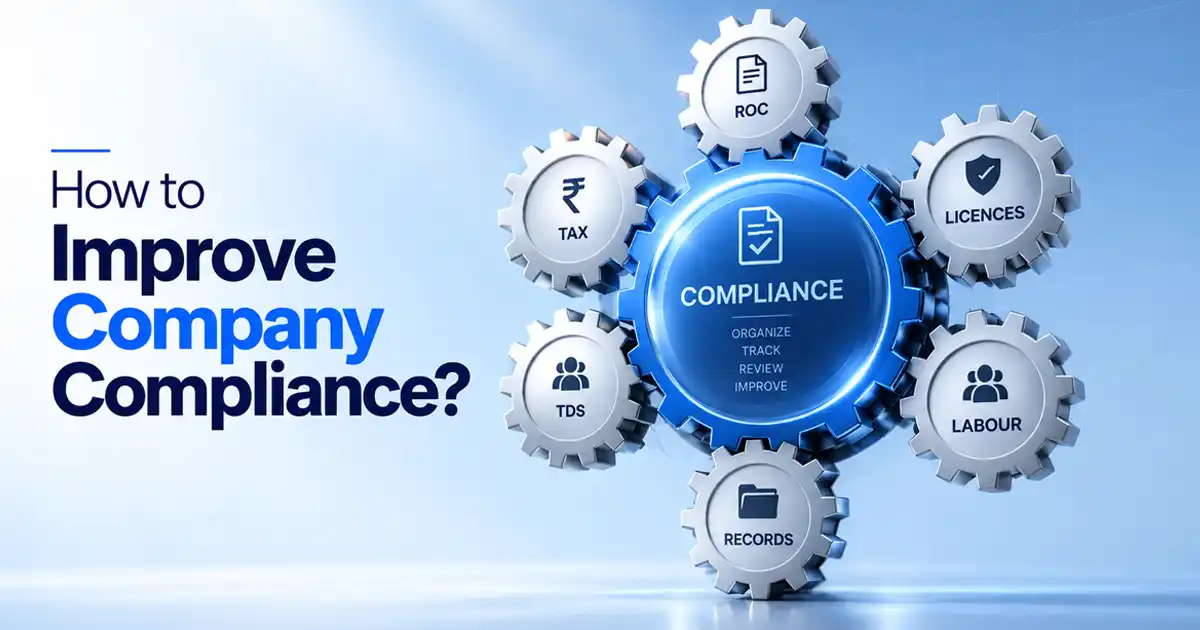
How to Improve Company Compliance?
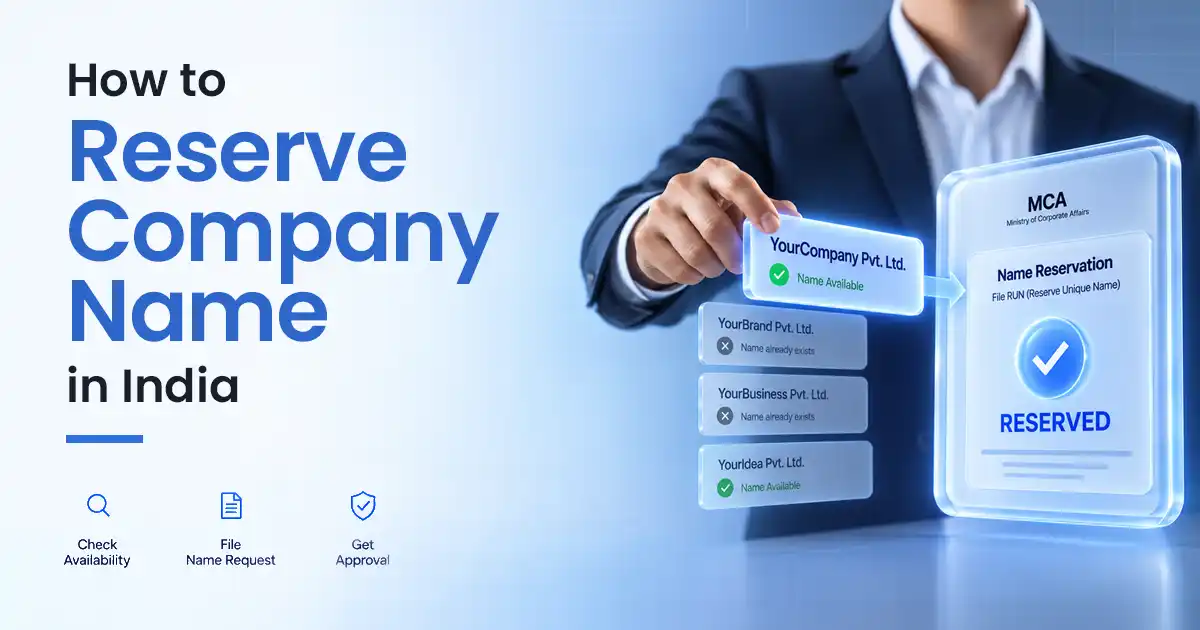
Company Name Reservation in India: Rules, Process & Fees
How to Start a Chocolate Business From Home in India (2026)?
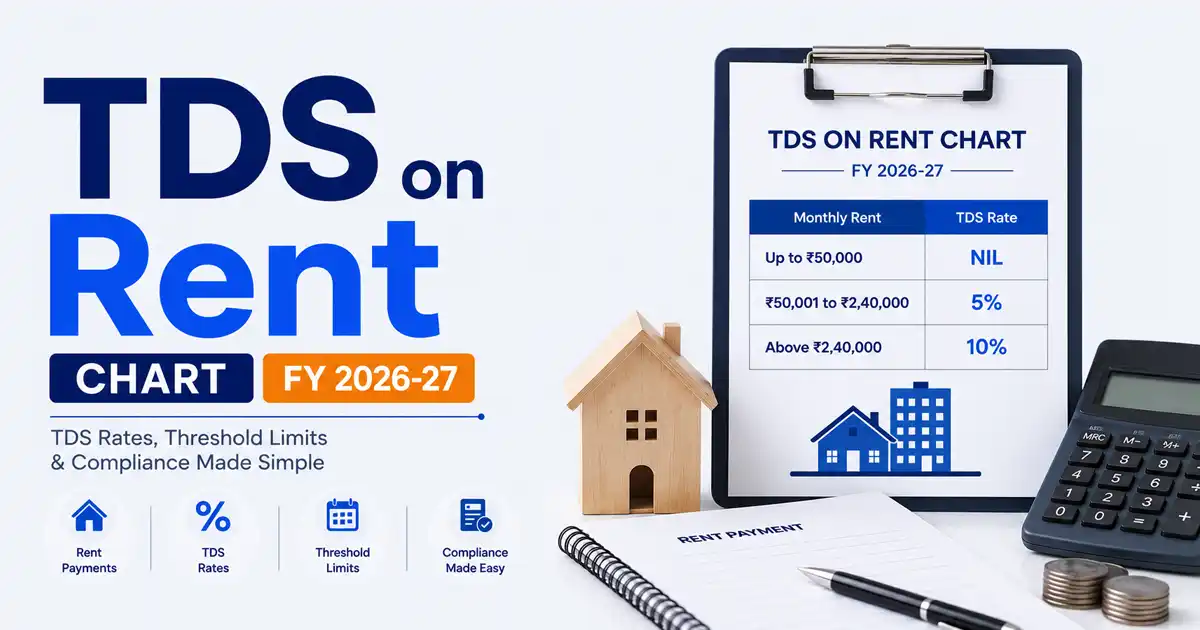
TDS on Rent Chart FY 2026–27: Rates, Limits, Sections and Complete Guide
GST on Bikes in India: New Rates by Engine Capacity
GST for Electrical Items in India: Rates & HSN Codes