Sole Proprietorship Firm Compliance - Annual Return Filing
Simplify annual compliance for your Sole Proprietorship firm with RegisterKaro. We help you maintain accurate financial records, meet tax obligations, and avoid penalties with timely filings and end-to-end support.
 Preparation and Filing of Income Tax Returns (ITR)Maintenance and Review of Books of AccountsTDS Compliance and Return Filing SupportAssistance with Advance Tax Calculation and PaymentAudit Support and Documentation (if required)

 What Sets Us ApartWhat Sets Us Apart
What is Sole Proprietorship Compliance in India?
Sole Proprietorship compliance is a set of legal and tax obligations that every sole-owned business must follow. This framework acts as a formal accountability system, identifying you as a legitimate taxpayer and service provider. These regulations ensure that your firm stays transparent with government authorities. They also help you keep your business legally compliant.
Once you complete your Sole Proprietorship Registration, compliance links to several critical regulatory pillars:
- Income Tax Department: Tracks your firm’s earnings as personal income, ensuring you pay the correct taxes based on individual slabs.
- Ministry of Labour and State Authorities: Identifies your physical presence through Shop and Establishment registrations or professional tax records.
- Goods and Services Tax (GST) Network: Monitors your domestic and interstate transactions once you cross specific turnover thresholds.
Sole Proprietorship compliance is mandatory for an individual running a firm in India under the Income Tax Act, 1961, and state laws. It enables the government to verify your business activities and allows authorities to review records.
Taxes Applicable to Sole Proprietorship in India (Income Tax, GST & TDS)
Sole proprietorships in India are taxed by the Indian government based on the individual owner’s income. Since the firm and the owner are legally the same, all profits are treated as personal income and taxed accordingly. The focus is on accurate reporting, timely payments, and compliance with applicable tax laws.
Key tax components include:
- Income Tax (Personal Taxation): The primary tax applicable to a sole proprietorship is the ITR filing. The Income Tax Department adds business profits to the owner’s total income and taxes them accordingly. E-filing ITR for small proprietorship firms is mandatory.
- Goods and Services Tax (GST): GST registration is mandatory if your annual aggregate turnover exceeds ₹40 lakh for goods or ₹20 lakh for service providers (lower limits of ₹20 lakh/₹10 lakh apply in special category states). You must register regardless of turnover if you engage in interstate sales or e-commerce.
- TDS and TCS Compliance: As per the new Income Tax Act 2025 (effective April 2026), all TDS sections have been renumbered. Proprietors must deduct tax at source (TDS) on payments like rent, professional fees, or contractor charges once they cross specific audit thresholds. Proper TCS and TDS filing is essential to report these deductions accurately and avoid penalties.
- Advance Tax: If your total tax liability exceeds ₹10,000 in a financial year, you must pay advance tax in installments. This helps avoid interest penalties and ensures smooth tax compliance.
- Professional Tax: This is a state-level tax on professions, trades, and employments. If applicable in your state (like Assam and Maharashtra), you must register for Professional Tax and pay an annual amount, which is capped at ₹2,500 per year.
- Audit Requirements: Under Section 44AB of the Income Tax Act, you must get your accounts audited by a Chartered Accountant. Especially, if your firm's turnover exceeds ₹1 crore (or ₹10 crore if at least 95% of transactions are digital).
- Presumptive Taxation (Section 44AD/44ADA): To reduce the compliance burden, small businesses with turnover up to ₹3 crore (for goods) or ₹75 lakh (for professionals) can opt to pay tax on a "presumptive" basis. This allows you to declare a fixed percentage of your turnover as profit without maintaining detailed books of accounts.
These regulations ensure that sole proprietorships contribute to the economy. They also enable firms to benefit from individual-centric tax reliefs.
Mandatory Compliances for a Proprietorship Firm in India
A sole proprietorship must follow a set of mandatory compliance requirements to operate legally and avoid penalties. These requirements depend on the nature, size, and location of your firm. Staying compliant ensures smooth operations and builds trust with authorities and customers.
Mandatory compliance links your firm to several critical regulatory authorities:
1. Income Tax Compliance
The Income Tax Department treats the firm’s business and your personal income as one. To remain compliant, you must:
- File Income Tax Return using ITR-3 (for the firm’s income) or ITR-4 (if opting for the simplified presumptive taxation scheme).
- Pay your taxes in quarterly installments if your estimated tax liability for the year exceeds ₹10,000.
- Have your accounts audited by a Chartered Accountant if your annual turnover exceeds ₹1 crore (or ₹10 crore if 95% of your transactions are digital) under Section 44AB.
2. GST Compliance (if registered)
If your firm is registered under GST, you must comply with regular return filings and tax payments. GST return filing for a proprietorship firm involves reporting your sales, purchases, and tax collected from customers to the government.
- Submit periodic returns, such as GSTR-1 and GSTR-3B, either monthly or quarterly, depending on your turnover.
- File GSTR-9 annually to reconcile monthly filings with the audited financial statements (applicability is based on turnover and government notifications).
3. Other Compliances
Beyond taxes, your proprietorship may need additional registrations and licenses based on your business activity and state laws. Following these compliances ensures smooth operations and avoids penalties.
- Complete Shop and Establishment Registration within 30 days of starting operations to comply with local labor laws.
- Obtain and file the Professional Tax if applicable in your state, such as Maharashtra or Karnataka.
- Apply for an FSSAI license if your firm is involved in manufacturing, processing, or selling food products.
- Complete MSME/Udyam registration to access government schemes, easier credit, and protection against delayed payments.
Following these compliance requirements helps you stay legally secure and ensures your firm runs without disruptions throughout the year.
Annual Compliance for Sole Proprietorship in India
Annual compliance for a sole proprietorship focuses on reporting income, closing financial records, and meeting tax obligations for the financial year. Even though compliance is relatively simple compared to other business structures, timely filings are essential to avoid penalties and maintain financial discipline.
Key annual compliance requirements for sole proprietorships include:
- Income Tax Return (ITR) Filing: You must file your annual income tax return (ITR-3 or ITR-4, depending on your eligibility) to report business income and pay applicable taxes.
- Financial Statements Preparation: You should prepare a clear summary of your annual income, expenses, assets, and liabilities. This documentation is vital for accurate tax filing, bank loan applications, and long-term financial planning.
- GST Annual Return (if registered): Firms registered under GST may need to file an annual return, along with regular monthly or quarterly filings.
- TDS Return Filing (if applicable): If you have deducted TDS during the year, you must file annual or periodic TDS returns and reconcile records.
- Business Record Maintenance: Maintain proper books of accounts, invoices, and supporting documents for compliance and future reference.
- Compliance Review and Planning: Review your financials and tax position at year-end to plan deductions, investments, and tax-saving strategies for the next year.
- Renewal of Licenses: Many state-specific permits, such as the Shop and Establishment license or FSSAI permit, require annual renewal. You must pay the renewal fees on time to keep your firm’s operations legal.
Annual compliance ensures your firm remains legally sound and financially organized. With proper planning and timely action, you can avoid last-minute stress and focus on business growth.
Compliance Checklist for Sole Proprietorship Firm
A compliance checklist helps you stay organized and ensures that you do not miss any important legal or tax obligations. For a sole proprietorship, maintaining a simple yet consistent checklist can prevent penalties and keep your firm running smoothly.
Here’s a checklist of annual compliance for a proprietorship to follow:
- File Income Tax Return (ITR-3 or ITR-4) on time
- Pay advance tax in scheduled installments (if applicable)
- Maintain proper books of accounts and financial records
- Conduct a tax audit if turnover exceeds the prescribed limits
- Register under GST if turnover crosses the threshold
- File GST returns (monthly/quarterly and annual, if applicable)
- Deduct and deposit TDS for applicable payments
- File TDS returns within due dates
- Renew Shop and Establishment registration as required
- Obtain and maintain Professional Tax registration (state-specific)
- Secure FSSAI license for food-related businesses
- Keep invoices, bills, and receipts properly documented
- Reconcile bank statements and financial records regularly
- Track compliance deadlines and set timely reminders
- Register under MSME (Udyam) to access government benefits (optional)
Following this checklist regularly will help you stay compliant, reduce risks, and manage your finances more efficiently.
Documents Required for Sole Proprietorship Firm Compliance
Proprietorship compliance requires specific documents to verify the identity of the business owner, track financial transactions, and ensure proper tax filings. These documents help authorities validate your business activities and maintain regulatory transparency. They are broadly divided into essential and additional requirements.
Essential Documents for Proprietorship Compliance
These documents are required for most compliance activities such as ITR filing, GST returns, and audits:
- PAN Card of the proprietor for tax identification and filing
- Aadhaar Card or other identity proof of the proprietor
- Bank Account Details or Bank Statements for financial tracking
- Books of Accounts, including profit & loss statements and expense records
- Sales and Purchase Invoices for income and expense verification
- GST Registration Certificate (if applicable)
- TDS Records and Challans (if applicable)
- Previous Year ITR (if available) for reference and continuity
- Address Proof of Business (utility bill, rent agreement, etc.)
Additional Documents for Proprietorship Compliance
Depending on your business type and compliance requirements, you may also need:
- Shop and Establishment Registration Certificate
- Professional Tax Registration Certificate (state-specific)
- FSSAI License for food-related businesses
- MSME (Udyam) Registration Certificate (if registered)
- Audit Reports and Financial Statements (if audit is applicable)
- Investment Proofs for claiming tax deductions
- Loan or Credit Documents (if applicable)
- Any other sector-specific licenses or permits
Ensure that all documents are accurate, updated, and consistent across records. Proper documentation makes compliance filing faster, reduces errors, and helps speed up responses to notices or queries.
How to File Income Tax Return for a Proprietorship Firm?
Filing Income Tax Return (ITR) for a sole proprietorship is simple if you have the right documents and follow the correct steps. Since the firm and the owner are the same, you must report business income in your personal ITR form.
You can file ITR offline by printing and signing the ITR-V form after online submission and sending it to the Centralized Processing Center (CPC). For limited (such as senior citizens), you can submit a physical ITR form at the income tax office.
E-Filing ITR for Small Proprietorship Business
Follow these steps to file your ITR online:
- Determine the Applicable ITR Form: Choose ITR-3 if you maintain regular books of accounts. Choose ITR-4 if you opt for the presumptive taxation scheme.
- Gather Required Documents: Keep your PAN, Aadhaar, bank statements, profit & loss statement, balance sheet (if applicable), and GST details ready.
- Calculate Total Income: Add your firm’s income along with any other income sources, such as salary, interest, or rental income.
- Compute Tax Liability: Calculate your total tax payable after considering deductions, exemptions, and advance tax already paid.
- Visit the Income Tax E-Filing Portal: Log in to the Income Tax portal (incometax.gov.in) using your PAN credentials and select the relevant assessment year.
- Fill in the ITR Form: Enter all required details, including personal information, income details, tax payments, and deductions.
- Verify and Submit the Return: Review all details carefully and submit the return online.
- E-Verify Your ITR: Complete verification using Aadhaar OTP, net banking, or other available methods to successfully file your return.
Timely and accurate ITR filing for proprietorship firms helps you stay compliant, avoid penalties, and maintain a clean financial record for your firm.
How to File GST Return for Sole Proprietorship?
Filing GST returns for a sole proprietorship is essential if your firm is registered under GST. It ensures proper reporting of sales, purchases, and tax payments. Regular filing helps you avoid penalties and keeps your business compliant.
E-Filing GST Returns for Sole Proprietorship
Follow these steps to file your GST returns online:
- Log in to the GST Portal: Visit the official GST portal (gst.gov.in) and log in using your GSTIN and credentials.
- Select the Relevant Return: Choose the applicable return form, such as GSTR-1 (outward supplies) or GSTR-3B (summary return), based on your filing requirement.
- Enter Sales Details (Outward Supplies): Provide details of all invoices issued during the period, including taxable value and GST charged.
- Report Purchase Details (Input Tax Credit): Add details of purchases and eligible Input Tax Credit (ITC) based on supplier invoices.
- Verify Tax Liability: Check the total GST payable after adjusting input tax credit against output tax.
- Make Tax Payment: Pay the outstanding GST liability through net banking, UPI, or other available payment modes.
- Submit the Return: Review all details carefully and submit the return on the portal.
- File with E-Verification: Complete the filing using Digital Signature Certificate (DSC), Electronic Verification Code (EVC), or Aadhaar-based verification.
Filing GST returns accurately and on time helps maintain compliance, ensures smooth input tax credit claims, and avoids unnecessary notices or penalties.
Sole Proprietorship Filing Deadlines You Should Not Miss
Staying on top of compliance deadlines is essential for every sole proprietor. Missing due dates can lead to penalties, interest charges, and unnecessary legal complications.
Key sole proprietorship filing deadlines include:
| Compliance Type | Particulars | Due Date |
| Income Tax Return (ITR) | Non-audit cases | 31st July (Assessment Year) |
| Audit cases | 31st October (Assessment Year) | |
| Tax Audit Report | Submission by a Chartered Accountant | September 30th of the Assessment Year |
| Advance Tax | 1st Installment (15% of estimated tax) | 15th June |
| 2nd Installment (45% of estimated tax) | 15th September | |
| 3rd Installment (75% of estimated tax) | 15th December | |
| 4th Installment (100% of estimated tax) | 15th March | |
| GST Returns (if applicable) | GSTR-1 (Monthly) | 11th of next month |
| GSTR-3B (Monthly) | 20th of next month | |
| Quarterly GSTR-1 and GSTR-3B | 13th and 22nd/24th of the month after the quarter | |
| GST Annual Return | GSTR-9 (Annual reconciliation) | December 31st of the next Financial Year |
| TDS Returns (if applicable) | Q1 (Apr–Jun) | 31st July |
| Q2 (Jul–Sep) | 31st October | |
| Q3 (Oct–Dec) | 31st January | |
| Q4 (Jan–Mar) | 31st May | |
| Professional Tax | Monthly or Annual State Filings | Varies by State (e.g., last day of the month) |
| FSSAI License Renewal | Annual License Renewal | 30 days before the current license expires |
Keeping track of these deadlines ensures smooth compliance and helps you avoid last-minute stress or penalties.
Penalties for Non-Compliance of Sole Proprietorship
Failing to meet compliance requirements can lead to financial penalties, interest charges, and legal notices. Even though a sole proprietorship has fewer regulations, non-compliance can still disrupt business operations and impact credibility.
Common penalties for non-compliance of sole proprietorship include:
- Late Filing of Income Tax Return: Missing the due date for filing the Income Tax Return for a sole proprietorship can result in a penalty of up to ₹5,000 under Section 234F. Additionally, you will be charged interest on any unpaid tax amounts, and you may lose the benefit of carrying forward business losses to future years.
- Interest on Advance Tax Default: If you fail to pay advance tax or pay less than the required amount, the department charges interest under Sections 234B and 234C of the Income Tax Act. This interest accumulates monthly, increasing your total tax liability.
- GST Late Filing Penalties: If you are registered for GST, late fees are charged for every day of delay for GST returns. Continuous non-filing for more than six months can lead to the suspension or cancellation of GST registration, halting your ability to sell or move goods.
- TDS Non-Compliance: Failure to deduct or deposit TDS can result in heavy interest and penalties. More importantly, the tax department may disallow your business expenses, meaning you end up paying higher income tax on your gross revenue.
- Penalty for Not Maintaining Books of Accounts: If required books are not maintained or are inaccurate, you can face penalties under the Income Tax Act starting from ₹25,000.
- Audit Non-Compliance: If a tax audit is applicable and not conducted, a penalty of 5% of total turnover (up to a maximum of ₹1,50,000) may be levied.
- Professional Tax and Local Compliance Penalties: Most states impose penalties for late payment or non-registration of Professional Tax. These charges vary by state but can lead to legal notices from the state labor department.
- License-Related Penalties: Operating without or failing to renew mandatory licenses, such as Shop and Establishment or FSSAI, can lead to daily fines or even a forced closure of your business premises.
Regular compliance and timely filings help you avoid these penalties and ensure smooth business operations. Staying proactive with deadlines and documentation is the best way to remain penalty-free.
Connect with RegisterKaro and let our experts handle the legal hassle while you grow your business.
Frequently Asked Questions (FAQs)
What are the compliances of a proprietorship firm?
−The compliances of a proprietorship firm include income tax filing, GST (if applicable), TDS obligations, and local registrations. You must file ITR annually, pay advance tax if required, and maintain proper records. Depending on your business, licenses like Shop and Establishment or FSSAI may also apply.
Is GST mandatory for proprietorship?
+Which ITR form is used for proprietorship?
+Can I file proprietorship taxes online?
+What is the due date for filing an income tax return for a sole proprietorship?
+Do small proprietorship businesses need an audit?
+Is it necessary for proprietorship firms to file an Income Tax Return?
+Is GST registration required for all proprietorship businesses?
+What happens if I miss compliance deadlines for my proprietorship?
+Do I need to maintain books of accounts for a proprietorship firm?
+Is an audit required for a sole proprietorship?
+What happens if compliance for a sole proprietorship is not followed?
+
Reviewed by
Joel DsouzaJoel Dsouza is a Chartered Accountant (CA) and compliance expert with over 7 years of hands-on experience in company registration, tax structuring, GST, ROC filings, and MCA compliance. As a qualified member of the Institute of Chartered Accountants of India (ICAI) and Co-Founder at RegisterKaro, he has personally advised more than 1,000 startups and SMEs across India, helping founders navigate incorporation, regulatory frameworks, and financial planning from Day 1. With deep expertise across all three levels of Finance and Portfolio Management, Joel is committed to promoting financial literacy and simplifying India's startup ecosystem through clear, actionable guidance that entrepreneurs can act on immediately.
Why Choose RegisterKaro for Sole Proprietorship Compliance?
RegisterKaro makes sole proprietorship compliance simple, accurate, and stress-free. Whether you are a small business owner or a growing entrepreneur, we ensure your tax filings and legal obligations are handled efficiently. Here’s how we support you:
- Fast and Seamless Process: Complete your compliance filings online without dealing with complex procedures or multiple platforms.
- Expert Guidance: Get professional support for ITR filing, GST returns, TDS compliance, and tax planning tailored to your firm.
- End-to-End Compliance Support: From documentation to final filing, we manage the entire process and keep your firm fully compliant.
- Timely Alerts and Deadline Tracking: Never miss a due date with regular reminders and proactive compliance tracking.
- Accurate Documentation and Filing: We ensure error-free filings to minimize the risk of notices, penalties, or rejections.
- Transparent Pricing: Clear and upfront pricing with no hidden charges, so you know exactly what you are paying for.
- Dedicated Support Team: Get quick assistance for queries, notices, or compliance-related concerns anytime.
Stay compliant with confidence by choosing RegisterKaro for reliable and efficient sole proprietorship compliance support.

What Our Clients Say
View All
Jit
 Verified
Register Karo is the best platform to register your company, @kajal chowhan helped me a lot, to make the process smoothly. Thank you team registerkaro

Guru
Verifiedprofessional work, good team work by the team allocated to us, on time delivery for incorporation of my company, Ankit followed a good workflow throug... Read more

yayati
VerifiedI reached out to registerkro for company windup. Would like to give shout out to Astha gupta who was extremly helpful throughout the process. Kudos to... Read more

Vijay Azad
VerifiedHi It was pleasure to contact you@alka for company registration .Happy with the dedication and support during process and working beyond timeline...

aravind raj
VerifiedWe did startup registeration with their team, it was point to point approach and they were clear in those procedures and their followup is too good...

vinay kumar
VerifiedYour staff Ankita Matta is a polite person the way of handling the issues was good. I hope in future register karo team handle the issues in a same wa... Read more

Riya Singh
VerifiedRegister karo demonstrated professionalism and expertise in navigating complex legal and regulatory issues related to our industry. Special thanks Ank... Read more

ganesh patil
VerifiedHad a great experience with Register Karo. The LLP registration process was handled smoothly and everything was explained clearly. Highly recommended!

Ayush
VerifiedReally impressed with the service provided by Prayansh Jindal. He handled everything efficiently and ensured that all my queries were answered promptl... Read more

Sanjeev Rai
VerifiedRegister karo Helped me A lot in ICEGATE Registration Process, Highly satisfied with their Service , Kind and polite staff Overall Excellent Experienc... Read more
Related Blogs
View All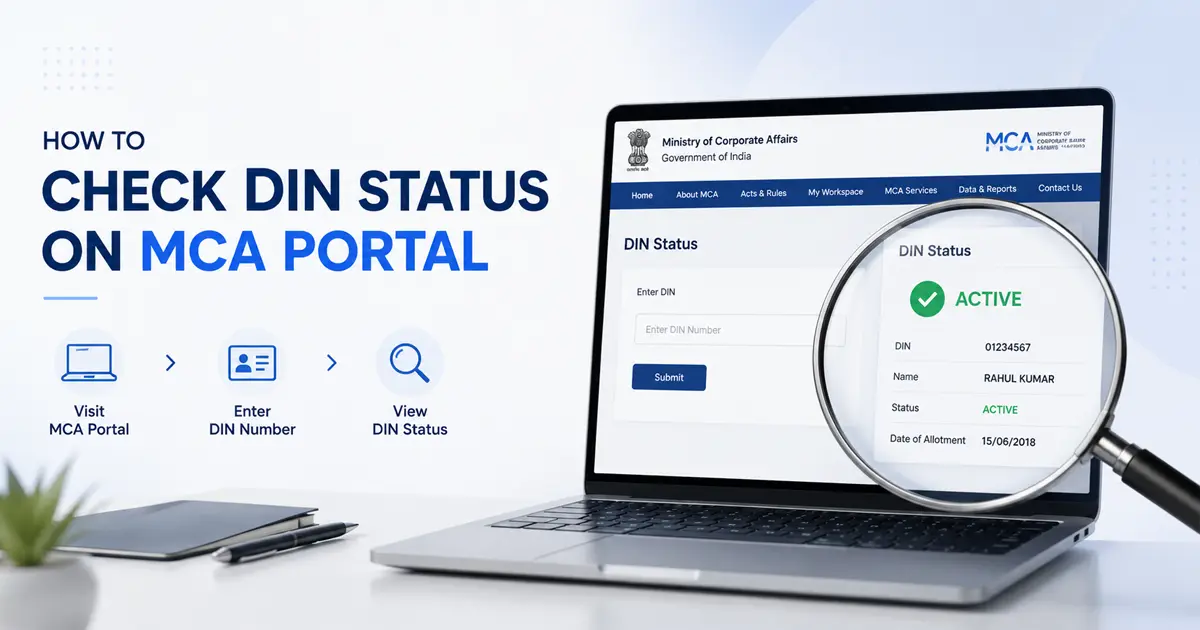
How to Check DIN Status on MCA Portal: Step-by-Step
How to Close a Sole Proprietorship Firm in India: Procedure

One Person Company (OPC) Tax Benefits in India 2026
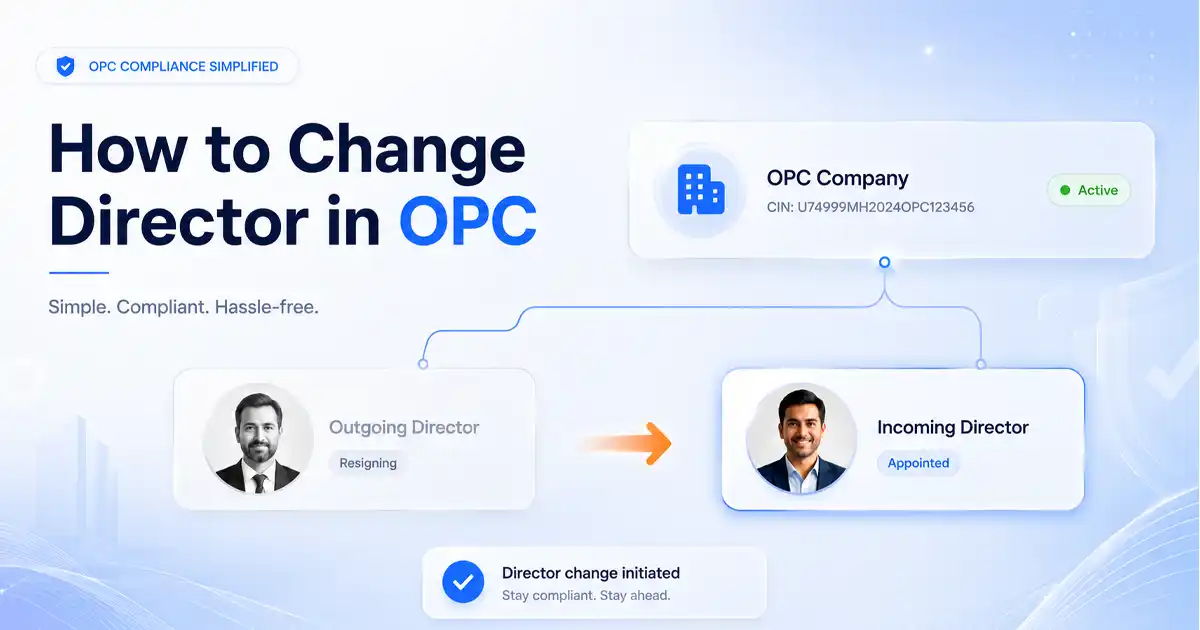
How to Change Director in OPC: DIR-12 Process & Compliance 2026
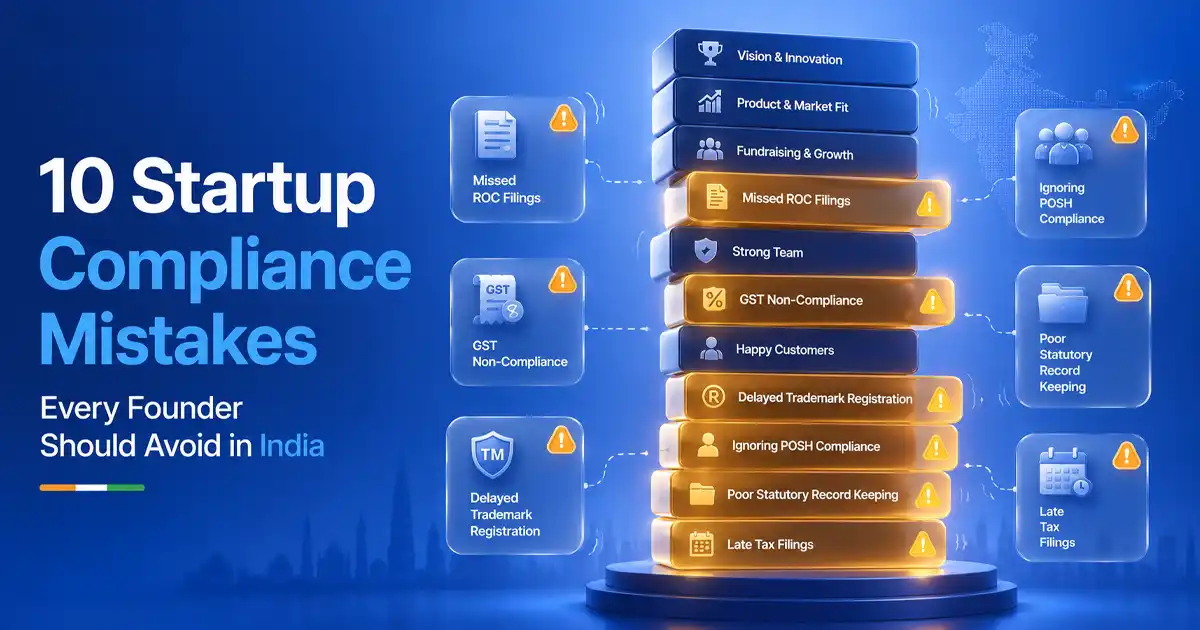
10 Startup Compliance Mistakes Founders Must Avoid in 2026
How to Avoid MCA Notices: Top Causes, Penalties & Prevention
Dormant Company vs Active Company: Difference & Comparison Table
How to Change Company Status from Dormant to Active (MSC-4)
ROC Notice for Strike Off: Meaning, Reply & Consequences
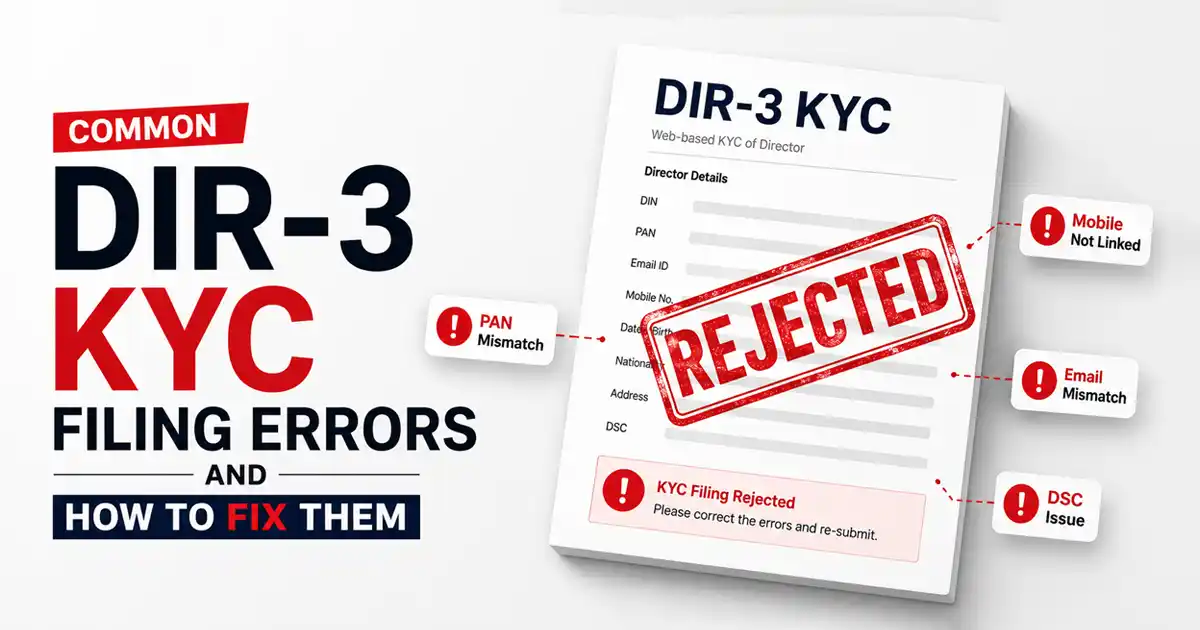
DIR-3 KYC Filing Errors: Common Mistakes & How to Fix Them