


Starting a food truck in India involves choosing a concept, arranging the vehicle and kitchen, and obtaining the required FSSAI registration or license and local permissions. You can operate a single owner-run truck, build a small fleet, cater to events and festivals, or combine on-site sales with delivery platforms such as Zomato and Swiggy. You can also choose a business structure, such as a sole proprietorship, LLP, or company, depending on your ownership and growth plans. Your concept, menu, vehicle, and operating locations will determine the investment, permissions, and day-to-day costs.
India’s food truck market is projected to reach around USD 327 million by 2034, growing at roughly 6% annually, according to IMARC. With startup costs of about ₹5–15 lakh, depending on the vehicle and kitchen setup, food trucks offer a relatively accessible entry point. However, you also need to meet the FSSAI, vehicle, municipal, fire-safety, and GST requirements that apply to your business and operating locations before commencing operations.
This guide explains how to start a food truck business step by step, covering business registration, licenses and permissions, vehicle and kitchen setup, operating costs, staffing, marketing, and common mistakes. It also reflects the applicable regulatory framework and food-truck developments as of 2026, including the Food Safety and Standards Act, 2006, Street Vendors (Protection of Livelihood and Regulation of Street Vending) Act, 2014, and GST rules.
Key Takeaways
- Starting a food truck involves choosing a concept, registering the business, setting up the vehicle and kitchen, obtaining applicable licenses, and securing permission to operate at your chosen locations.
- Key compliances can include FSSAI registration or licensing, commercial vehicle compliance, municipal vending or trade permissions, fire-safety approvals, and GST registration, depending on your business and location.
- From April 1, 2026, FSSAI registration covers food businesses with turnover up to ₹1.5 crore, with a ₹100 fee for applicable registration categories. A State License applies above ₹1.5 crore up to ₹50 crore, while a Central License applies above ₹50 crore. Fees and categories may vary by the type and scale of food business, so confirm the category applicable to your operation.
- FSSAI approval addresses food safety, not your right to park and vend at a particular location. Municipal and vending permissions are separate requirements where applicable.
- A food truck typically requires ₹5–15 lakh to set up, with the vehicle and kitchen fabrication accounting for much of the initial investment.
- Licensing fees, vending rules, parking restrictions, and other local requirements vary by city, so check the rules that apply to your operating locations before investing in the truck.
Is Legal Business Registration Required to Start a Food Truck?
Company registration is not mandatory to start a food truck. You can operate as a sole proprietorship, which is generally the simplest structure for a single-owner business. An LLP or Private Limited Company may be considered if you plan to add partners, operate multiple trucks, or raise external investment.
Regardless of the business structure, you must obtain the food, vehicle, vending, and other approvals applicable to your operations, including FSSAI registration or license and municipal vending permission.
Documents Required to Start a Food Truck Business in India
Prepare the required documents before applying for licenses and registrations to avoid delays. Common documents include:
- Owner’s identity and address proof: PAN, Aadhaar, passport-size photographs, and address proof.
- Business documents: Incorporation certificate, business PAN, partnership deed, or Udyam registration, depending on the business structure.
- Vehicle documents: Registration Certificate (RC), commercial fitness certificate, insurance, and PUC certificate.
- Kitchen and layout details: Food truck layout, equipment details, and LPG or fire-safety setup, where required.
- Food safety documents: FSSAI application details, water-potability report, and staff medical fitness certificates, where applicable.
- Vending or premises proof: Commissary or storage address proof and applicable vending or parking permissions.
- Tax documents: GST registration details, where applicable.
Exact requirements depend on the city, state, and type of operation, so confirm the applicable documents before applying.
Step-by-Step Guide to Starting Your Food Truck Business: From Concept to Launch
Starting a food truck involves six practical steps, from validating your concept and arranging licenses to launching and staying compliant.
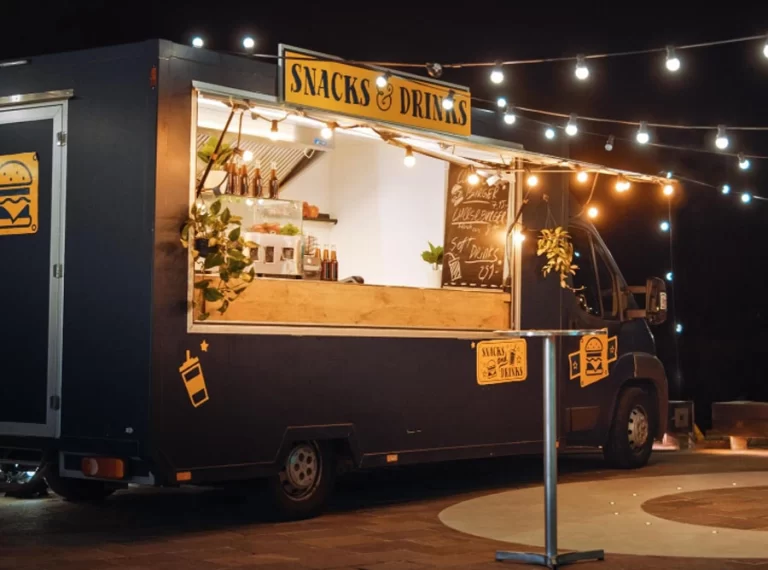
The process involves the following steps:
Step 1: Research Your Market and Create a Business Plan
Start by deciding what you will sell, who you will serve, and where you will operate.
Research your target locations before investing in a truck.
- Study customer demand: Check footfall around tech parks, colleges, markets, residential areas, and event venues to find locations with regular demand.
- Research competitors: Note their cuisines, prices, busiest hours, and locations. Look for gaps rather than simply copying an existing concept. A distinct niche, like vegan, regional, or gourmet street food, can help you stand out.
- Build your menu: Choose items that are practical to prepare in a small kitchen and can be served quickly during busy periods.
- Calculate your numbers: Estimate the truck and equipment cost, ingredients, staff, fuel, parking, licenses, marketing, and other monthly expenses.
- Set sales targets: Work out how many orders you need each day to cover your costs and reach your desired profit.
Step 2: Choose Your Business Structure and Register the Business
Choose a structure based on the number of owners, liability, compliance needs, and plans to expand.
| Structure | Suitable for | Key consideration |
| Sole proprietorship | One owner-run food truck | Simple to set up, but the business and owner are not separate legal entities |
| Partnership firm | Two or more owners | Allows shared capital and responsibilities, but partners may have personal liability |
| LLP | Multiple owners planning a more structured business | Separate legal entity with more compliance than a proprietorship or traditional partnership |
| Private limited company | Businesses planning multiple trucks or outside investment | Separate legal entity with higher compliance and stronger scope for bringing in investors |
After selecting the structure, register the business and keep the documents you may need for license applications. Depending on the structure, these may include a Company Incorporation Certificate, partnership deed or MOA/AOA, and business PAN.
Then set up the basic financial systems you will use to run the business:
- Open a business bank account: Keep food truck sales and expenses separate from personal transactions. This makes bookkeeping, tax filing, and financial tracking easier.
- Start basic bookkeeping: Record daily sales and expenses such as ingredients, wages, fuel, maintenance, and license renewals. This helps you track operating costs and profit margins from the start.
Step 3: Obtain Food, Vehicle, and Local Permissions
Before you start selling, identify the permissions that apply to your food business, vehicle, and chosen operating locations. Requirements vary by city and how the truck operates, so check with the relevant authorities before finalizing your locations.
| License / Registration | Issuing authority | Typical cost | Key point |
| FSSAI Registration/License | FSSAI | Varies, depending on category | Basic registration covers turnover up to ₹1.5 crore; the State License applies above ₹1.5 crore and up to ₹50 crore; the Central License applies above ₹50 crore or when operating across multiple states. FSSAI registrations and licenses now have perpetual validity unless suspended, canceled, or surrendered. |
| Commercial vehicle registration and fitness | RTO | Varies | Keep the RC, fitness certificate, insurance, and PUC valid as applicable to the vehicle. |
| Municipal vending/trade permission | Local municipal authority / Town Vending Committee | Varies | Determines where and under what conditions you can operate in public spaces. Check permitted vending zones before choosing locations. |
| Health trade license | Local authority | Varies | May apply to food preparation or handling, depending on local rules. |
| Fire safety approval / NOC | Local or state fire authority | Varies | May be required depending on the truck’s cooking setup, LPG use, premises, or local requirements. |
| Police / public-order / event permission | Local police/authority | Varies | May apply where local rules require permission for operating in public spaces or at specific locations. |
| Shop and Establishment registration | State labor department | Varies | Requirements depend on the state and how the business operates and employs staff. |
| GST registration | GST authorities | Free | Registration depends on applicable GST rules, turnover, supply model, and other conditions. |
| Pollution/waste compliance | State pollution control board / local authority | Varies | A separate environmental clearance is not automatic, but generator use, waste disposal, and noise rules may apply depending on your equipment and location. |
For a food truck operating in public spaces, the Certificate of Vending may be required and is generally obtained through the local Town Vending Committee (TVC) under the Street Vendors Act. The operator applies to the relevant local authority, provides the required business and identity documents, and undergoes the applicable verification. If approved, the TVC issues the certificate specifying the permitted vending area and applicable conditions.
Note: An FSSAI registration or license confirms compliance with food safety requirements, but it does not authorize you to park or sell at a particular location. You must separately follow local municipal, vending, parking, and traffic rules for each place where you plan to operate. Under FSSAI’s 2026 reforms, certain street food vendors already registered under the Street Vendors Act through a municipal corporation or Town Vending Committee are treated as having deemed FSSAI registration, subject to the applicable conditions.
Step 4: Buy and Set up the Food Truck
Once you understand the regulatory requirements, choose a vehicle and design the kitchen around your actual menu.
- Choose the right vehicle: Consider road conditions, parking restrictions, kitchen space, storage needs, and your budget before buying. Compact, easily customized models such as the Tata Ace, Mahindra Supro, or Maruti Eeco are popular food-truck bases.
- Install essential equipment: Depending on the menu, this may include a griddle, fryer, refrigerator, storage units, water systems, LPG equipment, and fire-safety equipment.
- Plan the workflow: Arrange the kitchen so staff can move logically from storage to preparation, cooking, and serving without unnecessary movement.
- Prioritize hygiene: Use food-safe surfaces, adequate ventilation, clean-water storage, and proper waste disposal systems.
- Add visible branding: Use the truck’s exterior for your business name, logo, menu highlights, and contact details. A catchy name and memorable logo carried consistently across the truck’s graphics help you stand out and be recognized across locations.
Step 5: Set up Your Team and Daily Operations
- Hire and train staff: Assign clear roles for cooking, preparation, billing, and customer service. Train everyone in food handling and personal hygiene.
- Find reliable suppliers: Choose suppliers who can provide consistent quality and timely deliveries, especially for ingredients you use every day.
- Set up inventory controls: Track purchases, daily usage, wastage, and closing stock to prevent shortages and unnecessary food costs. Inventory apps such as GoFrugal can automate this.
- Create cleaning routines: Set daily schedules for cleaning cooking equipment, work surfaces, storage areas, water systems, and the vehicle.
- Finalize pricing: Set menu prices after calculating food and packaging costs, platform charges, labor, fuel, maintenance, taxes, and other operating expenses. Instead of relying on a standard profit margin, build a break-even model based on your expected daily orders and average order value.
Step 6: Launch, Market, and Maintain Compliance
Start small, test the operation, and make adjustments before committing to a full launch.
- Run a soft launch: Serve a limited menu first to test preparation time, customer response, staffing, and order volumes.
- Promote your location: Share your daily location, timings, menu, and offers through Instagram, WhatsApp, Google Business Profile, and other relevant channels. List the truck on delivery platforms like Zomato and Swiggy if you plan to deliver.
- Build customer reviews: Encourage genuine feedback and use it to improve food, service, and menu choices.
- Track performance: Monitor daily sales, average order value, food costs, wastage, and repeat customers to identify what is working.
- Stay compliant: Renew FSSAI, vehicle, municipal, fire-safety, and other applicable registrations on time and complete required tax and statutory filings.
A food truck establishment typically takes 1 to 3 months. FSSAI, vehicle, and vending permissions may take 2 to 6 weeks, while truck purchase and fit-out can take 3 to 6 weeks alongside the licensing process.
Cost to Start a Food Truck Business in India
Starting a food truck in India can cost somewhere around ₹5–15 lakh, depending on the vehicle, kitchen setup, menu, location, and operating model.
| Cost component | Typical cost | What it covers |
| Vehicle | ₹1.5–₹6 lakh | Used or new commercial vehicle suitable for conversion into a food truck |
| Kitchen fabrication and equipment | ₹1.5–₹4 lakh | Cooking equipment, refrigeration, LPG setup, water tanks, exhaust, storage, and fire-safety equipment |
| Licenses and registrations | ₹5,000–₹30,000+ | FSSAI, vehicle-related charges, municipal permissions, fire approvals, and other applicable registrations. Costs vary by city and business structure |
| Branding and truck wrap | ₹20,000–₹50,000 | Logo, exterior graphics, signage, menu boards, and other branding |
| Initial inventory | ₹20,000–₹50,000 | Ingredients, packaging, cleaning supplies, and other opening stock |
| POS, utensils, and miscellaneous equipment | ₹20,000–₹40,000 | Billing system, utensils, serving equipment, storage containers, and small tools |
| Working capital | ₹50,000–₹1 lakh | Initial fuel, wages, ingredients, parking, maintenance, and other operating expenses |
| Estimated initial investment | ₹5–₹15 lakh | Actual cost depends mainly on the vehicle, kitchen build, location, and scale of operations |
A used vehicle with a basic kitchen can keep the initial investment lower, while a new vehicle with custom fabrication and equipment can push the budget toward the higher end.
To see whether the numbers work, build a quick break-even model instead of assuming a fixed profit margin. For example:
- Average order value: ₹150
- Food and packaging cost: ~₹60 per order, leaving ₹90 contribution per order
- Monthly fixed costs: ~₹65,000 for parking, wages, fuel, maintenance, and other expenses
Break-even orders: ₹65,000 ÷ ₹90 ≈ 723 orders per month, or about 24 orders per day if you operate 30 days a month.
Note: License and permission costs are indicative. FSSAI fees depend on the applicable registration or license category, while municipal, vending, health, fire, and vehicle-related charges vary by location and requirements. GST registration itself has no government application fee, although professional assistance may cost extra.
Can a Food Truck Operate Anywhere in India?
While an FSSAI registration or license allows you to operate a food business, it does not give you the right to vend at any location. Where you can park and sell depends on local vending, traffic, and property rules:
- Public spaces: Roads, footpaths, and other public areas are subject to local vending and traffic rules.
- Vending zones: Cities may designate vending zones and require a Certificate of Vending from the local Town Vending Committee.
- Private property: Operating on a mall, office campus, or private plot generally requires the owner’s permission or a space agreement.
- Events: Fairs, festivals, and markets may require separate permission from the organizer or local authority.
- Local rules: Parking, vending zones, operating hours, and permit requirements can differ between cities.
Tip: Before operating at a new location, check the applicable vending, parking, and property permissions with the local authority.
Common Mistakes to Avoid When Starting a Food Truck
A food truck may cost less to start than a restaurant, but small compliance or operational mistakes can quickly increase costs. Watch out for these common pitfalls:
- Assuming FSSAI approval lets you sell anywhere: FSSAI registration or licensing covers food safety. It does not give you permission to park or vend at any location. Check municipal vending, parking, and location-specific requirements before choosing your route.
- Choosing the wrong FSSAI category: Select the registration or license based on your applicable food business category and turnover. From April 1, 2026, FSSAI registration covers businesses with turnover up to ₹1.5 crore, subject to the applicable rules.
- Treating every local permit as permanent: Municipal, vending, health, and fire requirements differ by location and may have specific validity or renewal conditions. Keep a record of every approval and its renewal or compliance date.
- Cutting corners on LPG and fire safety: A food truck has limited space and often uses cooking equipment and LPG. Use compliant equipment, proper fittings, ventilation, and fire-safety measures, and obtain any approvals required by the local authority.
- Choosing a location without researching it: High footfall does not automatically make a location suitable. Check whether vending is permitted, study nearby competition, assess customer demand, and factor in parking and operating restrictions.
- Underestimating working capital: Spending most of the budget on the vehicle and kitchen can leave little money for wages, fuel, ingredients, maintenance, and other expenses. Keep a working-capital buffer for the initial months.
- Losing control of inventory and hygiene: Poor stock rotation and inaccurate purchasing can increase food wastage and costs. Follow consistent storage, cleaning, and food-handling practices and maintain the required records.
- Relying on walk-in customers alone: Food trucks depend heavily on visibility and location. Use social media, location updates, offers, and repeat-customer strategies to let customers know where and when you will operate.
Food Truck vs Restaurant: Which Should You Start?
A food truck and a restaurant differ mainly in startup cost, location, operating expenses, and customer experience. Your available capital, target market, and preferred business model can help determine which format fits better.
| Aspect | Food Truck | Restaurant |
| Setup cost | ~₹5–15 lakh | ~₹25 lakh or more |
| Location | Mobile, subject to vending and parking rules | Fixed commercial premises |
| Rent | Parking, vending, or storage costs | Rent, security deposit, and other premises costs |
| Staff | Usually a small team of 2–4 | Larger team for kitchen and service |
| Licenses | FSSAI, vehicle, vending, fire, and applicable local approvals | FSSAI, trade, fire, and other applicable local approvals |
| Customer reach | Multiple locations, events, and delivery | Primarily one location, plus delivery |
| Flexibility | Easier to change locations or menu | Greater commitment to premises and setup |
| Customer experience | Primarily takeaway, outdoor, or delivery | Dine-in, takeaway, and delivery |
A food truck generally requires less upfront investment and offers greater location flexibility. A restaurant requires a larger fixed investment but can provide dedicated seating, a permanent location, and a broader dine-in experience.
Conclusion
A food truck can offer a relatively flexible way to enter India’s food business, with lower upfront investment than a traditional restaurant. It also allows entrepreneurs to test locations, menus, and customer demand before committing to a larger setup.
Success still depends on a clear concept, the right licenses, an efficient kitchen, accurate pricing, and disciplined cost and compliance management. With these in place, a food truck can build a steady customer base and provide a foundation for future expansion.
