

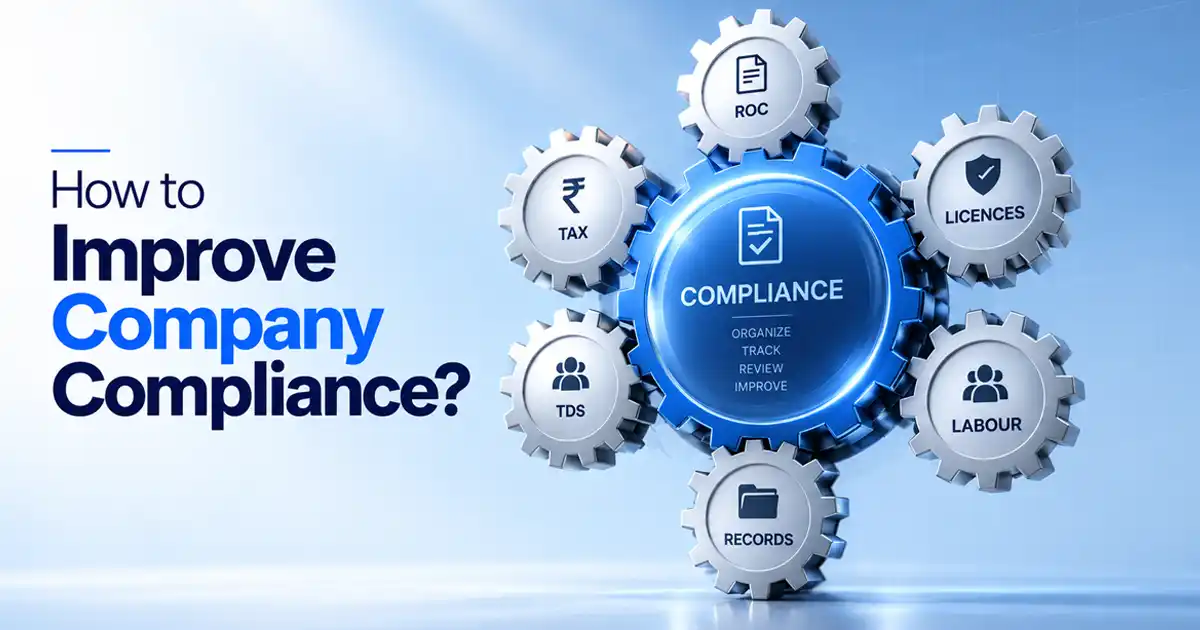
Compliance for a company is not just about filing returns before their deadlines. It involves tracking requirements, assigning responsibility, maintaining records, and keeping up with changes in tax, labor, corporate, and industry-specific regulations.
As a company grows, its compliance requirements grow with it. New employees, additional states, changes in business activities, and corporate events can all create new obligations. Without a structured process, it becomes easier to miss a deadline, overlook a filing, or let an important registration expire.
The solution is not simply to remember more deadlines. You need a compliance system that tells you what needs to be done, who is responsible, when it is due, and whether it has been completed. After all, business owners do not deliberately miss deadlines. They often lack a system that keeps every obligation visible and on track.
A clear compliance checklist, centralized calendar, defined responsibilities, regular reviews, and proper documentation can help you reduce compliance risks and avoid costly mistakes.
Key Takeaways
- Compliance failures usually come from a lack of ownership and tracking. They are not always caused by businesses being unaware of the rules.
- Compliance spans three layers. These include corporate filings with the ROC, sector-specific regulatory obligations, and internal company policies. All three need attention, not just the first.
- Improving compliance starts with an honest audit of where you currently stand. Follow this with a calendar, a written ownership policy, and automation as the business scales.
- Routine annual compliance costs around ₹10,000 to ₹30,000 for a low-activity private limited company and ₹25,000 to ₹1,50,000 or more for an active one. See the annual company compliance cost breakdown. Either way, it costs far less than catching up after falling behind.
- Late filing of AOC-4 or MGT-7 attracts an uncapped ₹100 per day penalty. Three consecutive years of default can also trigger automatic director disqualification under Section 164(2).
- Prolonged non-filing can lead to company strike-off under Section 248. After strike-off, the company legally ceases to exist, and its bank accounts are frozen.
- Review compliance quarterly and after any major business change. This helps you catch gaps before they become expensive.
- Outsourcing becomes worth considering once your business expands into multiple states, has had a missed filing, or lacks genuine compliance expertise in-house.
Why is Compliance Important for a Company?
A company preparing for a funding round may face delays if investors find overdue filings, expired licenses, or unresolved regulatory notices during due diligence. Staying compliant helps you avoid such issues and keeps your business ready for funding, partnerships, and growth.
Here are some of the key ways proper compliance can benefit your company:
- Keeps your company in good legal standing: Timely filings and registrations help meet the requirements applied to your business and avoid regulatory action.
- Reduces financial penalties: Late filings, missed payments, and other compliance failures can result in additional fees of at least ₹100 per day in some cases, along with interest or penalties.
- Protects directors from avoidable consequences: Certain defaults can lead to director disqualification under the Companies Act, 2013.
- Supports funding and business partnerships: Investors, lenders, and larger corporate clients may review your company’s compliance records during due diligence.
- Builds business credibility: Up-to-date filings, valid registrations, and well-maintained records show customers, partners, and regulators that your business follows the required processes.
Step-by-Step Process to Improve Compliance in a Company
Strong annual compliance for a private limited company starts with knowing what needs to be done, who is responsible, and when each requirement is due. You need a clear process for identifying requirements, assigning responsibilities, maintaining records, and reviewing compliance regularly.
Here are the key steps you can follow to improve compliance in your company:
1. Conduct a Compliance Audit
Start by checking your company’s current compliance position. A compliance audit helps you identify missed filings, expired registrations, unpaid dues, and gaps in your records.
Review the following areas and ask questions:
- MCA and ROC filings: Have all annual returns, financial statements, event-based filings, and other applicable MCA filings been completed on time?
- Tax compliance: Are your GST returns, TDS filings, and income tax requirements up to date? Are there any outstanding dues?
- Statutory records: Are your registers, minutes, resolutions, and other required records properly maintained?
- Licenses and registrations: Are all required licenses and registrations still valid? Have any renewals been missed?
- Past notices and defaults: Are there any pending government notices, penalties, late filings, or unresolved compliance issues?
Run this audit at least once a year. You should also conduct one after major changes, such as entering a new state, changing your business activity, or restructuring the company.
2. Identify All Applicable Compliance Requirements
Not every company has the same compliance obligations. Your requirements depend on factors such as business structure, industry, location, employees, turnover, and business activities. A producer company, for example, follows its own compliance calendar for producer company obligations.
Create a list of all requirements that apply to your company. This may include:
- MCA and ROC filings
- GST and income tax compliance
- TDS requirements
- Labor and payroll compliance
- Industry-specific licenses
- State-specific registrations
- Event-based filings and approvals
Review this list whenever your company launches a new activity, enters a new state, hires employees, or changes its structure.
3. Create a Company Compliance Checklist
Turn your compliance requirements into a practical checklist. Include the name of each filing or obligation, its due date, the person responsible, required documents, and its current status.
A checklist can help you track recurring and event-based requirements in one place. A statutory compliance checklist can help organize your key statutory obligations.
4. Build a Compliance Calendar
A compliance calendar gives your company a central view of upcoming deadlines. Add ROC filings, GST and TDS returns, tax payments, labor requirements, license renewals, and board meeting requirements.
Set reminders before each deadline instead of waiting until the due date. You can also create a compliance calendar to track recurring obligations and assign tasks in advance.
5. Assign Clear Ownership for Each Compliance Task
Every compliance requirement should have a clearly assigned owner. Avoid keeping all compliance knowledge with one person.
Assign responsibilities to the appropriate teams or professionals. For example, finance may handle tax filings, HR may manage payroll-related requirements, and the company secretary or compliance professional may oversee corporate filings.
Set a backup person for important tasks. This helps prevent missed deadlines when the primary owner is unavailable.
6. Draft an Internal Compliance Policy
An internal compliance policy explains how your company will manage its obligations. It should define who handles each requirement, how documents are maintained, and what happens when a deadline is missed.
The policy should also include an escalation process. Employees should know whom to contact when they identify a compliance issue or receive a regulatory notice.
Review the policy whenever there is a major regulatory or business change.
7. Maintain Proper Statutory Records and Documents
Keep your compliance documents organized and easy to access. These may include statutory registers, board minutes, resolutions, financial records, filing acknowledgments, licenses, certificates, and government notices.
Use a consistent naming and storage system. Keep copies of important filings and supporting documents so you can retrieve them during an audit, due diligence process, or regulatory review.
8. Use Technology and Standardized Processes
Manual tracking can make it easier to miss deadlines or lose important documents. Use compliance software, spreadsheets, or centralized systems to track tasks, reminders, documents, and approvals.
Standardize recurring processes wherever possible. Create document templates, filing checklists, approval workflows, and reminder schedules for regular compliance tasks.
9. Conduct Regular Compliance Reviews
Review your company’s compliance regularly instead of waiting for annual filings. Check for missed tasks, upcoming deadlines, expired registrations, and regulatory changes.
Update your compliance checklist, calendar, and processes whenever requirements change. Review quarterly, or more often if your business has complex compliance needs.
10. Train Employees on Compliance Requirements
Compliance is not limited to the finance or legal team. Employees can also trigger compliance obligations through hiring, payments, contracts, customer data, business activities, or operational decisions.
Train relevant employees on the requirements connected to their roles. Explain what they need to do, what records they need to maintain, and when they should escalate an issue.
Provide refresher training when regulations or internal processes change.
Common Compliance Mistakes Companies Should Avoid
Even companies that have a compliance process can face problems when responsibilities or records are not managed properly. Avoiding these common mistakes can help you keep your compliance process on track.
- Tracking only annual filings: Compliance also includes monthly, quarterly, event-based, tax, labor, and license-related requirements.
- Relying on one person: Keeping all compliance knowledge with one employee creates a risk if that person leaves or is unavailable. Assign backup owners for important tasks.
- Missing event-based requirements: Changes such as appointing a director, changing the registered office, issuing shares, or altering business activities can trigger additional filings.
- Assuming low business activity means low compliance: A company may still have mandatory filing and record-keeping requirements even when it has limited transactions or operations.
- Ignoring regulatory updates: Changes in laws, filing forms, deadlines, and government procedures can make an old compliance process outdated.
- Keeping incomplete records: Missing minutes, registers, filing acknowledgments, or supporting documents can create problems during audits and due diligence.
- Waiting until the deadline: Last-minute filing leaves little time to correct errors or arrange missing documents. Set internal deadlines before the statutory due dates.
- Failing to review compliance after business changes: Expanding to another state, hiring employees, adding a new activity, or restructuring the company can create new compliance obligations.
How Often Should a Company Review Compliance?
Compliance should be reviewed throughout the year rather than only during annual filing periods. A regular review helps you identify missed requirements, upcoming deadlines, and new obligations early.
- Monthly: Check upcoming deadlines, pending filings, tax payments, and unresolved compliance tasks. For example, review whether your GSTR-1 filing is due.
- Quarterly: Review the overall compliance position, statutory records, licenses, and new risks. For example, check your quarterly TDS filings, where applicable.
- Annually: Conduct a detailed compliance review and update your checklist, calendar, and internal compliance policy. For example, verify your annual GST return (GSTR-9) filing requirement.
- Whenever a rule changes: The DIR-3 KYC shift from annual to triennial filing is one recent example. The bigger ones in 2025-26 were the consolidation of 29 labor laws into four Labour Codes (effective November 2025, changing minimum wage, overtime, and fixed-term employee benefit rules) and GST 2.0’s slab restructuring (effective September 2025). Both required companies to actually revisit payroll processes and pricing, not just note the change and move on.
The review frequency should also match your company’s size, industry, and level of regulatory exposure. Businesses with more complex operations may need more frequent reviews.
What are the Consequences of Non-Compliance?
Missing a compliance requirement can create more than a late fee. The full list is covered in the consequences of not filing company compliance. Repeated or serious defaults can affect your company’s operations, directors, finances, and business reputation.
Some common consequences include:
- Penalties and additional fees: Late filings and missed payments can lead to penalties, interest, and additional government fees. Late filing of AOC-4 or MGT-7 attracts an additional fee of ₹100 per day, per form, with no upper limit, meaning the cost keeps growing every day the filing remains pending.
- Director disqualification: Under Section 164(2) of the Companies Act, 2013, a director can face disqualification if the company fails to file its financial statements or annual returns for a continuous period of three financial years. The disqualification can apply for five years.
- Company strike-off: Under Section 248 of the Companies Act, 2013, the Registrar can strike a company off the register after prolonged non-filing. Once struck off, the company legally ceases to exist, its bank accounts get frozen, and outstanding contracts become effectively unenforceable.
- Regulatory action: Serious or repeated violations can result in notices, restrictions, or other action from the relevant authorities.
- Business disruption: Expired registrations, missed filings, or unresolved regulatory issues can interfere with normal business operations.
- Funding and partnership risks: Investors, lenders, and corporate partners may identify compliance gaps during due diligence and ask for them to be resolved before moving forward.
- Loss of credibility: A history of missed filings or unresolved compliance issues can make it harder to build trust with customers, partners, and other stakeholders.
Tip: Incorporation is only the starting point. A fresh set of compliance obligations, like statutory registers and director KYC, begins the moment your company is registered. Missing any of these early requirements creates the exact kind of gap this guide is helping you avoid. RegisterKaro handles this entire post-incorporation process for you, so nothing slips through in the first few critical months.
When Should a Company Consider Compliance Outsourcing?
Compliance outsourcing can help when your internal team does not have enough time or expertise to manage all applicable requirements. It can also provide additional support as your company grows or its compliance needs become more complex.
You may consider outsourcing when:
- Your compliance workload is increasing: More employees, locations, transactions, or business activities can create additional compliance requirements.
- You do not have in-house expertise: If your team is unfamiliar with specific MCA, tax, labor, or industry requirements, external professionals can provide specialized support.
- Deadlines are frequently missed: Repeated delays or last-minute filings may indicate that your current process needs additional support.
- You operate across multiple states: Different state-level registrations and labor requirements can make compliance harder to manage internally.
- Your team spends too much time on compliance: Outsourcing routine compliance work can allow your finance, HR, and management teams to focus on core business activities.
- You are preparing for funding or due diligence: External compliance support can help identify and address outstanding filings, documentation gaps, and other issues before a review.
Outsourcing does not remove the company’s responsibility to comply with applicable laws. Your internal team should still monitor the work, provide accurate information, and maintain oversight of important compliance obligations.
