

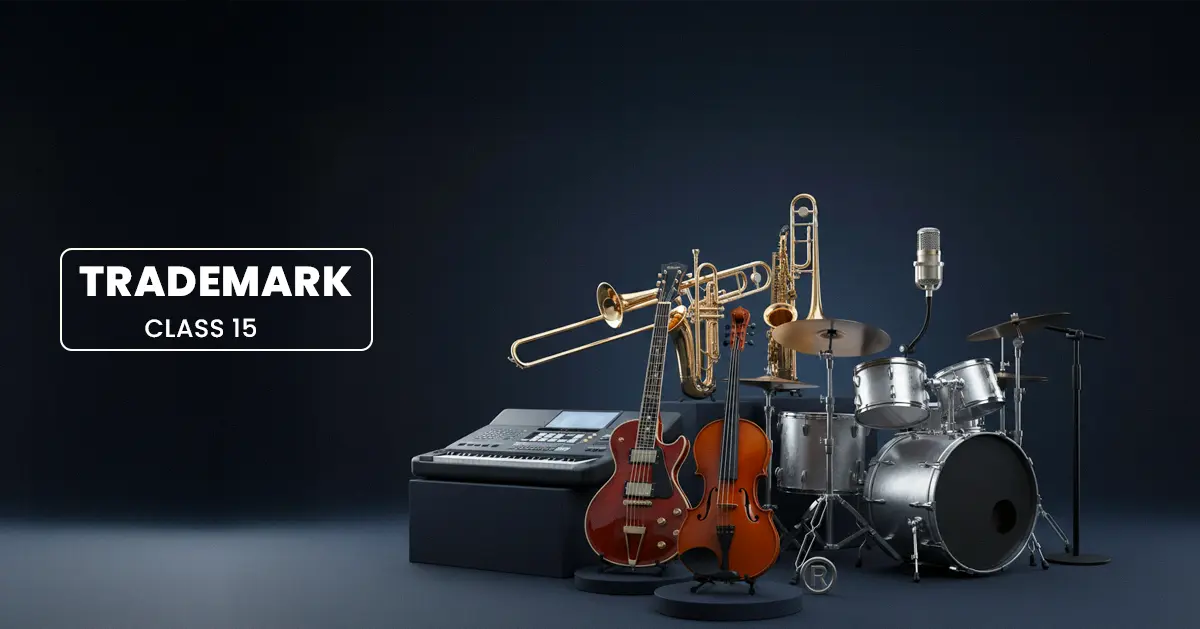
Trademark Class 15 covers musical instruments and items. Businesses that manufacture, sell, or trade musical instruments, including string, wind, brass, and percussion instruments, use this trademark class for registration. It also includes electronic musical instruments and synthesizers that people use for music creation. This class also extends to their parts, fittings, and accessories, such as tuning forks, metronomes, instrument stands, and conductors’ batons.
However, this class does not cover recorded music, sound recordings, or audio equipment. It only protects the brand identity of musical instruments and their essential accessories.
Key Takeaways
- Class 15 covers musical instruments (string, wind, brass, percussion, electronic) and their accessories, including music stands, tuning devices, and conductors’ batons.
- It does not cover recorded music or audio equipment (Class 9), music streaming services (Class 41), sheet music (Class 16), non-musical toys (Class 28), or unrelated merchandise (Class 25).
- This guide reflects the current NICE Classification 13th Edition (NCL 13-2026), adopted by the Indian Trademark Registry.
- Filing costs ₹4,500 per class for individuals, startups, and MSMEs, and ₹9,000 for companies and other entities.
- Validity runs 10 years, renewable every 10 years.
- Yamaha, Fender, Gibson, and Steinway & Sons are examples of real Class 15 registrants.
What is Trademark Class 15?
Trademark Class 15 covers musical instruments and their accessories, including guitars, pianos, strings, and drumsticks. It follows the NICE Classification 13th Edition (NCL 13-2026), adopted by the Indian Trademark Registry. The Trade Marks Act, 1999, governs trademark registration for Class 15 in India. It gives businesses exclusive rights to use their marks and prevents others from copying or misusing their brand names.
Registration under Class 15 also helps businesses build customer trust and brand recognition. It allows owners to take legal action against trademark infringement and supports smooth business expansion. A registered trademark becomes a valuable business asset over time.
Popular examples registered under Trademark Class 15 include brands such as Yamaha, Fender, Gibson, and Steinway & Sons. These brands enjoy strong global recognition and are legally protected from imitation.
Who Should Choose Trademark Class 15 in India?
Businesses involved in musical instruments and related products should register under Trademark Class 15. The main beneficiaries include:
- Musical instrument manufacturers: Companies producing guitars, pianos, violins, drums, or wind instruments.
- Electronic instrument brands: Businesses selling keyboards, synthesizers, and digital musical instruments.
- Musical accessory makers: Brands manufacturing guitar strings, drumsticks, mouthpieces, tuning forks, or metronomes.
- Instrument retailers and traders: Businesses distributing musical instruments and their parts under a brand name.
- Exporters of musical instruments: Companies exporting instruments or accessories can protect their brand in global markets.
Key Categories in Trademark Class 15
Trademark Class 15 covers musical instruments and items directly related to music production. The key categories include:
- String instruments: Guitars, violins, cellos, and similar instruments.
- Wind instruments: Flutes, clarinets, saxophones, and recorders.
- Brass instruments: Trumpets, trombones, tubas, and horns.
- Percussion instruments: Drums, cymbals, xylophones, and tambourines.
- Electronic musical instruments: Keyboards, synthesizers, and digital instruments.
- Parts and accessories: Strings, bows, drumsticks, mouthpieces, tuning devices, instrument stands, and conductors’ batons.
List of Goods Covered Under Trademark Class 15 in India
The table below covers a detailed list of musical instruments and items included in trademark class 15:
| Category | Examples of Goods Covered |
|---|---|
| String Instruments | Guitars, violins, harps, banjos, mandolins |
| Keyboard Instruments | Pianos, organs, accordions, synthesizers, keyboards |
| Percussion Instruments | Drums, tambourines, xylophones, bongos, cymbals |
| Wind Instruments | Flutes, clarinets, saxophones, trumpets, harmonicas |
| Electronic Musical Instruments | Electronic keyboards, digital pianos, drum pads, synthesizers |
| Musical Instrument Accessories | Guitar strings, drumsticks, violin bows, mouthpieces, reeds |
| Tuning and Metronome Devices | Tuning forks, metronomes, electronic tuners |
| Instrument Stands & Holders | Music stands, guitar stands, drum racks |
| Conducting & Performance Tools | Conductors’ batons, music practice aids |
| Other Musical Instruments | Xylophones, tambourines, castanets, marimbas, bagpipes |
Goods Not Covered in Trademark Class 15
The table below describes the goods that do not fall in the Trademark Class 15 category:
| Goods | Recommended Trademark Class |
|---|---|
| Recorded music, CDs, and digital audio files | Class 9 |
| Music streaming services or apps | Class 41 |
| Audio equipment (speakers, microphones, headphones) | Class 9 |
| Sheet music and printed music publications (unless part of a mechanical instrument) | Class 16 |
| Non-musical toys or electronic gadgets | Class 28 |
| Merchandise unrelated to musical instruments (clothing, bags) | Class 25 |
How to Register for Trademark Class 15 in India?
You can apply for a trademark in Class 15, whether your musical instruments or items are already in use or planned for future launch. Here’s the process:
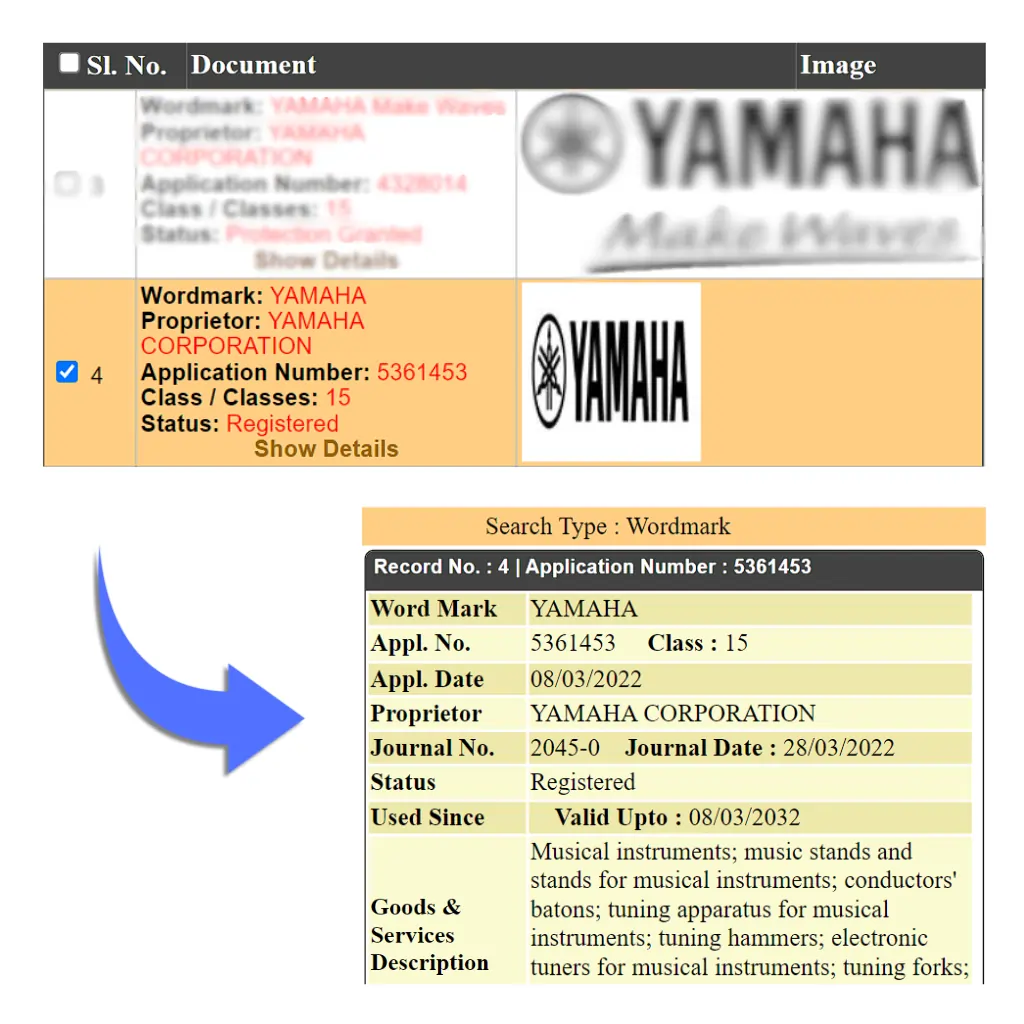
- Search first: Check the IP India Trademark Search portal. You can also use RegisterKaro’s trademark name availability tool. This helps confirm that your brand name or logo is not already registered under Class 15.
- File Form TM-A: Submit the application online through the IP India Trademark Portal. Choose a single-class application for Class 15 goods. If your brand covers other classes, choose a multi-class application.
- Pay the government fee: The fee is ₹4,500 per class for individuals, startups, and MSMEs. For companies and other entities, it is ₹9,000 per class.
- Examination: The Trademark Registry reviews your application. It checks the mark’s originality, classification, and similarity to existing marks. If there are issues, it may issue an Examination Report. You must reply to trademark objections within 30 days.
- Publication and opposition: Once approved, the mark is published in the Trademark Journal. It stays open for opposition for 4 months. During this period, third parties can file a trademark opposition.
- Registration and renewal: After registration, you can use the ® symbol. The trademark is valid for 10 years. You must renew your trademark every 10 years.
The examination usually takes 6–12 months. After approval, the mark goes through a 4-month publication period.
Common Mistakes While Registering for Trademark Class 15
Businesses often make mistakes when applying for Trademark Class 15 in India. These errors can lead to objections, delays, or even rejection. Avoid the following mistakes:
- Choosing the wrong class: Some applicants confuse musical instruments with audio equipment, recorded music, or music services, which fall under other classes.
- Using vague product descriptions: Broad terms like “musical products” or “instruments” may raise objections. Specify the type of instruments or accessories clearly.
- Skipping a trademark search: Filing without checking existing trademarks can lead to conflicts with similar marks.
- Ignoring brand distinctiveness: Generic or descriptive names like “Guitar World” or “Piano Store” face higher rejection risks. The brand must be unique and memorable.
- Missing objections or deadlines: Failing to respond to examination reports within 30 days can result in application abandonment.
- Not planning for future products: Registering only current instruments or accessories may require new filings if the business expands to other musical items.
- Filing without professional guidance: Incorrect forms or incomplete documents can delay approval. Expert assistance ensures accurate filing and strengthens your application.
