

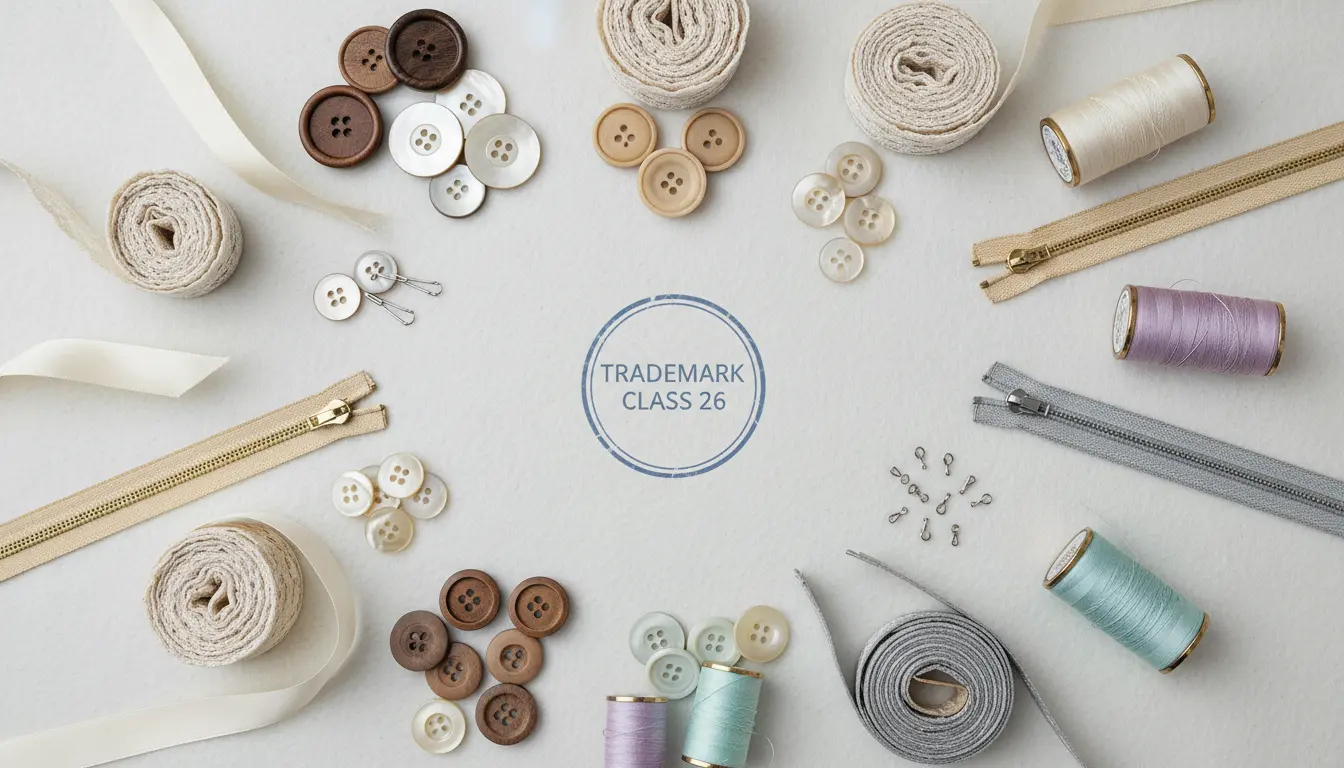
Trademark Class 26 covers various sewing and haberdashery accessories. The category includes products such as lace, ribbons, braids, buttons, hooks, and sewing fasteners. It also covers related items like pins, needles, artificial flowers, and hair decorations used in garment finishing and decoration.
Registering under Class 26 gives a brand exclusive rights to its name or logo for sewing and garment accessories. It stops competitors from copying or imitating the products. Class 26 also strengthens brand recognition and provides legal protection against infringement. Businesses that manufacture, sell, or trade these products can register their brand under Class 26 to secure legal protection.
Key Takeaways
- Class 26 covers lace, ribbons, braids, buttons, hooks and eyes, pins, needles, artificial flowers, hair decorations, and false hair.
- Yarns and threads for sewing or textile use are Class 23, not Class 26. This is a common point of confusion since needles and pins sit alongside thread in a sewing kit.
- It does not cover finished clothing (Class 25), fabrics (Class 24), sewing machines (Class 7), jewelry (Class 14), or bags and leather goods (Class 18).
- Filing costs ₹4,500 per class for individuals, startups, and MSMEs, and ₹9,000 for companies and other entities.
- Validity runs for 10 years and can be renewed indefinitely.
- Coats, DMC, Prym, and Gutermann are examples of real Class 26 brands.
Why Register a Trademark Under Class 26?
Trademark Class 26 protects brands dealing in sewing and garment accessories. In India, trademark registration is governed by the Trade Marks Act, 1999. It gives businesses exclusive rights to use their brand name or logo for these products. A registered trademark allows businesses to take legal action against trademark infringement and protects their products in the market.
Over time, a registered trademark becomes a valuable business asset and supports growth into new lines.
Popular brands registered under Class 26 include Coats, DMC, and Prym. Trademark Class 26 protects brands dealing in sewing and garment accessories.
Who Should Choose Trademark Class 26 in India?
Businesses dealing in sewing and garment accessories should register under Trademark Class 26. The main beneficiaries include:
- Accessory manufacturers: Companies producing ribbons, lace, buttons, hooks, pins, and decorative trims.
- Sewing material brands: Businesses selling sewing needles, fasteners, braids, and other garment components.
- Textile embellishment makers: Brands creating decorative sewing items or craft accessories.
- Retailers and distributors: Shops or online sellers offering sewing and textile accessories under a brand name.
- Exporters of sewing accessories: Companies exporting sewing or garment materials can protect their brand in global markets.
Key Categories in Trademark Class 26 in India
Trademark Class 26 covers sewing, garment, and textile accessories used for fastening, decoration, and finishing. The key categories include:
- Fastening accessories: Buttons, hooks, eyes, press studs, snaps, and zippers.
- Decorative trims: Lace, ribbons, braids, fringes, embroidery trims, and ornamental borders.
- Sewing essentials: Needles, pins, and tailoring accessories.
- Hair accessories: Hair clips, hair bands, hairpins, scrunchies, and decorative hair ornaments.
- Garment support items: Buckles, clasps, and non-clothing fasteners used with garments.
- Dressmaking and tailoring accessories: Hooks, eyes, closures, and other small items used in garment construction and finishing.
What Goods are Covered Under Trademark Class 26 in India?
The table below provides a detailed list of goods and accessories covered under Trademark Class 26 in India:
| Category | Examples |
|---|---|
| Fastening Accessories | Buttons, press buttons, snap fasteners, hooks, eyes |
| Closures and Fittings | Zippers, clasps, buckles, garment closures |
| Decorative Trims | Lace, ribbons, braids, fringes, embroidery trims |
| Sewing Tools | Needles, safety pins, dressmaking pins |
| Garment Support Items | Hook-and-loop fasteners, fastening tapes, corset accessories, garment supports |
| Hair Accessories | Hair clips, hair bands, hairpins, scrunchies, barrettes |
| Decorative Items | Artificial flowers, appliqués, badges, ornamental patches |
| Tailoring & Dressmaking Accessories | Dress hooks and loops, shoulder pads |
| Clothing Embellishments | Decorative labels, non-textile badges, ornamental accessories |
Note: Use the Trademark Class Search Tool to identify the correct class for your product.
Goods not Covered in Trademark Class 26
Trademark Class 26 does not cover finished products or goods that fall under other trademark classes. The following items are excluded from Class 26:
| Goods Not Covered | Correct Trademark Class |
|---|---|
| Finished clothing, footwear, and headgear | Class 25 |
| Fabrics and textiles | Class 24 |
| Sewing machines and textile machinery | Class 7 |
| Yarns and threads, including sewing thread | Class 23 |
| Jewelry and precious metal accessories | Class 14 |
| Bags, handbags, and leather goods | Class 18 |
| Clothing belts and wearable fashion items | Class 25 |
How to Register a Class 26 Trademark in India?
You can apply for a trademark in Class 26, whether your sewing or garment accessories are already in use or planned for future launch. Follow these steps to complete your Class 26 trademark registration safely:
- Search first: Check the IP India Trademark Search portal or use RegisterKaro’s trademark name availability tool to confirm your brand name or logo isn’t already registered under Class 26.
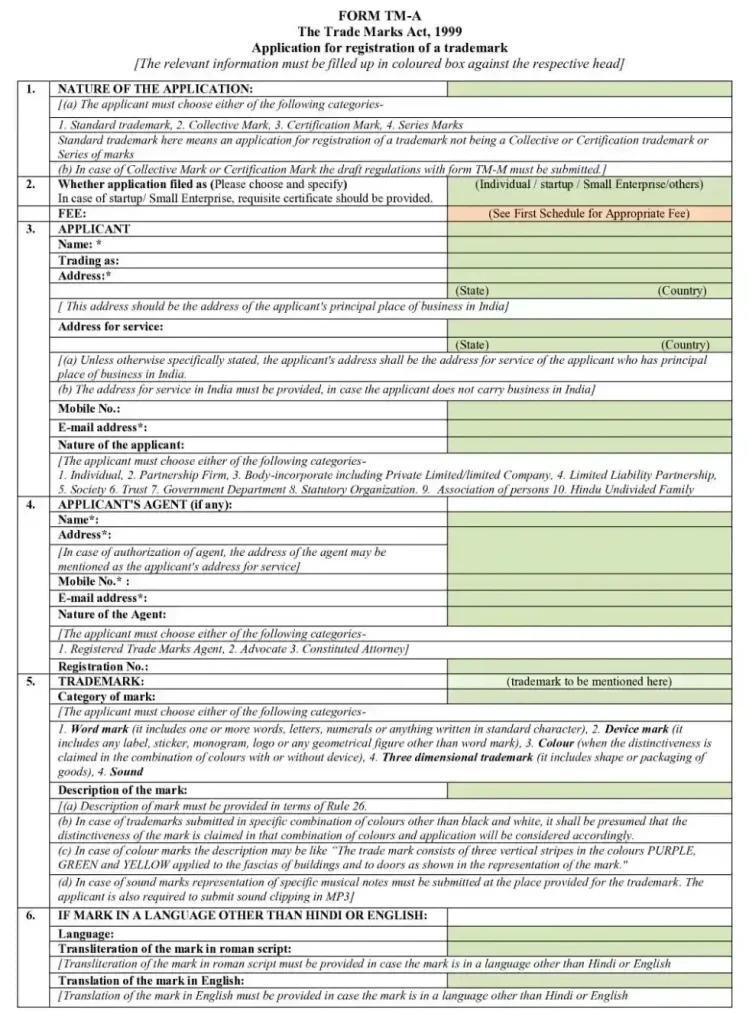
- File Form TM-A: Submit online through the IP India Trademark Portal. Choose a single-class application for Class 26 goods only, or a multi-class application if your brand spans other classes too.
- Pay the government fee: ₹4,500 per class for individuals, startups, and MSMEs; ₹9,000 per class for companies and other entities.
- Examination: The Trademark Registry reviews your application for originality, correct classification, and similarity with existing marks, issuing an Examination Report if there are issues. You must reply to trademark objections within 30 days.
- Publication and opposition window: Once approved, the mark is published in the Trademark Journal for 4 months, during which third parties may file a trademark opposition.
- Registration and renewal: Once registered, you gain exclusive rights to use the ® symbol. Validity runs 10 years, renewable indefinitely via trademark renewal.
Examination typically takes 6–12 months, followed by the 4-month publication period.
Common Mistakes While Registering for Trademark Class 26
Businesses often face issues when filing a trademark under Class 26 in India. These mistakes can cause objections, delays, or rejection of the application. Avoid the following common errors:
- Selecting the wrong trademark class: Many applicants confuse sewing accessories with finished clothing or fabrics, which belong to other classes. Class 26 applies only to items like buttons, ribbons, lace, hooks, pins, and trims.
- Using unclear product descriptions: Generic terms such as “sewing items” or “garment accessories” may attract objections. Always list specific Class 26 products clearly.
- Skipping the trademark search: Filing without checking existing trademarks increases the risk of conflicts with similar or identical marks.
- Choosing non-distinctive brand names: Descriptive names like “Button House” or “Lace Store” have a higher chance of rejection. A unique and distinctive brand works best.
- Missing responses or deadlines: Not replying to examination reports within 30 days can lead to application abandonment.
- Ignoring future business plans: Registering only current accessories may require fresh filings if you expand into new Class 26 products later.
- Applying without expert support: Incorrect details or incomplete documents can slow the process. Professional guidance improves accuracy and approval chances.
