Cheque Bounce Notice under Section 138 by Legal Experts
Send a legally valid Cheque Bounce Notice under Section 138 with RegisterKaro. Ensure timely legal action with expert-drafted notice and full compliance support for faster resolution. What you get:
 Legally Compliant Notice Drafted by ProfessionalsFast Turnaround with Precise DocumentationSection 138 Valid Legal Format GuaranteedDelivery Support via RPAD, Courier & EmailComplete Legal Support Until Court Filing

 What Sets Us ApartWhat Sets Us Apart
Overview of Cheque Bounce
A cheque bounce, also known as a dishonored or returned cheque, happens when a bank declines to process a cheque submitted for payment. This usually occurs because the payer's account has insufficient funds to cover the cheque's amount. Nevertheless, other factors, such as incorrect details (e.g., date, signature, or account number) or a damaged cheque, can also lead to a cheque bouncing.
What is a Cheque Bounce Notice?
A cheque bounce notice is a legal notice you receive when a cheque you issued fails to clear, usually due to reasons like not enough money in your account or wrong details. The person who didn’t get the payment sends you this notice, asking you to pay the amount within 15 days. If you don’t pay on time, they can file a legal case against you under the law. So, it’s important to act quickly and settle the matter.
Why Does a Cheque Bounce?
A cheque bounces when the bank doesn't clear it, which means the payment doesn’t go through, and the cheque is sent back to the person who tried to deposit it.
This happens when the issuer's account lacks sufficient funds, the signature doesn't match the one on file, or there are other issues like a damaged or incorrectly dated cheque.
- Insufficient Funds: The most common reason is when the account holder doesn't have enough money to cover the amount written on the cheque.
- Signature Mismatch: If the signature on the cheque doesn't match the signature on file with the bank, it will be rejected.
- Incorrect or Incomplete Information: Errors like a wrong date, payee name, or the amount written in words that do not match the figures can also cause a bounce.
- Overwriting or Alterations: Any changes or overwrites on the cheque, unless properly authenticated with the issuer's signature, can lead to rejection.
- Stale Cheque: A cheque presented after three months from the date of issue is considered stale and won't be honored.
- Other Issues: A damaged cheque, an account closure, or a stop payment instruction from the issuer can also result in a bounced cheque.
Consequences of a Bounced Cheque
- Fees: Banks typically charge fees for bounced cheques, both to the issuer and potentially to the payee.
- Reputational Damage: Repeated bounced cheques can damage a person's or business's reputation and make it harder to get credit or conduct future transactions.
- Legal Action: In some cases, bouncing a cheque can lead to legal consequences, especially if it's due to insufficient funds and the payee chooses to pursue legal action.
Key Details in Cheque Bounce Notice Sample Format
The contents of the Cheque Bounce Notice are:
- The name and address of the drawer of the cheque.
- The name and address of the payee.
- Information about the cheque was presented to the bank for payment.
- Details of the cheque number, date, and amount.
- Date of return of the cheque.
- Reason for the cheque bounce.
- Request for the immediate arrangement of the payment of the amount.
- Reference to Section 138 of the Negotiable Instruments Act.
When to Send a Cheque Bounce Notice?
A cheque bounce notice should be sent when a cheque you received is not cleared by the bank. You must send the notice within 30 days from the date the bank returns the bounced cheque. In the notice, you should ask the person to pay the due amount within 15 days. If they don’t pay, you can take legal action under the Negotiable Instruments Act.
How to Send the Notice and Proof of Delivery
This step involves sending the notice via registered post with acknowledgment due (RPAD) or through a reliable courier service to ensure there is a valid proof of delivery.
1. Sending the Notice
- Registered Post with Acknowledgment Due (RPAD): This is the most reliable method as it provides a record of delivery with the AD card.
- Courier Service: If using a courier, choose a reputable service that offers a tracking number and delivery confirmation.
- E-mail (through an advocate): Sending the notice via email, especially through an advocate, is also acceptable.
2. Proof of Delivery
- AD card: For RPAD, the acknowledgment card signed by the recipient serves as proof of delivery.
- Courier receipt: For courier service, the delivery confirmation document from the courier serves as proof.
- Email confirmation: If sent via email through an advocate, the email confirmation from the advocate acts as proof.
3. Response Time
- The person who issued the bounced cheque (drawer) has 15 days from the date of receiving the notice to make the payment.
4. Consequences of Non-Payment
- If the drawer fails to pay within 15 days of receiving the notice, the payee (holder of the cheque) can file a complaint in court under Section 138 of the Negotiable Instruments Act.
5. Court Proceedings
- The court in the city where the cheque was presented for payment has jurisdiction to hear the case.
- The court will review the documents, including the notice and proof of delivery, and issue a summons to the drawer if satisfied with the case.
What Happens After Sending the Notice?
If the payment is not made within this timeframe, the payee can file a criminal complaint in court under Section 138 of the Negotiable Instruments Act.
1. Notice Period (15 Days)
- The payee sends a legal notice to the drawer, demanding payment for the bounced cheque within 15 days.
- If the drawer pays the amount within this period, the matter is resolved, and no further action is taken.
2. Legal Action (if payment is not made)
- If the drawer fails to pay within the 15-day notice period, the payee can file a criminal complaint under Section 138 of the Negotiable Instruments Act.
- This complaint is typically filed in a Magistrate's court.
- The court will then issue a summons to the drawer, and the case will proceed through the court system.
3. Penalties and Consequences
- Criminal Prosecution: If the drawer is found guilty, they can face penalties such as imprisonment for up to two years, a fine up to twice the cheque amount, or both.
- Civil Suit: The payee can also pursue a civil suit to recover the amount of the bounced cheque.
- Bank Penalties: The bank may also impose charges for the bounced cheque, and the drawer's credit rating could be negatively impacted.
- Revocation of Services: In some cases, repeated cheque bounces can lead to the revocation of banking services like chequebook privileges.
Documents Required to File a Cheque Bounce Case
These documents are crucial for establishing the facts of the case and proving the drawer's liability.
1. The Dishonored Cheque and Bank Documents
- Original Bounced Cheque: The physical cheque is the primary evidence in your case.
- Cheque Return Memo / Bank Memo: This vital document from your bank states the reason and date of the dishonor (e.g., "Funds Insufficient," "Signature Mismatch," "Account Closed," "Stop Payment"). This memo acts as concrete proof of the cheque's dishonor.
- Bank Statement (Optional but Recommended): A copy of your bank statement showing the debit entry for the cheque presentation and the subsequent credit entry upon its return (if applicable) can further substantiate your claim.
2. Legal Notice and Proof of Dispatch/Delivery
Copy of the Legal Demand Notice: A true copy of the formal written notice you sent to the drawer demanding payment of the bounced cheque amount.
Proof of Service of Notice: This is extremely important to demonstrate that the drawer received the legal notice within the stipulated timeframe. Acceptable proofs include:
- Registered Post with Acknowledgment Due (RPAD) Slip: The postal receipt from sending the registered post.
- RPAD Acknowledgment Card (AD Card): The card is signed by the recipient upon delivery and is returned to you by the postal department. This is considered very strong proof of delivery.
- Courier Receipt and Delivery Confirmation: If sent via courier, the receipt with the tracking number and the delivery confirmation report from the courier company.
- Email Confirmation (if sent through an advocate): In some cases, especially if sent via a lawyer's official email, the email confirmation can serve as proof.
3. Complaint and Supporting Affidavits
Criminal Complaint (Drafted by a Lawyer): This is the formal petition filed in the Magistrate's court. It should clearly outline the entire chronology of events, including:
- Details of the payee (complainant) and the drawer (accused).
- The transaction or underlying debt for which the cheque was issued.
- Full details of the cheque (number, date, amount, bank).
- Details of the cheque's presentation and dishonor, along with the reason.
- Particulars of the legal notice sent, including date of dispatch and receipt.
- A statement that the drawer failed to make payment within the 15-day notice period.
- A prayer for legal action under Section 138 of the Negotiable Instruments Act.
Affidavit of the Complainant: A sworn statement by the payee affirming the truthfulness of the facts stated in the complaint. This is usually filed along with the complaint.
4. Documents Proving Legally Enforceable Debt/Liability (Crucial)
While Section 138 presumes a legally enforceable debt, it's always beneficial to provide documents that support the existence of such a debt or liability. This strengthens your case and helps counter potential defenses by the drawer. These may include:
- Invoices, Bills, or Receipts: If the cheque was issued against goods or services provided.
- Loan Agreements / Promissory Notes: If the cheque was issued for a loan repayment.
- Supply Orders or Contracts: Documents establishing the business transaction.
- Correspondence (Emails, SMS, etc.): Any communication between the parties related to the debt or the cheque.
- Account Statements: If it's a long-standing financial relationship, relevant entries show the outstanding amount.
5. Identity and Authorization Documents
- Complainant's Identity Proof: A copy of the payee's Aadhar Card, PAN Card, or other government-issued ID.
- Vakalatnama (Power of Attorney): If the complaint is being filed by a lawyer on behalf of the payee, a signed Vakalatnama authorizes the lawyer to represent the payee in court.
- Board Resolution (for Companies/Organizations): If the complainant is a company or an organization, a board resolution authorizes a specific individual (e.g., director, manager) to file the complaint on behalf of the entity.
6. Court Fees
- Court Fee Stamp / Challan: Court fees are payable based on the cheque amount. The specific amount varies by jurisdiction and cheque value, and these fees must be affixed to the complaint or paid as per court rules.
Legal Process of Cheque Bounce Case
Dealing with a cheque bounce in India follows a proper legal process. It starts with knowing the reasons why the cheque was not cleared and includes the steps you need to take to take legal action against the person who gave the cheque.
1. Filing the Complaint
The complaint is typically filed before a Judicial Magistrate First Class or a Metropolitan Magistrate in the court having jurisdiction (usually where the cheque was presented for payment). The complaint should be in writing, accompanied by an affidavit and all necessary documents, including the original bounced cheque, the cheque return memo, a copy of the legal notice, and proof of its delivery.
2. Court Examination and Summons
Upon receiving the complaint and supporting documents, the Magistrate will examine the complainant under oath (known as the "sworn statement" or "complainant's examination"). Suppose the Magistrate is satisfied that a prima facie case exists (meaning, there appears to be enough evidence to proceed). In that case, they will then issue a summons to the drawer (accused), directing them to appear before the court on a specified date. These summons are typically sent via registered post.
3. Drawer's Appearance and Plea
Once the drawer receives the summons, they are legally bound to appear before the court. Upon their appearance, they usually apply for bail, which is generally granted. The court will then formally ask the drawer to state their plea – whether they plead guilty to the offense or claim innocence. If the drawer pleads guilty, the court may proceed to pass a judgment of conviction and impose penalties. If the drawer pleads not guilty, the case will proceed to trial.
4. Court Proceedings (Trial)
If the drawer pleads not guilty, the case moves into the trial phase. This involves the following:
- Complaint's Evidence: The complainant will present their evidence, often through an affidavit, reiterating the facts of the case. The drawer's lawyer will then have the opportunity to cross-examine the complainant and their witnesses.
- Accused's Statement: After the complainant's evidence, the court will record the statement of the accused under Section 313 of the Criminal Procedure Code, allowing them to explain the circumstances and the evidence against them.
- Accused's Evidence: The drawer then gets the chance to present their defense, including calling witnesses and submitting documents to prove their innocence. The complainant's lawyer will have the right to cross-examine the defense witnesses.
- Final Arguments: After all evidence has been presented, both parties (through their lawyers) will present their final arguments, summarizing their case and citing relevant legal provisions and precedents.
5. Execution of Judgment
After hearing the final arguments and considering all the evidence, the Magistrate will deliver the judgment.
- If Convicted: If the drawer is found guilty, the court will pass a conviction order. The penalties can include imprisonment for a term that may extend to two years, a fine which may extend to twice the amount of the cheque, or both. The court may also direct the drawer to pay compensation to the payee. The judgment can be executed by initiating recovery proceedings for the fine/compensation or by a warrant for imprisonment.
- If Acquitted: If the drawer is found not guilty, they are acquitted of the charges.
- Appeal: Either party, if aggrieved by the judgment, has the right to file an appeal in a higher court (e.g., Sessions Court) within a stipulated period.
Consequences of Ignoring a Cheque Bounce Notice
Ignoring a cheque bounce notice in India can lead to significant legal and financial repercussions for the drawer.
1. Imprisonment
If the drawer fails to make the payment within the 15-day notice period and the payee subsequently files a complaint under Section 138 of the Negotiable Instruments Act, 1881, and the drawer is found guilty, they can face imprisonment for a term which may extend to two years. This makes cheque bounce a criminal offense, not just a civil one.
2. Fine
In addition to or as an alternative to imprisonment, the court can impose a fine which may extend to twice the amount of the cheque. This fine is often intended to compensate the payee for the financial loss incurred due to the bounced cheque. The amount of the fine can be substantial, especially for high-value cheques.
3. Both Imprisonment and Fine
The court can impose both a fine and jail time. This means the drawer could be sentenced to a jail term and also be required to pay a hefty fine, depending on the specifics of the case, the amount involved, and the conduct of the drawer.
4. Issuance of Summons and Warrant
If the drawer ignores the legal notice and the payee files a complaint, the court will first issue a summons to the drawer, directing them to appear. If the drawer fails to appear even after receiving the summons, the court can then issue bailable or non-bailable warrants for their arrest. This can lead to the police apprehending the drawer to ensure their presence in court.
5. Impact on Creditworthiness and Reputation
A cheque bounce can severely impact the drawer's financial standing. Banks often report bounced cheques to credit bureaus, leading to a negative impact on the drawer's credit score (CIBIL score). A poor credit score can make it difficult to obtain future loans, credit cards, or other financial services.
Furthermore, a criminal conviction for a cheque bounce can significantly damage an individual's or business's reputation, affecting future business dealings and personal credibility.
6. Civil Liability
While Section 138 deals with the criminal aspect of cheque bounce, the payee also retains the right to initiate a civil suit for recovery of the cheque amount along with interest and costs. This means the drawer could face both criminal prosecution and a civil lawsuit for the same bounced cheque, leading to multiple legal battles and liabilities.
7. Restrictions on Professional Positions
In certain professions or positions of public trust, a criminal conviction, including one for a cheque bounce, can lead to disqualification or restrictions on holding specific professional or directorial positions. For example, directors of companies might face disqualification from holding directorships if convicted of certain offenses, including those under Section 138 of the Negotiable Instruments Act.
Connect with RegisterKaro and let our experts handle the legal hassle while you grow your business.
Frequently Asked Questions (FAQs)
What is the punishment for a bounced cheque?
Under Section 138 of the Negotiable Instruments Act, 1881, if a drawer is found guilty of a cheque bounce due to insufficient funds, they can face imprisonment for a term that may extend to two years, or a fine which may extend to twice the amount of the cheque, or both. The court may also order the drawer to pay compensation to the payee.
How many days do I have to send a cheque bounce notice?
The payee (the person who received the bounced cheque) must send the legal demand notice to the drawer within 30 days from the date of receiving the "cheque return memo" from their bank, which signifies the cheque's dishonor.
What happens if the drawer does not pay within 15 days?
Suppose the drawer fails to make the payment within the 15 days stipulated in the notice. In that case, the payee then has the right to file a criminal complaint in the appropriate Magistrate's court under Section 138 of the Negotiable Instruments Act, 1881. This complaint must be filed within 30 days of the expiry of the 15-day notice period.
What documents are needed to file a cheque bounce case?
To file a cheque bounce case, you will typically need the original bounced cheque, the cheque return memo from the bank stating the reason for dishonor, a copy of the legal demand notice sent to the drawer, and proof of delivery of that notice (e.g., RPAD acknowledgment card or courier receipt). Additionally, documents proving the underlying debt or liability (like invoices and loan agreements) are highly beneficial.
Can a cheque bounce case be settled out of court?
Yes, a cheque bounce case can be settled out of court at any stage of the proceedings, even after the complaint has been filed in court. Often, courts encourage mediation or settlement between the parties. If a settlement is reached, the parties can file a compromise petition with the court, and the case will be closed.
Does a bounced cheque affect my CIBIL score?
Yes, a bounced cheque, particularly one due to insufficient funds, can negatively impact your CIBIL score (credit score). Banks report such incidents to credit bureaus, and repeated instances can significantly lower your score, making it harder to obtain loans, credit cards, or other financial services in the future.
Can I re-present a bounced cheque?
Yes, you generally can re-present a bounced cheque for payment, provided it is still within its validity period (usually three months from the date of issue). However, if it bounces again, you will need to send a fresh legal notice for the second dishonor to initiate legal proceedings. It's often advisable to send a notice after the first bounce rather than re-presenting multiple times.
What should I do if I receive a cheque bounce notice?
If you get a cheque bounce notice, don’t ignore it. Check the reason with your bank and try to settle the amount with the party who issued the notice. You have 15 days to make the payment from the date you receive the notice. If you fail to pay, legal action can be taken against you under the Negotiable Instruments Act.

Reviewed by
Joel DsouzaJoel Dsouza is a Chartered Accountant (CA) and compliance expert with over 7 years of hands-on experience in company registration, tax structuring, GST, ROC filings, and MCA compliance. As a qualified member of the Institute of Chartered Accountants of India (ICAI) and Co-Founder at RegisterKaro, he has personally advised more than 1,000 startups and SMEs across India, helping founders navigate incorporation, regulatory frameworks, and financial planning from Day 1. With deep expertise across all three levels of Finance and Portfolio Management, Joel is committed to promoting financial literacy and simplifying India's startup ecosystem through clear, actionable guidance that entrepreneurs can act on immediately.
Why Choose RegisterKaro for the Cheque Bounce Notice Drafting Service?
Navigating the complexities of a cheque bounce in India involves a clear legal framework, from understanding why a cheque might be dishonored to the steps involved in seeking legal recourse.
- Expert Legal Guidance and Compliance: Our legal team ensures your cheque bounce notice is meticulously drafted, adhering to all legal requirements and timelines under the Negotiable Instruments Act, 1881.
- Strategic Case Assessment and Tailored Solutions: We provide a customized strategy for your specific cheque bounce case, focusing on effective recovery and resolution.
- Efficient and Modern Process Management: Experience a hassle-free and efficient process for sending your notice, managed entirely online with timely updates.
- Maximizing Recovery and Resolution: We focus on strategies to maximize the likelihood of recovering your funds, including exploring amicable settlements.
- Comprehensive Support: From initial notice drafting to guidance on potential court proceedings, we offer complete support throughout your cheque bounce recovery journey.

What Our Clients Say
View All
Ganesh Rawat
 Verified
I was impressed by how quickly RegisterKaro completed my company registration. Their experts answered all my queries and ensured a seamless experience... Read more

Mohammednahiyan nahi...
VerifiedI have find very good experience with Tripti jain guidance the work was so smooth and effective and she was very quick responder and she is very good... Read more

IteraLearn Solutions...
VerifiedI had a wonderful experience with the address change service. The entire process was managed efficiently, with regular updates and excellent support t... Read more

Balaram Jeppesen
VerifiedOverall swift response and prompt execution of the promised tasks. Would recommend. Navya Lakra and Harjeet Singh have been handling things well for m... Read more

Social Vibes
VerifiedI had director additional and removal services from Register karo and they were so prompt and systematic with the whole process. Specially Deepshikha... Read more

Shubham Jayant
VerifiedI discovered the service through Instagram, and I am very happy with the experience. Kudos to Mr. Aakash, who went above and beyond to help us with al... Read more

Hariharan Murugesan
VerifiedThank you so much for your help with incorporating my company. Vaidehi Gupta was helpful and handled the process efficiently. I really appreciate the... Read more

Tapito Bike taxi
VerifiedWe had an excellent experience with their GST, MSME, and compliance services. The team demonstrated strong knowledge, handled all filings accurately,... Read more

pannuru nithin
VerifiedMy experience with RegisterKaro was mixed but ultimately positive. Initially, I struggled to get updates and had to follow up repeatedly, which was fr... Read more

Harmeet India
VerifiedRegisterKaro have a team of professionals to register a company & they know exactly what a startup is required. I'm really impressed with Good support... Read more
Related Blogs
View All
CA Firms in Indore 2026 – Top Chartered Accountants for Tax, Audit & Compliance

Top CA Firms in Jaipur 2026 – Best Tax, Audit & Mid-Size Firms
Corporate Laws (Amendment) Bill, 2026: Latest Companies Act and LLP Changes
Section 194JB of Income Tax Act,1961 – TDS Rate, Threshold Limit, and Applicability

Top 10 CA Firms in Pune 2026 – Mid-Size, Audit & Best Tax Firms
Section 139(1) of the Income Tax Act – Who Must File ITR, Due Dates & Rules
Section 54 of Income Tax Act: Capital Gains Exemption, Conditions, and Examples
Section 112A of Income Tax Act – LTCG Tax Rate, Exemption, Eligibility & Rules
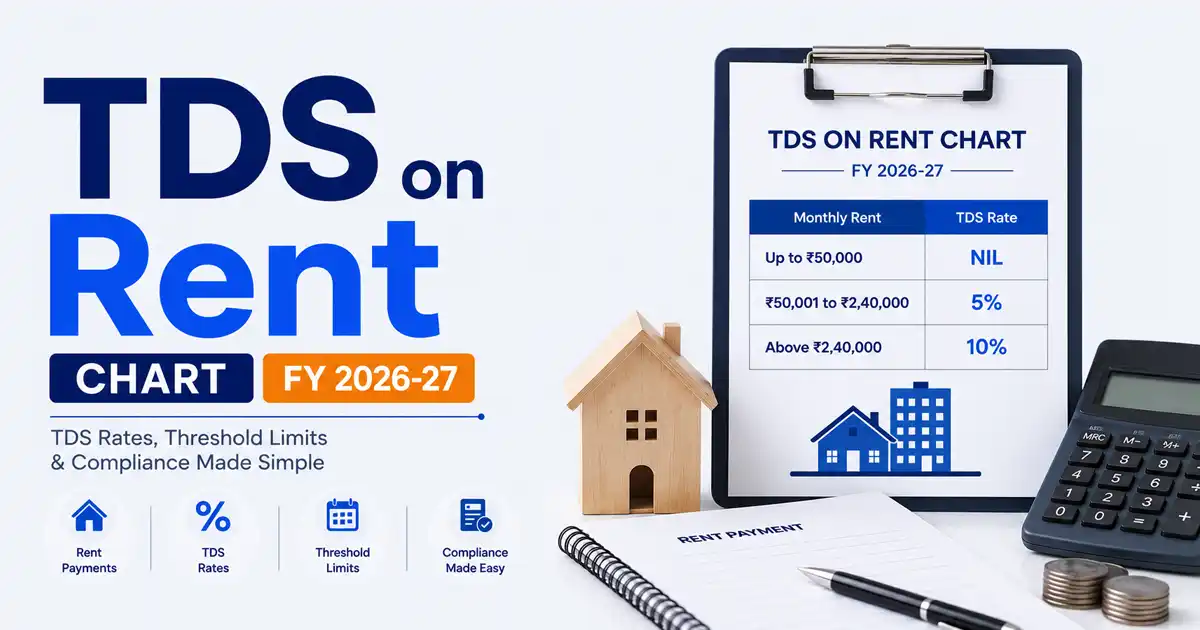
TDS on Rent Chart FY 2026 27 – Rates, Limits, Sections and Complete Guide
Section 44ADA of the Income Tax Act – A Complete Guide and Calculation