Founders' Agreement
Secure your startup’s future with a professionally drafted Founders' Agreement. Get expert help to align your vision, protect interests, and avoid legal or operational pitfalls from day one.
 Legally Valid & Customised Founders' AgreementClear Terms for Equity Split & VestingDefined Roles & Responsibilities of Each FounderSmooth Exit & Dispute Resolution ClausesTrusted by 10,000+ Indian Startups & Founders

 What Sets Us ApartWhat Sets Us Apart
What is the Founders' Agreement?
A founders' agreement is a binding contract between the individuals who start a company. It outlines the terms and conditions of their partnership, essentially serving as a blueprint for how the business will be run and how decisions will be made.
It's particularly important when there are multiple co-founders, as it addresses aspects like ownership, responsibilities, and even exit strategies. Think of it as a prenuptial agreement for your business, designed to protect everyone's interests.
By articulating key aspects like equity distribution, decision-making processes, and dispute resolution, this agreement minimizes misunderstandings and provides a framework for collaboration.
Let's explore why this document is so critical for your startup's success.
Why is the Founders' Agreement Important?
A founders' agreement is vital for several reasons:
- Clarity and Expectations: It clearly defines each founder's role, responsibilities, and expected contributions, preventing misunderstandings later on.
- Equity Distribution: It precisely outlines how equity (ownership shares) will be divided among founders, including vesting schedules and clauses for departures. This is crucial for a co-founder equity agreement or a founder's equity agreement.
- Decision-Making: It establishes a clear process for making important business decisions, whether by consensus, majority vote, or specific assigned authority.
- Dispute Resolution: It provides a mechanism for resolving disagreements or conflicts among founders, avoiding costly and time-consuming litigation.
- Protecting Intellectual Property: It often includes provisions for assigning intellectual property created by founders to the company.
- Exit Strategy: It addresses what happens if a founder leaves the company, covering buyback clauses, non-compete agreements, and transfer restrictions.
- Attracting Investors: Investors often look for a solid founders agreement as it demonstrates a well-thought-out and stable founding team.
When is the Founders' Agreement Required?
A founders' agreement is required and highly recommended at the very beginning of a startup's journey, ideally before or shortly after the formal incorporation of the company through a new pvt ltd company registration process.
Even if you are just starting with an idea, having an agreement between co-founders is beneficial. It's particularly crucial in the following situations:
- Before Formalizing Partnership: As soon as you decide to form a business with one or more co-founders.
- Before Seeking Investment: Investors will typically ask to see this agreement to understand the stability and structure of the founding team.
- Before Developing Products/Services: Ensure that all intellectual property created by founders belongs to the company.
- When there's a significant commitment of time or resources: To protect the interests of all involved.
- Even after incorporation: A founder's agreement after incorporation can still be drafted, though it's best to do it as early as possible to prevent potential issues.
Components of the Founders' Agreement Template
A comprehensive founders' agreement template typically includes the following key components:
| Component | Description |
| Equity Ownership | Specifies the percentage of shares owned by each founder. |
| Roles and Responsibilities | Defines each founder's duties and decision-making authority. |
| Capital Contributions | Details the initial investments (money, assets, or services) contributed by each founder. |
| Vesting Schedule | Sets the timeline over which founders earn their equity to ensure long-term commitment. |
| Intellectual Property (IP) | Clarifies ownership of any IP created before and during the business. |
| Decision-Making Process | Outlines how major business decisions will be made and voting rights. |
| Confidentiality Clause | Requires founders to keep sensitive business information private. |
| Dispute Resolution | Describes methods to resolve conflicts (mediation, arbitration). |
| Exit and Buyout Terms | Defines how a founder can leave and how their shares are handled or bought out. |
| Non-Compete Clause | Restricts founders from competing with the business during and after their involvement. |
| Dividend Policy | States how and when profits will be distributed among founders. |
| Amendments | Procedure to change or update the agreement in the future. |
Who Needs a Founders' Agreement?
Any individual or group of individuals who are starting a new business venture with co-founders should create a founders' agreement. This includes:
- Entrepreneurs launching a startup.
- Business partners are forming a new company.
- Innovators are collaborating on a new product or service.
- Friends or colleagues venturing into business together.
Documents Required for Founders' Agreement
While the primary "document" is the agreement itself, having the following information and informal documents ready can streamline the drafting process:
- Founder Identities: Full legal names, addresses, and contact information for all founders.
- Business Idea/Plan: A clear understanding of the business concept, mission, and vision.
- Proposed Equity Split: The initial discussion or agreed-upon percentages of ownership for each founder.
- Roles & Responsibilities Outline: A preliminary list of what each founder will be responsible for.
- Company Name & Structure: If already decided (e.g., Private Limited Company, LLP).
- Intellectual Property Details: Any existing IP/trademark or plans for IP development.
- Initial Contributions: Details of capital, assets, or time contributed by each founder.
Founders' Agreement vs Shareholders' Agreement
While both are crucial for a company, there are key distinctions:
| Aspect | Founders' Agreement | Shareholders' Agreement |
| Purpose | Defines roles, equity, and responsibilities of the startup founders. | Governs the rights and obligations of all shareholders in a company. |
| Parties Involved | Only the founders of the company. | All shareholders, including founders, investors, and others. |
| Scope | Focuses on startup formation, equity splits, vesting, and founder duties. | Covers broader issues like share transfers, voting rights, dividends, and exit strategies. |
| Timing | Created at the inception or early stages of the startup. | Usually created after company formation, often during investment rounds. |
| Legal Status | May be informal or formal, but primarily internal among founders. | Legally binding contract registered with the company and enforceable under corporate law. |
| Key Clauses | Equity split, roles, vesting, IP ownership, and dispute resolution among founders. | Share transfer restrictions, tag-along/drag-along rights, dividend policy, and board composition. |
| Duration | Typically lasts until the company matures or the shareholders' agreement takes over. | Remains in force as long as shareholders hold shares in the company. |
| Dispute Resolution | Usually focused on internal founder conflicts. | Covers disputes among all shareholders and company management. |
Procedure for Drafting Founders' Agreement
The procedure for drafting a founders' agreement typically involves these steps:
Step 1: Initial Discussion among Founders: All co-founders sit down to discuss and agree upon their shared vision, individual roles, specific responsibilities, equity distribution, and anticipated challenges for the new venture.
Step 2: Information Gathering: Collect all necessary details about each founder (full legal names, addresses, contact information) and the business (business concept, proposed equity split, initial contributions, and, if decided, the company name and structure).
Step 3: Legal Consultation: Engage a legal professional specializing in startup law. They will provide expert advice, ensuring the agreement is legally sound, comprehensive, and enforceable under relevant laws.
Step 4: Drafting the Agreement: The lawyer will draft the Founders’ Agreement based on the discussions and information provided. This draft will include essential clauses such as equity vesting, intellectual property assignment, and dispute resolution mechanisms.
Step 5: Review and Negotiation: All founders meticulously review the drafted agreement. This is a crucial stage for discussing, negotiating, and clarifying any terms to ensure complete comfort and understanding among all parties.
Step 6: Revisions: Based on the feedback and negotiated points from the founders, the legal professional will make the necessary revisions to the draft document.
Step 7: Signing the Agreement: Once all founders mutually agree to the finalized terms, they formally sign the document. This is often done in the presence of witnesses or a notary to ensure legal validity.
Cost of Drafting Founders' Agreement
The cost of drafting a founders' agreement in India can vary significantly based on several factors:
| Service Type | Description | Approximate Cost (Rs.) |
| Basic Founders' Agreement Drafting | Standard agreement for startups with 2-3 founders, simple terms. | Rs. 10,000 – Rs. 20,000 |
| Customized Agreement | Tailored clauses for complex equity, vesting, or multi-founder scenarios. | Rs. 20,000 – Rs. 40,000 |
| Legal Review Only | Reviewing and suggesting edits to a pre-drafted agreement. | Rs. 5,000 – Rs. 15,000 |
| Consultation and Advisory | Financial and legal advice, along with drafting support. | Rs. 10,000 – Rs. 25,000 per hour or project |
| Registered Agreement (Including Stamp Duty & Registration Fees) | Assistance with legal registration (if applicable) and payment of stamp duty. | Rs. 5,000 – Rs. 15,000 (varies by state) |
Note: Prices vary based on the complexity of the agreement, location, and the consultant or law firm you engage. Contact a professional and get help with your finances.
Terminating the Founders' Agreement
Terminating a founders' agreement means formally ending the legal contract that governs the relationship among the founders. This can happen under various circumstances as outlined in the agreement itself.
Common reasons for termination include:
- Mutual Consent: This is the most straightforward ground for termination. If all founders agree that the agreement is no longer necessary or beneficial, they can mutually decide to end it. This often involves a written agreement outlining the terms of termination, including asset distribution, intellectual property rights, and any ongoing responsibilities.
- Breach of Contract: If one or more founders fail to uphold their obligations as defined in the agreement, it can constitute a breach of contract. This might include issues like not contributing agreed-upon capital, failing to perform assigned duties, violating confidentiality clauses, or engaging in activities detrimental to the company. The agreement usually outlines what constitutes a material breach and the process for addressing it, which may lead to termination if the breach isn't rectified.
- Achievement of Purpose: Some founder agreements are created for a specific project or a defined period. Once the project is completed or the specified timeframe expires, the agreement's purpose has been fulfilled, leading to its natural termination.
- Company Dissolution: If the startup or company itself is dissolved or goes out of business, the founder agreement typically terminates along with it. The agreement should ideally include provisions for how assets and liabilities are handled in such a scenario.
- Exit of a Founder: While not always a full termination of the entire agreement, the departure of a founder (whether voluntary or involuntary) often triggers specific clauses within the agreement that effectively terminate that individual's involvement. This may lead to a revised agreement among the remaining founders or a partial termination for the existing founder, outlining their equity buyback, non-compete clauses, and other post-departure terms.
- Material Change in Circumstances: In some cases, unforeseen and significant changes that fundamentally alter the basis of the agreement (e.g., a major shift in market conditions making the original business model unviable) might be grounds for re-negotiation or termination, though this is often more complex and may require legal counsel.
Alternative Options to the Founders’ Agreement Termination
Terminating a founder agreement can be a drastic step, and often, there are less disruptive alternatives that can address issues while preserving the core relationship or business. Exploring these options can save time, resources, and potential legal disputes.
- Re-negotiation and Amendment: Instead of outright termination, founders can opt to re-negotiate specific terms or amend the existing agreement. This is particularly useful when circumstances change or initial assumptions prove incorrect. It allows for flexibility and adaptation without completely dissolving the foundational document. For example, if a founder's role changes, their equity vesting schedule or responsibilities can be amended.
- Mediation or Arbitration: When disagreements arise that threaten the agreement, but direct negotiation is difficult, mediation or arbitration can provide a neutral third party to help resolve disputes. Mediation is non-binding, while arbitration typically results in a binding decision, offering a structured way to find common ground without resorting to full termination or litigation.
- Founder Buyout: If one founder wishes to leave or is no longer contributing effectively, a buyout option can be pursued. The remaining founders of the company itself can purchase the departing founder's equity, allowing them to exit gracefully while the agreement continues for the others. The founder agreement should ideally outline the valuation method for such buyouts.
- Role Reassignment or Restructuring: Sometimes, issues stem from a mismatch between a founder's skills and their assigned role, or a change in the company's needs. Instead of termination, founders can consider reassigning roles, restructuring responsibilities, or even bringing in external expertise to fill gaps, allowing the agreement to continue with adjusted parameters.
- Temporary Suspension: In rare cases, if the issues are temporary or require a pause for re-evaluation, founders might agree to temporarily suspend certain clauses or the agreement as a whole, with clear conditions for its reactivation. This is less common but can be useful in highly specific, short-term scenarios.
Founders' Agreement Template
This Founders' Agreement ("Agreement") is entered into on [Date], by and among the following individuals (each a “Founder” and collectively the “Founders”):
- Founder 1 Name
Address: [Founder 1 Address]
Email: [Founder 1 Email] - Founder 2 Name
Address: [Founder 2 Address]
Email: [Founder 2 Email]
(Add additional Founders if applicable)
RECITALS
WHEREAS, the Founders intend to establish a company provisionally named [Provisional Company Name] ("Company") to engage in the business of [Business Description];
WHEREAS, the Founders wish to set forth their understanding regarding their respective roles, responsibilities, equity ownership, and rights regarding the Company;
NOW, THEREFORE, in consideration of the foregoing and the mutual promises set forth below, the Founders agree as follows:
ARTICLE 1: COMPANY FORMATION
1.1. Name: The Company shall be named [Final Company Name].
1.2. Legal Structure: The Company shall be incorporated as a [e.g., Private Limited Company] under the laws of [Jurisdiction].
1.3. Incorporation Date: The target incorporation date is [Date].
ARTICLE 2: CAPITAL AND EQUITY
2.1. Equity Split: The initial ownership shall be as follows:
2.2. Capital Contributions:
Each Founder agrees to contribute the following:
- Founder 1 Name
- Cash: [Amount]
- In-kind: [Services, IP, assets]
- Founder 2 Name
- Cash: [Amount]
- In-kind: [Services, IP, assets]
2.3. Vesting (Optional but Recommended):
- Vesting period: [e.g., 4 years]
- Cliff: [e.g., 12 months]
- Vesting frequency: [e.g., monthly]
- Acceleration: [e.g., Double-trigger upon Change of Control]
ARTICLE 3: ROLES & RESPONSIBILITIES
3.1. Initial Roles:
- Founder 1 Name: [Title, e.g., CEO]
Responsibilities: [Key areas] - Founder 2 Name: [Title, e.g., CTO]
Responsibilities: [Key areas]
3.2. Time Commitment: All Founders shall dedicate [full-time/part-time] effort. Any material outside commitment must be disclosed.
3.3. Decision-Making:
- Day-to-day: [e.g., consensus or CEO discretion]
- Major decisions (e.g., equity, debt, IP transfer): Require [majority/unanimous] consent.
ARTICLE 4: INTELLECTUAL PROPERTY
4.1. IP Assignment: All IP developed by Founders for the Company shall be owned by the Company.
4.2. Prior IP: Any existing IP retained by a Founder must be disclosed and listed in Schedule A.
4.3. Confidentiality: Founders shall maintain strict confidentiality during and after their time with the Company.
ARTICLE 5: COMPENSATION
5.1. Salaries: Initial compensation shall be [e.g., deferred, fixed at INR 25,000/month starting MM/YYYY].
5.2. Reimbursements: Reasonable business expenses shall be reimbursed with appropriate documentation.
ARTICLE 6: FOUNDER DEPARTURE
6.1. Voluntary Exit: Unvested equity is forfeited. Vested equity may be repurchased at [e.g., fair market value].
6.2. Termination for Cause: All equity (vested and unvested) may be forfeited.
6.3. Without Cause: Unvested equity forfeited; vested equity may be repurchased.
6.4. Death/Disability: [e.g., Partial or full vesting, equity repurchase terms]
6.5. Repurchase Option: The Company may repurchase equity within [e.g., 60 days] after exit.
ARTICLE 7: TRANSFER RESTRICTIONS
7.1. Right of First Refusal: Founders must offer shares to the Company before transferring to third parties.
7.2. Tag-Along Rights: Remaining Founders can join any third-party sale proportionally.
7.3. Drag-Along Rights: If Founders holding [e.g., 75%] of equity approve a sale, others must sell on the same terms.
ARTICLE 8: NON-COMPETE & NON-SOLICITATION
8.1. Non-Compete: Founders agree not to start or join a competing business for [X months/years] post-departure within [Geographic Area].
8.2. Non-Solicit: Founders agree not to solicit Company employees or clients for [X months/years] after leaving.
ARTICLE 9: DISPUTE RESOLUTION
9.1. Negotiation: Good faith efforts will be made to resolve any disputes.
9.2. Mediation: Disputes not resolved may go to mediation in [City].
9.3. Arbitration: Failing mediation, binding arbitration under [Rules], held in [City, State, Country].
9.4. Governing Law: This Agreement shall be governed by the laws of [Jurisdiction].
ARTICLE 10: MISCELLANEOUS
10.1. Entire Agreement: This document is the complete agreement among the Founders.
10.2. Amendments: Any changes must be in writing and signed by all Founders.
10.3. Severability: If any provision is invalid, the rest remains enforceable.
10.4. Notices: Notices shall be sent to the addresses listed above.
10.5. Counterparts: Agreement may be signed in counterparts.
10.6. Successors & Assigns: This Agreement binds successors and assigns of the Founders.
IN WITNESS WHEREOF, the Founders have executed this Agreement as of the date first above written.
Founder Signatures:
Founder 1 Name
Founder 2 Name
(Add more lines as needed)
SCHEDULE A: Prior Intellectual Property
[List any pre-existing IP each Founder brings to the company. If none, state “None.”].
Connect with RegisterKaro and let our experts handle the legal hassle while you grow your business.
Frequently Asked Questions (FAQs)
Why do I need a Founders' Agreement?
You need an agreement between co-founders to clearly define roles, responsibilities, equity distribution, decision-making processes, and dispute resolution mechanisms. It acts as a legally binding roadmap, preventing future conflicts and misunderstandings, thus safeguarding the interests of all founders and the business itself. It is critical for setting up a strong foundation.a
When should I make a Founders' Agreement?
You should make a founders' agreement as early as possible, ideally before or immediately after officially forming your company. It's best to have it in place before you start committing significant resources, developing intellectual property, or seeking external funding, as investors will often require it.
How long does it take to get an Agreement?
The time it takes to get a founders' agreement depends on the complexity of your business, the number of founders, and how quickly you can provide the necessary information and reach consensus. Once all information is gathered, the drafting process can take anywhere from a few days to a couple of weeks, followed by review and negotiation.
How much does it cost to get a Founders' Agreement?
The cost of a founders' agreement varies based on factors like the complexity of your business, the lawyer's experience, and the scope of services. Generally, it can range from Rs. 15,000 to Rs. 50,000 or more in India. It's best to get a clear quote from your legal professional.
What is the difference between a Founder's Agreement and a Shareholders Agreement?
A founders' agreement focuses on the initial founders, outlining their roles, equity vesting, and early operations. A shareholders' agreement covers all shareholders, including founders and investors, regulating share ownership, transfers, voting, and governance. Often, the founders' agreement evolves into a shareholders' agreement as the company grows. Additionally, a founders' agreement differs from an operating agreement, which governs the overall internal operations of an LLC.

Reviewed by
Joel DsouzaJoel Dsouza is a Chartered Accountant (CA) and compliance expert with over 7 years of hands-on experience in company registration, tax structuring, GST, ROC filings, and MCA compliance. As a qualified member of the Institute of Chartered Accountants of India (ICAI) and Co-Founder at RegisterKaro, he has personally advised more than 1,000 startups and SMEs across India, helping founders navigate incorporation, regulatory frameworks, and financial planning from Day 1. With deep expertise across all three levels of Finance and Portfolio Management, Joel is committed to promoting financial literacy and simplifying India's startup ecosystem through clear, actionable guidance that entrepreneurs can act on immediately.
Why choose RegisterKaro for the Founders' Agreement Service?
Choosing RegisterKaro for your founders' agreement service provides you with expert legal guidance and a seamless process:
- Expert Legal Team: Experienced lawyers specialize in startup law and understand the nuances of drafting robust founders' agreements.
- Customized Solutions: We don't believe in one-size-fits-all. We tailor each founder's agreement to your specific business needs and founder dynamics.
- Comprehensive Coverage: Ensure your agreement covers all critical aspects, from equity and IP to dispute resolution and exit strategies.
- Post-Agreement Support: We are available to answer your questions even after the agreement is signed.
- Focus on Prevention: Prioritize drafting an agreement that prevents future conflicts, laying a strong foundation for your business.
What Our Clients Say
View All
Rakesh Kumar
 Verified
I recently incorporated a company from register karo , my experience was very good and also my case was assigned to Krishna Raina . He really helped m... Read more

ashfaq
VerifiedJust wanted to give a big shoutout to Anjali Chauhan for making the incorporation process of our LLP so smooth and hassle-free. She was super helpful... Read more

Hari Prasad
VerifiedI registered my company using RegisterKaro and I received timely support from Mr. Aman saxena and the team. The whole process was smooth and the team... Read more

yayati
VerifiedI reached out to registerkro for company windup. Would like to give shout out to Astha gupta who was extremly helpful throughout the process. Kudos to... Read more

Paras Vyas
VerifiedThe compliance team is helpful and fairly responsive during need of hour. I would feel that it would be more beneficial if periodic compliance require... Read more

Vijay R
VerifiedI am delighted to provide this testimonial for Rahul, whose expert guidance and exceptional dedication were instrumental in setting up my company. His... Read more

Sri Nithya Swaroopan...
VerifiedThanks to their exceptional support, I would confidently recommend Registerkaro to others, not just for their quality services but for their outstand... Read more

Atul Chaudhary
VerifiedI had a great experience with RegisterKaro. Shubham Bharti handled my entire process in a highly professional and efficient manner. He was always resp... Read more

Pankaj Kumar
VerifiedI had a great experience working with Tamanna Negi as my SPOC for company registration. The entire process was smooth and hassle-free. Communication w... Read more

Ambika Subhash
VerifiedThe Best Team, who helped me to get my company registered and who made my dream come true of opening my own company. RegisterKaro is so dedicative tea... Read more
Related Blogs
View All
CA Firms in Indore 2026 – Top Chartered Accountants for Tax, Audit & Compliance
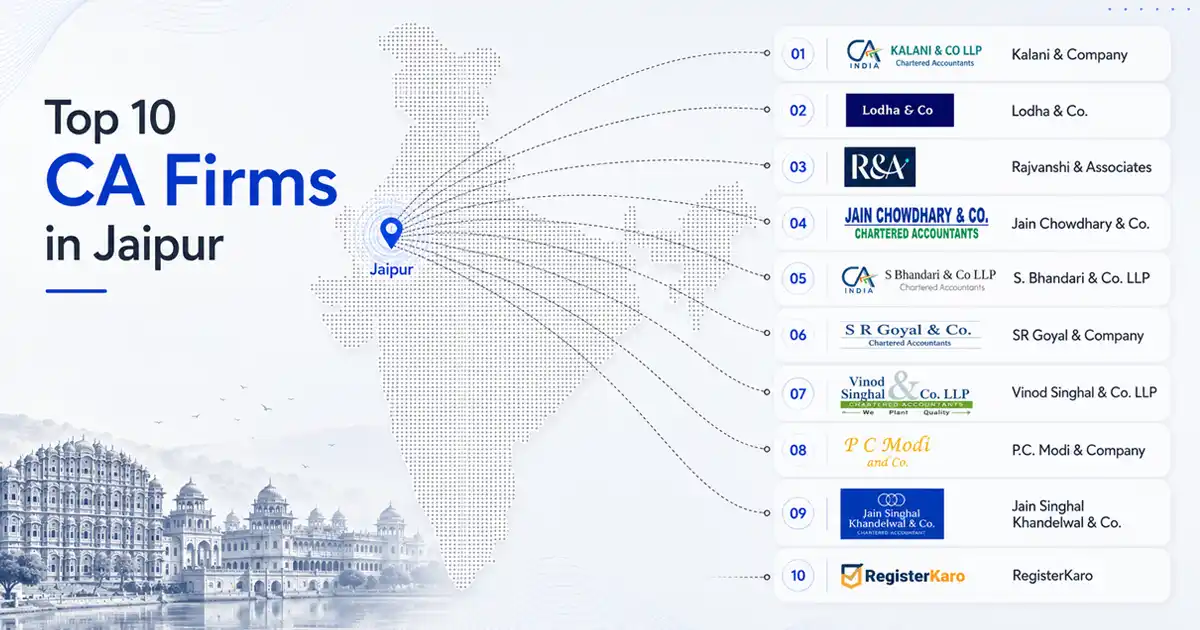
Top CA Firms in Jaipur 2026 – Best Tax, Audit & Mid-Size Firms
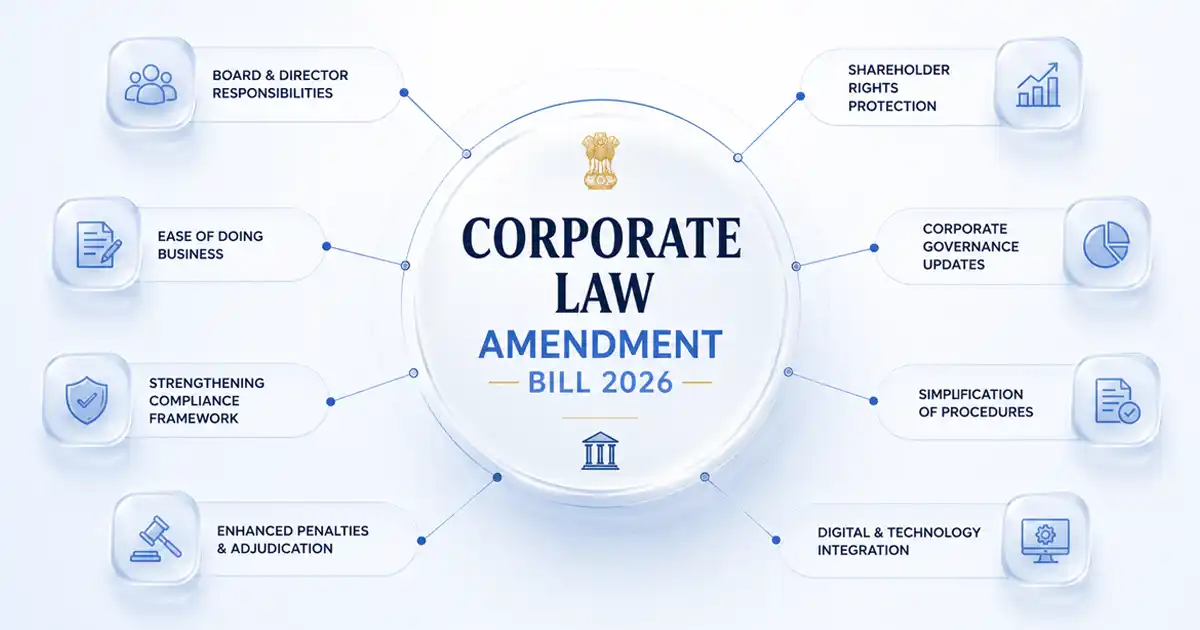
Corporate Laws (Amendment) Bill, 2026: Latest Companies Act and LLP Changes
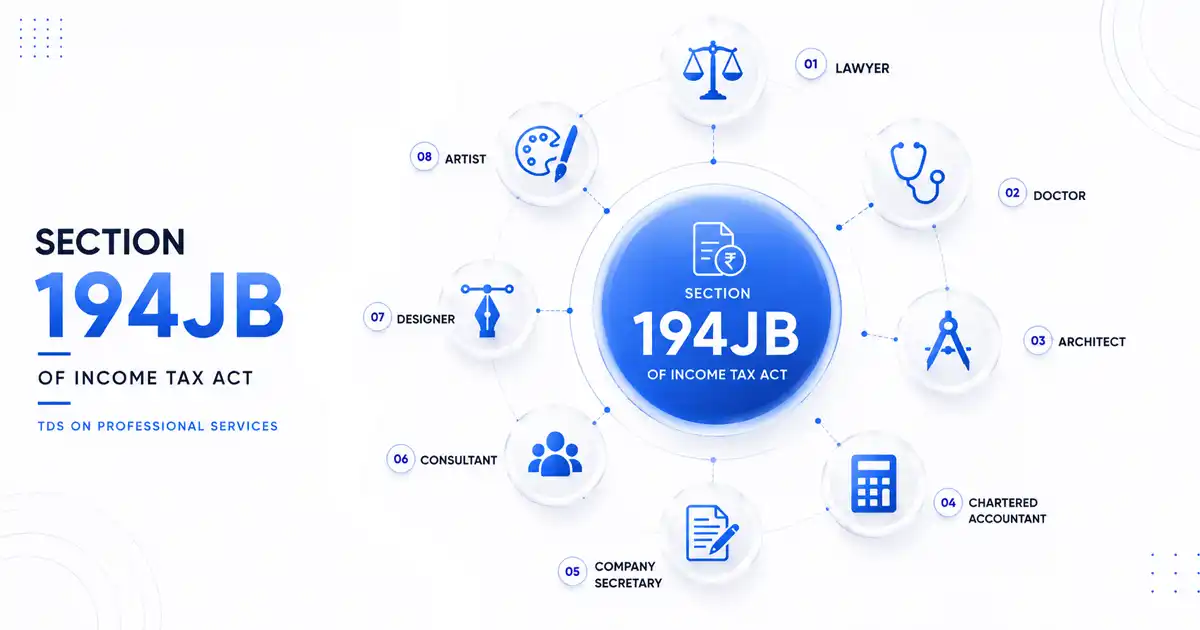
Section 194JB of Income Tax Act,1961 – TDS Rate, Threshold Limit, and Applicability
Top 10 CA Firms in Pune 2026 – Mid-Size, Audit & Best Tax Firms
Section 139(1) of the Income Tax Act – Who Must File ITR, Due Dates & Rules
Section 54 of Income Tax Act: Capital Gains Exemption, Conditions, and Examples
Section 112A of Income Tax Act – LTCG Tax Rate, Exemption, Eligibility & Rules
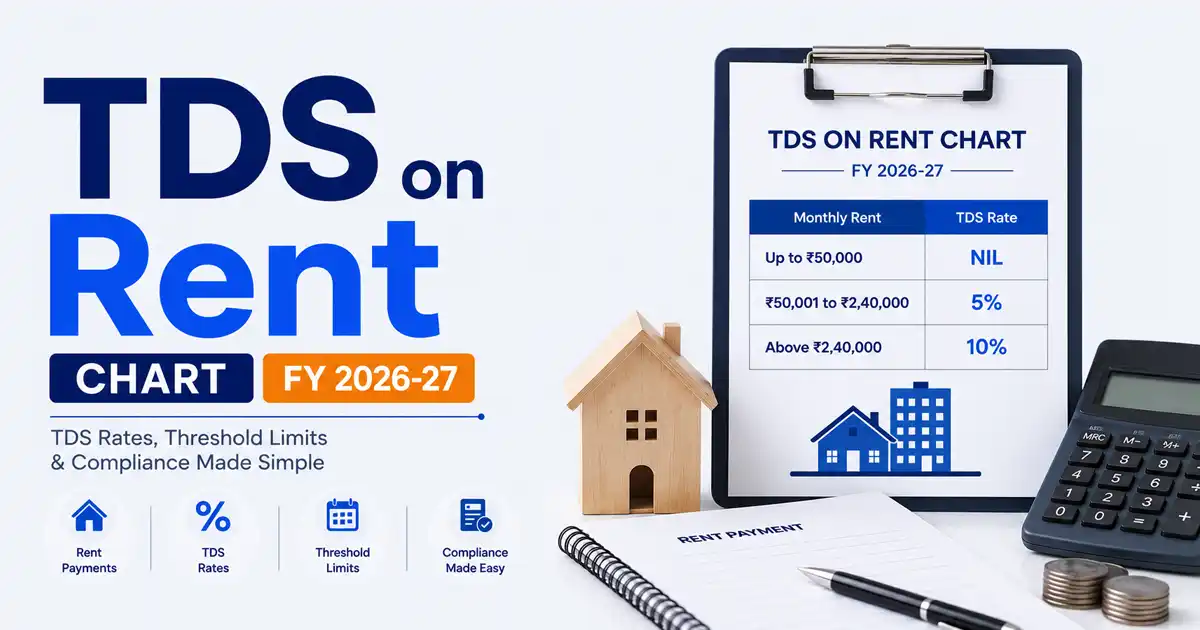
TDS on Rent Chart FY 2026 27 – Rates, Limits, Sections and Complete Guide
Section 44ADA of the Income Tax Act – A Complete Guide and Calculation