Company Registration in Mauritius from India
Register your company in Mauritius from India with RegisterKaro. Fast-track your global expansion with expert support and a streamlined setup process tailored to your business goals.
 End-to-End Mauritius Company SetupExpert Guidance on Legal & Tax Compliance100% Foreign Ownership RightsAccess Global Markets with EaseTrusted by 500+ Businesses

 What Sets Us ApartWhat Sets Us Apart
Overview of Company Registration in Mauritius
Setting up a company in Mauritius gives entrepreneurs and investors a stable, business-friendly environment with strong international ties. Known for its legal framework, tax regime, and ease of doing business, Mauritius has become a preferred destination.
Whether you're a startup or foreign investor, Mauritius offers full ownership, low taxes, and access to extensive double tax treaties. With proper guidance and compliance, the incorporation process is straightforward, enabling you to establish your presence quickly and efficiently.
Why You Should Choose Mauritius for Your Business?
Mauritius provides a highly attractive environment for businesses looking to expand beyond their domestic borders. Its unique blend of stability, strategic positioning, and favorable policies makes it a top choice.
- Strategic Location for Global Expansion: Mauritius bridges Africa and Asia, offering a prime base for businesses targeting the fast-growing African market while maintaining strong Asian connections. Its advanced financial sector and pro-business policies make it an ideal global hub.
- India-Mauritius DTAA Benefits: The Double Taxation Avoidance Agreement provides key tax advantages:
- Lower withholding taxes on cross-border dividends, interest, and royalties
- Protection against double taxation
- Clear guidelines on permanent establishment
Despite updates, the DTAA remains a valuable tool for Indian investors.
- Stable Political and Legal Framework: Mauritius offers political stability, a hybrid legal system (English and French influences), and strong investor protections, minimizing risks and boosting confidence for foreign businesses.
- Gateway to African and Global Markets: Access major trade blocs like AfCFTA, SADC, and COMESA, giving businesses a competitive edge in African markets. Mauritius also enjoys strong global trade relations for broader market access.
- Business-Friendly Time Zone: With GMT+4, Mauritius aligns well with Asia, Africa, and Europe, enabling smooth cross-border communication and efficient global operations.
Company Structure in Mauritius for Your Indian Business
Choosing the correct company structure is vital for aligning with your business goals and compliance requirements in Mauritius. Each type offers distinct advantages for Mauritius company registration.
1. Global Business Company (GBC)
- Purpose: Most common and versatile for international business activities, including trade, investment holding, fund management, and intellectual property holding.
- Tax Residency: Considered a tax resident in Mauritius, allowing access to Mauritius’ network of Double Taxation Avoidance Agreements (DTAs), including with India.
- Tax Benefits:
- Subject to 15% corporate income tax, but eligible for an 80% exemption on certain foreign income streams if substance requirements are met (effective rate as low as 3%).
- Exempt from withholding tax and capital gains tax on dividends and share sales.
- Flexibility: Can be structured as a limited company, partnership, or trust, depending on business needs.
- Operational Scope: Can engage in global business and, under certain conditions, local business with Mauritian residents if contracts are signed and invoiced locally.
- Regulation: Governed by the Companies Act 2001 and regulated by the Financial Services Commission (FSC).
- Requirements:
- Must have a registered office in Mauritius.
- Streamlined incorporation process when handled by a licensed agent.
- Can be incorporated quickly.
2. Authorised Company (AC)
- Purpose: Designed for entities whose core business activities and control are outside Mauritius.
- Tax Status: Not considered a tax resident in Mauritius; does not benefit from Mauritius’ DTAs.
- Tax Benefits: Complete exemption from tax on worldwide profits unless income is sourced from Mauritius, in which case normal local rates apply.
- Ownership & Management:
- The majority beneficial ownership must be non-Mauritian.
- Central management and control must be outside Mauritius.
- Operational Restrictions:
- Cannot conduct business with Mauritian residents or generate revenue from within Mauritius.
- Prohibited from banking, financial services, insurance, securities, collective investment schemes, trusteeship, and gambling activities.
- Incorporation Requirements:
- At least one shareholder (individual or corporate).
- At least one director (must be non-resident).
- Must have a registered office and a resident registered agent in Mauritius.
- No minimum paid-up capital required.
3. Domestic Company
- Purpose: Primarily for business activities within Mauritius; preferred for investing and trading with Mauritian residents.
- Ownership: 100% foreign ownership allowed.
- Taxation:
- Subject to 15% corporate income tax.
- Certain income types may qualify for an 80% tax credit, reducing the effective tax to 3%.
- No taxes on dividends.
- Incorporation:
- Minimum one shareholder (can be non-resident).
- Minimum one resident director required.
- No minimum paid-up capital.
- Incorporation can be completed in as little as two days.
- Compliance:
- Must maintain a registered office in Mauritius (not a P.O. Box).
- Annual returns and, if turnover exceeds MUR 50 million, audited accounts are required.
- The Company Secretary assists with governance and compliance.
Eligibility for Registering a Company in Mauritius
To register a company in Mauritius, applicants must satisfy the following core requirements:
a. Minimum Shareholders and Directors:
- A minimum of one shareholder and one director is required.
- The same individual can fulfill both roles.
- Shareholders and directors can be either individuals or corporate entities.
b. Director Residency Requirements (Vary by Company Type):
- Domestic Companies: Must have at least one director ordinarily resident in Mauritius.
- Global Business Companies (GBCs): Are required to have a minimum of two directors ordinarily resident in Mauritius. This is a crucial element for meeting substance requirements, qualifying for tax residency, and accessing Double Taxation Avoidance Agreement (DTAA) benefits.
- Authorised Companies (ACs): Do not require a resident director, as their central management and control are intentionally located outside Mauritius.
c. Registered Office: Every registered company in Mauritius must maintain a physical, local registered office address. This address serves as the official point for all statutory communications and notices.
d. Company Secretary:
- Global Business Companies (GBCs): It is mandatory to appoint a qualified company secretary who is resident in Mauritius.
- Domestic Companies: Generally required, though specific exceptions may apply for "small private companies" as defined by the Companies Act 2001.
- Authorised Companies (ACs): While a resident company secretary is not required, ACs must appoint a licensed Management Company to act as their Registered Agent in Mauritius. This agent handles essential local administrative and compliance functions.
e. Lawful Business Activity: All proposed business activities must strictly comply with Mauritian laws. The company cannot be involved in any prohibited sectors or illegal operations.
f. Share Capital: There is no statutory minimum share capital requirement for company incorporation in Mauritius. However, the capital injected should be sufficient and reasonable to adequately support the company's planned business operations and financial obligations.
g. Compliance with Special Licensing (If Applicable): Businesses operating in certain regulated sectors (e.g., financial services, insurance, investment funds, banking) are required to obtain additional specific licenses or regulatory approvals from relevant authorities, such as the Financial Services Commission (FSC).
Document Checklist for Company Formation in Mauritius
Accurate and properly certified documents are crucial for foreign company registration in Mauritius.
For Each Indian Individual Director and Shareholder
- Certified True Copy (CTC) of Valid Passport: All pages, certified by a Notary Public in India or Mauritian Embassy/High Commission.
- Proof of Residential Address: Recent utility bill, bank statement, or Aadhaar card (within 3 months).
- Professional Resume/CV: Detailing educational and professional background.
- Bank Reference Letter: From an Indian bank, confirming good financial standing.
- Declaration of Non-Bankruptcy: Formal statement.
- Police Clearance Certificate: Sometimes requested, especially for investor permits.
For Indian Corporate Shareholders
- Certified True Copy of Certificate of Incorporation: Proof of the Indian company's legal existence.
- Certified True Copy of Memorandum and Articles of Association (or equivalent): Defining the Indian company's objectives and rules.
- Board Resolution: Authorizing the investment in the Mauritian company, specifying the amount, and appointing representatives.
- Latest Audited Financial Statements: Demonstrating financial health.
- List of Directors and Shareholders: Details of the Indian company's current directors and significant shareholders.
- Certificate of Incumbency/Good Standing: Confirming the Indian company's active status.
The Role of KYC (Know Your Customer) Documents
KYC documentation is paramount for company registration and bank account opening in Mauritius, adhering to international AML/CFT standards. It serves to:
- Verify the identities of all individuals and entities.
- Understand proposed business activities.
- Identify Ultimate Beneficial Owners (UBOs).
- Assess associated risks.
Comprehensive and accurately certified KYC documents are essential for a smooth process.
How to Register a Company in Mauritius from India?
The process of company registration in Mauritius from India is systematic and can largely be managed remotely with the help of a registered agent or management company.
Step 1: Choosing a Unique Company Name and Getting it Approved
You need to select a unique company name that complies with the guidelines set by the Corporate and Business Registration Department (CBRD) in Mauritius. Your chosen name should not be identical to or too similar to existing registered companies.
Your registered agent will then submit an application to the CBRD for name approval and reservation. This step is crucial for securing your desired identity.
Step 2: Appointing Directors and Shareholders
Appoint the individuals or corporate entities who will serve as directors and shareholders of your Mauritian company. As mentioned, a GBC requires at least two resident directors, while an AC needs at least one director who can be non-resident.
You also need a minimum of one shareholder (which can be a corporate entity from India). Make sure these individuals meet the eligibility criteria for their respective roles.
Step 3: Engaging a Registered Agent or Management Company in Mauritius
It is legally mandatory for every company registered in Mauritius to appoint a licensed Registered Agent or Management Company based in Mauritius. This professional entity plays a pivotal role in the registration process and ongoing compliance. They will:
- Handle all communication with the Corporate and Business Registration Department (CBRD) and the Financial Services Commission (FSC).
- Prepare and submit all necessary incorporation documents.
- Provide a registered office address in Mauritius.
- Ensure your company complies with local laws and regulations.
Their expertise is invaluable for navigating the intricacies of foreign company registration in Mauritius.
Step 4: Compiling and Submitting the Required Application Documents
Your chosen registered agent will guide you in compiling all the necessary documents. This includes identification documents for directors and shareholders, proof of address, and corporate documents if an Indian company is a shareholder. Each document must meet the "certified true copy" standards. This meticulous preparation is vital for a smooth process.
Step 5: Filing with the Corporate and Business Registration Department (CBRD)
Once all documents are prepared and verified, your registered agent will officially file the incorporation application with the Corporate and Business Registration Department (CBRD).
This department is responsible for maintaining the register of companies and businesses in Mauritius. They will review your application for completeness and compliance with the Companies Act 2001.
Step 6: Obtaining Your Certificate of Incorporation and Business Registration Number
Upon successful review and approval of your application, the CBRD will issue your Certificate of Incorporation. This legal document formally brings your company into existence in Mauritius. Simultaneously, you will receive your Business Registration Number (BRN). This marks the official completion of your Mauritius company registration. You are now ready to proceed with opening a bank account and applying for any necessary business licenses.
Costs for Registering a Company in Mauritius
Understanding the financial outlay is essential when planning your Mauritius company registration cost. These costs can be broken down into several categories.
Government Registration and License Fees
These are the direct fees payable to the Mauritian government authorities.
1. Corporate and Business Registration Department (CBRD) Fees
- Company Incorporation Fee: Approximately MUR 3,500 (around Rs. 6K) for local companies. For a Global Business Company (GBC), the incorporation fee is typically higher, paid as part of the total FSC fee.
- Name Reservation Fee: A small fee, usually around MUR 250 (around Rs. 474), to reserve your desired company name.
2. Financial Services Commission (FSC) Fees
- GBC Application and Annual Fee: The FSC charges an application fee and an annual license fee for Global Business Companies. This can be around Rs. 1.5 Lakhs to Rs. 1.7 Lakhs for the first year, which includes the CBRD incorporation fee.
- Authorised Company (AC) Annual Fee: A lower annual fee is charged for Authorised Companies, typically around Rs. 30K to Rs. 34K.
3. Other Government Fees
Depending on your business activity, you might need specific business licenses or permits from various government bodies, each with its application and annual renewal fees. These can vary significantly by industry.
Professional Fees for Management and Formation Services
Engaging a licensed Management Company or Corporate Service Provider is mandatory and forms a significant part of the Mauritius company registration cost. These professionals handle the entire registration process and ensure ongoing compliance.
- Incorporation Services: Fees for preparing and filing all incorporation documents, liaising with the CBRD and FSC, and providing initial legal and structural advice. These can range from Rs. 1.3 Lakhs to Rs. 3.4 Lakhs, depending on the complexity of the structure (GBC vs. AC), the services included (e.g., directors, bank account assistance), and the service provider.
- Nominee Services (if required): If you need resident directors or nominee shareholders to meet local requirements, there will be additional annual fees for these services.
- Legal Advice: Any specialized legal advice beyond standard incorporation (e.g., drafting bespoke agreements) will incur separate legal fees.
Annual Renewal and Maintenance Costs
Maintaining your company in Mauritius involves recurring annual costs.
- Annual GBC/AC License Fees: These are paid to the FSC annually to maintain your Global Business Licence or Authorised Company status.
- Registered Agent/Company Secretary Fees: Your appointed management company or registered agent will charge an annual fee for their services, including maintaining your registered office, statutory records, and ensuring ongoing compliance. This typically ranges from Rs. 86,000 to Rs. 2.1 Lakhs per year, depending on the scope of services.
- Annual Return Filing Fee: A small annual fee is paid to the CBRD for filing your company's annual return.
- Audit Fees: GBCs are generally required to undergo an annual audit, which incurs audit fees that vary based on the company's size and complexity of transactions. ACs are typically exempt from audit but may need to file an annual financial summary.
- Tax Compliance Fees: Fees for preparing and filing annual tax returns with the Mauritius Revenue Authority (MRA).
- Substance-Related Costs: For GBCs, costs associated with maintaining substance (e.g., office rent, staff salaries, local expenses) must be factored in.
The Cost of Opening a Bank Account
While not a direct registration fee, opening a corporate bank account is a necessary step and may involve costs.
- Initial Deposit: Mauritian banks often require an initial minimum deposit to open a corporate account, which can vary from a few hundred to several thousand US dollars, depending on the bank and account type.
- Account Maintenance Fees: Some banks charge monthly or annual account maintenance fees.
- Transaction Fees: Fees for international transfers, cheque processing, and other banking services should also be considered.
Overall, the Mauritius company registration cost for a GBC in the first year, including government and professional fees, can range from Rs. 3.4 Lakhs to Rs. 6.8 Lakhs, and annual maintenance costs for subsequent years typically range from Rs. 2.1 Lakhs to Rs. 4.3 Lakhs, excluding substantial operational costs. For an AC, the costs are generally lower.
Post-Registration Tax and Compliance in Mauritius
Successfully registering your company in Mauritius is only the beginning. Ongoing tax and compliance obligations are crucial for maintaining good standing and avoiding penalties.
Mauritius operates a simple and attractive corporate tax system:
- Standard Corporate Tax Rate: The standard corporate tax rate is 15%.
- Partial Exemption for GBCs: GBCs enjoy an 80% tax exemption on qualifying foreign income, effectively reducing the corporate tax rate to 3% for activities like dividends or leasing. To qualify for this, GBCs must meet specific "substance requirements" in Mauritius.
- No Capital Gains Tax: Mauritius does not impose a capital gains tax.
- No Withholding Tax on Dividends: Generally, there is no withholding tax on dividends paid by a Mauritian company.
- DTAA Benefits: GBCs can leverage Mauritius's network of Double Taxation Avoidance Agreements (DTAs), subject to satisfying substance requirements and anti-abuse provisions.
- Authorised Company (AC) Exemption: An Authorised Company (AC) is generally exempt from income tax in Mauritius on its worldwide profits, as it is considered a non-tax resident. However, it cannot claim DTAA benefits.
- VAT (Value Added Tax): The standard VAT rate in Mauritius is 15%. Businesses exceeding a certain turnover threshold must register for VAT.
Annual Filing Requirements with the Mauritius Revenue Authority (MRA)
All companies registered in Mauritius must comply with annual filing requirements to the Mauritius Revenue Authority (MRA).
- Annual Tax Returns: Companies must file annual tax returns with the MRA, regardless of whether they have generated profit.
- Audited Financial Statements: GBCs are typically required to prepare and file audited financial statements annually with both the MRA and the Financial Services Commission (FSC).
- Financial Summary for ACs: Authorised Companies are usually exempt from statutory audit in Mauritius but must file an annual financial summary with the FSC.
- Economic Substance Reporting: GBCs must provide annual declarations to the MRA confirming they meet the economic substance requirements.
Compliance and Reporting for GBC and Authorised Companies
Both GBCs and ACs have specific compliance and reporting obligations to the Financial Services Commission (FSC), which is the regulator of the non-bank financial services sector.
- Annual License Renewal: Pay annual license fees to the FSC to maintain the GBC or AC status.
- Annual Returns: File annual returns with the Corporate and Business Registration Department (CBRD).
- UBO Disclosure: Companies must disclose details of their Ultimate Beneficial Owners (UBOs) to the authorities.
- FATCA/CRS Reporting: Companies may be subject to reporting under international tax transparency initiatives like FATCA (Foreign Account Tax Compliance Act) and CRS (Common Reporting Standard) if they hold financial accounts.
Mauritius Company Registration Certificate
The company registration certificate is the official document issued by the Mauritius Registrar of Companies upon successful incorporation. It confirms your company’s legal status and gives you the authority to operate within and outside Mauritius. This certificate is essential for opening bank accounts, signing contracts, and proving your entity’s legitimacy.
Key details include:
- Company name and registration number.
- Type of company (e.g., GBC, Domestic).
- Date of incorporation.
- Registered business address.
- Registrar’s official seal and signature.
This certificate serves as legal proof of your company’s formation and is a critical document for establishing trust with partners, clients, and financial institutions.
How to Download a Mauritius Company Registration Certificate?
The following is the process to download your company registration certificate from Mauritius:
- Visit the CBRD Portal: Go to the official website of the Corporate and Business Registration Department.
- Log in to your Profile: Use your registered email ID and password to log in to your company’s profile on the portal.
- Navigate to ‘My Companies’: Access the dashboard and select the company for which you want to download the certificate.
- Select ‘Documents’ Section: Locate the section that stores all official company documents.
- Choose ‘Certificate of Incorporation’: Click on the link for the Certificate of Incorporation or Registration Certificate.
- Download PDF: The certificate will be available for direct download in PDF format. Save it securely for legal and business use.
How to Check Company Registration Status in Mauritius?
Follow these steps to check your company registration status online:
- Go to the CBRD Website: Visit the official website.
- Click on ‘Company Search’: Use the public search function to look up your company.
- Enter Company Name or Number: Input your exact company name or registration number in the search field.
- View Company Profile: Click on the matching result to see your company's registration details, including status, incorporation date, and type.
- Verify Status: The status field will show whether your company is "Registered," "In Good Standing," or if any updates or filings are pending.
Connect with RegisterKaro and let our experts handle the legal hassle while you grow your business.
Frequently Asked Questions (FAQs)
Do I need to visit Mauritius to register my company?
No, you generally do not need to physically visit Mauritius to register your company. The entire company registration process can be handled remotely through a licensed company. However, an in-person visit or video conference might be required by banks for the corporate account opening process for due diligence purposes.
How long does it take to set up a company in Mauritius?
The timeline for Mauritius company registration varies depending on the type of company and the completeness of documents.
- Domestic Company: Typically, it can take as little as 3-5 working days once all documents are ready and verified.
- Global Business Company (GBC): This usually takes longer, around 2-3 weeks, as it involves approval from both the CBRD and the Financial Services Commission (FSC) and a more extensive due diligence process.
Authorised Company (AC): Can be slightly quicker than a GBC, often around 1-2 weeks. Delays can occur if documents are incomplete or if additional information is requested.
What is the main difference between a GBC and an Authorised Company?
The main difference lies in their tax residency and operational focus:
- Global Business Company (GBC): A tax resident in Mauritius. It conducts business globally, but its core income-generating activities and management must be carried out in or from Mauritius to meet substance requirements. GBCs can access Mauritius's DTAA network.
- Authorised Company (AC): A non-tax resident in Mauritius. It conducts business primarily outside Mauritius, and its central management and control must be located outside Mauritius. ACs are generally exempt from income tax in Mauritius but cannot access DTAA benefits. They are often chosen for simple international trading or holding activities where DTAA benefits are not sought.
Can I get residency in Mauritius by starting a company?
Yes, by starting a company in Mauritius and meeting certain investment criteria, Indian entrepreneurs can apply for an Investor Occupation Permit. This permit allows you to live and work in Mauritius for up to 10 years and can eventually lead to permanent residency. The minimum investment currently required is USD 50,000 into a qualifying business.
Is Mauritius still a tax-friendly jurisdiction for Indian investors?
Yes, Mauritius remains a tax-friendly jurisdiction, though its tax landscape has evolved. While the capital gains tax exemption under the India-Mauritius DTAA for shares acquired after April 1, 2017, has been modified, Mauritius continues to offer:
- A low corporate tax rate of 15% with a potential 80% partial exemption for GBCs (effectively 3%).
- No capital gains tax at the Mauritian level.
- No withholding tax on dividends.
- A robust DTAA network (for GBCs) that still provides benefits for various income streams like interest and royalties.
- A stable, transparent, and compliant regulatory environment that adheres to international standards.

Reviewed by
Joel DsouzaJoel Dsouza is a Chartered Accountant (CA) and compliance expert with over 7 years of hands-on experience in company registration, tax structuring, GST, ROC filings, and MCA compliance. As a qualified member of the Institute of Chartered Accountants of India (ICAI) and Co-Founder at RegisterKaro, he has personally advised more than 1,000 startups and SMEs across India, helping founders navigate incorporation, regulatory frameworks, and financial planning from Day 1. With deep expertise across all three levels of Finance and Portfolio Management, Joel is committed to promoting financial literacy and simplifying India's startup ecosystem through clear, actionable guidance that entrepreneurs can act on immediately.
Why Choose Registerkaro for Company Registration in Mauritius?
When it comes to company registration in Mauritius for Indian entrepreneurs, choosing the right partner can make all the difference. Registerkaro offers comprehensive services designed to simplify your journey.
- Expertise in Mauritius Company Formation: Extensive knowledge and hands-on experience in registering international companies, with a focus on Mauritius.
- End-to-End Registration Support: Complete assistance from initial consultation to document filing and bank account setup.
- Legal Compliance & Guidance: Ensure full compliance with Mauritian laws, tax rules, and international standards.
- Transparent & Cost-Effective Pricing: Clear breakdown of all government fees and service charges—no hidden costs.
- Post-Incorporation Services: Ongoing support including secretarial services, tax compliance, and regulatory updates.

What Our Clients Say
View All
Aditya Chaudhary
 Verified
I would like to express my heartfelt appreciation to Ms. Anchal Gupta from RegisterKaro for her exceptional assistance in the incorporation of our com... Read more

Skills Bazzar
VerifiedI sincerely appreciate Harsh for his excellent support in completing our MCA documentation. He handled everything with great attention to detail, prof... Read more

Naman Mahendroo
VerifiedThe compliance and bookkeeping team have made this entire process incredibly easy and stress-free for me. A huge thank you to Sayana for handling the... Read more

Snackdesi
VerifiedWe've opted Registerkaro to help with the grants for early stage startups. Diksha from the Seed Funding team helped preparing the deck and applying fo... Read more

AJAY SATI
VerifiedWorking with Kunal Jain at RegisterKaro has been an outstanding experience. His deep understanding of GST compliances, quick response time, and commit... Read more

Gaurav Kumar
VerifiedStarting a business can be overwhelming, but RegisterKaro simplified everything for me. Ayush Jain ensured all my queries were resolved quickly and cl... Read more

Dr. SanjayKUMAR Pate...
VerifiedRegisterKaro made our GST and annual filings completely hassle-free. Their team handled the entire process efficiently and kept us updated at every st... Read more

shilpa deshmukh
VerifiedWe had a good experience working with Sumit Kumar. He was incredibly patient in addressing all our queries and diligent with follow-ups, which signifi... Read more

Yojna Singh
VerifiedI had no idea where to start, and honestly, I thought the whole process would be stressful. From the first conversation, Archana made everything feel... Read more

Prajjwal Raghav
VerifiedThe operations team simplified the entire registration process by efficiently handling all legal and technical requirements. I did not have to worry a... Read more
Related Blogs
View All
How to Start a Chocolate Business From Home in India (2026)?
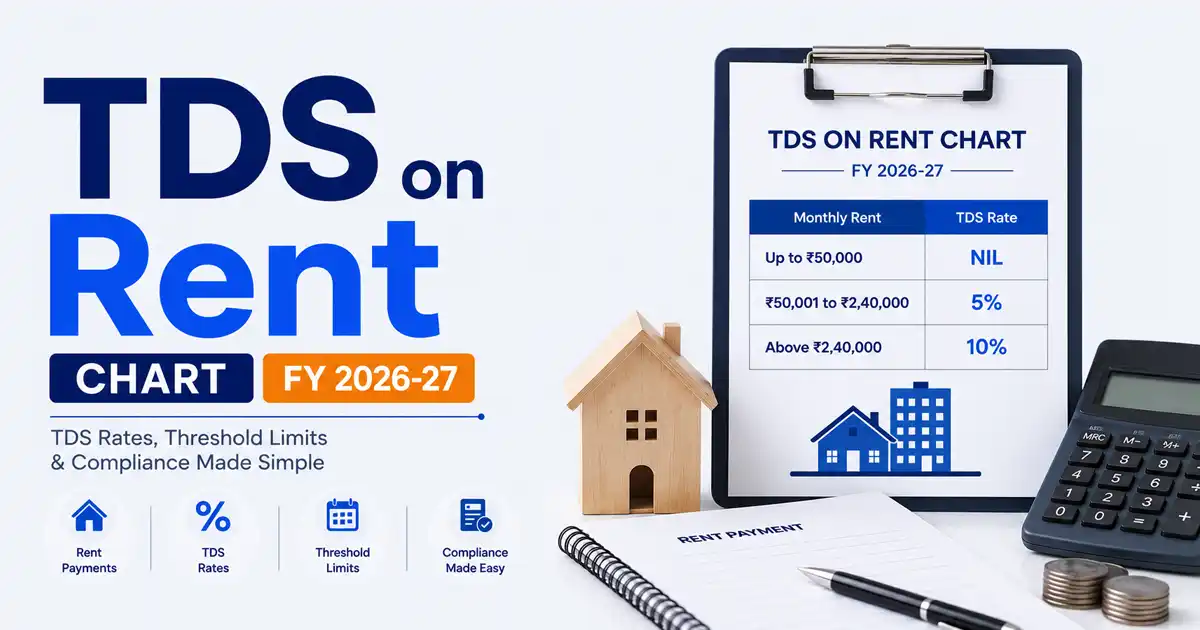
TDS on Rent Chart FY 2026–27: Rates, Limits, Sections and Complete Guide
GST on Bikes in India: New Rates by Engine Capacity
GST for Electrical Items in India: Rates & HSN Codes

GST on Cars in India 2026: New Rates, Slabs & Impact

GST on Car Insurance in India: Rate, ITC, and Latest Rules
GST on Vehicle Insurance in India: Rate, ITC & Rules
How to Check IEC Code Application Status Online on DGFT Portal? Complete 2026 Guide

Difference Between Brand and Trademark in India
How to File Trademark Form TM-M: Purpose, Fees & Process