

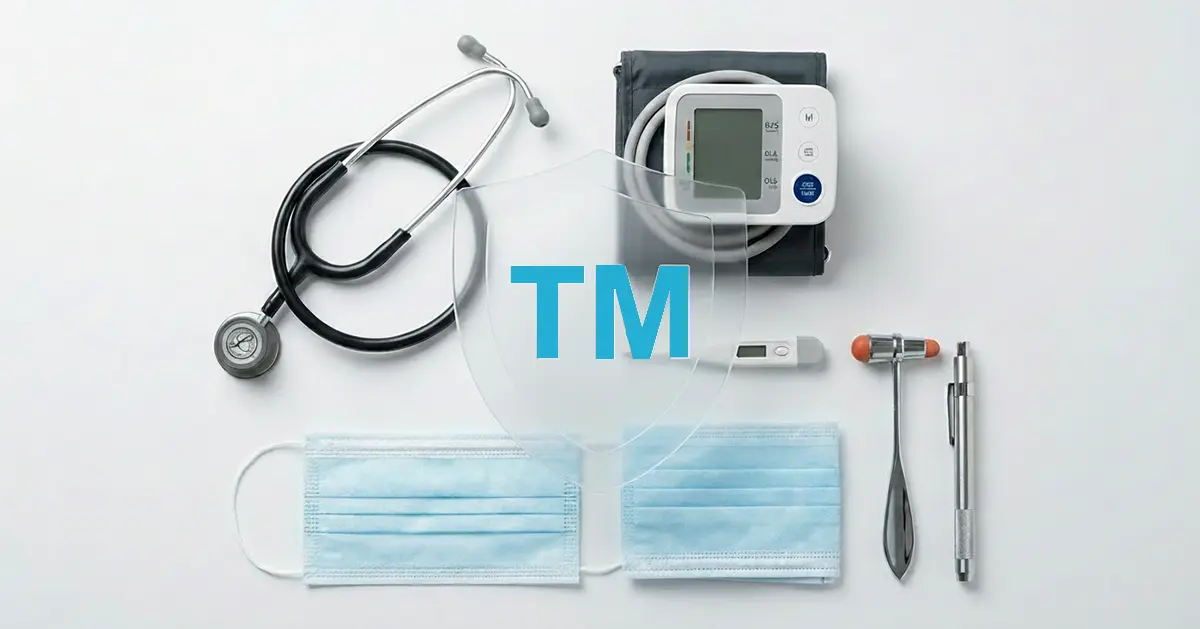
Trademark Class 10 includes medical devices and healthcare equipment under the international Nice Classification system. It covers physical products used for diagnosis, treatment, surgery, rehabilitation, and patient care. The class focuses on medical instruments and devices rather than medicines or healthcare services.
As India’s medical device sector grows, businesses should consider trademark registration to protect their brand. A registered trademark helps prevent unauthorized use and builds trust with hospitals, clinics, and healthcare providers. It also supports business expansion and long-term growth.
Key Takeaways
- Class 10 covers medical devices and healthcare instruments used for diagnosis, treatment, surgery, rehabilitation, and patient care, not medicines or medical services.
- It spans surgical instruments, diagnostic/monitoring equipment, orthopedic and mobility devices, implants, respiratory equipment, lab devices, sensory aids, home medical devices, and sterilization equipment.
- It does not cover pharmaceuticals (Class 5), medical/healthcare services (Class 44), medical software without hardware (Class 9/42), general scientific instruments not designed for medical use (Class 9), or cosmetics (Class 3).
- Trademark registration doesn’t substitute for CDSCO regulatory approval under the Medical Devices Rules, 2017.
- Filing costs ₹4,500 per class for individuals, startups, and MSMEs, and ₹9,000 for companies and other entities.
- Validity runs 10 years, renewable indefinitely.
What is Trademark Class 10?
Trademark Class 10 includes medical devices and healthcare equipment. It helps businesses protect their brands in a competitive healthcare market. The COVID-19 pandemic also increased competition and demand across the medical device industry.
A Class 10 trademark protects brands used for medical equipment and devices. It helps businesses build brand recognition and take legal action against trademark infringement.
Note: Trademark registration under Class 10 does not substitute for regulatory approvals required under the Medical Devices Rules, 2017. Medical devices sold in India must also comply with Central Drugs Standard Control Organization (CDSCO) regulations before commercial use.
Who Should Register Under Trademark Class 10?
Businesses dealing with medical devices and healthcare equipment should register under Class 10 to protect their brand. This includes:
- Manufacturers and developers of medical, surgical, or diagnostic devices, including home-use and mobility equipment.
- Dental, orthopedic, and rehabilitation equipment companies.
- Importers, exporters, distributors, and private-label brands of medical devices.
- Veterinary medical device manufacturers or suppliers.
- Startups creating innovative healthcare or monitoring devices.
This class also suits health-tech businesses that sell hardware-based medical solutions, even when software plays a supporting role. Philips Healthcare, for example, protects its brand under Class 10 for products like MRI machines, where software enhances performance.
What are the Goods Covered Under Trademark Class 10
From complex surgical machines to everyday home-use tools, Class 10 covers the major instruments healthcare providers use:
| Category | Examples of Goods Covered |
|---|---|
| Medical & Surgical Instruments | Scalpels, forceps, retractors, surgical kits, endoscopes, suturing instruments |
| Diagnostic & Monitoring Devices | ECG machines, blood pressure monitors, pulse oximeters, stethoscopes, X-ray and imaging equipment |
| Dental Equipment | Dental chairs, drills, braces, aligners, implants, orthodontic tools |
| Orthopedic & Rehabilitation Equipment | Crutches, orthopedic supports, physiotherapy devices, and traction equipment |
| Mobility & Assistive Devices | Wheelchairs, walkers, canes, mobility scooters, and patient lifting devices |
| Respiratory & Life Support Equipment | Ventilators, CPAP machines, oxygen masks, anesthesia apparatus |
| Surgical Implants & Prostheses | Artificial joints, plates, screws, and heart valves |
| Hospital & Clinic Equipment | Hospital beds, examination tables, IV stands, patient monitors, medical trolleys |
| Laboratory & Research Devices | Centrifuges, microscopes, diagnostic test kits (excluding chemical or reagent-based test kits) |
| Hearing, Vision & Sensory Aids | Hearing aids, vision testing devices, and medical alert systems |
| Home Medical Devices | Nebulizers, thermometers, home-use blood pressure monitors, and first-aid kits |
| Sterilization & Hygiene Equipment | Autoclaves, sterilizers, and medical waste disposal devices |
| Sutures & Medical Fastening Devices | Surgical sutures, staples, clamps, and fastening instruments |
Goods Not Covered Under Trademark Class 10
While Trademark Class 10 covers a wide range of medical and healthcare devices, it does not cover every product in the healthcare ecosystem.
- Pharmaceuticals & Medicines: Tablets, capsules, syrups, vaccines (Class 5).
- Medical & Healthcare Services: Hospitals, clinics, physiotherapy services, diagnostic centers (Class 44).
- Software & Digital Solutions: Medical apps, telemedicine platforms, AI diagnostics without hardware (Class 9 or Class 42).
- Scientific & Measuring Instruments: General scientific or industrial measuring instruments not designed or approved for medical or diagnostic use (Class 9).
- Cosmetics & Personal Care Products: Skincare creams, hygiene products, ointments (Class 3).
If you select the wrong class, you risk application rejection or weaker brand protection. Identify the correct class early using RegisterKaro’s trademark Class Finder.
How to Register a Trademark Under Class 10 in India?
Filing a trademark under Class 10 in India involves key steps:
- Conduct a Trademark Search: Check if your brand name or logo is already in use. RegisterKaro’s trademark availability check tool can help identify if your desired name or logo is available.
- Select the Correct Class and Goods Description: Clearly define the products to be protected under Class 10 for precise coverage.
- File the Application (TM-A Form): Submit online via the IP India Trademark Portal with applicant details, brand logo or name, and product description.
- Examination of Application: The trademark examiner actively reviews the application to check compliance and identify potential conflicts. Any trademark objection must be addressed promptly.
- Publication in Trademark Journal: The Trademark Registry publishes the trademark in the Trademark Journal for 4 months. This allows third parties to raise any objections.
- Receive Registration Certificate: If no trademark opposition arises or if you resolve it in your favor, the Trademark Registry registers the trademark and grants you exclusive rights.
- Maintain & Renew Your Trademark: Trademarks last 10 years. Trademark renewal can be done indefinitely to ensure ongoing protection for your brand.
Multi-Class Filing: Trademark Class 10 and Related Classes
Medical device and healthcare brands often operate across multiple product categories. Filing in only one class can leave your other offerings unprotected and expose your business to legal risks.
Here are some different trademark classes related to Class 10:
| Class | What It Covers | Relation to Class 10 |
|---|---|---|
| Class 5 | Pharmaceuticals, vitamins, medical supplements | Often sold alongside Class 10 medical devices; requires a separate filing |
| Class 9 | Scientific and medical measuring instruments, software, and diagnostic apps | Some diagnostic devices have hardware-software components |
| Class 44 | Medical and healthcare services, clinics, physiotherapy | Businesses providing devices plus healthcare services may need this class |
| Class 3 | Cosmetics, skincare, hygiene products | Some healthcare brands sell personal care products alongside Class 10 devices |
For example, 3M operates in surgical and safety devices (Class 10), healthcare products like bandages (Class 5), and diagnostic tools (Class 9), securing its brand identity across multiple segments.
