

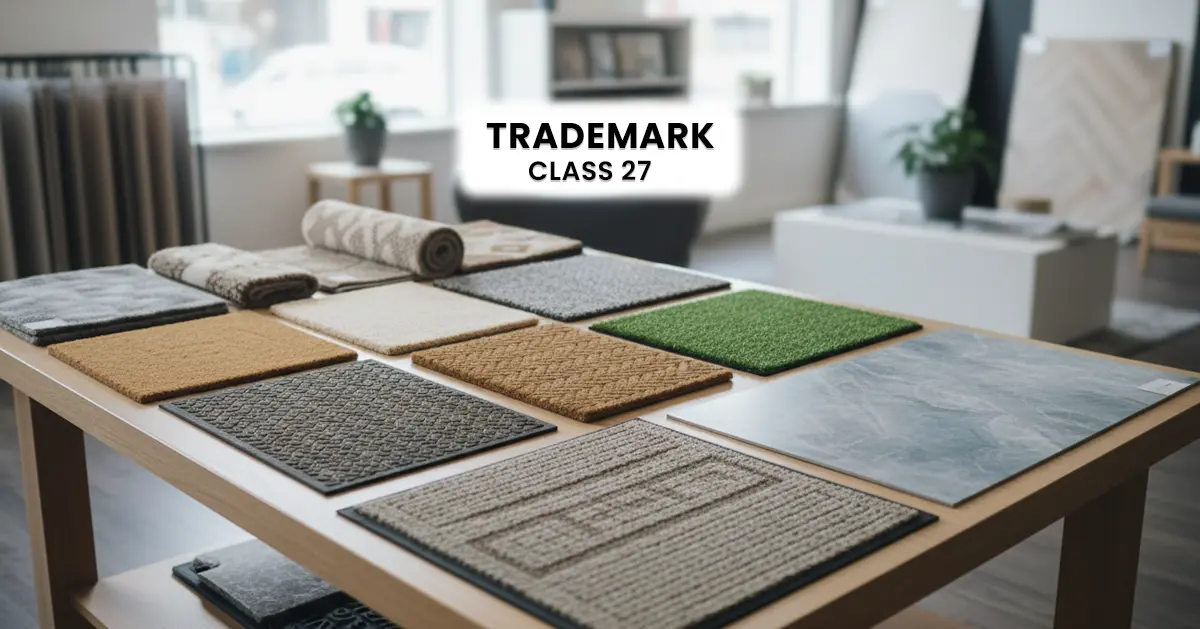
Trademark Class 27 covers floor and wall coverings in India. It includes carpets, rugs, mats, linoleum, vinyl floor coverings, and non-textile wall hangings. Registration under this class helps businesses protect their brand identity from imitation and misuse.
Legal trademark protection under the Trade Marks Act, 1999 helps businesses prevent infringement disputes. The Controller General of Patents, Designs and Trade Marks (CGPDTM), Government of India, enforces this protection and strengthens consumer trust.
Key Takeaways
- Class 27 covers carpets, rugs, mats, matting, linoleum, and other materials for covering existing floors, plus wall hangings that are not made of textile.
- Textile wall hangings and textile wallpaper are excluded from Class 27, confirmed directly against WIPO’s own class heading, which specifically limits wall coverings to non-textile materials. These fall under Class 24 instead.
- It does not cover floor tiles or wooden boards (Class 19), electrically heated carpets (Class 11), or mats for infant playpens (Class 20).
- Filing costs ₹4,500 per class for individuals, startups, and MSMEs, and ₹9,000 for companies and partnerships.
- Registration is valid for 10 years from the filing date, renewable indefinitely via Form TM-R.
What is Trademark Class 27 in India?
Trademark Class 27 applies to products designed to cover existing floors or walls, protecting the unique branding of carpets, mats, and non-textile wall coverings. Trademark registration gives legal rights to use your logo, name, or design exclusively in this category. India follows the Nice Classification (NICE) system, recognized globally under WIPO, to categorize goods and services.
Who Can File for Trademark Class 27 in India?
Any business involved in manufacturing, supplying, or selling floor and wall coverings can file under the Class 27 trademark. This includes:
- Carpet manufacturers producing home, office, or automobile carpets.
- Mat suppliers offering bath mats, door mats, gym mats, and yoga mats.
- Linoleum and vinyl flooring producers supplying floor coverings for homes and commercial spaces.
- Non-textile wall covering manufacturers offering wallpaper and non-fabric wall hangings.
- Startups and small businesses introducing innovative flooring or wall covering designs.
What Products Does Trademark Class 27 Cover?
Trademark Class 27 protects a wide range of products that businesses add to existing floors or walls. Below is a detailed list of products that you can protect under Class 27 in India:
| Product Name | Description |
|---|---|
| Automobile carpets | Cover car floors and improve interior aesthetics |
| Bath mats | Absorb water and prevent slipping in bathrooms |
| Carpet underlay | Provide cushioning under carpets for comfort and durability |
| Gymnastic mats/gymnasium mats | Provide cushioning and safety during exercise or training |
| Door mats | Prevent dirt from entering and improve safety at entrances |
| Floor coverings | Cover existing floors, including linoleum and vinyl |
| Floor mats, fire-resistant | Protect surfaces from heat and fire hazards |
| Linoleum | Durable floor covering, easy to clean for homes and businesses |
| Mats of woven rope for ski slopes | Ensure safety and traction on ski slope paths |
| Mats | Serve general floor covering purposes |
| Non-slip mats | Provide anti-slip surfaces for wet or slippery areas |
| Reed mats | Offer traditional or decorative floor coverings |
| Tatami mats | Serve as traditional Japanese-style floor coverings |
| Non-textile wallpaper | Cover and decorate interior walls, provided it is not textile-based |
| Wall hangings, not of textile | Decorate walls using non-fabric materials |
| Vinyl floor coverings | Durable, waterproof floors for homes and businesses |
| Yoga mats | Provide grip and cushioning for workouts |
| Artificial turf | Synthetic ground covering used as an alternative to natural grass or carpet |
What Products are Excluded from Class 27?
Certain products fall outside Class 27 and require separate registration. These include:
- Floors, floor tiles, wooden boards, and geotextiles fall under Class 19.
- Electrically heated carpets fall under Class 11.
- Mats for infant playpens fall under Class 20.
- Textile wall hangings and textile wallpaper fall under Class 24.
Knowing these exclusions prevents trademark objections and ensures correct filing under trademark Class 27.
How to Register your Trademark in Class 27?
You can file on a “proposed to be used” basis if your products aren’t yet on the market. Choose “already in use” if your carpets, mats, or wall coverings are already sold.
Follow these steps to register your trademark under Class 27:
- Search first: Use the IP India database or RegisterKaro’s free trademark search tool. Check for existing marks, phonetic similarities, and pending applications under Class 27.
- Confirm the correct class: Class 27 protects floor coverings, mats, carpets, linoleum, artificial turf, and non-textile wall hangings. These goods are distinct from Classes 1–34 for goods and Classes 35–45 for services.
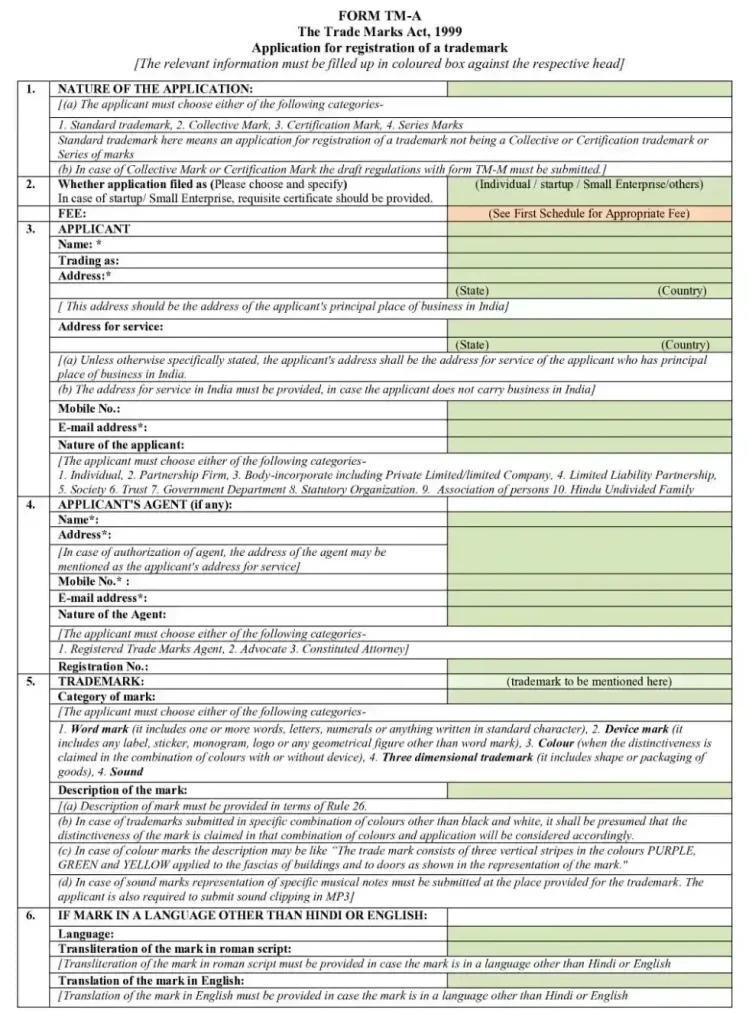
- File Form TM-A: Include applicant details, a clear logo or wordmark in JPEG format, precise product descriptions, and proof of use if applicable. Submit through the IP India E-Filing Portal. Government fees run ₹4,500 for individuals/MSMEs/startups and ₹9,000 for companies/partnerships.
- Examination: The Registrar checks for legal compliance and conflicts. The Registrar may raise objections under Section 9 for distinctiveness or Section 11 for similarity to prior marks. Respond to trademark objections within 30 days. Attend trademark hearings if scheduled.
- Publication and opposition window: Once approved, your mark is published in the Trademark Journal for 4 months. During this period, third parties can file trademark opposition. Respond promptly with a counterstatement and evidence if opposed.
- Registration and renewal: Once cleared, you can use the ® symbol. Registration is valid for 10 years from the filing date. You can renew it through Form TM-R before expiry, with a 6-month grace period at a surcharge if missed.
Other Trademark Classes That Can Cause Confusion for Class 27
Businesses often confuse Class 27 with other trademark classes because some products appear similar but legally belong elsewhere. The main classes that confuse are:
- Class 20: Covers mats for infants and furniture-related products. Businesses selling play mats or specialized furniture mats sometimes mistakenly file under Class 27 instead.
- Class 11: Includes electrically heated carpets and other electrical floor coverings. Companies selling heated carpets often assume they belong in Class 27, which can cause rejection.
- Class 19: Protects wooden, non-metallic, or industrial flooring. Businesses selling vinyl or wooden floors may misclassify these, delaying registration.
- Class 24: Covers textile wall hangings and textile wallpaper, distinct from the non-textile wall coverings that belong in Class 27.
Filing in the correct class ensures authorities recognize the products properly and grants full legal protection.
