


Trademark Class 40 covers services that treat, transform, or custom-process materials. It also includes printing, recycling, air and water purification, and food and drink preservation. Common services include textile finishing, metal fabrication, chemical processing, alloy treatment, printing, and photographic development.
Indian manufacturing and processing industries rely on these services for large-scale production and custom solutions. Trademark registration protects industrial service brands from unauthorized use. It also establishes legal ownership and builds credibility with clients and business partners.
Leading companies such as L&T, Tata Steel, Aditya Birla Group, and Grasim Industries operate in areas covered by Class 40. These include manufacturing, metal processing, chemical processing, and textile treatment.
Key Takeaways
- Class 40 covers material treatment and processing services. These include waste recycling, air purification, water treatment, printing, and food and drink preservation. WIPO’s official heading confirms these services.
- Printing services belong to Class 40. They do not fall only under Class 16 or 41. Printing is one of the five explicitly named components of Class 40.
- Class 40 does not cover industrial machinery (Class 7), raw materials (Class 1), business consultancy (Class 35), transportation (Class 39), or technical and engineering consultancy (Class 42).
- Filing fees are ₹4,500 per class for individuals, startups, and small enterprises. The fee is ₹9,000 for companies.
- Registration remains valid for 10 years. You can renew it indefinitely.
- Registration protects the service activity only. It does not protect ownership of the finished goods produced. Those goods need separate registration under the relevant class.
What is Trademark Class 40 in India?
Trademark Class 40 applies to services that process, treat, or transform materials. The World Intellectual Property Organization (WIPO) manages this classification globally under the Nice system.
Class 40 services support factories, industrial units, textile mills, chemical plants, printing houses, and specialized manufacturing facilities. In India, the Trade Marks Act, 1999 governs registration under this class. The Indian Trademark Registry examines applications based on the type and purpose of the service.
The Registry focuses on how the service processes or transforms materials. It does not consider production scale, machinery type, output format, or location. This keeps processing services separate from consulting, logistics, and educational services covered under different trademark classes.
Who Should Register Under Trademark Class 40?
You should register under Trademark Class 40 if your business offers services that process, treat, or transform materials. This class applies to a broad range of industrial and manufacturing service providers, including:
- Textile processing companies: Protect brand names for fabric dyeing, printing, finishing, and other textile treatments.
- Metalworking and fabrication firms: Secure trademarks for metal shaping, cutting, coating, and alloy treatment services.
- Chemical and material processors: Safeguard brands for chemical treatments, material transformations, and industrial processing services.
- Printing and photographic development businesses: Register trademarks for printing services, photo processing, film developing, and photocomposing.
- Custom manufacturing units: Register trademarks for services converting raw materials into finished goods, including textiles, metals, chemicals, or specialty products.
- Recycling and waste treatment operators: Protect brand names for waste recycling, material recovery, and destruction services.
- Water and air treatment providers: Secure trademarks for air purification and water treatment services offered to industrial or commercial clients.
- Food and beverage preservation services: Protect brands for food smoking, freezing, milling, and preservation services performed for others.
- Export-oriented processing providers: Protect trademarks for services supplied to international markets.
- Contract and private-label processors: Secure brand protection for services performed on behalf of other companies, retailers, or institutional clients.
Leading Indian and global industrial service providers, like Bharat Forge for metal processing and Century Textile, protect their brands under Class 40.
What Services are Covered Under Trademark Class 40?
Trademark Class 40 applies to services that involve processing, treating, or changing the physical condition of materials. These services support manufacturing and industrial operations.
The table below summarizes the major service categories and examples covered under Trademark Class 40 in India:
| Service Category | Examples of Covered Services |
|---|---|
| Treatment of Materials | Textile dyeing, bleaching, washing, finishing; metal cutting, forging, welding, coating; chemical processing and material modification |
| Printing Services | Printing, photocomposing, photographic film development, photogravure, book and document printing |
| Recycling Services | Recycling of waste and trash, material recovery, destruction services |
| Air & Water Treatment | Air purification, air deodorizing/freshening, water treatment and purification services |
| Food & Drink Preservation | Food and drink preservation, fruit crushing, flour milling, food smoking, freezing of foods |
| Contract Manufacturing | Manufacturing or processing goods for others using supplied raw materials |
| Surface & Material Finishing | Polishing, plating, strengthening, coating, and protective surface treatments |
| Export-Focused Processing | Processing services provided for export-oriented textile or manufacturing units |
| Private-Label & Third-Party Processing | Processing services delivered for brands, retailers, or institutional clients |
| Handloom & Craft Processing | Traditional dyeing, finishing, and treatment services for handloom and artisanal textiles |
| Sustainable Processing Services | Eco-friendly, recycled, low-emission, and environmentally responsible processing methods |
| Processing of Materials Imported into India | Manufacturing and processing services performed domestically on materials sourced from overseas suppliers |
| Processing Services for Overseas Clients | Manufacturing and processing services performed for clients or markets based outside India |
Note: Trademark Class 40 protects service activities only. It does not cover ownership of finished goods. Businesses must register final products under the appropriate trademark goods class based on product type and use.
Which Services are not Included in Trademark Class 40?
Trademark Class 40 covers services related to the treatment, processing, or transformation of materials. The following related activities fall under other trademark classes and do not qualify for protection under Class 40:
- Commercial and business support: Advertising, branding, marketing, sourcing, inventory management, and business consulting fall under Class 35.
- Transportation and storage: Shipping, freight forwarding, warehousing, distribution, and cargo handling fall under Class 39.
- Technical and advisory services: Engineering consultancy, industrial design, R&D, and testing fall under Class 42.
- Construction and repair: Factory construction, machinery installation, and equipment maintenance fall under Class 37.
- Sales and retail: Selling finished or semi-finished goods falls under Class 35, not Class 40.
- Industrial software: Automation software and production management systems fall under Class 9 or Class 42, depending on their function.
- Cleaning services: Routine cleaning and janitorial services fall under Class 37. Specialized industrial treatment services fall under Class 40.
Tip: Use RegisterKaro’s Trademark Class Search Tool to find the correct class for your services.
How to Register a Trademark Under Class 40 in India?
You can file as “proposed to be used” if your services have not started yet. Choose “already in use” if you currently provide processing, printing, or industrial services.
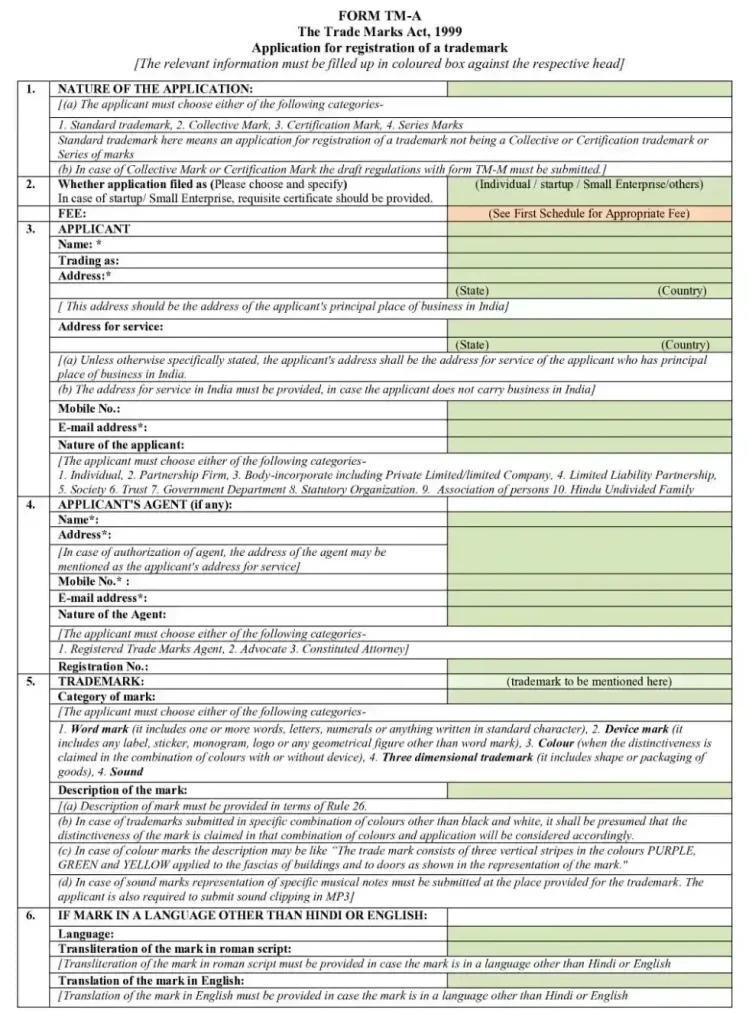
Follow these steps to register your Class 40 trademark:
- Search first: Check the official IP India trademark database or use RegisterKaro’s trademark availability check tool. Verify availability for your specific services.
- Select the right service description: Clearly list services such as metal processing, textile finishing, printing, food preservation, recycling, or custom manufacturing. Precise descriptions can reduce objections.
- File Form TM-A: Submit the application through the IP India Trademark Portal or offline at the Trademark Registry. Include your brand name, logo, service descriptions, and applicant details. The fee is ₹4,500 for individuals, startups, or small enterprises and ₹9,000 for companies.
- Examination: The Trademark Registrar reviews the application for accuracy, similarity with existing marks, and legal compliance. If concerns arise, the Registrar issues an Examination Report. Respond within the specified timeline to avoid delays or abandonment.
- Publication and opposition window: Once accepted, the mark is published in the Trademark Journal. Third parties can file a trademark opposition within four months.
- Registration and certificate: If no opposition is filed or objections are resolved, the Registrar grants registration. You receive a Trademark Registration Certificate and can use the ® symbol.
The process usually takes 12–18 months from filing to certificate. A registered trademark remains valid for 10 years and can be renewed indefinitely through trademark renewal.
Trademark Classes Related to Class 40: Multi-Class Filings
Businesses offering industrial, manufacturing, or material treatment services often operate across more than one trademark class. Filing in related classes with Trademark Class 40 broadens brand protection and covers all service and commercial activities.
The table below shows trademark classes that often overlap with Class 40:
| Related Class | Goods / Services Covered | Why It Relates to Class 40 |
|---|---|---|
| Class 35 | Advertising, business management, wholesale, retail, import, export, and distribution services | Sales, marketing, and commercial activities for processed or manufactured goods fall under Class 35 |
| Class 37 | Construction, installation, repair, and maintenance services | Plant setup, machinery installation, and industrial maintenance are separate from processing services |
| Class 42 | Engineering services, technical consultancy, research, testing, inspection, and quality control | Technical support and R&D linked to manufacturing are classified under Class 42 |
| Class 39 | Transportation, logistics, warehousing, and storage services | Movement and storage of raw materials or finished goods do not qualify as material treatment |
| Relevant Goods Classes (Optional) | Finished or semi-finished goods produced through manufacturing or processing | Products sold under your own brand must be registered in their respective goods classes |
For example:
- Tata Steel Processing and Distribution Ltd.: Protects metal cutting, coating, and heat treatment services under Class 40. Finished steel products fall under relevant goods classes.
- Arvind Limited: Protects fabric dyeing, washing, and finishing services under Class 40. Woven and processed fabrics fall under Class 24.
- SRF Limited: Covers chemical treatment and industrial processing under Class 40. Sales, export, and distribution fall under Class 35.
- Larsen & Toubro (L&T): Covers manufacturing and material processing under Class 40. Engineering design, testing, and technical consultancy fall under Class 42.
Tip: Businesses offering processing services along with product sales, logistics, or consulting should consider multi-class trademark registration for broader protection.
