


A POSH complaint is the formal written complaint through which a woman can report workplace sexual harassment. It is filed under the Sexual Harassment of Women at Workplace (Prevention, Prohibition and Redressal) Act, 2013. Filing a complaint is the first step of the legal process that ensures a fair inquiry, protects everyone’s rights, and provides remedies when misconduct is proven.
Once a complaint is filed, the process follows strict timelines under the POSH Act:
- Complaint acknowledgment and review: Immediate upon receipt by the Internal Committee (IC) or Local Committee (LC)
- Sharing the complaint with the respondent: Within 7 working days
- Respondent’s written reply: Within 10 working days
- Completion of inquiry by IC/LC: Within 90 days
- Submission of inquiry report to employer: Within 10 days of completing the inquiry
- Employer action on recommendations: Within 60 days of receiving the report
This guide explains who can file a POSH complaint, the applicable time limits, the complaint format, the inquiry process, and the possible outcomes of a complaint.
Key Takeaways
- Under Section 9, the “aggrieved woman” must file a POSH complaint in writing within 3 months of the incident. For a series of incidents, the time limit runs from the last incident.
- A POSH complaint form should include the complainant’s and respondent’s details, a clear description of the incident, dates and locations, witness information, supporting evidence, and a signed declaration.
- A complainant can file a POSH complaint even without direct documentary evidence. The IC may rely on witness statements, surrounding circumstances, and the balance of probabilities standard.
- The POSH complaint process follows statutory timelines. The IC must notify the respondent within 7 working days, complete the inquiry within 90 days, submit its report within 10 days, and the employer must act within 60 days.
- Under Section 14, the IC may recommend action against the complainant only when it finds clear evidence that the complaint was false or malicious. An unproven complaint alone does not attract penalties.
What is a POSH Complaint and Who Can File it?
A POSH complaint is submitted to the organization’s IC within 3 months or, in certain cases, the LC (for organizations with fewer than 10 employees). Once a woman files a POSH complaint, the Act requires the IC to:
- Acknowledge the complaint (immediately after receipt)
- Review the allegations (within 90 days)
- Begin conciliation (if requested) (before inquiry; no fixed statutory timeline) or
- A formal inquiry (within 90 days of receiving complaint)
The committee must investigate the complaint and take appropriate action based on its findings. It cannot ignore or indefinitely delay a valid complaint.
Who Can File a POSH Complaint?
Any woman who experiences sexual harassment in the workplace can file a POSH complaint, whether she is a:
- Permanent employee
- Temporary employee
- Contract worker
- Intern and trainee
- Consultant
- Daily wage worker
- Volunteer
- Job applicants visiting the workplace.
The Act also covers incidents that occur during work-related travel, meetings, training programs, conferences, and virtual workplace interactions.
In most cases, the aggrieved woman files the complaint herself. However, if she cannot do so due to physical or mental incapacity, a relative, friend, co-worker, legal heir, or another authorized person may file it on her behalf. If she is unable to put the complaint in writing, the Presiding Officer must provide reasonable assistance to help her submit it.
POSH Complaint Time Limit
Under Section 9 of the POSH Act, a woman must file a POSH complaint within 3 months of the incident. If the harassment occurs over multiple incidents, the 3-month period begins from the date of the last incident. The IC may extend this deadline by another 3 months if the complainant shows sufficient cause for the delay. The IC must record its reasons for granting the extension in writing.
A proposed amendment introduced in 2024 seeks to extend the filing period from 3 months to 1 year. If enacted, women would have up to 1 year from the incident, or the last incident in a series, to file a complaint. However, the amendment has not yet been legalized.
Even with the possibility of an extension or future legislative changes, employees should file complaints as early as possible to preserve evidence and support a timely inquiry.
Note: In X v. Nirmal Kanti Chakrabarti (2025), the Supreme Court held that the POSH complaint time limit generally starts from the incident itself. Later administrative or workplace actions related to the matter do not restart or extend the 3-month filing period.
What Must a POSH Complaint Form Contain? Format and Required Details
The POSH Act does not prescribe a standard complaint format. However, every complaint must be in writing and provide enough information for the IC to conduct an inquiry.
A POSH complaint should include:
- The complainant’s name, designation, department, and contact details
- The respondent’s name, designation, and relationship to the complainant, if known
- A clear, chronological description of the incident(s)
- The date, time, and location of each incident
- Names of witnesses, if any
- Supporting evidence, such as emails, messages, screenshots, photographs, or call records
- A signed declaration confirming that the information is true to the best of the complainant’s knowledge.
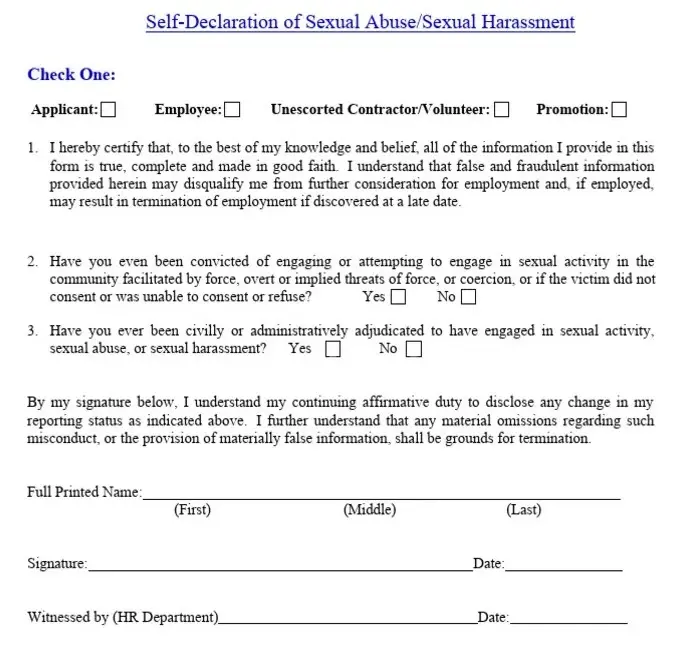
The complaint should focus on specific facts and incidents rather than general allegations. Here’s a sample opening for a POSH- compliant:
“I, [Name], [Designation], and [Department], am submitting this complaint under the Sexual Harassment of Women at Workplace (Prevention, Prohibition and Redressal) Act, 2013, against [Respondent’s Name], [Respondent’s Designation]. The incidents described below occurred on [Date(s)] at [Location(s)] and constitute workplace sexual harassment.”
Note: The complaint should present the facts clearly and in chronological order. If certain details or documents are unavailable at the time of filing, the complainant may submit them later during the inquiry.
Can You File a POSH Complaint Without Evidence?
You can file a POSH complaint even if you do not have direct evidence. Many workplace harassment incidents occur without witnesses or documented proof. While supporting evidence strengthens a case, its absence does not prevent an inquiry. The IC cannot dismiss a complaint solely because the complainant lacks documentary proof.
The IC does not conduct a criminal trial or require proof beyond a reasonable doubt. Instead, it evaluates the complaint based on the balance of probabilities and considers all relevant material, including:
- The complainant’s statement
- Witness accounts
- Emails, messages, and chat records
- Workplace behavior patterns and surrounding circumstances
- CCTV footage, where available.
How Does the POSH Complaint Process Work?
Once a complainant files a POSH complaint, the law sets a clear, step-by-step process in motion to ensure a fair and time-bound inquiry:
- File the Complaint: The complainant submits a written complaint to the Internal Committee (IC) or the Local Committee (LC), where applicable, within 3 months of the incident.
- Notify the Respondent: Within 7 working days of receiving the complaint, the IC provides a copy to the respondent. The respondent must submit a written response, along with supporting documents and witness details, within 10 working days.
- Conciliation (Optional): Before starting an inquiry, the complainant may request conciliation under Section 10 of the POSH Act. Keep in mind that the IC cannot initiate conciliation on its own, and the parties cannot use monetary settlement as the basis for resolution.
- Interim Relief (If Requested): During the inquiry, the IC may recommend interim measures under Section 12, such as a transfer, paid leave, or other appropriate relief for the complainant.
- Conduct the Inquiry: If conciliation is not requested or fails, the IC conducts a formal inquiry under Section 11. The IC has the powers of a Civil Court under Section 11(3) read with the Code of Civil Procedure, 1908 — including:
- Summoning and enforcing the attendance of any person and examining them on oath
- Requiring the discovery and production of documents
- Any other matter which may be prescribed
The IC must follow principles of natural justice — share the complaint and evidence with the respondent, allow cross-examination, hear both parties, and arrive at findings based on the balance of probabilities (not the criminal “beyond a reasonable doubt” standard). The inquiry must conclude within 90 days under Section 11(4).
- Submit the Inquiry Report: Within 10 days of concluding the inquiry, the IC submits its findings and recommendations to the employer and shares the report with both parties. Section 16 requires the IC to maintain confidentiality of the complainant’s identity, respondent’s identity, witnesses, contents of the complaint, inquiry proceedings, conciliation/inquiry recommendations, and information related to the complaint. Breach of confidentiality attracts a penalty under Section 17 read with Rule 12 (typically ₹5,000 under prescribed Rules, or service-rule consequences for employees).
- Employer Takes Action: The employer must implement the IC’s recommendations within 60 days of receiving the inquiry report.
- Appeal: Either party may appeal the decision before the appropriate authority within 90 days, subject to the applicable legal provisions.
Outcomes of a POSH Complaint: What to Expect
The Internal Committee (IC) submits its findings and recommendations to the employer as per the inquiry under Section 13 of the POSH Act. The employer must implement the recommendations within 60 days.
There are four possible outcomes:
| Outcome | Action |
|---|---|
| Matter settled through conciliation | If parties settle for Section 10, the IC records the terms in writing and closes the complaint. If either party breaches the settlement, the complainant may request a formal inquiry. Monetary settlement cannot be the basis of conciliation |
| Sexual harassment is proven | The IC may recommend: written warning, withholding of promotion or increment, suspension, termination from service, deduction of compensation payable to the complainant from the respondent’s salary, or other action under applicable service rules |
| Sexual harassment is not proven | The IC closes the complaint and recommends no action against the respondent. An unproven complaint does NOT automatically become a false complaint — this distinction is critical under Section 14 |
| The complaint is found to be false or malicious | Under Section 14, the IC may recommend action against the complainant only if it finds clear evidence of malicious intent or a knowingly false complaint. Actions may include a written warning, withholding of promotion/increment, transfer, or termination in serious cases. Inability to substantiate a complaint is explicitly NOT grounds for action |
Both parties receive a copy of the inquiry report and may appeal within 90 days under Section 18 to the appropriate authority (Industrial Tribunal/Labour Court for the organized sector, or the court of competent jurisdiction). The employer and the IC must maintain confidentiality throughout under Section 16.
Can a POSH Complaint Be Withdrawn?
The POSH Act does not expressly provide a procedure for withdrawing a complaint after it has been filed. However, a complainant may decide not to pursue the matter further or resolve it through conciliation under Section 10.
In practice:
- The complainant may request withdrawal at any stage of the proceedings.
- The IC may close the matter if it considers the request appropriate.
- In serious cases, the IC may continue the inquiry despite the withdrawal request, particularly if workplace safety concerns remain.
If the parties settle the matter through conciliation, the IC records the settlement and closes the complaint. However, if either party breaches the settlement terms, the complainant may ask the IC to reopen the matter and conduct a formal inquiry.
Common Challenges Faced During POSH Complaint Resolution and How to Address Them
The POSH complaint process can be challenging to follow for both complainants and employers in practice. Some of the most common difficulties include:
- Lack of direct evidence: Many incidents occur without witnesses or documented proof. In such cases, provide a detailed account of the incident and submit any available supporting material. The IC can also consider witness statements and circumstantial evidence.
- Delay in filing the complaint: Delayed complaints may make fact-finding more difficult. File the complaint as soon as possible and explain any valid reasons for the delay to the IC.
- Fear of retaliation: Employees may worry about workplace backlash after filing a complaint. Where necessary, the complainant can request interim relief, such as a transfer, leave, or other protective measures during the inquiry.
- Confidentiality concerns: Sharing details of the complaint can affect the inquiry and violate the POSH Act. All parties should maintain confidentiality throughout the proceedings.
- Limited awareness of POSH procedures: A lack of understanding about timelines, rights, and obligations can create confusion. Reviewing the organization’s POSH policy and the complaint process can help parties participate more confidently.
Resolving a POSH complaint requires organizations to balance legal compliance, procedural fairness, confidentiality, and employee well-being. RegisterKaro helps businesses address these challenges through expert POSH advisory, Internal Committee support, policy guidance, and compliance assistance. Get in touch with our experts to ensure your organization handles POSH complaints effectively and in accordance with the law.
