

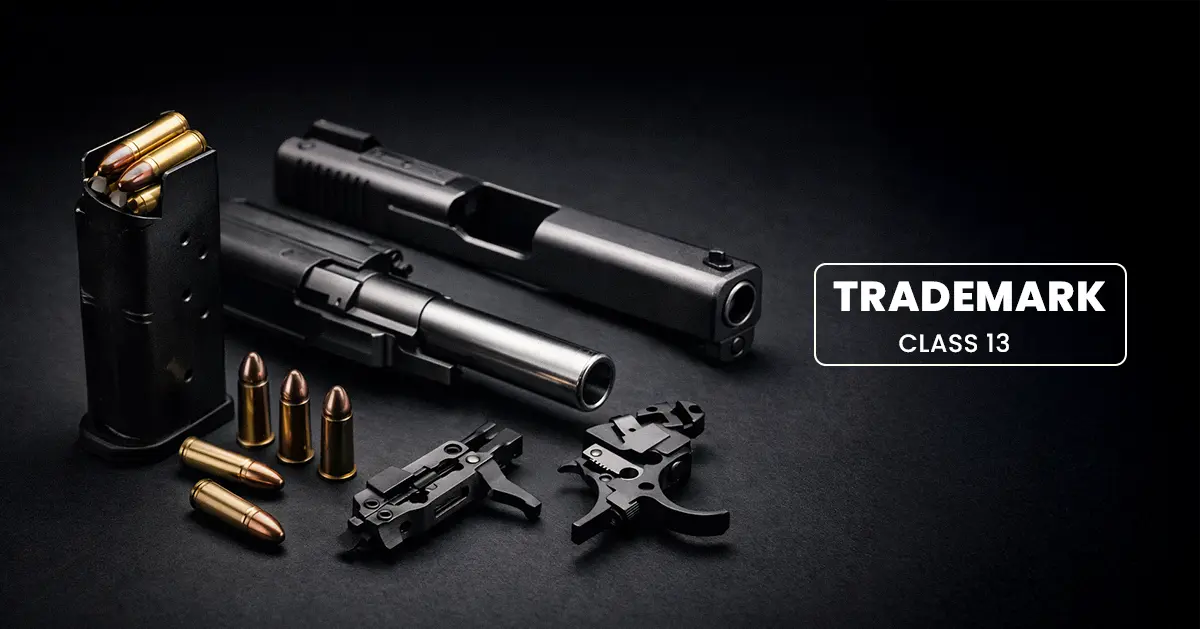
Trademark Class 13 applies to firearms, pistols, rifles, revolvers, ammunition, explosives, fireworks, and related weapon components. Businesses distribute these items through licensed defense suppliers and security agencies. Some also supply shooting sports retailers, industrial contractors, and government-approved channels. These products serve defense, law enforcement, sporting, and industrial sectors.
India’s firearms and explosives industry is tightly regulated and highly competitive. Trademark registration protects your brand identity and builds trust with distributors and clients. It allows businesses to expand across regions while staying compliant with arms, ammunition, and explosives licensing laws.
Well-known global and Indian brands, such as Glock, Beretta, Remington, and Ordnance Factory products, register their names and logos under Class 13.
Key Takeaways
- Class 13 covers firearms, ammunition and projectiles, explosives, and fireworks. This is confirmed by WIPO’s class heading.
- Genuine decorative and theatrical fireworks stay in Class 13. Toy-classified pyrotechnic items like Christmas crackers and toy caps fall under Class 28.
- It does not cover non-lethal self-defense devices (Class 9/10), toy or replica weapons (Class 28), industrial chemicals unrelated to weapons (Class 1), or firearm metal components sold separately (Class 6).
- Trademark registration protects brand identity only. It does not permit the manufacture, sale, or distribution of firearms, ammunition, or explosives, which remain governed by the Arms Act, 1959, and Explosives Act, 1884.
- Filing costs ₹4,500 per class for individuals, startups, and MSMEs, and ₹9,000 for companies.
- Registration typically takes 12–18 months. Validity runs for 10 years and can be renewed indefinitely.
What is Trademark Class 13 in India?
Trademark Class 13 is a goods category under the Nice Classification, administered internationally by the World Intellectual Property Organization (WIPO). It applies to firearms, pistols, rifles, revolvers, ammunition, explosives, fireworks, and related weapon accessories, used for products intended for defense, law enforcement, sporting, and industrial markets. It is regulated under the Trade Marks Act, 1999, based on the goods’ nature and intended use.
Note: Fireworks and pyrotechnic articles fall under Class 13, except toy items like Christmas crackers and toy caps, which fall under Class 28. Class 13 trademark registration protects brand identity but does not permit the manufacture, sale, or distribution of these goods. Businesses must comply with the Arms Act, 1959, Explosives Act, 1884, and applicable state regulations.
Who Should Register Under Trademark Class 13?
You should register your brand under Class 13 if your business falls into the following categories:
- Firearm manufacturers: Protect brand names for pistols, rifles, revolvers, and other firearms.
- Ammunition producers: Secure trademarks for bullets, cartridges, shells, and related ammunition.
- Explosive and pyrotechnic manufacturers: Safeguard brands for industrial explosives, blasting materials, and fireworks.
- Defense and tactical equipment brands: Register trademarks for weapon accessories, scopes, silencers, and safety devices.
- Importers and exporters of firearms and explosives: Protect trademarks for products imported into or exported from India.
- Private label weapon manufacturers: Secure trademarks for firearms, ammunition, or explosives produced for licensed retailers, shooting clubs, or exclusive collaborations.
- Weapons marketers and brand licensors: Register trademarks for licensing, franchising, co-branding, or brand extensions.
- Suppliers and distributors of weapons: Protect trademarks used in promoting and selling firearms, ammunition, and explosives to licensed retailers, defense agencies, or security organizations.
Leading global and Indian brands, such as Sig Sauer, Taurus, FN Herstal, and Ishapore Rifles, register their trademarks under Class 13.
What are the Goods Covered Under Trademark Class 13?
The table below shows the key categories and examples of goods covered under Class 13, verified against WIPO’s official Class 13 list:
| Category | Examples of Goods Covered |
|---|---|
| Firearms | Pistols, rifles, revolvers, shotguns, muskets, air guns |
| Ammunition | Bullets, cartridges, shells, ammunition belts, cartridge cases |
| Explosives | Dynamite, industrial explosives, blasting materials, detonators, blasting caps |
| Pyrotechnics & Fireworks | Firecrackers, sparklers, signal flares, Bengal lights, theatrical pyrotechnics |
| Weapon Accessories | Scopes, silencers, gun mounts, stocks, magazines, holsters |
| Tactical & Defense Equipment | Rocket launchers, artillery guns, ballistic weapons, cartridge loading apparatus |
| Sporting Firearms & Accessories | Hunting and sporting firearms, gun cases, shooting range targets, gun safes |
| Industrial Explosives Equipment | Drilling explosives, controlled blasting devices, mining or construction explosives |
| Import & Export Firearms & Ammunition | Licensed firearms, ammunition, and explosives imported into or exported from India |
| Private Label Firearms & Ammunition | Firearms, ammunition, or explosives manufactured for shooting clubs, retailers, or exclusive collaborations |
Which Products Does Trademark Class 13 Exclude?
Other trademark classes cover some related products, so Class 13 does not cover them. These include:
- Non-lethal weapons and self-defense devices: Stun guns, tasers, pepper spray, and batons fall under Class 9 or Class 10.
- Protective gear and safety equipment: Helmets, body armor, shields, and fire suppression devices fall under Class 9 or Class 10.
- Toy, replica, and training weapons: Airsoft guns, paintball markers, non-functional replicas, and toy pyrotechnic items like Christmas crackers fall under Class 28.
- Sporting equipment unrelated to firearms: Archery equipment and general hunting accessories fall under Class 28.
- Industrial chemicals unrelated to weapons: Laboratory chemicals and non-explosive industrial substances fall under Class 1.
- Firearm metal components sold as standalone parts: Gun barrels, weapon mounts, and metal casings sold separately fall under Class 6.
Tip: Use RegisterKaro’s Trademark Class Search Tool to confirm correct classification and reduce the risk of objections.
How to Register a Trademark Under Class 13 in India?
You can file on a “proposed to be used” basis if you have not launched the products yet, or on an “already in use” basis if you already sell them in the market. Here’s the process:
- Search first: Check the official IP India trademark database, or use RegisterKaro’s trademark name availability check tool to verify availability for firearms, ammunition, explosives, and related accessories.
- Select the right goods description: Clearly list all products you want to protect, such as pistols, rifles, revolvers, ammunition, explosives, pyrotechnics, or weapon accessories, rather than using vague terms.
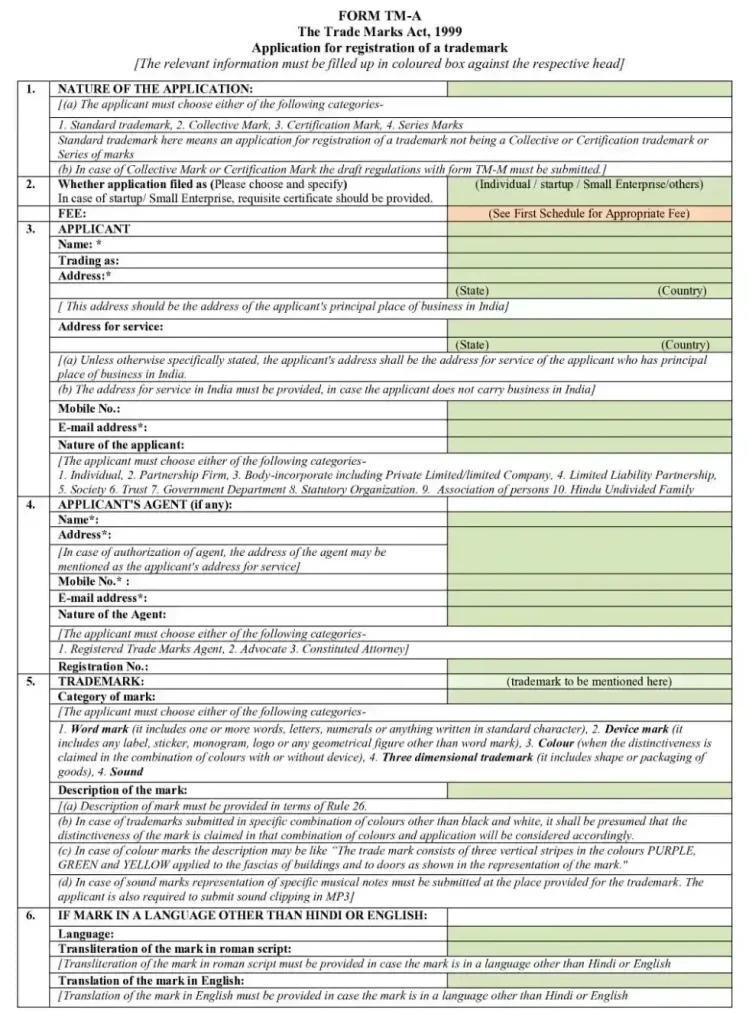
- File Form TM-A: Submit online through the IP India Trademark Portal with your brand name, logo, product descriptions, and applicant details. Pay the applicable fee, ₹4,500 for individuals, startups, or MSMEs, and ₹9,000 for companies.
- Examination: The Trademark Registrar examines your application for errors, similarities, or legal issues. An Examination Report may be issued if clarification is needed. Respond within the given timeline to avoid delays.
- Publication and opposition window: Once the Registrar accepts the mark, it publishes the mark in the Trademark Journal for 4 months. During this period, the public can file a trademark opposition.
- Registration and certificate: If unopposed or objections are resolved, you receive a Trademark Registration Certificate granting exclusive rights under Class 13. You can then use the ® symbol.
The process typically takes 12–18 months. A trademark is valid for 10 years and can be renewed indefinitely.
Trademark Classes Related to Class 13: Multi-Class Filings
Firearms, ammunition, explosives, and related products often overlap with other trademark classes. The table below highlights classes commonly associated with Class 13:
| Related Class | Goods / Services Covered | Why It Relates to Class 13 |
|---|---|---|
| Class 6 | Metal components for firearms, gun barrels, weapon mounts, ammunition casings | Protects parts and components sold separately from finished firearms |
| Class 9 | Electronic firearm accessories, digital sighting systems, and non-lethal electronic devices | Covers electronic or digital tools related to firearms |
| Class 10 | Protective body armor and medical emergency equipment used alongside firearms | Covers safety and medical equipment used with firearms |
| Class 11 | Pyrotechnic signaling devices and flares used for non-weapon signaling | Includes safety or signaling devices not classified as weapons |
| Class 35 | Wholesale, import, distribution, or retail services for firearms, ammunition, and explosives | Protects commercial services related to Class 13 products |
| Class 39 | Transportation, storage, and delivery of firearms, ammunition, and explosives | Covers logistics and supply chain services for Class 13 goods |
| Class 41 | Training, education, and shooting range services | Protects firearm training and safety courses |
| Class 42 | Research, testing, and technical services for firearms and explosives | Covers R&D, inspection, and quality testing services |
For example, a firearms company may register:
- Firearms, ammunition, and explosives under Class 13.
- Gun components and metal parts under Class 6.
- Retail and distribution services under Class 35.
- Firearm safety training under Class 41.
This multi-class filing strategy safeguards a single brand across products, accessories, and services. It creates a cohesive legal shield that prevents competitors from using similar marks in related areas.
