Reviewed by
Last updated

What is RNI Registration in India?

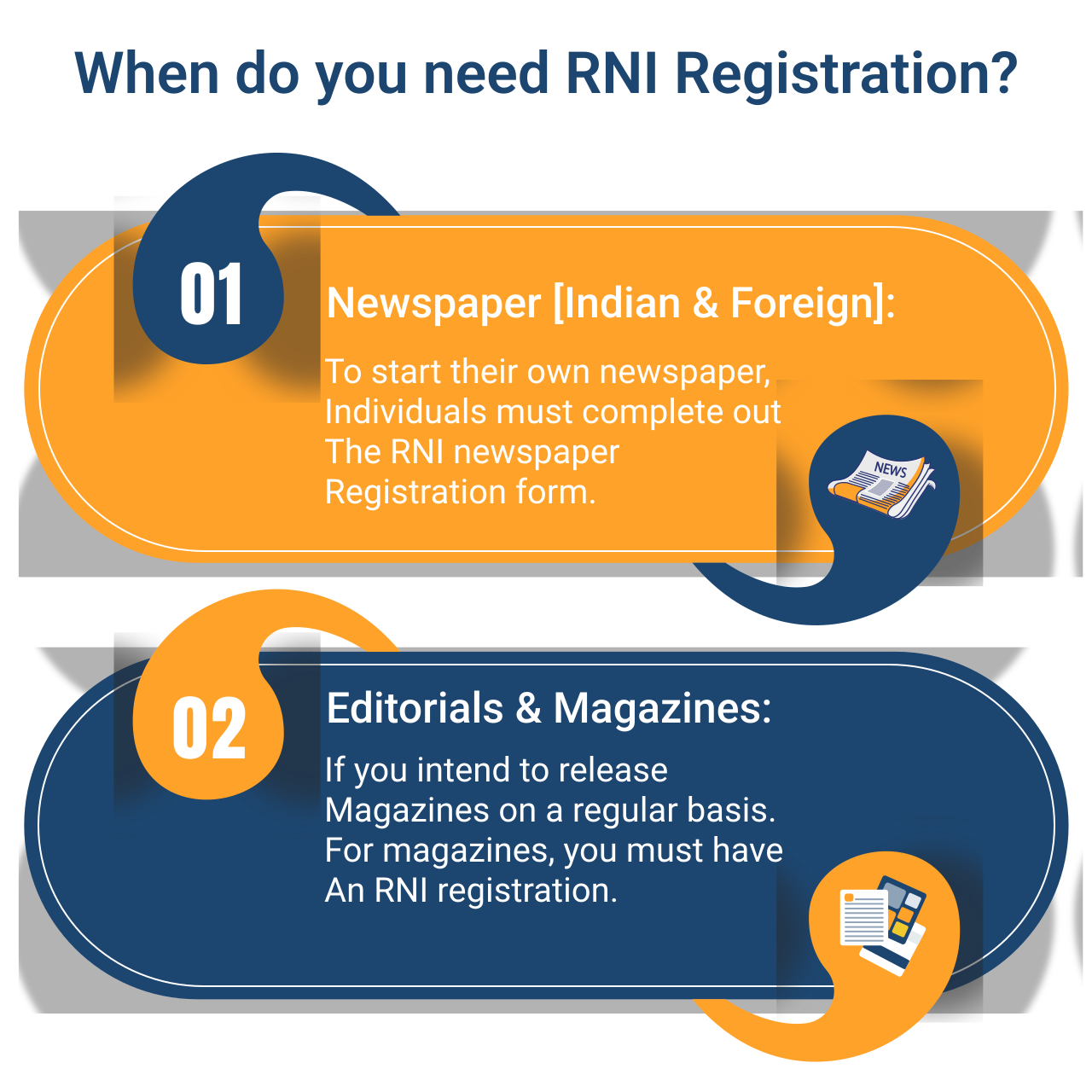
RNI Registration is the mandatory legal approval required to publish and operate a newspaper, magazine, journal, or any other periodical in India. The Press Registrar General of India (PRGI) now manages this registration process, having replaced the earlier Registrar of Newspapers for India (RNI).

Before starting a newspaper or periodical business, owners, publishers, or printing entities must obtain RNI registration from the concerned authority. This registration grants legal recognition to the publication and ensures compliance with the applicable publishing laws in India.

The core objectives of RNI registration include:

  • Verify Title Uniqueness: Ensures that no other publication uses the same title, protecting your publication's identity and brand.
  • Regulate and Maintain Print Media Records: Helps the government maintain an organized national database of newspapers and periodicals.
  • Ensure Legal Accountability: Establishes the legal responsibility of publishers, printers, and owners for published content.
  • Provide Access to Government Benefits and Facilities: Enables eligible publications to avail of postal concessions, government advertisements, and other regulatory benefits.

All procedures are governed by the Press and Registration of Periodicals Act, 2023 (PRP Act, 2023).  

Levels of RNI Registration in India

To publish print media in India, you need RNI registration, which involves two main stages:

  • Title Registration (Level 1): This is the first step, where you get your proposed publication's title approved by the PRGI to ensure it's unique. If approved, the PRGI issues a Title Verification Letter to you.
  • Publication Registration (Level 2): After title approval, you formally register your publication. This involves filing declarations, publishing your first issue within a timeframe, and submitting documents to RNI. Once approved, you receive the final RNI Registration Certificate, authorizing your publication.

Purpose of RNI Registration in India

With RNI Registration, newspapers and periodicals in India get a structured legal system under the Press and Registration of Periodicals Act, 2023. The main purposes of RNI registration include:

  • Legal Compliance: Ensures all newspapers and magazines adhere to the Press and Registration of Periodicals Act, 2023.
  • Unique Titles: It prevents title duplication by verifying that every publication's name is unique.
  • Official Recognition: Provides official government recognition, crucial for credibility.
  • Access to Benefits: Enables eligibility for postal concessions and government advertisements.
  • Industry Monitoring: Helps RNI maintain a database for monitoring the print media sector.

Legal Framework of RNI Registration in India

The legal framework of RNI registration sets specific rules for registration, title approval, and certification under a single law:

  • Governing Law: The Press and Registration of Periodicals Act, 2023 (PRP Act, 2023) came into effect on March 1, 2024. It replaces the earlier 1867 Act and serves as the sole law regulating print media registration. It also establishes the authority of the Press Registrar General of India (PRGI).
  • Registration Mandate: The Act requires all newspapers and periodicals to complete mandatory online registration before publication.
  • Title Selection: PRGI verifies each proposed publication title to ensure uniqueness and prevent duplication.
  • Certification Process: The Act defines the eligibility criteria and outlines the online process for issuing the official RNI registration certificate.

Benefits of RNI Registration in India

RNI Registration provides several operational and commercial advantages for newspapers and periodicals in India, including:

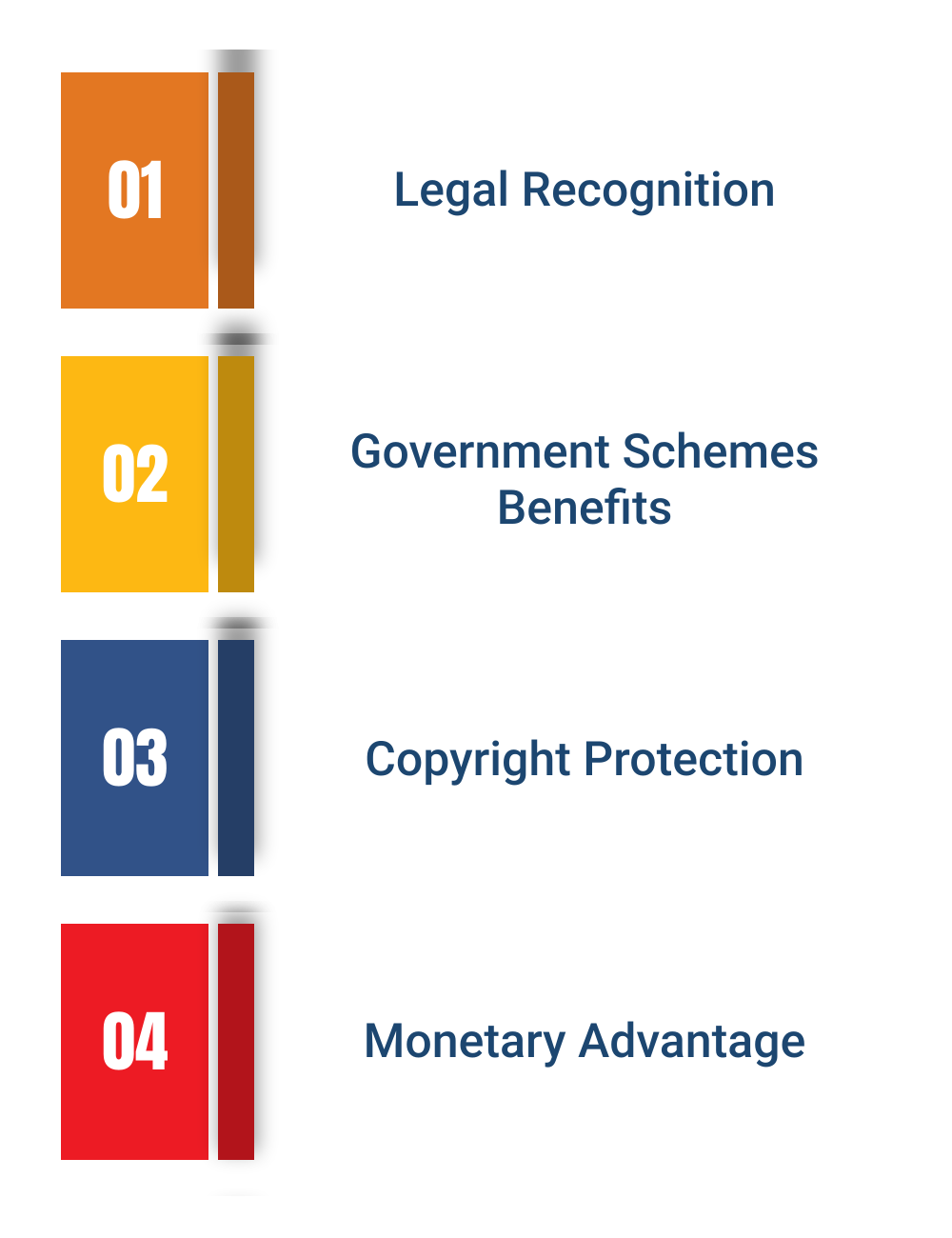
  • Legal Recognition: Gives your publication official validity under Indian law and supports compliant operations.
  • Title Protection: Secures exclusive use of your publication name and reduces the risk of duplication.
  • Access to Government Benefits: Enables participation in approved government advertisement programs and related schemes.
  • Postal Discounts: Allows eligibility for reduced postal rates, which supports cost-effective distribution.
  • Enhanced Credibility: Strengthens trust among readers, advertisers, and regulatory bodies.
  • Easier Banking: Simplifies the process of opening and managing bank accounts for publication-related transactions.

Roles and Responsibilities of the PRGI (Formerly RNI)

The Press Registrar General of India (PRGI), earlier known as the Registrar of Newspapers for India (RNI), is a government body under the Ministry of Information and Broadcasting (MIB). The authority was renamed under the Press and Registration of Periodicals Act, 2023, which came into effect on March 1, 2024.

The PRGI manages the registration and monitoring of newspapers and magazines published across the country and ensures that publications follow legal rules. The key roles and responsibilities are mentioned below:

1. Registration of Newspapers and Magazines

RNI handles the registration process for all newspapers and magazines in India. Before starting a publication, the owner must apply to the RNI and get it officially registered. This helps the government keep a proper record and avoid confusion.

2. Title Verification

Before publishing, a newspaper or magazine must get its name (title) verified by PRGI. This is to make sure that no two publications have the same or similar names. It avoids legal and identity issues between different publishers.

3. Maintaining Publication Records

RNI keeps detailed records of all registered newspapers and magazines. These records include the title, language, frequency, name of publisher, printer, and place of publication. This data is important for government and public use.

4. Ensuring Legal Compliance

RNI checks if newspapers follow the rules given under the Press and Registration of Books Act, 2023. It makes sure that publishers follow proper procedures and submit the required documents on time.

5. Collecting Annual Statements

Every year, publishers must send an Annual Statement to RNI. This statement includes the number of copies printed, sold, and details about the ownership and staff. This helps RNI track the status and growth of each publication.

6. Publishing the ‘Press in India’ Report

RNI publishes a report called Press in India every year. It provides detailed statistics about all registered publications, their languages, regions, and circulation. This report gives a clear picture of the Indian print media industry.

7. Deregistration of Publications

If a newspaper or magazine stops publishing or fails to follow the rules, RNI has the authority to cancel its registration. This ensures that only active and legal publications remain in the records.

8. Optional Circulation Certification

Some newspapers may ask RNI to certify their circulation figures. Although this is not compulsory, it helps in getting government advertisements and building credibility.

Who is Eligible for RNI Title Registration in India?

To obtain RNI (now PRGI) Title Registration under the PRP Act, 2023, the applicant and the publication must fulfill specific eligibility criteria. The PRGI reviews these criteria during the title verification process to confirm that the applicant qualifies for registration:

For the Applicant (Publisher/Owner)

The eligibility requirements for the applicant include the following:

  • Indian Citizen/Entity: The applicant must be an Indian citizen or a legal entity (e.g., Sole Proprietorship, Partnership, Private Limited Company, Trust, Society) registered in India.
  • Legal Standing: The individual publisher must be of legal age and of sound mind, without disqualifying criminal records.
  • Declaration Readiness: Must be prepared to make a formal declaration before the District Magistrate.

For the Publication Itself

The eligibility conditions for the publication include the following:

  • Defined Periodicity: The publication must have a regular publishing frequency (e.g., daily, weekly, monthly).
  • Unique Title: The proposed title must be distinct and not conflict with existing publications, as verified during the RNI title registration process.
  • Printed in India: The publication must be printed and published within Indian territory.
  • Required Documentation: The applicant must have all necessary documents ready for submission.

For Digital Publishers

The registration requirements for digital publishers include the following:

  • Applicable Entities: Digital content platforms, online news portals, and other digital-first entities.
  • Purpose: Intending to publish a physical print edition (newspaper, magazine, or periodical).
  • Registration Requirement: Yes, an online news portal or digital publisher must complete the full RNI registration process if they decide to launch a physical print edition of their content.

Documents Required for RNI Registration in India

The applicant must collect a specific set of documents before starting the RNI registration process. Each document confirms a particular detail about the publisher, the printer, or the publication itself.

The table below lists every required document, explains its purpose, and identifies the party that must provide it:

DocumentPurposeWho Provides It
Certificate of Incorporation (issued through LLP or private limited company registration in India, or a Partnership Deed for partnership firms)Confirms the legal existence of the business entity that applies for registrationApplicant, if the applicant is a registered entity
PAN Card and identity proof (Aadhaar, Passport, or Voter ID)Verifies the identity and tax records of the individuals who run the publicationPublisher and Printer
Two recent passport-size photographsEstablishes visual identification on official recordsPublisher and Printer
Publisher's Declaration (Form VI) and Printer's Declaration, which the publisher and printer swear before the District MagistrateRecords the formal legal commitment of both parties toward the publicationPublisher and Printer
Proof of residential address (utility bill, rent agreement, or ownership papers)Confirms the residential location of the publisherPublisher
Proof of address for the printing press (ownership papers, lease agreement, or utility bills)Confirms the operating location of the printing pressPrinter
Agreement between the Publisher and PrinterDefines the working terms when the printer and the publisher are different partiesPublisher and Printer jointly
No Objection Certificate (NOC) from the District MagistrateGrants official approval to use the proposed title for the publicationApplicant
Copy of the first published issue of the newspaper or periodicalProves that the publication has started operations as declaredApplicant, after the title registration step

How to Apply for RNI Registration Online in India – Complete Process

Follow the steps below to complete the RNI title registration process online in India:

1. Title Verification & Declaration Filing

Begin by securing a unique title for your publication through the District Magistrate (DM). Simultaneously, the Publisher and Printer must file their formal declarations before the DM.

2. Frequency Declaration

Once the title is verified and approved by PRGI, you must declare the periodicity of your publication (e.g., daily, weekly, fortnightly, monthly, quarterly, etc.) to the DM/ADM. This frequency will be formally recorded.

3. Editor Appointment

At this stage, you also need to formally appoint an editor for your publication. The editor's name and details are crucial for the registration process and need to be declared.

4. Submitting the Online Application

Next, compile all necessary documents. Complete the registration form on the Press Sewa Portal by paying the prescribed government fee of ₹1,000 and submit your application online.

5. RNI Review & Title Allotment

The RNI reviews your application and documents. Upon satisfactory verification, they formally allot the unique title to your publication.

6. Publication of First Issue

After your title is allotted, you must publish the first issue of your newspaper or magazine within the specified timeframe.

7. Certificate Issuance

Once the PRGI verifies the first issue and all supporting documents, the official Certificate of Registration is issued. This certificate completes your publication's legal authorization and allows you to operate as a registered publisher in India.

RNI Registration Fees & Penalties in India

An applicant should plan for an overall spend of around ₹18,000 to ₹48,000. Although the direct government charge for RNI (now PRGI) registration is low, applicants should plan for other related expenses that arise during the process.

The table below lists the major costs involved in RNI registration:

Type of CostAmount (₹)Purpose
Government Processing Fee1,000The official fee is paid through the Press Sewa Portal at the time of application. This is the only direct payment required by the government.
Professional Consultancy Fees10,000 – 30,000The amount charged by consultants who handle the certification process and guide applicants through each step.
Printing the First Issue5,000 – 10,000The cost of printing the first required issue of the publication, which the applicant must submit to RNI.
Legal or Specialized Consulting Services2,000 – 7,000The fee for legal advice or expert guidance during the application and compliance stages.

Penalties for Non-Compliance with RNI in India

Publishers must follow certain rules under the Press and Registration of Periodicals Act, 2023, or they may face fines and other actions from the PRGI.

  • Non-Submission of Annual Statements: If a publisher does not submit the required Annual Statement, a penalty of ₹1,000 per year will be charged.
  • General Penalties for Breaking Rules: If a publisher breaks any rule under the Act, a fine of up to ₹1,000 can be imposed. This includes mistakes in details, not following the process, or missing deadlines, as per the guidelines on the Press Sewa Portal.
  • Suspension or Cancellation of Registration: If a publisher repeatedly fails to submit annual statements or provides false or incorrect information, the RNI has the right to suspend or cancel the registration of the publication. This means the newspaper or magazine may not be allowed to publish legally.

RNI Registration Renewal & Validity in India

An RNI registration does not have an expiry date, so it does not require a traditional renewal process. Instead, its validity is perpetual, as long as the publisher adheres to ongoing compliance requirements set by the PRGI.

If a publisher fails to follow the compliance rules and faces the penalties mentioned in the previous section, the PRGI may suspend or revoke the registration. In such cases, the publication can no longer operate legally in India.

Post RNI Registration Compliance Requirements in India

Every registered publisher must follow a set of ongoing rules to keep the RNI registration active and legally valid:

  • Start Publishing Within 6 Months: The publisher must release the first issue within six months of receiving the registration. A delay beyond this period can make the registration invalid or lead to cancellation.
  • Submit the First Issue to RNI: The publisher must send one physical copy of the first issue to the RNI office. This copy must display the names of the printer, publisher, and editor along with the registration number.
  • File the Annual Statement: Every publisher must file an Annual Statement with the PRGI by 31st May each year. The statement must list the number of copies printed, copies sold, and the average circulation.
  • Display Mandatory Details in Every Issue: Each issue must clearly carry the names of the printer, publisher, and editor, the place of printing and publishing, the RNI registration number, and the approved title. Publishers usually print these details near the editorial section or on the last page.
  • Report Any Changes to RNI: The publisher must inform RNI about any change in the place of publication, language, editor, or periodicity. Such changes need proper documents and prior approval from the RNI.

Get Your RNI/PRGI Certificate for Newspaper Registration in India

The RNI Certificate, formally known as the Certificate of Registration, is the essential document issued to newspapers and periodicals in India. This certificate confirms a publication's official registration and legal authorization to operate within the country.

How to Download the RNI Registration Certificate?

Once your application is approved by PRGI, you can download your certificate directly from the online portal. Just follow these steps:

  1. Visit the Press Sewa Portal: Go to the official website: presssewa.prgi.gov.in.
  2. Log in with Your Credentials: Use the username and password you created during the registration process to log in.
  3. Go to 'My Applications' Section: After logging in, click on ‘My Applications’ from the menu to see your submitted applications.
  4. Find Your Approved Application: Look for the application that shows the status as ‘Approved’ in the list.
  5. Download Certificate: Once you see the approved application, click on the ‘Download Certificate’ button to get your RNI certificate in PDF format.

How to Check the RNI Title Certificate Status?

If your certificate is not yet available, you can check the status of your application anytime online.

  1. Open Press Sewa Portal: Visit the official portal.
  2. Click on ‘Track Status’: On the homepage, select the ‘Track Status’ or ‘Application Status’ option.
  3. Enter Required Details: You’ll need to enter your Application Reference Number or Title Name, along with the State in which you applied.
  4. Check the Status: Click on the ‘Search’ or ‘Track’ button. The system will display the current status of your RNI application—like under review, approved, or needing correction.

Connect with RegisterKaro and let our experts handle the legal hassle while you grow your business.


Frequently Asked Questions (FAQs)

What is RNI registration?

RNI registration is the mandatory process of registering newspapers, magazines, and other periodicals with the Registrar of Newspapers for India (RNI). It ensures legal recognition and compliance with government regulations under the Press and Registration of Periodicals Act, 2023 (previously the Press and Registration of Books Act, 1867).

What is the full form of RNI?

The full form of RNI is Registrar of Newspapers for India. It has recently been renamed to Press Registrar General of India (PRGI).

How to apply for RNI registration?

The process generally involves:

  • Title Verification: Apply online for title verification on the Press Sewa Portal, proposing unique titles.
  • Declaration Filing: After title approval, file a declaration (Form I) with the District Magistrate (DM) or relevant authority.
  • First Issue Publication: Publish the first issue within the prescribed time (42 days for dailies/weeklies, 90 days for others) after declaration authentication.
  • Submission to RNI: Submit the title verification letter, authenticated declaration, and copies of the first issue to RNI for final registration.

What is an RNI certificate?

An RNI certificate is the official document issued by the RNI (or PRGI) that grants legal permission to publish a newspaper, magazine, or periodical in India. It confirms the title is approved and registered, ensuring authenticity and credibility.

How to check RNI registration?

You can check the status of your RNI application or verify a registration by visiting the official Press Sewa Portal (previously RNI website) and looking for sections like "Title Verification Status" or "Certificate of Registration Status". You'll usually need to enter the application number or title name.

How to get an RNI registration number?

You get an RNI registration number once your publication is successfully registered by the RNI (or PRGI) after all the required steps, including title verification, declaration, and submission of the first issue, are completed and approved. The RNI issues the registration certificate along with a unique registration number.

How much does RNI registration cost?

RNI registration itself is generally considered free or has nominal government fees. However, there may be associated costs for professional services, documentation, and compliance. Some sources mention an application fee for title verification (e.g., INR 1000 for periodicals), but direct registration fees are often stated as nil.

Which documents are required for RNI registration?

Key documents typically include:

  • Title Verification Letter from RNI.
  • Authenticated Declaration (Form-I) by the DM.
  • Copy of the first issue of the publication.
  • Affidavit regarding ownership, and no foreign tie-up.
  • ID and address proofs of the publisher, editor, and owner.
  • Agreement with the printing press (if different from the publisher).

How to apply for a title in RNI?

You apply for title verification in RNI by visiting the Press Sewa Portal, clicking on "Title Verification," filling out the online application form with proposed titles, periodicity, language, and publishing district, and submitting it for approval.

What is the time period for title verification in RNI?

The process involves two key timeframes:

  • Processing Time: The time for the PRGI (formerly RNI) to approve a title application submitted via the Press Sewa Portal is usually 2-3 weeks. This can vary based on the current volume of applications and the complexity of the verification check.
  • Validity Period: Once your title is approved, the verification is valid for exactly 1 year from the date the letter is issued. You must publish your first issue within this one-year timeframe to be eligible for the final Certificate of Registration.

How do I verify my title in RNI?

To verify your title in RNI, you initiate the process through the Press Sewa Portal. After submitting your proposed titles, the RNI assesses them for uniqueness and compliance, and upon approval, issues a title verification letter. You can check the status online using your application or reference number.

Is RNI registration mandatory?

Yes, RNI registration is mandatory for all newspapers, magazines, and other print periodicals published in India under the Press and Registration of Periodicals Act, 2023. Publishing without it can lead to legal complications.

What is the role of RNI?

The RNI (now PRGI) is a statutory body responsible for regulating and maintaining a database of all newspapers and periodicals in India. Its roles include:

  • Issuing registration certificates.
  • Compiling and maintaining the Register of Periodicals.
  • Verifying circulation claims.
  • Monitoring content for compliance with regulations.

What is the validity of RNI?

The RNI registration certificate itself does not have an expiry date as long as annual compliances (like submitting annual statements) are met. However, the initial title verification is valid for one year, requiring the first issue to be published within that timeframe.

How to get a newspaper license?

Getting a newspaper license in India is synonymous with obtaining RNI registration. The process involves title verification, filing a declaration with the District Magistrate, publishing the first issue, and then submitting all documents to the RNI for the issuance of the Certificate of Registration (which acts as the license).

How do I get an RNI number for a newspaper?

You get an RNI number for a newspaper once the RNI (or PRGI) officially registers your publication after completing all the necessary steps: successful title verification, authentication of your declaration by the District Magistrate, and submission of the first published issue.

What is the difference between RNI and PRGI?

PRGI is the new name of RNI. The Government of India renamed the Registrar of Newspapers for India (RNI) as the Press Registrar General of India (PRGI) under the Press and Registration of Periodicals Act, 2023. The authority's functions remain the same, but it now operates under the new law.

How long does PRGI registration take?

PRGI registration generally takes a few weeks to a few months to complete. The total time depends on title verification, document review, publication of the first issue, and final approval by the PRGI. Accurate documentation and timely submission at each stage help reduce delays and speed up the registration process.

Can online news portals apply for RNI registration?

Yes, online news portals can apply for RNI (now PRGI) registration if they plan to launch a physical print edition. In such cases, they must complete the full registration process like traditional publishers. PRGI registration currently applies only to printed publications, so purely digital platforms do not require this registration.

How can I download my RNI certificate?

You can download the RNI certificate from the Press Sewa Portal after the PRGI approves your application. Visit presssewa.prgi.gov.in, log in with your credentials, and open the 'My Applications' section. Locate the approved application and click the 'Download Certificate' button to receive your certificate in PDF format.

Is title verification compulsory?

Yes, title verification is a compulsory step in the RNI registration process. The PRGI verifies every proposed title to ensure it is unique and does not match any existing publication. Without an approved title, the applicant cannot move forward with the publication registration stage or receive the final Certificate of Registration.

What happens if I miss filing annual statements?

The PRGI charges a penalty of ₹1,000 per year if you miss filing the Annual Statement. Repeated failure or submission of false information can lead to suspension or cancellation of registration. To avoid penalties, publishers must file the Annual Statement with the PRGI by 31st May every year.

Joel Dsouza

Reviewed by

Joel Dsouza

Joel Dsouza is a Chartered Accountant (CA) and compliance expert with over 7 years of hands-on experience in company registration, tax structuring, GST, ROC filings, and MCA compliance. As a qualified member of the Institute of Chartered Accountants of India (ICAI) and Co-Founder at RegisterKaro, he has personally advised more than 1,000 startups and SMEs across India, helping founders navigate incorporation, regulatory frameworks, and financial planning from Day 1. With deep expertise across all three levels of Finance and Portfolio Management, Joel is committed to promoting financial literacy and simplifying India's startup ecosystem through clear, actionable guidance that entrepreneurs can act on immediately.

Why Choose RegisterKaro for RNI Registration in India?

RegisterKaro offers complete support for RNI registration through experienced professionals who handle every stage of the process accurately and on time.

  • Expert Legal Guidance: Our team understands the Press and Registration of Periodicals Act, 2023, and guides you through each step.
  • Title Verification Assistance: We conduct a detailed title search to improve the chances of first-attempt approval.
  • End-to-End Documentation: We prepare, verify, and submit all required documents on your behalf.
  • Dedicated Compliance Manager: A dedicated expert provides regular updates on your application status.
  • Post-Registration Support: We assist with annual statement filing and ongoing compliance requirements under the PRP Act, 2023.
Why Choose RegisterKaro for RNI Registration in India?

What Our Clients Say

View All
Akshit Singh Pathania

Akshit Singh Pathani...

VerifiedVerified

5/5
Others

Registration process was smoothly handled by the spoc and the company got incorporated within 20 days, quite impressed.Great job has been done by the... Read more

Date Posted-2025-01-31
AADESH KUMAR

AADESH KUMAR

VerifiedVerified

5/5
Others

I had a great experience with registerkaro.A special thanks to kajal sharma. She was professional, reposive, and guided me throughout the entire proce... Read more

Date Posted-2026-07-31
mahima dixit

mahima dixit

VerifiedVerified

4/5
Others

The company really great I had really wonderful experience with it , I will prefer everyone to try it. Experienced team with great knowledge thanks Me... Read more

Date Posted-2024-03-30
Ronit Dhansoia

Ronit Dhansoia

VerifiedVerified

5/5
Others

Professional, knowledgeable, and easy to work with. If you’re starting a company and want someone who genuinely cares about getting it right, Prayansh... Read more

Date Posted-2026-04-21
Rohit Kumar

Rohit Kumar

VerifiedVerified

5/5
Others

A special thanks to Shubham Bharti, who managed my case with exceptional professionalism. He was always available to answer my questions, provided cle... Read more

Date Posted-2026-07-17
AROGYYA AMARKANTAK PVT LTD

AROGYYA AMARKANTAK P...

VerifiedVerified

5/5
Others

Everything was fine, they took time and got everything done, the work is also continuing with the complaint, it was a very good experience to be assoc... Read more

Date Posted-2026-07-22
Shakeel Sheroo

Shakeel Sheroo

VerifiedVerified

5/5
Others

Excellent experience from start to finish. As someone from the finance sector, I appreciate businesses that are organized and process-driven. Register... Read more

Date Posted-2026-07-25
Prathmesh Naik

Prathmesh Naik

VerifiedVerified

5/5
Others

My experience with register Karo was Hasseless. I was appointed Shagun from Registerkaro as POC and She helped us throughout the process of Incorporat... Read more

Date Posted-2023-08-29
Sweety Saini

Sweety Saini

VerifiedVerified

5/5
Others

Super smooth, transparent, and efficient process. Their team guided us through every step and answered all our questions instantly and extremely clear... Read more

Date Posted-2026-07-22
Akansha Tomar

Akansha Tomar

VerifiedVerified

5/5
Others

Aditi Sharma from Register Karo( Banglore office ) has handled all the compliance, registration, and related work for my company very professionally a... Read more

Date Posted-2026-04-24

Related Blogs

View All
Consequences of Not Filing Company Compliance – Penalties, Disqualification, and Strike-Off
September 10, 2026

Consequences of Not Filing Company Compliance – Penalties, Disqualification, and Strike-Off

Missed your ROC, GST, or ITR filings? Know the exact penalties, director disqualification risk, strike-off process, and how to regularize pending company compliance in 2026.
Company Annual Compliance Cost – GST, and ITR Charges for a Private Limited Company
September 9, 2026

Company Annual Compliance Cost – GST, and ITR Charges for a Private Limited Company

Full company compliance cost for 2026 — MCA filing fees, statutory audit, GST returns, ITR and DIR-3 KYC. Government vs professional charges, line by line. Get a fixed annual quote.
How to Close an LLP With Pending Annual Compliance in India?
September 7, 2026

How to Close an LLP With Pending Annual Compliance in India?

Learn how to close an LLP with pending annual compliance in India, including overdue filings, penalties, required forms, and the LLP strike-off process.
How to Improve Company Compliance?
September 5, 2026

How to Improve Company Compliance?

Learn how to improve compliance in a company with 10 practical steps covering policies, records, deadlines, audits, reporting and regulatory requirements in India.
Company Name Reservation in India: Rules, Process & Fees
September 5, 2026

Company Name Reservation in India: Rules, Process & Fees

How to reserve a company name in India: SPICe+ Part A vs RUN, MCA naming rules, fees, validity period, extensions, and rejection reasons explained.
How to Start a Chocolate Business From Home in India (2026)?
August 12, 2026

How to Start a Chocolate Business From Home in India (2026)?

Learn how to start a chocolate business from home in India in 2026 with FSSAI, GST, costs, pricing, and selling channels in 7 simple steps.
TDS on Rent Chart FY 2026–27: Rates, Limits, Sections and Complete Guide
July 27, 2026

TDS on Rent Chart FY 2026–27: Rates, Limits, Sections and Complete Guide

Get download or view the TDS on Rent FY 2026-27 chart in india with updated rates, threshold limits, applicable sections, filing requirements, and examples
GST on Bikes in India: New Rates by Engine Capacity
July 9, 2026

GST on Bikes in India: New Rates by Engine Capacity

Know the GST rate on bikes in India: 18% up to 350cc, 40% above 350cc, and 5% on electric bikes. See how the reform changed prices, HSN codes, and ITC.
GST for Electrical Items in India: Rates & HSN Codes
July 9, 2026

GST for Electrical Items in India: Rates & HSN Codes

Learn GST rates on electrical items in India, their HSN codes, input tax credit rules, and scrap sale GST, with a complete rate list for electrical goods.
GST on Cars in India 2026: New Rates, Slabs & Impact
July 8, 2026

GST on Cars in India 2026: New Rates, Slabs & Impact

Check the latest GST on cars in India: 18% on small cars, 40% on luxury cars and SUVs, 5% on EVs. See the full car GST rate list, slabs, and impact.