Shop and Establishment Registration Online in India
Get your Shop Act Licence / Shop and Establishment registration for your shop, office, or commercial establishment online under your state's Act. RegisterKaro handles the documentation, filing, and state-specific requirements from start to finish.
 Complete Shop Act Licence registration in any Indian stateState-specific document preparation, review, and filingAccurate government fee calculation by state and employee countDigital certificate and registration number, no office visitsRenewal, amendment, and licence verification support


 What Sets Us ApartWhat Sets Us Apart
What is Shop and Establishment Registration?
Shop and Establishment registration, commonly called a Shop Act Licence (or Shop Act Registration), is a state-level registration required for eligible shops and commercial establishments under the applicable Shops and Establishments Act. The State Labour Department or designated authority issues the registration as official proof that the establishment is registered under the relevant labour law.
The Act regulates employment conditions in businesses such as shops, offices, hotels, restaurants, and theatres. It covers areas such as working hours, wages, leave, holidays, rest intervals, and employee records.
The registration deadline varies by state, with 30-60 days from starting operations being a common requirement. Timely registration helps businesses meet applicable labour-law requirements and avoid penalties.
Why is Shop and Establishment Registration Mandatory for Businesses?
For businesses covered by the applicable state law, registration provides formal proof of compliance and can support several day-to-day business requirements:
- Proof of compliance: Provides official evidence that the establishment is registered under the applicable Shops and Establishments Act.
- Legal compliance: Helps avoid penalties or other action for operating without the required registration.
- Opening a current account: Banks may accept the certificate as business or establishment proof, particularly for proprietorships and small businesses.
- Loans and government schemes: Some lenders, subsidies, and MSME schemes may require it as supporting documentation.
- Vendor and platform onboarding: E-commerce platforms, aggregators, and corporate buyers may ask for it as business proof.
- Supporting other registrations: It may be used as supporting documentation for GST, professional tax, FSSAI, and other registrations, depending on the state and business activity.
- Workforce compliance: Brings the establishment under applicable rules for working hours, wages, leave, holidays, and other employment conditions.
- Avoiding penalties: Timely registration helps prevent penalties for operating without the required registration.
Eligibility Criteria for Shop & Establishment Registration
Registration generally applies to shops and commercial establishments operating from premises within a state's jurisdiction. The key criteria are:
- Type of business: Shops selling goods or providing services, offices, trading and service establishments, and, in many states, restaurants and entertainment venues.
- Physical premises: The business operates from a physical office, shop, workspace, or warehouse in the state.
- Employee count: Most states require registration regardless of employee count, while some apply it only after employees are hired. Basically, requirements vary by state.
- Registration timeline: You generally need to apply within 30 days of starting business, subject to the state's rules.
Note: Shops and Establishments laws are state-specific, so definitions, thresholds, exemptions, and deadlines vary.
Who Needs to Register Under the Shops & Establishment Act?
Commonly covered businesses include:
- Shops and retail outlets: Grocery, electronics, clothing, and similar stores.
- Restaurants and entertainment: Restaurants, cafés, cinemas, theatres, and similar venues.
- Commercial establishments: Consultancies, banks, insurance firms, brokerages, IT/software companies, travel agencies, and real-estate firms.
- Warehouses and godowns.
- Online and home-based businesses: Generally covered when operating from physical premises and meeting the state's applicable employee requirements.
Generally exempt, subject to state rules: Government offices, public utilities, factories and mines covered by separate laws, certain healthcare and educational institutions, charitable institutions, and some family-run businesses without employees.
Some states also provide sector-specific exemptions, such as Karnataka's exemptions for qualifying IT/ITeS and biotechnology firms.
Documents Required for Shop and Establishment Registration (Shop Act Licence)
Requirements vary by state and business structure, but most applications require these core documents:
Common Documents
- Recent photograph of the establishment showing the nameboard/signboard.
- Business address proof, such as an electricity bill, water bill, property tax receipt, rent agreement, or lease deed.
- Rent agreement and landlord's No Objection Certificate (NOC) for rented premises.
- Identity and address proof of the proprietor, partners, or directors.
- Business or proprietor's PAN.
- Employee details, where applicable.
- Fee payment challan.
Additional Documents by Business Structure
- Sole Proprietorship: Aadhaar, PAN, address proof, and photograph of the proprietor.
- Partnership Firm: Partnership deed, firm PAN, and identity and address proofs of all partners.
- Private Limited Company / LLP: Certificate of Incorporation, MoA and AoA or LLP agreement, entity PAN, and details and proofs of directors or partners. A board resolution may also be required.
Note: Exact documents required for Shop and Establishment license vary by state. Check the relevant labour department portal before filing.
Step-by-Step Guide to Shop and Establishment Registration
The shop and establishment registration process is now mostly online, making it efficient and transparent. You should generally apply when commencing business (the exact window varies by state). Here's how the registration works, step by step:
Step 1: Visit Your State's Labour Department Portal
- To register under the Shops and Establishments Act, go to your state's Labour Department website.
- Look for a section like "Shop Registration" or "Shops and Establishments." Each state runs its own portal, so follow the local process.
Example: In Maharashtra, where Shop and Establishment registration is commonly called the Gumasta License, applications are made through maitri.maharashtra.gov.in. You can complete the form, upload the required documents, pay the applicable fee, and download the registration certificate online.
Step 2: Create a Profile and Fill the Registration Form
Create a user account with your mobile number and email for verification. Once logged in, open the registration form and enter:
- Business name
- Full business address
- Type of establishment (retail shop, office, restaurant, etc.)
- Owner's name and contact details
- Total number of employees
- Date of commencement of business
Review all entries carefully before submitting to avoid errors or delays.
Step 3: Upload the Required Documents
Upload the required documents in the format and size specified by your state's portal. Requirements vary by state and business structure.
Make sure each file meets the portal's format and size requirements.
Step 4: Pay the Registration Fee
Pay the applicable fee online by net banking, debit card, or credit card and save the payment receipt. Fees generally range from ₹100 to ₹5,000, depending on the state, business type, and applicable rules.
Step 5: Verification and Certificate Issuance
The Labour Department reviews the application and documents. Some states may also inspect the premises. Once approved, you can download the registration certificate with its unique registration number.
Note: Requirements can differ by employee count. For example, Maharashtra requires establishments with fewer than 10 workers to file an online intimation in 60 days, while establishments with 10 or more workers require registration. Check your state's rules before applying.
Shop Act Licence / Shop and Establishment Registration Fees
Shop and Establishment registration costs vary by state. Most states calculate the government fee based on the number of employees, while some also consider the establishment type or registration validity. Professional fees for preparing and filing the application are charged separately. Indicative government fee ranges as of September 2026 include:
| State | Typical Government Fee |
| Maharashtra | Nil–₹2,400 |
| Karnataka | ₹300–₹4,000 |
| Delhi | ₹50–₹2,500 |
| Tamil Nadu | ₹100–₹2,500 |
| Gujarat | ₹500–₹3,000 |
For a state-wise breakdown, see our detailed guide on Shop and Establishment Act registration fees across India.
Note: Renewal fees, where applicable, are generally based on the same state-specific fee structure. Check your state's Labour Department portal for the current fee before filing.
Obligations After Shop and Establishment Registration
Once the establishment is registered, the business may have ongoing compliance requirements under the applicable state law. These requirements can include:
- Display the certificate: Keep it in a visible place at the establishment.
- Maintain statutory registers: Keep required records of employees, wages, attendance, leave, overtime, and accidents, as applicable.
- Follow working-hour and leave rules: Comply with limits on working hours, overtime, weekly holidays, and leave, and display required notices.
- Renew before expiry: Where registration has a fixed validity, renew it before expiry to avoid penalties.
- Report changes: Notify the department of changes to the business name, address, ownership, nature of business, or other registered details within the prescribed period.
- Report closure: Notify the department when the establishment closes and apply for cancellation where required.
- File returns: Submit periodic or annual returns where required by the state.
Note: Requirements vary by state, including registers, renewal periods, reporting deadlines, and return requirements.
Shop and Establishment Certificate (Shop Act Licence)
The Shop and Establishment Certificate serves as proof that your business or establishment is registered with the relevant state labour authority under the applicable Shops and Establishments law. It provides evidence that the establishment is recognised for compliance with state rules covering working hours, employee rights, leave, and workplace conditions. It may apply to shops, offices, restaurants, and other commercial establishments, including certain home-based businesses, depending on the state and the nature of the activity.
The certificate may also be required when opening a business bank account, obtaining GST registration, or applying for other licenses, depending on the state and business activity.
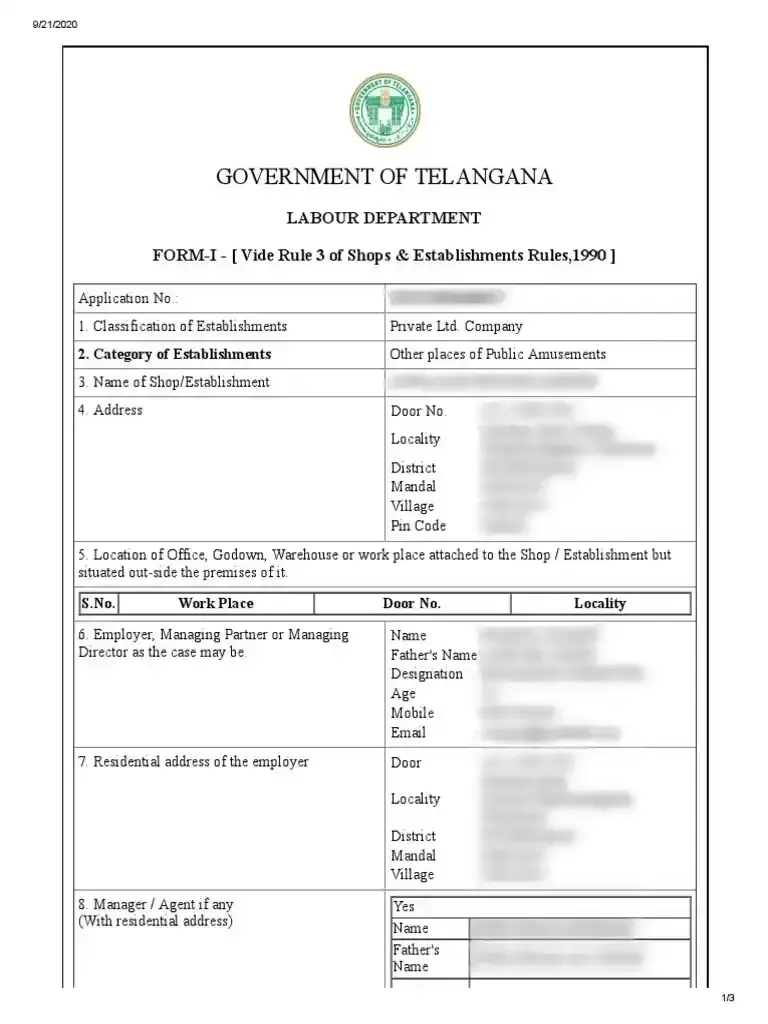
How to Download a Shop and Establishment Certificate?
Once your application is approved:
- Log in to the state portal where you applied, such as maitri.maharashtra.gov.in for Maharashtra.
- Open your dashboard and select "My Applications," "Application Status," or the relevant certificate section.
- Open the approved application showing an "Approved" or "Issued" status.
- Download your Shop Act Licence / Shop and Establishment certificate, usually as a PDF, and keep a copy for your records.
How to Check or Verify a Shop Act License Online?
You can check or verify a Shop Act Licence online through the Labour Department portal of the state where the establishment is registered. The exact process may vary by state, but generally involves the following steps:
- Visit the official Labour Department or designated labour services portal of your state (like maitri.maharashtra.gov.in for Maharashtra).
- Look for options such as License Verification, Registration Search, Application Status, or Shop and Establishment services.
- Enter the Shop Act registration number, license number, or other required business details.
- Submit the details to view the available registration information.
- Check the establishment name, registration status, registration number, and validity to confirm the licence details.
Validity & Renewal of Shop and Establishment Registration
The validity of Shop and Establishment registration varies by state. Some states issue lifetime registration, while others require renewal for a fixed period. Check your certificate for its validity and expiry date, and renew it where applicable.
When and How to Renew?
If your certificate has a fixed validity, apply for renewal before it expires. The process generally involves:
- Log in to your state's Labour Department portal like Nivesh Mitra portal for Uttar Pradesh.
- Select Renew Registration or the applicable renewal option.
- Review and update your business and employee details, if required.
- Pay the applicable fee and download the renewed certificate.
Documents and Fees for Renewal
Renewal generally requires your existing registration number, updated business or employee details, and fee payment. Requirements and fees vary by state and may depend on factors such as employee count.
Key Rules Under the Shops and Establishments Act for Employers
The Act sets baseline requirements for working conditions, employee welfare, and workplace records. Exact limits and entitlements vary by state, but common requirements include:
- Working hours, rest, and overtime
The rules for working hours, rest intervals, spread-over, and overtime vary from state to state under the applicable Shops and Establishments law. For example, Maharashtra generally provides for a maximum of 9 hours of work per day and 48 hours per week, subject to the conditions and exemptions under its law. It also prescribes rest intervals and overtime requirements, including overtime payment at the prescribed higher rate.
Therefore, businesses should check the Shops and Establishments law applicable in the state where their establishment operates rather than relying on a nationwide standard.
- Weekly holiday and leave
-
- Give employees at least one full day off every week. If they work on that day, compensatory leave or additional pay may apply.
- Leave commonly includes earned or annual leave, casual leave, and sick leave, along with applicable national and festival holidays. Exact entitlements vary by state.
- Records and registers
Employers must maintain prescribed records covering employees, wages, attendance, leave, working hours, and other matters. They may also need to display working-hour notices and maintain registers for fines, accidents, and other prescribed matters. These records must generally be available for inspection.
- Employment terms
-
- Issue formal appointment letters stating designation, wages, and terms of service.
- Follow the prescribed notice periods for termination, which vary with the employee's tenure, to avoid arbitrary dismissal.
- Provisions for women employees
-
- Night-shift rules (e.g., roughly 7 PM–6 AM) vary by state. Where permitted, employers may need to provide safe transport, security, sanitation, and other safety measures.
- Follow the Maternity Benefit Act, 1961, and applicable requirements for workplace safety, sanitation, and employee welfare.
How to Update Your Shop and Establishment Registration?
Keep your Shop and Establishment registration updated when your business details change.
The process generally involves:
- Log in to your state's Labour Department portal.
- Select the amendment option, such as "Amendment," "Change in Particulars," or "Update Registration Details."
- Enter the changes, such as a new address, business name, ownership, or employee count.
- Upload supporting documents, such as a new rent agreement for an address change or updated identity proof for an ownership change.
- Pay the applicable amendment fee, if required.
- Submit and track the application until the department updates the records or issues a revised certificate.
Note: Most states prescribe a specific deadline for reporting changes, often 30 days. Check your state's rules to avoid late fees or penalties.
Consequences of Not Registering Under the Shops and Establishments Act
Operating without the required registration can result in penalties under the applicable state law. The consequences depend on the state and the nature of the violation.
- Fines: Penalties for operating without the required registration, or for continuing a violation, depend on the applicable state's Shops and Establishments law and can differ significantly. For example, under Section 29 of the Maharashtra Shops and Establishments (Regulation of Employment and Conditions of Service) Act, 2017, a first contravention may attract a fine of up to ₹1 lakh, along with up to ₹2,000 per day for a continuing offense. A subsequent conviction may attract a fine of up to ₹2 lakh, subject to the prescribed ₹2,000-per-worker cap.
- Additional penalties: Separate fines, often ₹100 to ₹1,000 per day, may apply for violations such as poor record-keeping, excessive working hours, or leave violations.
- Legal action: The Labour Department may issue notices or initiate proceedings for serious or repeated violations.
- Business disruption: Repeated non-compliance may lead to restrictions or other action permitted under state law.
- Licensing hurdles: Registration may be requested for certain business licenses, applications, or institutional requirements.
- Loss of opportunities: Some government schemes, incentives, or business opportunities may require proof of compliance.
- Reputational impact: Non-compliance can affect trust among employees, suppliers, customers, and other stakeholders.
Connect with RegisterKaro and let our experts handle the legal hassle while you grow your business.
Frequently Asked Questions (FAQs)
Is Shop and Establishment registration mandatory for every business?
Yes, for most covered shops and commercial establishments, but the requirement varies by state. Some states require registration regardless of employee count, while others apply it after employees are hired. The usual deadline is within 30-60 days of starting operations, subject to state rules.
Which businesses need Shop and Establishment registration?
Shops, offices, restaurants, cafes, warehouses, and other service or commercial establishments generally need to register. This can include online and home-based businesses operating from physical premises with employees. Government offices, factories and mines covered by separate laws, and some family-run businesses without employees may be exempt.
How much does Shop and Establishment registration cost?
Fees are state-specific and may depend on factors such as employee count, establishment type, or business activity. They can range from nil or ₹100 to a few thousand rupees. Professional fees for preparing and filing the application are separate.
Is Shop and Establishment registration valid for life, or does it need renewal?
It depends on the state. Some states, including Delhi, Gujarat, and Uttar Pradesh, issue lifetime certificates, while others, such as Maharashtra and Karnataka, require periodic renewal.
Is Shop and Establishment registration valid for a lifetime?
The validity of a Shop and Establishment license depends on the state. Some states provide lifetime validity, while others require renewal after a fixed period. For example, Delhi, Gujarat, Uttar Pradesh, and Rajasthan generally do not require periodic renewal, while Maharashtra and Karnataka prescribe renewal requirements. Check your state's rules and the validity mentioned on your certificate.
What is a Gumasta License, and is it the same as Shop and Establishment registration?
“Gumasta” is the commonly used name for Shop and Establishment registration in Maharashtra. It is the registration required under the Maharashtra Shops and Establishments Act and is filed through the state’s designated portal.
Can I complete Shop and Establishment registration online?
Yes, most states provide an online process through the labour department or designated government portal. You generally submit the application and documents, pay the applicable fee, and download the certificate after approval.
Do online sellers and home-based businesses need Shop and Establishment registration?
It depends on the state and how the business operates. An online or home-based business may need registration if it operates from a physical premises and meets the applicable employee or establishment criteria. A solo freelancer working alone from home may be exempt in some states.
What happens if a business does not obtain the required Shop and Establishment registration?
Operating without required registration can result in fines, continuing penalties, or other legal action, depending on the state and violation. Non-compliance may also create practical difficulties with bank accounts, other licenses, or marketplace and vendor onboarding.
Can Shop and Establishment registration be updated or transferred if business details change?
A registration generally cannot be transferred to another establishment, but changes such as business name, address, ownership, or employee count can usually be reported through the amendment process. The applicable deadline and procedure depend on the state.
Is a Shop Act License the same as Shop and Establishment registration?
Yes, Shop Act License & Shop and Establishment Registration generally refer to the same registration. “Shop Act License” is the commonly used term for the registration required under the applicable state Shops and Establishments Act.

Reviewed by
Joel DsouzaJoel Dsouza is a Chartered Accountant (CA) and compliance expert with over 7 years of hands-on experience in company registration, tax structuring, GST, ROC filings, and MCA compliance. As a qualified member of the Institute of Chartered Accountants of India (ICAI) and Co-Founder at RegisterKaro, he has personally advised more than 1,000 startups and SMEs across India, helping founders navigate incorporation, regulatory frameworks, and financial planning from Day 1. With deep expertise across all three levels of Finance and Portfolio Management, Joel is committed to promoting financial literacy and simplifying India's startup ecosystem through clear, actionable guidance that entrepreneurs can act on immediately.
Why Choose RegisterKaro for Shop & Establishment Registration?
Each state has its own registration process, documents, and fee structure. RegisterKaro helps you complete the process correctly from application to obtaining the certificate.
- State-specific expertise: We handle state-specific requirements, from Maharashtra's Gumasta registration to Shop and Establishment registrations in other states.
- Correct fee calculation: We identify the applicable fee based on your state, employee count, and other relevant criteria.
- Fully online process: Complete the registration without unnecessary office visits or paperwork.
- Application tracking: Track your application status and receive updates throughout the registration process.
- End-to-end support: We handle document verification, filing, department queries, and certificate delivery.
- Post-registration assistance: Get support with amendments, renewals, and changes to your registration when required.

What Our Clients Say
View All
King
 Verified
Great experience working with them for my company incorporation. The entire process was smooth, well-explained, and handled professionally. They were... Read more

Harshit Goyal
VerifiedMeghna was exceptionally supportive, facilitating all registration processes with remarkable efficiency and ease. Her invaluable assistance significan... Read more

Bhadri Narayanan
VerifiedHighly satisfied with their customer service from explaining my queries and following up till the completion of process. Special thanks to Adithya shu... Read more

Mohit Malik
VerifiedI had a very positive experience with the GST compliance and registration services. The entire process was smooth, quick, and clearly explained. The t... Read more

Prithika Fredric
VerifiedAkriti Gupta helped us in registering our startup. Thanks for sending us timely updates and ensuring everything went smoothly. We truly appreciate you... Read more

R. Gopinathreddy Red...
VerifiedGood morning to everyone. My name is R.Gopinath Reddy and My dream is to start a company and it's very easy to maintain a company without more employe... Read more

Amit Rahate
VerifiedPurvi consistently followed up on pending requirements, kept us informed of important deadlines, and ensured that our filings were completed smoothly... Read more

Martand Yadav
VerifiedI had a very smooth and hassle free experience with register karo while registering my LLP. Thanks Aditya Singh for regular updates. We appreciate you... Read more

Gaurav Gammer
VerifiedThe Ragister Karo website is user-friendly and easy to navigate. The registration process is simple and straightforward, making it convenient for user... Read more

Akshayam Axom
VerifiedExcellent service provided by register Karo lead by Neha Kumari & team. This is our second year with Register Karo and it has been a smooth journey so... Read more
Related Blogs
View All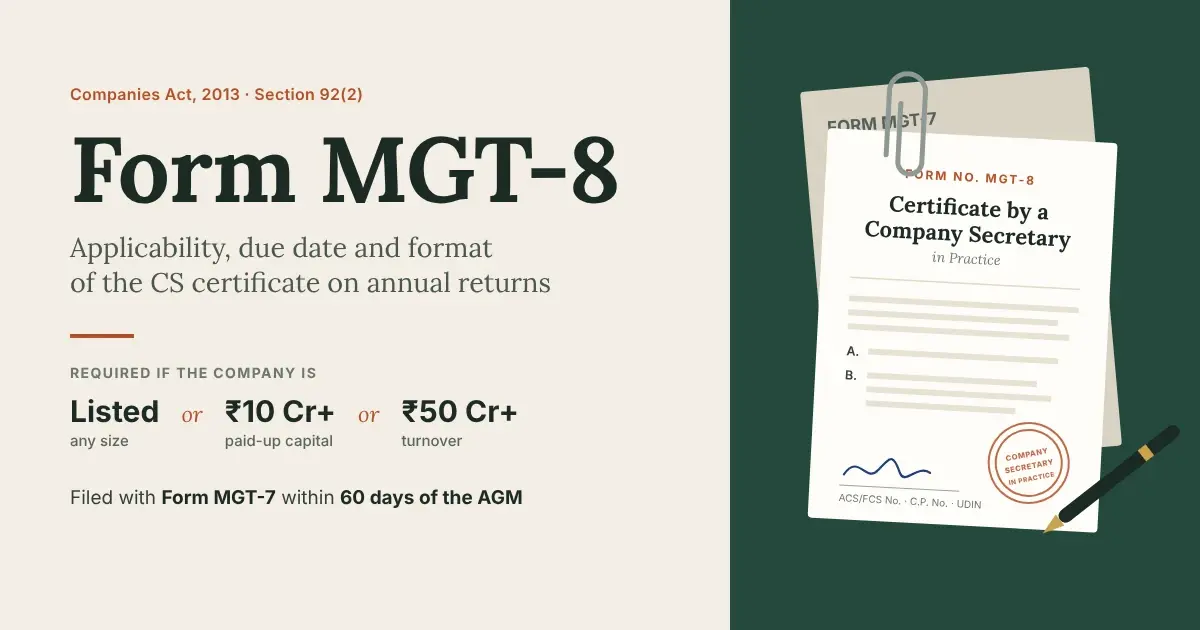
What is Form MGT-8: Applicability, Due Date, and Format

Conversion of Private Company into Public Company in India: Procedure, Forms & Timeline

Board Meetings In Company Law: Section 173 Of Companies Act 2013

Declaration Of Dividend As Per Companies Act 2013

Debentures Under the Companies Act, 2013: Section 71 Explained
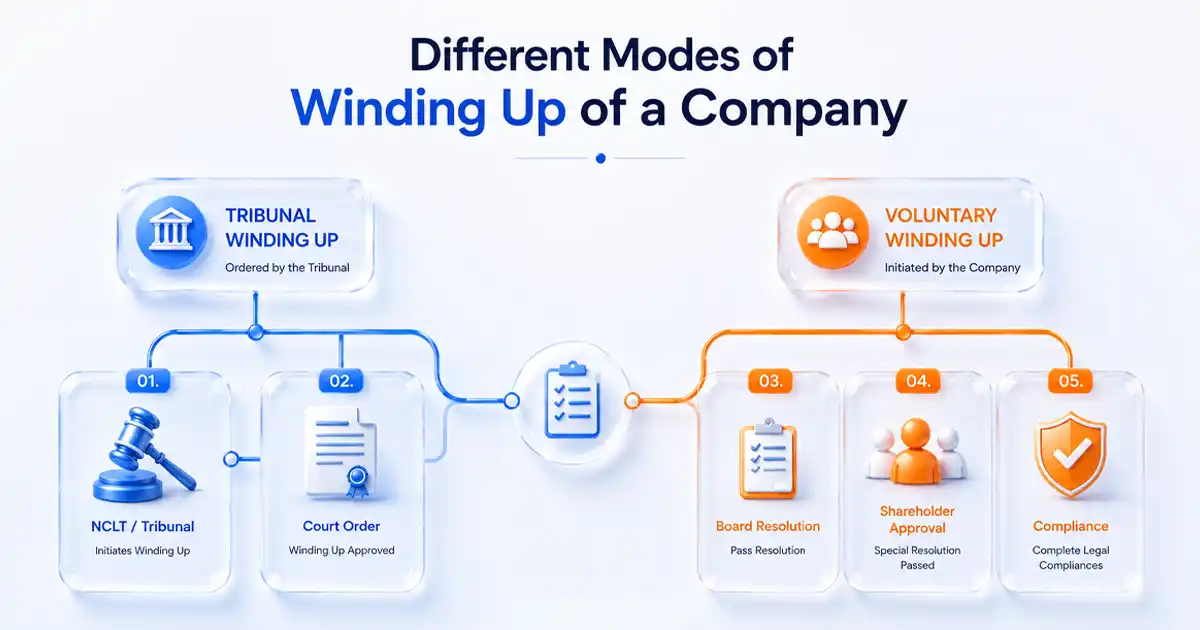
Modes of Winding Up of a Company: IBC & Companies Act
Types Of Voting Under Companies Act, 2013
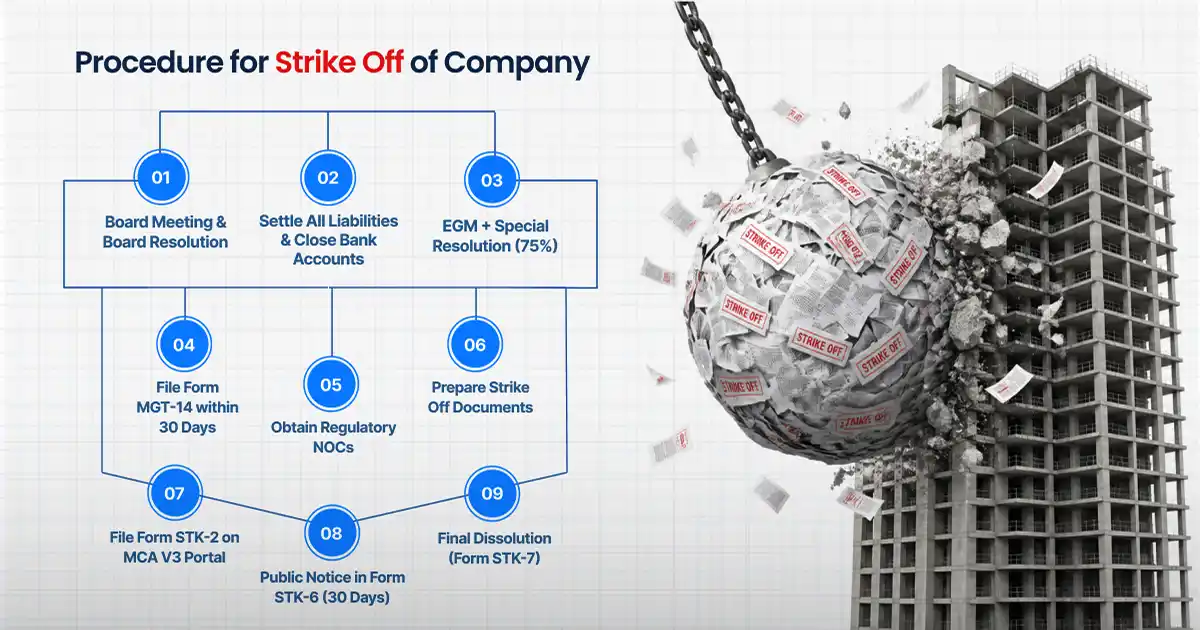
Strike Off Company in India: Meaning, Procedure, Forms & Revival Guide

Appointment of Auditor Under the Companies Act, 2013
Depreciation Rates as per Companies Act 2013: Key Provisions