Close a Private Limited Company in India
Close your Private Limited Company online with RegisterKaro through strike-off (Form STK-2) or voluntary winding up methods. We handle the entire process, helping you exit compliantly while avoiding penalties and director disqualification.
 Seamless Strike-Off & Voluntary Winding-Up ServicesComplete ROC Filing, Legal Documentation & SupportAvoid Penalties, Director Disqualification & Legal TroubleLower Closure Cost Under The CCFS-2026 SchemeDedicated Expert Support From Filing To Final Dissolution

 What Sets Us ApartWhat Sets Us Apart
Overview of Closing a Private Limited Company
Closing a private limited company in India is a formal process governed by the Companies Act, 2013. Most companies close through strike-off under Section 248, the fast and low-cost route for dormant or inactive companies. However, companies with different activity levels, financial conditions, or legal issues may require voluntary or compulsory winding up.
Properly dissolving a company is essential to avoid future compliance burdens, penalties, and director liabilities. Whichever route you take, the process involves settling all outstanding dues, closing the company's accounts, and filing the required e-forms with the ROC.
When to Consider Closing Your Private Limited Company?
A Private Limited Company is usually closed due to financial difficulties, business changes, or operational issues. Companies consider closing down in the following situations:
- Persistent Losses or Debt: If a company consistently loses money and struggles with debt, winding it up can prevent further financial burden on its directors and shareholders.
- Insolvency: When a company can't pay its debts, closure might be the only option.
- Strategic shift: An outdated business model, changing objectives, or a pivot to new opportunities can make closing the existing entity the cleanest route.
- Restructuring: Closure can be part of a larger restructuring to adapt to new market realities.
- Internal Conflicts: Significant disagreements among stakeholders can hinder operations, often leading to closure.
- Retirement or Succession Issues: If key decision-makers retire or leave without a proper succession plan, company closure might become necessary.
- Non-compliance: Failing to meet legal and regulatory requirements can also result in closure.
- Inactivity: If a company has been dormant for an extended period, closing it may be the most sensible choice.
- Insufficient members: A Private Limited Company must have at least 2 and up to 200 members. If it falls below 2 members, closure may be required.
- Failure to File Returns: Not filing annual returns or financial statements for two consecutive financial years can trigger ROC strike-off proceedings under Section 248(1).
Methods to Close a Private Limited Company in India
A private limited company in India can be closed through three routes under the Companies Act, 2013:
- Strike-Off (Section 248)
- Voluntary Winding Up
- Compulsory Winding Up
The right option depends on your company's activity, financial condition, and future plans. Here's a quick comparison:
| Closure Method | Best For | Key Authority Involved | Time Taken | Complexity Level |
| Strike-Off (Fast Track Exit) | Dormant or inactive companies | C-PACE (under the ROC) | 3–6 months | Simple |
| Voluntary Winding Up | Solvent companies opting for closure | ROC + Tribunal (NCLT) | 12–18 months | Moderate to Complex |
| Compulsory Winding Up | Fraudulent or illegal activities | NCLT + ROC | 2+ years | Highly Complex |
If you intend to restart your business later, you may instead apply for Dormant Company status under Section 455.
Eligibility for Closure of a Private Limited Company
You can apply to close your private limited company if any of the following conditions are true:
- Your Company Didn't Start or Has Been Inactive: The company never commenced business after incorporation. Alternatively, it has remained inactive for the last two financial years without applying for dormant status.
- Subscription Money Not Paid / Business Not Commenced: The subscribers didn't pay the agreed share capital. As a result, the company failed to file Form INC-20A within 180 days of incorporation.
- No Unpaid Bills or Loans: The company doesn’t owe money to anyone (no unpaid taxes, loans, employee salaries, or vendor payments).
- No Court Cases: The company should not be involved in any legal cases or disputes.
- All Returns Are Filed: The company has filed all pending returns up to date, including AOC-4, MGT-7, income tax returns, and GST returns. It has also cancelled its GST registration.
- Directors and Shareholders Agree: The board of directors has passed a resolution to close the company. At least 75% of the shareholders agree to shut it down.
If your company meets these conditions, you can legally close it through Strike-Off or Voluntary Liquidation, depending on your situation.
Documents Required to Close a Private Limited Company
To close a private limited company in India, you'll need specific documents, regardless of the chosen method (strike-off or voluntary winding-up).
1. Documents Required Across Both Methods
Regardless of the closure method, certain foundational documents are consistently required to process the company's dissolution.
| Document | Purpose |
| Incorporation documents, Certificate of Incorporation (CoI), MOA, AOA | Establish the company's legal identity |
| Latest audited financial statements + audit report | Show the company's financial standing |
| PAN and address proof of all directors and shareholders | Verification and record-keeping |
| Bank account closure proof | Confirm the company holds no active accounts |
| Digital Signature Certificate (DSC) of directors | Electronically sign and file the forms |
2. Additional Documents for Strike-Off (Section 248)
For administrative closure through strike-off, a set of documents affirming the company's inactivity and compliance is needed.
| Document | Purpose |
| Board & shareholder resolutions (special resolution / 75% consent) via Form MGT-14 | Authorize the strike-off |
| Indemnity Bond (Form STK-3) from every director | Indemnify authorities against future liabilities |
| Affidavit (Form STK-4) from every director | Confirm solvency and compliance |
| CA-certified Statement of Accounts (Form STK-8) | Show financial position (not older than 30 days) |
| GST cancellation order / GSTR-10 proof | An active GST registration blocks a strike-off |
| Latest Income Tax Return acknowledgement | Confirm tax filings are up to date |
| NOC from regulators (RBI, SEBI, etc.), if applicable | Clearance where the company is regulated |
3. Additional Documents for Voluntary Liquidation (IBC, 2016)
Voluntary winding up requires a structured legal process supported by detailed documentation to ensure proper liquidation and compliance. Key documents include:
| Document | Purpose |
| Special Resolution (passed by at least 75% of shareholders) | Approve the voluntary liquidation |
| Declaration of Solvency by the majority of directors | Confirm the company can pay its debts in full |
| Appointment of an Insolvency Professional (Liquidator) | Manage the liquidation under IBBI Regulations, 2017 |
| Public announcements in newspapers and the Official Gazette | Notify creditors and stakeholders |
| Liquidator's reports & audited final accounts | Filed with the ROC and the NCLT |
How to Close a Private Limited Company in India?
A private limited company in India can be closed through three routes under the Companies Act, 2013, and the Insolvency and Bankruptcy Code, 2016: strike-off, voluntary liquidation, or compulsory winding up. The right method depends on your company's activity status, financial health, and legal standing:
1. Striking Off (Fast Track Exit)
The strike-off process under Section 248(2) of the Companies Act, 2013 (Fast Track Exit), provides a simplified way to close a defunct or inactive private limited company in India.
Below are the key steps involved to strike off company in India:
1. Board Meeting
The process begins with a board meeting where the Board of Directors passes a resolution to approve the strike-off. In this meeting, the board also authorizes a director or company secretary to handle and submit the necessary documents for the strike-off procedure.
2. Settle Liabilities and Close Bank Accounts
The company must clear all its outstanding dues, including statutory liabilities, taxes, employee salaries, loans, and vendor payments. Once liabilities are cleared, all company bank accounts must be officially closed, and a bank account closure letter or statement should be collected for submission with the application.
Cancel the company's GST registration by filing GSTR-10 and surrender other registrations before applying. An active GST registration can delay or block the strike-off process.
3. Shareholder Approval
An Extraordinary General Meeting (EGM) is held, during which a special resolution is passed for voluntary strike-off approval. The resolution must be approved by 75% of shareholders by paid-up share capital, or through their written consent. If a special resolution is passed during an EGM, the company must file Form MGT-14 with the Registrar of Companies within 30 days. Any distribution of the company's remaining assets or reserves to shareholders may also have tax implications under applicable tax laws.
4. Preparation and Filing of Form STK-2
Form STK-2 must be filed online with C-PACE along with the government fee of ₹10,000 (reduced to ₹2,500 under the CCFS-2026 scheme until 15 July 2026). Required attachments include:
- Indemnity Bond (STK-3) and Affidavit (STK-4) from all directors.
- STK-8 statement of accounts, not older than 30 days.
- Copy of special resolution or 75% shareholder consent.
- Latest ITR acknowledgement, bank account closure letter, and directors’ ID/address proof.
5. ROC Scrutiny and Public Notice
After receiving the application, the ROC (or C-PACE) scrutinizes the documents. If everything is in order, the ROC issues a public notice in Form STK-5 or STK-6. The notice is published on the MCA website and in the Official Gazette, giving the public, creditors, and other stakeholders 30 days to raise objections.
6. Resolution of Objections (If Any)
If any objections are received during the public notice period, the company must provide a proper explanation or clarification. The ROC will assess the company’s response and decide whether to proceed with the strike-off. If objections are not resolved, the strike-off application may be rejected.
7. Final Strike-Off Order
If there are no objections or if all objections are resolved to the satisfaction of the ROC, a final order of strike-off is issued in Form STK-7. The company’s name is then removed from the Register of Companies, and the order is officially published in the Official Gazette. From this date, the company is considered legally dissolved.
Timeline: Usually completed within 3–6 months, depending on document accuracy, the 30-day public notice period, and whether any objections are received.
2. Voluntary Winding Up
Voluntary winding up (now voluntary liquidation) is governed by Section 59 of the Insolvency and Bankruptcy Code, 2016. Under this process, a solvent company closes by settling liabilities and distributing assets. The process is managed by an Insolvency Professional and ends with an NCLT dissolution order. The process follows the IBBI (Voluntary Liquidation Process) Regulations, 2017. A company can opt for it when:
- The period mentioned in the company’s articles has ended.
- A specific event mentioned in the articles for closure has occurred.
- The company passes a special resolution (agreed by at least 75% of shareholders) to close.
Steps Involved:
- The board of directors approves the proposal to close the company and recommends voluntary liquidation.
- The company submits a Declaration of Solvency confirming it can pay its debts. Creditors representing at least 2/3 in value must approve the liquidation.
- The company must submit a Declaration of Solvency, showing it can pay its debts. This must also be approved by the trade creditors.
- The appointed Insolvency Professional (liquidator) prepares a final report on the winding-up activities.
- A final general meeting is held where the liquidator presents the report, and members pass a resolution for dissolution.
- A copy of the final accounts and the resolution is filed with the ROC.
- The liquidator applies to the NCLT for a dissolution order, which is typically issued within 60 days if everything is in order.
- After the order is passed, a copy must be filed with the ROC.
- After the company is closed, its name cannot be used by anyone else for 2 years.
Timeline: The process generally takes 6–12 months, depending on asset realization and the time taken by the NCLT to issue the dissolution order.
3. Compulsory Winding Up
Compulsory winding up occurs when the NCLT orders a company to shut down. It applies under Section 271 of the Companies Act, 2013, for specified legal violations, or under the Insolvency and Bankruptcy Code, 2016, in cases of insolvency.
Steps in Compulsory Winding Up Process:
-
Filing of a Petition
A petition (formal request) to close the company can be filed by:
-
- The company itself
- Creditors of the company
- Any shareholder (also called a contributory)
- Any or all of the above parties
- The Central Government or the State Government
- The Registrar of Companies
The petition must be submitted using Form WIN 1 or WIN 2, and should be filed in three copies. It must also include a sworn statement (affidavit) in Form WIN 3.
-
Tribunal's Review
The tribunal reviews the petition. If the petition is filed by someone other than the company, the tribunal may require the company to submit its objections and statement of affairs within 30 days.
-
Advertisement of Petition
The petition must be advertised in a prescribed manner and kept open for at least 14 days to allow objections from stakeholders.
-
Appointment of a Liquidator
The tribunal appoints a liquidator to oversee and manage the winding-up process, ensuring the company's assets are fairly distributed to its creditors and shareholders.
-
Preparation and Approval of Reports
The liquidator prepares a preliminary report, which, upon approval, is finalized and submitted to the tribunal to sanction the winding-up order.
-
Submission to the Registrar of Companies (ROC)
The liquidator must submit a copy of the winding-up order to the ROC within 30 days. Failure to do so results in penalties.
-
Final Approval by ROC
Upon satisfactory review, the ROC officially dissolves the company by removing its name from the register.
-
Publication in the Official Gazette
The ROC publishes a notice in India to formally announce the company's dissolution.
Timeline: This process may take 1–3 years or more, depending on the complexity of the case, creditor claims, litigation, asset realization, and NCLT proceedings.
Costs of Closing a Private Limited Company in India
Closing a private limited company in India via strike-off typically costs ₹17,000–₹25,000, covering government fees, professional charges, and documentation. Costs may rise if there are pending compliance or liabilities. Here's how the methods compare:
| Closure Method | Typical Cost | Notes |
| Strike-Off (Section 248) | ₹17,000 – ₹25,000 | The fastest, cheapest route for dormant/inactive companies |
| Voluntary Liquidation (IBC) | ₹1,00,000 – ₹3,00,000+ | Higher, as it requires an Insolvency Professional and an NCLT order |
| Compulsory Winding Up (NCLT) | ₹2,00,000+ | Highest, driven by Tribunal proceedings and litigation costs |
Strike-Off Cost Breakdown
Since strike-off is the route most companies use, here's the detailed breakdown:
| Cost Component | Typical Amount |
| Government fee (STK-2) | ₹10,000 (₹2,500 under CCFS-2026 until 15 Jul 2026) |
| Professional fees | ₹6,000 – ₹10,000 |
| Documentation & audit | ₹1,000 – ₹3,000 |
| Pending compliance penalties | ₹100/day per form (90% off under CCFS-2026) |
| Winding up (if insolvent) | ₹1,00,000 – ₹2,00,000 |
Consequences of Not Closing a Company Effectively
Even if a Private Limited Company has stopped operating, it continues to exist in the eyes of the law until it is formally dissolved through strike-off or winding up. If it is not closed properly, it can still face legal, financial, and compliance-related consequences in India.
- Compliance Requirements Even for an Inactive Company: A private limited company must still file annual returns, financial statements, and tax filings even when dormant. Non-filing attracts ₹100 per day per form with no upper limit, and under Section 164(2), failure for three consecutive years disqualifies directors for five years across all their companies.
- Risk of Personal Liability for Directors: If a company is not properly closed, directors may become personally liable for loans or contracts they have guaranteed. This risk increases if the company defaults on its obligations.
- Obstacles to Starting New Ventures: If a company remains “active” or “defaulting” on MCA records, directors may face administrative issues or restrictions. This can affect their ability to register a private limited company in India, get bank loans, or obtain registrations later.
- Continued Legal & Creditor Liability: An inactive company can still be held accountable for past actions, unresolved contracts, or outstanding dues. Creditors can issue legal notices and initiate recovery proceedings, and directors may face consequences, affecting their professional standing.
- Negative Market Perception: Suppliers, investors, and clients may view unresolved closures negatively, which can affect future business dealings and diminish professional credibility.
- Unnecessary Administrative and Financial Burden: Directors may still need to maintain books of accounts, conduct audits, and appoint professionals for filings. This leads to avoidable time and cost burdens.
- Difficulty in Reusing Company Name or Structure: If a company is struck off for non-compliance, its name cannot be reused easily. Revival or reuse requires NCLT approval and may involve penalties.
Closing now is far cheaper than waiting, as penalties accumulate daily. The CCFS-2026 scheme (until 15 July 2026) also offers a 90% discount on late fees and reduced strike-off charges.
Close Your Company Under CCFS-2026 (Limited-Time Fee Relief)
If your private limited company is inactive or has pending filings, now is the best time to close it. The Companies Compliance Facilitation Scheme, 2026 (CCFS-2026), issued by the MCA via General Circular No. 01/2026 dated 24 February 2026, offers a one-time window to clear backlogs and exit at reduced cost. The scheme runs from 15 April 2026 to 15 July 2026, with no expected extension.
Benefits of Closing Under CCFS-2026
- Strike-off at 25% of the fee: The Form STK-2 government fee drops from ₹10,000 to just ₹2,500.
- 90% waiver on backlog penalties: Companies with long-pending filings (AOC-4, MGT-7, etc.) can settle massive accumulated late fees by paying only 10% of the total. This relief is especially significant for businesses that delayed closure due to heavy penalties, making it far easier to finally clear compliance dues and shut down legally.
Disclaimer: CCFS-2026 is valid only until 15 July 2026. Applications filed after this period will not be eligible for the revised fee structure and may be subject to regular charges.
Note: CCFS-2026 does not apply to companies that have already filed for strike-off, are already dormant, or against whom a final strike-off notice has been issued.
What is C-PACE?
Centre for Processing Accelerated Company Exit (C-PACE) is an MCA authority that handles company strike-off applications across India. It centralizes the process, replacing regional ROCs and making company closure faster and more streamlined.
How C-PACE changed the strike-off process:
- Centralized processing: All Form STK-2 applications are now filed and reviewed by C-PACE instead of regional ROCs.
- Faster exits: Dedicated processing has reduced timelines, with strike-offs now typically completing in 40–90 days.
- Stricter scrutiny: C-PACE closely checks compliance, filings, and liabilities, so incomplete applications or active GST registrations often lead to rejection.
In short, C-PACE has made strike-off faster and more structured, but also stricter, making a clean application essential.
Is Selling Your Company an Alternative to Closing It?
Technically, selling your company is not the same as closing it, but it can serve as an alternative to closure if you're looking to exit the business. Instead of dissolving the entity and liquidating assets, you transfer ownership to another individual or company through a business sale or merger/acquisition deal.
How It Works
When you sell a company instead of closing it, ownership is transferred to a new buyer while the business continues to operate. The process generally involves the following:
- Business Sale: You sell the company's shares (a share sale) or its assets (an asset sale) to a buyer.
- Transfer of Liabilities and Assets: The new owner typically assumes the ongoing operations, employees, contracts, and liabilities.
- Continuity: The business continues to exist legally, operationally, and financially, albeit under new ownership.
Key Differences Between Selling the Company and Closing It
Here’s a quick comparison to help you understand how selling a company differs from formally closing it:
| Selling the Company | Closing the Company |
| Business continues | Business is permanently shut down |
| May generate profit | May involve losses/liquidation |
| Requires due diligence | Requires legal compliance |
| Ownership changes | Ownership is dissolved |
If your company is financially healthy, compliant, and free from major liabilities, selling it may generate returns instead of requiring you to bear closure costs. However, if it is dormant or has significant liabilities, formally closing it through strike-off or winding up is usually the more suitable option.
Connect with RegisterKaro and let our experts handle the legal hassle while you grow your business.
Frequently Asked Questions (FAQs)
What is the main difference between "Strike Off" and "Voluntary Winding Up"?
−Strike-off is the simpler, faster route to close a defunct or inactive company by filing Form STK-2 with C-PACE. Voluntary liquidation (now under the IBC, 2016) is a detailed process for solvent companies that involves appointing an Insolvency Professional, settling liabilities, and obtaining an NCLT dissolution order.
How long does it typically take to close a company in India?
+What documents are required for closing a private limited company in India?
+Does a professional need to be engaged to close a company?
+Can a company with pending loans or debts opt for a strike-off?
+What happens to the assets of a company after it is struck off?
+Is it possible to revive a struck-off company?
+What is the role of a liquidator in company closure?
+What is a Declaration of Solvency?
+How much does it cost to close a private limited company in India?
+Do I need to cancel my GST registration before closing the company?
+What is C-PACE?
+Can I close a company without filing pending annual returns?
+What happens if I don't formally close my inactive company?
+Can I close a company with no business activity?
+Is GST cancellation mandatory before strike-off?
+Can I close a company with an active bank account?
+Can the ROC reject an STK-2 application?
+How long does C-PACE take to process a strike-off?
+Can directors start another company after a strike-off?
+
Reviewed by
Joel DsouzaJoel Dsouza is a Chartered Accountant (CA) and compliance expert with over 7 years of hands-on experience in company registration, tax structuring, GST, ROC filings, and MCA compliance. As a qualified member of the Institute of Chartered Accountants of India (ICAI) and Co-Founder at RegisterKaro, he has personally advised more than 1,000 startups and SMEs across India, helping founders navigate incorporation, regulatory frameworks, and financial planning from Day 1. With deep expertise across all three levels of Finance and Portfolio Management, Joel is committed to promoting financial literacy and simplifying India's startup ecosystem through clear, actionable guidance that entrepreneurs can act on immediately.
Why Choose RegisterKaro to Close Your Private Limited Company?
Closing a Private Limited Company involves strict ROC filings and compliance checks. RegisterKaro handles the full strike-off or winding-up process for your Private Limited Company, ensuring a smooth, compliant exit without penalties or rejection. Here's why businesses trust us:
- Corporate Law Expertise: Our experts understand the Companies Act, 2013, and manage the complete closure process, including strike-off, winding up, and ROC objections, with accuracy and efficiency.
- End-to-End Filing Support: From board resolutions and STK-2 to GST cancellation and ROC filings, we manage all the paperwork and submissions.
- CCFS-2026 Advantage: We help eligible companies close under the current CCFS-2026 scheme, with reduced STK-2 fees and waived backlog penalties (until 15 July 2026).
- Director Risk Protection: We ensure proper closure so you avoid director disqualification, penalties, and lingering compliance liabilities.
- Transparent Fixed Pricing: Clear, fixed-fee packages suited to startups, dormant businesses, and SMEs, with no hidden costs.
What Our Clients Say
View All
Kesha Ram
 Verified
Register Karo is a company carryout all task which you demand from Registeration process to final compliance of commencement of the new company. My e... Read more

Dhamodaran Narayana...
VerifiedThank you for the exceptional support provided by Vishakha throughout this process. My experience with RegisterKaro's company wind-up service was exce... Read more

Jit
VerifiedRegister Karo is the best platform to register your company, @kajal chowhan helped me a lot, to make the process smoothly. Thank you team registerkaro

Guru
Verifiedprofessional work, good team work by the team allocated to us, on time delivery for incorporation of my company, Ankit followed a good workflow throug... Read more

yayati
VerifiedI reached out to registerkro for company windup. Would like to give shout out to Astha gupta who was extremly helpful throughout the process. Kudos to... Read more

Vijay Azad
VerifiedHi It was pleasure to contact you@alka for company registration .Happy with the dedication and support during process and working beyond timeline...

aravind raj
VerifiedWe did startup registeration with their team, it was point to point approach and they were clear in those procedures and their followup is too good...

vinay kumar
VerifiedYour staff Ankita Matta is a polite person the way of handling the issues was good. I hope in future register karo team handle the issues in a same wa... Read more

Riya Singh
VerifiedRegister karo demonstrated professionalism and expertise in navigating complex legal and regulatory issues related to our industry. Special thanks Ank... Read more

ganesh patil
VerifiedHad a great experience with Register Karo. The LLP registration process was handled smoothly and everything was explained clearly. Highly recommended!
Related Blogs
View All
Trademark Registration for a Private Limited Company in India
How to Register a Company in Bangalore: A Complete Step-by-Step Guide (2026)
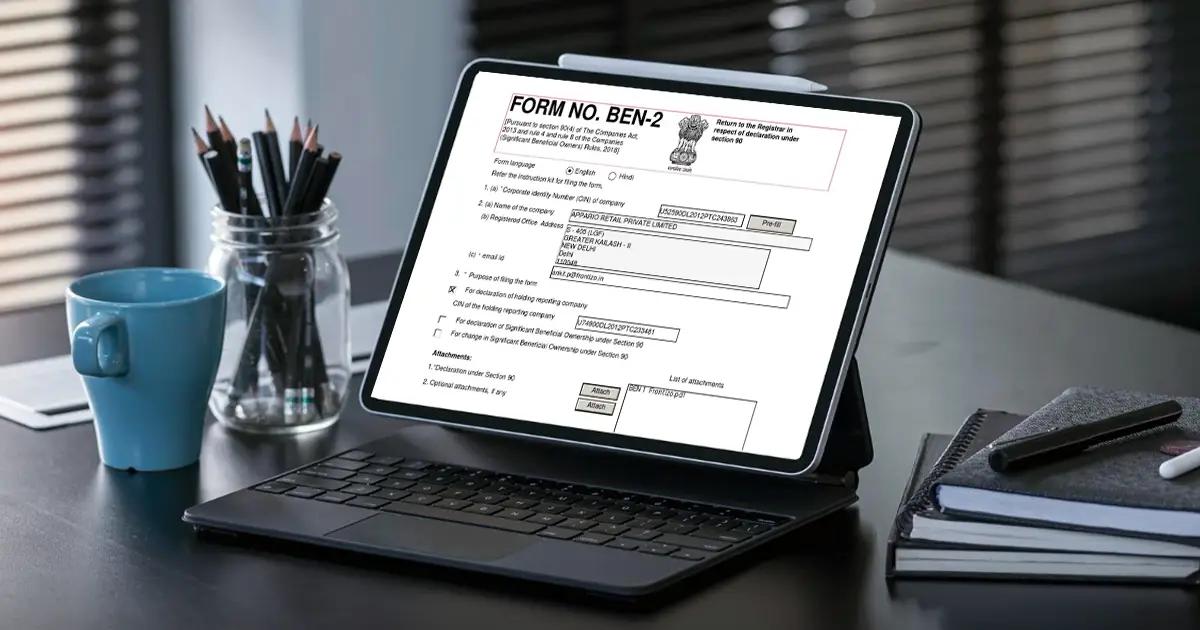
Form BEN-2: Meaning, Applicability, Due Date & Filing Process
Form AOC 5: MCA Filing, Time Limit & Fees Guide

Procedure for Conversion of Private Company into OPC (2026 Guide)

Labor Laws in India for a Private Company: Leave Policy & Wages

Key Exemptions & Privileges to Private Companies in India

Maximum & Minimum Number of Members in a Private Company

Conversion of a Public Company into a Private Company: Legal Requirements
Appointment of Chairman in a Private Limited Company