International Trademark Registration in India
International trademark registration extends your brand's protection worldwide through the Madrid Protocol. RegisterKaro handles the entire process, from WIPO filing to country-specific objections, for seamless protection across 133 countries.
 International Trademark Search Across WIPO's Global DatabaseForm MM2(E) Drafting & Filing Across 133 Member CountriesCoordination Between the Indian Trademark Office & WIPOSupport for Provisional Refusals & Country-Specific ObjectionsRenewal Tracking & Central-Attack Protection Planning

 What Sets Us ApartWhat Sets Us Apart
Overview of International Trademark Registration in India
International trademark registration extends your Indian trademark's legal protection to other countries. While an Indian trademark protects your brand only within India, international registration secures your rights in the countries where you register it. This is essential if you plan to export, sell overseas, or grow your brand internationally. A trademark can be a name, logo, slogan, symbol, or any sign that identifies your business.
The most efficient way to obtain international protection is through the Madrid Protocol, which covers 117 member countries across 133+ territories, including the US, EU, UK, and China. India joined the Madrid Protocol on July 8, 2013, allowing Indian businesses to seek international trademark protection through a single application.
Under the Madrid System, administered by the World Intellectual Property Organization (WIPO), you file one application through the Indian Trademark Office, which acts as your Office of Origin. You can designate the countries where you want protection, and WIPO forwards the application to each one for examination under its national trademark laws.
International trademark registration is not a single global trademark. It is a coordinated system of national trademark rights managed through one centralized application process. You can access the system through the WIPO IP Portal or eMadrid.
Madrid Protocol for International Trademark Registration
The Madrid Protocol is the treaty that makes international trademark registration practical and affordable, rather than a country-by-country ordeal.
What is the Madrid System?
Protecting a trademark in 10 countries once meant hiring 10 separate lawyers and filing 10 applications in 10 languages. It also required paying fees in 10 currencies and tracking 10 different renewal deadlines. It was slow, expensive, and genuinely difficult to manage.
The Madrid System changed that. It allows you to file one application, in one language, pay one set of fees, and seek protection across all 117 member countries, covering 133 territories, through a single centralized process. WIPO, the UN agency based in Geneva that administers global IP rights, manages the entire system.
India's Membership in the Madrid Protocol
India joined the Madrid Protocol on July 8, 2013. Since then, Indian businesses can seek international trademark protection through a single application filed with the Indian Trademark Office. Here's what that means in practice:
- Saves Money: Significantly cheaper than filing separate applications in each country.
- Saves Time: File once, and WIPO forwards your application to every country you've chosen.
- Simple Management: Manage your entire international trademark portfolio, including renewals, through one centralized system with a single renewal fee.
What is International Trademark Registration?
A trademark is a sign, a name, logo, slogan, or symbol that identifies your brand and tells customers it comes from you and meets a certain standard. When you register a trademark in India, that protection is territorial, with exclusive rights only within India's borders.
International trademark registration extends that same protection to other countries. It is not a single global trademark. Instead, it is a coordinated set of national rights secured country by country through the Madrid Protocol, administered by WIPO.
You can access this system through the WIPO IP Portal or directly via eMadrid.
Why Does Your Business Need International Trademark Registration?
Registering a trademark internationally matters most once your business starts operating beyond India's borders. Here's why it becomes essential rather than optional when crossing oceans:
- Protects Your Brand When You Sell Abroad: Without registration, anyone in that country can legally copy your name or logo. This causes customer confusion. It also damages your reputation with no legal way to stop it.
- Secures Your Online Presence: Your website reaches a global audience as soon as it goes live. If customers anywhere can access your brand, international trademark protection helps safeguard it as your business expands across borders.
- Prevents Trademark Squatting: Someone abroad can spot your growing Indian brand and register it in their country first. They can then block your entry or demand payment to release it. Registering internationally in advance closes this door before it opens.
- Protects Against Local Competitors Copying a Recognizable Brand: As your Indian brand gains visibility through exports, social media, or press coverage, local businesses abroad may deliberately adopt a similar name, betting you won't have grounds to stop them without a registered mark there.
- Builds a Global Brand: If the goal is worldwide recognition, this is a foundational step, not an afterthought.
International trademark registration isn't reserved for large companies. It's a practical step for any business selling online or planning to grow beyond India.
Benefits of International Trademark Registration
The benefits of international trademark registration extend across legal protection, business value, and market access. Here's what it actually delivers:
- Exclusive Rights Abroad: Gives you the sole right to use your brand name and logo in every country you register, with the power to sue copycats for damages and stop unauthorized use.
- Real Financial Asset: A registered international trademark is intellectual property with genuine value; you can sell it, license it, or use it as security for a loan.
- Stronger Investor Confidence: Signals that you're a serious, forward-thinking business, often strengthening an investor's confidence to back your expansion plans.
- Instant Customer Trust: The ® symbol builds credibility with customers abroad who've never encountered your brand before.
- Licensing and Franchising Revenue: Enables you to license or franchise your trademark to businesses in other countries. This helps you earn revenue and expand into new markets without opening your own operations there.
- More Attractive as a Partner: A protected brand makes distribution deals and collaborations easier to close with businesses abroad.
- Smoother Customs Clearance: Registered marks are easier for customs officials to verify, reducing the risk of your genuine goods being wrongly seized as counterfeit.
- Active Counterfeit Enforcement: Enables you to request that customs authorities intercept counterfeit products using your brand name before they reach the market.
- Peace of Mind to Invest: Confidence to put real marketing and business investment into a new country, backed by legal protection that's already in place.
Who Should Apply for International Trademark Registration in India?
International trademark registration is ideal for businesses and individuals seeking brand protection beyond India. It is particularly suitable for:
- Businesses exporting products or services to foreign markets.
- Companies planning to expand operations internationally.
- Startups with global growth ambitions.
- E-commerce sellers serving customers in multiple countries.
- Manufacturers working with overseas distributors or retailers.
- Franchisors expanding their brand into foreign jurisdictions.
- Technology companies offering software, apps, or digital services globally.
- Businesses licensing their trademarks to foreign partners.
- Brand owners participating in international trade shows and exhibitions.
- Companies seeking to prevent trademark infringement in key overseas markets.
Pre-requisites for International Trademark Registration: What You Need to Prepare?
International trademark registration in India depends on two foundational requirements being in place before you can file anything with WIPO. Here's what you need first:
- A "Basic Mark" in India: Either a registered trademark already on record, or a pending application currently under examination. Your international application must match this exactly; the trademark, applicant details, and goods/services must correspond.
- Domiciled in India: You need a genuine connection to India, as a citizen, business owner, or someone permanently based here. The Indian Trademark Office acts as your "Office of Origin," the office through which you file.
- Awareness of the "Central Attack" Risk: For the first 5 years, your international registration remains legally dependent on your Indian basic mark. If the Indian mark is successfully opposed, cancelled, or refused during this window, your international registration falls with it, even in countries where it was already granted protection.
- A Class 3 DSC: Class 3 Digital Signature Certificate (DSC) to file electronically through the IP India e-filing portal, along with the associated ₹5,000 handling fee per international application.
Documents Required for International Trademark Registration
The Madrid Protocol requires less paperwork than filing separately in each country. However, you must keep a few documents ready before completing Form MM2(E). Here's what you'll need:
- A Copy of Your Indian Trademark Application: Confirms your application number and the exact details of your basic mark.
- Identity and Address Proof of the Applicant: PAN card, Aadhaar card, or a company incorporation certificate and board resolution for company applicants.
- Power of Attorney (Form TM-48): Required if a trademark attorney or agent is filing on your behalf.
- A Digital Image of Your Trademark/Logo: Needed for device marks, in JPEG format at a minimum of 300 DPI resolution.
- Complete List of Goods and Services: The goods and services must match your Indian basic mark under the Nice Classification. Adding new items beyond it is not allowed.
- Priority Claim Document (if applicable): Required only if you're claiming priority from an earlier trademark filing in another country.
How to Apply for International Trademark Registration Under the Madrid Protocol?
International trademark registration under the Madrid Protocol follows a step-by-step process, from filing to country-specific protection. Here's exactly how to apply:
Step 1: Trademark Search on WIPO's Global Brand Database
- Search WIPO's free Global Brand Database before filing anything.
- Check whether a similar trademark already exists in each country you're targeting.
A thorough search here saves time and money by avoiding applications likely to be rejected.
Step 2: File the Application in Form MM2(E)
- Complete Form MM2(E), "(E)" standing for English.
- Include your details, your basic Indian trademark, and the "designated countries" where you want protection.
- File this with the Indian Trademark Office and pay the applicable handling fee.
Step 3: Indian Trademark Office Verification
- The Indian Trademark Office acts as your Office of Origin, checking your MM2(E) application against your basic Indian mark.
- Confirms the trademark, the owner's name and address, and the goods/services list all match, or that the international listing is no broader than the Indian one.
- If everything aligns, it certifies the application and forwards it to WIPO in Switzerland.
Step 4: Examination by WIPO
- WIPO conducts a formal review of the application.
- Checks that the form is filled correctly, goods/services are classified under the Nice Classification, and fees are paid correctly.
- Records the trademark in the International Register once everything is in order.
Step 5: Publication and Notification to Designated Countries
- WIPO publishes your trademark in the WIPO Gazette of International Marks.
- Sends you a certificate of international registration.
- Notifies the trademark offices in every country you have designated.
- Allows you to track application status and country-by-country decisions through WIPO's Madrid Monitor.
Important: This does not mean your trademark is protected yet. It only means your application has been accepted and sent to the selected countries for examination.
Step 6: Examination by Each Country's Trademark Office
- Each designated country examines your application under its own national law.
- Countries have a set deadline, usually 12 or 18 months, to notify WIPO of any refusal.
- A "provisional refusal" (e.g., for similarity to a local mark) gives you a chance to respond, typically requiring a local lawyer in that country.
Protection is granted if there are no objections or once you successfully overcome a refusal.
Step 7: Grant of International Registration by WIPO
- If a country doesn't refuse protection within its deadline, your trademark is considered protected there.
- WIPO records the grant in the International Register and notifies you.
- You now hold a registered, enforceable trademark in every country that granted protection.
Keep in mind: For the first five years, your international registration depends on your Indian basic mark. Therefore, protecting your Indian registration is just as important as your international filing.
International Trademark Registration Fees
The cost of international trademark registration starts at roughly ₹61,000 (653 CHF) for the WIPO basic fee alone. Country designation fees, class fees, and professional charges apply separately. Here's the complete breakdown of what you'll actually pay:
Part 1. Fee Paid in INR to the Indian Trademark Office: A one-time handling fee of ₹5,000 is payable to the Indian Trademark Office for verifying your application and forwarding it to WIPO, paid in Indian Rupees.
Part 2. Fees Paid to WIPO in Swiss Francs (CHF): The main cost, paid directly to WIPO, is made up of three components: the Basic Fee, Country Designation Fees, and the Supplementary Fee.
| Fee Component | Payable To | Amount (CHF/INR) | Notes |
| Basic Fee (Black & White) | WIPO | 653 CHF | Standard base fee for international application |
| Basic Fee (Color) | WIPO | 903 CHF | Applicable if the trademark includes colors |
| Complementary Fee | WIPO | 100 CHF per country | For member countries using the standard fee structure |
| Individual Country Fee | WIPO | Varies | Country-specific fee (USA, EU, Japan, and others charge higher rates) |
| Supplementary Fee | WIPO | 100 CHF per class | Charged per class beyond the first three classes |
| Professional Fee | Your Attorney/Firm | Varies | For filing, classification, and legal support |
WIPO offers a 90% basic fee reduction for applicants from countries on the United Nations' Least Developed Countries (LDCs) list. These include Bangladesh, Nepal, Rwanda, Senegal, Cambodia, and Afghanistan. India is not eligible for the discount, but the Madrid System is still more cost-effective than filing separate applications in each country.
Factors Affecting the International Trademark Registration Final Price
Three things drive your total cost of international trademark registration in India up or down:
- Number of Countries: More designated countries means more designation or individual fees.
- Number of Classes: Coverage beyond three classes triggers the supplementary fee.
- Use of Color: A color mark carries a higher basic fee (903 CHF) than black-and-white (653 CHF).
Validity and Renewal of International Trademark Registration
An international trademark registration under the Madrid System is valid for 10 years from the registration date. It can be renewed indefinitely for additional 10-year periods.
How to Renew an International Trademark Registration?
Renewing your international trademark is simple through the Madrid System. Follow these steps to keep your registration active:
- File a single renewal request directly with WIPO, covering all your designated countries in one submission.
- Pay one set of renewal fees, following the same fee structure as the original application: a 653 CHF basic renewal fee, plus complementary or individual fees for each designated country.
- Renew every 10 years, indefinitely, with no limit on how many times you can renew.
Reminder Notice: WIPO usually sends a renewal reminder six months before expiry. However, you should track the renewal deadline yourself.
International Trademark Renewal Costs and Planning
International trademark registrations under the Madrid System must be renewed every 10 years. Renewal fees follow the same per-country and per-class structure as the original filing:
- Basic renewal fee: 653 CHF, plus any individual or complementary country fees for the jurisdictions covered.
- Country-specific fees: Many member countries charge individual renewal fees in addition to the basic WIPO fee. For example, the UK's renewal fee is 261 CHF for one class and 64 CHF for each additional class (as of April 1, 2026).
Renewal costs increase with each additional country and class. Businesses can reduce future costs by not renewing protection in countries they no longer need.
Common Mistakes to Avoid During International Trademark Registration
The international trademark registration process is straightforward once you understand it, but a few avoidable mistakes commonly cause delays or outright rejection. Here's what to watch for:
- Choosing a Weak Mark: A trademark that's too descriptive (like "Sweet Chocolate" for chocolates) or generic is difficult to register and even harder to defend later. Choose something distinctive and memorable instead.
- Skipping the Trademark Search: Filing without checking WIPO's Global Brand Database first risks applying for a mark that's already taken elsewhere, losing your application fees with nothing to show for it. A thorough search upfront is a genuinely important first step, not an optional one.
- Incorrect Classification: Misclassifying goods or services across the 45 available classes can get your application rejected outright. This is exactly the kind of detail where professional help earns its cost.
- Application Errors: Small mistakes, a misspelled name, or a wrong address can cause real problems. Double-check every detail before submitting.
- Forgetting the "Central Attack" Risk: For the first five years, your international registration depends on your Indian basic mark. Failing to maintain or defend it can affect your trademark protection abroad.
- Assuming International Registration Means Automatic Protection: WIPO recording your application does not mean your trademark is protected in every designated country. Each country examines the application under its own trademark laws and may refuse protection.
Connect with RegisterKaro and let our experts handle the legal hassle while you grow your business.
Frequently Asked Questions (FAQs)
Can an Indian business register a trademark internationally?
Yes, an Indian business can register a trademark internationally through the Madrid Protocol by filing a single international application via the Indian Trade Marks Registry to secure protection in 133 member countries, provided it already has a trademark application or registration in India.
Do I need a trademark in India before registering internationally?
Yes, you need a registered trademark or a pending application in India first. This is your "basic mark," and your international application must match it exactly in terms of the mark itself and goods or services.
How many countries can one international trademark cover?
One application can cover up to 133 countries under the Madrid Protocol's 117 member states, letting you designate as many or as few countries as you need in a single filing.
How much does international trademark registration cost from India?
Costs start at roughly ₹61,000 (653 CHF) for the WIPO basic fee alone, plus a ~₹5,000 Indian handling fee, country designation fees, and any professional charges, varying based on countries and classes chosen.
Which form is used to file an international trademark in India?
Form MM2(E) is used to file an international trademark application, submitted through the Indian Trademark Office, which acts as your Office of Origin before forwarding it to WIPO.
How long does international trademark registration take?
Each designated country has 12 to 18 months to examine your application and notify WIPO of any refusal, so full protection across all countries typically takes 12 to 18 months from filing.
How long is an international trademark valid?
An international trademark registration under the Madrid System is valid for 10 years from the date of registration, renewable indefinitely for successive 10-year periods.
What is the Madrid Protocol?
The Madrid Protocol is an international treaty administered by WIPO that lets you file one application, in one language, with one set of fees, to seek trademark protection across 117 member countries.
What is "central attack" in international trademark registration?
Central attack refers to your international registration's dependency on your Indian basic mark for the first five years. If the Indian mark is cancelled or restricted during this period, your international registration is affected too.
What happens if a country refuses my international trademark?
The country issues a "provisional refusal" and notifies WIPO. You then have a chance to respond and argue your case, usually with a local lawyer, before that country makes a final decision.
Is the Madrid Protocol cheaper than filing in each country separately?
Yes, significantly. Registering in five countries through the Madrid Protocol typically costs ₹1.5-2.5 lakhs, compared to ₹5-8 lakhs for separate filings, a 60-70% savings from avoiding multiple local agents and translations.
Can a startup or small business register an international trademark?
Yes, the Madrid Protocol was designed to make international registration affordable for smaller businesses too, not just large companies, by centralizing fees, filing, and management through one system.
Can I add more countries after an international trademark filing?
Yes, you can designate additional countries later through a subsequent designation request to WIPO, without having to file an entirely new international application from scratch.
Can a trademark be refused in one country but accepted in another?
Yes, each designated country examines your application independently under its own national law, so your mark can be granted protection in some countries while being refused in others.
What happens if my Indian trademark is cancelled?
If your Indian basic mark is cancelled during the five-year dependency period, you can "transform" your international registration into national applications in each protected country within three months, preserving your priority date.
Is WIPO registration valid worldwide?
No, WIPO recording your application in the International Register doesn't grant automatic worldwide protection. Each designated country still examines and independently decides whether to grant protection under its own laws.
Can I file an international trademark without a lawyer?
Yes, filing Form MM2(E) doesn't legally require a lawyer, but professional help reduces errors, and you'll likely need local counsel if any designated country issues a provisional refusal.

Reviewed by
Abhilash ShuklaAbhilash Shukla is an Intellectual Property Attorney and Commercial Legal Professional with over 13 years of experience advising businesses on trademark law, brand protection, intellectual property strategy, and commercial legal matters. His tenure as an Examiner of Trade Marks & Geographical Indications with the Government of India allowed him to gain first-hand expertise in trademark examination, registrability assessment, classification, and trademark registry procedures. With a deep understanding of both legal and commercial considerations, Abhilash helps businesses develop practical strategies to protect and scale the value of their brands.
Why Choose RegisterKaro for International Trademark Registration Service?
The Madrid System makes international trademark registration more efficient, but getting each step right still takes real expertise, which is where RegisterKaro comes in. Here's how we help:
- Expert Guidance: Selecting a distinctive trademark, running global searches, and identifying the right classes and jurisdictions for protection.
- Dedicated Support for Indian Businesses: Coordinating smoothly between the Indian Trademark Office and WIPO, so nothing gets lost procedurally.
- End-to-End Management: Handling everything from initial filing through every 10-year renewal cycle.
- Accurate Filing and Compliance: Verifying your international application matches your Indian basic mark exactly, reducing the risk of refusals.
- Central Attack Protection Planning: Helping you understand and plan around the five-year dependency risk, including transformation options if needed.

What Our Clients Say
View All
Sachin Pandey
 Verified
Recently got my company incorporated from Register Karo my Spoc was Vikas Kumar very supportive and his manager Jai bhaitia is the greatest and knowle... Read more

K.S. Trading Co.
VerifiedSneha Mishra has been handling our company’s GST filings and compliances with a high level of accuracy and professionalism. Her timely updates, clear... Read more

Hench Tec Solutions
VerifiedRegister Karo team is working with us since couple of months on our accounting & Book keeping activity and we are very much satisfied with their suppo... Read more

Aryan Agarwal
VerifiedThank you for successfully completing my ISO work. I am very satisfied with your service and would be happy to recommend RegisterKaro to others for IS... Read more

Koti Anuhya
VerifiedI have got my company registered through RegisterKaro. Company registration and PT registration process was smooth and was done quickly. Happy with th... Read more

Kajal
VerifiedI almost postponed my work because I thought it would be too complicated. RegisterKaro made the process simple, and Archana was always just a call or... Read more

Sumit Bisht
VerifiedManish has demonstrated a commendable ability to incorporate feedback and requirements effectively into his work. His attention to detail and willingn... Read more

Ayush Kumar
VerifiedI had a great experience getting my company incorporated with the help of Ms. Anchal Gupta. She managed the entire process very efficiently and profes... Read more

Shivam Chaurasiya
VerifiedOutstanding service from start to finish! The team was professional, responsive, and made the entire process seamless. Highly recommend for their atte... Read more

RAKESH VERMA
VerifiedGlad to join the register Karo for my company incorporation they are very helpful during the whole process. I would definitely love to recommend for y... Read more
Related Blogs
View All
Difference Between Brand and Trademark in India
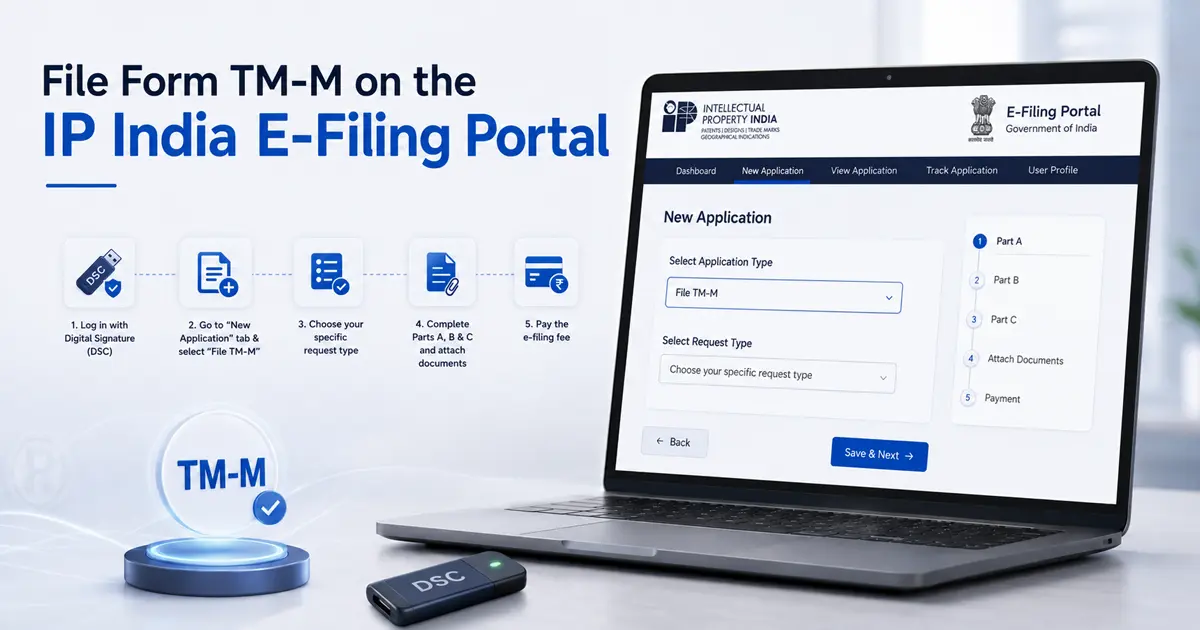
How to File Trademark Form TM-M: Purpose, Fees & Process
Design Registration Fees in India: 2026 Cost Breakdown
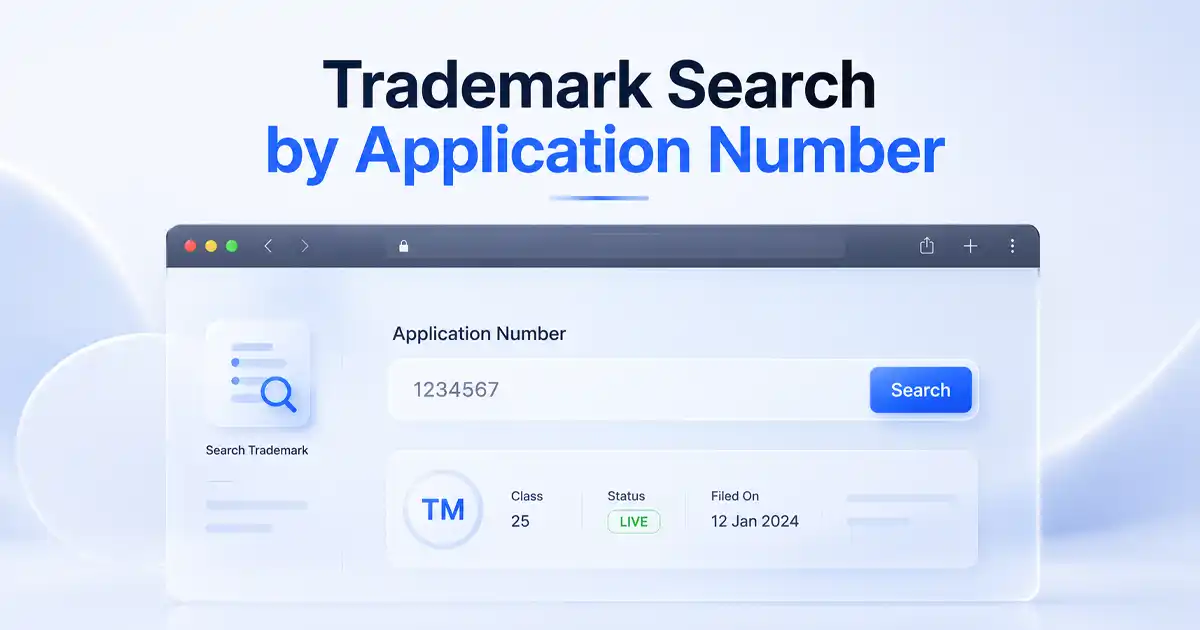
How to Search a Trademark by Application Number on IP India?
11 Trademark Class Selection Mistakes to Avoid in 2026
Wordmark vs Logo: Difference, Examples & Trademark Rules in India

How to Register Your Trademark in Flipkart Brand Registry?

Burger King Pune Trademark Battle Case: Local vs Global Brand

Trademark Class 99 in India: Multi-Class Filing Guide (2026)
Difference Between Logo and Trademark in India