Trademark Registration Online in India
Register your trademark online with RegisterKaro to protect your brand name, logo, slogan, or tagline under the Trade Marks Act, 1999. Get expert help with search, filing, and objection handling.

Transparent Pricing
File your trademark in India from ₹1,499 + govt fee
Free availability search, attorney-led drafting, Nice-class advice, and end-to-end TM-A filing at the appropriate Trade Marks Registry. Pick the plan that fits — government fee additional.
Start today for ₹1,499. The government fee is billed only when we file your application.
- Professional fee (now)₹1,499
- Government fee (at filing)₹4,500
- Total₹5,999
No hidden charges · Refund if we can't file
Pay the professional and government fee together today — everything included, filed immediately.
- Professional fee₹1,499
- Government fee₹4,500
- Total today₹5,999
No hidden charges · Refund if we can't file
What is Trademark Registration in India?
When you register a trademark, you gain legal protection for your brand identity and can take action against unauthorized use, subject to the scope of your registration and applicable law. A registered trademark helps distinguish your goods or services from competitors and strengthens your brand’s legal standing. Under Section 28 of the Trade Marks Act, 1999, registration grants the registered proprietor exclusive rights to use the mark for the goods or services covered by the registration, subject to applicable conditions and limitations.
In India, trademark registration is administered by the Trade Marks Registry under the Office of the Controller General of Patents, Designs and Trade Marks (CGPDTM). The Controller falls under the Department for Promotion of Industry and Internal Trade (DPIIT), Ministry of Commerce and Industry. You can apply online through the IP India portal by filing Form TM-A. Individuals, startups, small enterprises, partnership firms, LLPs, and companies can file a trademark application online from anywhere in India, without visiting a Registry office.
The government e-filing fee is ₹4,500 per mark, per class for individuals, startups, and small enterprises, and ₹9,000 per mark, per class for other applicants. Applicants claiming the reduced fee must provide the applicable supporting certificate, such as a DPIIT recognition certificate or Udyam registration, as relevant.
What is a Trademark?
A trademark is a distinctive sign, word, logo, design, shape, sound, or combination of colors that identifies the goods or services of one business and distinguishes them from those of others. A trademark helps consumers recognize a brand and identify the source of its products or services.
A brand like Amul protects its name, logo, and tagline (“The Taste of India”) separately and is now easily recognizable by most Indians. Registration helps stop competitors from using similar names or slogans that trade on the brand’s reputation.
What is a Trademark Class?
Trademark classes divide goods and services into 45 categories, with each covering similar goods or services. India follows the Nice Classification system, which includes 45 classes:
- Classes 1 to 34: Cover goods such as chemicals, clothing, electronics, and food.
- Classes 35 to 45: Cover services such as advertising, education, IT, and hospitality.
When you register a trademark, its protection mainly covers the goods and services in the class (or classes) you file under. For example, if a clothing startup registers its brand under Trademark Class 25 but later launches an e-commerce marketplace, it may also need Class 35 protection.
Note: The 13th Edition of the Nice Classification took effect on January 1, 2026, and some goods and services moved between classes. If you are using older material, check the current class headings before you choose.
Use a free Trademark Class Search Tool to find the correct class in seconds by simply entering your product or service name.
Types of Trademark Registration in India
A trademark can be a brand name, logo, slogan, sound, shape, or another distinctive sign that identifies the source of goods or services. Different types of trademarks protect different brand elements, helping businesses distinguish their offerings from competitors.
The main types of trademarks include:
| Type of Trademark | What It Protects | What You Should Know |
| Word Mark | A company name, product name, or slogan, regardless of its font, color, or style. | Protects the words in any style. |
| Logo Mark | A graphic symbol, design, or visual element representing a brand. | Protects that specific design, so a redesign needs a fresh filing. |
| Sound Mark | A distinctive sound or jingle associated with a brand. | The application needs an audio file and a notation of the sound. |
| Shape Mark | The three-dimensional shape of a product or its packaging. | Section 9(3) refuses shapes that come from the nature of the goods, serve a technical result, or give the goods substantial value. |
| Color Combination Mark | A distinctive combination of colors used in relation to specific goods or services, subject to trademark requirements. | File with a clear claim of the exact colors. |
| Collective Mark | A mark used by members of an association or collective group. | The association owns the mark, and its members use it. |
| Certification Mark | A mark indicating that goods or services meet specified standards or characteristics. | The owner certifies traits such as origin, material, or quality. |
Most businesses start with a word mark to protect the name. They then add a logo mark once the design is final. Because each type protects a different element, many brands hold more than one.
Why Should You Register Your Trademark? Key Benefits
The benefits of trademark registration go beyond legal protection. Along with protecting your brand, registration increases its business value and gives you greater control over how the mark is used. The main advantages are:
- Exclusive Brand Rights: A registered trademark gives the proprietor an exclusive right to use the mark in relation to the registered goods and services, subject to applicable conditions and limitations.
- Strong Legal Protection: Under Section 31 of the Trade Marks Act, 1999, registration is prima facie evidence that the mark is valid, which helps you in disputes.
- Right to Sue Infringers: You can file legal action against anyone who copies or misuses your trademark and claim remedies such as an injunction, damages, or an account of profits.
- Creates a Valuable Business Asset: A trademark adds value to your business. You can license, sell, or franchise it and strengthen your company’s valuation during funding or acquisitions.
- Build Brand Credibility: Once registered, the ® symbol can be used to indicate that the trademark is registered in India.
- Supports Business Expansion: Trademark registration makes franchising, licensing, and nationwide brand expansion easier and more secure.
- Prevents Counterfeit Imports: You can record your registered trademark with Indian Customs under the IPR (Imported Goods) Enforcement Rules, 2007, to help stop counterfeit goods from entering the market.
- Marketplace Brand Protection: A registered mark qualifies you for brand registry programs on platforms like Amazon and Flipkart, which help you report copycat listings.
- Provides Long-Term Protection: A trademark remains valid for 10 years from the date of filing. You can keep it in force by renewing it for further 10-year periods.
Note: Foreign applicants without a principal place of business in India must provide an address for service in India. They may use an authorized trademark agent or attorney to handle filings and communications with the Registry.
Under Section 27(1) of the Trade Marks Act, 1999, you cannot bring an infringement action for an unregistered trademark. However, the proprietor may still pursue a common-law passing-off action if the required elements are established.
Who Can Apply for a Trademark Registration Online in India?
Any individual or entity using or intending to use a brand can apply for trademark registration. The filing process is not limited to registered companies; even early-stage businesses can register their brand name or logo. Eligible applicants include:
- Individuals
- Sole proprietors
- DPIIT-recognized startups and small enterprises
- Partnership firms
- LLPs
- Private Limited and Public Limited Companies
- Hindu Undivided Families (HUFs), through the karta
- Trusts and societies
- Foreign individuals or companies
Eligibility Criteria for Trademark Registration in India
Before filing your application, check whether your proposed trademark meets these requirements:
- Distinctiveness: The mark should distinguish your goods or services from those of other businesses.
- Availability: It should not conflict with an earlier trademark for identical or similar goods or services.
- Registrability: The mark must not fall under the absolute or relative grounds for refusal under Sections 9 and 11 of the Trade Marks Act, 1999.
- Use or intended use: You must be using the mark or have a genuine intention to use it for the specified goods or services.
- Clear representation: The mark must be represented clearly in the application so the Registry can identify what you seek to register.
- No prohibited elements: The mark must comply with restrictions on protected emblems, names, flags, and other prohibited symbols, including those under the Emblems and Names (Prevention of Improper Use) Act, 1950.
- No deceptive or generic marks: A mark may be refused if it is deceptive, customary in common language or trade, or otherwise barred under applicable law.
Documents Needed for Trademark Registration in India
The documents required to register a trademark depend on the applicant, mark, claimed usage, and filing category. Below is the list of documents needed for a first-time trademark registration application:
1. Trademark Application Forms
- Form TM-A for standard applications.
- Power of Attorney if filing through a Trademark Agent or Attorney using the Authorization form (TM-48).
2. Applicant Identity Documents (as requested by the filing agent or the Registry)
- For individuals: PAN card, Aadhaar card, voter ID, or passport copy.
- For companies: Certificate of Incorporation (CoI), MOA/AOA.
- For partnerships: Partnership deed and registration certificate.
- For LLPs: LLP Agreement and registration certificate.
- For trusts and societies: Trust deed or society registration certificate.
3. Trademark Representation Materials
- Clear representation of the mark in JPEG format (for logos/device marks).
- Specific format requirements for sound marks, 3D marks, or other non-traditional marks.
4. Priority Documents (if applicable)
- A priority claim statement within your Form TM-A application, stating the first filing date, convention country, and application number. You must make the claim within six months of the first foreign filing.
- Certified copy of the priority application if claiming convention priority, submittable within two months of your Indian filing if not available at the outset.
- English translation of priority trademark registration documents if in a foreign language.
5. Use-Related Documentation
- Affidavit of use if the mark is already in commercial use.
- User declaration with specific dates of first use in commerce.
- Evidence of use, such as invoices, advertisements, and packaging samples.
6. Additional Supporting Materials
- Consent letter from a living person, or from the legal representative of a person who died within the last 20 years, if their name or likeness appears in the mark.
- NOC from the relevant authority for certain regulated terms.
- Supporting evidence for acquired distinctiveness claims (if applicable).
- Udyam certificate for small enterprises or DPIIT startup recognition certificate (for the concessional fee).
Keep the list of goods or services, the relevant trademark class, and the date of first use ready, as these details may be required in the application. The documents required to register a trademark vary depending on the applicant type and filing circumstances.
How to Register a Trademark in India for AY 2026-27?
The trademark registration process in India is handled end-to-end through the IP India portal. Below is the step-by-step procedure applicable to all types of marks:
Step 1: Conduct a Trademark Search
- Start with a trademark search on the official IP India portal to identify identical or similar marks and assess potential conflicts.
- You can also use a free trademark search tool to check existing applications and registrations across relevant trademark classes.
- Make sure your proposed mark (name, logo, slogan) is not identical or deceptively similar to an existing trademark. Check for similar spellings and similar sounds too, not only exact matches.
Step 2: Choose the Appropriate Trademark Class
- The Registry grants protection based on trademark classes (1–34 for goods, 35–45 for services).
- Choose one or more classes depending on the nature of your business. One application can cover several classes, and the government fee is charged per class.
Step 3: File the Trademark Application (Form TM-A)
File Form TM-A either online or physically at the Trademark Registry Office, and pay the government fee for each class. Key details to be included:
- Applicant name and address
- Type of mark (wordmark, logo, sound mark, etc.)
- Description of goods/services
- Trademark class
- Date of first use (if applicable)
Step 4: Allotment of Application Number & TM Symbol Usage
The Trade Marks Registry issues a unique application number after you file the application.
Applicants commonly use the ™ symbol to indicate that they are claiming the mark as a trademark while the application is pending. Registration is required to use the ® symbol in India.
Remember, using the ® symbol on an unregistered mark can be an offense under Section 107 of the Trade Marks Act, 1999.
Step 5: Formal Examination by Trademark Registry
The Trademark Registry examines the application and may issue an Examination Report raising objections or seeking clarification. During examination, the Registry checks:
- Legal eligibility under the Trade Marks Act, 1999
- Non-conflict with existing marks
- Descriptive or generic nature of the mark
Step 6: Respond to Trademark Examination Objection
- If the Examination Report raises objections under Section 9 or Section 11, submit a reply within one month from the date the report is communicated.
- File a Trademark Objection Reply with relevant explanations and supporting evidence. If a hearing is scheduled, attend it or appoint an authorised representative.
Step 7: Trademark Journal Publication
- If the Registrar accepts the application (either directly or after objection resolution), your trademark is published in the Trade Marks Journal.
- Under Section 21 of the Trade Marks Act, 1999, read with Rule 42(1) of the Trade Marks Rules, 2017, any person may file an opposition within four months from the date of publication or re-publication of the trademark.
Step 8: Handling Trademark Opposition (if filed)
- If a third party files a trademark opposition, you must file a counter-statement within two months of receiving the opposition notice. Under Section 21(2) of the Trade Marks Act, 1999, failure to meet this deadline results in the application being treated as abandoned.
- Both parties may submit evidence and attend hearings before the Registrar decides the opposition.
- If no opposition is filed within the prescribed period or the opposition is decided in your favour, the application may proceed to registration, subject to the applicable requirements.
Step 9: Issuance of Registration Certificate
- If your application clears all stages, you’ll receive the Trademark Registration Certificate from the Trademark Registry.
- You can now legally use the ® (Registered) symbol alongside your brand name/logo.
- The certificate records the registered mark, proprietor, and specified goods or services.
Trademark registration is valid for 10 years from the date of registration and can be renewed for further 10-year periods. Set a reminder to renew it before expiry to maintain protection.
The overall timeline varies depending on examination, objections, hearings, opposition, and Registry processing. Trademark registration can take a year or longer. You can request expedited examination by filing Form TM-M electronically with the prescribed fee. Expedited examination is available through e-filing only; physical filing is not permitted for this request. However, expedited examination does not guarantee registration within a fixed period.
Trademark Registration Fees in India
The trademark cost in India has two parts: the government fee and the professional fee. The government fee for online trademark registration is ₹4,500 per class for individuals, startups, and small enterprises and ₹9,000 per class for other applicants. Our professional service fee starts at ₹1,499, offering an affordable option for applicants seeking assistance with trademark filing. Professional fees are charged separately from government fees and may vary depending on the services required.
The table below lists the government fees for filing, expedited processing, renewal, and opposition, charged per class:
| Fee Type | Applicable To | Amount (per class) |
| Official Filing Fee (e-filing) | Individuals, Startups, and Small Enterprises | ₹4,500 |
| Official Filing Fee (e-filing) | Other applicants | ₹9,000 |
| Official Filing Fee (physical filing) | Individuals, Startups, and Small Enterprises | ₹5,000 |
| Official Filing Fee (physical filing) | Other applicants | ₹10,000 |
| Expedited Processing Fee | Individuals, Startups, and Small Enterprises | ₹20,000 |
| Expedited Processing Fee | Other applicants | ₹40,000 |
| Renewal (e-filing) | All applicants | ₹9,000 |
| Renewal (physical filing) | All applicants | ₹10,000 |
| Renewal with surcharge, within 6 months after expiry (e-filing / physical) | All applicants | ₹13,500 / ₹15,000 |
| Restoration and renewal after removal, within 1 year of expiry (e-filing / physical) | All applicants | ₹18,000 / ₹20,000 |
| Notice of opposition or counter-statement (e-filing / physical) | The opposing party or the applicant | ₹2,700 / ₹3,000 |
Since fees for trademark registration apply to each class, filing online in three classes costs ₹13,500 for individuals, startups, and small enterprises, and ₹27,000 for others.
How to Check Trademark Application Status?
You can check your trademark registration status online in two ways:
- By application number, the unique ID assigned when you file for trademark protection.
- By the mark’s name, by searching for it on the official IP India portal if you don’t have the number.
To monitor the progress of your application at each stage, follow these steps:
- Go to the Trademark Application/Registration Status page on ipindiaonline.gov.in.
- Enter your Application Number and the captcha in the provided fields.
- Click “View” to see the current status (e.g., “Send to Vienna Codification”, “Advertised”, “Registered”, etc.).
- Review any alerts or actions required (such as objection replies or hearings).
- Track updates until you see the status as “Registered”.
Also watch the email address you gave at filing, because the Registry sends notices there.
What the Common Trademark Application Statuses Mean
The status page shows where your application stands in the process. The most common statuses, and what to do at each, are:
- Formalities Chk Pass: The Registry has verified the basic filing details. No action is needed.
- Marked for Exam: The application is in the queue for examination. No action is needed.
- Send to Vienna Codification: The Registry is assigning codes to the logo or design elements of the mark. No action is needed. Wait for the next update.
- Objected: The Examiner raised objections in an Examination Report. File a written reply within one month.
- Ready for Show Cause Hearing: The Examiner was not satisfied with your reply and has listed a hearing. Attend it or appoint a representative.
- Advertised: The mark is published in the Trade Marks Journal. Watch for any opposition during the opposition period.
- Opposed: A third party filed an opposition. File a counter-statement within two months of the notice.
- Registered: The mark is registered. Keep the certificate and note the renewal date.
- Abandoned or Refused: The application ended after a missed deadline, or the Registrar refused it. Check the order, because your next step depends on the reason.
Note: If your status shows “Objected,” this isn’t a rejection; it means the Examiner has raised a query that needs a written reply within one month. Your application remains active at this stage.
Key Authorities & Legal Framework Governing Trademarks in India
Trademark registration in India runs on the Trade Marks Act, 1999 and the Trade Marks Rules, 2017. The following authorities and legal provisions shape how your application is filed, examined, and protected:
- Controller General of Patents, Designs and Trade Marks (CGPDTM): The apex authority under the Ministry of Commerce and Industry. It oversees all registrations in India through the Trade Marks Registry and acts as the Registrar of Trade Marks.
- Section 9 of the Trade Marks Act, 1999 (Absolute Grounds): Allows the Registrar to refuse marks that are generic, descriptive, customary in trade, or lacking distinctiveness. For example, calling a milk brand simply “Milk.”
- Section 11 of the Trade Marks Act, 1999 (Relative Grounds): Provides grounds for refusal where a mark conflicts with an earlier trademark or other earlier rights. This is subject to the conditions under the Act.
- Section 29 of the Trade Marks Act, 1999 (Infringement): Sets out when the use of a mark counts as infringement of a registered trademark.
- Madrid Protocol: An international system that lets eligible Indian applicants seek trademark protection in member countries through a single international application, based on a pending or registered Indian trademark. Members cover 130+ countries, and each designated country applies its own laws and examination requirements.
- Well-Known Trademarks: Section 2(1)(zg) defines a well-known trademark. Marks recognized as well-known can receive broader protection across classes. A proprietor can apply to the Registrar for determination of a trademark as well-known under Rule 124 of the Trade Marks Rules, 2017, subject to the applicable legal requirements.
- Proposed to Be Used vs. Used Marks: You can file a trademark even before launching your brand (“proposed to be used”) or after commercial use has begun (“used”). A used mark needs a first-use date and may require proof of that use.
- Trademark Dispute Resolution: Trademark appeals and rectification matters were earlier heard by the Intellectual Property Appellate Board (IPAB). They are now heard by the respective High Courts, following the Tribunals Reforms Act, 2021.
What is the Difference Between Trademark, Copyright, and Patent?
Trademarks, copyrights, and patents are three different forms of intellectual property protection, each designed to safeguard a specific type of creation or asset. The major differences between these three forms of IP protection are discussed in the table below:
| Basis of Comparison | Trademark | Copyright | Patent |
| What it Protects | Brand names, business names, logos, symbols, taglines, sounds, and brand identity elements | Original creative and artistic works such as books, music, films, software code, and artwork | Inventions, innovations, products, processes, and technical solutions |
| Purpose | To protect brand identity and prevent consumer confusion in the marketplace | To protect the expression of original ideas and creative content | To protect new inventions and technological advancements |
| Examples | Company name, brand logo, product name, slogan | Books, songs, movies, paintings, mobile apps | Machines, manufacturing processes, and pharmaceutical compounds |
| Governing Law in India | Trade Marks Act, 1999 | Copyright Act, 1957 | Patents Act, 1970 |
| Registering Authority | Trade Marks Registry | Copyright Office | Patent Office |
| Registration Requirement | Registration is recommended for legal protection and enforcement | Protection is automatic; registration strengthens legal rights | Patent protection requires the grant of a patent following the applicable application and examination process |
| Validity Period | 10 years from filing, renewable in 10-year periods | Generally the author’s lifetime plus 60 years; 60 years from publication for films, sound recordings, and photographs | 20 years from the date of filing |
| Rights Granted | Exclusive right to use the mark for specific goods or services | Exclusive right to reproduce, publish, perform, adapt, and communicate the work to the public | Exclusive right to stop others from making, using, selling, or importing the invention |
| Scope of Protection | Protects brand identity in the marketplace | Protects creative expression, not ideas | Protects functional and technical innovations |
| Best Suited For | Businesses, startups, and brand owners | Authors, artists, developers, and content creators | Inventors, researchers, and technology-driven businesses |
Many businesses need more than one. A single brand may hold a trademark for its name and logo, copyright in its content, and a patent for a technical invention.
Connect with RegisterKaro and let our experts handle the legal hassle while you grow your business.
Frequently Asked Questions (FAQs)
Who can apply for trademark registration in India?
Any individual or entity that uses or intends to use a mark can apply. This includes sole proprietors, startups, partnership firms, LLPs, companies, trusts, societies, HUFs, and foreign applicants. You can apply even before you incorporate the business or launch the brand.
How much does trademark registration cost in India?
The government fee is ₹4,500 per class for individuals, startups, and small enterprises, and ₹9,000 per class for other applicants when they file online. Professional fees start from ₹1,499 and are separate. The total depends on how many classes you file under.
How long does trademark registration take in India?
Registration often takes a year or more. The time depends on examination, objections, hearings, and any opposition. Expedited examination speeds up the examination stage but does not guarantee a fixed date for registration.
What is the validity period of a trademark?
A registered trademark is valid for 10 years from the date of filing. You can renew it for further 10-year periods by filing a renewal before the term ends. A late renewal attracts a surcharge, and a lapsed mark can be restored within one year.
What is the difference between TM (™) and Registered (®) symbols?
The ™ symbol shows that you claim a mark as your trademark. You can use it before registration, even before you file. The ® symbol shows that the mark is registered, and using it on an unregistered mark can be an offense under Section 107 of the Trade Marks Act, 1999.
Is brand registration or logo registration different from trademark registration?
No, brand name registration and logo registration are both forms of trademark registration under the Trade Marks Act, 1999. You choose the mark type: a word mark protects the name, and a logo mark protects the design. Each type protects a different element of the brand.
What is the difference between a trademark and a trade name?
A trademark identifies your goods or services, while a trade name is the name under which your business operates. Registering a company or trade name with the Registrar of Companies or under GST does not give brand protection. You need trademark registration for exclusive rights over the name.
How do I check my trademark registration status?
Open the Trademark Application/Registration Status page on ipindiaonline.gov.in. Enter your application number and the captcha, then click “View”. The page shows your current status, such as Objected, Advertised, or Registered.
What happens if someone was using my trademark before I applied?
An earlier user may have legal rights even if you register the trademark first. Under Section 34 of the Trade Marks Act, 1999, a person who has continuously used an identical or similar trademark from an earlier date may be protected against certain claims by a registered proprietor. The earlier user may also oppose your application or bring a passing-off action, depending on the circumstances. Conduct a trademark search before filing.
Can a trademark be rejected after publication?
Yes, after publication, a third party can file an opposition within the opposition period, and the Registrar can refuse the application if the opposition succeeds. The Registrar can also withdraw acceptance under Section 19 if the application was accepted in error.
What are the MSME trademark registration benefits?
An eligible small enterprise registered under Udyam can pay the concessional government fee of ₹4,500 per class instead of ₹9,000 when it files online. Keep your Udyam certificate ready as proof of eligibility.
Can I register on Amazon, Flipkart, or Meesho with a pending trademark application?
Amazon Brand Registry can accept a pending application filed through its IP Accelerator program. Flipkart Brand Assure requires a registered trademark. Meesho asks for proof of brand ownership, so check each platform’s current rules before you apply.

Reviewed by
Abhilash ShuklaAbhilash Shukla is an Intellectual Property Attorney and Commercial Legal Professional with over 13 years of experience advising businesses on trademark law, brand protection, intellectual property strategy, and commercial legal matters. His tenure as an Examiner of Trade Marks & Geographical Indications with the Government of India allowed him to gain first-hand expertise in trademark examination, registrability assessment, classification, and trademark registry procedures. With a deep understanding of both legal and commercial considerations, Abhilash helps businesses develop practical strategies to protect and scale the value of their brands.
Why Choose RegisterKaro for Trademark Registration in India?
RegisterKaro makes trademark registration more accessible with professional assistance, affordable service fees, and support throughout the filing process. Our team helps you understand the requirements, prepare the application, and manage follow-up steps so you can focus on building your brand.
Here is how RegisterKaro supports your trademark registration in India:
- Specialist support: Our trademark professionals assist you from the initial search through to registration, including the required filings and responses.
- Accurate classification: We identify the relevant trademark class or classes based on your goods or services, which helps reduce classification-related issues.
- Clear pricing: Professional fees start at ₹1,499, with government fees shown per class before you pay.
- Filing and deadline tracking: We prepare and file your application, monitor its status, and track key deadlines during the registration process.
- Objection and opposition support: Our team prepares and files responses to trademark objections or opposition proceedings when required.

What Our Clients Say
View All
Abhishek Virendra
 Verified
Thank you, Nikesh Kumar, for clearing up all my doubts during the trademark registration process and for handling everything with such professionalism

Uttam Saha
VerifiedI had a very good experience with RegisterKaro for my trademark registration. Their team guided me throughout the process, explained every step clearl... Read more

Raja Faridi
VerifiedI had a very good experience with RegisterKaro for my trademark registration. Their team guided me throughout the process, explained every step clearl... Read more

Ravi Teja
VerifiedRomina helped smooth trademark registration of my entity. She ensured all the necessary paperwork and co ordination was completed accurately and on ti... Read more

zahid shaikh
Verifiedhad my entire startup registration done with registerkaro. company registration, startup registration, brand registration and now gst and other tax fi... Read more

Nihal Shetty
VerifiedDeepak Paneru has been providing monthly support for our GST filings, and the experience has been excellent. He is proactive in following up, highly k... Read more

Raj Goyal
VerifiedOne among the best once to provide service, special shoutout to vibha for helping, guiding and providing robust service around the clock, Thank-you vi... Read more

Mohit Goyal
VerifiedMy experience with RegisterKaro for APEDA and Spices Board registration was smooth and professional. The team handled the process diligently, responde... Read more

Soumyadeep Das
VerifiedIt's easy to provide a service, but it's much harder to create trust. Shubham Bharti earned my trust through his honest communication, regular follow-... Read more

Bastab Chakraborty
VerifiedUpdating review from 2 star to 4. Well Registrkaro Prices Are good, but they do work on time. But their sales team & CA's have lil communication Gap,... Read more
Trademark Registration Across India
Related Blogs
View All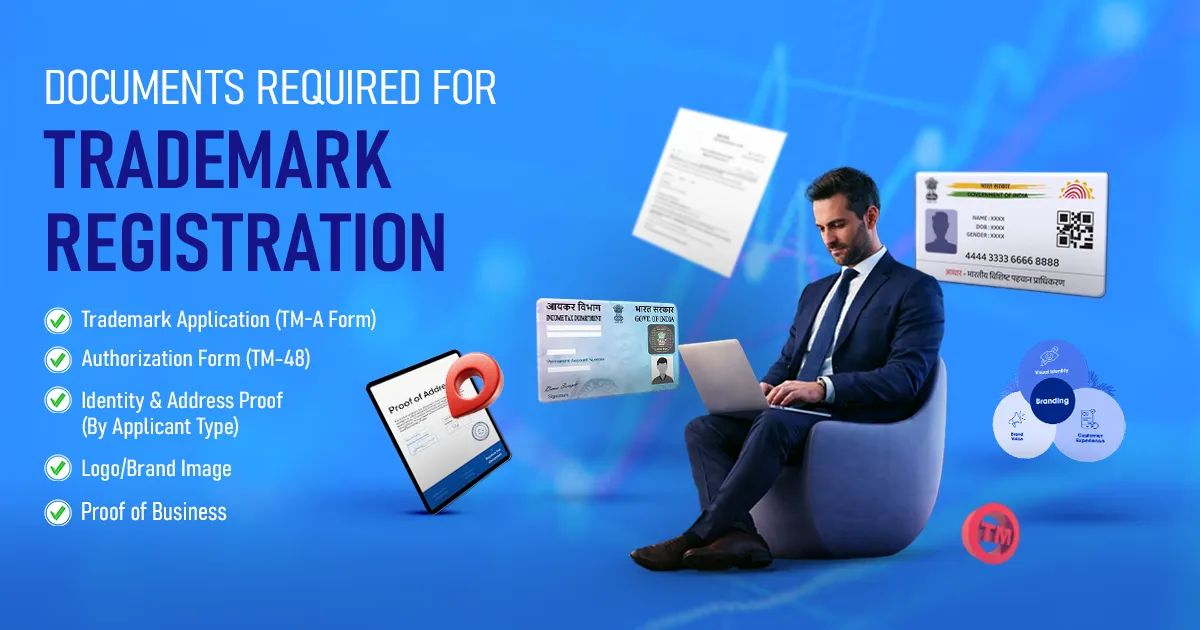
Documents Required for Trademark Registration in India

Trademark Class 35: Advertising & Business Services in India
Trademark Registration Fees in India: A Cost Guide 2026

Trademark Class 34 in India: Tobacco and Smoking Products

Trademark Registration Number: What It Is & How To Find?

Trademark Class 32: Water, Non-Alcoholic Beverages & Beer

Trademark Class 18: Leather, Luggage Bags & Leather Imitations

Trademark Class 27 in India: Carpets, Rugs, and Mats

Trademark Class 22 in India: Ropes, Sacks & Packing Bags

What Does Abandoned Mean in a Trademark & How to Revive It?