Class 3 DSC (Digital Signature Certificate) in India
Class 3 DSC enables secure digital authentication for e-filing, tenders, and contracts across India. Apply confidently with RegisterKaro’s expert support for a seamless process.
 Government-approved Class 3 DSCValid for Legal & Financial TransactionsMinimal Document VerificationWorks with GST, MCA, e-TendersTransparent Pricing, No Hidden Charges

 What Sets Us ApartWhat Sets Us Apart
What is a Class 3 DSC?
A Digital Signature Certificate (DSC) is a digital equivalent of a handwritten signature. A Class 3 DSC is the highest level of DSC available in India. It provides the strongest security and is used for important and high-risk transactions.
Class 3 DSC is issued by licensed Certifying Authorities (CAs) under the Information Technology Act, 2000. They issue it after a strict verification process, which may include in-person or video verification.
In simple terms, a Class 3 DSC functions like your most secure online identity card, verifying who you are and ensuring that your transactions are protected from tampering. It is available in a physical token format (USB device) that must be connected to your computer to use the certificate securely.
Key Reasons to Choose Class 3 DSC in India
A Class 3 DSC is often referred to as the “gold standard” due to its unparalleled trust level in digital transactions. Here’s why:
- Highest level of security: Uses advanced encryption to protect data from unauthorized access and is legally accepted throughout India for official electronic signatures.
- Mandatory for critical transactions: Required for activities such as:
-
- E-tendering, online procurement, and e-auctions
- GST filings and MCA21 company filings
- Income Tax Department e-filing and tax-related submissions
- Patent registration under the Indian Patent Office
- Trademark registration under the Trademark Registry
- DGFT (Directorate General of Foreign Trade) / IEC (Import Export Code) registration
- EPFO (Employees’ Provident Fund Organisation) registration
- ICEGATE (Indian Customs Electronic Gateway) customs clearance
- Accessing various other government portals and services
- Legally valid under the IT Act, 2000: Recognized as a secure way to sign documents electronically in India.
- Prevents fraud and impersonation: Reduces the risk of identity theft during online processes.
In short, if your work involves high-value or sensitive online transactions, a Class 3 DSC is the safest and most reliable choice.
Class 2 vs. Class 3 DSC
The main difference between Class 2 and Class 3 digital signature certificates lies in the level of security and verification. Here are the differences:
| Factor | Class 2 DSC | Class 3 DSC |
| Purpose | Used for general e-filing like Income Tax, MCA, and GST filings. | Used for high-security transactions like e-tendering, e-auctions, and online bidding. |
| Verification Process | Basic identity verification is done online. | Strict verification process, including in-person or video verification. |
| Security Level | Moderate security. | The highest security level among all DSC in India. |
| Acceptance | Accepted on most government portals except high-value tenders. | Accepted on all portals, including those requiring the highest trust level. |
| Usage Example | Filing income tax returns. | Participating in government e-procurement. |
Note: Class 2 DSCs were discontinued from 1st January 2021 to enhance security. Now, only Class 3 DSCs are valid for all important online transactions.
Who Needs a Class 3 DSC?
The Class 3 DSC's purpose is to ensure secure and legally valid digital transactions. It is required by anyone involved in secure, high-value, or legally binding online transactions.
1. Businesses and Organizations
Many businesses must use a Class 3 DSC to comply with government regulations and participate in online processes, such as:
- Companies taking part in e-tendering and e-procurement.
- Exporters and importers registered with DGFT (Directorate General of Foreign Trade).
- Entities filing compliance documents on the MCA (Ministry of Corporate Affairs) and GST portals.
- Corporations involved in secure online bidding or auctions.
- Professionals and businesses use them to file intellectual property applications.
Note: Companies often require a board resolution to authorize an individual to obtain a DSC on behalf of the company.
2. Individuals and Professionals
Certain individuals also need a Class 3 DSC for their professional activities, such as:
- Chartered accountants, company secretaries, and lawyers handling legal or compliance filings.
- Independent contractors participating in government bids.
- Professionals use secure portals like IRCTC for specialized bookings or transactions.
- Vendors selling to government departments through e-marketplaces.
- Importers and exporters use it for customs clearance and other trade-related documents.
- Anyone needing to sign legally valid documents online.
Types of Class 3 DSC in India
A Class 3 DSC can be issued in different formats, depending on the type of security and usage required.
1. Signing Certificates for Document Authentication
These certificates are used to digitally sign documents, ensuring the signer’s identity and the document’s integrity. They are widely used for legal contracts, compliance forms, and official correspondence.
2. Combo Certificates
A combination of signing and encryption certificates provides complete security, allowing users to both sign documents and encrypt data (convert information into a coded format so only authorized parties can read it). This is the most versatile option for businesses and professionals who need all-in-one protection.
Benefits of Using a Class 3 DSC
A Class 3 DSC offers multiple advantages for businesses, professionals, and organizations involved in secure online transactions, such as:
- Enhanced Security and Unwavering Trust: A Class 3 DSC uses advanced encryption and authentication methods to protect data from tampering and unauthorized access. It assures the recipient that the document or transaction truly comes from the verified user.
- Legal Validity and Seamless Compliance: Under the Information Technology Act, 2000, a Class 3 DSC holds the same legal value as a handwritten signature. It helps meet compliance requirements on platforms like MCA, DGFT, GST, etc., without the need for physical paperwork.
- Streamlined Online Transactions and Processes: Whether for e-tendering, e-auctions, or government filings, a Class 3 DSC simplifies the process by replacing manual signatures and in-person submissions with secure digital authentication.
- Significant Savings in Time and Cost: By reducing paperwork, courier charges, and the need for physical presence, a Class 3 DSC saves both time and money. Transactions can be completed within minutes from anywhere in the world.
How to Apply for Class 3 DSC in India?
The process to apply for a Class 3 DSC involves a few important steps. Follow this simple process to get your Class 3 DSC quickly and securely:
Step 1: Choosing a Certifying Authority (CA)
Select a licensed CA approved by the Government of India. You can find the list of authorized CAs on the official Controller of Certifying Authorities (CCA) portal (cca.gov.in).
Step 2: Filling out the Application Form
Complete the application form provided on the CA’s website or physical office. Ensure all details are accurate to avoid delays.
Step 3: Submitting Proof of Identity and Address
Submit valid identity and address documents such as Aadhaar card, PAN card, Passport, or Voter ID. The documents must match the details provided in the application.
Step 4: Complete e-KYC Verification
This step may involve:
- Aadhaar OTP verification
- Video KYC
- In-person verification
The exact process depends on the Certifying Authority.
Step 5: Making Payment
Pay the applicable fee for the Class 3 DSC online or offline, depending on the CA’s payment options. Prices may vary slightly between providers.
Step 6: Issuance of DSC Token
After successful verification and payment, the Certifying Authority will issue your Class 3 DSC. You will receive a USB token or a downloadable digital certificate to use for signing and encryption.
Documents Required for Class 3 DSC in India
To apply for a Class 3 DSC, you need to submit specific documents depending on whether you are an individual or representing an organization. Here’s the list of documents:
1. Documents Required for an Individual
- Identity Proof: Valid government-issued ID such as Aadhaar Card, PAN Card, Passport, or Voter ID.
- Address Proof: Documents like Aadhaar Card, Passport, Voter ID, or Utility Bills that confirm your residential address.
- Photograph: Recent passport-sized photograph as per CA guidelines.
- Video Verification: Some Certifying Authorities require a short video verification call to confirm your identity as part of the Class 3 DSC process.
2. Documents Required for Organizations
The documents vary depending on the type of organization applying for the Class 3 DSC.
a. Partnership Firm
- Partnership deed
- PAN card of the firm
- Proof of address of the firm
- Identity and address proof of partners
b. Private Limited/Limited Company
- Certificate of Incorporation
- Memorandum & Articles of Association (MOA/AOA)
- Board Resolution approving DSC issuance
- PAN card of the company
- Identity and address proof of the authorized signatory
c. NGO (Non-Governmental Organization) /TRUST/ AOP (Association of Persons)
- Registration certificate of NGO/Trust/AOP
- PAN card of the entity
- Trust deed or registration documents
- Identity and address proof of the authorized signatory
d. Joint Venture
- JV agreement
- Certificate of incorporation/registration of JV partners
- PAN cards of the partners
- Identity and address proof of the authorized signatory
The Cost of Class 3 DSC in India
Understanding the cost of a Class 3 Digital Signature Certificate helps you plan your budget effectively.
Class 3 DSC Price Range
- For a 1-year validity, prices usually range from ₹1,000 to ₹2,500.
- For 2 or 3 years, prices typically increase proportionally, often up to ₹5,000, depending on the CA and certificate type.
- Combo certificates that include both signing and encryption are generally priced higher than signing-only certificates.
Factors Affecting Class 3 DSC Price
Several factors affect the Class 3 DSC price, including:
- Depending on the CA chosen, which may charge differently based on its service.
- The type of DSC, whether it is signing-only, encryption-only, or combo certificates.
- The validity period, as DSCs are available for 1, 2, or 3 years. Longer durations cost more upfront but save on renewal fees.
- Additional services like video verification, USB tokens, or priority processing may add to the cost.
DSC Validity and Renewal Process
A Class 3 DSC is valid for a fixed period, after which it must be renewed to continue its use.
- Validity Period: Most Class 3 DSCs are issued for 1 to 3 years.
- Renewal Timeline: You can renew your DSC up to 30 days before it expires.
- Renewal Process:
- Submit a renewal application with updated documents if required.
- Complete any required identity verification, including video verification if applicable.
- Pay the renewal fee based on your chosen validity period.
- Consequences of Expiry: If your DSC expires, you will not be able to use it for signing or encryption until it is renewed. This may delay online filings or transactions.
Connect with RegisterKaro and let our experts handle the legal hassle while you grow your business.
Frequently Asked Questions (FAQs)
What is a Digital Signature Certificate (DSC)?
A Digital Signature Certificate (DSC) is an electronic form of a signature that proves the identity of the holder. It is used to sign documents digitally, ensuring security and authenticity in online transactions. It is mandatory for high-value transactions such as e-tendering, e-auctions, and filing important government documents for maximum security and trust.
Are digital signatures legally valid in India?
Yes, digital signatures using a Class 3 DSC are legally valid under the Information Technology Act, 2000. They hold the same legal status as handwritten signatures.
Who issues DSCs in India?
DSCs are issued by government-approved Certifying Authorities (CAs). Service providers can help you facilitate the application process with these CAs.
Do I need to be physically present to get a Class 3 DSC?
Physical presence may not be required if the Certifying Authority allows video verification. However, strict identity proof and sometimes in-person verification are part of the Class 3 DSC requirements.
Can foreign nationals or organizations apply for a Class 3 DSC in India?
Yes, foreign nationals and organizations can apply for a Class 3 DSC in India, provided they submit valid identity and address proofs as required by the Certifying Authority.
What are the main uses of a Class 3 DSC for businesses?
Businesses use Class 3 DSC for:
- Filing company returns on the MCA portals
- Participating in e-tendering and government auctions
- GST and other tax filings
- Secure digital contracts and agreements
How long does it take to receive a Class 3 DSC?
The process usually takes 3 to 7 working days after submitting all documents and completing verification.
What are the different types of Class 3 DSCs?
Class 3 DSCs include:
- Signing Certificates for document authentication
- Encryption Certificates for secure data exchange
- Combo Certificates combining both signing and encryption
How can I check the validity of my Class 3 DSC?
You can check the validity by opening the USB token management software on your computer, selecting your certificate, and viewing its properties, which will show the expiration date. You can also check it on the CA's official website.
Can I renew my Class 3 DSC?
Yes, you can renew your Class 3 DSC before it expires by submitting a renewal application with updated documents and paying the renewal fee.
Can one person have two DSCs?
Yes, one person can hold multiple DSCs, but each must be registered separately and used for different purposes if needed.

Reviewed by
Joel DsouzaJoel Dsouza is a Chartered Accountant (CA) and compliance expert with over 7 years of hands-on experience in company registration, tax structuring, GST, ROC filings, and MCA compliance. As a qualified member of the Institute of Chartered Accountants of India (ICAI) and Co-Founder at RegisterKaro, he has personally advised more than 1,000 startups and SMEs across India, helping founders navigate incorporation, regulatory frameworks, and financial planning from Day 1. With deep expertise across all three levels of Finance and Portfolio Management, Joel is committed to promoting financial literacy and simplifying India's startup ecosystem through clear, actionable guidance that entrepreneurs can act on immediately.
Why Choose RegisterKaro for Getting a Class 3 DSC?
Choosing the right service provider can make your Class 3 Digital Signature Certificate application smooth and seamless. Here’s why RegisterKaro stands out:
- Quick and Easy Application: With a streamlined online process, we ensure fast submission and minimal delays.
- Authorized and Trusted: As partners with government-approved Certifying Authorities, we guarantee your DSC is authentic and legally valid.
- Secure Data Handling: Your personal and business information is handled with the highest security standards to protect your privacy.
- Affordable Pricing: Competitive pricing options help you get a Class 3 DSC without unnecessary costs.
- Dedicated Customer Support: Responsive support team ready to assist you before, during, and after your DSC issuance.
What Our Clients Say
View All
King
 Verified
Great experience working with them for my company incorporation. The entire process was smooth, well-explained, and handled professionally. They were... Read more

Clint Khwairakpam
VerifiedThank you so much, Register Karo and Aryan Singh, for providing me with smooth and understanding service while incorporating my company.Looking forwar... Read more

Chandrashekhar Kumar
VerifiedStarted and ended cool. Intermediate phase was a bit hectic due to communication lag, but all is well if it ends well. Thank you Himanshu Shukla for t... Read more

Pranshu Katiyar
VerifiedService is too good , smooth process for GST filling and other process , staff is too supportive , special thanks to MISS Muskan Singla for kind help... Read more

Sumit Bisht
VerifiedI had the pleasure of working with Manish Tiwari during the process of registering our company, and I must commend his professionalism, knowledge, and... Read more

chaitanya verma
VerifiedI will highly recommend registerkaro for company incorporation. Jiya was my dedicated spoc and i have zero complaints, she did an impeccable job and w... Read more

ROHIT ARORA
VerifiedCompany incorporation managed by Suhana, all steps were made clear and she was available to answer all queries and support. Thanks to her and the whol... Read more

Madhav Kumar
VerifiedI’m very pleased with my experience with RegisterKaro. The team was professional, helpful, and kept the process simple from start to finish. They resp... Read more

Jeevesh Patel
VerifiedGood company for Company incorporation, Compliances purpose and other legal Consultancy. Sneha ma'am and there team supports from register karo is exc... Read more

Muruganandan Palanis...
VerifiedProfessional, Very Professional Service...Am glad to work with RegisterKaro and they made the company registration process hassle free. Appreciate the... Read more
Related Blogs
View All
How to Check GST Active Status Online?

How to Start a Masala Business in India?

How to Start a Coaching Institute in India?

How to Start a Bottled Water Business in India?

Compliance Calendar for Producer Company in India
How to Apply for DIN Number: DIR-3 Process & SPICe+ for Directors
Virtual CFO Cost in India for Startups: Fees & Pricing
Accounting Outsourcing Cost in India: Complete Pricing Guide
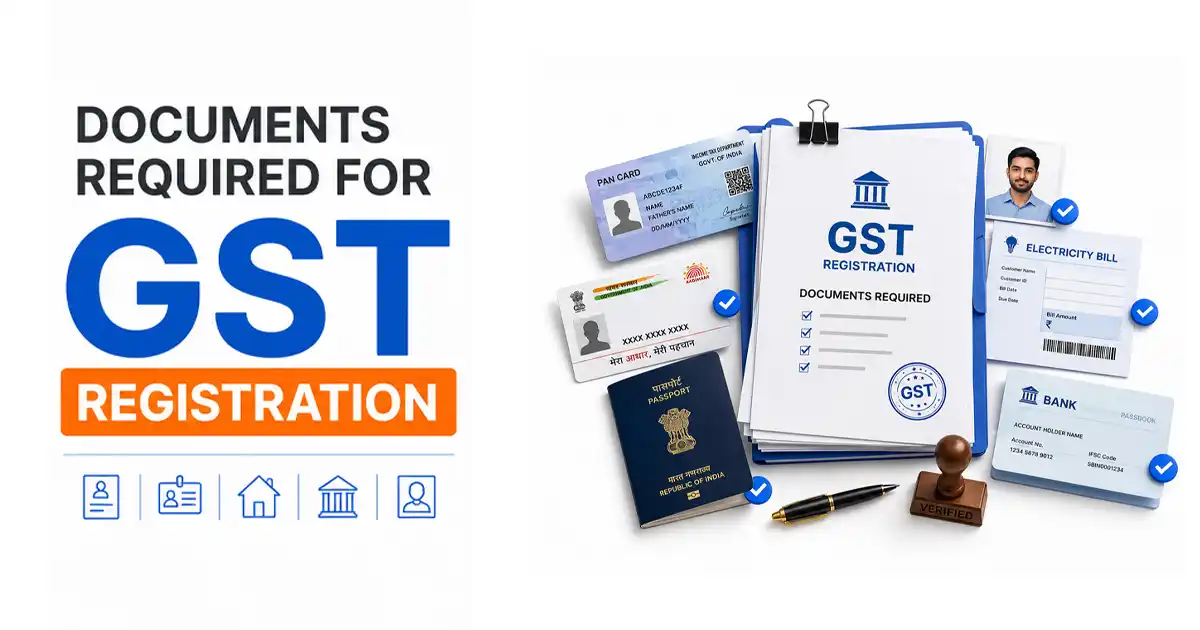
Documents Required for GST Registration in India (Checklist)

How to Start a Scrap Business in India: Setup & Profit