ISO 13485 Certification in India
RegisterKaro provides end-to-end support for your ISO 13485:2016 certification — handling documentation, QMS implementation, and audits, so you can focus on building compliant medical devices.
 ISO 13485:2016 Gap Analysis & DocumentationQMS Design Tailored to Your DevicesInternal Audit & Audit-Readiness SupportAccredited Certification Body CoordinationGuidance on Global Regulatory Alignment

 What Sets Us ApartWhat Sets Us Apart
What is ISO 13485 Certification?
ISO 13485 Certification is an internationally recognized certification that confirms a medical device manufacturer has implemented a Quality Management System (QMS). It helps organizations demonstrate that they consistently manufacture safe, high-quality medical devices while complying with applicable regulatory requirements.
The current version, ISO 13485:2016, published in March 2016, replaced ISO 13485:2003. It places greater emphasis on quality and regulatory compliance throughout the medical device lifecycle, with stronger requirements for:
- Risk management
- Supplier controls
- Regulatory compliance
- Product validation and traceability
- Complaint handling
- Post-market surveillance
- Documentation and record management
Who Needs ISO 13485 Certification in India?
ISO 13485 certification is suitable for any organization involved in one or more stages of the medical device lifecycle. It applies to businesses of all sizes, from startups to large multinational companies.
Organizations that commonly require or benefit from ISO 13485 certification include:
- Medical device manufacturers.
- In Vitro Diagnostic (IVD) medical device manufacturers.
- Contract manufacturers and private-label manufacturers.
- Suppliers of components, raw materials, and packaging for medical devices.
- Importers, exporters, wholesalers, and distributors of medical devices.
- Sterilization, calibration, testing, and laboratory service providers.
- Installation, maintenance, repair, and servicing companies for medical equipment.
- Software developers creating medical device software, including Software as a Medical Device (SaMD).
- Design and engineering firms involved in medical device development.
- Organizations providing quality assurance, regulatory, or manufacturing support services for the medical device industry.
Why is ISO 13485 Certification Important?
ISO 13485 certification supports regulatory compliance, customer trust, and access to international markets for medical device businesses. Regulators, healthcare providers, distributors, and OEMs often expect suppliers to have an ISO 13485-certified QMS before doing business with them.
It is also closely linked to regulatory approvals in many countries:
- European Union: EN ISO 13485 is harmonized under the Medical Device Regulation (MDR) and In Vitro Diagnostic Regulation (IVDR). It helps manufacturers demonstrate conformity with quality management requirements.
- United States: The FDA's Quality Management System Regulation (QMSR), effective from 2 February 2026, aligns the FDA's quality system requirements with ISO 13485:2016.
- Other countries: Canada, Australia, Singapore, and South Africa, also recognize or rely on ISO 13485 as part of their medical device regulatory frameworks.
For Indian medical device manufacturers, ISO certification supports compliance with domestic and international regulations. It also makes it easier to enter regulated global markets.
Benefits of ISO 13485 Certification for Medical Businesses
ISO 13485 certification provides significant benefits for organizations in the medical device industry, including:
- Global market access: Facilitates entry into the EU, US, and other regulated markets where ISO 13485 is widely recognized or expected.
- Simplified regulatory compliance: Supports compliance with medical device regulations across multiple countries through a single QMS.
- Improved risk management: Promotes a risk-based approach throughout the product lifecycle to identify, assess, and control risks.
- Enhanced product quality and patient safety: Ensures consistent manufacturing processes that improve product reliability, safety, and performance.
- Greater customer confidence: Demonstrates your commitment to quality, safety, and regulatory compliance, building trust with regulators, healthcare providers, customers, and business partners.
- Greater operational efficiency: Standardized and documented processes reduce errors, defects, waste, and rework while improving overall productivity.
- Better supplier management: Establishes stronger controls for evaluating, monitoring, and managing suppliers to maintain consistent product quality.
- Improved product traceability: Strengthens traceability across manufacturing and the supply chain, making it easier to identify, track, and recall products when necessary.
- Competitive advantage: Improves your eligibility for tenders, supplier approvals, and business contracts, helping you stand out from uncertified competitors.
- Supports regulatory approvals: Provides a strong quality management foundation for regulatory pathways such as CE marking, CDSCO compliance, and MDSAP participation. However, ISO 13485 certification alone does not fully satisfy the FDA's QMSR requirements or exempt manufacturers from FDA inspections.
- Fewer quality issues: Reduces the likelihood of non-conformities, product recalls, customer complaints, and regulatory findings through better quality controls.
ISO 13485 and CDSCO Compliance in India
For medical device manufacturers in India, ISO 13485 helps establish a QMS that aligns with the requirements of the Medical Devices Rules, 2017. Although ISO 13485 certification does not replace a CDSCO registration, it supports regulatory compliance and simplifies quality management.
- Supports the Medical Devices Rules, 2017: ISO 13485 provides a globally accepted QMS framework that helps manufacturers meet quality management requirements under the Rules.
- Helps with CDSCO licensing: An ISO 13485-compliant QMS makes it easier to maintain the quality documents and records commonly required during CDSCO licensing and inspections.
- Forms the basis of the ICMED 13485 scheme: ICMED 13485 is India's voluntary medical device certification scheme. It is based on ISO 13485 and includes additional quality requirements for the Indian medical device industry.
- Choose an NABCB-accredited certification body: For better credibility and wider acceptance, obtain certification from a certification body accredited by NABCB or another internationally recognized accreditation body.
Note: ISO 13485 certification supports compliance with the Medical Devices Rules, 2017. However, it does not replace CDSCO registration, manufacturing licences, or other regulatory approvals.
Structure and Clauses of ISO 13485:2016
ISO 13485:2016 contains eight clauses. Clauses 1 to 3 provide the background and scope of the standard, while Clauses 4 to 8 contain the mandatory requirements that organizations are audited against during certification.
Clause 1 to 3 – Scope, References, and Terms
The first three clauses:
- Explain the purpose and scope of ISO 13485
- Identify the normative reference (ISO 9000:2015)
- Define the key terms used throughout the standard
These clauses provide the foundation for understanding the standard but do not contain certifiable requirements.
Clause 4 – Quality Management System (QMS)
This clause requires organizations to establish, implement, document, maintain, and continually improve a QMS. It includes requirements for:
- Quality management system documentation
- Quality manual
- Medical device file
- Control of documents and records
- Outsourced processes
The objective is to ensure that all quality-related activities are properly documented, controlled, and consistently followed.
Clause 5 – Management Responsibility
Clause 5 requires top management to demonstrate leadership and commitment to the Quality Management System. It covers:
- Quality policy
- Quality objectives
- Management planning
- Roles, responsibilities, and authorities
- Management representative
- Management review
Top management must ensure the QMS remains effective and aligned with applicable regulatory requirements.
Clause 6 – Resource Management
This clause focuses on providing the resources needed to operate an effective QMS. It includes requirements for:
- Competent personnel and training
- Infrastructure and equipment
- Work environment
- Contamination control (where applicable)
Organizations must ensure they have the people, facilities, and environment necessary to consistently produce safe and compliant medical devices.
Clause 7 – Product Realization
Clause 7 is the most comprehensive section of ISO 13485:2016. It covers all activities involved in bringing a medical device from concept to delivery and post-delivery support. Key requirements include:
- Product realization planning
- Customer-related processes
- Design and development
- Purchasing and supplier controls
- Production and service provision
- Cleanliness and contamination control
- Installation and servicing
- Validation of production processes
- Identification and traceability
- Preservation of products
- Control of monitoring and measuring equipment
This clause ensures that medical devices are consistently designed, manufactured, and delivered in accordance with quality and regulatory requirements.
Clause 8 – Measurement, Analysis, and Improvement
The final clause focuses on monitoring the effectiveness of the QMS and driving continual improvement. It includes requirements for:
- Feedback and customer satisfaction
- Complaint handling
- Internal audits
- Monitoring and measurement of processes and products
- Control of nonconforming products
- Data analysis
- Corrective and preventive action (CAPA)
- Advisory notices
These activities help identify issues and improve product quality, regulatory compliance, and QMS performance.
Key Requirements of ISO 13485:2016
To achieve ISO 13485 certification, an organization must implement a QMS that meets the standard's mandatory requirements. Some of the key requirements include:
- Documented Quality Management System (QMS): Establish and maintain a documented QMS, including a quality manual, quality policy, and quality objectives.
- Risk management: Apply risk management throughout the entire medical device lifecycle, from design to post-market activities.
- Design and development controls: Establish controlled processes for designing and developing medical devices, where applicable.
- Medical device file: Maintain a medical device file for each medical device or device family.
- Process validation: Validate critical processes, particularly those where outputs cannot be fully verified, such as sterilization and software validation.
- Product identification and traceability: Ensure medical devices can be identified and traced throughout manufacturing and distribution.
- Supplier and purchasing controls: Evaluate, monitor, and control suppliers to ensure purchased products and services meet specified requirements.
- Feedback and complaint handling: Implement systems to collect customer feedback, manage complaints, and support post-market surveillance.
- Corrective and Preventive Action (CAPA): Identify quality issues, determine root causes, implement corrective actions, and prevent recurrence.
- Document and record control: Maintain accurate, up-to-date documents and records to demonstrate compliance with ISO 13485 requirements.
Documents Required for ISO 13485 Certification
Organizations must maintain documented procedures and records to demonstrate that their QMS is implemented effectively and complies with the standard.
The standard requires documented procedures for areas such as:
- Control of documents and records
- Design and development
- Purchasing and supplier evaluation
- Particular requirements for sterile medical devices (where applicable)
- Product identification and traceability
- Preservation of products
- Control of monitoring and measuring equipment
- Feedback and complaint handling
- Analysis of data
- Advisory notices
- Corrective and Preventive Action (CAPA)
In addition to these documented procedures, organizations are required to maintain:
- A quality manual
- A quality policy and quality objectives
- A medical device file for each medical device or device family
- Records of training, internal audits, management reviews, process validation, risk management, and other key quality activities
How to Get ISO 13485 Certification in India? Step-by-Step Process
The ISO 13485 certification process follows a structured approach to ensure your QMS meets all requirements of the standard. Below is the complete step-by-step journey from preparation to certification and ongoing compliance:
Step 1: Gap Analysis
Evaluate your existing processes against the requirements of ISO 13485:2016. This helps identify gaps that must be addressed before certification, such as:
- Missing or incomplete documentation
- Weak or absent risk management processes
- Gaps in regulatory compliance
- Inadequate process controls
Step 2: QMS Planning and Documentation
Design and develop your Quality Management System. This includes preparing key documents such as:
- Quality manual
- Quality policy and objectives
- Standard operating procedures (SOPs)
- Work instructions
- Risk management files
- Medical device files
All documentation should be tailored to your products and operations.
Step 3: Implementation of the QMS
Put the documented system into practice across the organization. This involves:
- Training employees on new processes
- Assigning roles and responsibilities
- Ensuring daily operations follow documented procedures
- Integrating quality controls into production and service activities
Step 4: Internal Audit
Conduct an internal audit to check whether your QMS is working effectively. The audit helps to:
- Identify nonconformities
- Check process compliance
- Verify documentation accuracy
- Ensure readiness for external audit
Corrective actions should be completed before moving forward.
Step 5: Management Review
Top management evaluates the performance of the QMS. This includes reviewing:
- Internal audit results
- Quality objectives and performance
- Customer feedback and complaints
- Supplier performance
- Improvement opportunities
Step 6: Stage 1 Audit (Documentation Review)
An accredited certification body reviews your documentation to assess readiness. This stage focuses on:
- Completeness of QMS documentation
- Alignment with ISO 13485 requirements
- Overall preparedness for certification audit
Step 7: Stage 2 Audit (Certification Audit)
The certification body conducts an on-site audit to verify real implementation. It checks:
- Whether processes are followed in practice
- Effectiveness of risk and quality controls
- Compliance with all applicable clauses
- Actual records and evidence of implementation
Step 8: Addressing Nonconformities and Certification Decision
If issues are found, you must:
- Identify root cause
- Implement corrective actions
- Submit evidence of closure
Once resolved, the certification body issues the ISO 13485:2016 certificate, usually valid for three years.
Step 9: Surveillance and Recertification Audits
After certification, maintain compliance through:
- Annual surveillance audits to ensure ongoing adherence
- Recertification audit every 3 years to renew the certificate
Step 10: Continuous Improvement
Even after certification, continuously improve your QMS by:
- Monitoring process performance
- Reducing risks and inefficiencies
- Updating systems as regulations change
- Strengthening product quality and safety
The ISO 13485 certification process typically takes 3 to 6 months. It depends on the organization’s size, complexity of operations, and effectiveness of existing documentation and processes.
ISO 13485 Certification Cost in India
The cost of ISO 13485 certification in India ranges from ₹50,000 for small organizations to ₹10,00,000+ for multisite organizations. Below is a cost breakdown:
| Cost Component | What It Includes | Typical Cost Range (INR) |
| Gap Analysis & Consulting | Initial assessment, QMS planning, documentation support, implementation guidance, training | ₹25,000 – ₹1,50,000 |
| QMS Documentation & Implementation | Quality manual, SOPs, risk management files, and medical device file preparation | ₹30,000 – ₹2,00,000 |
| Certification Body Audit Fees | Stage 1 and Stage 2 audits by an accredited certification body | ₹50,000 – ₹2,50,000+ |
| Internal Audit & Training | Internal audits, employee training, compliance readiness activities | ₹10,000 – ₹75,000 |
| Surveillance Audit (Annual) | Yearly post-certification audits to maintain compliance | ₹15,000 – ₹75,000 per year |
| Software / eQMS Tools (Optional) | Document control systems, quality management software, and audit tracking tools | ₹10,000 – ₹2,00,000+ per year |
| Process Validation Costs | Validation of sterilization, equipment, software, and manufacturing processes | ₹20,000 – ₹5,00,000+ |
| Calibration & Testing Costs | Equipment calibration, lab testing, and measurement verification activities | ₹5,000 – ₹1,00,000+ annually |
| Employee Training & Competency Development | Specialized ISO 13485 and medical device regulatory training programs | ₹5,000 – ₹50,000 per employee |
| Regulatory / Technical Consultancy (Optional) | Support for CE marking, CDSCO compliance, MDR guidance, and technical documentation | ₹25,000 – ₹3,00,000+ |
ISO 13485 certification fees vary based on company size, number of employees, scope of operations, complexity of processes, and the certification body chosen.
ISO 13485 Certificate Validity and Renewal
An ISO 13485:2016 certificate is generally valid for three years from the date of issue. You should keep your certificate active by maintaining your QMS in line with ISO 13485 requirements.
To ensure uninterrupted certification, organizations must:
- Maintain a fully functional and updated QMS at all times
- Continuously monitor processes and performance
- Close nonconformities within agreed timelines
- Keep documentation and records up to date
- Adapt to regulatory or process changes promptly
How to Renew ISO 13485 Certificate?
Here’s how to renew the ISO 13485 certificate:
- Maintain your Quality Management System (QMS) in full compliance throughout the 3-year certification period.
- Conduct regular internal audits and close all nonconformities on time.
- Hold periodic management review meetings to monitor QMS performance.
- Ensure all documents, records, and risk files are updated and controlled.
- Address any issues raised during surveillance audits promptly.
- Undergo the recertification audit conducted by the certification body before expiry.
- Close any nonconformities raised during the recertification audit.
- Receive the renewed ISO 13485 certificate for the next 3-year cycle.
ISO 13485 vs ISO 9001: Key Differences in ISO Certifications
ISO 13485 and ISO 9001 are both internationally recognized QMS standards, but they are designed for different purposes and industries. The table below highlights the key differences:
| Aspect | ISO 13485 | ISO 9001 |
| Focus | Medical device quality, safety, and regulatory compliance | General quality management and customer satisfaction |
| Industry applicability | Medical devices and related services only | Applicable to any industry |
| Primary objective | Ensuring product safety and regulatory compliance | Improving overall business performance and customer satisfaction |
| Regulatory linkage | Closely linked to medical device regulations (e.g., EU MDR, IVDR, FDA QMSR) | No direct linkage to specific industry regulations |
| Risk approach | Strong emphasis on product risk management across the lifecycle | General risk-based thinking for process improvement |
| Customer focus | Indirect focus through safety and compliance | Direct focus on customer satisfaction |
| Documentation requirements | More detailed and strict (includes medical device files, traceability, validation) | Less prescriptive, more flexible process documentation |
| Product traceability | Mandatory and highly detailed | Not mandatory in all cases |
| Regulatory audits | Commonly required for regulatory approvals | Not typically required for regulatory compliance |
Many medical device companies adopt both standards to ensure strong quality systems along with broader business improvement capabilities.
Connect with RegisterKaro and let our experts handle the legal hassle while you grow your business.
Frequently Asked Questions (FAQs)
What is ISO 13485 certification?
ISO 13485 certification is a third-party confirmation that an organization’s Quality Management System (QMS) meets the requirements of ISO 13485:2016, the international standard for medical devices. It demonstrates the ability to consistently design, manufacture, and supply safe and compliant medical devices.
What is ISO 13485:2016?
ISO 13485:2016 is the current version of the standard for medical device quality management systems, published in March 2016. It focuses strongly on risk management, regulatory compliance, and product safety throughout the entire lifecycle of a medical device.
Who needs ISO 13485 certification?
ISO 13485 certification is required or relevant for all organizations involved in the medical device lifecycle, including manufacturers, suppliers, importers, distributors, contract manufacturers, sterilization providers, and medical device software developers. It applies to businesses of all sizes.
Is ISO 13485 certification mandatory?
ISO 13485 is not globally mandatory, but it is widely required or strongly preferred in regulated markets. It is commonly expected for medical device approvals in regions such as the EU and Canada, and is increasingly aligned with regulatory frameworks like the FDA QMSR (from 2026).
What are the main clauses of ISO 13485:2016?
ISO 13485:2016 contains eight clauses. Clauses 4 to 8 are auditable and include:
- Quality Management System
- Management Responsibility
- Resource Management
- Product Realization
- Measurement, Analysis, and Improvement
How much does ISO 13485 certification cost in India?
The cost varies depending on organization size, scope, complexity, and certification body fees. Small organizations typically pay less, while larger or multi-site companies incur higher costs due to increased audit and documentation requirements.
How long does ISO 13485 certification take?
The certification process usually takes a few months. The timeline depends on QMS readiness and includes gap analysis, documentation, implementation, internal audit, and the two-stage external certification audit.
How long is an ISO 13485 certificate valid?
An ISO 13485 certificate is valid for three years, provided the organization successfully completes annual surveillance audits. A recertification audit is required at the end of each three-year cycle.
What is the difference between ISO 13485 and ISO 9001?
ISO 13485 is specific to medical devices and focuses on regulatory compliance, risk management, and product safety, while ISO 9001 applies to all industries and focuses on customer satisfaction and continual improvement. Many medical device companies maintain both certifications.
What documents are required for ISO 13485 certification?
Key documents include a quality manual, SOPs for core processes (such as design control, purchasing, sterilization, traceability, and CAPA), a medical device file, and supporting records that demonstrate compliance and process control.
How do I get ISO 13485 certification?
The process includes performing a gap analysis, building and implementing a QMS, conducting internal audits, completing management reviews, and undergoing a two-stage audit by an accredited certification body. Certification is issued after all nonconformities are resolved.
Does ISO 13485 help with FDA and CE compliance?
Yes, ISO 13485 supports global regulatory compliance. It is harmonized with EU MDR and IVDR for CE marking, and the FDA’s QMSR (effective 2026) aligns with ISO 13485:2016, making it highly valuable for both US and EU market access.

Reviewed by
Joel DsouzaJoel Dsouza is a Chartered Accountant (CA) and compliance expert with over 7 years of hands-on experience in company registration, tax structuring, GST, ROC filings, and MCA compliance. As a qualified member of the Institute of Chartered Accountants of India (ICAI) and Co-Founder at RegisterKaro, he has personally advised more than 1,000 startups and SMEs across India, helping founders navigate incorporation, regulatory frameworks, and financial planning from Day 1. With deep expertise across all three levels of Finance and Portfolio Management, Joel is committed to promoting financial literacy and simplifying India's startup ecosystem through clear, actionable guidance that entrepreneurs can act on immediately.
Why Choose RegisterKaro for ISO 13485 Certification?
ISO 13485 is a strict, documentation-intensive standard where even small gaps can lead to audit nonconformities or delays in certification. RegisterKaro helps you avoid these challenges with structured, expert-led support throughout the entire process.
- Medical device expertise: Our consultants understand ISO 13485 requirements in depth, including risk management, traceability, validation, and regulatory expectations specific to medical devices.
- Audit-ready documentation: We prepare complete, structured documentation, including quality manuals, SOPs, risk files, and medical device files, designed to meet auditor expectations.
- Certification body coordination: RegisterKaro helps you connect with accredited certification bodies and manage the audit process for a smooth certification experience.
- Regulatory alignment support: Our team guides you in aligning your QMS with global requirements such as EU MDR, IVDR, FDA QMSR, and other applicable regulations to support market access.
- Transparent and structured pricing: We provide clear, upfront pricing with no hidden charges, so you know exactly what you are paying for.
What Our Clients Say
View All
Roopashree Nayak
 Verified
I recently availed RegisterKaro's services, and the experience was really satisfactory. The team was cooperative, responded to my queries promptly, an... Read more

Nidhi Jha
VerifiedI got best service from Rahul Ji (Register -Karo). Employees are very knowledgeable and skilled. All the employees shown very good behaviour. Thank yo... Read more

Anukul Raj
VerifiedOverall a Very nice experience, service provided by the complete team is very nice at the end I would Like to thank Rishabh Rajput Sir & to the whole... Read more

harvinder singh
VerifiedThey actually know what they're doing. You can count on them. They'll provide solution to your problems and are always ready to maneuver you out of di... Read more

Yojna Singh
VerifiedI had no idea where to start, and honestly, I thought the whole process would be stressful. From the first conversation, Archana made everything feel... Read more

Vanshika Agrawal
VerifiedI had an amazing experience with the Registerkaro. Their dedication, kindness, and willingness to help exceeded my expectations.My sincere appreciatio... Read more

DAMODAR CHOWDARY
VerifiedI opted for the director addition and share transfer process, which was completed smoothly and efficiently by Rupali. She provided prompt responses th... Read more

laksh bansal
VerifiedSuper smooth and convenient process. Will save you good bucks if you chose them to register your company over your regular CA. Special mention to hars... Read more

Kapil Goyal
VerifiedWe opted for RegisterKaro for our ROC compliance and GST filing requirements. Swapnil provided excellent support throughout the process, ensuring time... Read more

Avi shah
VerifiedThe team was very supportive, the representatives were very fast with all the processes and kudos to Pushpanjali Raj for managing the entire process e... Read more
Related Blogs
View All
How to Start a Chocolate Business From Home in India (2026)?
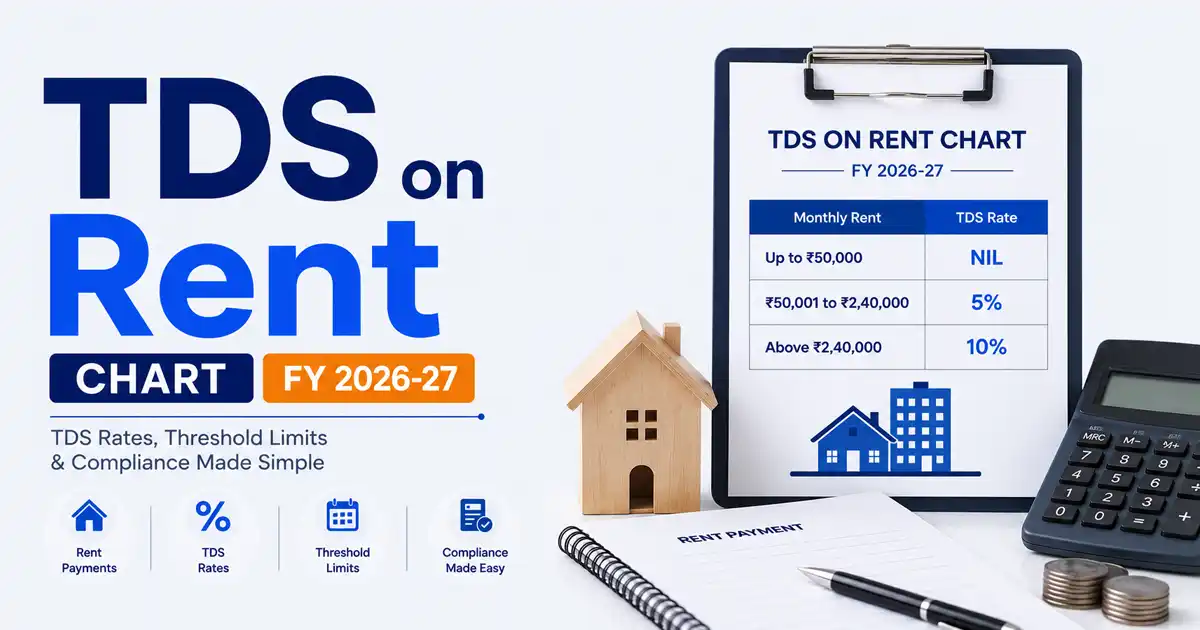
TDS on Rent Chart FY 2026–27: Rates, Limits, Sections and Complete Guide
GST on Bikes in India: New Rates by Engine Capacity
GST for Electrical Items in India: Rates & HSN Codes

GST on Cars in India 2026: New Rates, Slabs & Impact

GST on Car Insurance in India: Rate, ITC, and Latest Rules

GST on Vehicle Insurance in India: Rate, ITC & Rules
How to Check IEC Code Application Status Online on DGFT Portal? Complete 2026 Guide
Difference Between Brand and Trademark in India
How to File Trademark Form TM-M: Purpose, Fees & Process