

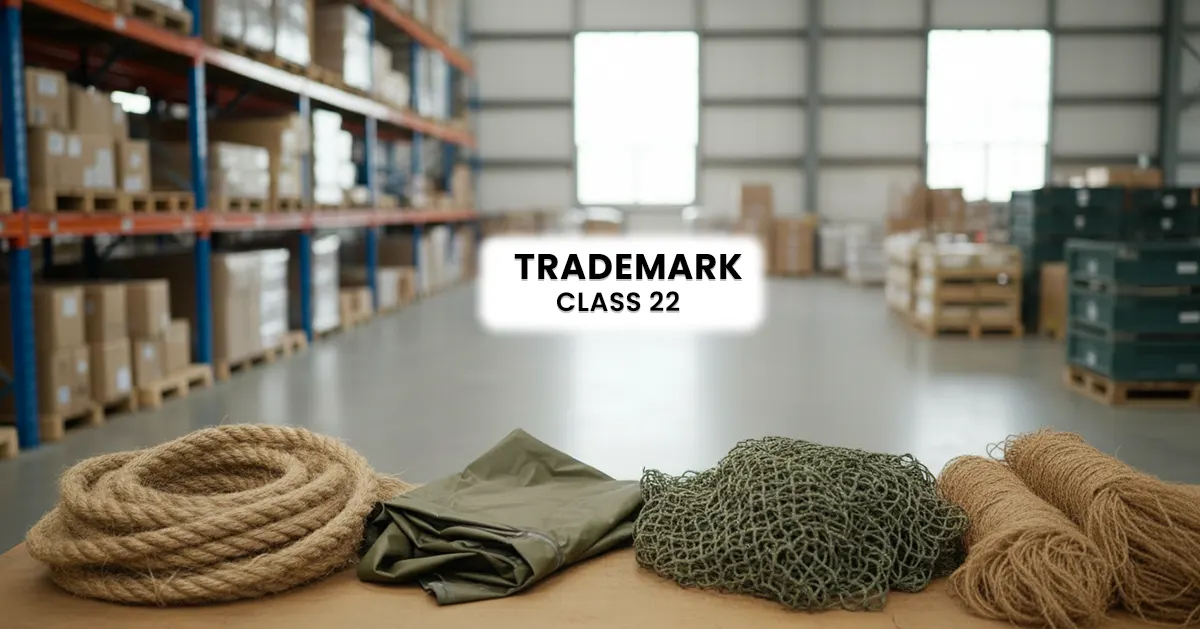
Trademark Class 22 covers textile-based and non-metallic goods used for tying, packing, covering, or stuffing. It includes ropes, nets, sacks, tents, tarpaulins, padding, and raw fibers such as jute and cotton. Businesses that manufacture, trade, or supply these goods can protect their brands by registering under Class 22.
Registering a Class 22 trademark helps businesses build a recognizable brand in the market. It also strengthens customer trust and gives the brand legal protection against unauthorized use.
Key Takeaways
- Class 22 covers ropes, nets, tents, tarpaulins, sacks, raw fibrous textile materials, and padding/stuffing materials, confirmed directly against WIPO’s own Class 22 heading.
- Padding and stuffing materials are excluded from Class 22 specifically when made of paper, cardboard, rubber, or plastics. These route to Class 16 or Class 17 instead.
- It does not cover metal ropes/chains (Class 6), instrument strings (Class 15), sports strings (Class 28), hair nets (Class 26), or vehicle luggage nets (Class 12).
- Filing costs ₹4,500 per class for individuals, startups, and MSMEs, and ₹9,000 for companies and other entities.
- Validity runs 10 years, renewable indefinitely in 10-year intervals.
- SRF, Reliance Industries, Polyplex, and Twiga are examples of Indian companies operating in Class 22-adjacent industrial textile and packaging materials.
What is Trademark Class 22 in India?
Trademark Class 22 matters for businesses that manufacture or trade in textile packing and binding materials. Trademark registration under this class prevents others from using a similar brand name for related goods. It also reduces market confusion among consumers and strengthens brand recognition.
In India, the trademark system is governed by the Trade Marks Act, 1999. The Controller General of Patents, Designs and Trade Marks (CGPDTM) manages registration through the Trade Marks Registry. The Registry follows the Nice Classification maintained internationally by WIPO.
Who Should Choose Trademark Class 22 in India?
Businesses that manufacture, sell, or distribute textile-based packing and binding goods should choose Trademark Class 22. The following entities benefit most from this registration:
- Rope and cord manufacturers: Companies producing ropes, twines, cords, and strings for industrial or commercial use.
- Net and mesh producers: Brands dealing in fishing nets, cargo nets, and safety nets.
- Packaging material suppliers: Businesses selling sacks, bags, and bulk storage materials.
- Tarpaulin and tent manufacturers: Companies offering tents, awnings, tarpaulins, and textile coverings.
- Raw textile fiber traders: Businesses dealing in jute, cotton, wool, and other raw fibrous materials.
Which Goods Fall Under Trademark Class 22 in India?
The table below summarizes common goods under Trademark Class 22:
| Goods Type | Examples |
|---|---|
| Ropes and cords | Natural fiber ropes, synthetic cords, twines, strings |
| Nets and mesh | Fishing nets, cargo nets, safety nets |
| Tents and awnings | Camping tents, tarpaulins, awnings, sails |
| Sacks and bags | Jute sacks, bulk storage bags, packing bags |
| Padding and stuffing | Cotton, wool, jute, or other textile stuffing materials |
| Raw textile fibers | Jute, cotton, hemp, wool fibers |
| Textile coverings | Tarpaulins, canvas sheets, industrial covers |
| Agricultural textile products | Burlap sacks, shade nets, crop protection nets |
| Packing materials | Textile ropes, cords, and twines for industrial use |
| Industrial textile products | Reinforced textile sheets, canvas tarpaulins, protective coverings |
What Goods are not Covered in Trademark Class 22?
Many businesses assume all packing, binding, and textile-related products fall under Trademark Class 22. The table below clarifies which goods are not included in Class 22, along with their correct classification:
| Goods Not Covered | Correct Trademark Class | Notes |
|---|---|---|
| Metal ropes, chains, wire ropes | Class 6 | Class 22 only covers non-metallic textile ropes |
| Strings for musical instruments | Class 15 | Specific instrument accessories |
| Sports strings (tennis, badminton) | Class 28 | Sports equipment class |
| Padding/stuffing of rubber or plastics | Class 17 | Excluded by material type, confirmed against WIPO’s official heading |
| Padding/stuffing of paper or cardboard | Class 16 | Also excluded by material type, confirmed against WIPO’s official heading |
| Safety nets (industrial/sports/electronic systems) | Class 9 or Class 28 | Function-specific nets go elsewhere |
| Hair nets | Class 26 | Textile accessories class |
| Vehicle luggage nets | Class 12 | Part of vehicle accessories |
| Garment bags for travel | Class 18 | Leather and textiles for goods carriers |
| Non-textile packaging bags (plastic, paper) | Class 16 or Class 17 | Depends on material |
Note: WIPO’s official Class 22 heading excludes padding and stuffing materials made of paper, cardboard, rubber, or plastics.
Tip: Use RegisterKaro’s Free Trademark Class Finder to identify the right trademark Class for your goods and register with confidence.
How to Register a Class 22 Trademark in India: Step-by-Step
If you manufacture, sell, or trade textile-based packing, binding, or covering goods, registering a Class 22 trademark secures your brand legally in India. Here’s a step-by-step process for how to register under Class 22:
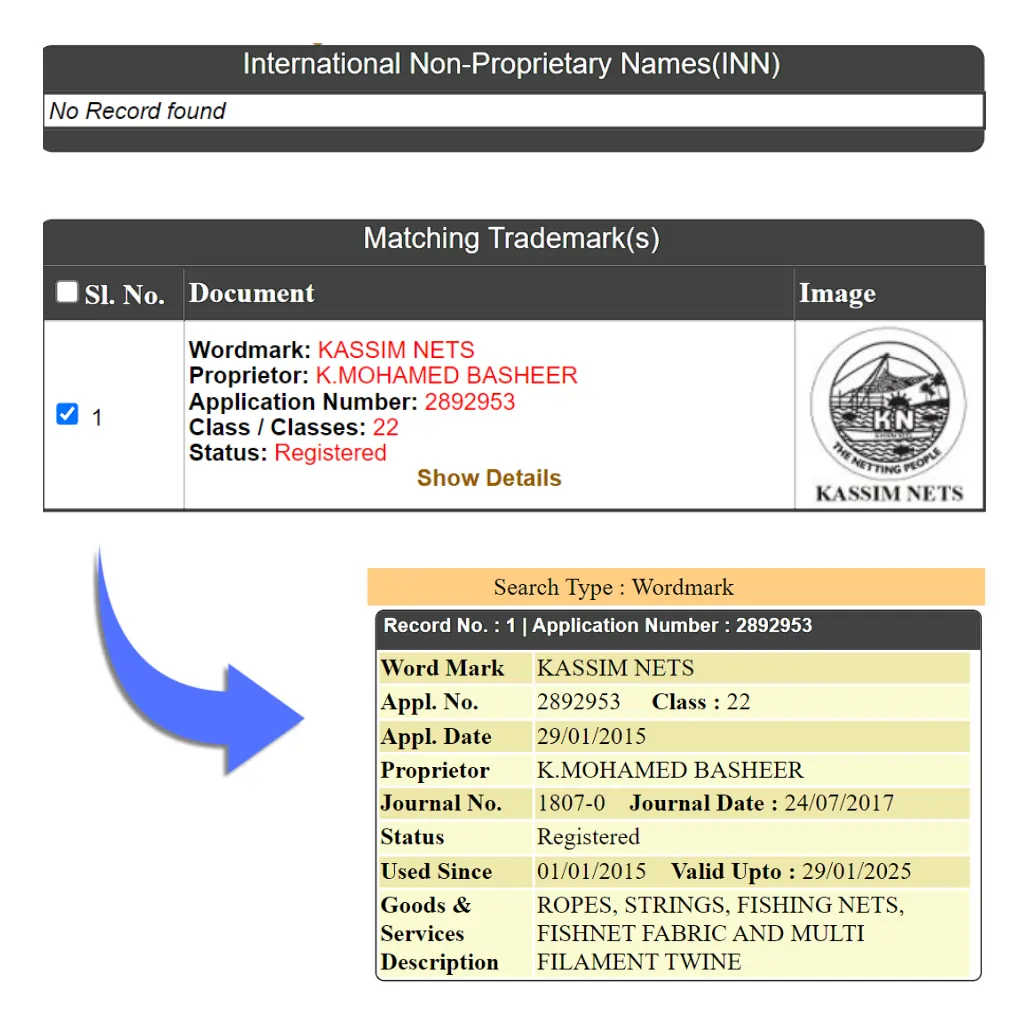
- Search first: Conduct a detailed search using the IP India Portal or RegisterKaro’s Trademark Search Tool. Confirm that your brand name or logo isn’t already registered under Class 22.
- Confirm classification: Make sure your goods fall under Class 22. This includes textile ropes, nets, sacks, tents, padding, or raw textile fibers. Misclassification can cause delays or rejection.
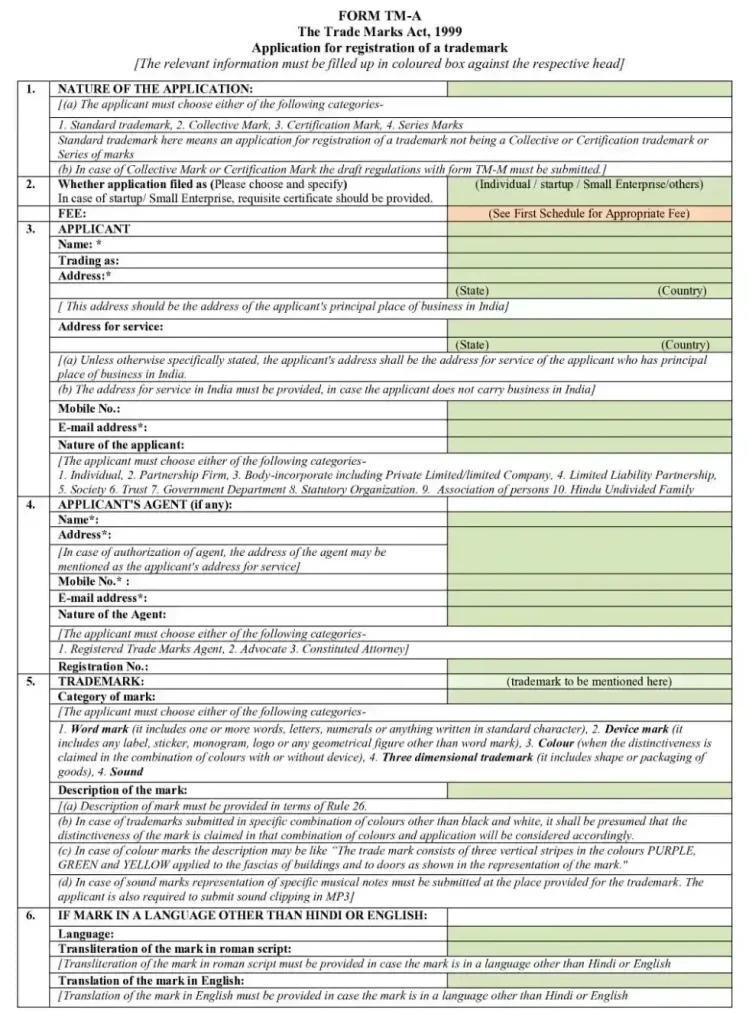
- File Form TM-A: Submit the application online through the IP India Trademark Portal. Choose a single-class application for Class 22 goods only. Choose a multi-class application if your brand spans other classes like Class 17 or Class 20. Government fees run ₹4,500 per class for individuals, startups, and MSMEs, and ₹9,000 per class for companies and other entities.
- Examination: The Trademark Registry reviews your application for correct classification, originality, and similarity with existing marks. It issues an Examination Report if there are issues. You must reply to trademark objections within 30 days.
- Publication and opposition window: Once cleared, your mark is published in the Trademark Journal for 4 months. During this period, third parties may file a trademark opposition.
- Registration and renewal: Once registered, you gain the right to use the ® symbol. The registration remains valid for 10 years. You can renew it indefinitely in 10-year intervals.
The process of registering a Class 22 trademark usually takes 6–12 months. This is followed by the 4-month publication period.
Common Mistakes to Avoid When Registering a Class 22 Trademark
Many businesses make avoidable mistakes that can delay approval or lead to objections. Avoid the following errors for smooth registration:
- Selecting the wrong class: Confusing textile-based goods with rubber, plastic, or machinery-based products, especially padding materials, triggers objections.
- Using vague product descriptions: Terms like “textile products” or “packing materials” are too broad. List specific goods, such as “ropes, nets, sacks, and tents.”
- Skipping a trademark search: Filing without checking existing trademarks risks conflicts with similar brands.
- Missing objections or deadlines: Failing to respond to Examination Reports or opposition notices within 30 days can lead to abandonment.
- Not planning for future products: Registering only current products may require fresh applications as your textile or packing range expands.
- Filing without professional help: Incomplete forms or missing documents can delay approval.
