

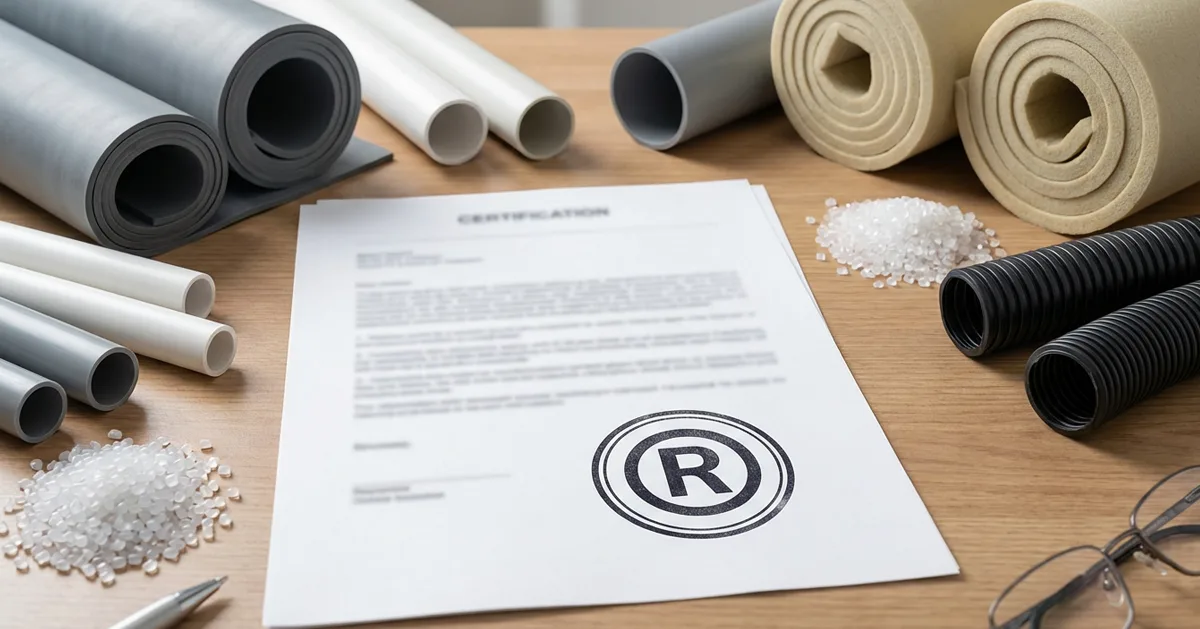
Trademark Class 17 covers rubber, plastic, and non-metallic materials used in industrial manufacturing. These include rubber sheets, plastic films, flexible pipes, hoses, insulation materials, gaskets, seals, foam products, and semi-finished packing materials. These products support the construction, electrical, automotive, and engineering industries.
India’s industrial materials market is highly competitive and driven by infrastructure growth. Trademark registration under Class 17 helps prevent look-alike products and unauthorized brand use. It also protects brand identity and improves market recognition as businesses expand across regions and sectors.
Global material science companies such as Saint-Gobain register their insulation and industrial material brands under Class 17.
Key Takeaways
- Class 17 covers rubber, plastic, and non-metallic materials in semi-finished or industrial form. These include insulation, gaskets, seals, hoses, foam products, and packing materials.
- It does not cover finished consumer goods (Classes 25 and 28), medical-use rubber or plastic items (Class 10), retail paints or adhesives (Classes 2 and 3), metal products (Class 6), or electrical and machinery parts (Classes 7 and 9).
- Class 17 permits asbestos substitutes. Indian safety and environmental laws restrict asbestos itself.
- Filing fees are ₹4,500 per class for individuals and startups. Companies pay ₹9,000 per class.
- The registration lasts for 10 years and you can renew it indefinitely.
- BASF illustrates a common multi-class strategy. Plastic insulation materials fall under Class 17, while related chemical compounds fall under Class 1.
What is Trademark Class 17 in India?
Trademark Class 17 focuses on semi-finished rubber, plastic, and non-metallic industrial materials. Manufacturers generally use these materials to make or support other products. Once they become finished consumer goods, they may fall under a different trademark class.
This distinction is important for manufacturers. Simply producing rubber or plastic products does not automatically qualify them for Class 17. The product’s form and intended use determine the correct class.
Note: Class 17 registration does not replace statutory approvals. Rubber, plastic, and insulation materials must still meet applicable quality, safety, and industry regulations before commercial use or sale.
Who Should Register Under Trademark Class 17?
Trademark Class 17 applies to businesses and individuals dealing in rubber, plastic, and non-metallic industrial materials. You should consider registering under this class if your brand or business falls into the following categories:
- Rubber product manufacturers: Protect brand names used for rubber sheets, rubber compounds, seals, gaskets, and industrial rubber components.
- Plastic and polymer material producers: Secure trademarks for plastic sheets, films, rods, tubes, and semi-finished plastic materials used in manufacturing.
- Pipe, hose, and tubing manufacturers: Safeguard brands for non-metallic flexible pipes, hoses, and industrial tubing systems.
- Insulation material manufacturers: Protect trademarks for thermal, electrical, and acoustic insulation materials made from rubber or plastic.
- Foam, packing, and sealing material suppliers: Register brand names for foam products, packing materials, sealing strips, and cushioning materials used in industrial applications.
- Construction and industrial material suppliers: Secure trademark rights for rubber and plastic materials supplied to infrastructure, engineering, and manufacturing projects.
DuPont registers its insulation and industrial material brands under Class 17, strengthening brand recognition and market trust globally.
What are the Goods Covered Under Trademark Class 17?
The table below highlights the key categories and examples of goods covered under Trademark Class 17 in India:
| Category | Examples of Goods Covered |
|---|---|
| Rubber Products (Industrial & Semi-Finished) | Rubber sheets, rubber compounds, rubber strips, rubber pads, rubber profiles, raw or semi-processed rubber |
| Plastic & Polymer Materials (Semi-Finished) | Plastic sheets, rods, tubes, plastic pellets, semi-finished plastic components for industrial use |
| Flexible Pipes, Hoses & Tubing (Non-Metallic) | Rubber hoses, flexible non-metallic pipes, industrial tubing systems, pressure hoses |
| Thermal Insulation Materials | Heat insulation sheets, thermal rubber insulation, insulation mats, thermal plastic insulation |
| Electrical Insulation Materials | Electrical insulation tapes, insulation sleeves, cable insulation materials |
| Acoustic & Soundproofing Materials | Soundproof rubber sheets, noise-control foam, vibration-absorbing materials |
| Foam & Cushioning Materials | Rubber foam, plastic foam, cushioning pads, vibration-damping foam |
| Seals, Gaskets & Packing Materials | Rubber gaskets, sealing strips, industrial sealing materials, packing rings |
| Non-Metallic Linings & Coatings | Protective rubber linings, tank linings, pipe linings |
| Expansion Joints & Flexible Connectors | Rubber expansion joints, flexible bellows, flexible industrial connectors |
| Plastic Laminates & Protective Films | Industrial plastic laminates, barrier films, surface-protection films |
| Protective & Covering Materials | Rubber mats, protective plastic covers, industrial floor coverings, insulating floor mats |
| Semi-Finished Plastic Goods | Plastic pellets, molded plastic blanks, plastic preforms, sheets, films, extrusions |
| Gutta-Percha, Gum & Mica Products | Gutta-percha sheets, industrial gum materials, mica sheets, mica films |
| Asbestos Substitutes & Heat-Resistant Materials | Non-asbestos insulation materials, heat-resistant composite sheets, synthetic insulation substitutes |
| Dielectric & Insulating Materials | Dielectric materials, insulating resins, insulating plastics |
| Packing, Padding & Shock-Absorbing Materials | Industrial padding materials, protective packing materials (non-paper, non-textile) |
| Flexible Plastic Films (Industrial Use) | Stretch films, shrink films, industrial wrapping films (not retail packaging) |
Note: Asbestos substitutes are permitted under Trademark Class 17, as asbestos itself is restricted under Indian safety and environmental laws.
Which Products are Excluded from Trademark Class 17?
Although Trademark Class 17 covers rubber, plastic, and non-metallic industrial materials, several related products are classified under other trademark classes. These include:
- Finished consumer goods: Items like rubber footwear, toys, and household plastic products fall under Class 25 or Class 28, depending on the product.
- Medical and healthcare products: Rubber or plastic items intended for medical use, such as surgical gloves or medical tubing, are registered under Class 10.
- Paints, coatings, and adhesives for consumer use: Ready-made paints, varnishes, glues, or sealants meant for retail sale fall under Class 2 or Class 3.
- Metal or metallic products: Pipes, fittings, or industrial components made from metal fall under Class 6.
- Electrical devices and machinery: Rubber or plastic parts that are part of machinery or electronic equipment may fall under Class 9 or Class 7, depending on usage.
Tip: Use RegisterKaro’s Trademark Class Finder to classify your rubber, plastic, or industrial material products correctly and avoid objections or rejection during registration.
How to Register a Trademark Under Class 17 in India?
Follow these steps to register your Class 17 trademark:
- Search first: Check whether your brand name, logo, or industrial material already exists under Class 17. Use the official IP India trademark database or RegisterKaro’s trademark name availability check tool.
- Select the right goods description: Clearly list the rubber, plastic, or non-metallic products you want to protect. These may include rubber sheets, plastic films, hoses, gaskets, insulation materials, foam products, and semi-finished industrial components.
- File Form TM-A: Submit the application through the IP India Trademark Portal or offline at the Trademark Registry. Include your brand name, logo, product descriptions, and applicant details. The filing fee is usually ₹4,500 for individuals or startups and ₹9,000 for companies.
- Examination: The Registrar checks your application for errors, similarities, and legal issues. An Examination Report may be issued if clarification is needed. Respond within the specified timeline to avoid delays.
- Publication and opposition window: Once accepted, your trademark is published in the Trademark Journal. The public can file objections within four months.
- Registration and certificate: If no trademark opposition is filed, or objections are resolved, your mark is registered. You receive a Trademark Registration Certificate with exclusive rights under Class 17.
The process usually takes 12–18 months. Registration is valid for 10 years and can be renewed indefinitely through trademark renewal.
Trademark Classes Similar to Class 17: Multiple Class Filing
Many manufacturers deal in products that fall across multiple trademark classes.
| Trademark Class | Goods Covered | How It Differs from Class 17 |
|---|---|---|
| Class 1 | Industrial chemicals, adhesives | Covers chemical compositions, not finished rubber or plastic materials |
| Class 6 | Metal pipes, fittings | Applies to metal goods, not rubber or plastic alternatives |
| Class 19 | Non-metal building materials | Covers rigid construction items, not flexible insulation |
| Class 22 | Ropes, nets, tarpaulins | Focuses on textile-based materials |
| Class 35 | Trading and distribution services | Protects services, not physical rubber products |
BASF, for example, registers plastic insulation materials under Class 17, while related chemical compounds fall under Class 1. Filing only under Class 17 may leave related goods unprotected.
