FSSAI License Registration in Punjab
Get your FSSAI license in Punjab online with expert support from RegisterKaro. Fast, reliable, and fully compliant registration for restaurants, cloud kitchens, and food startups.
 Basic, State, & Central FSSAI LicensingExpert Guidance for Food Businesses in PunjabFast & Transparent Registration ProcessPunjab-Specific Compliance & Documentation SupportRenewal, Modification, & Annual Return Assistance

 What Sets Us ApartWhat Sets Us Apart
What is the FSSAI License in Punjab?
The FSSAI license in Punjab is a mandatory certification issued by the Food Safety and Standards Authority of India (FSSAI) for all food businesses. It ensures food is prepared, packaged, stored, and sold safely according to government hygiene and safety standards.
Punjab has a thriving food industry. It ranges from local dhabas and street food vendors in Ludhiana, Amritsar, and Patiala to large-scale food manufacturers and dairy units across the state. FSSAI License Registration proves your business is safe, compliant, and trustworthy.
The state is also a major producer of fruits, dairy products, and processed foods. In 2023-24, the state produced 14.00 million tons of milk. Such bustling industries require FSSAI compliance to operate safely and legally.
In Punjab, FSSAI registration is completed online through the Food Safety Compliance System (FoSCoS) portal. After submission, Food Safety Officers (FSOs) inspect and verify compliance with state and national standards.
Why Food Businesses Need an FSSAI Number in Punjab?
An FSSAI number is the unique registration or license number issued by the FSSAI to a food business.
Holding this number in Punjab helps businesses:
- Operate legally under the Food Safety and Standards Act, 2006.
- Build consumer confidence with certified food hygiene and safety.
- List on food delivery platforms like Zomato and Swiggy.
- Expand operations across India or engage in interstate/export food trade.
- Avoid fines, penalties, or license suspension for non-compliance.
Businesses can also check the FSSAI license number online for verification, ensuring transparency, legal compliance, and customer safety.
Who Needs an FSSAI License in Punjab?
Essentially, every operator involved in food production, processing, storage, distribution, and sale requires an FSSAI license in Punjab. Here’s a detailed list:
- Food Manufacturers & Processors: Businesses producing, processing, or packaging snacks, beverages, dairy products, or bakery items across Punjab.
- Restaurants, Cafes & Cloud Kitchens: All food service businesses, including home-based kitchens offering deliveries in cities like Ludhiana, Chandigarh, Amritsar, and Patiala.
- Food Traders, Wholesalers, & Distributors: Entities handling bulk food items, raw materials, or packaged goods throughout Punjab.
- Retailers, Grocery Stores, & Supermarkets: Shops selling edible goods, snacks, beverages, or confectionery.
- Food Transporters & Warehousing Units: Businesses transporting or storing perishable and packaged food products within the state.
- Exporters & Importers: Companies exporting or importing food products within India or outside Punjab.
- Home Bakers & Small Food Startups: Small-scale home food businesses selling cakes, pickles, or snacks online or offline.
- Caterers & Event Food Services: Any business providing food at weddings, parties, or corporate events in Punjab.
- Juice, Ice Cream, & Beverage Vendors: Mobile carts or fixed outlets selling consumable drinks or frozen desserts.
- Food Testing Labs & Community Kitchens: Labs testing food quality or NGOs distributing food may also require registration, depending on scale.
Any entity in Punjab involved in food preparation, sale, or distribution must obtain an FSSAI license or registration to operate legally.
Types of FSSAI Licenses in Punjab
FSSAI follows a three-tier system under which every Food Business Operator (FBO) in Punjab must be registered. These are:
1. Basic Registration – Small Food Businesses
This entry-level registration is suitable for small-scale or home-based food businesses operating locally in Punjab. It applies to businesses with an annual turnover of up to Rs. 12 lakh.
Who Needs It:
- Home bakers, tiffin services, and small food stalls.
- Local juice shops, tea stalls, and small food retailers.
- Cottage industries produce jams, pickles, honey, or packaged foods.
License Highlights:
- Minimal documentation and quick approval.
- 14-digit registration number to display on packaging or business premises.
- Valid for 1–5 years and can be renewed easily.
Example: A homemade pickle unit in Ludhiana or a small café in Amritsar would fall under this category.
2. State License – Medium-Sized Food Businesses
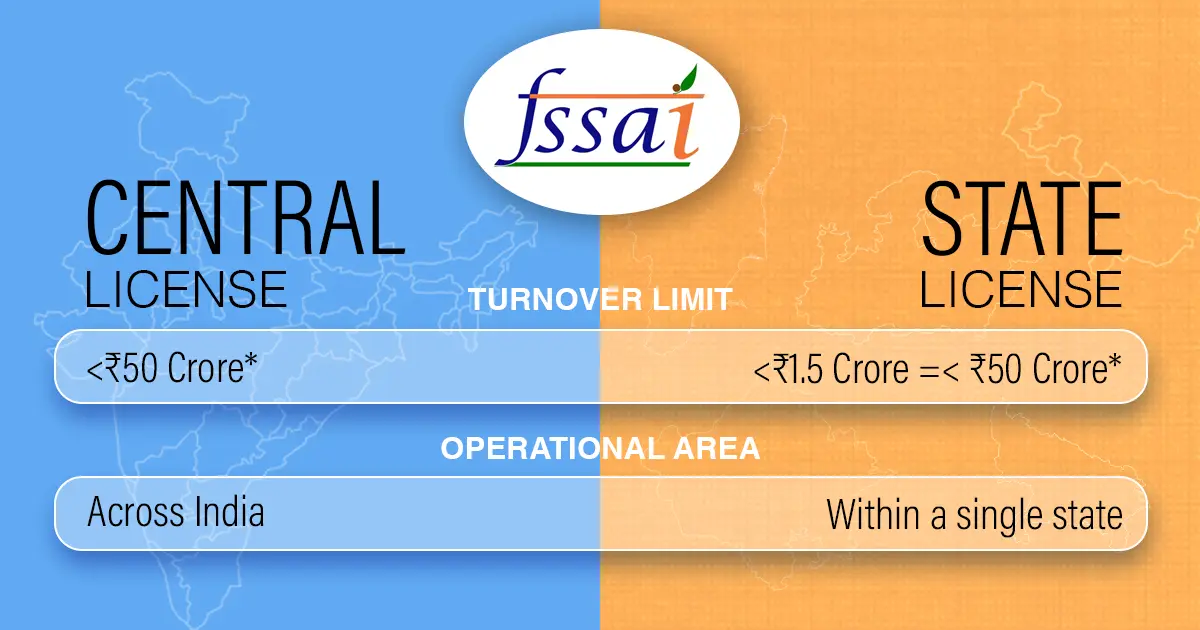
The State FSSAI license is meant for food businesses operating within Punjab above the basic registration limit. It usually applies to businesses with a turnover above Rs. 12 lakh and up to Rs. 20 crore.
Who Needs It:
- Mid-sized restaurants, catering services, and hotels.
- Local food manufacturers, packers, and transporters.
- Retail chains or wholesalers serving multiple towns and districts in Punjab.
License Highlights:
- Issued by the State Licensing Authority under FSSAI in Punjab.
- Requires detailed documentation, such as layout plans and food safety compliance records.
- Valid for 1–5 years.
Example: A fruit processing unit in Patiala or a mid-scale restaurant chain in Chandigarh would require this license.
3. Central License – Large or Multi-State Food Businesses
This license applies to large-scale food operators working across India or engaged in import and export activities. A Central FSSAI license is usually required for businesses with a turnover above Rs. 20 crore or those operating in multiple states.
Who Needs It:
- Large food manufacturers and national brands.
- Importers and exporters of food products.
- Major hotel or restaurant chains with outlets in more than one state.
- E-commerce food sellers supplying across India.
License Highlights:
- Issued directly by the FSSAI central authority.
- Requires extensive documentation related to production, sourcing, and food safety systems.
- Suitable for large enterprises operating nationally or internationally.
Example: A mango pulp exporter in Punjab or a dairy brand supplying products to multiple states would need a Central FSSAI License.
In summary, different types of FSSAI licenses cater to varying business scales, ensuring tailored compliance and food safety for every food operator.
Documents Required for FSSAI License Registration in Punjab
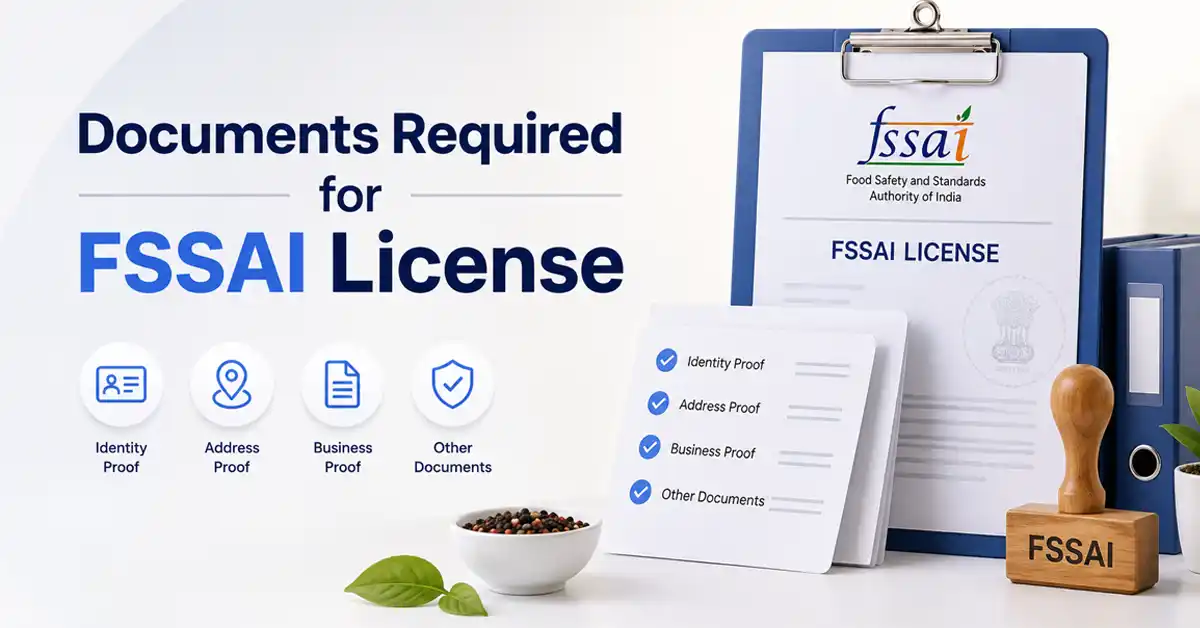
FBOs in Punjab must submit documents for identity, business details, and food safety compliance. The required documents vary based on whether the application is for a Basic, State, or Central FSSAI license.
Here’s the complete list of documents required for FSSAI registration in Punjab:
- Passport-size photographs and ID proof (Aadhaar, PAN, or Voter ID) of the business owner or partners.
- Proof of business address, such as an electricity bill, rental agreement, or property ownership document.
- Business registration proof, such as:
- Food Safety Management System (FSMS) plan detailing hygiene and safety protocols.
- No Objection Certificate (NOC) from the local municipal authority or Gram Panchayat (e.g., Municipal Corporation Ludhiana, Municipal Corporation Amritsar, or the concerned Gram Panchayat).
- Proof of premises ownership or rent agreement for the food unit, shop, or kitchen.
- List of food products to be manufactured, stored, distributed, or sold.
- Layout plan or blueprint of the food processing or storage unit (for manufacturers or large businesses).
- List of machinery and equipment used in food production or packaging.
- Water testing report from a government-approved or NABL-accredited laboratory (if water is used for cooking or processing).
- Form IX, with the nomination of persons by the company authorized to be responsible for food safety.
- Self-declaration form confirming compliance with FSSAI regulations and product standards.
- Proof of annual turnover to determine whether the Basic, State, or Central license applies.
- IEC or Import Export Code License, if the business imports or exports food products.
- Employee list with medical fitness certificates for those handling food directly.
- Declaration Form B, duly signed by the proprietor, partner, or authorized signatory.
- Certificate of hygiene and sanitary conditions (for food manufacturing or storage premises).
- Authority letter authorizing the responsible person to file the FSSAI application.
- Central license copy of the head office, if the application is for a branch or unit in Punjab.
- Details of waste disposal and pest control arrangements (required for restaurants, processors, and manufacturers).
Ensuring that all FSSAI license documents are complete and accurate is essential for smooth and timely approval.
Note: Depending on your business type and location, you may need additional approvals before completing your FSSAI registration in Punjab. These can include a Shop and Establishment Certificate, Pollution Control Board consent, Fire Department NOC, or a Trade License.
How to Get an FSSAI License Online in Punjab?
Getting an FSSAI License in Punjab is simple through the FoSCoS portal (foscos.fssai.gov.in). Follow these steps to complete your online registration:
Step 1: Identify the License Type
- Identify your food business category, such as restaurant, manufacturer, cloud kitchen, or retailer.
- Determine your business scale and annual turnover to decide whether you need a Basic, State, or Central License.
Keep essential details like business address, product list, and contact information ready before applying.
Step 2: Collect Required Documents
- Prepare all FSSAI-related documents according to your chosen license category.
- Ensure that every document is clear, updated, and matches your business information.
Missing or incorrect documents can delay the approval process.
Step 3: Apply Online on the FoSCoS Portal
Visit the official FoSCoS website at foscos.fssai.gov.in.
- Create an account using your business details and select the option “Apply for License/Registration.”
- Fill in the application form carefully, upload the required documents, and pay the applicable government fees.
Save the acknowledgment number to track your application status.
Step 4: Application Verification and Inspection
- The local FSO in your district, such as Ludhiana, Amritsar, or Chandigarh, reviews your application.
- For small food businesses, document verification is usually sufficient.
- For manufacturers and larger units, FSOs may conduct a physical inspection before approval.
Step 5: Receive Your FSSAI License Number and Certificate
- Once your application is approved, you receive a 14-digit FSSAI License Number.
- You can download your FSSAI certificate directly from the FoSCoS portal.
- Display the certificate at your business premises, kitchen, or packaging area for public visibility.
Step 6: Renew and Stay Compliant
- Your FSSAI license remains valid for 1 to 5 years, depending on the validity period selected.
- Apply for renewal at least 30 days before the expiry date to avoid penalties.
- Maintain proper hygiene, record-keeping, and quality checks to stay compliant during routine inspections.
The process usually takes 7 to 15 working days, depending on documents and inspection requirements. After approval, you can verify your FSSAI license number anytime on the FoSCoS portal.
Want a fast and stress-free FSSAI license in Punjab? RegisterKaro manages your documentation, filing, and coordination with authorities. Contact us today for quick, error-free approval and complete compliance support.
FSSAI Registration Fees and Validity in Punjab
The cost of an FSSAI license in Punjab depends on your registration type and business size. Fees are standard government charges and may vary slightly as per state guidelines, so it’s important to check the latest rules before applying.
Here is a detailed breakdown:
1. Basic Registration Cost
For businesses under the Basic Registration category:
- Rs. 100 per year for small food businesses.
- Applicable for businesses with an annual turnover of up to Rs. 12 lakh.
2. State License Cost
For food businesses requiring a State License, the annual government fee depends on business size:
- Rs. 2,000 per year for small to medium state-level food businesses.
- Rs. 3,000 per year for medium-scale operations.
- Rs. 5,000 per year for large food businesses operating within Punjab.
3. Central License Cost
For businesses that require a Central License:
- Rs. 7,500 per year for manufacturers.
- Rs. 15,000 per year for large manufacturers.
- Rs. 10,000 per year for importers.
- Rs. 7,500 per year for large food retailers.
Note: FSSAI license fees may increase due to additional inspections, food category requirements, business size, or special capacity-based charges.
Renewal and Modification of FSSAI License in Punjab
Renewing or modifying your FSSAI license in Punjab is essential to remain compliant and continue food business operations without disruption. Timely updates help avoid penalties, inspections, or suspension under the Food Safety and Standards Act, 2006.
1. Renewal Required Every 1–5 Years Before Expiry
Every FSSAI license in Punjab is valid for 1 to 5 years, depending on the period selected during registration.
- Apply for renewal at least 30 days before expiry via the FoSCoS portal (foscos.fssai.gov.in).
- Submit updated business details, supporting documents, and pay the prescribed renewal fees.
Timely FSSAI License Renewal ensures legal compliance, smooth operations, and continued customer trust across Punjab.
Tip: Businesses in cities like Ludhiana, Amritsar, and Chandigarh should renew early to account for possible inspection delays.
2. Apply for Modification if Address, Business Type, or Capacity Changes
You must apply for modification whenever your business address, ownership, or food category changes.
- Update your license when expanding production capacity, introducing new food products, or opening branches in other districts of Punjab.
- Submit the required documents and apply online through the FoSCoS portal.
Keeping your FSSAI license details updated prevents compliance issues during inspections and ensures smooth operations.
3. Penalties for Late Renewal in Punjab
Failing to renew your FSSAI license on time has financial and operational consequences.
- A penalty of Rs. 100 per day applies for each day after the license expiry date.
- If the license is not renewed within the permitted period, the authority may mark it as invalid.
- Running a food business with an expired license can result in suspension or cancellation under the Food Safety and Standards Act, 2006.
4. Penalties for Non-Compliance in Punjab
Food businesses in Punjab are monitored by the State Licensing Authority under FSSAI to ensure compliance.
- Operating without a valid FSSAI license can result in fines of up to Rs. 5 lakh (as per Section 63 of the Act).
- Authorities may seize food products or close non-compliant food units.
- Repeated violations or unsafe practices can lead to permanent license cancellation.
Regular renewals and maintaining accurate records help Punjab food businesses operate smoothly, avoid penalties, and build a trustworthy reputation.
Why FSSAI Registration is Important for Food Businesses in Punjab?
FSSAI registration is mandatory for all food businesses in Punjab, including dhabas, cloud kitchens, and restaurants in cities like Chandigarh, Ludhiana, Amritsar, and Patiala. Holding an FSSAI license ensures your business operates legally, complies with food safety regulations, and meets hygiene standards. It also builds customer trust and demonstrates professionalism in your operations.
Get FSSAI registration in Punjab to:
- Ensure your business follows the Food Safety and Standards Act, 2006.
- Build credibility by assuring consumers about food quality, hygiene, and safety.
- Prevent legal actions, fines, or possible business closure for non-compliance.
- Make your brand eligible for online food delivery platforms like Zomato, Swiggy, and Amazon Foods.
- Open opportunities for export, bulk supply, and participation in government tenders.
- Improve brand recognition with a valid 14-digit FSSAI license number.
- Maintain consistent food quality through regular inspections and compliance checks.
- Strengthen consumer trust in competitive food markets across Punjab, including Ludhiana, Jalandhar, and Amritsar.
In short, an FSSAI license in Punjab gives your food business the legal authority, credibility, and confidence to grow safely and responsibly in a thriving food industry.
Food License for Popular Businesses in Punjab
Punjab’s food industry includes traditional cuisine as well as a growing agro-based, dairy, and urban food sector. Therefore, all food businesses, small or large, must obtain an FSSAI license to operate legally. This also ensures food safety and quality across the state.
Here are some popular businesses in Punjab that require an FSSAI license:
- Food Service Establishments: All food-serving outlets in cities like Chandigarh, Ludhiana, Amritsar, Jalandhar, and Patiala must hold an FSSAI license to operate legally. This ensures they maintain hygiene standards and provide safe food to customers.
- Home Bakers & Cloud Kitchens: Home-based food sellers and cloud kitchens in towns like Mohali, Bathinda, and Hoshiarpur must obtain at least a Basic FSSAI Registration. This is necessary for selling through food delivery platforms like Swiggy, Zomato, or local online marketplaces. It also builds trust with customers.
- Food Manufacturers & Packers: Businesses producing jams, pickles, honey, packaged snacks, ready-to-eat meals, or herbal products in Punjab must obtain a State or Central FSSAI License based on turnover and production capacity. This ensures smooth, lawful operations and compliance with food safety standards.
- Dairy & Poultry Businesses: All milk collection centers, dairy processing units, poultry farms, and egg distributors in Punjab must hold an FSSAI license. This guarantees proper hygiene, safe handling, and correct labeling throughout the supply chain.
- Fruit & Food Exporters: Exporters dealing in mangoes, kinnow, processed fruit products, and packaged foods must obtain a Central FSSAI License. This helps manage interstate and international trade smoothly while complying with national and export food safety standards.
- Traders, Wholesalers, & Retail Chains: Supermarkets, grocery stores, and wholesale traders handling packaged or processed food items must register under FSSAI. This confirms that all food products meet safety, storage, and labeling requirements.
- Food Transporters & Warehouses: Cold storage operators, warehouse owners, and transporters of perishable foods in Punjab must have an FSSAI license. This ensures hygienic transportation and safe storage across districts and urban-rural supply chains.
Obtaining an FSSAI license in Punjab helps food businesses operate legally, maintain hygiene, and comply with India’s food safety regulations.
FSSAI Registration Office Details in Punjab
To simplify business compliance and promote food safety, every food business operator (FBO) in Punjab can contact the State Food Safety Commissioner’s Office. FBOs can also reach out to district food safety branches for help with FSSAI licensing, inspections, and regulatory guidance.
State FSSAI / Food Safety Commissioner’s Office
The Commissioner of Food Safety, Punjab, under the Health & Family Welfare Department, oversees FSSAI registration and licensing across the state. The office also supervises enforcement activities and promotes food safety in Punjab.
- Address: Prayas Building, 5th Floor, Sec 38B, Chandigarh
- Phone: 0172-2688438
- Email: secyhealth23@gmail(dot)com / foodpunjab22@gmail(dot)com / dir.fdalabpb@punjab(dot)gov(dot)in
Businesses can also check their FSSAI license number online for verification and transparency to ensure legal compliance and customer safety.
Working Hours and Helpdesk
For assistance with FSSAI license application, renewal, modification, or food safety complaints in Punjab, businesses can contact the Food Safety Department. They are available Monday to Friday, 10:00 AM to 5:00 PM (excluding government holidays).
Helpdesk assistance is available through the official email contacts listed above. For food safety grievances, citizens can call 104, the Punjab Health Helpline operated by the Health & Family Welfare Department. They can also use the CM Seva Helpline 1100 for state-level support related to FSSAI matters.
Regional / District Offices
Punjab operates food safety offices in major districts such as Ludhiana, Amritsar, Patiala, Jalandhar, Bathinda, Mohali, Hoshiarpur, Ferozepur, and Moga. Regional officers and Assistant Commissioners (Food Safety) support local FBOs with FSSAI licensing, inspections, compliance checks, and guidance.
Businesses can also visit their respective district/lower-level food safety office for faster query resolution, inspection support, or on-site compliance help.
Note: Small food businesses in Punjab can register online through the FoSCoS portal without visiting any office. Medium and large operators may need on-site verification by FSOs before a State or Central FSSAI license is issued.
Connect with RegisterKaro and let our experts handle the legal hassle while you grow your business.
Frequently Asked Questions (FAQs)
How to get an FSSAI license in Punjab?
To get an FSSAI license in Punjab, you first need to determine your food business category based on your annual turnover and type of operation, then apply online through the FoSCoS portal. You must upload essential documents such as identity proof, business registration, and address proof.
After submission, the Punjab Food Safety Department verifies your application and may inspect your premises if required. Once approved, you receive a digital FSSAI license, allowing you to legally operate your food business anywhere in Punjab.
What documents are required for FSSAI registration in Punjab?
For FSSAI registration in Punjab, you need identity proof, address proof, a business registration certificate, and passport-size photographs. Depending on your food business, additional documents like a Food Safety Management System (FSMS) plan, layout plan of the premises, water test report, or machinery list may be required. Larger manufacturing units may also need NOCs from local authorities. Ensuring all documents are correct and updated helps speed up verification and approval.
How long does it take to get the FSSAI license in Punjab?
The FSSAI registration process in Punjab usually takes around 7 to 15 working days, depending on your license type and whether an inspection is needed. Small businesses with basic registration are approved faster, while State and Central licenses may take longer due to inspections and verification. Submitting accurate documents and responding promptly to queries can reduce the waiting time and help you start operations without delay.
Is online food business registration different in Punjab?
No, the online FSSAI registration process in Punjab is the same as in other states and is completed through the FoSCoS portal. However, local food safety officers or municipal authorities may conduct inspections or request extra permits for manufacturing units or large food businesses. These additional steps ensure your food business in Punjab meets hygiene, storage, and safety standards before starting operations.
How can RegisterKaro help me with FSSAI renewal in Punjab?
RegisterKaro assists you in renewing your FSSAI license in Punjab by handling the entire process, from preparing documents to submitting your application online and following up with food safety officers. Our experts track your renewal deadlines and ensure timely filing, so your business never runs with an expired license. We also help with updates or corrections if your business details change, reducing compliance risks and penalties.
Can I upgrade my basic registration to a state license in Punjab?
Yes, you can upgrade from Basic Registration to a State License in Punjab when your annual turnover exceeds Rs. 12 lakh or if your business expands. The upgrade process is done through the FoSCoS portal, where you submit updated business and financial details. Upgrading ensures your food business stays legally compliant as it grows and allows you to expand operations within Punjab without facing legal complications.
Do home bakers in Punjab need FSSAI registration?
Yes, home bakers in Punjab must obtain an FSSAI license if they sell cakes, sweets, or snacks, even on a small scale. Home kitchens selling food are legally considered food businesses. FSSAI registration helps you maintain hygiene standards, gain customer trust, and sell on platforms like Zomato or Swiggy. It also protects you from penalties for operating without a valid food license.
Do I need a separate FSSAI license for each outlet in Punjab?
Yes, each food outlet or manufacturing unit operating at a different location in Punjab must have its own FSSAI license. Licenses are issued per location to allow proper inspection and monitoring by local officers. This applies to restaurants, cloud kitchens, warehouses, and factories. Having separate licenses ensures every unit follows food safety norms and avoids compliance issues during inspections.
What happens if I don’t get an FSSAI license in Punjab?
Operating without an FSSAI license in Punjab is illegal under the Food Safety and Standards Act and can result in penalties of up to Rs. 5 lakh. Authorities may also seize products or suspend your business operations. Having a valid FSSAI license protects your business legally, builds customer trust, and allows you to supply food to retailers, hotels, and online platforms without facing legal trouble.
How to check the FSSAI license status or verify it in Punjab?
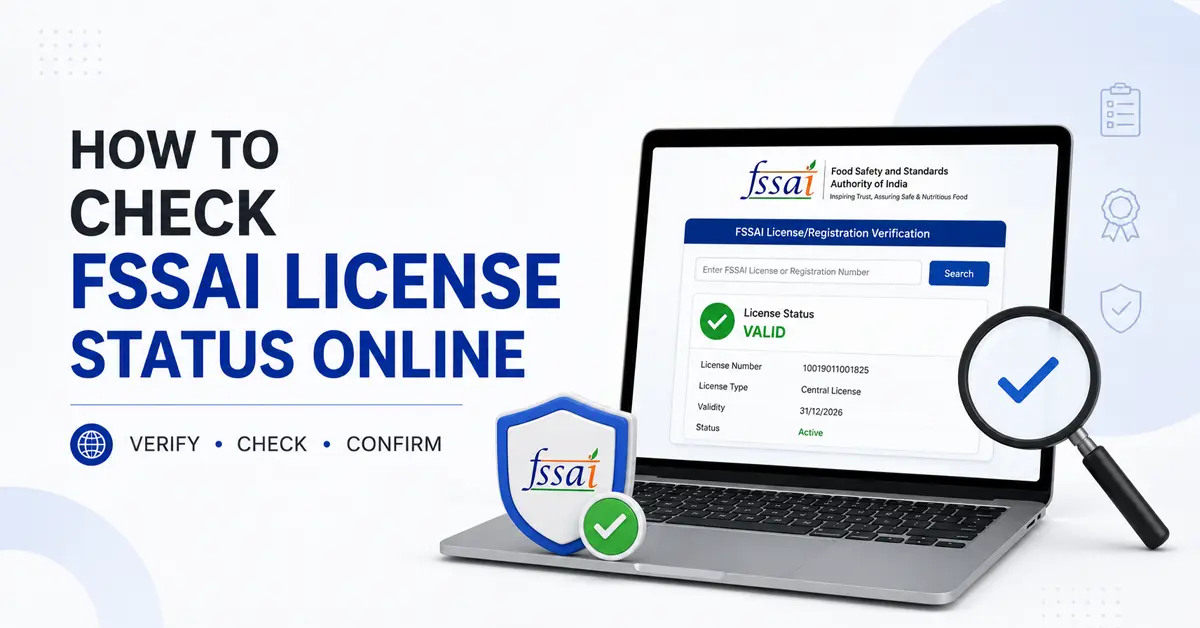
You can check or verify your FSSAI license status in Punjab by visiting the FoSCoS portal and entering your 14-digit license number. The system shows your license’s validity, current status, and authenticity instantly. Customers can also use this method to confirm whether your food business is registered. Regularly checking your license helps ensure compliance and prevents running your business with an expired or inactive license.
How can I download my FSSAI certificate online in Punjab?
To download your FSSAI certificate in Punjab, log in to the FoSCoS portal and navigate to the “Issued Licenses” section. You can download the certificate as a PDF and print it to display at your business premises. Including the license number on packaging or menus reassures customers about your food safety compliance and demonstrates transparency in your operations.
Is a physical inspection required for the FSSAI license in Punjab?
Physical inspection is usually not required for small businesses under Basic Registration in Punjab. However, medium and large food businesses, such as restaurants, hotels, or manufacturing units, must undergo an inspection by Punjab food safety officers. Inspectors verify hygiene, storage conditions, and layout before issuing or renewing the license to ensure your operations meet legal safety standards.
Can I transfer or modify my FSSAI license if I change my address in Punjab?
You cannot transfer an FSSAI license in Punjab, but you can modify it if your business address, ownership, or product category changes. Modifications are done through the FoSCoS portal by uploading updated documents. The authority reviews and approves changes, allowing you to continue operations legally. Keeping your license updated prevents compliance issues and maintains accurate records for inspections.
Is FSSAI registration different from the Food License in Punjab?
No, FSSAI registration and a food license mean the same thing in Punjab. Small businesses receive Basic Registration, while medium and large businesses obtain State or Central Licenses based on turnover. Both fall under the Food Safety and Standards Act, 2006, and confirm that your food business adheres to hygiene, safety, and regulatory requirements mandated by law.
I sell food online in Punjab through Zomato or Swiggy. Do I need FSSAI registration?
Yes, if you sell food online in Punjab through platforms like Zomato or Swiggy, you must have a valid FSSAI license. These platforms require your license number to list your business. FSSAI registration ensures hygiene compliance, builds customer trust, protects you from legal penalties, and allows smooth operation in the growing online food delivery market.
Can a trader or distributor in Punjab apply for an FSSAI license?
Yes, traders, wholesalers, and distributors dealing with food items in Punjab must have an FSSAI license. The law requires every entity in the food supply chain to follow safety standards. Having a valid license ensures traceability, legal compliance, and the ability to work with manufacturers and retailers without restrictions or penalties.
Is an FSSAI license in Punjab transferable in case of business ownership change?
No, an FSSAI license in Punjab cannot be transferred if business ownership changes. The new owner must apply for a fresh license in their name to operate legally. This ensures accountability, maintains accurate records, and allows authorities to verify the new owner’s details, keeping your business compliant with food safety regulations.

Reviewed by
Joel DsouzaJoel Dsouza is a Chartered Accountant (CA) and compliance expert with over 7 years of hands-on experience in company registration, tax structuring, GST, ROC filings, and MCA compliance. As a qualified member of the Institute of Chartered Accountants of India (ICAI) and Co-Founder at RegisterKaro, he has personally advised more than 1,000 startups and SMEs across India, helping founders navigate incorporation, regulatory frameworks, and financial planning from Day 1. With deep expertise across all three levels of Finance and Portfolio Management, Joel is committed to promoting financial literacy and simplifying India's startup ecosystem through clear, actionable guidance that entrepreneurs can act on immediately.
Why Choose RegisterKaro for FSSAI License Registration in Punjab?
Getting your FSSAI license in Punjab can be challenging due to state-specific rules, district requirements, and strict documentation checks. RegisterKaro simplifies the process by handling everything online, from document preparation to final approval.
Here’s why food businesses across Punjab trust us:
- Expert Team Familiar with Punjab Food Laws: Our professionals are well-versed with Punjab’s food safety rules and prepare every application according to FSSAI standards, ensuring faster approval.
- Fully Online, Stress-Free Process: We take care of your documentation, form submission, and follow-ups digitally, saving you time and eliminating unnecessary visits to government offices.
- Transparent and Affordable Pricing: RegisterKaro provides clear, upfront pricing with no hidden fees, so you always know exactly what you are paying for.
- Dedicated Local Support: Our team manages document collection, verification, and filing across Punjab, ensuring smooth coordination with local authorities.
- 24×7 Assistance for Renewal and Compliance: We assist not only during registration but also for ongoing FSSAI compliance, helping your license stay valid and avoiding penalties.
RegisterKaro ensures your food business in Punjab remains fully compliant, trustworthy, and prepared for sustainable growth.

What Our Clients Say
View All
Prem Kumar
 Verified
I had an outstanding experience with RegisterKaro, especially with Chinmay, who assisted me with my FSSAI registration. He was extremely professional,... Read more

Md Imtiyaz
VerifiedGreat experience with company incorporation! The process was smooth, quick, and professionally handled. Clear guidance was provided at every step, mak... Read more

Akhilesh Kumar
VerifiedUsing RegisterKaro for GST compliance has been really smooth and hassle-free. All filings are done on time, communication is prompt, and the team foll... Read more

Sarkar
Verified"I recently worked with Register Karo and was thoroughly impressed by the professionalism, attention to detail, and expertise they provided. From the... Read more

Nandu more
VerifiedWe have a company called Quiv Kart. We used the services of Registerkaro for our company registration, and their team was extremely helpful throughout... Read more

Arpit Raj
VerifiedI recently got my Private Limited Company registered through RegisterKaro, and the experience was smooth and hassle-free. Their team handled everythin... Read more

Abhijit Mondal
VerifiedVery good experience, excellent support,Timely response on each and every query. All this at an every affordable rate.Ankita Matta and the Whole team... Read more

Amit Kumar
VerifiedMs Vandana Sharma has done awesome work for me from Registerkaro . She worked late night with me . I appreciate her for these type of effort . Thanks... Read more

Vanshika Agrawal
VerifiedI had an amazing experience with the Registerkaro. Their dedication, kindness, and willingness to help exceeded my expectations.My sincere appreciatio... Read more

Training Hub
VerifiedI had an excellent experience with RegisterKaro. Special thanks to Rajshree for her continuous support, quick responses, and professional guidance thr... Read more
FSSAI Registration in Punjab Cities
FSSAI Registration in States Near Punjab
Other Business Services in Punjab
Related Blogs
View All
FSSAI License for Packaged Drinking Water: Fees & Rules

FSSAI License Fees in India: Cost, Types & How to Save

Roles & Responsibilities of FBOs (Food Business Operators) in India

FSSAI Regulations for Nutraceuticals in India

How to Start Masala Business in India in 2026?

Foods Banned by FSSAI in India: Complete List
Difference Between FSSAI State and Central License in India

FSSAI Offences and Penalties in India: Fines and Punishments for Food Businesses
Documents Required for FSSAI License & Registration (2026)
How to Check FSSAI License Status Online on FoSCoS Portal?