


Trademark Class 4 covers industrial oils, lubricants, greases, fuels, illuminants, and candles in India. If you manufacture, refine, or sell any product used for combustion, lighting, or industrial energy, you must register under Class 4.
It covers goods such as:
- Industrial oils, lubricants, and greases.
- Petroleum fuels.
- Alternative fuels.
- Industrial waxes and dust-binding compositions.
- Candles, wicks, illuminants, and firelighters.
- Solid fuels like coal, charcoal, coke, peat, and briquettes.
Many businesses in India’s energy, petroleum, automotive, and lighting industries rely on Class 4 trademark protection. Leading firms include IndianOil (Servo), Hindustan Petroleum (HP Lubricants), Tide Water Oil (Veedol), Castrol India, Reliance Industries, and Adani Total Gas. These companies protect their brand identity under Class 4.
Key Takeaways
- Class 4 covers industrial oils, greases, waxes, lubricants, dust-binding compositions, fuels, illuminants, and candles or wicks for lighting.
- Electrical energy is part of Class 4. The 9th edition added it to the class, as confirmed in the EU court case Edison SpA vs. EUIPO.
- Class 4 does not cover cosmetic oils (Class 3), edible oils (Class 29), medicinal oils (Class 5), or laboratory chemicals (Class 1).
- Filing fees are ₹4,500 per class for individuals, startups, and MSMEs. Companies, LLPs, and partnership firms pay ₹9,000.
- Multi-class filing is common. For example, Castrol files engine oils under Class 4 and vehicle care or polishing products under Class 3.
What is Trademark Class 4?
Trademark Class 4 is a goods category under the Nice Classification, administered by WIPO. In India, it is governed by the Trade Marks Act, 1999. Class 4 covers products consumed during use to power, lubricate, or light something.
Trademark registration under Class 4 helps prevent counterfeiting and protect brand ownership. It also builds trust, supports enforcement, enables licensing and distribution, and creates a long-term brand asset.
Note: Electrical energy falls under Class 4 from the 9th edition of the Nice Classification, as confirmed by the Edison SpA vs. EUIPO case. Businesses supplying branded electricity may seek protection under this class.
Who Should Register Under Trademark Class 4?
If your business deals with energy, combustion, lubrication, or lighting products, Class 4 is the right class to file under. The following businesses should register their brand under Class 4 in India:
- Refiners, distributors, and resellers of petrol, diesel, kerosene, aviation fuel, natural gas, LPG, and CNG.
- Companies producing automotive engine oils, hydraulic fluids, transmission oils, gear oils, and cutting fluids.
- Businesses producing industrial-grade greases, bearing greases, leather preservatives, weapon greases, and belt-conditioning oils.
- Manufacturers of biodiesel, ethanol fuel, biomass fuel, producer gas, and solid fuel briquettes.
- Businesses dealing in anthracite, coke, coal briquettes, charcoal, peat, firewood, and combustible briquettes.
- Makers of basic lighting candles, tapers, Christmas tree candles, nightlights, wicks, and lamp oils.
- Manufacturers of beeswax, paraffin, carnauba wax, belting wax, raw wax, ozokerite, and industrial wax.
- Producers of non-chemical fuel additives, motor performance enhancers, and dust-binding compositions.
Trademark Class 4 Complete List of Goods
Here’s the complete category-wise breakdown of the Class 4 trademark list under NCL 13-2026:
1. Industrial Oils, Greases, and Lubricants
- Industrial oils, lubricating oils, lubricating grease
- All-purpose lubricants, automotive lubricants, transmission oils
- Hydraulic oil, cutting fluids, moistening oil
- Motor oil, gear oil, oleine
- Illuminating grease, illuminating wax, lubricating graphite
2. Animal and Plant Oils (Industrial Use)
- Animal oils for industrial purposes, bone oil for industrial purposes
- Castor oil for industrial purposes, rape oil/colza oil for industrial purposes
- Sunflower oil for industrial purposes
- Soya bean oil for non-stick treatment of cooking utensils
- Fish oil (not edible), wool grease (lanolin), tallow
3. Petroleum Fuels and Derivatives
- Gasoline/petrol, diesel oil/gas oil, kerosene
- Naphtha, benzene, benzine, benzol, mazut
- Mineral fuel, ligroin, ligroin solvents, methylated spirit
- Petroleum (raw or refined), petroleum ether, petroleum jelly for industrial purposes
- Coal naphtha, coal tar oil
4. Alternative and Renewable Fuels
- Alcohol fuel, ethanol fuel, fuel with an alcoholic base
- Biodiesel fuel, biomass fuel
- Fuel gas, producer gas, oil gas
- Solidified gases (fuel), natural gas, vaporised fuel mixtures
- Aviation fuel
5. Solid Fuels
- Coal, coke, anthracite
- Charcoal (fuel), coal briquettes, coal dust (fuel)
- Wood briquettes, combustible briquettes
- Peat (fuel), peat briquettes, lignite
- Firewood, tinder
6. Candles, Wicks, and Illuminants
- Candles, tapers, Christmas tree candles, nightlights (candles)
- Perfumed candles (when used for basic lighting)
- Wicks for candles, lamp wicks, lamp oil
- Lighting fuel, gas for lighting, firelighters
- Paper spills for lighting, wood spills for lighting
7. Waxes (Industrial)
- Beeswax, paraffin, carnauba wax
- Ceresine, ozokerite (ozocerite)
- Belting wax, industrial wax, raw wax
- Stearine, wax (raw material)
8. Fuel Additives and Specialty Compositions
- Non-chemical additives to motor fuel, non-chemical fuel additives
- Non-slipping preparations for belts
- Oils for paints
- Oils for releasing form work (building)
- Textile oil
9. Dust Absorbing and Binding Compositions
- Dust absorbing compositions, dust binding compositions for sweeping
- Wetting compositions
- Dust removing preparations, dust laying compositions
10. Leather and Equipment Greases
- Grease for leather, grease for belts, grease for footwear
- Grease for arms (weapons)
- Preservatives for leather (oils and greases)
- Oil for the preservation of leather, oil for the preservation of masonry
11. Electrical Energy
- Electrical energy falls under Trademark Class 4 as a commercial product under the Nice Classification
- Confirmed as part of the class’s alphabetical list since the 9th edition
- Distinct from the equipment used to generate, store, or manage electricity, which falls under other classes
Which Products are not Covered Under Trademark Class 4?
Some oil, wax, and fuel-related products fall under other trademark classes. The correct class depends on the product’s purpose and use. Here’s where to file instead:
| Product | Correct Class | Why |
|---|---|---|
| Cosmetic and personal care oils, including hair oil, massage oil, essential oil, skin oil | Class 3 | Non-medicated cosmetic preparations |
| Edible oils and fats, like cooking oil, ghee, butter, and refined oil | Class 29 | Food products for human consumption |
| Polishing and cleaning waxes, such as furniture polish, shoe wax, and car wax | Class 3 | Cleaning and polishing preparations |
| Decorative or perfumed/scented candles (fragrance/aroma purpose) | Class 3 | Air fragrancing and cosmetic candles |
| Medicinal and therapeutic oils, including Ayurvedic oils, medicated balms | Class 5 | Pharmaceutical preparations |
| Laboratory and scientific oils | Class 1 | Chemicals for industry and science |
| Chemical fuel additives | Class 1 | Chemical preparations, not non-chemical additives |
| Edible waxes for food and confectionery | Class 29 / 30 | Food-grade products |
| Vehicle air fresheners | Class 3 | Air fragrancing preparations |
| Batteries, solar panels | Class 9 | Scientific and electrical apparatus |
| Electric power generators | Class 7 | Machinery and engines, not scientific apparatus |
| Lamps, lighting fixtures, electric lighting equipment | Class 11 | Lighting apparatus, not illuminants |
| Fuel storage tanks, oil drums, containers | Class 6 / 20 | Container goods, not the fuel itself |
| Oil filters, fuel pumps, lubrication systems | Class 7 | Machinery parts |
Note: Basic lighting candles, tapers, and nightlights fall under Class 4. Decorative, scented, and perfumed candles sold for home fragrance fall under Class 3. D2C candle brands on Amazon, Nykaa, or Etsy generally need Class 3.
How to File a Trademark Class 4 in India?
Businesses can follow these steps to file a Class 4 trademark in India:
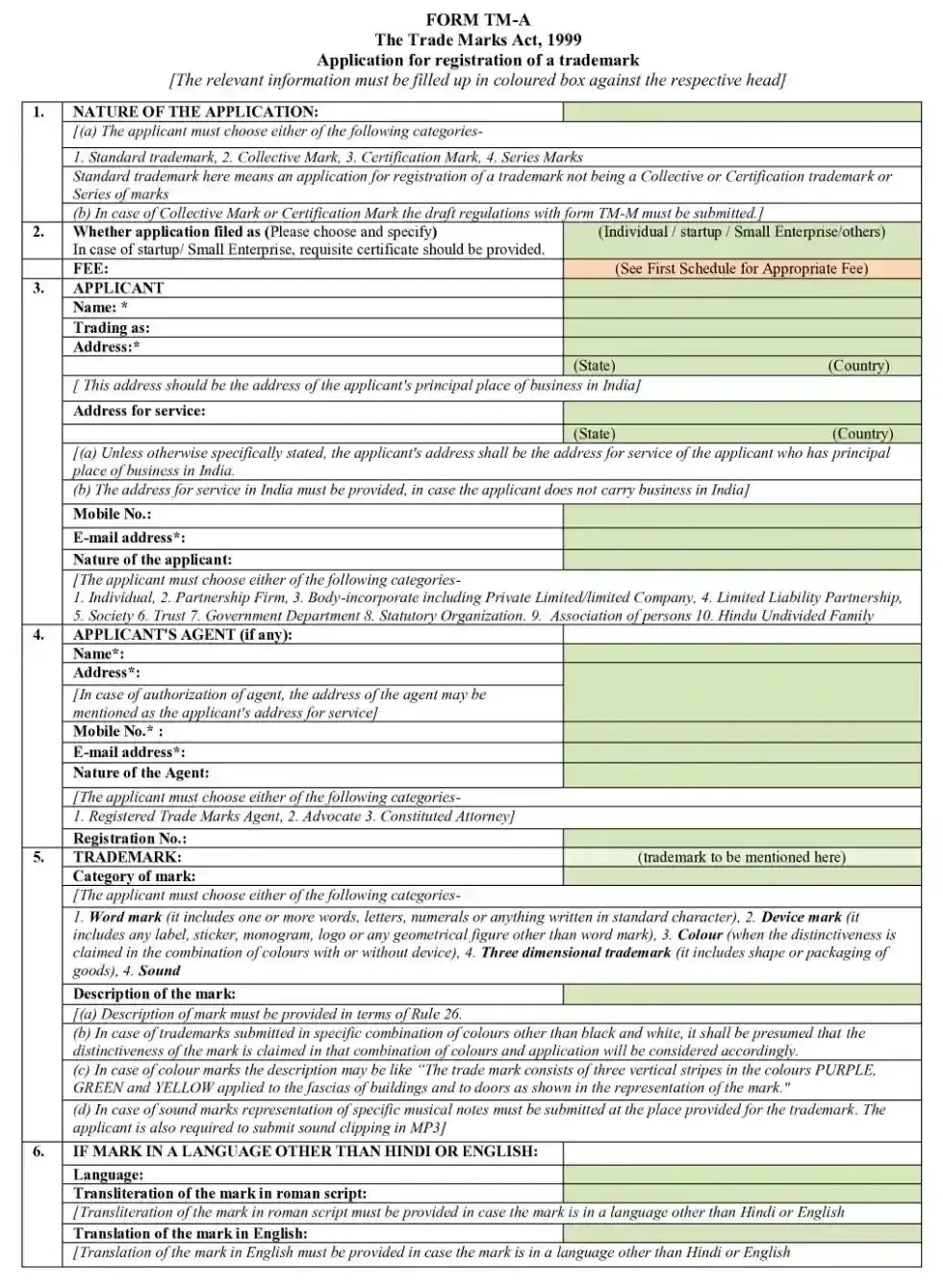
- Search first: Search the Indian Trademark Registry database for similar marks in Class 4. You can also use RegisterKaro’s trademark availability check tool to check your desired name or logo.
- File the application: Submit Form TM-A online through the IP India portal. Include your brand name, logo, and list of Class 4 goods.
- Examination by the Trademark Office: The Registrar reviews your application for legal compliance and conflicts. The Registrar may issue trademark objections if clarification is needed.
- Respond to objections, if any: Respond within the stipulated time. Provide clarification or amend your application if required.
- Publication in the Trademark Journal: Once approved, your trademark appears in the Trademark Journal. Third parties can file trademark opposition within four months.
- Registration and certificate: The Registrar issues the registration certificate if no opposition arises. You also receive registration after successfully overcoming any opposition.
The government filing fee for a Class 4 trademark is ₹4,500 per class for individuals, startups, and MSMEs filing online. Companies, LLPs, and partnership firms pay ₹9,000 per class.
Trademark Classes Related to Class 4: Multi-Class Filings
Most energy, lubricant, and candle brands need protection across multiple trademark classes. Here are the classes most commonly filed along with Class 4:
| Class | What It Covers | Why It Matters for a Class 4 Brand |
|---|---|---|
| Class 1 | Industrial chemicals, chemical fuel additives, lab chemicals | File here for chemical fuel additives and industrial chemical preparations |
| Class 3 | Cosmetic oils, perfumed candles, vehicle air fresheners, and cleaning waxes | File here if you sell scented candles, hair oils, or vehicle cleaning waxes |
| Class 5 | Pharmaceutical preparations, medicated oils | File here if your oils carry therapeutic or medicinal claims |
| Class 7 | Machinery parts, oil filters, fuel pumps, generators, and engines | File here if you sell lubrication system components or power generation equipment |
| Class 9 | Batteries, solar panels, and electrical apparatus | File here if you also deal in electric or solar energy equipment |
| Class 11 | Lamps, lighting fixtures, electric lights | File here for lighting equipment that uses Class 4 illuminants |
| Class 29 | Edible oils, ghee, butter, food-grade fats | File here if you sell food-grade oils or edible waxes |
| Class 35 | Retail, distribution, online stores, fuel station chains | File here if you operate a fuel station network or an online lubricant store |
Multi-class filing helps energy and lubricant brands protect different product categories. For example, Castrol uses Class 4 for engine oils and lubricants and Class 3 for vehicle care and polishing products.
