


Class 5 covers pharmaceuticals, veterinary products, and health-related preparations in India. It includes medicines, dietary supplements, sanitary preparations, disinfectants, and dressings across allopathic, Ayurvedic, homeopathic, Unani, and Siddha formulations. If you manufacture, supply, or distribute pharmaceutical or healthcare products, Class 5 protects your brand name and logo.
India supplies over 50% of the world’s vaccines and around 20% of its generic medicines (IBEF). It also has one of the world’s largest traditional medicine industries. This scale makes trademark protection especially important. Courts also strictly assess phonetic similarity in Class 5. In Cadila Healthcare v. Cadila Pharmaceuticals (SC, 2001), the Supreme Court held that similar drug names can pose patient safety risks.
Latest Update: This guide reflects NCL 13-2026, effective 1 January 2026. It adds nicotine preparations for smoking cessation to Class 5. It also reclassifies essential oils for medicinal use into Class 5 based on actual use, rather than defaulting to Class 3.
Key Takeaways
- Class 5 covers pharmaceuticals, veterinary products, sanitary items, supplements, dressings, and disinfectants across all medicine systems.
- Courts apply stricter phonetic-similarity rules here, per Cadila Healthcare v. Cadila Pharmaceuticals (SC, 2001).
- Medicines and dressings fall under Class 5; medical devices and instruments fall under Class 10.
- NCL 13-2026 added smoking-cessation nicotine products and reclassified medicinal essential oils into Class 5.
- Filing costs ₹4,500 per class for individuals, startups, and small enterprises; ₹9,000 for others.
- Uncontested filings take 12–18 months; contested ones can stretch to 18–24 months.
- Words like “Cure,” “Heal,” or “Relief” often draw objections under Section 9(1)(b).
What is Trademark Class 5?
Trademark Class 5 covers a broad range of essential products related to human and animal health. Trademark law ensures that critical products, including pharmaceuticals, veterinary products, and sanitary items, are legally protected under Class 5 of trademarks.
By registering under this trademark class for medicines, businesses safeguard their unique products. This is essential for brands in this category as they face higher risks of imitation, similarity disputes, and regulatory confusion due to similar-sounding names (for example, GlaxoSmithKline’s “Crocin” vs. “Crosin”).
Class 5 brand names often interact with multiple regulatory frameworks, such as FSSAI registration, AYUSH approval, drug licensing, and packaging regulations. A trademark helps strengthen compliance across these areas, ensuring that your brand remains protected while meeting legal requirements.
Products Covered Under Trademark Class 5
Trademark Class 5 includes essential health-related products that help improve well-being and ensure safety. Below is a list of the products covered:
| Product Category | Description | Examples |
| Pharmaceuticals | The trademark class for pharmaceuticals covers medicinal products used to treat, prevent, or diagnose illness in humans. This spans allopathic, Ayurvedic, homeopathic, Unani, and Siddha formulations. | Painkillers, antibiotics, antivirals, Ayurvedic formulations |
| Medical Preparations | Products help in medical treatments, such as ointments, creams, and other medicinal formulations. | Skin ointments, topical creams, antiseptic solutions |
| Veterinary Preparations | Medicines and treatments promote animal health. | Pet antibiotics, animal vaccines, and deworming tablets |
| Sanitary Preparations | This trademark class for sanitary pads and related hygiene items maintains protection for products used for medical or sanitary purposes. | Sanitary napkins, tampons, adult incontinence pads, diapers |
| Dietetic Food | Special food products adapted to medical or veterinary purposes, especially for babies or people with health conditions. | Baby formula, gluten-free foods, low-sodium foods |
| Dietary Supplements | Products that enhance nutrition and health for both humans and animals. | Finished consumer vitamin supplements (such as multivitamin tablets or capsules), protein supplements, and omega-3 oils |
| Adhesive Plasters | Bandages or materials cover wounds or injuries, often with adhesive properties. | Band-Aids, wound dressings |
| Materials for Dressings | Products cover and protect wounds, cuts, or burns. | Gauze, sterile bandages, dressing pads |
| Dental Products | Materials dentists use, such as those for filling teeth or dental care. | Tooth filling material, dental wax |
| Disinfectants | Chemicals or substances that clean or sterilize surfaces and environments. | Surface disinfectants, alcohol wipes |
| Pest Control Preparations | Products that eliminate or control pests like insects, rodents, and other vermin. | Insecticides, rodenticides, cockroach repellents |
| Fungicides and Herbicides | Chemical agents destroy or control fungi and harmful plants. | Fungicide sprays, weed killers |
Understanding the specifics of trademark Class 5 helps avoid trademark objections and ensures proper classification for your products.
Conducting a trademark class search is vital to ensure that your brand is unique and free from trademark infringement, securing your market position in India.
Products Not Covered Under Trademark Class 5
While Class 5 of the trademark covers many health-related products, certain items fall outside its scope. These exclusions include:
- Ingredients for Pharmaceutical Manufacturing: Bulk vitamins, antioxidants, and preservatives do not fall in this class (Class 1).
- Non-medicated Sanitary Products: Toiletries are excluded (Class 3).
- Orthopedic Bandages: Class 10 covers support bandages and orthopedic items.
- General Meal Replacements: Non-medical food and beverages are placed under appropriate food classes (Class 29, 30, 32).
- Deodorants for Human Use: These fall under Class 3.
- Medical Devices and Instruments: Surgical instruments, diagnostic equipment, and implants fall under Class 10. Medicines and drug formulations belong in Class 5, while medical devices and instruments are covered under Class 10.
Kenvue registers Tylenol and Band-Aid under Class 5. Johnson & Johnson’s surgical instruments and medical devices fall under Class 10.
Himalaya Wellness follows the same logic with its Ayurvedic range. It registers Liv.52 and Septilin under Class 5, since they’re medicinal formulations, not devices or personal care products.
If you are confused about which class best suits your product, check the trademark classes list before registering your trademark.
How to Register a Trademark Class 5 in India?
Registering a trademark protects your reputation and prevents confusion. Here’s the step-by-step process to register your Class 5 trademark in India:
Step 1: Conduct a Trademark Search
A trademark search is crucial to ensure your desired trademark isn’t already in use. This step helps avoid rejections or objections when you file your application. You must search for word marks and device marks to confirm there are no conflicting trademarks in your industry.
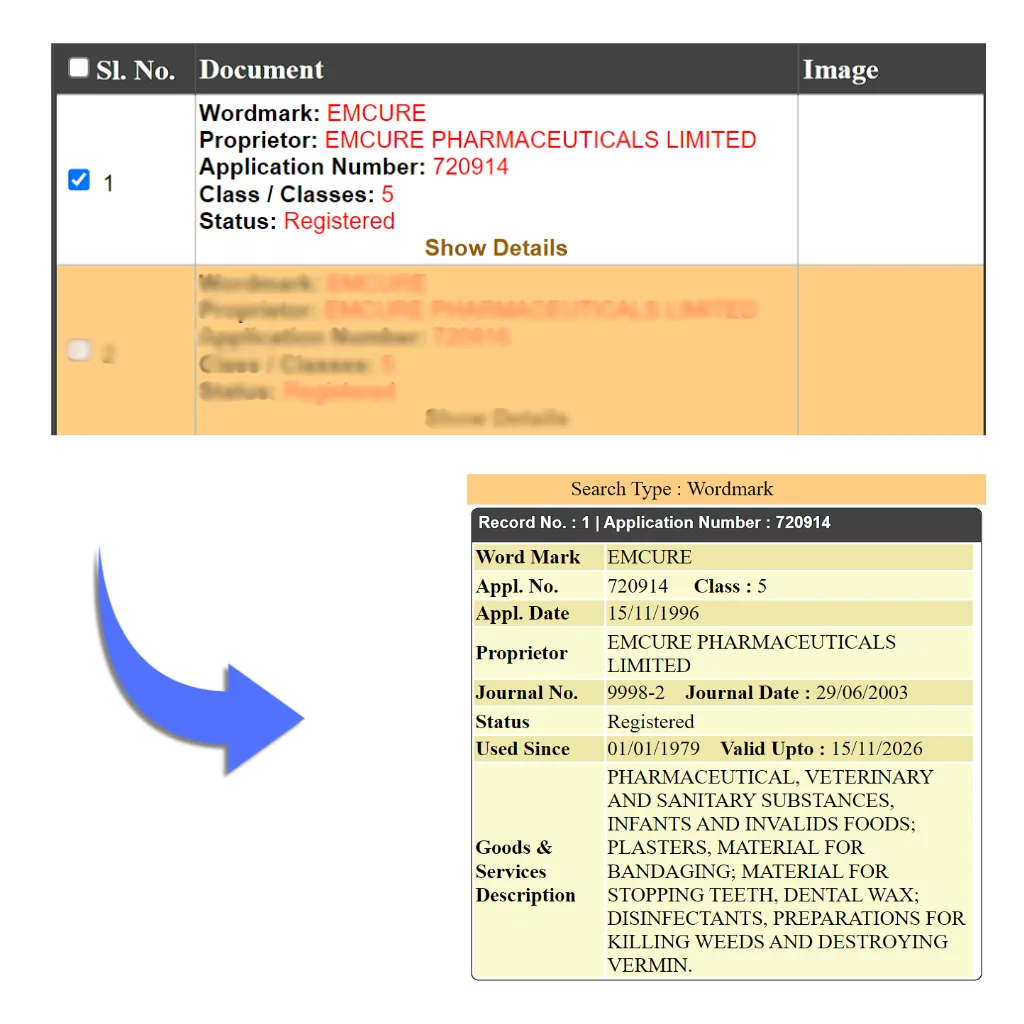
If your search reveals conflicts, reconsider your brand name or consult a trademark attorney to assess the risk and find alternatives to distinguish your mark. Since there are different types of trademarks, such as word marks and device marks, it’s important to search across all possible types.
Step 2: Prepare and File Your Trademark Application
Once your trademark is cleared, it’s time to file your trademark registration in Class 5 with the Indian Trade Marks Registry using Form TM-A. Filing establishes your legal rights over the trademark from the filing date.
Gather the necessary documents, including:
- Applicant details (name, nationality, and address).
- Logo or wordmark (in JPEG format).
- Proof of use (if applicable).
- Class of Goods or Services as per the Nice Classification.
- A Class 3 Digital Signature Certificate (DSC).
You can file the application online via the IP India Trademark E-Filing Portal. The filing fee depends on the number of classes you are applying under and the type of applicant.
Step 3: Examination of Your Trademark
The trademark examiner reviews your application for compliance with the Trade Marks Act, 1999. This includes checking distinctiveness under Section 9 and similarity to existing marks under Section 11.
If the Trademark Registry raises objections, you must respond within 30 days to resolve the issues and keep your application active.
Step 4: Trademark Publication and Opposition Period
Once the trademark is accepted, the Indian Trademark Registry publishes it in the Trademark Journal. This serves as a public notice, allowing third parties to oppose your registration if they believe your mark conflicts with theirs.
The opposition period lasts for four months, giving others the chance to challenge your application. If no opposition is filed, your application moves toward final registration.
Step 5: Final Registration and Protection
Once the opposition period ends, the Registry registers your trademark and grants exclusive rights. You can use the ® symbol and download the certificate from the IP India website.
Registration is valid for 10 years from the application date under Section 25 of the Trade Marks Act, 1999. Renew it indefinitely in 10-year periods using Form TM-R.
The registration fee for Trademark Class 5 is:
- ₹4,500 for Individual/Startup/Small Enterprise
- ₹9,000 for all other cases
Note: DPIIT-recognized startups and Udyam-registered MSMEs receive a 50% fee concession. Submit a valid certificate at the time of filing to pay ₹4,500 instead of ₹9,000 per class.
Class 5 applications typically take 12–18 months if uncontested. Objections or opposition can extend the timeline to 18–24 months due to stricter phonetic-similarity checks.
Common Mistakes When Filing Under Class 5 and How to Avoid Them
Pharmaceutical and healthcare businesses often face delays or limited protection due to avoidable filing errors. Here are the most common mistakes and how to avoid them:
- Filing Under the Wrong Class: Raw ingredients belong to Class 1, cosmetic toiletries to Class 3, medical devices to Class 10, and general food to Class 29. Verify with the trademark class search tool before filing.
- Using Descriptive or Generic Brand Names: Examiners frequently object to words like “Cure,” “Heal,” “Relief,” or “Fast-Acting” under Section 9(1)(b) of the Trade Marks Act, 1999. Choose a distinctive and unique brand name instead.
- Using Vague Product Descriptions: Broad terms like “medicines” or “health products” trigger objections. Use precise terms such as “antibiotic tablets for bacterial infections” or “Ayurvedic formulations for liver health.”
- Confusing Similar-Sounding Brand Names: Pharmaceutical names face heightened scrutiny for phonetic similarity, since a mix-up can pose real health risks. In Cadila Healthcare v. Cadila Pharmaceuticals (SC, 2001), the Supreme Court applied a stricter similarity standard to drug names than ordinary goods. Choose a clearly distinguishable name, not just visually but phonetically.
- Skipping a Comprehensive Trademark Search: Search the Indian Trademark Registry and WIPO’s global database to identify identical or phonetically similar marks in Class 5.
- Submitting Incomplete Documentation: Review the complete list of documents required for trademark registration before submission.
- Missing the Examination Report Deadline: Failing to reply within 30 days can result in abandonment. Respond to any trademark objection on time.
