Your trusted partner in business registration, compliance, and taxation. We answer all your questions.
Your trusted partner in business registration, compliance, and taxation. We answer all your questions to start any business online
How to Start a Saree Business in India?
Starting a saree business means choosing the right product varieties, finding reliable suppliers, setting your prices, and deciding where to sell. You can begin from home with a small collection or open a retail store with a larger inventory. Online selling through your own website, social media, or marketplaces also gives you access to customers beyond your local area.
The market also shows room for new businesses. The Indian saree market was valued at USD 6.15 billion in 2025 and is projected to reach USD 10.77 billion by 2034, growing at a 6.43% CAGR from 2026 to 2034, according to an IMARC Group report.
Before buying stock, decide which saree categories, fabrics, or styles you want to sell and who you want to serve. Your choice of products will affect your investment, pricing, marketing, and sales strategy. You also need to handle business registration, applicable tax requirements, inventory, packaging, and customer orders properly from the beginning.
This guide will explain the main saree business models, startup costs, registration requirements, and practical steps involved in setting up your business.
Types of Saree Businesses You Can Start
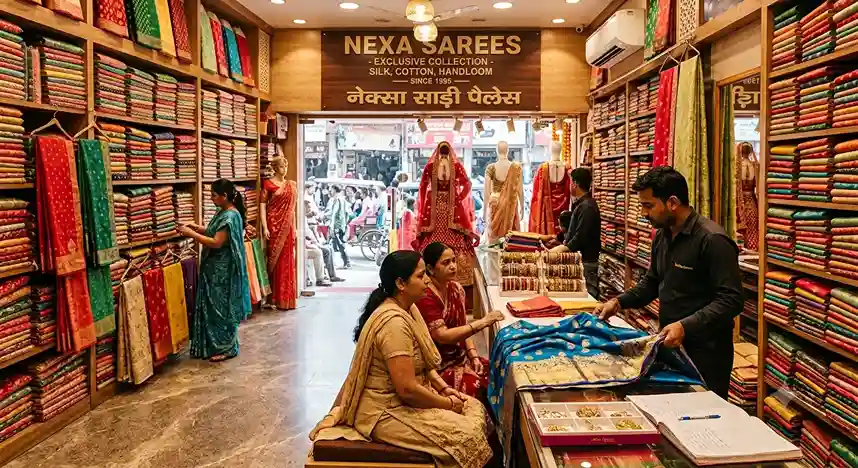
The saree market gives you several ways to enter the industry, depending on your budget, skills, and target customers:
1. Saree Retail Business
A saree retail business lets you buy sarees from wholesalers or manufacturers and sell them directly to customers. You can open a physical store and focus on a specific range, such as daily wear, festive sarees, or premium collections. Your location, product selection, pricing, and customer service will directly affect sales.
2. Saree Wholesale Business
A wholesale business involves buying sarees in larger quantities and supplying them to retailers, boutiques, and other sellers. You need reliable suppliers, sufficient storage space, and enough working capital to maintain stock. This model can suit you if you want to handle large orders rather than individual customer sales.
3. Online Saree Business
You can sell sarees through your own website, social media platforms, or online marketplaces without opening a physical store. This model lets you reach customers outside your local area. You need good product photographs, accurate descriptions, secure payment options, reliable shipping, and a clear return policy.
4. Saree Manufacturing Business
A saree manufacturing business involves producing sarees instead of buying finished products for resale. You may handle fabric selection, weaving, dyeing, embroidery, printing, finishing, and packaging. This model requires greater investment, skilled workers, production facilities, and reliable access to raw materials.
5. Saree Printing Business
A saree printing business focuses on adding designs, patterns, or motifs to suitable fabrics. You can use techniques such as digital printing, screen printing, block printing, or other suitable methods. You can sell the finished sarees directly or supply printed sarees to retailers and other businesses.
How to Start a Saree Business in India: Step-wise Guide
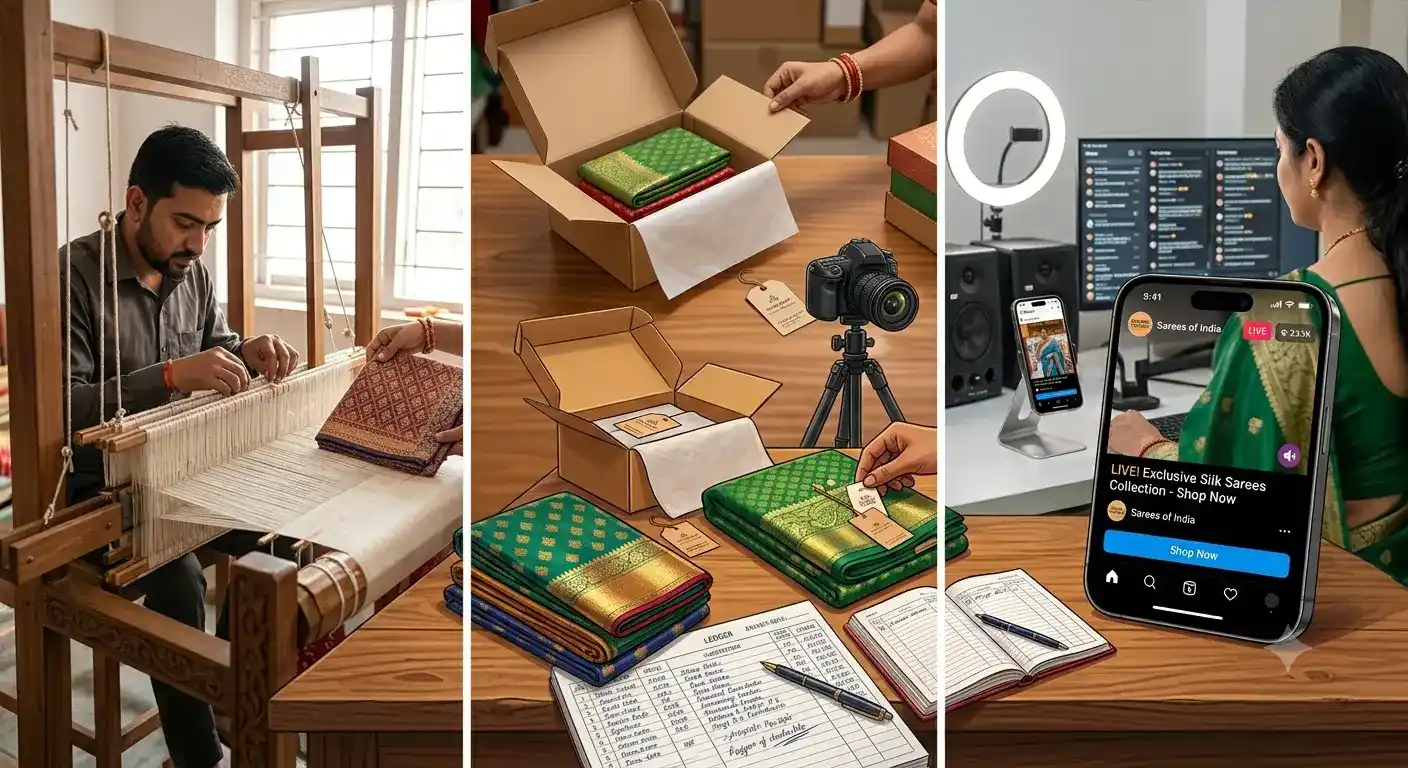
Starting a saree business requires choosing your product range and finding suppliers before you invest in inventory. The following steps cover the main decisions, registrations, setup, pricing, and sales activities:
Step 1: Choose Your Saree Niche and Target Customers
First, decide what type of sarees you want to sell and who you want to target. You could focus on cotton sarees for daily wear, silk sarees for weddings, designer sarees for premium buyers, or regional sarees from specific weaving traditions.
Then identify your target customers based on their budget, buying preferences, and location. This decision will guide your product selection, pricing, store location, and marketing strategy.
Step 2: Research Suppliers and Source Sarees
Find manufacturers, weavers, wholesalers, and distributors who can supply your chosen saree categories. Surat, Varanasi, Kanchipuram, Jaipur, Kolkata, and Bhagalpur are well-known sourcing locations for different saree varieties and textile products. Compare their prices, minimum order quantities, fabric quality, designs, delivery time, and return or replacement terms.
Order samples before purchasing large quantities. Check the fabric, color, stitching, finishing, borders, and overall quality yourself. This step can prevent costly inventory mistakes later.
Step 3: Prepare Your Business Plan and Budget
Decide how much money you can invest before purchasing inventory or renting a shop. Prepare a basic budget covering saree stock, rent, interiors, packaging, website costs, transportation, marketing, staff, and working capital. A small home-based saree business may require around ₹50,000 to ₹1.5 lakh initially , while a retail store can require ₹3 lakh to ₹8 lakh .
Also, estimate your monthly expenses and expected sales. This will help you decide how much stock you can safely purchase and how much revenue you need each month.
Step 4: Register Your Saree Business
Choose a business structure that suits your ownership and growth plans. You can operate as a sole proprietorship , partnership, LLP , or private limited company.
Register the business under the applicable requirements and open a separate business bank account. Keep your registration documents ready for suppliers, marketplaces, banks, and other business transactions.
Step 5: Complete the Required Tax and Local Registrations
Check which tax and local registrations apply to your saree business before starting sales. GST registration generally becomes mandatory when your aggregate turnover exceeds ₹40 lakh for goods in most states, subject to applicable exceptions and lower thresholds (₹20 lakh) in certain states.
If you run a physical store, also check the local requirements for shops and establishments, trade permissions, and other applicable registrations. Keep invoices and purchase records from your first sale.
Step 6: Set Up Your Store, Website, or Online Sales Channel
Choose your sales channel based on your business model. A physical store needs suitable space, display racks, lighting, storage, billing facilities, and customer seating.
For online sales, create a website or use suitable marketplaces and social media platforms such as Instagram, Facebook, and Pinterest . Add clear product photographs, fabric details, sizes, prices, delivery information, payment options, and return terms.
Step 7: Create Your Brand and Product Catalogue
Choose a business name, logo, packaging style, and overall presentation that customers can easily remember. Create a catalog with clear photographs and accurate details for every saree.
Mention the fabric, color, design, length, blouse piece details, care instructions, and selling price. Check relevant authenticity marks before claiming a saree's origin or material, such as GI tags for region-specific products, the Silk Mark for pure silk, and the Handloom Mark for genuine handwoven products. For example, a Kanchipuram silk saree may carry a GI-based origin claim, while a pure silk saree may carry the Silk Mark label.
Step 8: Set Product Prices and Profit Margins
Calculate the total cost of each saree before setting its selling price. Include the purchase price, transportation, packaging, marketplace charges, payment fees, taxes, and other selling expenses.
Then add your desired margin while checking prices charged by competing sellers. For example, if you spend ₹1,000 on a saree and incur ₹200 in additional selling costs, selling it for ₹1,500 gives you ₹300 profit and a 20% margin on the selling price. Keep separate pricing for retail and wholesale orders when you serve both customer groups.
Step 9: Set Up Inventory, Packaging, and Order Management
Maintain a clear record of every saree you purchase and sell. Assign product codes and record details such as design, fabric, color, quantity, purchase price, and selling price.
Use suitable packaging to protect sarees during storage and delivery. For online orders, check each product before dispatch and record shipping details to reduce errors and customer complaints.
Step 10: Market Your Saree Business and Generate Sales
Promote your products through channels where your target customers actually spend time. Use social media, local advertising, referrals, customer reviews, exhibitions, and online marketplaces according to your business model.
Post clear photographs and videos that show the saree from different angles. Track inquiries, orders, repeat customers, and sales from each channel so you can invest more in the methods that generate results.
Get Your Company Registered Today
Free consultations for MCA approvals to help you get started with your business.
GST Rate and HSN Codes for Sarees
Sarees attract 5% GST , regardless of whether they contain cotton, silk, or synthetic fibers. The ₹2,500 threshold applies to garments under Chapters 61 and 62, not unstitched sarees. Therefore, both a ₹300 cotton saree and a ₹15,000 Banarasi saree generally attract 5% GST.
The applicable HSN Code for saree classification depends on its fibre or material. Common classifications include HSN 5007 for silk fabrics, HSN 5208 or 5209 for cotton fabrics , and HSN 5407 or 5408 for man-made filament fabrics , with the applicable rate at 5%. Sarees with additional processing, such as embroidery, chikan work, or lace stitching, also continue to attract 5% GST when they remain classified as sarees.
Building an Online Presence for Your Saree Business
An online presence can help a saree business reach customers beyond its local area and generate sales throughout the year:
- E-commerce Website: Create a user-friendly website with high-quality product images, detailed descriptions, secure payment options, and clear shipping policies.
- Social Media Marketing: Use platforms such as Instagram, Facebook, and Pinterest to showcase sarees, answer customer questions, and promote new collections.
- Search Engine Optimization (SEO): Optimize your website and product pages so customers can find your sarees when they search online.
- Content Marketing: Share useful content about saree styling, fabric care, regional weaves, and new collections to attract potential buyers and build trust.
Register Your Company in Just 7–15 Days
Skip lengthy paperwork and delays with expert support for a faster MCA registration process.
How Much Does It Cost to Start a Saree Business?
Your total startup cost can range from ₹50,000 to ₹50 lakh or more, depending on your business model, inventory size, and setup requirements. The total cost depends on packaging, product photography, website setup, marketing, rent, transportation, and working capital.
The following figures provide a practical starting estimate:
| Saree Business Model | Approximate Starting Cost |
| Home-Based Saree Business | ₹50,000 to ₹1.5 lakh |
| Online Saree Business | ₹75,000 to ₹2.5 lakh |
| Saree Retail Store | ₹3 lakh to ₹8 lakh |
| Saree Wholesale Business | ₹5 lakh to ₹15 lakh |
| Saree Printing Business | ₹3 lakh to ₹10 lakh |
| Saree Manufacturing Business | ₹10 lakh to ₹50 lakh or more |
Future Prospects and Growth Opportunities for the Saree Business
The saree market still has plenty of room to grow as more customers buy traditional and modern sarees for different occasions. The key opportunities rank as follows:
- Growing Domestic Market: Rising incomes and demand across daily wear, workwear, weddings, and festivals will support growth. Economy sarees already hold 55% of the market , creating a strong volume opportunity.
- Untapped Rural and Semi-Urban Markets: Businesses can reach price-sensitive consumers with affordable products and regional designs. The offline channel accounts for 65% , highlighting the continued importance of local retail and distribution.
- Export Potential: Handloom and silk sarees can help businesses access international demand for Indian craftsmanship and sustainable fashion. This creates opportunities for silk saree and saree manufacturing businesses to expand beyond India.
- Rise of Niche Segments: Sustainable fabrics, handloom products, organic materials, and customized sarees can help businesses target premium and specialized customer segments.
Don't Let Delays Hold Your Business Back
Simplify registrations, documentation and ongoing compliance with a dedicated expert on your side.
Final Thoughts
Starting a saree business in India requires careful planning, reliable sourcing, effective pricing, and a clear understanding of your target customers. You can begin from home, launch an online store, or invest in retail, wholesale, printing, or manufacturing based on your budget and expertise.
Focus on product quality, accurate costing, attractive presentation, and consistent customer service from the start. As demand grows, expand your collection, strengthen your digital presence, and explore niche, regional, sustainable, and export opportunities. With disciplined operations and a customer-focused approach, you can build a saree business with strong potential for long-term growth.


Frequently Asked Questions (FAQs)
How much money do I need to start a saree business in India?
−You can start a saree business in India with around ₹50,000 to ₹1.5 lakh from home. Your investment depends on inventory, packaging, marketing, and sales channels. An online business may require ₹75,000 to ₹2.5 lakh, while a retail store generally requires significantly more capital for rent, interiors, and stock.
Is a saree business profitable in India?
+How can I start a saree business from home?
+Which sarees should I sell in a new saree business?
+Where can I buy sarees wholesale for my business?
+Do I need GST registration for a saree business?
+Which business registration is best for a saree business?
+How do I price sarees for my business?
+How can I market a saree business online?
+


Get your business a separate legal identity, limited liability protection, and easier access to funding.

Register a Limited Liability Partnership with flexible structure and lower compliance requirements.

Start your business journey as a single founder with limited liability protection.
Empowers entrepreneurs with government recognition, tax benefits, funding support, and simplified compliance.
Give your business a premium address and professional presence without the cost of a physical space.
Ensure legal, financial, and regulatory obligations and maintain the company’s good standing legally.

Register for Goods and Services Tax to legally collect tax from your customers.

Register as a Micro, Small, or Medium Enterprise to avail government benefits.

Obtain your FSSAI license to legally sell and serve safe food in India.
Featured In