Your trusted partner in business registration, compliance, and taxation. We answer all your questions.
Your trusted partner in business registration, compliance, and taxation. We answer all your questions to start any business online
How Can Women Start a Business in India?
Starting a business can give women in India a genuine path to financial independence. It also offers flexibility and the chance to turn existing skills into real income. Options include baking, fashion, teaching, and freelancing, with several startable at low cost directly from home. Government support has grown alongside this shift too. Schemes like Mudra Yojana (collateral-free loans up to ₹20 lakh) and Stand-Up India (loans of ₹10 lakh to ₹1 crore) are now genuinely more accessible than they were even a few years ago. A new Budget 2025-26 scheme also offers term loans of up to ₹2 crore to first-time women, SC, and ST entrepreneurs.
According to IBEF, citing official Ministry of MSME data, India now has over 3.07 crore (30.7 million) women-led enterprises registered on the Udyam Portal as of February 2026. Women-owned enterprises now account for over 20% of all registered MSMEs in India. The government is actively pushing to raise that share further through continued digital registration and formalization efforts.
Inspiring Business Ideas for Women in India
Many Indian women are turning their skills and talents into successful businesses from home or small setups. Here are some low-investment business ideas to consider:
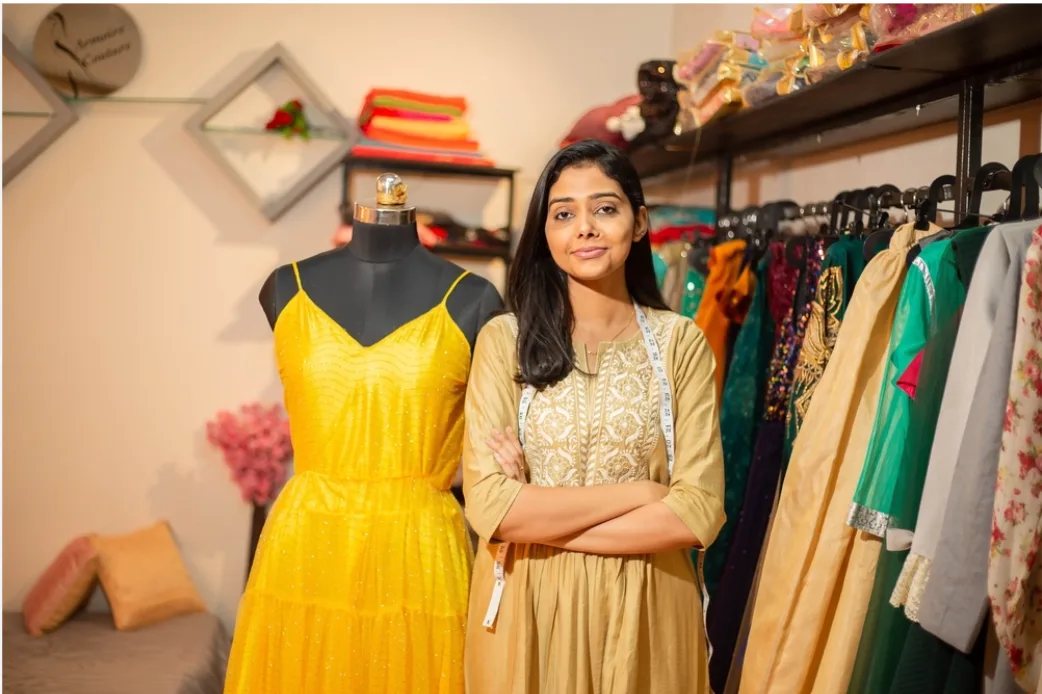
- Boutique or Tailoring Business: If you are good at stitching or designing clothes, you can start a small boutique from home or rent a small shop.
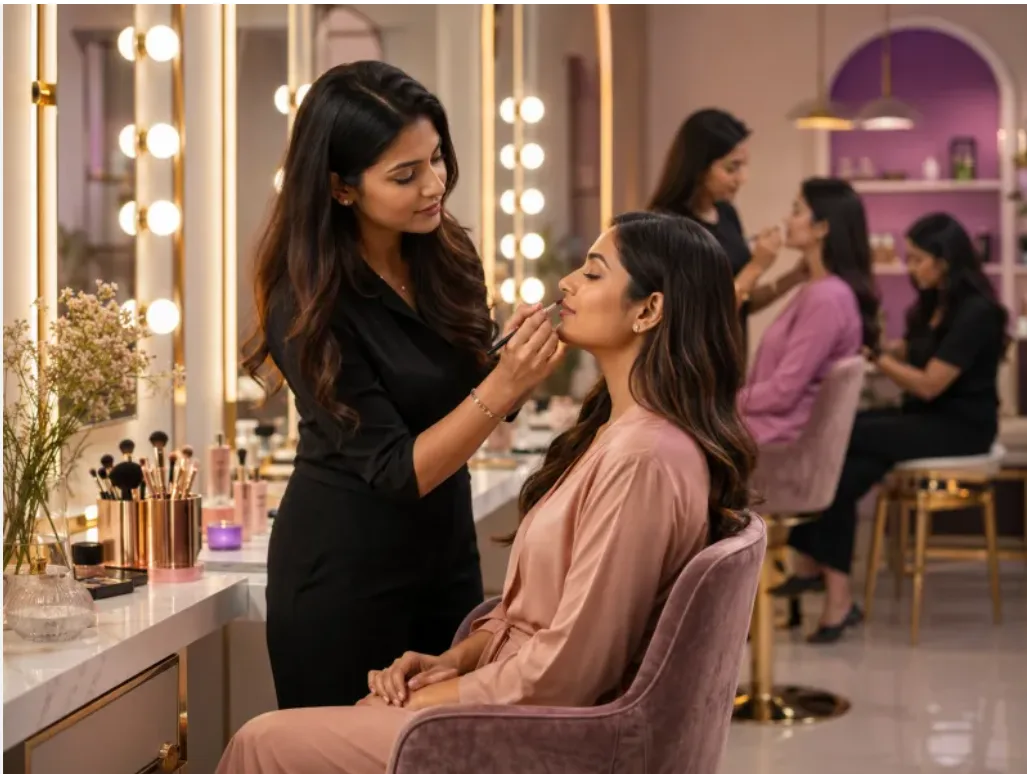
- Beauty Parlour or Salon: Many women start their own beauty parlours with basic training. It doesn't need a big investment and is always in demand.
- Home Tiffin or Catering Services: If you love cooking, you can provide homemade food to office-goers or students. This is a great way to earn from home.
- Online Teaching or Tuition Classes: If you are good at any subject or skill like English, Maths, or music, you can teach students online or at home.
- Handmade Crafts or Jewellery: Making and selling handmade jewellery, gift items, or crafts is a creative and profitable business idea.
- Blogging or YouTube Channel: If you enjoy writing, cooking, makeup, or teaching, you can start a blog or YouTube channel and earn through ads and sponsorships.
- Freelance Work (Writing, Graphic Design, etc.): You can work from home as a freelance writer, designer, or marketer through online platforms like Fiverr or Upwork.
- Reselling Products Online: You can sell clothes, beauty products, or home items through WhatsApp, Instagram, or platforms like Meesho.
- Daycare or Playschool: If you are good with kids, starting a daycare or small playschool at home can be a good option.
- Fitness or Yoga Classes: If you are into health and fitness, you can teach yoga or workout sessions from home or online.
Note : Meesho does not mandatorily require a GSTIN for all sellers. Eligible sellers can register using a PAN-based Enrollment ID (EID) if they sell only within their state and remain below the applicable GST turnover threshold. They must obtain the enrolment number through the GST portal. However, sellers shipping across state lines need a GSTIN. This makes Meesho a lower-barrier option than Amazon or Flipkart for women starting a low-investment business.
Digital Presence and Online Selling Basics for Women Entrepreneurs
Several of the ideas above, including reselling, freelancing, blogging, and handmade crafts, depend on a solid online presence. Here's what to set up before you start selling:
- WhatsApp Business: Create a free Business account, separate from your personal number. Build a product catalog, set auto-replies, and organize customer chats. This is often the simplest starting point for reselling or home-based food businesses.
- Instagram Shop or Business Profile: Switch to a Business account to add contact buttons and track post insights. You can eventually tag products directly if you sell physical goods.
- Meesho or Similar Reseller Platforms: Sign up with no upfront inventory investment, no need to hold or store stock yourself. The platform also handles logistics, packaging, and delivery on your behalf, making this one of the lowest-barrier, lowest-risk options on this list.
- A Simple Payment Setup: A UPI ID linked to your bank account covers most small transactions. For a more formal setup, a payment gateway account like Razorpay or PhonePe Business helps if you're building a proper storefront.
- Basic Photography: Natural light and a clean background go a long way. You don't need professional equipment to make products look appealing; just consistency across your posts.
- Simple Order Tracking: Even a basic spreadsheet helps you avoid missed orders or double-selling stock. WhatsApp Business and Meesho also have built-in tools for this.
You don't need to master all of this on day one. Most women start with just WhatsApp and Instagram, then add platforms as the business grows.
Get Your Company Registered Today
Free consultations for MCA approvals to help you get started with your business.
Steps for Women to Start Their Own Business in India in 2026-27
Starting a business is a great way for women to earn money, become independent, and follow their passion. It may seem difficult in the beginning, but with the right steps, any woman can start her own business. Here's what you have to do:
Step 1: Do Basic Market Research
Before starting your business, it's important to find out if people actually need or want your product or service. A little research can save time and money, and help you offer something that stands out.
- Talk to Real People: Ask your neighbours, friends, family, or local women's groups what they like, need, or currently use. Honest feedback is valuable.
- Use Online Polls: Create simple polls on Instagram Stories, WhatsApp Groups, or Facebook to understand what people prefer.
- Check Local Trends: Visit nearby markets or browse online platforms like Amazon, Meesho, or Flipkart to see what's currently popular.
- Find Your Unique Angle: Look at what others are already offering. Can you provide better quality, affordable pricing, or custom-made options?
Example: If many people sell homemade pickles, think about offering sugar-free, organic, or regional specialty versions to stand out.
Step 2: Create a Small Plan
Once you know what people want, translate those findings into a basic plan for your business. This doesn't need to be complicated, just a clear outline to guide your first steps.
Think about the following:
- What will you sell? Decide whether you'll offer a product (like snacks, clothes, or jewellery) or a service (like beauty, tuition, or yoga).
- Who are your ideal customers? Identify your target audience, such as students, mothers, working professionals, or residents. This helps you understand their needs and plan your products, pricing, and marketing accordingly.
- What makes you special? List what sets you apart. Is your product homemade, affordable, eco-friendly, or customized?
- How much money will you need to start? Estimate initial costs for things like raw materials, packaging, internet, or tools.
- Where will you sell? Choose your selling platforms, either from home, through WhatsApp, Instagram, local markets, or online marketplaces.
- How will you promote your business? Decide on your marketing plan. You have options such as word of mouth, social media, free samples, referrals, or posters.
Step 3: Set a Budget
The amount you need to start depends on the type of business you choose. A home-based service or small online business may require a modest budget for basic tools, raw materials, a phone, and internet. A business that needs equipment, inventory, staff, or a physical location will require more upfront investment.
Plan your budget around your actual business needs and avoid unnecessary expenses at the start. If you need additional funding, women entrepreneurs can explore government-backed schemes and small business loans that can help them build financial independence.
Step 4: Register Your Business (If Needed)
For small home-based businesses, you may not need any kind of registration at the start. Here's what actually applies as you grow:
- Selling through Amazon or Flipkart: GST registration is mandatory regardless of turnover; both platforms require it for every seller.
- Selling through Meesho: A notable exception, you can register with just a PAN-based Enrollment ID for many categories, without needing a full GSTIN.
- Growing beyond a small home setup: You may also need a shop license or Udyam (MSME) registration.
- Applying for loans or government benefits: Formal registration through Udyam or GST makes this process significantly easier.
Step 5: Promote Your Business
Tell everyone about your business, including family, friends, neighbours, and local groups. Use free tools like WhatsApp, Facebook, and Instagram to show your work, share prices, and post customer reviews. You can also make simple visiting cards or posters for offline promotion.
Step 6: Keep Learning and Improving
Watch free videos on YouTube, attend online workshops, or join women entrepreneur groups to learn new skills and marketing tricks. The more you learn, the better your business will grow.
Government Support and Resources for Women Entrepreneurs in India
More women in India are focusing on financial independence and building businesses of their own. In recent years, access to funding, training, digital tools, and business support has also improved. Government agencies, banks, and private organizations now offer several resources to help women start and grow their businesses.
1. Government Schemes for Women
The Indian government has special schemes that provide financial help, training, and support to women entrepreneurs. Some popular schemes are:
- Mudra Yojana for Women: Offers collateral-free loans without much paperwork. The scheme has four tiers. These include Shishu (up to ₹50,000), Kishor (₹50,000–₹5 lakh), Tarun (₹5–10 lakh), and the newer Tarun Plus (₹10–20 lakh, introduced in the 2024–25 Union Budget). Women borrowers also get a 0.25% interest rate concession.
- Mahila Udyam Nidhi Scheme: Provides soft loans of up to ₹10 lakh. These loans help women set up or expand small-scale enterprises.
- Stand-Up India Scheme: Provides greenfield business loans between ₹10 lakh and ₹1 crore to women entrepreneurs and SC/ST applicants for setting up a new enterprise.
- New Scheme for First-Time Entrepreneurs (Budget 2025-26): Announced in the 2025-26 Union Budget, this scheme provides term loans of up to ₹2 crore over five years to 5 lakh first-time women, SC, and ST entrepreneurs, along with online skill-building and capacity-development modules. It draws on lessons from the Stand-Up India scheme.
- GeM Registration and the Womaniya Initiative: Let women-led MSEs and Self Help Groups sell directly to government buyers on the Government e-Marketplace. This allows them to bypass intermediaries entirely. As of January 2026, over 2 lakh women-led MSEs have registered. They have collectively secured more than ₹80,000 crore in procurement orders, well above the mandated target.
- Public Procurement Policy for MSEs: A 3% sub-target specifically for women-owned MSEs sits within the broader 25% procurement target. This target is reserved for micro and small enterprises across government ministries and PSUs.
- Women Entrepreneurship Platform (WEP) by NITI Aayog: A unified digital platform offering access to government schemes, private mentorship, funding, networking, and skill development resources, all tailored for women.
- Skill India & PMKVY (Pradhan Mantri Kaushal Vikas Yojana): Provides hands-on vocational training to women in fields such as tailoring, beauty, digital marketing, and food processing to boost self-employment.
- MSME Udyam Registration Benefits: Women-owned MSMEs can access benefits such as easier access to credit, interest subsidies, and certain government incentives after registering on the Udyam portal. They may also receive priority access to government tenders and eligible subsidies.
2. Women-Specific Business Loans
Many banks and financial institutions offer special loans for women with lower interest rates and easy terms.
Examples:
- SBI's Stree Shakti Loan
- HDFC's Parivartan Loan
- Punjab National Bank's Mahila Udyami Scheme
These loans help women buy equipment, raw materials, or open a shop.
3. Skill Development and Training Programs
There are many free and low-cost training programs to help women learn business skills, digital marketing, packaging, financial planning, etc.
Some popular training sources:
- NSDC (National Skill Development Corporation)
- MSME Training Centers
- Skill India Mission
- Women Entrepreneurship Platform (WEP) by NITI Aayog
4. Online Platforms and Communities
Women can join online groups and forums where they can get advice, share ideas, and connect with other women entrepreneurs.
Examples:
- HEN India (Her Entrepreneurial Network): A community with 19 chapters across India, running grassroots programs to support women in business.
- FICCI Ladies Organisation (FLO): Offers structured, paid membership for women entrepreneurs in trade, commerce, and industry, with mentorship and policy advocacy support.
- SHEROES app: A dedicated platform for women to network, find opportunities, and access business resources.
- Facebook business groups: Active communities like Women Helping Women Entrepreneurs, where members share advice and connect over shared challenges.
- LinkedIn communities for businesswomen: Groups focused on peer support, fundraising discussions, and industry-specific networking for women founders.
5. NGO and Private Support
Some NGOs and private organizations also help women by offering mentorship, small funding, and business tools.
Examples:
- SEWA (Self-Employed Women's Association)
- FICCI Ladies Organisation (FLO)
- TIE Women's Network
Register Your Company in Just 7–15 Days
Skip lengthy paperwork and delays with expert support for a faster MCA registration process.
Legal Requirements & Licenses to Start a Business for Women in India
Even if you are running a small business from home, having the right registrations and licenses can help you grow and look professional.
1. Choose a Business Structure
First, decide how you want to run your business. Common types are:
- Sole Proprietorship , best for small businesses owned by one person.
- Partnership Firm , if you are starting the business with someone else.
- Private Limited Company or LLP , for bigger businesses or if you plan to grow big.
2. Register Your Business Name
If you have a brand or business name, you can register it to avoid copying by others. You can also apply for a trademark for extra protection.
3. UDYAM Registration (for MSMEs)
If your business is small or medium-sized, you can register under UDYAM . Registering on the Udyam portal is free and gives you benefits like easy loans, government schemes, and subsidies.
4. GST Registration
GST registration requirements depend on what you're selling. For goods businesses such as jewellery, crafts, packaged snacks, and clothes, registration is mandatory once turnover crosses ₹40 lakh, or ₹20 lakh in special category states. For service businesses such as tuition, salon, freelancing, and consulting, the threshold is ₹20 lakh, or ₹10 lakh in special category states.
If you sell through Amazon or Flipkart, GST registration is generally required from day one, regardless of turnover. For Meesho, a PAN-based Enrollment ID can substitute for a full GSTIN in many categories.
Once registered, you can legally charge GST on your bills and file GST returns as required.
5. FSSAI License (for Food Businesses)
If you are planning to start a tiffin service, bakery, or sell any food products, you must get an FSSAI food license from the Food Safety Department.
6. Shop & Establishment License
If you are opening a shop, salon, or any outlet, you may need to get this license from your local municipal office. It gives you legal permission to run a business from a location.
7. Import-Export Code (IEC)
If you want to sell or buy products from other countries, you need to get an IEC code from the DGFT (Director General of Foreign Trade).
8. Business Bank Account
Always open a separate bank account for your business in the business name. It makes managing money and applying for loans easier.
9. Other Licenses (if required)
Some businesses like salons, daycares, or teaching centres may require local permits, fire safety clearance, or education approvals depending on the state.
How Much Money is Needed to Start a Business for Women?
The cost of starting a business in India can vary widely. Freelance or reselling work can be started with as little as ₹0, while a fully equipped home-based beauty parlour can cost up to ₹5 lakh. Actual costs may vary by city, services offered, and whether you already have the required skills or equipment.
The table below gives a clearer idea of the estimated investment needed for different business ideas:
| Type of Business | Basic Setup Cost (Approx.) | Details |
| Home-Based Tiffin Service | ₹5,000 – ₹20,000 | Utensils, raw materials, packaging, delivery containers |
| Tailoring or Boutique Business | ₹10,000 – ₹50,000 | Sewing machine, fabrics, threads, rent (if any) |
| Beauty Parlour (Home-based) | ₹1,00,000 – ₹5,00,000 | Basic training, beauty equipment, furniture, initial product stock |
| Handmade Jewellery or Crafts | ₹5,000 – ₹25,000 | Raw materials, tools, basic packaging, promotion |
| Tuition or Coaching Classes | ₹3,000 – ₹10,000 | Whiteboard, study material, table/chairs, internet |
| Online Reselling (WhatsApp/Meesho) | ₹0 – ₹5,000 | No stock needed, mobile phone, basic data plan |
| Freelance Work (Writing, Design, etc.) | ₹0 – ₹10,000 | Laptop, internet, software (optional) |
| Homemade Pickles/Snacks | ₹4,000 – ₹15,000 | Ingredients, jars, labels, FSSAI registration (optional) |
| Yoga/Fitness Classes (Online/Home) | ₹5,000 – ₹30,000 | Yoga mat, training, internet, marketing tools |
| Daycare/Playschool at Home | ₹20,000 – ₹1,00,000+ | Toys, mats, furniture, licenses, safety equipment |
Note: These are estimated figures based on current market research.
Don't Let Delays Hold Your Business Back
Simplify registrations, documentation and ongoing compliance with a dedicated expert on your side.
Common Problems Women Face in Starting a Business
Starting a business comes with challenges for everyone, but women often face additional barriers. Social expectations, limited access to funding, fewer business networks, and unequal opportunities can make the journey harder. Recognizing these challenges can help women find the right support and build their businesses with greater confidence.
Here's what trips people up most, and how to actually work through it:
- Limited Access to Capital: Many women struggle to get loans or funding due to a lack of assets or credit history. Consider schemes such as MUDRA, Stree Shakti, and Stand-Up India. A new scheme announced in Budget 2025–26 will provide term loans of up to ₹2 crore to eligible first-time women, SC, and ST entrepreneurs.
- Lack of Family or Social Support: Sometimes families or society don't fully support women's business ambitions. Connect with others through SHEROES, LinkedIn groups, or FICCI FLO for encouragement, ideas, and a genuine sense of community.
- Balancing Work and Home Responsibilities: Managing both household tasks and a business can be tiring and stressful. Start home-based businesses like tiffin services, tuition, or online selling, formats built around flexibility rather than fixed hours.
- Limited Knowledge of Legal & Financial Processes: Many women are unsure how to register a business , file taxes, or get licenses. Use free resources like YouTube, Skill India, or MSME workshops to learn the basics without needing to hire help right away.
- Lack of Mentorship and Networking: Not having access to experienced mentors or business groups can slow down growth. Get guidance from local business mentors, join webinars, or attend workshops to build both your network and your confidence.
Starting a business as a woman in India comes down to a few essentials. Choose an idea that matches your skills, budget, and available time. Register your business when required and use the government support available, from Mudra loans to GeM's Womaniya initiative.
With over 3.07 crore women-led enterprises registered on Udyam, you'd be joining a large and growing community. Starting small from a home kitchen or WhatsApp catalog can also be a practical path toward building something bigger.


Frequently Asked Questions (FAQs)
What is the best business idea for women with low investment?
−Tuition classes, freelancing, online reselling, and homemade snacks are among the lowest-investment business ideas for women. Several can start with under ₹10,000 and need no dedicated shop or equipment.
Are there any government schemes for women entrepreneurs?
+Is there any training available for women entrepreneurs?
+Where can I find other women entrepreneurs for support?
+


Get your business a separate legal identity, limited liability protection, and easier access to funding.

Register a Limited Liability Partnership with flexible structure and lower compliance requirements.

Start your business journey as a single founder with limited liability protection.
Empowers entrepreneurs with government recognition, tax benefits, funding support, and simplified compliance.
Give your business a premium address and professional presence without the cost of a physical space.
Ensure legal, financial, and regulatory obligations and maintain the company’s good standing legally.

Register for Goods and Services Tax to legally collect tax from your customers.

Register as a Micro, Small, or Medium Enterprise to avail government benefits.

Obtain your FSSAI license to legally sell and serve safe food in India.
Featured In