


A GSTIN is a unique identification number assigned to businesses registered under the Goods and Services Tax system. Checking its status helps confirm whether a GSTIN is active, suspended, or cancelled on the GST portal.
Businesses, customers, and suppliers can verify GST details online through the GST Portal without logging in. Depending on the taxpayer’s circumstances and applicable GST rules, this verification supports activities such as GST invoicing, return filing, and other GST-related transactions.
Key Takeaways
- GST status may show a registration as Active, Suspended, or Cancelled.
- Under Rule 21A(2A), a taxpayer’s GSTIN may be suspended due to significant discrepancies between GST returns and supply details, or non-compliance with Rule 10A. The taxpayer may receive Form GST REG-31 and must generally respond within 30 days.
- You can check a GSTIN’s status without logging in by entering the 15-digit GSTIN/UIN and CAPTCHA on the GST Portal.
- The search results can show important details such as the legal name, trade name, registration date, taxpayer type, principal place of business, and cancellation details, where applicable.
- Checking GST status before dealing with a supplier or customer helps businesses verify registration details and reduce risks related to incorrect invoices and Input Tax Credit (ITC).
What Does GST Active Status Mean?
“Active” status means that the GST registration is currently active on the GST Portal. It does not, by itself, confirm that the taxpayer has filed all applicable GST returns or complied with every GST requirement.
When your GST registration is active, you can carry out activities permitted for a registered taxpayer under GST law, such as:
- Issue tax invoices, where applicable
- File applicable GST returns
- Permit taxable supplies, subject to GST requirements
- Generate e-way bills where applicable
A suspended GST registration is subject to specific restrictions under Rule 21A of the CGST Rules. During the suspension period, the taxpayer cannot make taxable supplies or issue tax invoices for such supplies. Under Rule 21A(3), the taxpayer is also not required to furnish returns under Section 39 during the suspension. Further, Rule 21A(3A) provides that a taxpayer whose registration is suspended under Rule 21A(2) or Rule 21A(2A) cannot be granted a refund under Section 54 during the suspension period.
What Does Active, Suspended, or Cancelled GST Status Mean?
The GST status indicates whether a taxpayer’s registration is currently valid, temporarily suspended, or cancelled. Each status affects the taxpayer’s ability to carry out GST-related activities.
- Active: The GST registration is currently valid, allowing the taxpayer to conduct GST-related activities subject to applicable rules and compliance requirements.
- Suspended: The registration is temporarily inactive while a cancellation application or compliance proceedings are pending. The taxpayer must not make taxable supplies or issue tax invoices during the suspension period.
- Cancelled: The GST registration is no longer valid. The taxpayer cannot make taxable supplies under that GSTIN unless the registration is restored or a new registration is obtained, as applicable.
What Details Can You Check Using GSTIN?
The GST Portal’s Search Taxpayer facility allows you to view key taxpayer details without logging in. These may include:
- GSTIN/UIN
- Legal name of the business
- Trade name
- Effective date of registration
- Constitution of business
- Taxpayer type
- Principal place of business
- GSTIN status
- Date of cancellation, where applicable
- Return filing details
- Return filing frequency
These details can help businesses verify a supplier’s or customer’s GST details, including their registration status and available turnover information, before entering into a transaction. You can also use our GST number search tool to quickly verify GST details instantly.
Step-by-Step Process to Check GST Active Status Online
Verifying your GST active status online includes the following steps:
1. Check GST Status on Portal
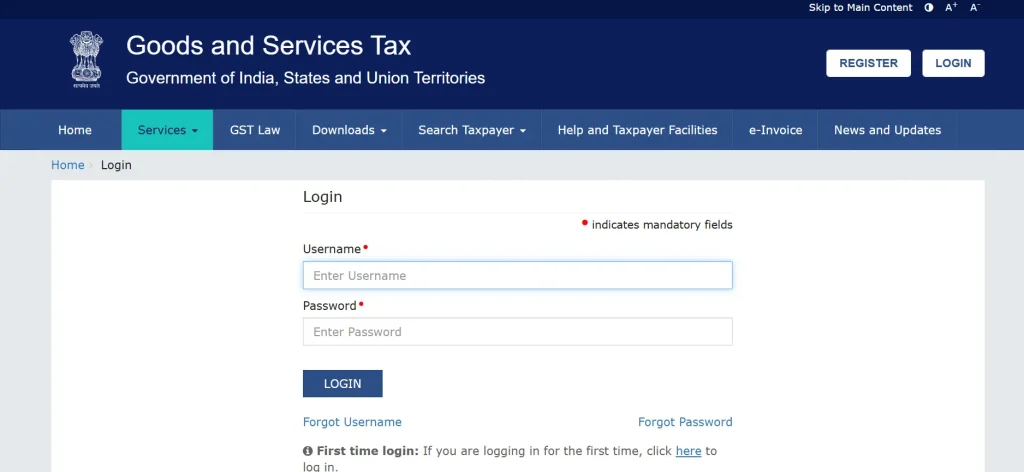
Visit the official GST Portal at gst.gov.in.
2. Click the “Search Taxpayer” Menu
On the GST Portal, open Search Taxpayer. The facility allows you to search for taxpayer details using options such as GSTIN/UIN or PAN, depending on the search facility selected.
3. Enter Your GSTIN
Input your 15-digit GSTIN accurately in the provided field. Even a minor mistake can result in an error, so double-check your entry.
4. Complete the CAPTCHA and Click Search
Enter the CAPTCHA displayed on the portal and click “Search”. The GST Portal will process the request and display the available details for the GSTIN, UIN, or PAN entered.
5. Review the GSTIN Details
Examine the details provided on the result page. Look for the GSTIN status. If the registration is currently active, the status will be shown as “Active”. The portal may also show “Suspended” or “Cancelled”, along with relevant dates or details where applicable.
6. Save or Print the Information
For your records, you can take a screenshot or print the details. This record can be useful for future audits or compliance checks.
Why Can a GSTIN Be Suspended or Cancelled?
At times, your GSTIN may be suspended or cancelled due to compliance or other regulatory issues. Some common reasons include:
- Non-Compliance with Filing Requirements: Non-filing of applicable GST returns can lead to cancellation proceedings. For taxpayers filing monthly returns, cancellation may apply after six continuous months of non-filing. For taxpayers under the QRMP scheme, cancellation may apply after two continuous tax periods. A person paying tax under the composition scheme may face cancellation if the return for a financial year is not furnished within three months after its due date.
- Incorrect or Outdated Information: Discrepancies in registration details, such as information relating to the principal place of business or other registration particulars, can result in compliance action.
- Government-Initiated Suspension: The proper officer may suspend a registration where there are grounds to believe that the registration is liable to cancellation, pending completion of the relevant proceedings.
What Should You Do If Your GSTIN is Suspended?
If your GSTIN is suspended under Rule 21A of the CGST Rules, the action required depends on the reason for suspension. Check the notice or communication on the GST Portal and respond within the applicable time.
If the proceedings are dropped, the registration continues. If the registration is cancelled, an eligible taxpayer may apply for revocation of cancellation under the applicable rules.
How to Revoke GST Registration Cancellation?
An eligible taxpayer can apply for revocation of cancellation in FORM GST REG-21 under Rule 23, generally within 90 days of receiving the cancellation order, subject to permitted extensions. If approved, the revocation order is issued in FORM GST REG-22. This deadline is extendable up to a total of 270 days with the required approvals. If rejection is proposed, FORM GST REG-23 is issued and the taxpayer can reply in FORM GST REG-24. For cancellation due to non-filing, pending returns and applicable tax, interest, penalty, and late fee must be paid first.
For appeals against a cancellation order, Section 107 generally provides three months from the date of communication, with a possible one-month extension for sufficient cause. Detailed timelines and extension provisions are covered under GST Cancellation and Revocation.
Importance of Regular GST Active Status Checks for Businesses
Regularly checking your GST status helps businesses identify registration-related issues early. Here’s why:
- Avoiding Compliance Issues and Business Disruptions: Regular GST status checks help identify suspension or cancellation issues early and prevent disruptions to taxable business activities.
- Preparing for Audits: Keeping a record of your GST status and associated documents can help maintain proper compliance records and support future audits or reviews.
- Staying Updated with GST Changes: GST rules and portal requirements can change over time. Staying updated helps businesses follow the latest GST requirements and take timely action when rules or compliance procedures change.
