LLP Compliance in India
Complete your LLP annual compliance in India - Form 11, Form 8, ITR-5, and the new triennial DIR-3 KYC. RegisterKaro manages ROC filings end-to-end, helping you avoid ₹100/day penalties and blocked event-based filings.
 Form 11, Form 8 & ITR-5 Annual Filing - On Time, Every YearAutomatic Due-Date Tracking, Including the New Triennial DIR-3 KYCEvent-Based ROC Filings: Partner Changes, LLP Agreement Updates & MoreFirst-Year Compliance for Newly Incorporated LLPsA Dedicated Compliance Expert - Not a Ticket Queue

 What Sets Us ApartWhat Sets Us Apart
What is LLP Annual Compliance?
After registration of your LLP, it must meet certain legal and statutory obligations every year. These ongoing requirements are collectively known as LLP annual compliance. They can include filings such as Form 11 (Annual Return), Form 8 (Statement of Account & Solvency), and ITR-5, along with other applicable compliances.
These requirements are prescribed under the Limited Liability Partnership Act, 2008, and applicable income tax laws. Even an inactive LLP or one with no income must complete the required filings unless it has been officially struck off. Timely compliance helps keep the LLP in good legal standing. It also helps maintain accurate MCA and tax records and avoid late fees, penalties, and other consequences of non-compliance.
Why is it Important to Keep Your LLP Compliant?
Keeping your LLP compliant helps you avoid penalties, maintain its active status, and keep your business ready for future changes or growth. It also keeps your MCA and tax records up to date.
Here are the key benefits of staying compliant:
- Remain legally active and avoid being classified as non-compliant by the MCA.
- Avoid late filing fees and penalties, which can accumulate without any upper limit for certain MCA filings.
- Prevent legal action against the LLP and its designated partners for non-compliance.
- Maintain transparency with regulators, lenders, investors, customers, and business partners.
- Build business credibility, making it easier to secure loans, attract investment, and win contracts.
- Ensure smooth access to financial services, such as bank loans, overdrafts, and credit facilities, where compliance documents are often required.
- Support future business transactions: Pending annual returns block all future MCA filings, including partner changes, registered office changes, and LLP agreement amendments, until the backlog is cleared. This can delay fundraising, partner induction, mergers, conversions, or closure of the LLP at exactly the moment you need to move quickly.
- Keep MCA records up to date, ensuring that information about partners and financial statements remains accurate and publicly available.
- Reduce the risk of compliance disputes and regulatory notices from the MCA or the Income Tax Department.
First Financial Year Rules for a Newly Incorporated LLP
The financial year for every LLP ends on 31 March. If your LLP is incorporated after 30 September, however, you can extend your first financial year to 31 March of the following year. This gives you a first financial year of up to 18 months (Section 2(1)(l), LLP Act, 2008).
This extension affects your first Form 8 and Form 11 deadlines:
- Form 11: Due within 60 days of the extended financial year-end.
- Form 8: Due within 30 days after six months from the extended financial year-end.
These deadlines are calculated from the extended year-end, not from a standard 12-month cycle. Missing this distinction can lead to unnecessary penalties for newly incorporated LLPs.
Post-Incorporation Compliance for LLP (One-Time Compliance Checklist)
With LLP incorporation, firms are required to complete one-time compliances to become fully operational. Some of these may need to be updated or re-filed if there is a change in the LLP's details, partners, or business activities.
1. Execute and File the LLP Agreement
- Draft the LLP Agreement on the applicable stamp paper within 30 days of incorporation.
- File Form 3 with the MCA within the prescribed timeline.
- Include details such as partners' rights and duties, capital contribution, profit-sharing ratio, and management structure.
- Update and file the agreement whenever any material changes occur.
2. Ensure PAN and TAN Are Available
- Verify that your LLP has been allotted a PAN and TAN.
- Apply separately only if they were not issued during incorporation.
- Use these registrations for tax compliance, banking, and statutory filings.
3. Maintain Proper Books of Accounts
- Maintain proper books of accounts as required under Section 34 of the LLP Act, 2008.
- Record all business transactions accurately from the date of registration.
- Preserve invoices, receipts, bank statements, and other supporting documents.
- Maintain records to support annual filings, audits (where applicable), and tax compliance.
4. Open a Current Bank Account
- Open a bank account in the LLP's name using the incorporation documents.
- Deposit the agreed capital contribution, if applicable.
- Route all business receipts and payments through this account.
5. Obtain Applicable Business Registrations
Depending on your business activities, obtain registrations such as:
- GST Registration
- Import Export Code (IEC)
- Shops and Establishments Registration
- Professional Tax Registration
- FSSAI Licence
- Any industry-specific approvals
6. Complete Employee-Related Registrations (If Applicable)
If your LLP hires employees, obtain registrations under applicable labor laws, such as:
- Employees' Provident Fund (EPF)
- Employees' State Insurance (ESI)
- Other state-specific labour registrations
7. Complete DIR-3 KYC for Designated Partners
Ensure every designated partner holding a DIN completes DIR-3 KYC. From FY 2026–27 onwards, DIR-3 KYC is required once every three financial years. Therefore, if it was completed for FY 2025–26, it will not be required again for FY 2026–27 and will next be due in FY 2028–29, unless the KYC details change earlier.
Update KYC details promptly whenever there is a change in personal information of any of the partners.
Key LLP Annual Filings Forms: Purpose & Due Dates for FY 2026-27
Along with the one-time compliances mentioned above, there are the key filings an LLP needs to complete every year to stay compliant with MCA requirements:
1. Form 11, Annual Return
Reports the LLP's structure and details as of 31 March 2027.
Form 11 includes:
- Details of partners and designated partners
- Partners' contributions
- Changes in the LLP's structure during the year
How to file:
- File e-Form 11 through the MCA V3 portal (mca.gov.in).
- Digitally sign the form using the designated partner's DSC.
- Pay the applicable government filing fee (₹50 to ₹600, depending on the LLP's total contribution).
Due date: 30 May 2027 (within 60 days from the end of FY 2026-27).
2. Form 8, Statement of Account and Solvency
Reports the LLP's financial position and confirms its solvency (Section 34 of the LLP Act, 2008).
Form 8 includes:
- Statement of assets and liabilities
- Statement of income and expenditure
- Declaration of solvency by the designated partners
How to file:
- File e-Form 8 through the MCA V3 portal.
- Digitally sign the form and obtain professional certification, where required.
- Pay the applicable government filing fee, ranging from ₹50 to ₹600.
Due date: 30 October 2027 (within 30 days after the end of six months of FY 2026-27).
3. ITR-5, Income Tax Return
Reports the LLP's income and tax liability to the Income Tax Department under the Income Tax Act, 2025.
It includes:
- Income and expenditure
- Deductions claimed
- Tax liability
- Taxes paid during the financial year
How to file:
- File ITR through the Income Tax e-Filing portal (incometax.gov.in).
- Verify the return electronically using the prescribed verification method.
- Pay any outstanding tax liability before or at the time of filing, if applicable.
Due date:
- 31 July 2027 for non-audit cases.
- 31 October 2027 for audit cases.
- Where a tax audit applies, file the audit report (Form 3CA/3CB-3CD) by 30 September 2027.
4. Tax Audit Report (Form 3CA/3CB-3CD) (If Applicable)
Reports the LLP's audited financial statements and tax audit particulars where a tax audit is required under the Income-tax Act, 2025.
How to file:
- Get the accounts audited by a Chartered Accountant.
- File Form 3CA or Form 3CB along with Form 3CD through the Income Tax e-Filing portal.
- Complete the filing before submitting ITR-5.
Due date:30 September 2027, unless extended by the Government.
5. DIR-3 KYC, Designated Partner KYC
Keeps the Director Identification Number (DIN) of designated partners (at least two) active.
How to file:
- Complete the prescribed DIR-3 KYC filing through the MCA portal.
- Verify the details using the designated partner's DSC or OTP, as applicable.
- Complete the filing within the applicable MCA timeline.
Due date: Once every three financial years, effective from FY 2026-27 onward.
6. TDS Return Filing, Section 194T
Ensures that LLPs deduct, deposit, and report Tax Deducted at Source (TDS) on specified payments made to partners under Section 393(3), Table, Serial No. 7 of the Income-tax Act, 2025. This provision corresponds to Section 194T of the Income-tax Act, 1961.
Section 194T applies when an LLP pays:
- Salary or remuneration to partners
- Commission or bonus to partners
- Interest on partners' capital or loans
If these payments to a partner exceed ₹20,000 in a financial year, the LLP must deduct TDS at 10%. TDS applies at the time of credit or payment, whichever is earlier.
How to comply:
- Deduct TDS at the prescribed rate.
- Deposit the TDS with the Central Government within the prescribed time.
- File the quarterly TDS Return (Form 26Q).
- Issue Form 16A to the partner within the prescribed timeline.
Due dates: Deposit TDS by the prescribed due date (generally the 7th of the following month, or 30 April 2027 for deductions made in March 2027).
File Form 26Q by:
- 31 July 2026 (Q1: Apr-Jun 2026)
- 31 October 2026 (Q2: Jul-Sep 2026)
- 31 January 2027 (Q3: Oct-Dec 2026)
- 31 May 2027 (Q4: Jan-Mar 2027)
Late filing penalty: Filing Form 26Q after the due date attracts a fee of ₹200 per day under Section 234E, capped at the total TDS amount deducted for that quarter.
Note: Additional compliances may apply based on the LLP's turnover, business activities, and registrations. These may include GSTR-9, TDS returns, GSTR-1, GSTR-3B, tax audit reports, or other regulatory filings.
LLP Compliance Checklist for Event-Based Filings
An LLP must report these event-based compliances to the MCA as and when they occur:
- Change in partners or designated partners: File Form 4 within 30 days to report the appointment, resignation, cessation, death, or change in the details of a partner or designated partner.
- Change in the LLP Agreement: File Form 3 within 30 days whenever you amend the LLP Agreement, such as changing the profit-sharing ratio, business activities, or partners' rights and responsibilities.
- Change in the registered office: File Form 15 within 30 days after shifting the LLP's registered office.
- Change in the LLP's name: Obtain approval for the new name and file Form 5 with the ROC within 30 days of the name approval.
- Change in partners' contribution: If the partners increase or modify their capital contribution, update the LLP Agreement and file Form 3. If the change also affects partner details, file Form 4, wherever applicable.
- Display LLPIN on all documents: Show the LLP's name, registered office address, registration number, and a statement confirming that it is registered with limited liability on all invoices, official correspondence, and publications. Failure to comply attracts a ₹10,000 penalty under Section 21 of the LLP Act, 2008.
Note: If you miss these deadlines, event-based forms attract graded additional filing fees based on the length of the delay. Small LLPs pay 1–25 times the normal filing fee, while other LLPs pay 1–50 times the normal fee.
Documents Required for LLP Annual Compliance
Keep the following documents ready before filing your LLP annual compliance forms:
- LLP Agreement and any supplementary agreements or amendments made during the financial year.
- Company Incorporation Certificate and LLPIN details.
- PAN card of the LLP.
- Details of all partners and designated partners, including their DIN, capital contribution, profit-sharing ratio, and any changes during the financial year.
- Bank statements for all LLP bank accounts and a summary of income and expenses.
- GST returns and records, if the LLP is registered under GST.
- Details of charges (if any) created, modified, or satisfied during the financial year, along with supporting documents.
- Professional certification details, where applicable, for Form 8 and Form 11.
- MSMED Act, 2006 disclosure of outstanding payments to micro and small enterprise suppliers, a mandatory attachment to Form 8.
- TDS certificates, TDS returns, and challans, if tax was deducted at source.
- Tax Audit Report (Form 3CA/3CB and Form 3CD), if the LLP is subject to a tax audit.
- Class 3 Digital Signature Certificate (DSC) of the designated partner(s) for signing MCA forms and the income tax return.
- Previous year's financial statements and filed returns, if required for reconciliation or reference.
ROC Compliance for LLP: How to File LLP Annual Returns Step-by-Step
Annual LLP compliance involves keeping your accounts updated, preparing financial statements, filing the required MCA forms, and completing income tax filings. It also includes checking whether your LLP has any audit or event-based compliance requirements. Here's how to handle the process:
Step 1: Close the Books of Accounts
Finalize your accounting records before preparing the annual filings.
This includes:
- Recording all income and expenses.
- Reconciling bank accounts.
- Verifying invoices and receipts.
- Closing the books for the financial year.
Step 2: Prepare the Financial Statements
Prepare the LLP's annual financial statements based on the finalized books of accounts. If your LLP's annual turnover exceeds ₹40 lakh or the partners' contribution exceeds ₹25 lakh during the financial year, complete a statutory audit before proceeding with the filings.
Important: The LLP Act audit requirement depends on turnover or contribution exceeding the prescribed limits. A separate tax audit under Section 44AB of the Income Tax Act may also apply based on turnover and transaction conditions. These are separate requirements, so check each threshold independently.
The financial statements prepared at this stage are used for both MCA filings and the Income Tax Return.
Step 3: Verify the Compliance Information
Before filing, review all statutory information to ensure it is accurate and up to date. Verify:
- Partner and designated partner details
- Capital contribution records
- LLP Agreement amendments made during the year
- Class 3 DSCs
- Financial information to be reported
Step 4: File the MCA Forms
- Log in to the MCA V3 portal.
- Complete and submit the applicable annual forms.
- Get Form 8 certified by a practicing Chartered Accountant, Company Secretary, or Cost Accountant, where required.
- Get Form 11 certified by a practicing Company Secretary if the LLP's contribution exceeds ₹50 lakh or the turnover exceeds ₹5 crore. Otherwise, a designated partner may certify the form.
- Digitally sign the forms and pay the prescribed government fees.
- Note the generated Service Request Number (SRN) for each filing.
Step 5: File the Income Tax Return
Once the MCA filings are complete, file ITR-5 through the Income Tax e-Filing portal.
During this step:
- Report the LLP's income and deductions.
- Calculate the tax liability.
- Pay any outstanding taxes and interest, if applicable.
- Verify the return using the LLP's DSC.
The information reported in the income tax return should match the LLP's financial statements.
Step 6: Complete Remaining Compliance Requirements
- Complete DIR-3 KYC, if applicable.
- Ensure all event-based compliances have been filed.
- Verify that no statutory filings remain pending.
Step 7: Download and Preserve the Filing Records
After completing all filings, download and securely store:
- MCA acknowledgment receipts and SRNs
- Government payment challans
- Filed copies of Form 11 and Form 8
- ITR acknowledgment
- Financial statements and audit reports, where applicable
LLPs that do not require an audit can usually complete the annual compliance process within 1-2 weeks. If a statutory audit is required, the process generally takes 2-4 weeks.
Tip: Start preparing your books and financial statements soon after the financial year ends on 31 March. This gives you enough time to complete the audit (if applicable) and file all statutory forms well before the due dates, reducing the risk of last-minute errors or additional filing fees.
LLP Compliance Fees and Government Charges
LLP annual compliance fee in India starts from ₹15,000 per year. Here is a detailed breakdown:
| Category | Details | Estimated Cost |
| Government Filing Fees | ||
| Form 8 Filing Fee | LLP contribution up to ₹1 lakh | ₹50 |
| LLP contribution above ₹1 lakh to ₹5 lakh | ₹100 | |
| LLP contribution above ₹5 lakh to ₹10 lakh | ₹150 | |
| LLP contribution above ₹10 lakh to ₹25 lakh | ₹200 | |
| LLP contribution above ₹25 lakh to ₹1 crore | ₹400 | |
| LLP contribution above ₹1 crore | ₹600 | |
| Form 11 Filing Fee | Same fee structure as Form 8 | ₹50-₹600 |
| Income Tax Return (ITR-5) | Government filing fee | Nil (late filing fees may apply under the Income Tax Act) |
| DIR-3 KYC | Filed within the prescribed timeline | Nil |
| Reactivation of deactivated DIN (delayed KYC) | ₹5,000 | |
| Professional Fees (Indicative) | ||
| Bookkeeping & Financial Statements | Preparation of books and annual financial statements | ₹3,000-₹15,000+ |
| Statutory Audit (if applicable) | Audit by a Chartered Accountant | ₹5,000-₹30,000+ |
| MCA Annual Filings | Preparation and filing of Form 8 and Form 11 | ₹2,000-₹8,000+ |
| Income Tax Return (ITR-5) | Preparation and filing of ITR-5 | ₹2,000-₹7,500+ |
| Other Costs | ||
| Class 3 DSC | New issue or renewal (generally valid for 2 years) | ₹2,500 per DSC |
| PAN/TAN Correction or Update (if required) | Government fees and service charges | ₹110-₹500+ |
Note: Small LLPs with capital contribution up to ₹25 lakh and turnover up to ₹40 lakh may qualify for lower government filing fees and reduced additional fees.
Penalties for Late Compliance of an LLP in India
Missing a compliance deadline can have serious financial and operational consequences for your LLP, especially when applying for MCA filings. Here's exactly what's at stake for each type of default:
| Compliance | Financial Penalty | Other Consequences |
| Form 11 (Annual Return) | ₹100 per day of delay, with no upper limit | The additional fee continues until the LLP files the form. |
| Form 8 (Statement of Account and Solvency) | ₹100 per day of delay, with no upper limit | The additional fee continues until the LLP files the form. |
| Event-based LLP Forms (Form 3, Form 4, Form 15, etc.) | 1× to 25× of the normal filing fee for Small LLPs; 1× to 50× for other LLPs, depending on the delay period | Delayed filing may postpone approval of partner changes, LLP agreement amendments, registered office changes, and other statutory updates. |
| ITR-5 (Income Tax Return) | Late filing fee under Section 234F of up to ₹5,000 (or ₹1,000 if total income does not exceed ₹5 lakh), plus applicable interest | The LLP may lose the benefit of carrying forward certain business losses and face other consequences under the Income Tax Act. |
| DIR-3 KYC / DIR-3 KYC Web | ₹5,000 government fee to reactivate a deactivated DIN | The designated partner cannot sign MCA forms until the DIN is reactivated, delaying other LLP filings. |
| Tax Audit Report (if applicable) | Penalty under Section 271B of 0.5% of turnover or gross receipts (maximum ₹1,50,000), whichever is lower | The Income Tax Department may initiate further action unless the LLP has a reasonable cause for the delay. |
Other Consequences of Non-Compliance
Beyond the financial penalties above, repeated or prolonged non-compliance triggers a separate set of regulatory and operational problems.
- Strike-off and winding-up risk: The ROC may strike off a non-compliant or defunct LLP under Section 75 of the LLP Act. If the LLP fails to file its Statement of Account and Solvency or annual return for five consecutive financial years, the Tribunal may order its winding up under Section 64.
- Loss of legal standing: A struck-off LLP cannot legally carry on business until it is restored.
- Automatic filing lockout: The MCA portal rejects all event-based filings, partner changes, registered office changes, and LLP agreement amendments if Form 11 or Form 8 remains pending, regardless of how the delay occurred.
- Difficulty accessing financial services: Banks, lenders, and investors often review MCA compliance records before approving loans or investments.
- Regulatory notices and legal action: The LLP and its designated partners may receive notices or face proceedings for persistent non-compliance.
LLP Compliance Calendar & Filing Due Dates (FY 2026-27)
Use this LLP compliance checklist to track your statutory obligations for the Financial Year (FY) 2026-27:
| Timeline / Due Date | Compliance | Applicable To |
| Throughout FY 2026-27 | Maintain books of accounts, supporting documents, and statutory records. | All LLPs |
| Within 30 days of any event | File the applicable MCA forms for changes in partners, designated partners, LLP Agreement, registered office, name, or other reportable changes. | LLPs with applicable changes |
| 15 June 2026 | Pay the first advance tax installment (15%). | LLPs with an advance tax liability of ₹10,000 or more |
| 31 July 2026 | File Form 26Q for Q1 (Apr-Jun 2026). | LLPs liable to deduct TDS |
| 30 June 2028 | File DIR-3 KYC for designated partners (first cycle under the new triennial rule). | Designated partners due for KYC in this cycle |
| 15 September 2026 | Pay the second advance tax installment (45%). | LLPs with an advance tax liability of ₹10,000 or more |
| 31 October 2026 | File Form 26Q for Q2 (Jul-Sep 2026). | LLPs liable to deduct TDS |
| 15 December 2026 | Pay the third advance tax installment (75%). | LLPs with an advance tax liability of ₹10,000 or more |
| 31 January 2027 | File Form 26Q for Q3 (Oct-Dec 2026). | LLPs liable to deduct TDS |
| 15 March 2027 | Pay the final advance tax installment (100%). | LLPs with an advance tax liability of ₹10,000 or more |
| 30 May 2027 | File Form 11 (Annual Return) with the MCA. | All LLPs |
| 31 May 2027 | File Form 26Q for Q4 (Jan-Mar 2027). | LLPs liable to deduct TDS |
| 31 July 2027 | File ITR-5 (non-audit cases). | Non-audit LLPs |
| 30 September 2027 | File the Tax Audit Report (Forms 3CA/3CB and 3CD), if applicable. | LLPs requiring a tax audit |
| 31 October 2027 | File ITR-5 (audit cases). | LLPs requiring a tax audit |
| 30 October 2027 | File Form 8 (Statement of Account and Solvency). | All LLPs |
| 31 December 2027 | File GSTR-9 (Annual Return), if applicable. | GST-registered LLPs |
Note: The above due dates are based on the standard deadlines prescribed under the Limited Liability Partnership Act, 2008, and the Income Tax Act, 2025. The Central Government may extend certain due dates through notifications or circulars (issued by MCA or CBDT). Always verify the latest due dates before filing using the compliance calendar or official government updates.
Connect with RegisterKaro and let our experts handle the legal hassle while you grow your business.
Frequently Asked Questions (FAQs)
Is annual compliance mandatory for my LLP even if there is no business activity?
Yes, annual compliance is mandatory even if your LLP has no business activity or income during the financial year. Unless the MCA has officially struck off the LLP, you must still complete the required annual returns and tax filings on time.
What are the annual compliance requirements for an LLP?
Key annual compliances include filing Form 11 and Form 8 with the MCA, filing ITR-5 with the Income Tax Department, completing DIR-3 KYC where applicable, and maintaining proper books of accounts, plus an audit if the LLP crosses prescribed thresholds.
What are the due dates for LLP annual compliance in FY 2026-27?
Form 11 is due on 30 May 2027. ITR-5 (non-audit) is due on 31 July 2027, and Form 8 is due by 30 October 2027. Tax audit cases extend ITR-5 to 31 October 2027. DIR-3 KYC follows a new triennial cycle starting 30 June 2028.
What is the penalty for late LLP compliance?
Late filing of Form 8 or Form 11 attracts ₹100 per day per form, with no upper limit. Delayed ITR-5 brings late fees, interest, and lost tax benefits. Missing DIR-3 KYC deactivates the partner's DIN, requiring a ₹5,000 reactivation fee.
What is the difference between Form 8 and Form 11?
Form 11 is the Annual Return, reporting partners, designated partners, and capital contributions. Form 8 is the Statement of Account and Solvency, covering assets, liabilities, income, expenditure, and a solvency declaration. Every LLP must file both forms annually.
Is a statutory audit mandatory for every LLP?
No, the LLP Act audit applies only if annual turnover exceeds ₹40 lakh or partner contribution exceeds ₹25 lakh. This threshold is separate from the Income Tax Act tax audit, which triggers at different, generally higher turnover thresholds instead.
Which Income Tax Return should an LLP file?
Every LLP must file Form ITR-5, regardless of whether it earned a profit, incurred a loss, or remained completely inactive during the financial year. This requirement applies uniformly, with no exemption based on business activity or turnover.
Can I file LLP annual compliance myself?
Yes, you can file directly through the MCA and Income Tax portals with the necessary documents and a valid Digital Signature Certificate. However, hiring a professional can save time, reduce errors, and help ensure all filings are completed correctly and on time. This can also help you avoid unnecessary penalties and compliance issues.
What happens if an LLP fails to complete annual compliance for multiple years?
Continuous non-compliance brings mounting fees, regulatory notices, and possible prosecution. Five consecutive years of unfiled returns let the Tribunal (NCLT) order compulsory winding up under Section 64, while the Registrar can separately strike off a defunct LLP under Section 75 read with Rule 37. Loans, investments, and partner admissions also become difficult to secure.
What is ROC compliance for an LLP?
ROC compliance means filing Form 11 (due 30 May) and Form 8 (due 30 October) with the Registrar of Companies through the MCA V3 portal each year. Every LLP must file both forms regardless of turnover or business activity levels.

Reviewed by
Joel DsouzaJoel Dsouza is a Chartered Accountant (CA) and compliance expert with over 7 years of hands-on experience in company registration, tax structuring, GST, ROC filings, and MCA compliance. As a qualified member of the Institute of Chartered Accountants of India (ICAI) and Co-Founder at RegisterKaro, he has personally advised more than 1,000 startups and SMEs across India, helping founders navigate incorporation, regulatory frameworks, and financial planning from Day 1. With deep expertise across all three levels of Finance and Portfolio Management, Joel is committed to promoting financial literacy and simplifying India's startup ecosystem through clear, actionable guidance that entrepreneurs can act on immediately.
Why Choose RegisterKaro for LLP Compliance?
RegisterKaro helps you prepare the required documents for one-time and annual compliance, complete the filings, track deadlines, and stay compliant throughout. Here's what we offer:
- End-to-end annual compliance: We handle Form 11, Form 8, ITR-5, and DIR-3 KYC from preparation to successful filing.
- Dedicated compliance expert: Get a single point of contact to manage your LLP's annual compliance and answer your queries.
- Deadline tracking and reminders: We monitor every statutory due date and notify you well before the filing deadlines.
- Accurate document review: Our experts verify your financial and statutory information before filing to minimize errors and resubmissions.
- Audit coordination: If your LLP requires a statutory audit, we coordinate with experienced Chartered Accountants for a smooth filing process.
- Industry-specific guidance: Whether you run a consultancy, startup, trading business, agency, or manufacturing LLP, we tailor the compliance process to your business.

What Our Clients Say
View All
Vikrant Singh
 Verified
We used register karo for GST filing and LLP compliance has been very good. The team completed all filings and compliance work on time and handled eve... Read more

Vinay Chauhan
VerifiedWe used Registerkaro for GST filling and LLP compliance services, and our experience has been very good.The team completed all fillings and compliance... Read more

Maha Lakshmi
VerifiedExcellent service from RegisterKaro! A huge thanks to Ayush Jain for his proactive support. He kept us on track with regular follow-ups and made the w... Read more

Rupesh Singh
VerifiedI had a smooth and hassle-free experience with RegisterKaro for my company registration. The team was professional, responsive, and guided me clearly... Read more

AJAY SATI
Verified"Best response ever! Kunal Jain’s services are far superior to others, solving problems instantly. Mori Event is completely satisfied with Kunal Jain... Read more

Vivek Singh
VerifiedI am highly satisfied with the services provided by RegisterKaro! A special thank you to Prajwal Bist for being incredibly helpful and guiding me smoo... Read more

Dhanashree Verma
VerifiedI had a great experience with RegisterKaro. A special thanks to Devashish for his exceptional support, professionalism, and dedication throughout the... Read more

Amitosh Mohan
Verified"Register karo provided excellent support throughout my compliance process. The team was quick to respond, professional, and made everything simple an... Read more

Anuj Vishwakarma
VerifiedRegisterKaro provided a professional experience from beginning to end. Archana guided me well, explained the process clearly, and made everything feel... Read more

SUMIT BISHT
VerifiedWe are pleased to acknowledge Mr. Manish Tiwari's contributions and professional excellence. Manish has consistently demonstrated strong leadership, s... Read more
Related Blogs
View All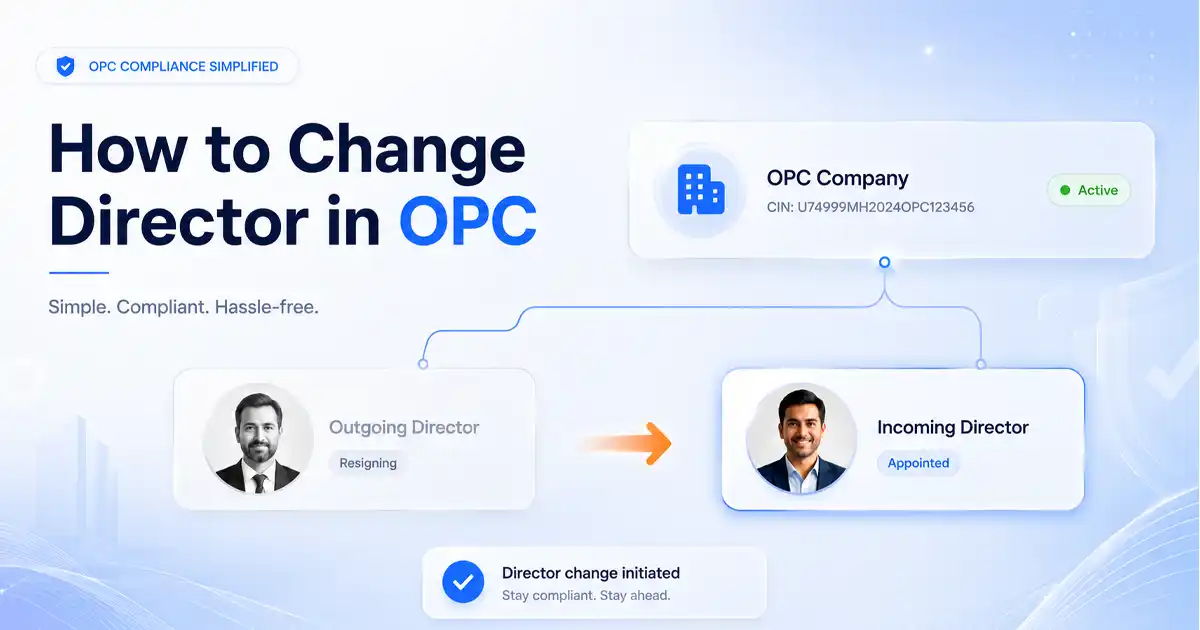
How to Change Director in OPC: DIR-12 Process & Compliance 2026
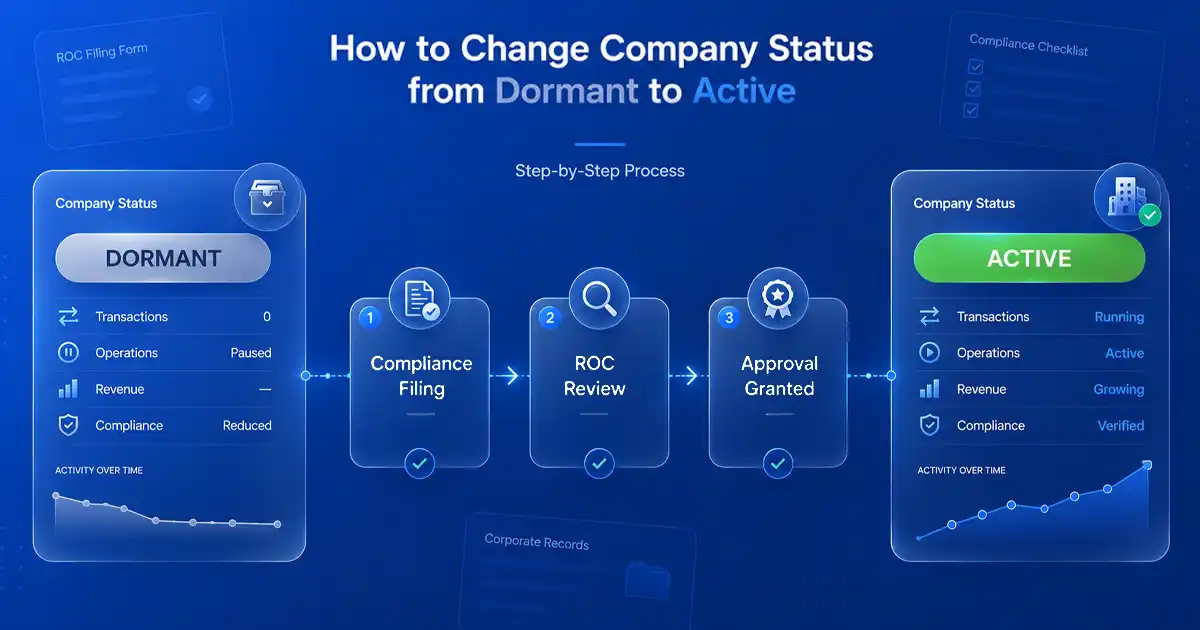
How to Change Company Status from Dormant to Active (MSC-4)
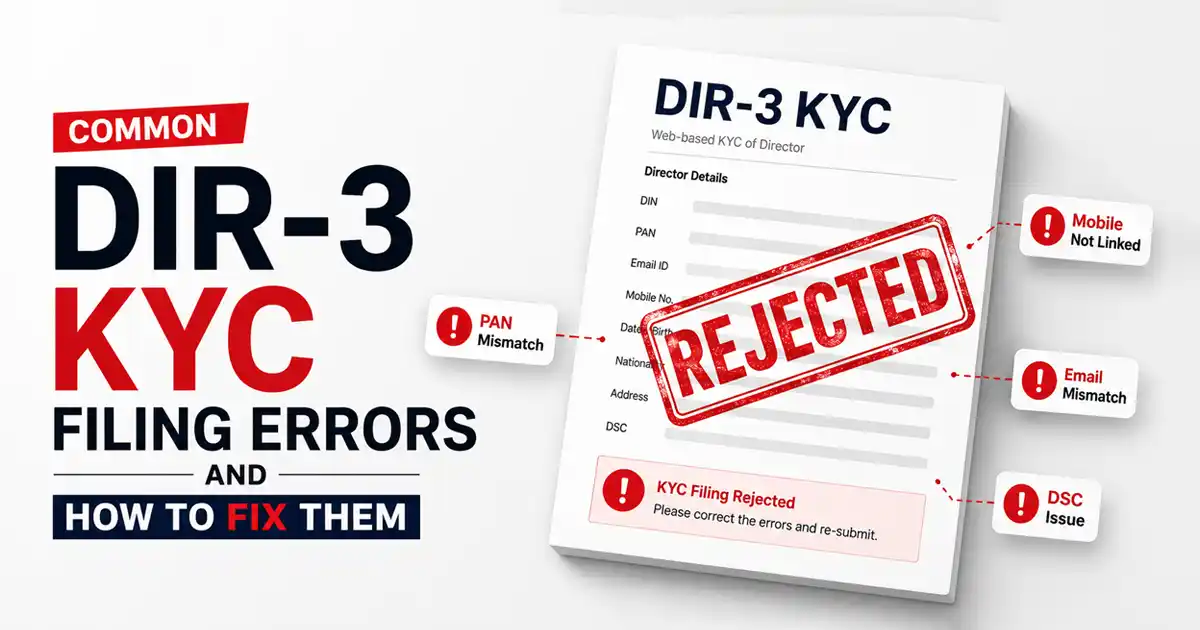
DIR-3 KYC Filing Errors: Common Mistakes & How to Fix Them

POSH Committee: Formation, Rules, Format, and Compliance
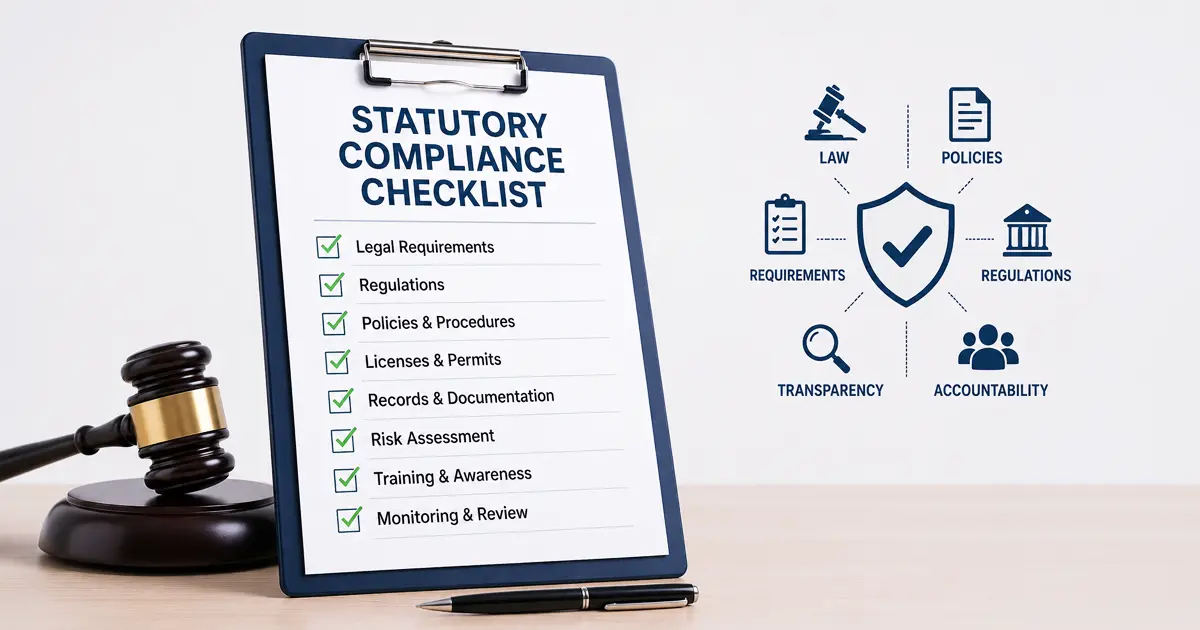
Statutory Compliance Checklist India 2026-27: ROC, GST, TDS, PF & ESIC
DIR-11 Form for Resignation of Director 2026: Filing Process & Procedure
Annual Compliances for Public Limited Company in India: 2026-27 Guide

LLP Partner Limit in India: Maximum & Minimum Partners
Appointment of Auditor in LLP: Procedure & Rules 2026

Procedure for Change of Name of LLP in India: Section 19