

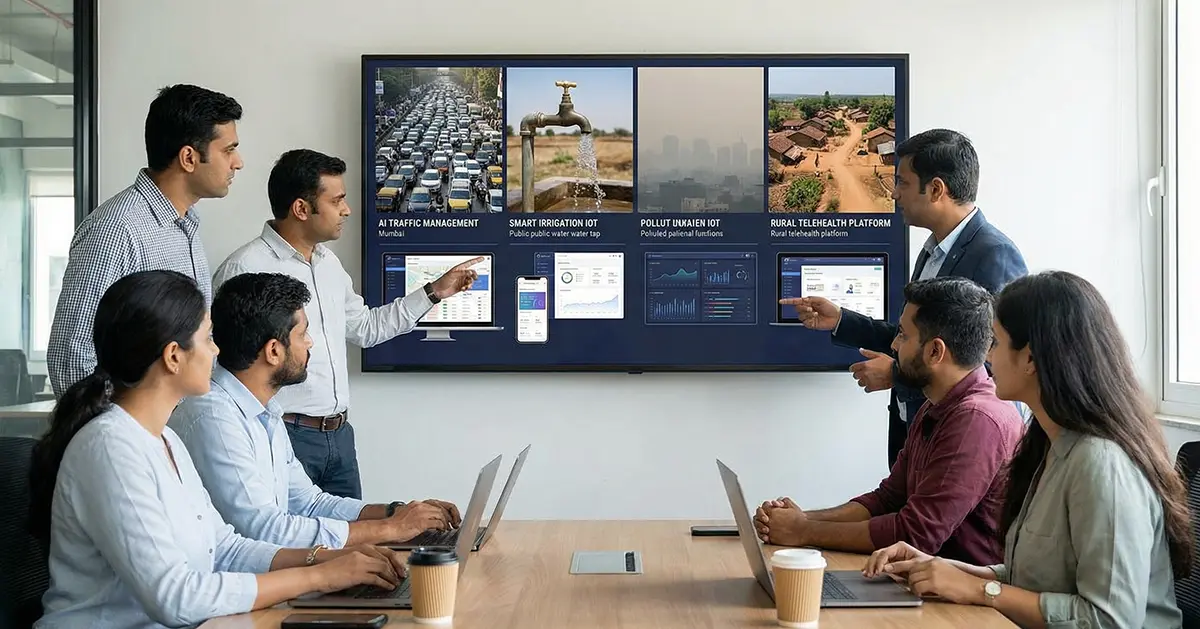
India faces several challenges that affect everyday life, from access to healthcare and education to farming, transport, waste management, and housing. As these challenges grow, traditional systems often struggle to meet changing needs quickly and efficiently.
This creates opportunities for startups to build practical solutions around real problems. Many entrepreneurs in India now focus on developing products and services that address specific gaps and make everyday life easier.
This article covers the major problems in India that startups can solve and the sectors where these opportunities exist. It also explains how new businesses can address these challenges with practical solutions.
Why India Needs Startup-Driven Solutions?
India faces several challenges that affect people, businesses, and public services. As demand grows, existing systems often struggle to respond quickly and meet people’s changing needs.
These challenges create opportunities for startups to build practical solutions in areas such as:
1. Population Pressure and Urban Growth
Many people move from villages to cities in search of work. Cities grow fast, but the services available do not keep pace. This increases pressure on housing, hospitals, schools, and transport. Rapid urban growth also creates traffic, pollution, and land shortages. These issues create major opportunities for startups to solve with technology and simple models.
A good example is Rapido, which helps people travel quickly through bikes and auto services when crowded cities make daily travel slow and stressful. It shows how simple ideas can improve daily living for millions.
2. Weak Infrastructure and Limited Resources
Many regions in India do not have basic infrastructure. Roads break. Public transport is unreliable. Water systems and sanitation are not enough for everyone. Electricity and internet access are still uneven in rural areas. Government departments depend on slow paperwork, long lines, and manual processes. Because systems cannot support people at scale, real problems grow larger each year.
NoBroker shows how digital tools remove old system delays by helping people find homes and services without middlemen, saving time and cost.
3. Young Population and Fast Digital Adoption
India has one of the world’s largest young populations. Most young people use smartphones and the internet every day. They try new apps, new tools, and new services without hesitation. This makes India a strong place for testing and growing new ideas. When people adopt solutions quickly, startups expand faster and reach more users.
Startups like Unacademy changed how students learn in India. It gives access to quality teaching from anywhere, helping students in small towns compete at the same level as metro students.
4. Shift Toward Practical and Affordable Impact
Today, people want real results, not only promises. Startups are focusing on real problems in India that startups can solve, such as access to clean water, simple healthcare, low-cost finance, and jobs. They aim to improve daily living while also building strong businesses. Investors and government programs support these problem-focused ideas because they help the country grow and improve living standards.
Ather Energy offers electric scooters that help reduce pollution and save fuel money. This shift shows how practical transport choices can improve life in crowded cities.
India needs solutions that help millions. These needs open a clear path for problem-solving ideas. Now, let us explore the biggest problems in India that startups can solve today.
Top 10 Problem Areas in India that Startups Can Solve
India faces many daily challenges that impact millions of people. These issues open the door for startup solutions in India that can support daily needs through simple and fast models.
1. Healthcare Access and Affordability
Increasing access to Healthcare is one of the biggest problems in India that startups can solve today. Many people in rural and small-town areas cannot reach hospitals or specialists on time. Treatment costs are high, so many families avoid checkups because they cannot afford them. This leads to late diagnosis, serious illness, and often death.
India now has about one doctor for every 811 people, counting both Allopathic and AYUSH practitioners together. This figure meets the World Health Organization norm of one doctor per 1,000 people. The real problem, however, lies in distribution rather than raw numbers. Most doctors and hospitals sit in cities, while a large share of Indians live in rural areas with few facilities. As a result, many people still travel long distances to reach a hospital or a specialist on time.
Why It Matters
Health is wealth. When people cannot access care, they lose income, jobs, and education opportunities. Families fall into debt due to medical bills. These issues show major problems in India that can be solved by startups building simple, low-cost healthcare services.
How Startups Can Help
Startups can bring healthcare facilities like hospitals, clinics, and chemists closer to people. They can make treatment easier to reach and also lower the cost through technology:
- Telemedicine for doctor consultations from home
- Mobile testing units for diagnostic services
- AI-based early detection tools
- Low-cost health insurance and micro-insurance
- Digital medical records
- Low-price generic medicine delivery
- Wellness and preventive care services
Why It Works in India
These solutions can grow fast because:
- Many people use smartphones every day
- The government plans to support digital health services
- Rural towns and tier 2–3 cities need affordable care
- Investors support health-tech growth
Startups like Practo and 1MG help people book online consultations, order medicines, and access digital health records from home.
2. Education and Skilling for Small Towns and Rural Areas
Education quality in India is uneven. Many schools and colleges outside Tier 1 or 2 cities do not have trained teachers, updated courses, or proper resources. Students complete their education without learning real job skills. They then struggle to find work and join the group of under-employed youth.
Why It Matters
Without skills, young people cannot get stable jobs. Families depend on low-income work, and many must move to big cities to survive. Industries say they have open roles, but they cannot find trained talent. This shows a serious disconnect that affects the country’s growth.
How Startups Can Help
Startups can provide skill training that fits real job needs. They can create learning systems that are easy to access from any town:
- Learning apps in local languages
- Short skill courses that teach specific job roles
- Job-matching platforms based on skills
- Hybrid online–offline learning centers
- Training for new digital and technical careers
- Career support and placement systems
Why It Works in India
These solutions grow fast because:
- India has one of the world’s largest youth groups
- Most young people use smartphones for learning
- Demand for training is high outside major cities
- Government programs support skill development
Startups such as Unacademy and Lead School are helping students learn through online lessons and hybrid classrooms.
3. Agriculture and Rural Economy
Agriculture supports a large part of India’s population and economy. Yet farmers struggle every day. More than 86% of Indian farmers own less than 2 hectares of land (Agriculture Census). Small land sizes, weak market access, and poor storage systems reduce income and increase losses. Post-harvest losses reach up to 30% due to poor storage and transport systems.
Middlemen take a large share of farmer profits. This reduces income and limits market control.
Why It Matters
When farming fails, rural families fall into debt. Food supply becomes unstable, and the country’s economy slows down. India cannot grow if its farmers continue to face losses instead of fair earnings.
How Startups Can Help
Startups can give farmers direct access to markets and better farming support. They can help remove middlemen and reduce wastage:
- Digital platforms that connect farmers directly to buyers
- Cold-storage systems to reduce spoilage
- Precision farming tools based on weather and soil data
- Online marketplaces for seeds, fertilizers, and equipment
- Price transparency tools for smart selling decisions
- Rural credit and insurance options for small farmers
Why It Works in India
These ideas can grow fast because:
- Farmers now use smartphones and the internet widely
- Government supports agri-technology programs
- Investors see strong potential in agritech
- India has a huge rural population that needs a reliable income
Startups like DeHaat and Ninjacart help farmers sell directly to buyers and reduce middlemen.
4. Waste Management and Pollution Control
India produces 62 million tonnes of waste every year, and only 30% is processed properly, according to CPCB. Most cities struggle to collect, sort, and process it. Landfills keep growing, plastic fills rivers, and e-waste piles up without proper recycling. Pollution affects air, water, and public health.
Why It Matters
Unmanaged waste harms health and makes cities unsafe to live in. Pollution leads to breathing problems, water contamination, and soil damage. Clean surroundings support better living conditions, tourism, and business growth.
How Startups Can Help
There are many ways startups can support cleaner and healthier cities:
- Smart bins and tracking tools for collection and sorting
- Recycling platforms for plastic, e-waste, and metals
- Waste-to-energy and composting solutions
- Door-to-door collection models for households and offices
- Community recycling systems with reward programs
- Local awareness and education platforms for better waste habits
Why It Works in India
These solutions can grow well because:
- People are more aware of cleanliness and safety
- Government rules support recycling and eco-friendly solutions
- Many schools, housing communities, and businesses want clean systems
- Investors support climate-tech and green solutions
Startups such as Recykal and Saahas Zero Waste run recycling systems and waste collection programs that convert waste into reusable material.
5. Water Scarcity and Sanitation
About 600 million people in India face severe water shortages, as per NITI Aayog. 70% of water is contaminated, causing health risks and economic losses. Some places in India face long droughts. Some depend on tankers or long walks to collect water. In cities, water contamination is common because treatment systems are weak. Poor sanitation increases disease and affects daily life.
Why It Matters
Clean water keeps people healthy. It helps children go to school, supports farms, and reduces medical costs. When water is unsafe, families lose time, money, and work. Safe water improves life in every area.
How Startups Can Help
Startups can work on:
- Water filters and purification devices
- Smart sensors to track leaks and water quality
- Water-ATM machines
- Small treatment plants for villages
- Affordable toilets and hygiene tools
- Wastewater recycling systems
These ideas fix daily needs instead of temporary arrangements.
Why It Works in India
- Rising demand for clean water in both cities and villages
- Policies focused on water safety and the Swachh Bharat goals
- Growing support for clean-tech by investors and institutions
- People are ready to try new and practical solutions
Startups like Swajal and Sarvajal install water ATMs and purification systems that give access to safe water at low cost.
6. Urban Mobility and Smart Transportation
Traffic is one of the most common problems in India that startups can solve today. In major cities like Delhi, Mumbai, Bengaluru, and Chennai, people spend long hours stuck on the road. Public transport is overcrowded, slow, or not available in many parts of growing cities. Last-mile travel is difficult, especially in tier-2 and tier-3 towns. These issues waste time, increase stress, and raise pollution levels.
Urban housing shortage is also linked to mobility problems, with a shortage of more than 18 million housing units across Indian cities (Ministry of Housing and Urban Affairs). When people live far from work, travel time becomes even longer and more expensive.
Why It Matters
When transport does not work well, daily life suffers. People reach school or work late. Fuel costs rise. Health problems increase because of pollution. Businesses lose money when goods do not arrive on time. Fixing mobility improves quality of life and supports a strong economy.
How Startups Can Help
Startups can build real solutions, such as:
- Ride-sharing and pooled travel apps
- Electric rickshaws and shared two-wheelers
- Micro-mobility for short trips
- Smart parking and traffic-control tools
- Transport apps for smaller cities
- Data-based route planning
These ideas offer faster travel and lower travel costs.
Why It Works in India
- Growing adoption of electric vehicles
- High smartphone usage for daily travel planning
- A large commuter population in every city
- Support from government schemes for cleaner transport
Startups like Rapido and Yulu provide affordable bike and e-bike rides to reduce travel time and pollution.
7. Affordable Housing and Low-Cost Living
Finding a safe and affordable living situation is a serious issue across India. Property prices in cities like Mumbai, Bengaluru, and Delhi are very high. Rent is rising faster than salaries. For example, a 1BHK in Mumbai’s Andheri or Bandra can cost ₹35,000–₹45,000 per month, while the average salary for many professionals starts around ₹25,000–₹30,000 per month. In Bengaluru, a 1BHK in Koramangala or Indiranagar often costs ₹22,000–₹30,000.
Because of this, many families are forced to live far from work or in small shared spaces.
Why It Matters
When people struggle to afford housing, it affects their daily lives. Long travel times reduce productivity. Students lose time they can put towards studying or resting. Families face stress and poor living conditions. Housing challenges prevent people from moving to cities for work or pursuing further education.
How Startups Can Help
Startups can create solutions that reduce cost and improve convenience, such as:
- Modular and prefabricated homes
- Co-living spaces and shared rental models
- Micro-rental housing for students and workers
- Rental financing and deposit-free systems
- Low-cost construction materials
- Platforms that verify tenants and owners
These ideas help people find homes faster and at fair prices.
Why It Works in India
- Huge demand for affordable housing
- The government pushes for smart-city and housing projects
- A large workforce searching for flexible living options
- Growing interest from investors in housing solutions
Startups such as NoBroker and Stanza Living help people find budget-friendly homes without broker fees.
8. Financial Inclusion and Access to Credit / Insurance
Many people and small businesses in India still don’t have access to banks, loans, or insurance. This affects daily life and growth as small shop owners cannot expand due to a lack of financial support. Farmers struggle during emergencies such as crop failure, bad weather, or medical needs in the family. Families face financial stress without savings or protection when sudden expenses appear.
Why It Matters
When people cannot access credit from banks, they turn to local moneylenders who charge extremely high interest. In many rural areas, informal lenders charge 24% to 60% interest per year, and in some cases even 3% to 10% per month, depending on urgency.
This pushes families into deep debt and long-term financial instability. Lack of insurance leaves them unprotected during medical or financial crises. Limited financial literacy stops families from planning for the future. These issues show why solving financial gaps is critical.
How Startups Can Help
Startups can build easy digital systems that allow everyone to access financial services:
- Micro-loans and micro-insurance for low-income families
- Neo-banking platforms for workers without bank accounts
- Digital wallets in local languages
- Alternative credit scoring for people with no credit history
- Peer-to-peer lending platforms
- Easy and transparent payment systems
These solutions help people earn more, save better, and stay financially secure.
Why It Works in India
- Strong growth in UPI digital payments
- Affordable smartphones and internet access
- Supportive government programs for financial inclusion
- Large rural and semi-urban population needing safe credit
Startups like Khatabook and ZestMoney offer easy credit and digital bookkeeping.
9. Employment Generation and Livelihood Opportunities
India has one of the world’s largest young populations, with over 52% of India’s population under the age of 30, while only 8.6% are above the age of 60. Yet India has a 7.4% unemployment rate and a large informal workforce (CMIE Report). Many young people struggle to find stable and skilled jobs.
Every year, millions of students finish school or college and look for work. Many struggle to find jobs that match their skills. Others work in unstable or low-paying roles. This creates a large need for jobs, skills, and income opportunities.
Why It Matters
When young people cannot find stable work, families face financial stress. People migrate to crowded cities and struggle with high living costs. Industries lose good talent because job systems are broken. These issues highlight serious problems in India that can be solved by startups focused on job creation and skill-based hiring.
How Startups Can Help
There is a large scope for job-focused platforms that support workers and employers:
- Job-matching and gig-work platforms
- Skill-based hiring tools connecting verified candidates with companies
- Remote-work tools for small towns and rural areas
- Training and reskilling programs linked to real jobs
- Rural employment and placement centers
- AI-based skill assessment and career guidance
These models create real earning opportunities and reduce unemployment.
Why It Works in India
- One of the largest youth populations is entering the workforce
- Strong digital access even in smaller towns
- High demand for flexible and skill-based roles
- Rising trust in gig and remote work
While solving job needs, one of the major challenges faced by startups in India is balancing speed, affordability, and access in smaller towns. Startups such as Apna and WorkIndia connect job seekers with employers through mobile platforms.
10. Logistics, Supply Chain, and Distribution Inefficiencies
Moving goods across India is still slow, complicated, and expensive. Small businesses struggle to deliver products on time. Cold storage is limited, and many areas lack reliable transport links. These delays increase costs and lead to damaged or expired goods.
Weak logistics infrastructure increases delivery costs by up to 14% of GDP, compared to 8% globally (NITI Aayog Logistics Report). Poor cold storage causes ₹92,000 crore in food wastage every year.
Why It Matters
When supply chains break, everyone suffers. Farmers lose produce, shops lose stock, and customers pay higher prices. Businesses cannot grow if they cannot deliver. These realities show problems faced by startups in India, especially those handling physical products.
How Startups Can Help
There are strong opportunities to fix distribution challenges with practical technology:
- Smart logistics platforms match trucks with shipments
- Warehousing-as-a-service for small businesses
- Cold-chain systems for perishable goods
- Last-mile delivery for remote areas
- Route planning and tracking tools
- Platforms that connect manufacturers and retailers directly
These solutions cut waste, reduce cost, and improve delivery speed.
Why It Works in India
- A growing e-commerce and retail market
- Digital tools that support real-time planning
- Government programs are improving national transport routes
- Strong demand from small businesses that need support
Startups like Delhivery and Shadowfax improve delivery speed through tech-enabled transport.
Transport is only one part of the challenge. India also faces risks from climate change and environmental damage. These are urgent problems in India that can be solved by startups focusing on clean energy and sustainability. The next section explains the need and opportunities.
Final Thoughts
India faces many challenges, but each challenge also creates an opportunity for practical startup solutions. From healthcare and education to agriculture, finance, transport, and waste management, startups can address gaps that affect people and businesses every day.
The strongest opportunities lie in solving clear problems with affordable, accessible, and reliable solutions. Startups that understand local needs and focus on real outcomes can create lasting value while building sustainable businesses.
