
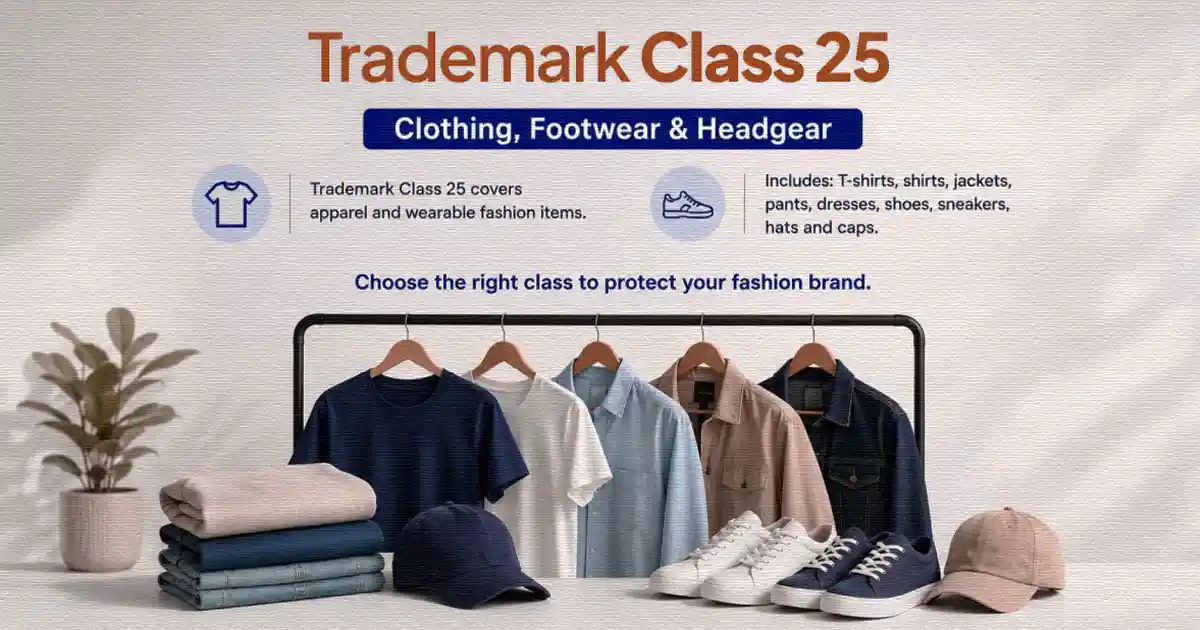
“Fashion fades, but identity stays.” In a world where trends change daily and copies appear overnight, protecting your brand becomes essential. Whether you sell handmade kurtas or launch a sneaker brand, securing a Class 25 trademark helps protect your identity.
A notable example is the Louis Philippe vs Louis Phillippe case in the Delhi High Court. In this case, the court protected the original brand against a deceptively similar mark, highlighting the importance of legal protection for brand identity.
Every successful brand does this. While Nike guards its swoosh, Zara protects its name. Even rising D2C brands like Snitch or Bewakoof trademark their clothing lines early. Your label on a hoodie, sandal, or cap is your signature, and rightfully, it deserves protection.
That’s why understanding trademark Class 25 for clothing is essential for anyone in the apparel, footwear, or headgear industry. This guide helps you protect your brand on paper, in the market, and in your buyers’ minds. Let’s make sure your label stays yours, no matter how big you grow.
Overview of Trademark Class 25 in India
India uses the Nice Classification system to organize trademarks into 45 different classes. These classes of trademarks help businesses protect the specific products they sell. In the fashion industry, this classification plays a crucial role because similar-sounding brands often compete for the same customers.
This is where clothing class trademark protection under Class 25 comes into being. It covers all clothing, footwear, and headgear products, everything from shirts and sarees to sneakers and beanies. When you file your brand under Class 25 through a proper trademark registration, you secure exclusive rights over your fashion label. This prevents other businesses from using a confusingly similar name for similar apparel products.
This class of trademark:
- Protects all types of wearable products such as clothing, shoes, and headgear.
- Allows fashion brands to secure exclusive rights to their name, logo, or label.
- Prevents others from using identical or similar marks for similar apparel goods.
- Strengthens your legal position in case of counterfeiting or brand misuse.
- Supports brand expansion into new apparel categories under the same trademark.
By understanding Class 25, fashion brands can confidently safeguard their products and plan for future growth.
Who Should File Under Trademark Class 25?
Essentially, any business that creates, manufactures, sells, or markets fashion products should file under Class 25, also known as the Garments Trademark Class. Filing under the trademark class for clothing ensures your brand stays secure as you expand your product range and plan for future growth.
You should file under Class 25 if you operate in any of the following segments:
- Clothing Brands: Whether you sell casual wear, ethnic wear, streetwear, or luxury apparel, you need protection under this class.
- Footwear Companies: Manufacturers and retailers of sneakers, boots, sandals, or sports shoes fall directly under Class 25.
- Headgear Businesses: Brands selling caps, hats, turbans, beanies, or non-protective fashion helmets should file here.
- Boutiques & Designers: Independent fashion designers and boutique owners should protect their brand identity before launching new collections.
- Sportswear & Athleisure Brands: Companies offering activewear, yoga wear, gym wear, or performance outfits need Class 25 protection.
- Kidswear, Menswear, & Womenswear Labels: Any brand selling category-specific clothing also belongs in this class.
- Uniform Manufacturers: Businesses producing school, corporate, or industrial uniforms should secure their trademark here.
- E-commerce Apparel Stores: Online clothing sellers must complete a trademark registration for e-commerce sellers under this class to prevent imitation.
A Class 25 trademark protects your brand as you expand, collaborate, and introduce new product lines.
Goods Covered Under Trademark Class 25
Trademark Class 25 covers a wide range of wearable products. If your business creates or sells anything people can wear, this class most likely includes it. The coverage is broad and protects clothing, footwear, headgear, and several specialty items.
Below is the Class 25 trademark list:
1. Clothing
Class 25 protects almost every type of apparel people wear daily or occasionally. Trademark Class for Clothing includes:
- T-shirts, shirts, tops, and blouses
- Trousers, jeans, shorts, and skirts
- Sarees, kurtas, ethnic wear, and other traditional outfits
- Jackets, coats, hoodies, and sweaters
- Lingerie, nightwear, shapewear, and innerwear
- Sportswear, swimwear, gym wear, and activewear
- Gloves, socks, leggings, and stockings
- Raincoats, robes, and costumes
- Leather clothing and specialty outfits
- Bathrobes, dressing gowns, and baby clothes
- Winter wear like mufflers, shawls, and stoles
- Ready-made linings, detachable sleeves, and fashion wristbands
- Neckties, bow ties, and scarves
- Bibs (not made of paper), pocket-squares, and ready-made linings
Brands like H&M, FabIndia, Zara, Roadster, Biba, Nike, and Puma operate in these segments and rely on Class 25 protection to secure their clothing lines.
2. Footwear
Class 25 also serves as the primary footwear trademark class for brands selling anything from basic slippers to premium performance shoes, including:
- Sneakers, running shoes, and sports footwear
- Sandals, slippers, flip-flops, and casual footwear
- Boots, formal shoes, loafers, and fashion shoes
- Safety shoes
- Climbing shoes, ski boots, and beach footwear
- Inner soles, heel pieces, welts, and fittings for shoes
- Tips, spikes, and accessories for footwear
- Non-electric footmuffs
Popular footwear brands in India, such as Nike, Adidas, Puma, Bata, Woodland, and Red Tape, use trademark classes for footwear to protect their brand identity.
3. Headgear
This class covers protective and fashion-oriented headwear used in day-to-day wear or specific activities. It includes:
- Caps, hats, and beanies
- Turbans, bandanas, and head wraps
- Berets, headscarves, and head shawls
- Fashion helmets (non-protective ones)
- Paper hats are intended as garments
- Headbands and hoods attached to clothing
Headgear brands like New Era, Puma, Adidas, Steelbird, Vega, and FabIndia rely on Class 25 to safeguard their hats, caps, and fashion headwear.
Note: Protective helmets fall under Class 9, not Class 25. Ensure that you file in the correct class to get proper trademark protection.
4. Niche & Specialty Apparel
Class 25 also covers unique and professional clothing categories, such as:
- Dancewear, yoga wear, and stage costumes
- Uniforms for schools, corporations, and industries
- Martial arts uniforms (karate, judo, taekwondo)
- Designer wear and limited-edition fashion outfits
- Fancy dress costumes and masquerade costumes
Brands in India, such as Decathlon, Allen Solly Junior, Peter England uniforms, and Sabyasachi, use Class 25 to protect their niche and specialty apparel.
By covering such a wide variety of wearable items, Trademark Class 25 gives fashion brands strong, flexible, and comprehensive protection.
Items Not Covered Under Trademark Class 25
While Class 25 covers a wide range of wearable products, some items are not included and fall under other trademark classes.
These include:
- Raw fabrics, textiles, cloth, yarn, and thread
- Accessories, haberdashery, fasteners, and decorative items, such as buttons, zippers, ribbons, buckles, and hatbands
- Leather goods, handbags, luggage, and animal clothing
- Protective or specialized clothing, footwear, or headgear. These include safety helmets, medical scrubs, orthopedic footwear, fire-resistant clothing, and industrial safety gear
- Electrically heated garments or footmuffs
- Electronic or smart wearables, such as smart shoes or smart clothing
- Pet wear, doll clothing, and toy costumes
- Paper bibs
- Masks for performance or protective use
- Clothing accessories not worn directly, such as detachable ornaments or non-fashion embellishments
- Footwear components that are not wearable alone, like shoelaces sold separately, and shoe soles for manufacturing
Brands like Vardhman Textiles, Hidesign, 3M, and Bata Safety Shoes operate in these categories outside Class 25.
Note: Masks used for fashion or styling fall under Class 25. However, protective, medical, or performance masks fall under Class 10 or 28.
Knowing what Class 25 does not cover is just as important as knowing what it does. This is because filing incorrectly can:
- Delay registration if the trademark office requires a correction or reclassification.
- Limit your legal protection, leaving some products exposed.
- Create disputes if someone else registers a similar mark in the correct class.
By understanding these boundaries, your brand secures the right protection from the start, avoiding unnecessary costs, time delays, and legal conflicts.
Importance of Choosing the Right Trademark Class
Choosing the correct trademark class is a critical step for any fashion brand. Filing in the right class ensures your brand receives full legal protection for the products you sell. Selecting the wrong class can create gaps in protection or trigger legal challenges.
Here’s why it matters:
- Avoid rejection or delays: Filing under the wrong class prompts objections from the trademark office and slows down registration.
- Secure exclusive rights: Correct classification guarantees that no one else can use a confusingly similar mark in your product category.
- Prevent disputes: Proper classification reduces the risk of legal conflicts with other brands.
- Support brand expansion: When you launch new products or categories, starting with the right class makes adding related classes easier.
- Build customer trust: A registered trademark signals professionalism and authenticity, which strengthens brand reputation.
- Strengthen enforcement: Proper classification makes it easier to enforce your rights in case of infringement.
- Save costs in the long run: Avoid repeated filings or corrections due to misclassification.
- Maintain brand consistency: Registering in the right class ensures all your apparel and fashion products are protected under one clear legal identity.
For fashion entrepreneurs, understanding Class 25 and its scope ensures that your brand identity is fully protected. Many Indian brands have faced real-world conflicts over clothing trademarks.
For instance, Aditya Birla Fashion has challenged local retailers for using similar marks, whereas Puma has acted against copycat brands like “Pumah.” These examples show why accurate classification and registration under Class 25 are essential to prevent costly legal battles and protect brand identity.
How to File a Trademark Under Class 25 in India?
Registering a trademark under Class 25 is essential to protect your clothing, footwear, and headgear brand in India. Here’s a clear, step-by-step guide to help you register a Class 25 trademark:
Step 1: Conduct a Trademark Search
- Check if your brand name or logo already exists in Class 25.
- Use the Indian Trademark Registry database or online search tools.
- Prevents conflicts and reduces the risk of trademark objections.
Timeline: 1-3 days
Tip: Use RegisterKaro’s free trademark search tool to check if your brand name or logo is already registered.
Step 2: Define Your Products Clearly
- List the exact goods your brand covers, such as shirts, sneakers, or caps.
- Provide precise product descriptions to avoid misclassification.
- Ensures your trademark protects all relevant items.
Timeline: 1-2 days
Step 3: Prepare Your Application
- Include the brand name or logo.
- Add owner details (individual or company).
- Mention the class number (Class 25) and description of goods.
- Provide the date of first use in commerce, if applicable.
- File online through Form TM-A or submit physically to the Trademark Office.

Timeline: 1-2 days
Step 4: Examination by the Trademark Office
- The registry reviews your application for compliance.
- Possible outcomes: acceptance, objections, or requests for clarification.
- Respond promptly to any office actions to improve chances of approval.
Timeline: 3-6 months
Step 5: Publication in the Trademark Journal
- Accepted trademarks are published in the Trademark Journal.
- Others have four months to oppose registration if they believe it infringes their rights.
Timeline: 4 months for the opposition period
Step 6: Registration and Certificate Issuance
- If no trademark opposition arises (or if resolved in your favor), the registry issues the registration certificate.
- Trademark rights are protected under Class 25 for ten years.
- Renewal is possible indefinitely.
Timeline: 6-12 months
Step 7: Maintain and Enforce Your Trademark
- Use the “®” symbol on your products to indicate registration.
- Monitor the market for potential infringements.
- Take action when necessary to maintain brand integrity.
Timeline: Ongoing
Class 25 trademark cost involves government fees and professional fees (depending on whether you file through an expert). Government fees are as follows:
- Rs. 4,500: For individual / startup / MSME applicants
- Rs. 9,000: For company / LLP / partnership
Protect your brand today! Register your Class 25 trademark quickly and easily with RegisterKaro to ensure your brand stays secure in India’s competitive market.
Wrapping Up
Protecting your fashion brand is essential. Trademark Class 25 secures your clothing, footwear, and headgear, keeping your brand identity safe. Understanding what Class 25 covers, what it does not, and the registration process helps you avoid delays and disputes. Many businesses also file under trademark Class 35 to protect their retail, online sales, and business services. This ensures full coverage of both products and commercial operations.
Choosing the right class strengthens your brand and builds customer trust.
Frequently Asked Questions (FAQs)
1. If I sell fabrics, do I need Class 25?
No, you do not need Class 25 if you sell fabrics. Raw fabrics, textiles, cloth, yarn, and similar materials fall under Trademark Class 24, not Class 25. Class 25 protects wearable finished products, not the materials used to make them. You must file in Class 24 to secure protection for fabric-related goods.
2. Do bags, wallets, or purses come under Class 25?
No, these items do not fall under Class 25. Bags, wallets, purses, luggage, and most leather goods belong to Trademark Class 18. Class 25 only protects wearable apparel like clothing, footwear, and headgear. If your business sells fashion accessories such as bags alongside clothing, you must register your trademark in both Class 18 and Class 25.
3. Is Class 25 enough if I only sell shoes?
Yes, Class 25 is sufficient if you sell only shoes. Class 25 covers all types of footwear, including casual shoes, sneakers, boots, sandals, and performance footwear. Registering in Class 25 protects your brand name or logo for your entire footwear line. You only need additional classes if you expand into non-wearable or leather accessory categories.
4. Are sports gear or protective clothing categorized under Class 25?
Not always, sportswear like jerseys or yoga wear belongs to Class 25, but protective gear often does not. Safety helmets, fire-resistant apparel, orthopedic shoes, or industrial protection gear fall under classes such as Class 9 or Class 10. You must classify based on actual function: fashion apparel fits Class 25, but safety-focused items require other classes.
5. Can I register a single trademark for clothing, shoes, and headgear together?
Yes, you can register a single trademark for clothing, shoes, and headgear under Class 25. This class covers all three categories, allowing brands to protect an entire fashion line in one filing. Registering them together keeps your branding unified and makes enforcement easier, especially when you sell multiple wearable product categories.
6. If I want to add accessories like belts, buttons, and zippers later, do I need a new class?
Yes, you usually need a new class. Clothing accessories like belts may fall under Class 25 or 26, depending on their purpose, while buttons, zippers, ribbons, and fasteners belong to Class 26. If you add bags, wallets, or leather accessories, you must file under Class 18. Each accessory category requires its correct classification.
7. Do I need to list every single item, or can I broadly say “clothing, footwear, and headgear”?
You can choose either approach, but both have trade-offs. Using broad terms like “clothing, footwear, and headgear” gives wide protection but may invite objections if your description appears too vague. Listing specific products like shirts, sneakers, or caps provides clarity and reduces risk. The best strategy balances accuracy, coverage, and smooth approval.
8. What is the trademark class for shoes and footwear?
Shoes and all types of footwear fall under Trademark Class 25, which covers clothing, footwear, and headgear. If your business sells sneakers, sandals, boots, or any kind of footwear, Class 25 provides full protection. This classification ensures no competitor can use an identical or confusingly similar brand name for footwear products, helping your brand maintain exclusivity in the market.
9. Do I need separate registration for footwear if my brand sells both clothes and shoes?
No. If your brand sells both clothing and shoes, Class 25 already covers these products under one category. You can file a single application that lists clothing, footwear, and headgear. This approach saves cost and simplifies trademark management. However, you must ensure detailed descriptions for all goods to avoid future disputes or objections during examination.
10. Can I use the same trademark for my apparel brand and my footwear line?
Yes, you can use and register the same trademark for both apparel and footwear because they fall under Class 25. This helps you maintain consistent branding across T-shirts, jeans, shoes, sandals, and other fashion goods. It also strengthens brand recall and avoids the need for separate filings. However, make sure the trademark is distinctive and not similar to existing Class 25 registrations.
11. Can homegrown or small brands register a trademark under Class 25?
Yes. Small apparel labels, boutique stores, handmade clothing sellers, and local footwear brands can all register under Class 25. Trademark protection benefits small businesses by preventing competitors from copying their brand name or logo. Even if you sell through Instagram or local markets, registering a Class 25 trademark safeguards your identity and builds long-term brand credibility.
12. Does Class 25 trademark registration protect my logo on shoes?
Yes, Class 25 trademark registration protects your logo on all categories of footwear, including sports shoes, slippers, boots, and casual wear. Once registered, you gain exclusive rights to use your logo on footwear products, and you can legally stop others from using a similar mark. This protection extends to online platforms, physical stores, and export markets where your footwear is sold.
13. Which kinds of goods typically fall under Trademark Class 25?
Trademark Class 25 covers all wearable products such as clothing, footwear, and headgear. This includes everyday apparel, fashion wear, uniforms, casual shoes, sports shoes, caps, and hats. If the product is worn on the body for style, comfort, or daily use, it almost always qualifies for Class 25. This class gives comprehensive brand protection in the apparel industry.
14. Does Class 25 include functional or specialized clothing and footwear?
Class 25 generally includes regular clothing and footwear, but not highly specialized or protective gear. Items like fire-resistant suits, industrial safety boots, medical scrubs, or electrically heated clothing usually fall into other classes because they serve a technical or protective purpose. You must check whether the product functions as regular wear or as a safety device to decide accurately.
15. Is there a detailed list of goods that Class 25 covers?
Yes. Class 25 includes a wide list of apparel items such as shirts, trousers, jeans, dresses, sarees, jackets, hoodies, sportswear, innerwear, footwear of all kinds, caps, hats, and fashion headgear. The official Nice Classification provides a structured list, but businesses can also describe goods broadly as “clothing, footwear, and headgear” to cover wider product categories.
16. How can I determine whether a product belongs to Class 25 or a different class?
You can identify the correct class by checking the product’s primary purpose. If the item is worn as clothing, footwear, or fashion headgear, it fits Class 25. If it functions as safety gear, medical wear, smart wearable tech, fabric material, or luggage, it falls under other classes. Comparing your product with the Nice Classification helps avoid classification errors.
17. Can I trademark the design of a specific shoe or clothing piece under Class 25?
Trademark law protects brand identifiers like names, logos, symbols, and taglines, not the physical design of clothing or shoes. For protecting specific designs, you must apply for design registration, not a trademark. However, you can trademark the logo or brand name placed on the design under Class 25, ensuring your branding remains exclusive in the fashion market.
18. Do I need to pay a government fee to register a Class 25 trademark?
Yes. Trademark registration requires government fees, which vary depending on whether the applicant is an individual, startup, MSME, or company. The fee covers filing, examination, and maintenance of your application. Even though the cost applies per class, the protection you receive for clothing, footwear, and headgear makes it a worthwhile investment for long-term brand growth.
19. How long does protection for a Class 25 trademark remain valid?
A Class 25 trademark remains valid for 10 years from the date of filing. You can renew it indefinitely in 10-year cycles, ensuring lifelong brand protection. As long as you renew on time and continue using the mark in commerce, your clothing or footwear brand can maintain exclusive rights and prevent competitors from using similar branding.
20. Can I file the same trademark in multiple classes if I sell different products?
Yes, you can register the same trademark in multiple classes if your business covers more than one product category, for example, clothing (Class 25), bags (Class 18), or fabrics (Class 24). Multi-class filing protects your brand across all markets you operate in, making it harder for competitors to imitate your name or logo in different product lines.
21. Is there any difference between trademark protection for clothing and for footwear?
Both clothing and footwear fall under Class 25, and the protection works the same way for each. One trademark registration can cover both categories if you list them in the application. The only difference lies in describing the goods clearly so the coverage remains strong. Properly identifying all product types ensures broader and more effective protection for your brand.
22. What is Class 25 in trademark?
Trademark Class 25 covers all types of wearable products, including clothing, footwear, and headgear. Filing under this class protects your brand name, logo, or label from being used by competitors in the same category. It applies to everyday apparel like shirts, jeans, and sneakers, as well as specialty and niche clothing, giving your fashion brand strong legal protection in India.
23. What is not included in Trademark Class 25?
Class 25 does not cover raw fabrics, textiles, yarns, or threads, nor accessories like belts, buttons, zippers, and hatbands. It also excludes leather goods, handbags, luggage, safety or protective clothing, electrically heated garments, smart wearables, pet apparel, or non-wearable components of footwear. These items fall under other classes like 18, 24, or 26 and require separate trademark filings for protection.
24. Can I file a single trademark for all Class 25 products?
Yes, you can file a single trademark under Class 25 to cover clothing, footwear, and headgear collectively. This allows your brand to protect multiple product lines within the same category, simplifying legal coverage. However, precise descriptions of your products are important, as overly broad terms may limit protection or invite objections during examination by the trademark office.
25. Should I file Class 25 and Class 35 together?
Filing under Class 25 protects wearable products, while Class 35 covers business services, retail, and e-commerce activities. If your brand not only manufactures clothing but also sells it online or through retail, filing both classes together ensures full protection for products and sales channels. Coordinated registration prevents imitation in both goods and business operations, giving your brand stronger legal security.
26. How much does it cost to register a trademark Class 25 in India?
Government fees for registering a Class 25 trademark in India depend on the type of applicant. Individuals, startups, or MSMEs pay Rs. 4,500 per application, while companies, LLPs, and partnerships pay Rs. 9,000. Professional fees may apply if you hire a trademark consultant. These fees cover filing, examination, and registration, offering ten years of protection, with renewal available indefinitely.


