

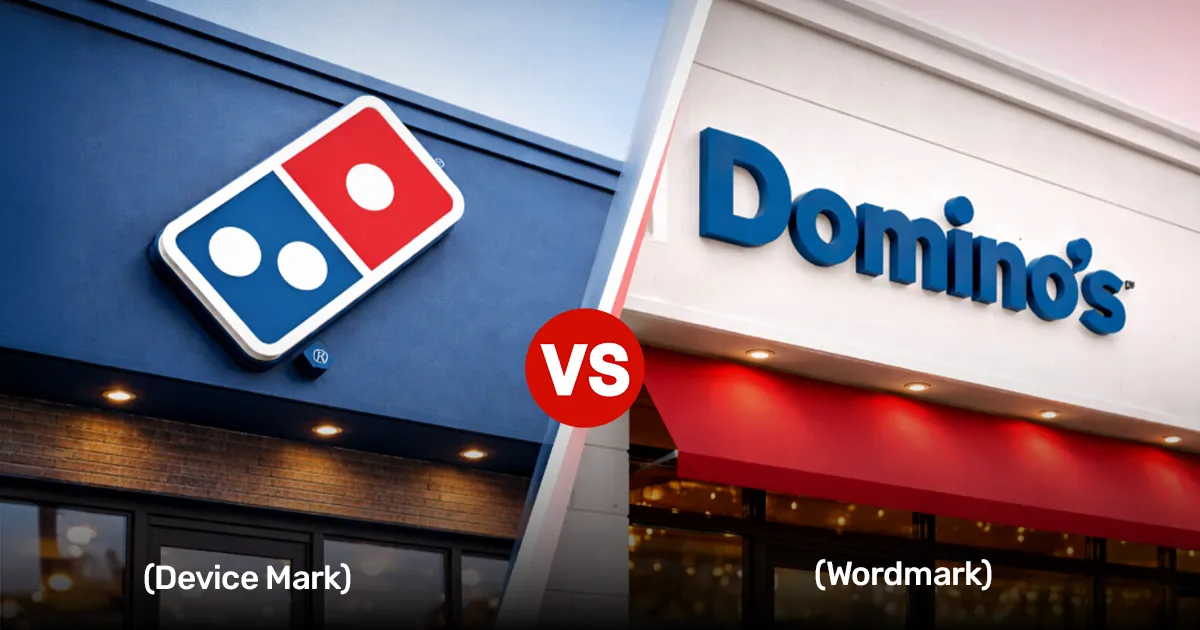
The difference between a device mark and a wordmark depends on what each one protects. A wordmark protects your brand name as text, regardless of the font or format. A device mark protects a specific logo, symbol, or visual design. Both are popular trademark types among Indian businesses. Choosing the right one can affect how well your brand is protected in a dispute.
The Nike swoosh symbol and the term “Coca-Cola” are trademarks that distinguish their respective businesses. One relies on visual identity, while the other relies on text.
Key Takeaways
- A wordmark protects text only, brand names, letters, or numbers, in any font or format. A device mark protects a specific visual design, logo, or graphic.
- Wordmarks generally offer broader protection and are more flexible, since they cover the name regardless of styling. Device marks protect only the exact visual form registered.
- Under Section 17 of the Trade Marks Act, 1999, registering a device mark containing text doesn’t automatically give exclusive rights to that text; the words need separate registration as a wordmark for full protection.
- Wordmarks are generally cheaper to register and less likely to face objections than device marks.
- Registering both a wordmark and a device mark together offers the strongest, most complete brand protection.
What is a Wordmark?
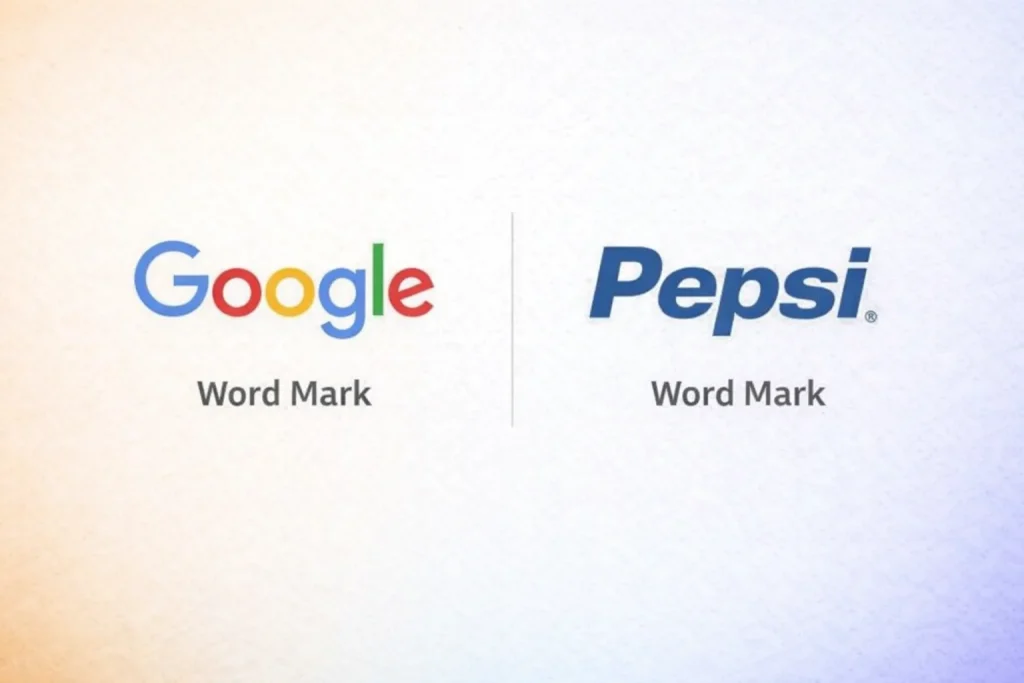
A wordmark consists only of text elements like letters, numbers, or words, without any graphic design, colour, or stylisation. It’s the simplest form of a trademark, protecting the words or letters as a whole, no matter how they’re presented. In India, the Trade Marks Act, 1999, under Section 2(zb), governs wordmark registration.
“Google” and “Pepsi” are prime examples of word marks. The protection covers the brand name itself, irrespective of the font or design used.
What is a Device Mark?
A Device Mark protects the visual identity of a brand. This includes:
- Logos
- Symbols
- Images
- Stylised text
- Shapes or colour combinations
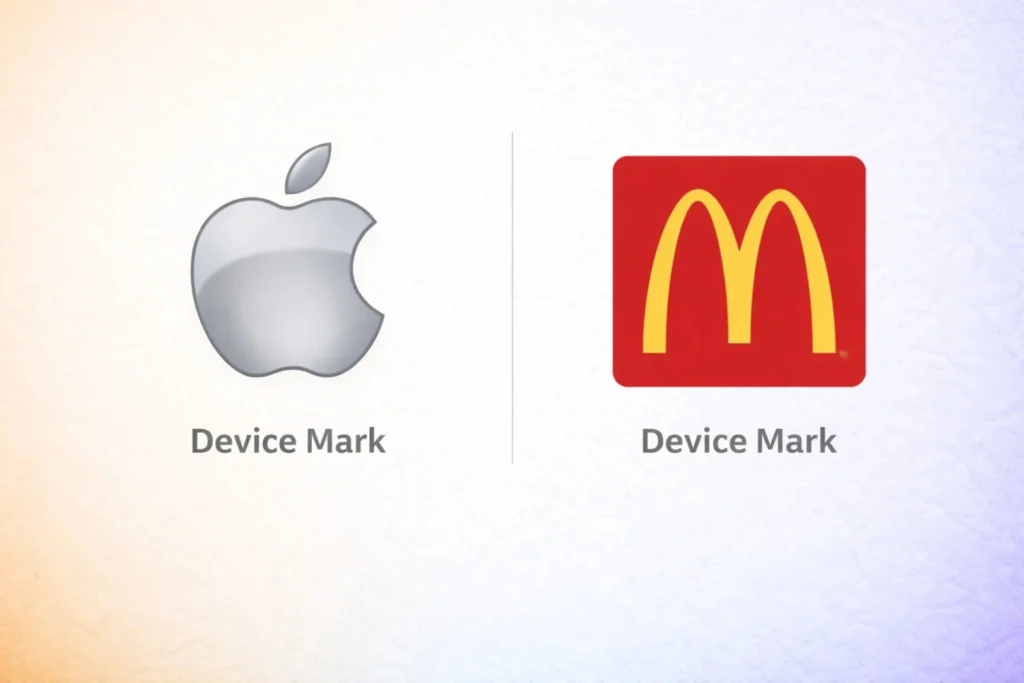
This type of trademark protects the specific visual representation. The brand must maintain consistent use of the design throughout the trademark registration process. For example, the Apple Logo or the McDonald’s Golden Arches are classic examples of device marks, instantly representing their companies without any text.
Wordmark vs Device Mark: Side-by-Side Comparison
Wordmarks and device marks protect different aspects of a brand. The table below compares their key differences to help you choose the right type of trademark:
| Aspect | Wordmark | Device Mark |
|---|---|---|
| Definition | A trademark made up of text, such as a brand name or slogan | A trademark made up of a design, logo, or image |
| Scope | Provides broad protection regardless of style | Protects a specific visual form |
| Flexibility | High, as you can use it in different fonts and formats | Low, as you must maintain the exact design |
| Memorability | Depends on the name | Offers strong visual recall |
| Enforcement | Stronger against textual use | Limited if the design changes |
| Protection Level | Covers the entire name or phrase | Covers the specific design or logo |
| Brand Recall | Relies on linguistic recognition | Relies on visual recognition |
| Trademark Classes | Can apply across various classes | Typically tied to specific visual classes |
| Cost of Registration | Generally cheaper to register | More expensive due to the detailed application |
| Trademark Objections | Less likely to face objections | Design similarity may lead to trademark objections |
Legal Implications Under Indian Trademark Law
Under Section 17 of the Trade Marks Act, 1999, a device mark does not separately protect the words within the logo unless they are registered as a wordmark. The Supreme Court confirmed this principle in S. Syed Mohideen vs. P. Sulochana Bai (2013). A composite mark protects the mark as a whole, not its individual elements.
Wordmarks and device marks are registered under specific classes of the Nice Classification. Choosing the correct class from Classes 1–45 ensures proper legal coverage and helps avoid conflicts.
Enforcement and infringement scenarios
- Brand name copied: A wordmark provides stronger protection.
- Logo copied: A device mark helps protect the visual design.
- Both registered: Owning both makes enforcement easier.
This distinction matters during disputes, online misuse, and domain-name conflicts.
Note: Indian courts consider phonetic, visual, and structural similarities when deciding infringement. Wordmarks offer strong protection because they cover the brand name across different fonts, styles, and contexts.
Which One Should You Register First Between Device and the Word Mark?
The right choice depends on how you use your brand and which element customers recognize most. For many businesses, registering the wordmark first provides broader protection.
Here is how to decide between the two:
Most startups register a wordmark first because:
- It offers wider protection.
- A wordmark allows future logo changes.
- It helps during trademark renewal and expansion.
You should prioritise a device mark if:
- Your logo is unique and central to your brand.
- The visual identity matters more than the name.
- You are confident the logo will not change.
Best Practice: Dual Registration
Register both the wordmark and device mark for broader brand protection. This strengthens enforcement and provides better protection in infringement cases. Many successful Indian brands use this approach as they grow.
