


The GSTN Advisory for OPCs issued in March 2023 brought forth an important update for smooth compliance under the Goods and Services Tax system. It helps OPCs complete legal registration on the GST portal and maintain proper compliance with tax authorities.
Earlier, many OPCs faced problems during GST registration because the portal did not include OPC as a separate business type. This advisory solves that issue and creates a clear process for registration of OPCs throughout India.
Key Takeaways
- The GSTN advisory clarifies how a One Person Company should select its business constitution while applying for GST registration.
- Since “One Person Company” may not appear as a separate option in the GST registration form, the applicant should select “Others” and enter “One Person Company” as instructed.
- An OPC should keep its company PAN, Certificate of Incorporation, MOA, AOA, and other applicable GST registration documents ready before starting the application.
- Correctly selecting the business constitution helps avoid errors or delays in GST registration and ensures that the OPC’s GST details accurately reflect its legal structure.
- The registration process and portal functionality can change through GSTN advisories and system updates, so applicants should verify the latest instructions on the official GST portal before filing.
What is GSTN Advisory for OPC in India?
The GSTN introduced an advisory to register an OPC because the REG-01 GST form did not list OPC as a business type. This omission confused OPC owners about how to select the correct business constitution, caused delays in registrations, and created potential compliance issues.
Following the advisory helps OPCs register correctly, avoid errors, and ensure smooth, timely GST compliance.
Key Benefits of GSTN Advisory for Entrepreneurs and Consultants
The advisory helps OPC owners, startups, and business consultants by:
- Reducing confusion and preventing registration errors.
- Ensuring OPCs can claim Input Tax Credit (ITC) and operate interstate without legal hurdles.
- Providing clarity on GST compliance to maintain accurate records and smooth operations.
Documents Required by OPCs to Get a GSTIN
Ensure you have the following documents ready before applying for your GSTIN:
- PAN of the Company: Mandatory for GST verification and registration.
- Certificate of Incorporation: Proof that the OPC company registration in India has been completed legally under the Companies Act 2013.
- Memorandum of Association (MOA) & Articles of Association (AOA): These outline the company’s objectives and internal rules.
- Business Address Proof: Acceptable proofs include an electricity bill, a rent agreement, a property tax receipt, or a No Objection Certificate (NOC) from the property owner.
- Director’s KYC Documents: PAN, Aadhar, Passport, or Voter ID of the company’s director. Ensure details match the incorporation records.
- Bank Account Proof (Optional but Recommended): A current bank account in the company’s name may be required during verification.
What Changes Were Introduced in GST Portal as per the Advisory?
Here’s a step-by-step guide, based on the GSTN advisory, to help OPC owners complete registration smoothly:
1. Visit the GST Portal
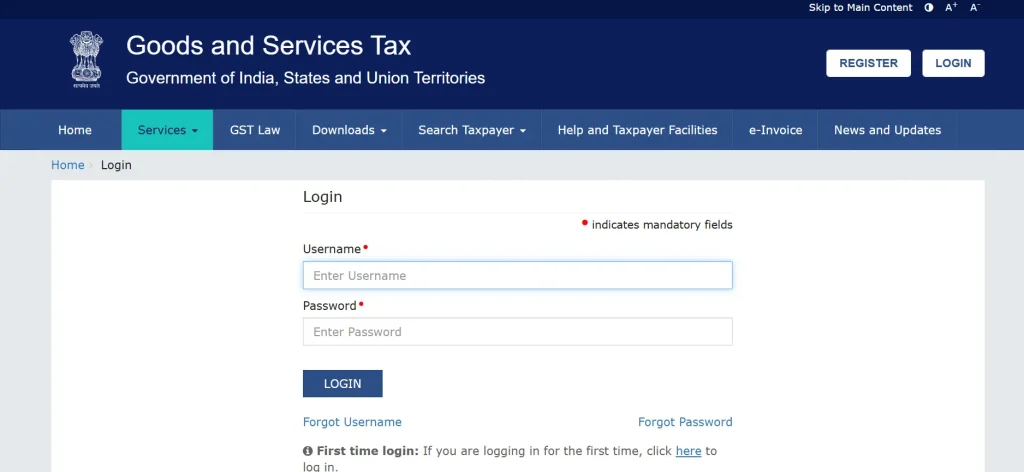
- Go to the official GST portal: gst.gov.in.
- Click “Register Now” under the Taxpayers (Normal) section.
- Choose “New Registration” to start the process.
2. Fill Part A of REG-01
- Enter the PAN of the company.
- Provide a valid mobile number and email address.
- Verify the OTP sent to both mobile and email.
3. Fill Part B – Business Details
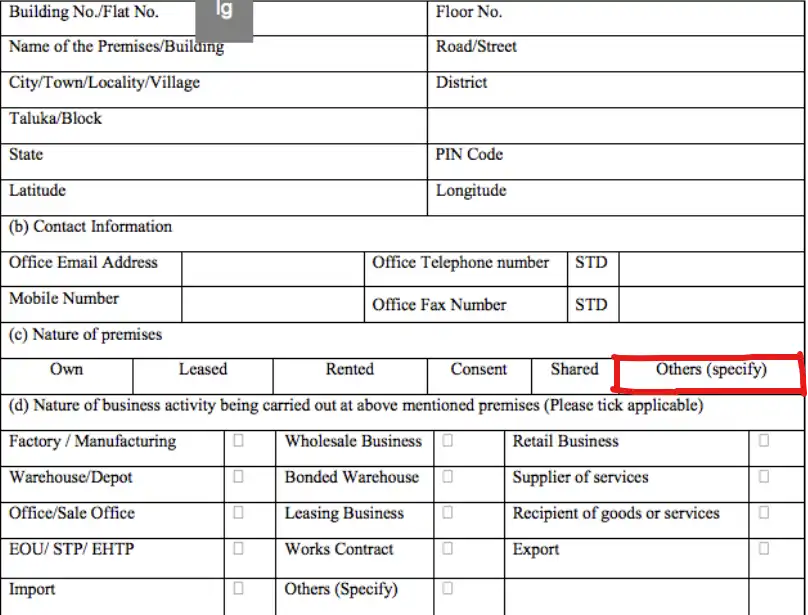
- In the business constitution dropdown, select “Others.”
- Manually enter “One Person Company” in the designated field.
- Provide additional details like principal place of business, state, and district.
4. Upload Required Documents
Refer to the documents section above for all mandatory uploads. This includes PAN, Certificate of Incorporation, MOA & AOA, business address proof, and Director’s KYC.
5. Verification & Submission
- Review all entered details carefully to prevent errors.
- The authorized signatory should digitally sign the application.
6. ARN Generation & Approval
- Submit the application and note the Application Reference Number (ARN).
- Track the application status on the GST portal until approval.
- Once approved, download the GSTIN certificate for future reference.
After submission, the GST portal typically processes the application within 3–7 working days. This may extend to 30 days if any inaccuracy gets flagged during physical verification or a notice in REG-03 is issued.
Note: OPCs exceeding ₹40 lakh (goods) and ₹20 lakh (services) turnover must register under GST. Special states like Manipur get a ₹10 lakh turnover for services.
Benefits of Registering GST for OPC Businesses
Registration on the GST portal helps an OPC stay compliant and operate smoothly. It also allows claiming ITC, trading legally, and building business credibility.
- Input Tax Credit (ITC): A GST-registered OPC can claim credit for taxes paid on purchases. This reduces the overall tax burden and improves cash flow.
- Business Credibility: Registration enhances the company’s credibility with suppliers, customers, and financial institutions. It becomes easier to secure partnerships and funding.
- Interstate Trade Eligibility: Registered OPCs can legally trade across states without restrictions or extra taxes, expanding business opportunities nationwide.
- Compliance with Legal Requirements: GSTIN proves that OPCs meet all statutory obligations under the law, helping avoid penalties and legal issues.
- Professional Image: GST compliance reflects professionalism and builds trust with clients, partners, and vendors.
- Compliance with E-Invoicing & Digital Reporting: Being GST-registered enables OPCs to comply with e-invoicing and digital reporting requirements.
- Access to Government Schemes & Subsidies: GSTIN allows OPCs to avail of government schemes, subsidies, and tenders, supporting business expansion and growth.
- Stronger Supplier Relationships: Suppliers prefer GST-compliant OPCs as they can pass on ITC benefits, strengthening vendor relationships.
Important Compliance Tips for OPC under GST
Once an OPC is registered under GST, maintaining compliance is crucial to avoid penalties and ensure smooth business operations. Here are the key compliance tips for OPCs in India:
1. Know Your GST Threshold Limits: Monitor your annual turnover to determine whether registration is mandatory. Ensure timely registration and filing to stay compliant.
2. File Returns on Time: Regularly file GSTR-1 and GSTR-3B (monthly summary). Timely filing helps avoid interest, penalties, and notices from authorities.
3. Maintain Proper Invoices: Issue GST-compliant invoices for every sale. Maintain accurate records to support Input Tax Credit (ITC) claims and audits.
4. Reconcile Accounts: Regularly reconcile purchase and sales data with GST returns. This prevents mismatches and reduces the likelihood of GST notices being issued.
5. Stay Updated on Notifications: Keep track of GST updates, circulars, and advisory changes to ensure ongoing compliance. This helps adapt to regulatory changes promptly.
6. Comply with Annual Return & Audit Requirements: If turnover exceeds the prescribed limit, file an annual return (GSTR-9) and undergo a GST audit as required under Indian law.
7. Digital Signature & E-Invoicing Compliance: Certain OPCs may need a Digital Signature Certificate (DSC) for specific filings, though most can use an Electronic Verification Code (EVC) for return submission. OPCs whose annual aggregate turnover exceeds ₹5 crore must comply with mandatory e-invoicing requirements for B2B invoices and select other documents, as per GST rules.
8. Claim ITC Accurately: Ensure that suppliers’ invoices are uploaded and matched on the GST portal before claiming Input Tax Credit.
Following these compliance practices helps OPCs avoid penalties, claim ITC accurately, and strengthen their legal standing under GST.
Common Issues and Solutions (as per GSTN Advisory)
Registering an OPC under GST can sometimes lead to technical or procedural challenges. Here are the common issues and their solutions as recommended by the GSTN advisory:
1. OPC Option Not Visible: The REG-01 form does not list OPC in the business constitution dropdown, which can confuse users during registration.
Solution: Select “Others” in the business constitution dropdown to bypass the missing OPC option.
2. Errors in Business Constitution: Choosing the wrong option or entering details incorrectly can trigger validation errors or cause the application to be rejected.
Solution: Manually type “One Person Company” in the business constitution field exactly as specified in the GSTN advisory.
3. Portal Validation Issues: Technical glitches, missing documents, or mismatched data may delay registration approval.
Solution: Ensure all required documents are uploaded correctly. If errors persist, raise a support ticket on the GST portal.
Following these solutions helps OPCs complete registration accurately, stay fully GST-compliant, and save time while avoiding frustration.
