Companies Act, 2013
The Companies Act 2013 is an important legislation that regulates the formation, management, and dissolution of companies in India. It replaced the previous Companies Act 1956 and introduced several new provisions and reforms to improve corporate governance, transparency, and accountability.


 What Sets Us ApartWhat Sets Us Apart
A Complete Analysis of the Companies Act 2013
The Companies Act 2013 is an important legislation that regulates the formation, management, and dissolution of companies in India. It replaced the previous Companies Act 1956 and introduced several new provisions and reforms to improve corporate governance, transparency, and accountability. Here is a brief analysis of some of the key features of the Companies Act 2013:
- The Act has 470 sections and 7 schedules, divided into 29 chapters. It also has various rules and regulations issued by the Ministry of Corporate Affairs (MCA) to implement the provisions of the Act.
- The Act provides for different types of companies, such as one-person company, small company, private company, public company, producer company, non-profit company, dormant company, etc. It also allows for the conversion of one type of company into another.
- The Act simplifies the process of incorporation of a company by introducing a single integrated form (SPICe) and reducing the number of documents required. It also mandates the use of digital signatures and electronic filing of documents.
- The Act introduces new concepts such as corporate social responsibility (CSR), class action suits, independent directors, women directors, key managerial personnel (KMP), secretarial audit, etc. It also prescribes various duties, qualifications, and liabilities for directors and KMP.
- The Act enhances the role and powers of shareholders and creditors in the management and affairs of the company. It also provides for more disclosure and transparency in financial reporting, audit, and valuation.
- The Act strengthens the regulatory framework and enforcement mechanism for dealing with fraud, mismanagement, oppression, and other offences committed by companies or their officers. It also empowers the National Company Law Tribunal (NCLT) and the National Financial Reporting Authority (NFRA) to adjudicate and regulate various company matters.
Comparative Analysis of Companies Act 1956 & Companies Act 2013
Here is a comparative analysis of some of the major provisions of the Companies Act 2013 and the Companies Act 1956:
- Types of companies: The Companies Act 2013 introduced the concept of one-person company (OPC), which allows a single person to form a company with limited liability and enjoy the benefits of a corporate entity. The Companies Act 1956 did not have any provision for OPCs. The Companies Act 2013 also provided for different types of companies, such as small company, producer company, dormant company, etc., which were not defined in the Companies Act 1956.
- Incorporation of company: The Companies Act 2013 simplified the process of incorporation of a company by introducing a single integrated form (SPICe) and reducing the number of documents required. It also mandated the use of digital signatures and electronic filing of documents. The Companies Act 1956 required multiple forms and documents for incorporation and did not have any provision for digital signatures or electronic filing.
- Board of directors: The Companies Act 2013 made it mandatory for every company to have at least one director who is a resident in India, i.e., who has stayed in India for at least 182 days in the previous calendar year. The Companies Act 1956 did not have any such requirement. The Companies Act 2013 also increased the maximum number of directors for a public company from 12 to 15 and allowed them to increase it further by passing a special resolution. The Companies Act 1956 had a limit of 12 directors for a public company. The Companies Act 2013 also made it compulsory for every listed company and certain other prescribed companies to have at least one-third of their total number of directors as independent directors, who are not related to the promoters or management of the company. The Companies Act 1956 did not have any specific provision for independent directors. The Companies Act 2013 also made it mandatory for certain classes of companies to have at least one-woman director on their board.
- Corporate Social Responsibility (CSR): The Companies Act 2013 introduced the concept of CSR, which requires every company to have a net worth of Rs. 500 crore or more, or a turnover of Rs. 1000 crore or more, or a net profit of Rs. 5 crore or more, to spend at least 2% of its average net profits of the preceding three years on CSR activities. The Companies Act 1956 did not have any provision for CSR.
- Share capital and allotment: The Companies Act 2013 replaced the concept of authorized capital with the concept of minimum paid-up capital for the incorporation of a company. It also reduced the minimum paid-up capital requirement for private companies from Rs. 1 lakh to Rs. 1 and for public companies from Rs. 5 lakhs to Rs. 5. The Companies Act 1956 required a minimum authorized capital and paid-up capital for incorporation. The Companies Act 2013 also relaxed the conditions for issuing sweat equity shares and employee stock options by startups and allowed unlisted companies to issue non-convertible debentures on a private placement basis without the requirement of creating a debenture redemption reserve.
- Amalgamation and merger: The Companies Act 2013 allowed cross-border mergers between Indian and foreign companies, subject to certain conditions and approvals. The Companies Act 1956 did not permit such mergers.
- Deposits: The Companies Act 2013 restricted the acceptance of deposits from the public by companies and imposed stringent conditions and penalties for non-compliance. The Companies Act 1956 allowed companies to accept deposits from the public subject to certain limits and disclosures.
- Audit and financial reporting: The Companies Act 2013 enhanced the role and powers of auditors and prescribed various duties, qualifications, and liabilities for them. It also established the National Financial Reporting Authority (NFRA) as an independent regulator to oversee the auditing and accounting standards and quality of service of auditors. The Companies Act 1956 did not have any provision for NFRA or auditor’s liability. The Companies Act 2013 also revised the format and disclosure requirements for the financial statements of companies and introduced a new division for non-banking financial companies and a new part for companies that are required to comply with the Indian Accounting Standards.
- Fraud and offences: The Companies Act 2013 strengthened the regulatory framework and enforcement mechanism for dealing with fraud, mismanagement, oppression, and other offences committed by companies or their officers. It also empowered the shareholders and creditors to file class action suits against the company or its directors for any fraudulent, unlawful, or wrongful act or omission or conduct. The Companies Act 1956 had no specific provision for class action suits or fraud.
These are some major differences between the Companies Act 2013 and the Companies Act 1956. The Companies Act 2013 is a comprehensive and progressive legislation that aims to promote the growth and development of the corporate sector in India. It also seeks to protect the interests of various stakeholders, such as shareholders, creditors, employees, consumers, government, and society at large.
Recent Amendments
Some of the recent amendments to the Companies Act 2013 are:
- The Companies (Amendment) Act, 2020, which came into force on December 21, 2020, decriminalized several offences and reduced penalties for non-compliance. It also empowered the Central Government to exempt certain classes of companies from the definition of ‘listed companies.
- The Companies (Corporate Social Responsibility Policy) Amendment Rules, 2021, which came into effect on 22 January 2021, made CSR spending mandatory for eligible companies and introduced new requirements for CSR policy, committee, projects, and reporting.
- The Companies (Share Capital and Debentures) Amendment Rules, 2021, which came into force on 19 March 2021, relaxed the conditions for issuing sweat equity shares and employee stock options by startups and allowed unlisted companies to issue non-convertible debentures on a private placement basis without the requirement of creating a debenture redemption reserve.
- The Companies (Audit and Auditors) Amendment Rules 2021, which came into force on March 24, 2021, revised the format of the auditor’s report to include additional disclosures on the use of audit software, whistle-blower complaints, going concern assumption, and material uncertainty related to events or conditions that may cast significant doubt upon the company’s ability to continue as a going concern2.
- The Companies (Indian Accounting Standards) Amendment Rules 2021, which came into force on March 24, 2021, amended certain Indian Accounting Standards (Ind AS) to align them with the International Financial Reporting Standards (IFRS) as issued by the International Accounting Standards Board (IASB)3.
- The Schedule III Amendment Notification, which was issued on 24 March 2021 and became effective from 1 April 2021, revised the format and disclosure requirements for the financial statements of companies. It also introduced a new division for non-banking financial companies and a new part for companies that are required to comply with the Indian Accounting Standards.
Arrangement of Sections under Companies Act 2013
CHAPTER I
PRELIMINARY
SECTIONS
1. Short title, extent, commencement and application.
2. Defination
CHAPTER II
INCORPORATION OF COMPANY AND MATTERS INCIDENTAL THERETO
3. Formation of company.
4. Memorandum
5. Articles
6. Act to override memorandum, articles, etc.
7. Incorporation of company.
8. Formation of companies with charitable objects, etc.
9. Effect of registration.
10. Effect of memorandum and articles.
11. [Omitted]
12. Registered office of company.
13. Alteration of memorandum.
14. Alteration of articles.
15. Alteration of memorandum or articles to be noted in every copy.
16. Rectification of name of company.
17. Copies of memorandum, articles, etc., to be given to members.
18. Conversion of companies already registered.
19. Subsidiary company not to hold shares in its holding company.
20. Service of documents.
21. Authentication of documents, proceedings and contracts.
22. Execution of bills of exchange, etc.
CHAPTER III
PROSPECTUS AND ALLOTMENT OF SECURITIES
PART I. – Public offer
23. Public offer and private placement.
24. Power of Securities and Exchange Board to regulate issue and transfer of securities, etc.
25. Document containing offer of securities for sale to be deemed prospectus.
26. Matters to be stated in prospectus.
27. Variation in terms of contract or objects in prospectus.
28. Offer of sale of shares by certain members of company.
29. Public offer of securities to be in dematerialised form.
30. Advertisement of prospectus.
31. Shelf prospectus.
32. Red herring prospectus.
33. Issue of application forms for securities.
34. Criminal liability for mis-statements in prospectus.
35. Civil liability for mis-statements in prospectus.
SECTIONS
36. Punishment for fraudulently inducing persons to invest money.
37. Action by affected persons.
38. Punishment for personation for acquisition, etc., of securities.
39. Allotment of securities by company.
40. Securities to be dealt with in stock exchanges.
41. Global depository receipt.
PART II —Private placement
42. Offer or invitation for subscription of securities on private placement.
CHAPTER IV
SHARE CAPITAL AND DEBENTURES
43. Kinds of share capital.
44. Nature of shares or debentures.
45. Numbering of shares.
46. Certificate of shares.
47. Voting rights
48. Variation of shareholders‘ rights.
49. Calls on shares of same class to be made on uniform basis.
50. Company to accept unpaid share capital, although not called up.
51. Payment of dividend in proportion to amount paid-up.
52. Application of premiums received on issue of shares.
53. Prohibition on issue of shares at discount.
54. Issues of sweat equity shares.
55. Issue and redemption of preference shares.
56. Transfer and transmission of securities.
57. Punishment for personation of shareholder.
58. Refusal of registration and appeal against refusal.
59. Rectification of register of members.
60. Publication of authorised, subscribed and paid-up capital.
61. Power of limited company to alter its share capital.
62. Further issue of share capital.
63. Issue of bonus shares.
64. Notice to be given to Registrar for alteration of share capital.
65. Unlimited company to provide for reserve share capital on conversion into limited company.
66. Reduction of share capital.
67. Restrictions on purchase by company or giving of loans by it for purchase of its shares.
68. Power of company to purchase its own securities.
69. Transfer of certain sums to capital redemption reserve account.
70. Prohibition for buy-back in certain circumstances.
71. Debentures.
72. Power to nominate.
CHAPTER V
ACCEPTANCE OF DEPOSITS BY COMPANIES
73. Prohibition on acceptance of deposits from public.
74. Repayment of deposits, etc., accepted before commencement of this Act.
75. Damages for fraud.
SECTIONS
76. Acceptance of deposits from public by certain companies.
76A. Punishment for contravention of section 73 or section 76.
CHAPTER VI
REGISTRATION OF CHARGES
77. Duty to register charges, etc.
78. Application for registration of charge.
79. Section 77 to apply in certain matters.
80. Date of notice of charge.
81. Register of charges to be kept by Registrar.
82. Company to report satisfaction of charge.
83. Power of Registrar to make entries of satisfaction and release in absence of intimation from company.
84. Intimation of appointment of receiver or manager.
85. Company‘s register of charges.
86. Punishment for contravention.
87. Rectification by Central Government in register of charges.
CHAPTER VII
MANAGEMENT AND ADMINISTRATION
88. Register of members, etc.
89. Declaration in respect of beneficial interest in any share.
90. Investigation of beneficial ownership of shares in certain cases.
91. Power to close register of members or debenture holders or other security holders.
92. Annual return.
93. Return to be filed with Registrar in case promoters‘ stake changes.
94. Place of keeping and inspection of registers, returns, etc.
95. Registers, etc., to be evidence.
96. Annual general meeting.
97. Power of Tribunal to call annual general meeting.
98. Power of Tribunal to call meetings of members, etc.
99. Punishment for default in complying with provisions of sections 96 to 98.
100. Calling of extraordinary general meeting.
101. Notice of meeting.
102. Statement to be annexed to notice.
103. Quorum for meetings.
104. Chairman of meetings.
105. Proxies.
106. Restriction on voting rights.
107. Voting by show of hands.
108. Voting through electronic means.
109. Demand for poll.
110. Postal ballot.
111. Circulation of members‘ resolution.
112. Representation of President and Governors in meetings.
113. Representation of corporations at meeting of companies and of creditors.
114. Ordinary and special resolutions.
115. Resolutions requiring special notice.
116. Resolutions passed at adjourned meeting.
117. Resolutions and agreements to be filed.
SECTIONS
118. Minutes of proceedings of general meeting, meeting of Board of Directors and other meeting and resolutions passed by postal ballot.
119. Inspection of minute-books of general meeting.
120. Maintenance and inspection of documents in electronic form.
121. Report on annual general meeting.
122. Applicability of this Chapter to One Person Company.
CHAPTER VIII
DECLARATION AND PAYMENT OF DIVIDEND
123. Declaration of dividend.
124. Unpaid Dividend Account.
125. Investor Education and Protection Fund.
126. Right to dividend, rights shares and bonus shares to be held in abeyance pending registration of transfer of shares.
127. Punishment for failure to distribute dividends.
CHAPTER IX
ACCOUNTS OF COMPANIES
128. Books of account, etc., to be kept by company.
129. Financial statement.
130. Re-opening of accounts on court‘s or Tribunal‘s orders.
131. Voluntary revision of financial statements or Board‘s report.
132. Constitution of National Financial Reporting Authority.
133. Central Government to prescribe accounting standards
134. Financial statement, Board‘s report, etc.
135. Corporate Social Responsibility.
136. Right of member to copies of audited financial statement.
137. Copy of financial statement to be filed with Registrar.
138. Internal Audit.
CHAPTER X
AUDIT AND AUDITORS
139. Appointment of auditors.
140. Removal, resignation of auditor and giving of special notice.
141. Eligibility, qualifications and disqualifications of auditors.
142. Remuneration of auditors.
143. Powers and duties of auditors and auditing standards.
144. Auditor not to render certain services.
145. Auditor to sign audit reports, etc.
146. Auditors to attend general meeting.
147. Punishment for contravention.
148. Central Government to specify audit of items of cost in respect of certain companies.
CHAPTER XI
APPOINTMENT AND QUALIFICATIONS OF DIRECTORS
149. Company to have Board of Directors.
SECTIONS
150. Manner of selection of independent directors and maintenance of data bank of independent directors.
151. Appointment of director elected by small shareholders.
152. Appointment of directors.
153. Application for allotment of Director Identification Number.
154. Allotment of Director Identification Number.
155. Prohibition to obtain more than one Director Identification Number.
156. Director to intimate Director Identification Number.
157. Company to inform Director Identification Number to Registrar.
158. Obligation to indicate Director Identification Number.
159. Punishment for contravention.
160. Right of persons other than retiring directors to stand for directorship.
161. Appointment of additional director, alternate director and nominee director.
162. Appointment of directors to be voted individually.
163. Option to adopt principle of proportional representation for appointment of directors.
164. Disqualifications for appointment of director.
165. Number of directorships.
166. Duties of directors.
167. Vacation of office of director.
168. Resignation of director.
169. Removal of directors.
170. Register of directors and key managerial personnel and their shareholding.
171. Members‘ right to inspect.
172. Punishment.
CHAPTER XII
MEETINGS OF BOARD AND ITS POWERS
173. Meetings of Board.
174. Quorum for meetings of Board.
175. Passing of resolution by circulation.
176. Defects in appointment of directors not to invalidate actions taken.
177. Audit committee.
178. Nomination and Remuneration Committee and Stakeholders Relationship Committee.
179. Powers of Board.
180. Restrictions on powers of Board.
181. Company to contribute to bona fide and charitable funds, etc.
182. Prohibitions and restrictions regarding political contributions.
183. Power of Board and other persons to make contributions to national defence fund, etc.
184. Disclosure of interest by director.
185. Loan to directors, etc.
186. Loan and investment by company.
187. Investments of company to be held in its own name.
188. Related party transactions.
189. Register of contracts or arrangements in which directors are interested.
190. Contract of employment with managing or whole-time directors.
191. Payment to director for loss of office, etc., in connection with transfer of undertaking, property or shares.
192. Restriction on non-cash transactions involving directors.
193. Contract by One Person Company.
194. Prohibition on forward dealings in securities of company by director or key managerial
personnel.
195. Prohibition on insider trading of securities.
CHAPTER XIII
APPOINTMENT AND REMUNERATION OF MANAGERIAL PERSONNEL
SECTIONS
196. Appointment of managing director, whole-time director or manager.
197. Overall maximum managerial remuneration and managerial remuneration in case of absence or inadequacy of profits.
198. Calculation of profits.
199. Recovery of remuneration in certain cases.
200. Central Government or company to fix limit with regard to remuneration.
201. Forms of, and procedure in relation to, certain applications.
202. Compensation for loss of office of managing or whole-time director or manager.
203. Appointment of key managerial personnel.
204. Secretarial audit for bigger companies.
205. Functions of company secretary.
CHAPTER XIV
INSPECTION, INQUIRY AND INVESTIGATION
206. Power to call for information, inspect books and conduct inquiries.
207. Conduct of inspection and inquiry.
208. Report on inspection made.
209. Search and seizure.
210. Investigation into affairs of company.
211. Establishment of Serious Fraud Investigation Office.
212. Investigation into affairs of company by Serious Fraud Investigation Office.
213. Investigation into company‘s affairs in other cases.
214. Security for payment of costs and expenses of investigation.
215. Firm, body corporate or association not to be appointed as inspector.
216. Investigation of ownership of company.
217. Procedure, powers, etc., of inspectors.
218. Protection of employees during investigation.
219. Power of inspector to conduct investigation into affairs of related companies, etc.
220. Seizure of documents by inspector.
221. Freezing of assets of company on inquiry and investigation.
222. Imposition of restrictions upon securities.
223. Inspector‘s report.
224. Actions to be taken in pursuance of inspector‘s report.
225. Expenses of investigation.
226. Voluntary winding up of company, etc., not to stop investigation proceedings.
227. Legal advisers and bankers not to disclose certain information.
228. Investigation, etc., of foreign companies.
229. Penalty for furnishing false statement, mutilation, destruction of documents
CHAPTER XV
COMPROMISES, ARRANGEMENTS AND AMALGAMATIONS
230. Power to compromise or make arrangements with creditors and members.
231. Power to Tribunal to enforce compromise or arrangement.
232. Merger and amalgamation of companies.
233. Merger or amalgamation of certain companies.
234. Merger or amalgamation of company with foreign company.
SECTIONS
235. Power to acquire shares of shareholders dissenting from scheme or contract approved by
majority.
236. Purchase of minority shareholding.
237. Power of Central Government to provide for amalgamation of companies in public interest.
238. Registration of offer of schemes involving transfer of shares.
239. Preservation of books and papers of amalgamated companies.
240. Liability of officers in respect of offences committed prior to merger, amalgamation, etc
CHAPTER XVI
PREVENTION OF OPPRESSION AND MISMANAGEMENT
241. Application to Tribunal for relief in cases of oppression, etc.
242. Powers of Tribunal.
243. Consequence of termination or modification of certain agreements.
244. Right to apply under section 241.
245. Class action.
246. Application of certain provisions to proceedings under section 241 or section 245
CHAPTER XVII
REGISTERED VALUERS
247. Valuation by registered valuers.
CHAPTER XVIII
REMOVAL OF NAMES OF COMPANIES FROM THE REGISTER OF COMPANIES
248. Power of Registrar to remove name of company from register of companies.
249. Restrictions on making application under section 248 in certain situations.
250. Effect of company notified as dissolved.
251. Fraudulent application for removal of name.
252. Appeal to Tribunal.
CHAPTER XIX
REVIVAL AND REHABILITATION OF SICK COMPANIES
253. Determination of sickness.
254. Application for revival and rehabilitation.
255. Exclusion of certain time in computing period of limitation.
256. Appointment of interim administrator.
257. Committee of creditors.
258. Order of Tribunal.
259. Appointment of administrator.
260. Powers and duties of company administrator.
261. Scheme of revival and rehabilitation.
262. Sanction of scheme.
263. Scheme to be binding.
264. Implementation of scheme.
265. Winding up of company on report of company administrator.
266. Power of Tribunal to assess damages against delinquent directors, etc.
267. Punishment for certain offences.
268. Bar of jurisdiction.
269. Rehabilitation and Insolvency Fund
CHAPTER XX
WINDING UP
SECTIONS
270. Modes of winding up
PART I.—Winding up by the Tribunal
271. Circumstances in which company may be wound up by Tribunal.
272. Petition for winding up.
273. Powers of Tribunal.
274. Directions for filing statement of affairs.
275. Company Liquidators and their appointments.
276. Removal and replacement of liquidator.
277. Intimation to Company Liquidator, provisional liquidator and Registrar.
278. Effect of winding up order.
279. Stay of suits, etc., on winding up order.
280. Jurisdiction of Tribunal.
281. Submission of report by Company Liquidator.
282. Directions of Tribunal on report of Company Liquidator.
283. Custody of company‘s properties.
284. Promoters, directors, etc., to cooperate with Company Liquidator.
285. Settlement of list of contributories and application of assets.
286. Obligations of directors and managers.
287. Advisory Committee.
288. Submission of periodical reports to Tribunal.
289. Power of Tribunal on application for stay of winding up.
290. Powers and duties of Company Liquidator.
291. Provision for professional assistance to Company Liquidator.
292. Exercise and control of Company Liquidator‘s powers.
293. Books to be kept by Company Liquidator.
294. Audit of Company Liquidator‘s accounts.
295. Payment of debts by contributory and extent of set-off.
296. Power of Tribunal to make calls.
297. Adjustment of rights of contributories.
298. Power to order costs.
299. Power to summon persons suspected of having property of company, etc.
300. Power to order examination of promoters, directors, etc.
301. Arrest of person trying to leave India or abscond.
302. Dissolution of company by Tribunal.
303. Appeals from orders made before commencement of Act.
PART II.—Voluntary winding up
304. Circumstances in which company may be wound up voluntarily.
305. Declaration of solvency in case of proposal to wind up voluntarily.
306. Meeting of creditors.
307. Publication of resolution to wind up voluntarily.
308. Commencement of voluntary winding up.
309. Effect of voluntary winding up.
310. Appointment of Company Liquidator.
311. Power to remove and fill vacancy of Company Liquidator.
312. Notice of appointment of Company Liquidator to be given to Registrar.
313. Cesser of Board‘s powers on appointment of Company Liquidator
SECTIONS
314. Powers and duties of Company Liquidator in voluntary winding up.
315. Appointment of committees.
316. Company Liquidator to submit report on progress of winding up.
317. Report of Company Liquidator to Tribunal for examination of persons.
318. Final meeting and dissolution of company.
319. Power of Company Liquidator to accept shares, etc., as consideration for sale of property of
company.
320. Distribution of property of company.
321. Arrangement when binding on company and creditors.
322. Power to apply to Tribunal to have questions determined, etc.
323. Costs of voluntary winding up.
PART III.—Provisions applicable to every mode of winding up
324. Debts of all descriptions to be admitted to proof.
325. Application of insolvency rules in winding up of insolvent companies.
326. Overriding preferential payments.
327. Preferential payments.
328. Fraudulent preference.
329. Transfers not in good faith to be void.
330. Certain transfers to be void.
331. Liabilities and rights of certain persons fraudulently preferred.
332. Effect of floating charge.
333. Disclaimer of onerous property.
334. Transfers, etc., after commencement of winding up to be void.
335. Certain attachments, executions, etc., in winding up by Tribunal to be void.
336. Offences by officers of companies in liquidation.
337. Penalty for frauds by officers.
338. Liability where proper accounts not kept.
339. Liability for fraudulent conduct of business.
340. Power of Tribunal to assess damages against delinquent directors, etc.
341. Liability under sections 339 and 340 to extend to partners or directors in firms or companies.
342. Prosecution of delinquent officers and members of company.
343. Company Liquidator to exercise certain powers subject to sanction.
344. Statement that company is in liquidation.
345. Books and papers of company to be evidence.
346. Inspection of books and papers by creditors and contributories.
347. Disposal of books and papers of company.
348. Information as to pending liquidations.
349. Official Liquidator to make payments into public account of India.
350. Company Liquidator to deposit monies into scheduled bank.
351. Liquidator not to deposit monies into private banking account.
352. Company Liquidation Dividend and Undistributed Assets Account.
353. Liquidator to make returns, etc.
354. Meetings to ascertain wishes of creditors or contributories.
355. Court, tribunal or person, etc., before whom affidavit may be sworn.
356. Power of Tribunal to declare dissolution of company void.
357. Commencement of winding up by Tribunal.
358. Exclusion of certain time in computing period of limitation
PART IV.—Official Liquidators
SECTIONS
359. Appointment of Official Liquidator.
360. Powers and functions of Official Liquidator.
361. Summary procedure for liquidation.
362. Sale of assets and recovery of debts due to company.
363. Settlement of claims of creditors by Official Liquidator.
364. Appeal by creditor.
365. Order of dissolution of company.
CHAPTER XX
PART I.—Companies authorised to Register under this Act
366. Companies capable of being registered.
367. Certificate of registration of existing companies.
368. Vesting of property on registration.
369. Saving of existing liabilities.
370. Continuation of pending legal proceedings.
371. Effect of registration under this Part.
372. Power of Court to stay or restrain proceedings.
373. Suits stayed on winding up order.
374. Obligations of companies registering under this Part.
PART II.—Winding up of unregistered companies
375. Winding up of unregistered companies.
376. Power to wind up foreign companies although dissolved.
377. Provisions of Chapter cumulative.
378. Saving and construction of enactments conferring power to wind up partnership firm, association
or company, etc., in certain cases.
CHAPTER XXII
COMPANIES INCORPORATED OUTSIDE INDIA
379. Application of Act to foreign companies.
380. Documents, etc., to be delivered to Registrar by foreign companies.
381. Accounts of foreign company.
382. Display of name, etc., of foreign company.
383. Service on foreign company.
384. Debentures, annual return, registration of charges, books of account and their inspection.
385. Fee for registration of documents.
386. Interpretation.
387. Dating of prospectus and particulars to be contained therein.
388. Provisions as to expert‘s consent and allotment.
389. Registration of prospectus.
390. Offer of India Depository Receipts.
391. Application of sections 34 to 36 and Chapter XX.
392. Punishment for contravention.
393. Company‘s failure to comply with provisions of this Chapter not to affect validity or contracts,
etc
CHAPTER XXIII
GOVERNMENT COMPANIES
SECTIONS
394. Annual reports on Government companies.
395. Annual reports where one or more State Governments are members of companies.
CHAPTER XXIV
REGISTRATION OFFICES AND FEES
396. Registration offices.
397. Admissibility of certain documents as evidence.
398. Provisions relating to filing of applications, documents, inspection, etc., in electronic form.
399. Inspection, production and evidence of documents kept by Registrar.
400. Electronic form to be exclusive, alternative or in addition to physical form.
401. Provision of value added services through electronic form.
402. Application of provisions of Information Technology Act, 2000.
403. Fee for filing, etc.
404. Fees, etc., to be credited into public account.
CHAPTER XXV
COMPANIES TO FURNISH INFORMATION OR STATISTICS
405. Power of Central Government to direct companies to furnish information or statistics.
CHAPTER XXVI
NIDHIS
406. Power to modify Act in its application to Nidhis.
CHAPTER XXVII
NATIONAL COMPANY LAW TRIBUNAL AND APPELLATE TRIBUNAL
407. Definitions.
408. Constitution of National Company Law Tribunal.
409. Qualification of President and Members of Tribunal.
410. Constitution of Appellate Tribunal.
411. Qualifications of Chairperson and members of Appellate Tribunal.
412. Selection of Members of Tribunal and Appellate Tribunal.
413. Term of office of President, Chairperson and other Members.
414. Salary, allowances and other terms and conditions of service of Members.
415. Acting President and Chairperson of Tribunal or Appellate Tribunal.
416. Resignation of Members.
417. Removal of Members.
418. Staff of Tribunal and Appellate Tribunal.
419. Benches of Tribunal.
420. Orders of Tribunal.
421. Appeal from orders of Tribunal.
422. Expeditious disposal by Tribunal and Appellate Tribunal.
423. Appeal to Supreme Court.
424. Procedure before Tribunal and Appellate Tribunal.
425. Power to punish for contempt
SECTIONS
426. Delegation of powers.
427. President, Members, officers, etc., to be public servants.
428. Protection of action taken in good faith.
429. Power to seek assistance of Chief Metropolitan Magistrate, etc.
430. Civil court not to have jurisdiction.
431. Vacancy in Tribunal or Appellate Tribunal not to invalidate acts or proceedings.
432. Right to legal representation.
433. Limitation.
434. Transfer of certain pending proceedings.
CHAPTER XXVIII
SPECIAL COURTS
435. Establishment of Special Courts.
436. Offences triable by Special Courts.
437. Appeal and revision.
438. Application of Code to proceedings before Special Court.
439. Offences to be non-cognizable.
440. Transitional provisions.
441. Compounding of certain offences.
442. Mediation and Conciliation Panel.
443. Power of Central Government to appoint company prosecutors.
444. Appeal against acquittal.
445. Compensation for accusation without reasonable cause.
446. Application of fines.
CHAPTER XXIX
MISCELLANEOUS
447. Punishment for fraud.
448. Punishment for false statement.
449. Punishment for false evidence.
450. Punishment where no specific penalty or punishment is provided.
451. Punishment in case of repeated default.
452. Punishment for wrongful withholding of property.
453. Punishment for improper use of ―Limited‖ or ―Private Limited‖.
454. Adjudication of penalties.
455. Dormant company.
456. Protection of action taken in good faith.
457. Non-disclosure of information in certain cases.
458. Delegation by Central Government of its powers and functions.
459. Power of Central Government of Tribunal to accord approval, etc., subject to conditions and to
prescribe fees on applications.
460. Condonation of delay in certain cases.
461. Annual report by Central Government.
462. Power to exempt class or classes of companies from provisions of this Act.
463. Power of court to grant relief in certain cases.
464. Prohibition of association or partnership of persons exceeding certain number.
465. Repeal of certain enactments and savings.
466. Dissolution of Company Law Board and consequential provisions.
467. Power of Central Government to amend Schedules.
468. Power of Central Government to make rules relating to winding up
SECTIONS
469. Power of Central Government to make rules.
470. Power to remove difficulties.
SCHEDULE I
SCHEDULE II
SCHEDULE III
SCHEDULE IV
SCHEDULE V
SCHEDULE VI
SCHEDULE VII
Conclusion
The Companies Act 2013 is a landmark legislation that has brought significant changes in the corporate law regime in India. It has introduced new concepts and provisions to address the contemporary issues and challenges faced by the corporate sector. It has also simplified the procedures and reduced the regulatory burden on the companies. However, the Companies Act 2013 is not without its drawbacks and ambiguities. It has also increased the compliance requirements and liabilities for the companies and their directors, auditors, and officers. Therefore, it is imperative for businesses to understand the implications and implications of the Companies Act 2013 and adopt best practices to ensure smooth functioning and growth.
Connect with RegisterKaro and let our experts handle the legal hassle while you grow your business.
Frequently Asked Questions (FAQs)
What is the significance of the Companies Act, 2013 compared to the Companies Act, 1956?
The Companies Act, 2013 introduced a modern framework for corporate governance in India, replacing the outdated Companies Act, 1956. It emphasizes transparency, accountability, and ease of doing business. Key improvements include:
-
Introduction of One Person Company (OPC) to promote entrepreneurship.
-
Mandatory Corporate Social Responsibility (CSR) for eligible companies.
-
Stronger auditor and director accountability, with clear roles and penalties.
-
E-governance and simplified compliance, making company operations more tech-friendly.
-
Enhanced protection for minority shareholders and investor interests.
Overall, the 2013 Act aligns Indian corporate law with international standards and supports economic growth through better regulation and innovation.

Reviewed by
Joel DsouzaJoel Dsouza is a Chartered Accountant (CA) and compliance expert with over 7 years of hands-on experience in company registration, tax structuring, GST, ROC filings, and MCA compliance. As a qualified member of the Institute of Chartered Accountants of India (ICAI) and Co-Founder at RegisterKaro, he has personally advised more than 1,000 startups and SMEs across India, helping founders navigate incorporation, regulatory frameworks, and financial planning from Day 1. With deep expertise across all three levels of Finance and Portfolio Management, Joel is committed to promoting financial literacy and simplifying India's startup ecosystem through clear, actionable guidance that entrepreneurs can act on immediately.
What Our Clients Say
View All
puneet kain
 Verified
I’m very satisfied with the service. The provider was knowledgeable, responsive, and completed the work on time with great attention to detail. Commun... Read more

Vishal Bhalerao
VerifiedI had a very smooth experience with Register karo team for incorporation of company. Arjav Jain and his team have helped me to get my company incorpor... Read more

OPICKPURE ORGANIC
VerifiedExcellent FSSAI service by RegisterKaro. My work was handled very smoothly and professionally. Special thanks to Chinmay Bhave, who guided me properly... Read more

Gaurav Kaushik
VerifiedI am very satisfied with the services provided by RegisterKaro. ✅ They completed our GST filings on time without any delays and ensured everything was... Read more

Acamus Retails
VerifiedI have taken services from registerkaro for company incorporation I was assigned with a good and promt team lead Bindiya Anand she was very helpfull w... Read more

PARAMOUNT TRADER
VerifiedIt was a nice experience with Register karo, Specifically Ms. Vanshika tyagi who has completed our incorporation process within a given time without... Read more

Raghu vamsi
VerifiedThank you, Team. I’m not sure who the founder is, but I truly appreciate the way your team has built this community. The regular updates, helpful noti... Read more

Laxmi Transport
VerifiedExcellent service. Miss. Pari was polite and supportive. Everything was completed on time without any problems. Thanks Registerkaro for establishing m... Read more

Rakesh Singh
VerifiedRegisterKaro made the entire process smooth and straightforward. The team was professional, responsive, and explained everything clearly. I really app... Read more

dhiraj kage
VerifiedGreat experience with registerkaro expert guidance,a trustworthy team and everything delivered ontime their support was highly responsive after paymen... Read more
Related Blogs
View All
Appointment of Auditor Under the Companies Act, 2013

Debentures Under the Companies Act, 2013: Section 71 Explained

Types Of Voting Under Companies Act, 2013

Conversion of Private Company into Public Company in India: Procedure, Forms & Timeline
Depreciation Rates as per Companies Act 2013: Key Provisions

Appointment of Company Secretary Under Companies Act, 2013: Rules & Process
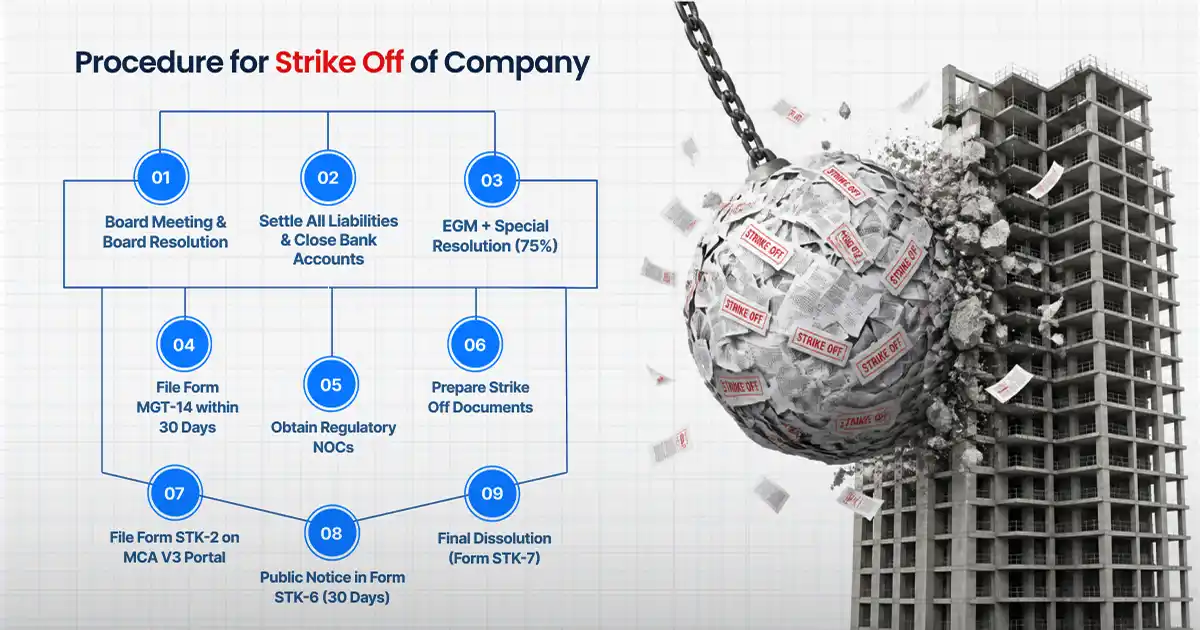
Strike Off Company in India: Meaning, Procedure, Forms & Revival Guide

Conversion of OPC to Private Limited Company: Process, Documents & Fees

Conversion of Partnership Firm into Private Limited Company (2026)
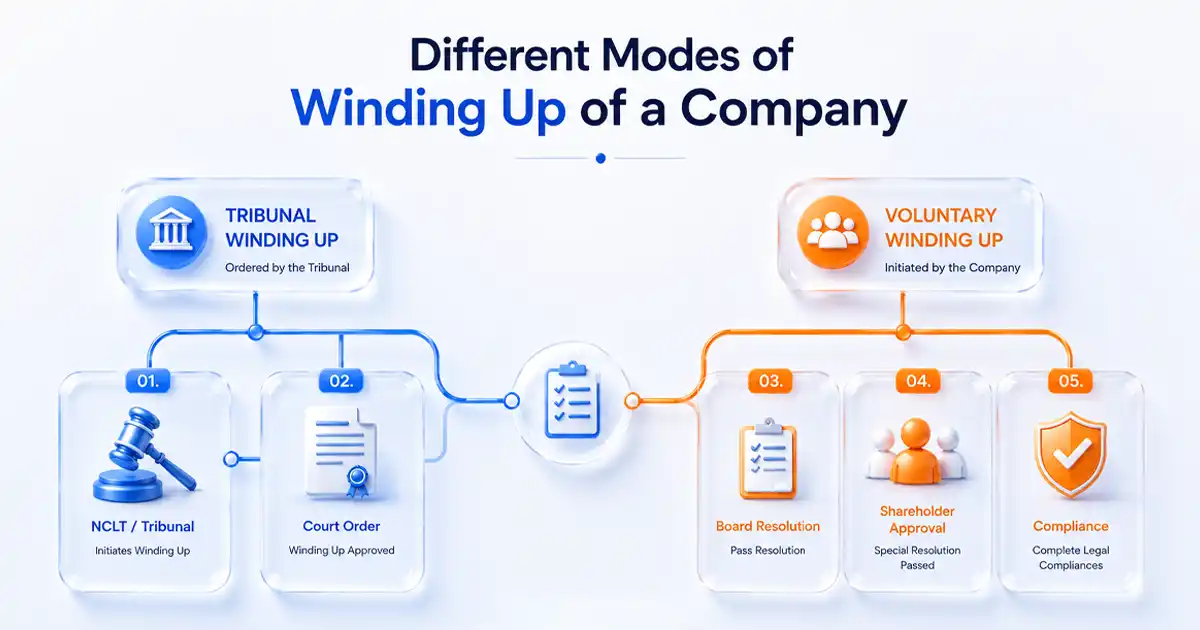
Modes of Winding Up of a Company Under Companies Act 2013