Sole Proprietorship Registration Online in India
Register your sole proprietorship firm online in India from ₹1,999 with RegisterKaro. Our experts handle GST, Udyam, Shop & Establishment registration, and your current account, end-to-end.
 GST, Udyam & Shop & Establishment RegistrationBusiness Current Account Setup SupportActivity-Based Registration & Licence GuidanceDocument Review Before Filing - Fewer RejectionsFast Proprietorship Firm Setup in 7–15 Days

 What Sets Us ApartWhat Sets Us Apart
What is Sole Proprietorship Registration?
Sole proprietorship registration is the process of formally establishing a business owned and run by a single individual. It is one of the lowest-cost business models in India and suits freelancers, small traders, and local shops that want to start with minimal paperwork. Unlike an OPC, a proprietor can also hire employees as the business grows.
The owner and business have no separate legal identity, so the proprietor is personally responsible for the business's profits, losses, and liabilities. Unlike a company or LLP, a proprietorship is not incorporated through the MCA portal and does not receive a single incorporation certificate. Instead, the business is established through the registrations and licenses applicable to its activity, such as:
- Udyam (MSME) registration: Free and paperless, it provides an official MSME identity and access to eligible benefits.
- GST registration: Required when the business crosses the applicable turnover threshold or falls under a compulsory-registration category.
- Shop & Establishment registration: Required under applicable state laws based on the business location, activity, and employees.
- A current bank account: Not a registration, but useful for keeping business and personal transactions separate.
For most small proprietors, Udyam registration and a current account can provide a practical starting point. GST, Shop & Establishment registration, and other licenses depend on your business activity, location, turnover, and applicable laws.
Who Should Apply for Sole Proprietorship Registration?
A sole proprietorship is suitable for individuals who want complete ownership, simple compliance, and direct control over business operations. It is ideal for:
- Freelancers, consultants, and solo service providers operating independently.
- Small shop owners, retailers, and local traders running single-owner businesses.
- First-time entrepreneurs testing a business idea with limited investment.
- Online sellers, content creators, and home-based business owners.
- Professionals such as CAs, lawyers, doctors, and architects practising independently.
- Small businesses that do not require external investors, co-founders, or complex ownership structures.
Why Choose Sole Proprietorship Business Structure in India? Key Benefits
For a solo founder testing an idea or running a small business, a sole proprietorship is often the fastest and most affordable way to start. Here’s what makes it appealing:
- Easy to Start and Manage: Set up your business with basic identity documents, applicable licences, and GST registration (if required). No MCA incorporation filing is needed.
- Complete Control and Decision-Making Power: The proprietor owns and manages the entire business, allowing quick decisions without partner or board approvals.
- Low Startup and Operational Costs: No mandatory incorporation fees apply, and compliance costs remain low compared to companies and LLPs.
- Minimal Compliance Requirements: Sole proprietors do not need ROC filings or statutory audits unless they cross applicable turnover or regulatory limits.
- Simplified Taxation: Business income is taxed under the proprietor’s individual slab rates. Presumptive taxation under Section 44AD can further simplify compliance for eligible businesses with turnover up to ₹2 crore (₹3 crore if 95% of receipts are digital).
- Complete Profit Ownership: The proprietor keeps all business profits after paying applicable taxes and expenses.
- Flexible Business Operations: Owners can easily change business activities, pricing, processes, and strategies without partner approvals.
- Quick Setup Process: Most proprietorship registrations are completed within 7–15 working days, depending on required licences and government processing timelines.
Disadvantages and Limitations of Sole Proprietorship Firm Registration in India
The simplicity of a sole proprietorship can become a limitation as well when the business grows or takes on more risk. Here are the key drawbacks to consider:
- The proprietor has unlimited liability for business debts, losses, and legal obligations.
- Raising funds can be more difficult compared to LLPs or companies because the business depends entirely on one owner and has no separate legal identity.
- The business does not have a separate legal identity from the proprietor.
- Expanding ownership or adding partners is difficult under this structure.
- The business may face continuity issues if the proprietor exits or becomes unavailable.
Eligibility Criteria for Sole Proprietorship Registration: Complete Checklist
A sole proprietorship has simple eligibility requirements because the business is owned and operated by one individual. You can set one up if you meet these basic conditions:
- Single individual owner: The business must be owned and controlled by one individual, who is at least 18 years old and legally competent to enter into contracts.
- Valid identity: The proprietor must have a valid PAN and identity documents required for the applicable registrations.
- Business address: The business must have a valid address for its operations or applicable registrations.
- Legal compliance: The proposed business activity must be permitted under applicable laws and cannot require approvals the proprietor does not hold.
- Non-resident eligibility: Non-residents may set up certain businesses, subject to FEMA, sector-specific rules, and required approvals.
- No minimum capital: There is no minimum capital requirement for starting a sole proprietorship.
Documents Required for Sole Proprietorship Registration in India
As a sole proprietorship has no separate incorporation filing, you mainly need your KYC documents and any licenses or registrations required for your business. Here’s what to prepare:
1. Identity, Address & Office Proof
- PAN Card: Original and photocopy of the proprietor's PAN.
- Aadhaar Card: Identity and address proof with current details.
- Passport or Voter ID: Acceptable as alternative identity and address proof.
- Business address proof:
- Owned premises: Property deed, tax receipts, or a utility bill in the proprietor's name.
- Rented premises: Rent agreement with the owner's NOC and property documents.
- Residential premises: Utility bill and residential address proof.
- Municipal permission: Any approval needed to operate a business from the chosen location.
2. For Business Registrations & Licenses
- Shop & Establishment Certificate: Required for most business operations as per state and local laws.
- Udyam/MSME Registration: Official recognition as a micro, small, or medium enterprise.
- GST Registration: Required if the turnover crosses the threshold (or for interstate sales).
- Trade Licence: From the local municipal authority for commercial operations.
- Professional Tax Certificate: State-specific, where applicable.
3. For Bank Account
- Account opening forms and the initial deposit as specified by the bank.
- Identity and address proof of the sole proprietor.
- Two business registration proofs (e.g., GST + Udyam, or Shop Act + Udyam) required by banks to open a current account.
- Cancelled cheque or bank statement for verification.
- Passport-size photographs of the proprietor.
4. Industry-Specific & Additional Documents
- FSSAI License: For food businesses (Basic, State, or Central, based on scale).
- Pollution clearance: For manufacturing that may affect the environment.
- Fire safety certificate: For commercial premises.
- Labour Department registration: If employing staff.
- Partnership NOC: If transitioning from a partnership or company to a proprietorship.
- Educational certificates: For professional services requiring specific qualifications.
Note: A sole proprietorship does not require minimum capital or financial eligibility proof for registration. The proprietor’s PAN, identity proof, business address proof, and applicable business registrations generally form the core set of documents required for sole proprietorship registration.
How to Register a Sole Proprietorship in India? Step-by-Step Process
The sole proprietorship registration process follows a systematic approach. Follow these 10 steps to legally set up your firm in 7–15 working days:
Step 1: Choose Business Name and Activity: Select an appropriate business name and clearly define your business activities. Also, check local business listings and trademark databases to ensure the name is not already in use and avoid brand conflicts.
Estimated Timeline: 1 day
Tip: Unlike companies and LLPs, sole proprietorships do not receive central name approval or automatic name protection through registration. Hence, consider checking trademark availability and registering the brand name to create exclusive rights and protect your identity.
Step 2: Obtain Required Identity Documents: Gather essential documents, including PAN and Aadhaar Card, and address proof (e.g., utility bill, voter ID) with Passport-size photographs.
Estimated Timeline: 1–2 days
Step 3: Secure Business Address Documentation: Arrange documents for your business location, such as:
- Rent agreement (if rented)
- Property ownership documents (if owned)
- Utility bill (electricity, water, etc.) as supporting proof
Estimated Timeline: 1–2 days
Step 4: Complete Udyam (MSME) Registration
Apply for Udyam Registration to obtain official MSME recognition. It helps businesses access government schemes, benefits, and easier credit opportunities.
Estimated Timeline: 1 day
Step 5: Register for GST (if applicable): Apply for GST registration via the GST Portal if threshold limits are met or you are involved in interstate supply or e-commerce. Businesses can also opt for the GST Composition Scheme (if eligible) to reduce compliance burden.
Estimated Timeline: 3–7 working days
Step 6: Obtain Shop and Establishment License: Apply for shop and establishment registration with local municipal authorities or the state labor department as required.
Estimated Timeline: 3–10 working days (state-wise)
Step 7: Open a Business Bank Account: Open a current account in your business name with accurate documentation mentioned earlier.
Estimated Timeline: 1–3 days after document approval
Step 8: Complete Additional Registrations (If Applicable): Depending on your state, industry, and business activities, you may need additional registrations or licences. These include:
- Professional Tax registration: Required in states that levy professional tax, subject to the applicable state rules.
- Industry-specific licences: These may include an FSSAI licence for food businesses, a municipal trade licence, Drug Licence, Import Export Code (IEC), or other sector-specific permits.
Estimated Timeline: 7–15 working days
Step 9: Set up Accounting and Compliance System: Establish proper books of accounts and a compliance management system for tax filings and regulatory requirements.
Estimated Timeline: 2–5 days
Sole Proprietorship Registration Fees in India
Total proprietorship firm registration fees start from ₹2,500 (professional fees of ₹1,999), reaching up to ₹15,000, depending on which registrations you choose (GST, FSSAI, Trade Licence) and whether you use professional assistance.
One-Time Proprietorship Firm Registration Charges
| Registration Type | Fees Range |
| GST Registration | Free (Online) |
| Shop & Establishment License | ₹1,000 – ₹5,000 |
| Trade License | ₹500 – ₹2,000 |
| Udyam (MSME) Registration | Free |
| Professional Tax Registration (Optional) | ₹300 – ₹1,000 |
| FSSAI Registration | ₹100 – ₹7,500 (based on license type) |
| Bank Account Opening | ₹500 – ₹2,000; varies based on bank |
| Professional Fees | From ₹1,999 |
For a detailed breakdown of the expenses involved, refer to our guide on the cost of proprietorship firm registration.
Compliance Requirements for a Sole Proprietorship in India
Unlike a company, a sole proprietorship has no ROC filings, board meetings, or statutory audit requirements. However, you still need to meet the tax, registration, and employee-related obligations that apply to your business. These include:
- Income tax return: File ITR-3 (regular) or ITR-4 (presumptive, under Section 44AD/44ADA) every year, as the firm's income is taxed as the proprietor's personal income.
- Advance tax: Pay in quarterly instalments if your total tax liability for the year exceeds ₹10,000.
- GST returns: If GST-registered, file GSTR-1 and GSTR-3B (monthly or quarterly) and the annual GSTR-9, including for nil-turnover periods.
- TDS returns: If you deduct TDS, such as on salaries or contractor payments, deposit the tax and file quarterly TDS returns.
- Tax audit: Required under Section 44AB if turnover exceeds ₹1 crore (₹10 crore where cash transactions are ≤5%), or ₹50 lakh of gross receipts for professionals.
- Professional tax: File and pay professional tax according to your state's rules, where applicable.
- Licence renewals: Renew state-specific registrations, such as the Shop & Establishment licence and FSSAI for food businesses, before they expire.
- Employee-related filings: Register for and file EPF and ESI once you cross the applicable employee thresholds.
Taxes Applicable to a Sole Proprietorship Firm in India
The profits of a sole proprietorship are taxed as the proprietor’s personal income, so the applicable rate depends on the chosen tax regime. The New Regime is the default and offers lower slab rates with fewer deductions, while the Old Regime has higher rates but allows deductions such as 80C, 80D, and home-loan interest.
Here’s how the two compare:
| Taxable income | New regime (FY 2026–27) | Old regime |
| Up to ₹2.5 lakh | Nil | Nil |
| ₹2.5 lakh–₹4 lakh | Nil | 5% |
| ₹4 lakh–₹5 lakh | 5% | 5% |
| ₹5 lakh–₹8 lakh | 5% | 20% |
| ₹8 lakh–₹10 lakh | 10% | 20% |
| ₹10 lakh–₹12 lakh | 10% | 30% |
| ₹12 lakh–₹16 lakh | 15% | 30% |
| ₹16 lakh–₹20 lakh | 20% | 30% |
| ₹20 lakh–₹24 lakh | 25% | 30% |
| Above ₹24 lakh | 30% | 30% |
Sole Proprietorship vs. Other Business Structures in India
The table below highlights how a sole proprietorship differs from other popular business structures in India.
| Feature | Sole Proprietorship | Partnership Firm | Limited Liability Partnership (LLP) | One Person Company (OPC) | Private Limited Company (Pvt. Ltd.) |
| Owner(s) | Single individual | Minimum 2, Maximum 50 | Minimum 2, No maximum limit | Single individual (who is both director & shareholder) | Minimum 2, Maximum 200 (shareholders) |
| Legal Identity | No separate legal identity (owner = business) | No separate legal identity (firm = partners collectively) | Separate legal identity | Separate legal identity | Separate legal identity |
| Liability of Owner(s) | Unlimited personal liability | Unlimited personal liability (joint & several) | Limited liability (to capital contribution) | Limited liability (to shares subscribed) | Limited liability (to shares subscribed) |
| Ease of Formation | Easiest, minimal formalities | Relatively easy, Partnership Deed required | Moderate complexity, requires MCA filing | Moderate complexity, requires MCA filing | Complex, significant compliances require MCA filing |
| Compliance Burden | Very low (PAN, Aadhaar, Shop Act/GST/Udyam if applicable) | Low to Moderate (Partnership Deed, PAN, GST if applicable, ITR-5) | Moderate (Annual filings with MCA, ITR-5) | Moderate (Annual filings with MCA, ITR-6, Audit mandatory) | High (Extensive annual filings with MCA, ITR-6, Audit mandatory) |
| Fundraising Ability | Difficult (relies on personal credit, limited options) | Moderate (can raise capital from partners, limited external options) | Moderate (can attract loans, some investor interest) | Moderate (can attract loans, limited equity options) | High (can raise equity funding, bank loans easily) |
| Perpetual Succession | No (business ends with the owner's demise/incapacity) | No (firm dissolves with the death/retirement of a partner unless otherwise agreed) | Yes | Yes | Yes |
| Transferability | Not easily transferable | Not easily transferable (requires a new deed) | Relatively easy (transfer of partnership interest) | Restricted (shares can be transferred, but rules apply) | Shares are relatively easily transferable |
| Taxation | Taxed as individual income of the proprietor (ITR-3 or ITR-4) | Firm taxed separately at 30% flat + surcharge/cess (ITR-5). The partners' share of profit is exempt. | Taxed at 30% flat + surcharge/cess (ITR-5) | Company taxed at corporate rates (ITR-6) | Company taxed at corporate rates (ITR-6) |
| Audit Requirement | Not mandatory unless turnover exceeds GST/income tax audit limits | Not mandatory unless turnover exceeds GST/income tax audit limits | Not automatically mandatory, only when financial thresholds are met | Mandatory regardless of turnover | Mandatory, regardless of turnover |
A sole proprietorship is usually the easiest structure to start with. An LLP, OPC, or Private Limited Company may be better when you need limited liability, multiple owners, succession, or external funding.
Common Mistakes to Avoid in Sole Proprietorship Registration
Based on our experience serving 50,000+ businesses, here are the most common mistakes first-time proprietors make and how to avoid them:
- Mixing personal and business finances: Always open a dedicated current account in the business name for a smooth ITR filing down the line.
- Picking a business name that conflicts with an existing trademark: Run a free company name search and consider trademark registration early to protect your brand.
- Skipping GST when inter-state or e-commerce sales start: GST registration may become mandatory for certain inter-state suppliers depending on the nature of goods or services supplied and applicable GST provisions.
- Ignoring Udyam registration: Udyam is free and unlocks 45-day payment protection under the MSMED Act, lower-interest loans, and PSU tender eligibility.
- Delaying conversion to an LLP or Private Limited Company: Businesses planning to raise funds, add partners, or scale operations should evaluate conversion of a sole proprietorship to a Pvt Ltd Company early to avoid future compliance and ownership challenges.
Connect with RegisterKaro and let our experts handle the legal hassle while you grow your business.
Frequently Asked Questions (FAQs)
Is sole proprietorship registration mandatory in India?
No, separate legal incorporation is not mandatory for a sole proprietorship in India under any central statute. However, to operate legally, open a business bank account, and enter commercial contracts, the sole owner must secure statutory business proofs such as Udyam (MSME) registration or a Shop and Establishment license based on state rules and revenue thresholds.
What documents are required for sole proprietorship registration?
The essential documents required to establish a sole proprietorship entity include the proprietor's personal PAN card, Aadhaar card linked with an active mobile number, passport-size photographs, and business address proof. Address proof can be provided via a recent utility bill, municipal tax receipt, or a registered rent agreement accompanied by a No Objection Certificate (NOC) from the property owner.
Does a sole proprietorship require a separate PAN card?
No, a sole proprietorship does not require a separate PAN card. Because a proprietorship firm is not a distinct legal entity from its owner, all business tax filings, income assessments, and financial liabilities are executed directly using the proprietor's personal Permanent Account Number (PAN).
Is GST registration compulsory for a sole proprietorship?
GST registration is not mandatory for every sole proprietorship unless statutory thresholds or specific business models apply. Registration becomes compulsory if annual turnover exceeds ₹40 Lakh for goods (₹20 Lakh in special category states) or ₹20 Lakh for services, or if the single-owner venture conducts inter-state sales, sells through e-commerce platforms, or voluntarily opts in to claim Input Tax Credit (ITC) benefits.
Can a sole proprietorship be converted into a Private Limited corporate structure later?
Yes, a sole proprietorship can be converted into a Private Limited corporate structure or a Limited Liability Partnership (LLP) as the venture expands. Conversion involves onboarding additional directors and shareholders, drafting new constitutional documents (MoA/AoA), transferring business assets, and securing fresh PAN, TAN, and GSTIN registrations under the new legal entity.
Who can start a sole proprietorship in India?
Any individual aged 18 years or above with a valid PAN, Aadhaar, and legal capacity to enter into contracts can start a sole proprietorship in India. The proprietor must also have the necessary registrations and licences required for their specific business activity.
What is the validity period of a sole proprietorship registration?
A sole proprietorship registration does not have a fixed validity period. It remains valid as long as the proprietor continues business operations and maintains applicable tax filings, licences, and compliance requirements.
Can a sole proprietorship operate under multiple business names?
Yes, a proprietor can operate multiple business names under the same PAN. However, each business activity must comply with applicable registrations, licences, and tax requirements.
Can I register a sole proprietorship without a physical office?
Yes, a sole proprietorship can operate from a residential address, rented premises, or other permitted locations. The proprietor must provide valid address proof and obtain required local approvals based on the nature of the business.
Can a sole proprietorship avail of business loans?
Yes, a sole proprietorship can apply for business loans, overdrafts, and credit facilities. Banks generally require business proof such as GST registration, Udyam registration, Shop and Establishment licence, income records, and the proprietor’s KYC documents.
What happens to a sole proprietorship after the owner's death?
A sole proprietorship does not continue as a separate legal entity after the proprietor’s death. The business assets and liabilities are transferred according to the proprietor’s will or applicable succession laws.
Do I get a Certificate of Incorporation for a sole proprietorship?
No, a sole proprietorship isn't incorporated through the Ministry of Corporate Affairs, so there's no Certificate of Incorporation like a company or LLP receives. Instead, your GST certificate, Udyam registration, or Shop & Establishment licence serves as proof that the business exists and operates legally.
Is my business name protected automatically when I register a sole proprietorship?
No, registering a proprietorship, or obtaining GST or Udyam, does not give you any exclusive rights to the business name. Anyone else can use a similar name unless you register a trademark. To legally protect your brand, you need a separate trademark registration.
Which ITR form does a sole proprietor file?
A sole proprietor files ITR-3 if reporting regular business or professional income, or ITR-4 (Sugam) if opting for presumptive taxation under Section 44AD or 44ADA. The business income is taxed at the proprietor's individual slab rates.

Reviewed by
Joel DsouzaJoel Dsouza is a Chartered Accountant (CA) and compliance expert with over 7 years of hands-on experience in company registration, tax structuring, GST, ROC filings, and MCA compliance. As a qualified member of the Institute of Chartered Accountants of India (ICAI) and Co-Founder at RegisterKaro, he has personally advised more than 1,000 startups and SMEs across India, helping founders navigate incorporation, regulatory frameworks, and financial planning from Day 1. With deep expertise across all three levels of Finance and Portfolio Management, Joel is committed to promoting financial literacy and simplifying India's startup ecosystem through clear, actionable guidance that entrepreneurs can act on immediately.
What Our Clients Say
View All
Ayushi Verma
 Verified
We had engaged with RegisterKaro for our sole proprietorship registration. Initially, it was quite slow and we had to follow up couple of times but af... Read more

Shuaib Ahmed
VerifiedKhushi was good in following up with things on time, but other team members also need to update in their systems on timely basis. Overall experience w... Read more

Nihal Shetty
VerifiedDeepak Paneru has been providing monthly support for our GST filings, and the experience has been excellent. He is proactive in following up, highly k... Read more

Pratap Reddy
VerifiedI entrusted my company registration work to RegisterKaro, and they assigned Dipak Sharma to the task. He handled it very professionally. Thank you to... Read more

pravin chauhan
VerifiedRegisterkaro provided efficient and professional support for our seed funding requirements. The process was well-organized and transparent throughout.... Read more

ARSHAD ALI BAIG
VerifiedIt was really such a good experience with RegisterKaro I har so much doubt firstly and their executives explained me everything well Im also very worr... Read more

megha syam
VerifiedSwathi done very good job, I am really appreciated that we are in that situation that lots of mca portal issues but she worked hard and completed co... Read more

Pradeep Kumar
VerifiedRegister karo ia firm which help you in all your startup issues and Reema from Register karo has helped me during my course of startup and the journey... Read more

Lakshay Pratap
VerifiedMy full recommendation goes to Registerkaro for their flawless onboarding and incorporation experience, Thanks to Parul mam for their support in the... Read more

Siddhi Datri
VerifiedGreat experience! The registration process was smooth, quick, and well-managed. The team was supportive, responsive, and kept me informed throughout.... Read more
Sole Proprietorship Registration Across India
Related Blogs
View All
LLP vs Sole Proprietorship: Key Differences Explained (2026)
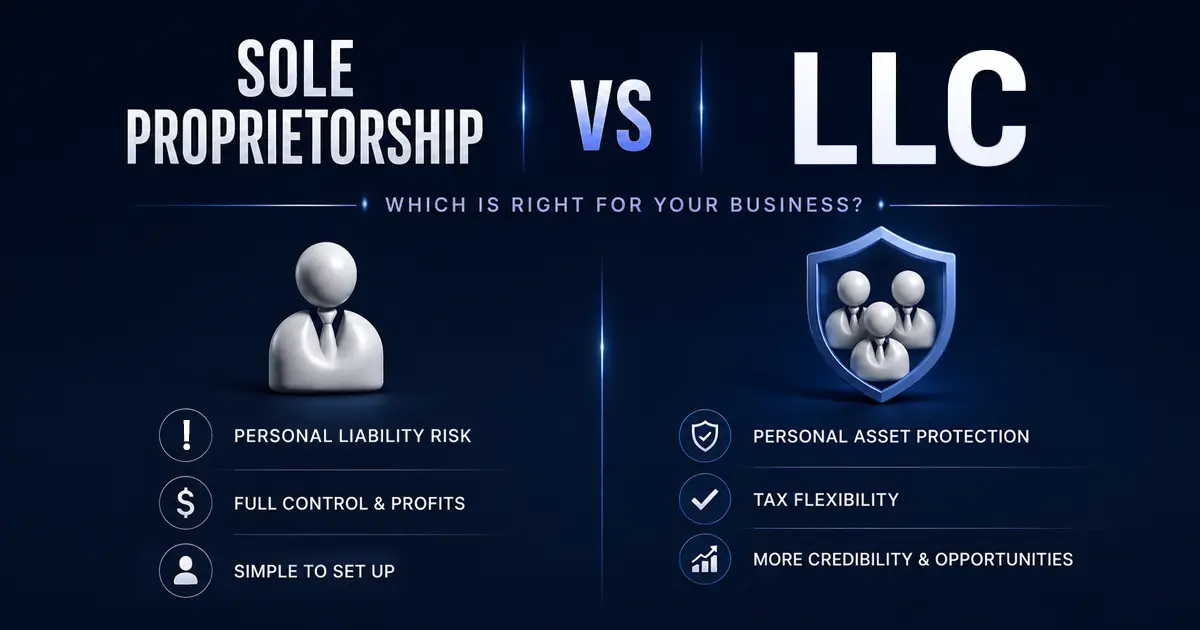
Sole Proprietorship vs LLC: Differences, Taxes & Best Fit
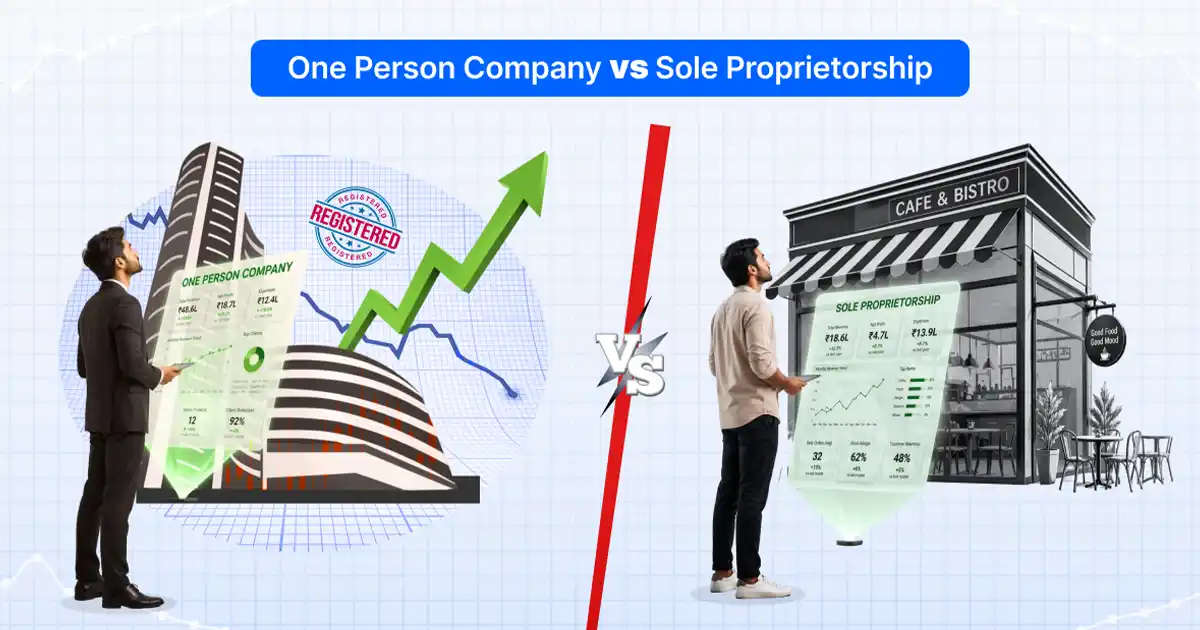
Difference Between OPC and Sole Proprietorship in India

Difference Between Sole Proprietorship and Private Limited Company

Top 10 Sole Proprietorship Firms in India: 2026 List
How to Close a Sole Proprietorship Firm in India: Procedure

Difference Between Sole Proprietorship and Partnership in India

How to Convert Sole Proprietorship to LLP in India (2026): Process & Fees

Documents Required for Sole Proprietorship (2026 Checklist)

Sole Proprietorship Registration Fees in India: Cost Guide