
Trademark Class 43 in India: Hotels, Restaurants & Accommodation Services
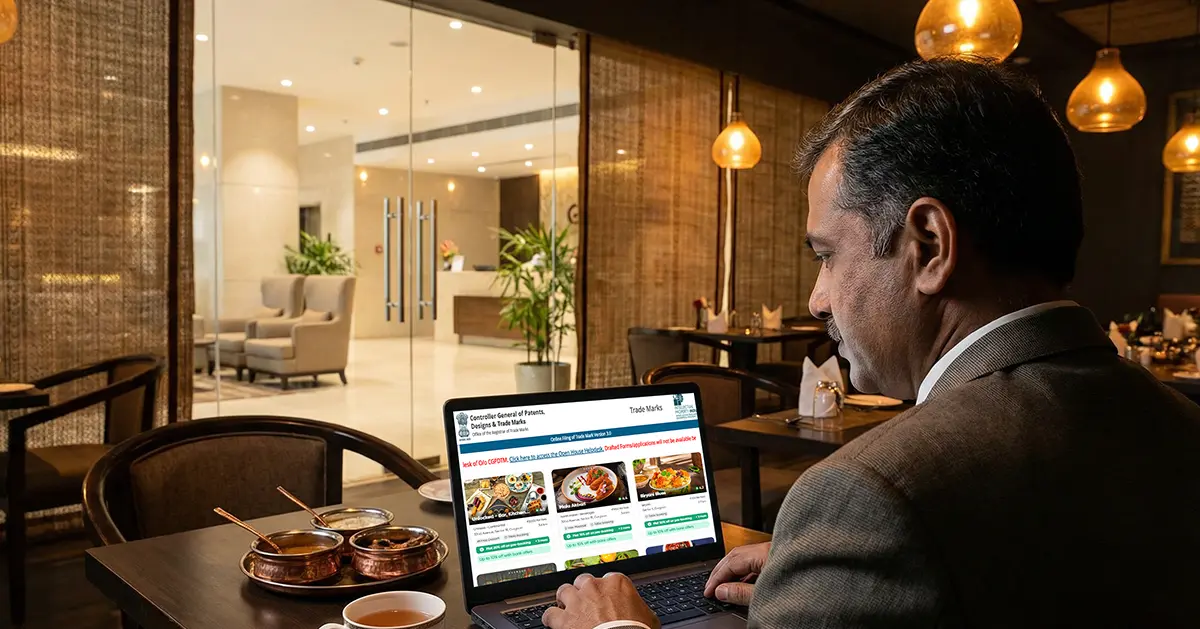
“A brand is no longer what we tell the consumer it is; it is what consumers tell each other it is.”: Scott Cook. In India’s bustling hospitality scene, this truth decides who succeeds and who fades away. You can serve great food and design inviting spaces, but your brand shapes how people remember you. In a crowded market of cafés and boutique hotels, you must protect that brand under trademark class for restaurant and hospitality services.
Protecting your brand does more than prevent imitation; it builds trust. When customers recognize your name, logo, or identity, they feel secure in choosing your business. It also sets you apart from competitors and strengthens your presence in a crowded market. Consider famous brands like Domino’s Pizza and Taj Hotels. Their names and logos are instantly recognizable, and customers associate them with quality, reliability, and a consistent experience.
In the competitive hospitality sector, Trademark Class 43 gives you the power to stand out, stay safe, and scale without fear. This blog covers everything you need to understand Trademark Class 43 and protect your hospitality brand with confidence.
What is Trademark Class 43? Definition and What’s Included
Trademark Class 43 protects services in the hospitality sector, including businesses that provide food, beverages, and temporary accommodation. Unlike product trademarks, it safeguards the service experience and the reputation you build with customers.
This class falls under the Nice Classification, an international system managed by the World Intellectual Property Organization (WIPO). The system categorizes goods and services into specific categories to ensure trademark registration in India is consistent worldwide. It also protects different types of trademarks, so that your hospitality services remain clearly defined and legally secured.
Filing under the food service trademark class in India gives your business several advantages:
- Provides legal rights to take action against infringers.
- Secures your brand identity for hospitality services.
- Prevents competitors from using similar names, logos, or branding.
- Supports expansion to new locations or service offerings.
- Protects your reputation in a competitive market.
- Aligns your registration with international standards via WIPO.
- Builds customer trust and signals professionalism.
- Creates a long-term asset that can be franchised, licensed, or sold.
For restaurants, cafés, cloud kitchens, hotels, and catering services, the hospitality services trademark provides legal certainty and professional credibility. It ensures your brand remains unique, recognizable, and defensible as you grow.
Services Covered Under Trademark Class 43
Trademark Class 43 protects a wide range of services in the hospitality sector. Unlike product trademarks, Class 43 safeguards the service experience and reputation your business delivers.
Key services covered under Class 43 include:
- Restaurants and cafes: Dine-in, takeaway, and casual dining services.
- Hotels and resorts: Accommodation, guest services, and hospitality management.
- Cloud kitchens and delivery-only services: Virtual restaurants and food delivery operations.
- Catering services: Event catering, corporate catering, and special occasion catering.
- Bars, lounges, and pubs: Beverage services, including food and drinks.
- Temporary lodging: Guest houses, homestays, hostels, boutique accommodations, and serviced apartments.
- Event venue rentals: Banquet halls, wedding venues, and conference facilities.
- Food service consultancy: Restaurant management, menu planning, and hospitality advisory services.
- Hospitality support services: Renting cooking or dining equipment, providing meal plans for institutions or corporate clients.
- Mobile or pop-up food services: Food trucks, pop-up cafés, and temporary dining experiences.
- Membership-based services: Clubs or lounges offering food, beverages, or lodging to members.
- Resort and wellness hospitality services: Wellness retreats or resort services that include accommodation.
- Guest meal provision: Providing breakfast, lunch, or other meals as part of accommodation services.
- Guest service management: Concierge services, front desk management, and customer service within lodging.
- Hospitality training services: Staff training in hotel management, restaurant operations, or culinary skills.
- Meal delivery subscriptions (linked to hospitality services): Subscription-based meals delivered to homes or offices.
- Corporate hospitality services: Arranging accommodation, meals, and event hosting for corporate clients.
Registering under Class 43 protects your legal rights over these services. It prevents others from using a similar name, logo, or brand in the same category. This ensures that your hospitality services and the reputation you build around them remain uniquely yours.
What is Not Covered Under Trademark Class 43?
While Trademark Class 43 protects hospitality services, it does not cover certain products, goods, or services. Knowing what falls outside this class helps avoid mistakes during registration and ensures proper legal protection.
Key services and items not covered under trademark for restaurant business include:
- Packaged food and beverages: Pre-packaged snacks, bottled drinks, or packaged meals. (Class 29, 30, 32)
- Alcoholic beverages: Wine, beer, spirits, and liquors are sold as products. (Class 33)
- Cookware and kitchen tools: Utensils, appliances, and cooking equipment sold as goods. (Class 21)
- Travel and transport services: Booking, taxi, or travel agency services. (Class 39)
- Medical, spa, and wellness services: Clinics, spas, and wellness centers not linked to accommodation. (Class 44)
- Event planning or management services: Organizing events without providing catering or hospitality. (Class 35)
- Security and personal services: Private security, concierge, or personal assistance. (Class 45)
Filing under the correct class ensures smooth registration and full protection for your brand. If your business overlaps with excluded services, you may need to register under the different trademark classes to cover all aspects of your operations.
For example, Starbucks not only runs cafés (Class 43) but also sells packaged coffee and beverages (Class 30/32). Hence, it registers under multiple trademark classes to cover all operations.
How to Register Under Trademark Class 43 in India?
Filing a Class 43 trademark protects your hospitality brand and ensures you have exclusive rights to your services. Follow these steps carefully to avoid mistakes and secure your trademark efficiently.
Step 1: Choose a Unique Brand Name and Logo
- Pick a name that is distinctive, memorable, and easy to pronounce.
- Avoid generic terms like “Hotel” or “Restaurant” without unique identifiers.
- Design a logo that clearly represents your brand and stands out from competitors.
- Ensure your brand identity reflects the services you offer, whether cafés, hotels, or cloud kitchens.
Estimated timeline: 1–2 weeks
Step 2: Conduct a Trademark Search
- Check the Indian Trademark Registry online for existing trademarks in Class 43.
- Search international databases like WIPO if you plan to expand globally.
- Look for similar names, logos, or branding to avoid conflicts.
- This step prevents objections, delays, or legal disputes in the future.
Tip: Use RegisterKaro’s free trademark search tool to check if your desired name or logo is available.
Estimated timeline: 1 week

Step 3: Prepare and Submit Your Application
- File your application through the Controller General of Patents, Designs, and Trade Marks (CGPDTM) portal.
- Include all necessary details:
- Applicant name and address
- Trademark representation (name, logo, or combination)
- List of services covered under Class 43
- Applicable filing fees
- Double-check all documents required for trademark registration for accuracy before submission.
Estimated timeline: 1–2 weeks
Step 4: Respond to Trademark Examination
- The trademark office reviews your application for conflicts or inconsistencies.
- Trademark Officers may raise objections if there is a similar registered trademark or if the application is incomplete.
- You must respond to any queries or objections within the given 1–3 months timeline.
Estimated timeline: 1–3 months (for office examination and response)
Step 5: Monitor Publication and Opposition
- If the application passes examination, the CGPDTM publishes it in the Trademark Journal.
- Third parties have four months to oppose the registration if they feel it conflicts with their trademark.
- If no opposition is filed, or if trademark opposition is resolved in your favor, the application moves to registration.
Estimated timeline: 4–6 months
Step 6: Receive Your Trademark Certificate
- Once approved, the trademark is officially registered.
- You receive a registration certificate, giving you exclusive rights over your services in Class 43.
- The certificate is proof of legal ownership and can be used in enforcement actions against imitators.
Estimated timeline: 1–2 months after the opposition period
Step 7: Renew Your Trademark on Time
- Trademark registration under Class 43 is valid for 10 years.
- You can renew a trademark indefinitely in 10-year increments. If you file it within 6 months after expiry, surcharges apply. Moreover, the restoration fee is applicable if the trademark is renewed after six months but within a year.
- Timely renewal ensures continuous protection and avoids lapses that may allow competitors to register similar trademarks.
Estimated timeline: File within six months before expiration
Best Practices to Adopt:
- Conduct thorough trademark searches before applying.
- Keep a clear record of your filings, responses, and certificates.
- Consider registering related trademarks in other relevant classes if your business also sells products (e.g., packaged food or beverages).
- Consult a trademark attorney for complex cases or potential conflicts.
- Monitor your trademark regularly to detect and prevent infringement.
The cost for registering a Class 43 trademark in India is around ₹4,500 for individuals or startups and ₹9,000 for companies per class, excluding professional service fees.
Ready to protect your restaurant, café, or hotel services? Get started with RegisterKaro today and secure your trademark for hotels with ease. Contact us today!
Trademark Classes Similar to Class 43
Many hospitality business owners assume that Class 43 alone will protect their entire operation. In reality, services and products related to your restaurant, café, or hotel may fall under other trademark classes. Understanding the differences prevents confusion and ensures comprehensive protection.
| Trademark Class | Services/Products Covered | Comparison with Class 43 |
| Class 30 | Packaged food, coffee, tea, spices, and bakery items | Covers food products for sale, not food service. Use alongside Class 43 if selling packaged items. |
| Class 32 | Non-alcoholic beverages like soft drinks, juices, and mineral water | Protects drink products, while Class 43 covers drinks served in a restaurant, café, or bar. |
| Class 33 | Alcoholic beverages, including wine, beer, spirits | Covers the sale of alcohol as a product; Class 43 covers bars and lounges serving these beverages. |
| Class 35 | Business management, event organization, marketing, and consultancy | Class 43 covers catering and hospitality services; Trademark Class 35 protects event planning or business services related to hospitality. |
| Class 44 | Medical, wellness, spa, and health services | Class 43 covers lodging with meals or general hospitality; Class 44 covers wellness and medical services. |
| Class 21 | Kitchenware, utensils, and dining equipment | Class 43 protects service delivery; Class 21 protects the sale of physical goods used in hospitality. |
| Class 39 | Travel, transport, delivery, and logistics services | Delivery of food via cloud kitchens overlaps with Class 43; other transport services fall under Class 39. |
Tip: If your business spans multiple areas (e.g., restaurant + packaged foods + alcohol), consider filing under all relevant classes to secure comprehensive protection.
Common Filing Mistakes for Class 43 and How to Avoid Them
Filing a trademark under Class 43 may seem straightforward, but many hospitality businesses face delays or weak protection due to common errors. Here’s how to avoid them:
- Using vague or generic descriptions: Filing with broad terms like “food services” or “hotel services” can lead to objections. Specify exactly what your business offers, including restaurants, cafés, bars, cloud kitchens, catering, or temporary accommodation. Include all relevant services.
- Ignoring trademark searches: Skipping a search may result in conflicts with existing trademarks. Conduct thorough searches in the Indian Trademark Registry and international databases like WIPO to ensure your brand is unique.
- Overlooking future business expansion: Listing only current services may require multiple applications later. Include both current and planned services, such as catering, delivery, or event hosting, in your specifications.
- Filing under the wrong class: Confusing Class 43 with other classes like Class 30 (packaged food) or Class 33 (alcoholic beverages) can invalidate protection. Understand which services fall under Class 43 and register other products or services in their respective classes.
- Submitting incomplete or incorrect documentation: Missing details, errors, or unclear logo representations can delay approval. Double-check all forms, documents, and images before submission.
- Ignoring professional guidance: Attempting registration without expertise may lead to rejection. Consult a trademark attorney or a service like RegisterKaro to ensure smooth filing and strong protection.
By following these tips, you can speed up your registration, secure stronger protection, and reduce the risk of legal conflicts.
How RegisterKaro Helps You?
RegisterKaro simplifies the entire process of trademark registration for hotels. We conduct detailed trademark searches, help prepare accurate applications, and guide you in specifying services correctly. With expert support, you reduce errors, avoid delays, and secure your hospitality brand confidently.
Start your hospitality trademark registration with RegisterKaro today and protect your business effortlessly.
Frequently Asked Questions (FAQs)
1. What is Trademark Class 43?
Trademark Class 43 protects services in the hospitality sector, including restaurants, cafés, hotels, cloud kitchens, and catering services. Unlike product trademarks, it safeguards the service experience and the reputation you build with customers. Filing under Class 43 ensures your hospitality business is legally recognized and prevents others from using similar names, logos, or branding in the same category.
2. Why is Class 43 important for hospitality businesses?
Class 43 is crucial because it gives restaurants, cafés, hotels, and catering services exclusive rights to their brand identity. It helps prevent imitation, protects your reputation, and ensures legal enforcement against infringers. Without Class 43 registration, competitors could use similar branding, potentially confusing customers and undermining your hard-earned credibility in the hospitality market.
3. Which services are covered under Class 43?
Class 43 covers a wide range of hospitality services, including dine-in and takeaway restaurants, cafés, hotels and resorts, cloud kitchens, bars, lounges, catering services, temporary lodging, mobile or pop-up food services, event venues, and membership-based clubs. It protects not just the service, but also the customer experience and professional reputation of your business.
4. Can I register my restaurant and packaged food under the same class?
No, Class 43 only covers hospitality services, not products. If your restaurant sells packaged foods, beverages, or bakery items, you will need to register these under the relevant classes, such as Class 30 for packaged food or Class 32 for non-alcoholic drinks. Registering under multiple classes ensures comprehensive protection for both services and products.
5. How do I apply for a trademark under Class 43 in India?
You can apply online via the Controller General of Patents, Designs, and Trade Marks (CGPDTM) portal. The process includes choosing a unique brand name and logo, conducting a trademark search, submitting your application with detailed service specifications, responding to examination queries, monitoring publication for oppositions, and finally receiving your registration certificate. Renewals are required every 10 years.
6. What are common mistakes businesses make when filing for Class 43?
Common mistakes include using vague descriptions, ignoring trademark searches, overlooking future business expansion, filing under the wrong class, submitting incomplete documentation, and not consulting professional guidance. These errors can lead to delays, objections, or weaker protection. Avoiding them ensures smoother registration and stronger legal coverage for your hospitality services.
7. How long does it take to register a trademark under Class 43?
Trademark registration under Class 43 generally takes between 12 to 18 months in India, depending on factors like objections, oppositions, or incomplete applications. Responding promptly to examination queries and ensuring accurate documentation can speed up the process. Using professional services like RegisterKaro can also help reduce delays and simplify the registration process.
8. Can I enforce my Class 43 trademark internationally?
While Class 43 registration in India protects your brand domestically, it aligns with the Nice Classification and WIPO guidelines, making international registration easier. To enforce your trademark abroad, you must file in the specific countries where you operate or plan to expand. This ensures global recognition and legal protection for your hospitality services.
9. How much does it cost to register a Class 43 trademark in India?
The cost depends on factors like whether you file as an individual/startup or a company, and whether you hire professional services. Government filing fees for one class start at around ₹4,500 for individuals/startups and ₹9,000 for companies. Professional services like RegisterKaro may add additional fees but simplify the process and improve the likelihood of approval.
10. What are the benefits of registering under Class 43?
Registering under Class 43 secures your brand identity, prevents competitors from copying your services, supports expansion to new locations or service offerings, protects your reputation in a competitive market, and aligns your registration with WIPO standards. It also builds customer trust, provides legal rights to enforce your trademark, and creates a long-term business asset.
11. Is Class 43 mandatory for restaurants?
Class 43 is not legally mandatory, but it is highly recommended for restaurants, cafés, hotels, and catering services. Registering under Class 43 protects your brand identity and hospitality services, giving you exclusive rights and legal recourse against imitators. Without it, your restaurant’s name, logo, or service could be copied by competitors, weakening your market presence.
12. Can I file under multiple classes?
Yes, you can file under multiple trademark classes if your business offers services or products that fall into different categories. For example, a restaurant selling packaged foods or beverages should register under Class 30 or Class 32 in addition to Class 43. Filing under all relevant classes ensures comprehensive protection and prevents legal disputes.
13. Can two restaurants have the same name?
Legally, two restaurants cannot register the same or confusingly similar name under the same class in India. If a name is already registered under Class 43, a new applicant must choose a distinct name to avoid conflicts. However, identical names can exist in unrelated classes, but this does not protect hospitality services from infringement.
14. What is the cost of Class 43 trademark registration in India?
The government filing fee for a Class 43 trademark starts at around ₹4,500 for individuals and startups and ₹9,000 for companies per class. Additional costs may include professional service fees if you hire trademark attorneys or platforms like RegisterKaro to assist with filing, searches, and documentation.
15. How long does it take to register a trademark in Class 43?
The registration process for Class 43 typically takes 12–18 months, depending on examination, oppositions, and objections. Conducting a thorough trademark search, responding promptly to queries, and filing accurately can speed up the process. Using professional services can further reduce delays and ensure smoother registration.
16. Can I protect my cloud kitchen under Class 43?
Yes, cloud kitchens offering food services without dine-in facilities fall under Class 43. Registering your cloud kitchen protects your brand name, logo, and delivery services from imitation. This ensures that even virtual or delivery-only restaurants have legal rights to their hospitality services, similar to traditional dine-in establishments.


