Startup India Registration (DPIIT Recognition)
Complete your Startup India registration and get DPIIT recognition for your startup, unlocking eligible benefits. RegisterKaro supports you from eligibility assessment and application preparation to certificate issuance.
 Innovation and scalability description supportAssistance with DPIIT clarification requestsRecognition certificate download assistanceGuidance on eligible government schemesApplication form preparation and filing support

 What Sets Us ApartWhat Sets Us Apart
What is Startup India Registration (DPIIT Recognition)?
Startup India Registration is the process of obtaining official startup recognition from the Department for Promotion of Industry and Internal Trade (DPIIT) under the Government of India's Startup India initiative. Once approved, the entity receives a DPIIT Certificate of Recognition with a unique recognition number. Since the initiative was launched in 2016, DPIIT has recognized more than 2.23 lakh startups across India (as of March 31st, 2026).
DPIIT recognition is voluntary, but it formally establishes an entity's recognized startup status under the Startup India framework. It is a key requirement for accessing several Startup India benefits and schemes, although individual benefits may have additional eligibility conditions. Recognition is available only after the business is incorporated or registered, and the application is submitted online through the Startup India portal at no government fee.
Objectives of Applying for Startup India Recognition
Launched in 2016, the Startup India initiative aims to build a stronger ecosystem for innovation and entrepreneurship. Its key objectives are to:
- Promote innovation and entrepreneurship by supporting new and innovative businesses across sectors.
- Reduce compliance burden through self-certification and simplified regulatory processes for eligible startups.
- Improve access to funding through initiatives such as the Fund of Funds for Startups and Startup India Seed Fund Scheme.
- Reduce business costs through eligible tax benefits and rebates or concessions on intellectual property filings.
- Support employment and economic growth by helping startups develop, scale, and create jobs.
What DPIIT Recognition Does Not Automatically Provide?
DPIIT recognition makes an eligible startup eligible to apply for certain Startup India benefits, but recognition alone does not grant those benefits. Each benefit has its own eligibility criteria, application process, or approval requirements:
- Section 80-IAC tax holiday: The three-year profit deduction is not automatic. It requires a separate application and Inter-Ministerial Board (IMB) approval, along with conditions such as incorporation on or before 31 March 2030 and eligibility as a Private Limited Company or LLP. The tax holiday also has a separate ₹100 crore turnover condition in the year the deduction is claimed, which is distinct from the ₹200 crore turnover limit for DPIIT recognition.
- Funding: DPIIT recognition does not guarantee funding. Startups must separately apply and qualify under schemes such as the Startup India Seed Fund Scheme or support available through the Fund of Funds for Startups (FFS).
- IPR benefits: Patent and trademark fee rebates and expedited processing are subject to the applicable IP filing procedures and eligibility requirements. They do not apply automatically upon recognition.
- Self-certification: Recognised startups can use self-certification under specified labour and environmental laws, subject to the applicable conditions and compliance requirements.
- Public procurement relaxations: Exemptions relating to prior experience, turnover, or EMD apply only where the startup and tender meet the relevant requirements.
Types of Startups Eligible for Registration in India
Startups eligible for DPIIT recognition can cover businesses across industries, provided they meet the applicable criteria. Common categories include:
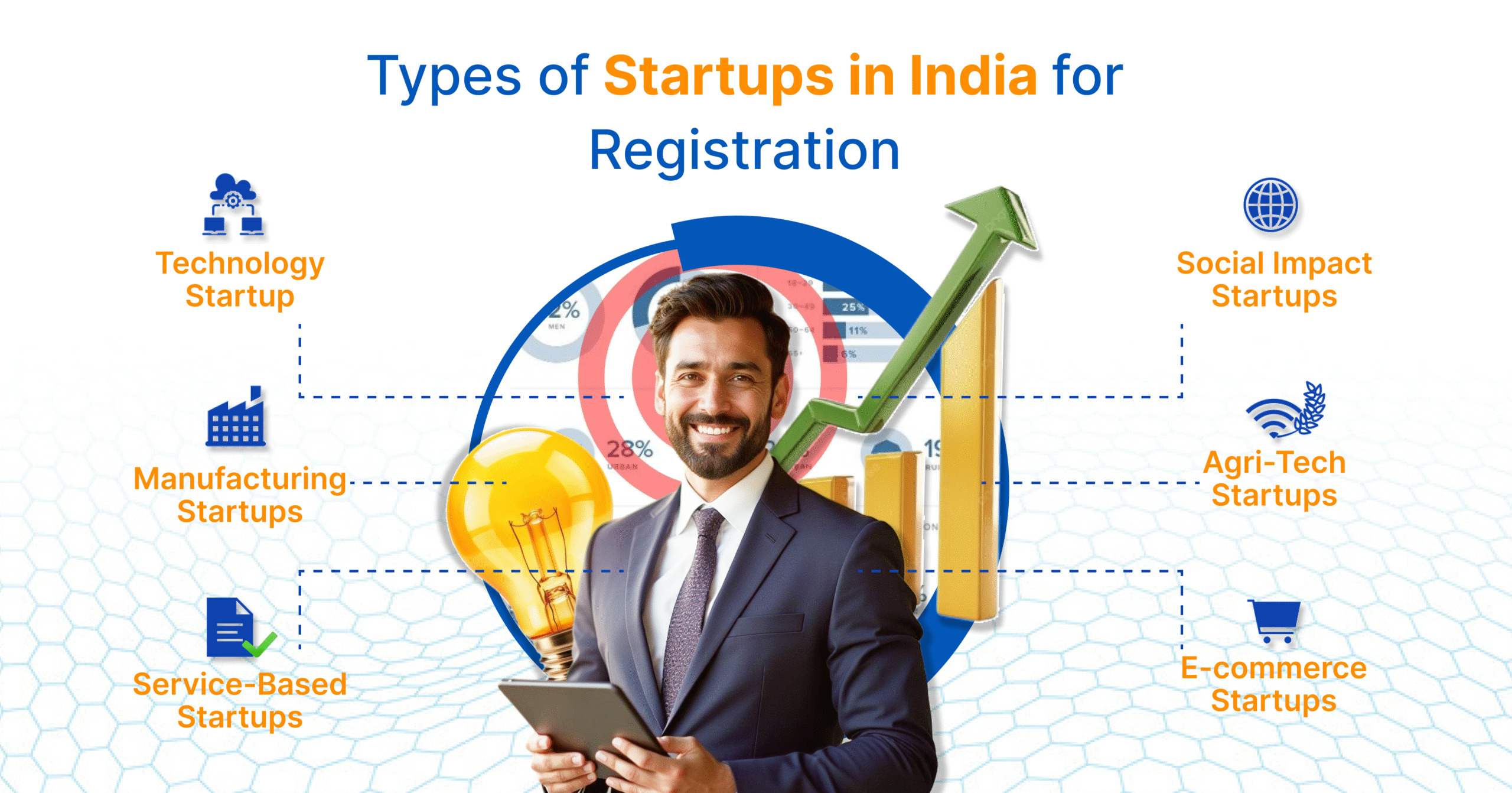
- Technology Startups: Develop innovative software, apps, AI solutions, automation tools, or other technology products.
- Service-Based Startups: Offer innovative services that improve or transform areas such as education, healthcare, finance, or home services.
- Manufacturing Startups: Develop innovative products, manufacturing processes, or technologies, such as electric vehicles or sustainable packaging.
- Agri-Tech Startups: Use technology to improve farming, food production, agricultural supply chains, or resource efficiency.
- Social Impact Startups: Develop scalable solutions addressing social or environmental challenges, including education, healthcare, or affordable housing.
- E-commerce Startups: Use digital platforms to sell products or services, including specialised marketplaces, sustainable products, or local delivery services.
Eligibility for Startup India Registration
To qualify for DPIIT recognition under Startup India, your business must meet all of the following criteria:
- Eligible business structure: The entity must be registered as a Private Limited Company, a Limited Liability Partnership (LLP), a Registered Partnership Firm, or a Cooperative Society. These structures give the entity formal legal recognition under Indian law.
- Age of the business: The entity must be up to 10 years old from its date of incorporation or registration. A recognized DeepTech startup can qualify for up to 20 years.
- Annual turnover limit: Annual turnover must be less than ₹200 crore in any financial year since incorporation (raised from ₹100 crore in the 2026 revision). For deep-tech startups, the amount should be less than ₹300 crore.
- Innovation or scalability: The entity must work towards the innovation, development, or improvement of products, processes, or services. It may also operate a scalable business model with significant potential for employment generation or wealth creation.
- Original business: The entity must not have been formed by splitting up or reconstructing an existing business.
Documents Required for Startup India Registration
DPIIT recognition under Startup India is an online, largely form-based process. The entity must already be incorporated or registered, so complete your startup registration (as a company, LLP, or partnership firm) first if you have not done so.
Much of the required information is entered directly in the application, but keeping the following documents and details ready can make the process smoother:
1. Primary Document
- Certificate of Incorporation or Registration: Upload the Certificate of Incorporation proving that the company, LLP, partnership firm, or eligible cooperative society is legally registered.
- Companies may also need to provide their MOA and AOA, where applicable.
2. Supporting Documents
- Entity PAN: PAN of the company, LLP, or partnership firm applying for recognition.
- Proof of innovation or scalability: A pitch deck, website or product link, prototype images, product description, video, or traction data that supports the claim of innovation, improvement, or scalability.
- Authorization: Board resolution or authorization letter confirming that the applicant is authorized to apply on behalf of the entity, where required.
- Awards or recognition: Certificates, awards, or other recognition that support the startup's innovation or business claims, if available.
3. Additional Documents, Where Applicable
- Funded startup: Funding documents such as a term sheet, investment agreement, or certificate from a SEBI-registered fund.
- IP-based business: Patent or trademark application or registration details.
- Incubator-supported startup: Recommendation or support letter from the relevant incubator.
- DeepTech startup: Technical documentation and other material supporting DeepTech eligibility.
- Seeking a tax benefit: Additional forms and documents required for the specific benefit, such as the IMB application for the Section 80-IAC tax holiday.
Note: Details such as the registered address, incorporation date, business activity, director or partner information, innovation description, and authorized person's declaration are generally entered directly in the Startup India application. Upload requirements can differ based on the entity and application, so check the current Startup India portal requirements before submitting.
How to Register Under the Startup India Scheme?
DPIIT recognition is applied for online through the Startup India portal, which redirects to NSWS (National Single Window System) after the business is incorporated. The process involves the following steps:
Step 1: Create Your Account
- Go to the Startup India website (startupindia.gov.in) or the NSWS portal (nsws.gov.in).
- Create your account using a valid email ID and mobile number, and complete OTP verification for both.
Step 2: Prepare Your Documents
- Prepare digital copies of your incorporation certificate and other business details.
- Write a brief description of your innovation and business model, explaining the problem you solve and what makes your solution unique.
- Keep director/partner identification proofs (Aadhaar + PAN) and supporting proof of content (pitch deck, website, prototype) ready.
Make sure every document is clear, readable, and in PDF format (usually under 5 MB) to avoid upload issues.
Step 3: Fill and Submit the Application
- Log in to the NSWS portal directly, or via the redirect from the Startup India portal.
- On your dashboard, select Add Approvals → Central Approvals, then find and add "Registration as a Startup."
- Fill out the form with accurate entity details, including name, incorporation date, CIN/LLPIN, PAN, turnover, and industry type.
- Upload all supporting documents in the specified format.
- Submit your self-declaration confirming your startup's eligibility, then submit the application for DPIIT review.
Step 4: DPIIT Review & Verification
- The Department for Promotion of Industry and Internal Trade (DPIIT) reviews your application.
- The review usually takes 2–5 working days, though it can extend to 2–4 weeks if clarifications are needed.
- You’ll be notified by email, or you can track your application on the Startup India dashboard.
You can track your application anytime through the Startup India / NSWS dashboard using your login. The status may show as under review, clarification required, or approved. Respond promptly to any clarification requests to avoid delays.
Tip: Respond quickly to any clarification requests from DPIIT to speed up approval.
Step 5: Receive Your Recognition Certificate
- Once DPIIT approves your application, you can download the Startup India Recognition Certificate from the Startup India portal.
- Save the certificate and DPIIT recognition number for your records and future applications for eligible Startup India benefits.
Your entity is now DPIIT-recognized under the Startup India initiative, subject to the conditions applicable to specific benefits or schemes.
Step 6: Access Post-Recognition Benefits (Optional)
- Apply for the Section 80-IAC income-tax holiday, which provides a 100% deduction of eligible profits for any three consecutive years within the first ten years. The benefit requires Inter-Ministerial Board (IMB) approval and is subject to additional conditions, including incorporation on or before 31 March 2030, eligibility as a Private Limited Company or LLP, and compliance with the applicable eligibility and fund-use requirements.
- Claim intellectual-property benefits, such as rebates and fast-tracking on patent and trademark filings.
- Explore funding through the Startup India Seed Fund Scheme or the Fund of Funds for Startups (FFS).
Note: Angel tax under Section 56(2)(viib) was abolished for all investors from April 1, 2025, so recognized startups no longer need a separate angel-tax exemption on share premium.
Startup India Registration Fees
DPIIT recognition under Startup India is free. There is no government fee for submitting an application through the Startup India portal. However, the entity must first be incorporated or registered, which involves separate government and professional costs. For a full breakdown of those costs, see our Startup India Registration Fees guide.
| Cost component | Typical cost | Notes |
| Startup India (DPIIT) recognition | Free | No government fee for the recognition application |
| Private Limited Company incorporation | ₹8,000–₹15,000 | Separate incorporation cost; depends on state, authorised capital, and professional fees |
| LLP incorporation | ₹6,000–₹35,000 | Separate cost; depends on state, contribution, and professional fees |
| Partnership Firm registration | ₹5,500–₹31,000 | Primarily depends on state stamp duty and professional fees |
| Professional or consultant fees | Starting from ₹1,999 | Optional; applies if you use professional assistance |
| Patent, trademark, or other IPR filing | Separate official fees | Optional; eligible startups may receive prescribed fee rebates |
Note: Startup India registration fees are nil, as the government does not charge any amount for the recognition application. However, incorporation or registration is a separate process with its own government and professional costs. Eligible entities, including Private Limited Companies, LLPs, registered Partnership Firms, and certain cooperative societies, must be legally registered and meet the applicable Startup India conditions before applying for DPIIT recognition.
Startup India Registration Certificate
The Startup India Registration Certificate, formerly called the DPIIT Certificate of Recognition, is the official document confirming that the DPIIT has recognized an eligible entity as a startup.
Serving as proof of recognition, the certificate includes key details such as:
- Entity name and legal structure
- DPIIT recognition number
- Date of recognition
- Incorporation or registration details
- Other identification details of the recognized entity
Once DPIIT approves your application, you can download the certificate from the Startup India portal. For step-by-step download and online verification (including DigiLocker), see our Startup India Certificate Download Guide.
Laws and Legal Framework Governing Startup India Registration
Startup India recognition is governed by a combination of DPIIT notifications, corporate laws, tax legislation, and intellectual property laws. The key legal frameworks include:
- Startup India Action Plan, 2016: Established the policy framework for the Startup India initiative and introduced measures for startup recognition, funding, tax relief, IPR support, and public procurement.
- DPIIT Notification G.S.R. 108(E), 2026: The current notification, dated 4 February 2026, defines a “Startup” and prescribes the eligibility and recognition framework. It superseded G.S.R. 127(E), 2019 and, among other changes, increased the general turnover limit for startup recognition from ₹100 crore to ₹200 crore.
- Companies Act, 2013, LLP Act, 2008, and Partnership Act, 1932: Govern the incorporation or registration of the business structures that can qualify for DPIIT recognition, including Private Limited Companies, LLPs, and registered Partnership Firms.
- Patents Act, 1970 and Trade Marks Act, 1999: Provide the legal framework for intellectual property protection. Startup India-related schemes provide eligible recognized startups with prescribed fee concessions and expedited IP processes.
Benefits of Applying for Startup India Registration
DPIIT recognition can give eligible startups access to government benefits that reduce compliance costs, support intellectual property protection, improve access to funding, and open up public procurement opportunities. Key benefits include:
When Can Startup India Recognition Be Revoked?
DPIIT recognition can cease when the entity no longer meets the applicable conditions or can be withdrawn where the recognition was obtained through false information or other ineligible circumstances. This may include:
- Exceeding the applicable limits: Recognition ends when the startup exceeds the prescribed recognition period or applicable turnover threshold.
- False information or declarations: DPIIT can withdraw recognition if the application contains false or misleading information.
- Ineligible formation: Recognition may be withdrawn if the entity is found to have been formed by splitting up or reconstructing an existing business or otherwise fails the prescribed eligibility conditions.
- Misuse of funds: The 2026 notification requires a recognised startup's funds to support its core innovation, business operations, or growth. Using funds for speculative activities, residential real estate, luxury assets, or other passive investments outside the ordinary course of business may affect the startup's eligibility for recognition or related benefits.
- Other violations: Recognition or associated benefits may be affected where the startup is found to have violated applicable laws or the conditions governing a specific benefit.
Common Mistakes to Avoid During Startup India Registration
Small errors or incomplete information can lead to clarification requests, delays, or an unsuccessful application. Check these points before submitting:
- Choosing an ineligible entity type: DPIIT recognition is available to eligible Private Limited Companies, LLPs, registered Partnership Firms, and specified cooperative societies. A sole proprietorship is not eligible.
- Using the founder's personal PAN: Enter the entity's PAN, not the founder's personal PAN. Check that the PAN matches the entity applying for recognition.
- Writing a vague innovation description: Clearly explain the problem, your solution, and what makes the business innovative, improved, or scalable. Avoid generic descriptions that do not explain the startup's specific value.
- Not keeping supporting material ready: Keep relevant evidence such as a pitch deck, website, product link, prototype, screenshots, or traction details available if requested during the application or review.
- Providing inconsistent information: Check that the entity's legal name, PAN, incorporation date, and other details match the information in your incorporation documents and application.
- Assuming DPIIT recognition automatically provides tax benefits: Recognition does not by itself grant the Section 80-IAC tax deduction. The tax benefit has separate eligibility requirements and approval requirements.
- Forming the entity by splitting or reconstructing an existing business: A business formed by splitting up or reconstructing an existing business does not qualify as a startup under the applicable DPIIT criteria.
DPIIT Recognition vs Startup Registration
Founders often use startup registration and DPIIT recognition interchangeably, but they refer to different steps. Here’s how they compare against each other:
| Aspect | Startup registration | DPIIT recognition |
| What it is | Registration or incorporation of the business as a legal entity | Official startup recognition under the Startup India initiative |
| Authority | MCA for companies and LLPs; relevant state authority for Partnership Firms; applicable authority for cooperative societies | DPIIT through the Startup India/NSWS application process |
| Result | Certificate of Incorporation or registration, along with CIN, LLPIN, or other applicable registration details | DPIIT Certificate of Recognition |
| Purpose | Legally establishes the business entity | Establishes recognised startup status and eligibility to apply for applicable benefits |
| Order | Completed first | Applied for after the entity is registered |
| Fee | Government and, where applicable, professional charges | No government fee for the DPIIT recognition application |
Connect with RegisterKaro and let our experts handle the legal hassle while you grow your business.
Frequently Asked Questions (FAQs)
Is Startup India Registration free?
Yes, applying for DPIIT recognition through the Startup India portal carries no government fee. However, separate costs may apply for incorporating or registering the entity beforehand, along with any professional, trademark, or patent services you choose.
What is DPIIT, and why is it crucial for startups?
DPIIT recognition helps startups get official government support. It gives access to tax exemptions, funding opportunities, faster patent filing, and relaxation in government tenders. This recognition also increases your startup’s credibility and trust with investors and customers.
Who is eligible for DPIIT recognition?
A Private Limited Company, LLP, registered Partnership Firm, or specified cooperative society may qualify if it meets the applicable conditions on age, turnover, innovation or scalability, and business formation. Generally, recognition is available for up to 10 years from incorporation or registration, or 20 years for eligible DeepTech startups, subject to the applicable turnover limits.
Does DPIIT recognition automatically provide a tax exemption?
No, DPIIT recognition makes an eligible startup able to apply for the Section 80-IAC tax holiday, but the benefit has separate eligibility conditions and requires approval from the Inter-Ministerial Board (IMB).
Is angel tax still applicable to recognised startups?
No, the tax on share premium under Section 56(2)(viib) was abolished for all investors from FY 2025-26. Therefore, DPIIT-recognised startups no longer need a separate exemption from this provision.
Is DPIIT recognition the same as company registration?
No, company incorporation or entity registration legally establishes the business, while DPIIT recognition is a separate application through Startup India to obtain recognised startup status under the applicable framework.
How long does DPIIT recognition remain valid?
Recognition can continue without periodic renewal as long as the entity meets the applicable conditions. For general startups, recognition is available for up to 10 years from incorporation or registration, while eligible DeepTech startups can remain recognised for up to 20 years, subject to the applicable turnover limits.
Is DIPP registered, and is Startup India registration the same?
DIPP (now DPIIT) recognition is a part of the Startup India registration process, essential for availing specific benefits.
Is Startup India registration mandatory for startups?
No, it’s not mandatory. However, registering gives your startup official government recognition and unlocks valuable benefits like tax exemptions, funding access, and credibility with investors. So, even though it’s optional, it’s highly recommended.
Can my Startup India Registration be transferred to another business?
No, the registration is specific to your business entity and cannot be transferred or assigned to another company.

Reviewed by
Joel DsouzaJoel Dsouza is a Chartered Accountant (CA) and compliance expert with over 7 years of hands-on experience in company registration, tax structuring, GST, ROC filings, and MCA compliance. As a qualified member of the Institute of Chartered Accountants of India (ICAI) and Co-Founder at RegisterKaro, he has personally advised more than 1,000 startups and SMEs across India, helping founders navigate incorporation, regulatory frameworks, and financial planning from Day 1. With deep expertise across all three levels of Finance and Portfolio Management, Joel is committed to promoting financial literacy and simplifying India's startup ecosystem through clear, actionable guidance that entrepreneurs can act on immediately.
Why Choose RegisterKaro for Startup India Registration?
RegisterKaro helps you manage the DPIIT recognition process from application preparation to certificate issuance, with support focused on getting the details and documentation right.
- Eligibility check: We review your entity structure and business details against the applicable DPIIT recognition criteria before you apply.
- Application preparation: Our team helps prepare the Startup India application, including the business activity and innovation description, so the information is clear and consistent.
- Clarification assistance: If DPIIT raises a query or requests additional information, we help you understand and respond to it.
- Certificate assistance: Once recognition is approved, we help you access and download the DPIIT Certificate of Recognition and keep the recognition details for your records.
- Post-recognition guidance: Our experts can also explain the eligibility and application requirements for specific Startup India benefits, so you know which benefits require separate applications or approvals.

What Our Clients Say
View All
Meenakshi Bazzad
 Verified
I've had an excellent experience with RegisterKaro service. Purnima Sharma support was invaluable, especially with our Startup India registration. I h... Read more

100xMBA
VerifiedI took Register Karo’s services in 2025 to start my registration process. From there on, I took their services for Startup India registration, monthly... Read more

Karingula Pranay
VerifiedIf you’re looking for reliable Startup India registration support, RegisterKaro is a great choice. Ms. Ayushi managed my case efficiently, answered al... Read more

Sarathkumar Mani
VerifiedRegisterkaro assisted me in obtaining the Startup India registration, and the entire process was smooth and swift. I’d like to extend my appreciation... Read more

Sravan Kumar Pendem
VerifiedI've had an excellent experience with Registerkaro Service. Samriddhi's support was invaluable, especially with our Startup India registration and nav... Read more

Piyush Mishra
VerifiedVibha is a really great supporter and really polite and courteous. She has been extremely helpful in the process. The way in which she has guided me t... Read more

Aarav Singh
VerifiedI have incorporated my company through register karo. It has very professional staff special thanks to Mr. Aerk, he is very polite & professional with... Read more

RAJU MOKA
VerifiedThe services given by Register Karo us excellent. Eventhough At initial stage of my company closure work bit delay was there, but later stage complian... Read more

Madhav Kumar
VerifiedThank you, RegisterKaro, for making my company incorporation process so smooth and hassle-free. The team was professional, responsive, and guided me a... Read more

Arjun Gowda
VerifiedIt's refreshing to work with a team that values both accuracy and customer satisfaction. The process was handled with care, and the overall experience... Read more
Related Blogs
View All
How to Raise Funds for Startup in India: Sources and Stages

How to Start Masala Business in India in 2026?

How to Start a Recycling Business in India: Complete Guide for 2026

How to Start a Security Service Business in India

Kerala Startup Incubators List with their Contact Information

How to Invest in Startups in India? 2026 Complete Guide

Government Schemes For Women Entrepreneurs in India: Funding Options
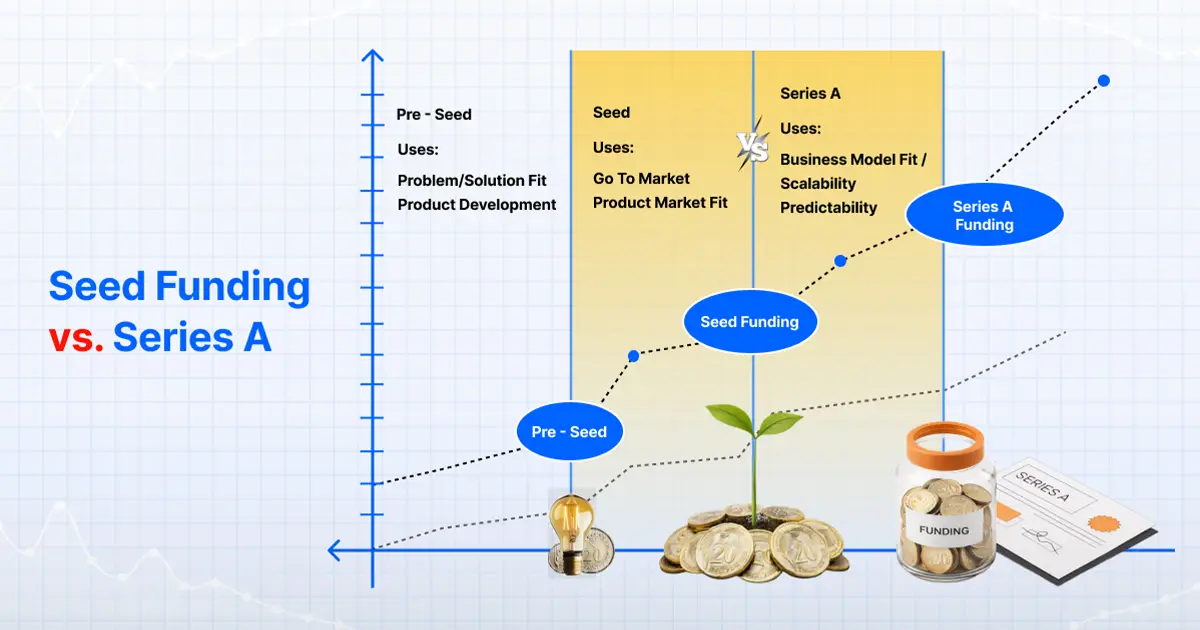
Difference Between Seed Funding and Series A Funding in India
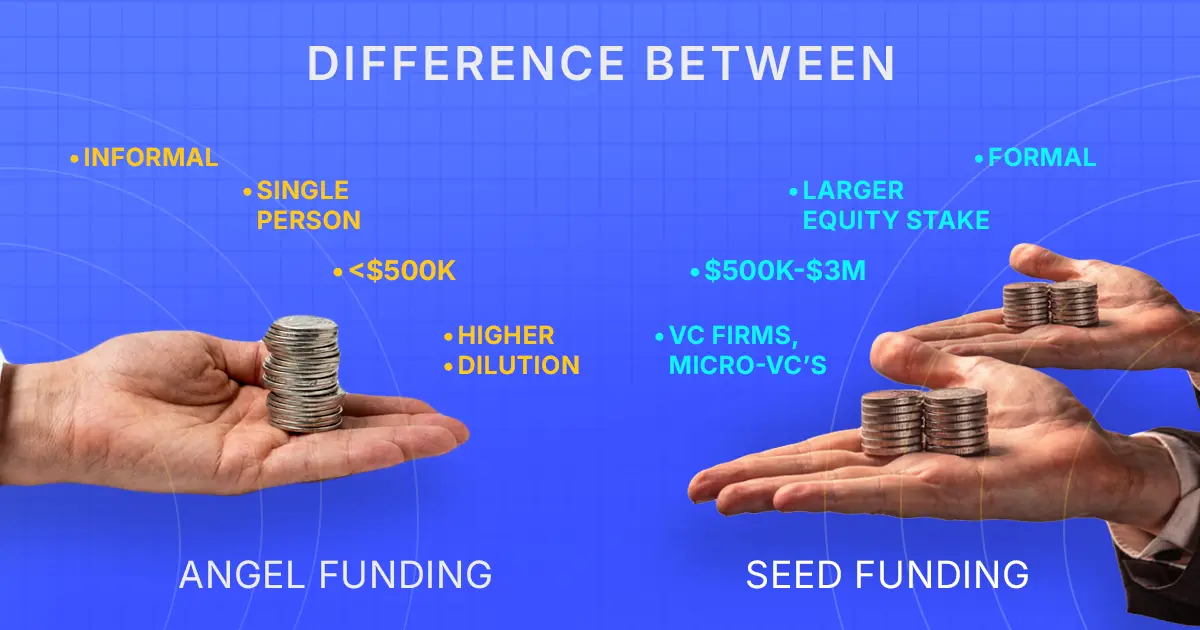
Difference Between Seed Funding and Angel Funding for Indian Startups
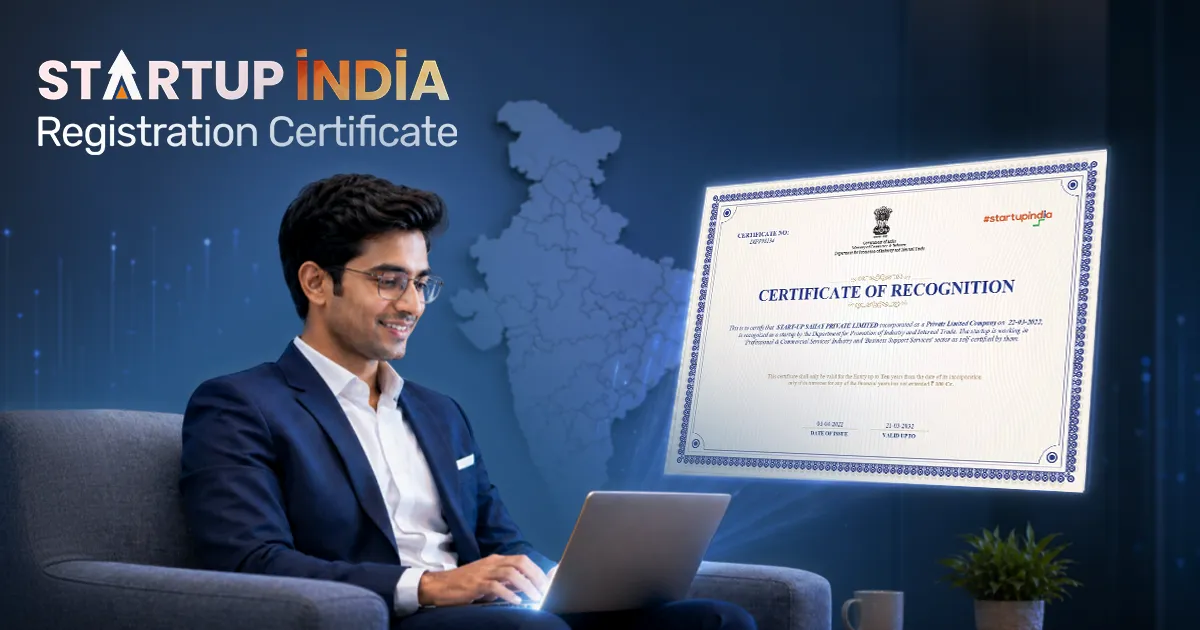
Startup India Certificate: How to Download (2026)