


A trademark disclaimer is a statement that limits a trademark owner’s exclusive rights over specific descriptive, generic, or non-distinctive elements within their registered mark, while keeping the overall trademark fully protected. In India, trademark disclaimers are governed by Section 17 of the Trade Marks Act, 1999.
The term “trademark disclaimer” actually covers two distinct concepts: (1) a Registry-imposed disclaimer during trademark examination where the applicant agrees not to claim exclusive rights over common words like “Coffee,” “Restaurant,” or “Premium,” and (2) a third-party trademark disclaimer used on websites, packaging, and advertising to acknowledge that another company owns a referenced mark.
Many first-time applicants assume a Registry disclaimer weakens their brand protection. It does not. A disclaimer only prevents monopoly over the disclaimed word; the complete trademark continues to receive full protection under the Trade Marks Act, 1999, and courts assess infringement based on the overall commercial impression.
This guide explains the meaning of disclaimer for trademark and the situations where the Registry requires it. It also covers disclaimer templates, examination report replies, legal rules, and real trademark disclaimer examples in India.
Key Takeaways
- A trademark disclaimer limits exclusive rights over descriptive, generic, or non-distinctive elements while keeping the full mark protected.
- Registry disclaimers are governed by Section 17 of the Trade Marks Act, 1999; the leading case is Registrar of Trade Marks v. Ashok Chandra Rakhit Ltd. (1955).
- You must reply to a Registry disclaimer requirement within 30 days of the Examination Report under Rule 33 of the Trade Marks Rules, 2017.
- A disclaimer does not weaken brand protection; courts assess infringement on overall commercial impression, confirmed in Marico v. Agro Tech Foods (2010).
- Third-party trademark disclaimers (used on websites and packaging) are a defensive practice that supports nominative fair use; they do not, by themselves, legalise infringement.
- Standard disclaimer wording: “No exclusive right is claimed over the word ‘[term]’ except as used in the mark as a whole.”
What is a Disclaimer for Trademark?
A trademark disclaimer is a legal statement used during trademark registration. It states that the applicant does not claim exclusive rights over a specific word, phrase, symbol, or element within the trademark.
A disclaimer does not weaken the overall trademark protection, and the owner still receives exclusive rights over the complete trademark as a whole. If another party copies the overall brand identity confusingly, the trademark owner can still take legal action for infringement or passing off.
For example, the trademark “AMUL ICE CREAM” carries a disclaimer for the words “Ice Cream” because the term is generic for the product category. Even with this disclaimer, the complete mark “AMUL ICE CREAM” continues to receive full trademark protection; what’s protected is the distinctive combination of “AMUL” with the product descriptor.
Why Does India Require a Disclaimer in Trademark Application?
The Trade Marks Registry requires disclaimers in trademark applications to ensure that no business gains exclusive rights over common or descriptive terms.
The legal foundation for trademark disclaimers in India sits at the intersection of two provisions of the Trade Marks Act, 1999:
- Section 9 (Absolute Grounds for Refusal) — Trademarks that are descriptive of the goods/services, devoid of distinctive character, or have become customary in the trade are barred from registration unless they have acquired distinctiveness. This is the trigger for most disclaimer requirements during examination.
- Section 17(1) — Grants the trademark owner exclusive rights over the complete registered trademark as a whole.
- Section 17(2) — Clarifies that those exclusive rights do not automatically extend to descriptive, generic, or non-distinctive parts of the trademark when those parts are unprotected on their own.
When an Examiner flags a Section 9 issue with a specific element of your mark, the Registry typically offers two paths: file evidence of acquired distinctiveness for the disputed element, or accept a disclaimer under Section 17 to limit exclusive rights over that element and proceed with registration of the full mark.
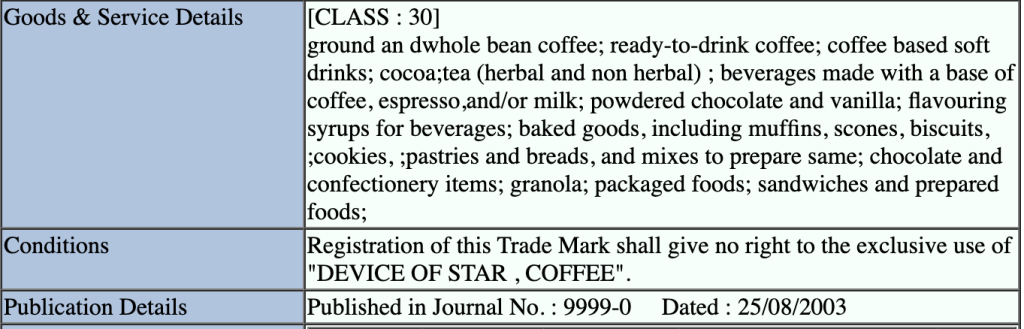
The Supreme Court clarified the purpose of a disclaimer for trademark in Registrar of Trade Marks v. Ashok Chandra Rakhit Ltd. The Court stated that a disclaimer defines the scope of the proprietor’s rights and prevents exaggerated claims based on trademark registration.
When is a Trademark Disclaimer Needed?
The Trade Marks Registry asks for a disclaimer for a trademark in these situations:
| Situation | Explanation | Example |
| Descriptive Words | The trademark directly describes the quality, purpose, character, or nature of the goods or services. | “Sweet” for confectionery products |
| Generic Terms | The mark contains common names used for the product or service. | “Bakery” for bakery services |
| Geographical Names | The trademark includes the name of a city, region, or place connected with the goods or services. | “Kashmir” for shawls |
| Common Trade Expressions | The mark uses words commonly used in a particular trade or industry. | “Premium” or “Super” |
| Non-Distinctive Elements | A part of the trademark lacks uniqueness and cannot independently identify the business source. | Simple descriptive device or wording |
| Laudatory Words | The trademark contains words that merely praise the product or service. | “Best,” “Perfect,” or “Deluxe” |
| Combination Marks | The overall trademark is distinctive, but some individual elements are descriptive or generic. | “ABC Milk Products” |
How to Add a Disclaimer in a Trademark Application in India?
Here’s the step-by-step process to add a disclaimer when filing or responding to a Trade Marks Registry objection.
- Identify Non-Distinctive Elements: Review the trademark and identify words or elements that are descriptive, generic, geographical, or commonly used in trade.
- Draft the Disclaimer Statement: Clearly state that you do not claim exclusive rights over the identified term, except as part of the complete trademark.
- Include in Application or Reply: Add the disclaimer while filing the trademark application or while responding to the examination report issued by the Trade Marks Registry.
- Use Standard Disclaimer Language: Write the disclaimer in the accepted format, such as: “No exclusive right is claimed over the word ‘XYZ’ except as used in the mark as a whole.”
- Submit Within Deadline: If the Registry raises a disclaimer requirement in the Examination Report, file your reply along with the disclaimer within 30 days from the date of issuance under Rule 33 of the Trade Marks Rules, 2017. Missing this deadline can cause your application to be marked abandoned. There is no automatic extension. A one-month extension may be requested using Form TM-M under Rule 109 with the prescribed fee, but it must be filed before the original 30-day deadline expires.
- Registry Review: The Trade Marks Registry examines the disclaimer and proceeds with the application if it meets legal requirements.
- Acceptance or Objection Handling: If required, the applicant can accept the disclaimer condition or present arguments against it during examination.
- Final Registration Effect: Once accepted, the disclaimer becomes part of the official trademark record and defines the scope of protection.
Note: The timeline for filing a reply to a disclaimer requirement may change based on Registry updates, extensions, or case-specific directions. Always verify the exact deadline on the official IP India portal (ipindia.gov.in) before filing to avoid procedural delays or abandonment.
Can You Refuse a Trademark Disclaimer?
You can refuse a trademark disclaimer, but it may not always be successful. If you disagree with the Registry’s requirement, you must show strong legal reasons or proof that the term is distinctive or has acquired distinctiveness through use. If the Registry does not accept your objection, it may insist on the disclaimer or refuse the application.
In most cases, applicants accept the disclaimer to avoid delays in registration. However, refusal can work if the term clearly identifies your brand and you can prove strong market recognition through sales, advertising, and long-term use.
Real Trademark Disclaimer Examples in India
Here are well-known trademark disclaimer examples that show how Indian and global brands handle this rule:
| Trademark Example | Disclaimed Element | Reason for Disclaimer |
| Amul Ice Cream | “Ice Cream” | Generic term for the product category |
| Indian Coffee House | “Coffee House” | Common hospitality industry expression |
| Delhi Darbar Restaurant | “Restaurant” | Describes the nature of business |
| Himalaya Herbal Products | “Herbal Products” | Descriptive of goods offered |
| Tata Salt | “Salt” | Generic product name |
| Lakme Fashion Week | “Fashion Week” | Common event-related expression |
| India Gate Basmati Rice | “Basmati Rice” | Describes a rice variety |
| Patanjali Ayurved Products | “Ayurved Products” | Descriptive product category |
| Britannia Good Day Biscuits | “Biscuits” | Generic product term |
| Pizza Hut India | “Pizza” | Descriptive food category |
| Starbucks Coffee | “Coffee” | Descriptive term for beverages |
| Royal Stag | “Stag” (in stylised/label contexts) | May be treated as non-distinctive in certain filings |
| UltraTech Cement | “Cement” | Generic industry term |
For instance, in “AMUL ICE CREAM,” the Registry disclaims the word “Ice Cream” because it only describes the product category. However, the trademark protection continues to apply to the complete mark “Amul Ice Cream,” which functions as a source identifier.
How to Draft a Trademark Disclaimer Statement (With Ready-to-Use Templates)
The Indian Trade Marks Registry accepts disclaimers for trademarks that use clear, legally unambiguous, and precise language. Here are some ready-to-use trademark disclaimer templates for your application:
1. Standard Disclaimer Template
Use this format in a trademark application:
“No exclusive right is claimed over the word ‘[insert term]’ except as used in the mark as a whole.”
2. Disclaimer After Registry Objection
If you respond to an objection, use a slightly formal version:
“Without prejudice, the applicant agrees to the disclaimer requirement and confirms that no exclusive rights are claimed over ‘[insert term]’ except as part of the trademark applied for.”
3. Multi-Class Trademark Disclaimer
For multi-class applications, ensure the disclaimer covers all relevant classes:
“No exclusive right is claimed over the word ‘[insert term]’ in respect of the goods/services covered under Classes [insert class numbers], except as used in the mark as a whole.”
Note: The disclaimer should always be:
- Clear and specific to the exact word or element
- Limited only to the non-distinctive portion of the mark
- Consistent with the trademark as filed
- Free from vague or broad legal language
How to Respond to a Trademark Disclaimer Requirement?
When the Trade Marks Registry raises a disclaimer requirement during examination, the applicant typically has three practical options:
- Accept the disclaimer: The applicant speeds up the application process, ensuring minimal delays in reaching advertisement and registration.
- Contest the disclaimer: The applicant files a reply to show that the term has acquired distinctiveness through use, sales, or reputation.
- Abandon and refile: The applicant may choose to adopt a stronger, more distinctive mark if the disclaimer weakens brand value.
In most cases, applicants accept the disclaimer because it reduces delays and avoids additional legal costs.
Does a Registered Trademark Disclaimer Weaken Your Brand?
A trademark disclaimer does not weaken your brand or reduce protection for your registered trademark. It only limits exclusive rights over descriptive, generic, or non-distinctive parts of the mark.
Indian courts assess trademark infringement based on the overall commercial impression of the trademark, not the disclaimed element in isolation. A disclaimer prevents monopoly over common business language, but it does not dilute the distinctiveness of the overall brand.
This principle was reinforced in Marico Limited v. Agro Tech Foods Ltd. (2010, Delhi High Court). The Court held that authorities must evaluate trademark protection as a whole, even when individual elements of the mark are descriptive. The key test remains overall similarity, consumer confusion, and brand impression in the market.
Let RegisterKaro help you handle trademark disclaimer objections with ease. Our experts draft compliant disclaimer statements, prepare examination replies, and support smooth trademark registration across all 45 classes under the NICE classification in India. Contact us today for professional trademark assistance!
