

Trademark Class 31 covers unprocessed agricultural, horticultural, forestry, and livestock products. These include seeds, fresh fruits and vegetables, grains, live plants and flowers, and live animals. In India’s agricultural sector, brand protection helps businesses stand out in a competitive market. Producing high-quality goods means little if competitors can copy your brand identity.
Brand protection also builds trust. Buyers connect familiar names, logos, and packaging with quality and consistency. Established brands like Mahyco and Syngenta, along with fresh produce brands such as Fresho, use strong branding to signal reliability and performance.
Key Takeaways
- Class 31 covers unprocessed agricultural, horticultural, forestry, and livestock products. These include seeds, fresh fruits and vegetables, grains, live plants and flowers, and live animals.
- Class 31 does not cover processed food (Classes 29 and 30), beverages (Classes 32 and 33), agricultural chemicals (Class 1), machinery (Classes 7 and 11), workwear (Class 25), veterinary medicines (Class 5), or agricultural consultancy services (Class 44).
- Filing fees are approximately ₹4,500 per class for individuals or startups. Companies pay ₹9,000 per class.
- Registration remains valid for 10 years. You can renew it every decade.
- Large agribusinesses often file across multiple classes. For example, ITC Limited covers fresh produce (Class 31), packaged foods (Classes 29 and 30), beverages (Class 32), and cigarettes (Class 34).
What is Trademark Class 31?
Class 31 falls under the Nice Classification, an international system maintained by WIPO. It keeps goods and services consistently categorized across more than 150 countries. For Indian agribusinesses, this consistency helps their Class 31 registration align with categories recognized by trading partners, distributors, and export markets.
Trademark registration under Class 31 protects your brand identity, not the biological product itself. A seed company or livestock breeder cannot use trademark law to stop competitors from growing similar crops or breeding similar animals. Such protection comes through plant variety rights or breeding patents, which follow a separate legal process.
Products Covered Under Trademark Class 31
The table below outlines the main categories of products covered under Trademark Class 31, along with common examples:
| Category | Examples |
|---|---|
| Seeds | Vegetable seeds, flower seeds, cereal seeds, herb seeds |
| Fresh fruits and vegetables | Apples, bananas, tomatoes, leafy greens, berries |
| Grains and cereals (unprocessed) | Rice, wheat, corn, barley, oats |
| Livestock and live animals | Cattle, poultry, sheep, goats, bees, horses |
| Live plants and flowers | Ornamental plants, shrubs, saplings, and flowering plants |
| Horticultural produce (fresh/unprocessed) | Fresh herbs, spices, mushrooms, tubers, bulbs |
| Fresh spices (unprocessed) | Turmeric, ginger, pepper, cardamom |
| Forestry products (live) | Live trees, seedlings, saplings, ornamental trees, shrubs |
| Natural food products | Fresh nuts, legumes, raw agricultural produce |
| Agricultural raw materials | Straw, hay, fodder, unprocessed cereals |
| Fresh aromatic and medicinal plants | Basil, mint, coriander, lemongrass |
What is Not Covered Under Trademark Class 31?
While Trademark Class 31 protects raw and unprocessed agricultural, horticultural, forestry, and livestock products, it does not extend to certain items or services.
Some products and services not included under Class 31 are:
- Processed or packaged food products: Canned fruits, packaged snacks, dairy products, or processed grains fall under Class 29 or 30.
- Beverages: Juices, soft drinks, alcoholic drinks, mineral water, or spirits fall under Class 32 or 33.
- Agricultural machinery or powered equipment: Tractors, harvesters, irrigation pumps, or powered gardening tools fall under Class 7 or 11.
- Chemicals and fertilizers: Fertilizers, pesticides, or chemical treatments for crops fall under Class 1.
- Clothing or footwear for agricultural use: Agricultural workwear, boots, gloves, or protective gear fall under Class 25.
- Veterinary medicines and supplements: Medical treatments, veterinary pharmaceuticals, and medicated supplements fall under Class 5.
- Services related to agriculture or forestry: Consultancy, landscaping, or farming services fall under Class 35 or Class 44.
Established brands often register trademarks across multiple classes. ITC Limited, for example, covers fresh agricultural produce under Class 31, packaged foods under Classes 29 and 30, beverages under Class 32, and cigarettes under Class 34.
How to Register Under Trademark Class 31 in India?
Businesses can protect their agricultural, horticultural, and forestry products by registering a trademark under Class 31. The process involves several steps, from checking availability to receiving the registration certificate.
Follow these steps to complete the Class 31 registration process:
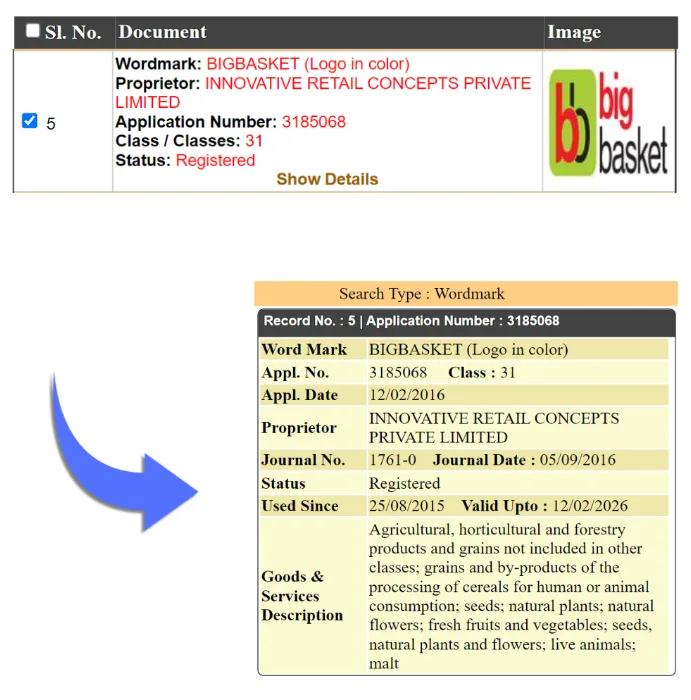
- Choose a distinct brand name and logo: Pick a name that is unique, memorable, and easy to pronounce. Avoid generic terms like “Seeds,” “Fruits,” or “Livestock” without a distinctive element.
- Conduct a trademark search: Check the Indian Trademark Registry for existing Class 31 trademarks. If you plan to sell internationally, check WIPO’s global database too. You can also use RegisterKaro’s free trademark search tool to check availability.
- Prepare and submit your application: File through the CGPDTM portal. Include applicant details, trademark representation, the Class 31 product list, and applicable filing fees.
- Respond to trademark examination: The Trademark Office reviews your application for conflicts or inconsistencies. It may raise objections if a similar trademark exists. Respond to trademark objections within the given timeframe, usually 1–3 months, to avoid abandonment.
- Monitor publication and opposition: Once cleared, the CGPDTM publishes your mark in the Trademark Journal. Third parties have four months to file an opposition.
- Receive your trademark certificate: After approval, you receive a registration certificate. It grants exclusive rights and allows you to take legal action against imitators.
- Renew on time: Use the ® symbol to show your exclusive rights. Renew your trademark every 10 years to maintain protection.
The trademark fee for Class 31 in India is approximately ₹4,500 per class for individuals or startups. Companies pay around ₹9,000 per class. Professional service fees apply separately.
Trademark Classes Related to Class 31
Many business owners in agriculture, horticulture, forestry, or livestock mistakenly assume that Class 31 alone will protect their entire brand. In reality, different trademark classes may also be relevant depending on the products they cultivate, produce, or sell.
To fully safeguard your brand, it’s important to know which additional classes might apply to your range of products:
| Trademark Class | Products/Services Covered | How it Differs from Class 31 |
|---|---|---|
| Class 1 | Chemicals for agriculture, fertilizers, pesticides | Class 31 covers raw agricultural or horticultural products, whereas Class 1 applies to chemical preparations used in farming |
| Class 5 | Medicines, dietary supplements, and veterinary treatments | Class 5 covers medicinal and therapeutic products; Class 31 protects live animals, seeds, and fresh produce with no medicinal claim |
| Class 29 | Processed or packaged food products, dairy items, edible oils | Class 31 protects unprocessed or raw agricultural goods; Class 29 focuses on processed and packaged food products |
| Class 30 | Coffee, tea, spices, bakery products, cereals | Protects consumable products; Class 31 applies to the raw materials, seeds, and fresh produce used to make these items |
| Class 32 | Non-alcoholic beverages | Covers bottled juices, soft drinks, or mineral water; Class 31 protects the raw fruits, herbs, or grains used to make beverages |
| Class 33 | Alcoholic drinks | Protects wine, beer, spirits, and other alcoholic beverages; Class 31 protects the raw ingredients like grapes, barley, or other crops |
| Class 44 | Agricultural consultancy or farming services | Includes services related to agriculture, horticulture, or forestry; Class 31 covers tangible products only |
