


Trademark Class 36 is the class for financial, monetary, insurance, and real estate services in India. It covers banks, NBFCs, fintech and payment platforms, insurers, investment and wealth managers, and real estate agents and brokers. Filing your brand under Class 36 secures exclusive rights to your name and logo across these services and lets you act against copycats.
The Nice Classification, established under the Nice Agreement and administered by the World Intellectual Property Organization (WIPO), organizes all types of trademarks into 45 different classes, Classes 1–34 covering goods, and Classes 35–45 covering services.
Key Takeaways
- Class 36 covers insurance, financial affairs, monetary affairs, and real estate affairs.
- It applies to banks, NBFCs, fintech and payment platforms, insurers, wealth managers, and real estate brokers.
- Stock brokers, trading platforms, and asset managers fall under Class 36 too, alongside crypto exchanges.
- Banking and fintech apps as software products fall under Class 9, not Class 36.
- Financial advertising and marketing fall under Class 35.
- Legal advisory and compliance services fall under Class 45.
- Filing costs ₹4,500 per class for individuals, startups, and MSMEs; ₹9,000 for others.
- Validity runs 10 years from the date of application, not the registration date, and renews indefinitely.
- Registration typically takes 12–18 months if uncontested.
- Large financial brands often file across Class 36, 35, and 9 for full protection.
Which Trademark Class is Real Estate In? (Class 36)
The trademark class for financial services in India is Class 36. The same applies to insurance, banking, real estate, and investment services, they all fall under Class 36. So whether you run a bank, an insurance company, a real estate brokerage, or a wealth management firm, Class 36 is where you file to protect your brand name and logo. (Only the software behind a fintech app shifts to Class 9, and financial advertising to Class 35.)
Who Should Choose Class 36 for Trademark Filing?
Businesses that manage money, financial risk, investments, or property transactions should apply under Class 36. The following businesses and professionals should register a trademark under this class:
- Banks and NBFCs: Banks and non-banking financial companies offering deposits, loans, or credit services.
- Fintech and payment platforms: Companies operating UPI apps, digital wallets, or online payment systems.
- Real estate agents and brokers: Professionals involved in buying, selling, or leasing properties.
- Insurance and wealth advisory firms: Firms offering insurance advice, risk guidance, or asset planning services.
- Crowdfunding and microfinance platforms: Platforms that arrange funds, enable peer-to-peer lending, or support small borrowers.
- Stock brokers and investment platforms: Businesses offering stock brokerage, mutual fund distribution, portfolio management, SIPs, or investment services. This also includes cryptocurrency exchanges.
Understanding different types of trademarks helps you choose the right protection. Selecting the correct type and class protects your brand and supports long-term growth.
What are the Services Covered in Trademark Class 36?
Trademark Class 36 categorizes professional and transactional services, not tangible goods. Knowing its scope helps businesses classify correctly and avoid registration errors. The table below summarises what it includes:
| Subcategory | Services Covered | Examples |
|---|---|---|
| Financial and Banking Services | Banking, credit/debit card services, electronic funds transfer, loans, hire-purchase, leasing, trust and fiduciary services, monetary and foreign exchange services | Online payments, UPI platforms, digital wallets, corporate and retail banking |
| Insurance Services | Insurance underwriting, risk assessment, claims management, brokerage and advisory | Life, health, vehicle, and property insurance |
| Real Estate Services | Property brokerage, real estate agency services, leasing, rent collection, property valuation and management | REITs, commercial and residential properties, property appraisal |
| Investment, Wealth, and Stock Broking | Fund management, asset and portfolio advisory, venture capital, private equity, stock and share brokerage, escrow services | Mutual funds, pensions, crowdfunding platforms, trading and SIP apps |
| Other Related Services | Debt collection, financial advisory, financial appraisal, charitable fundraising, financial sponsorship | Arranging finance for construction projects, valuation services |
What is Not Covered in Trademark Class 36?
Applicants often confuse products or services that appear closely connected but legally fall outside this class. The following table explains these differences clearly, helping you avoid objections and costly refiling:
| Item/Category | Commonly Confused Items/Services | Correct Class |
|---|---|---|
| Physical Goods | Insurance documents, passbooks, cheque books, payment cards | Class 16 or 9 |
| Software and Mobile Apps | Banking apps, fintech platforms, accounting software | Class 9 |
| Advertising and Business Management | Financial service promotion and marketing | Class 35 |
| Legal and Compliance Services | Legal advice, contract drafting, regulatory compliance | Class 45 |
| Construction and Infrastructure | Property development and construction supervision | Class 37 |
| IT and Technical Services | Software development, system maintenance, data hosting | Class 42 |
| Education and Training | Financial training and investment courses | Class 41 |
| Non-Financial Consultancy | Business strategy consulting without financial execution | Class 35 or 42 |
| Medical and Health Services | Health treatment linked to insurance providers | Class 44 |
Choosing the right classes helps ensure proper trademark protection. For example, Bajaj Finance and Bajaj Finserv hold registrations under Class 36 for financial services and Class 35 for business and advertising services.
Tip: Use RegisterKaro’s Free Trademark Class Search Tool to find the right class for your services.
How to Register a Trademark under Class 36 in India?
Registering under Class 36 involves these steps:
- Search first: Check Class 36 using the IP India Trademark Public Search or RegisterKaro’s Trademark Name Availability Check.
- Draft precise service specifications: Clearly describe your services, such as banking, insurance, real estate, or fund management.
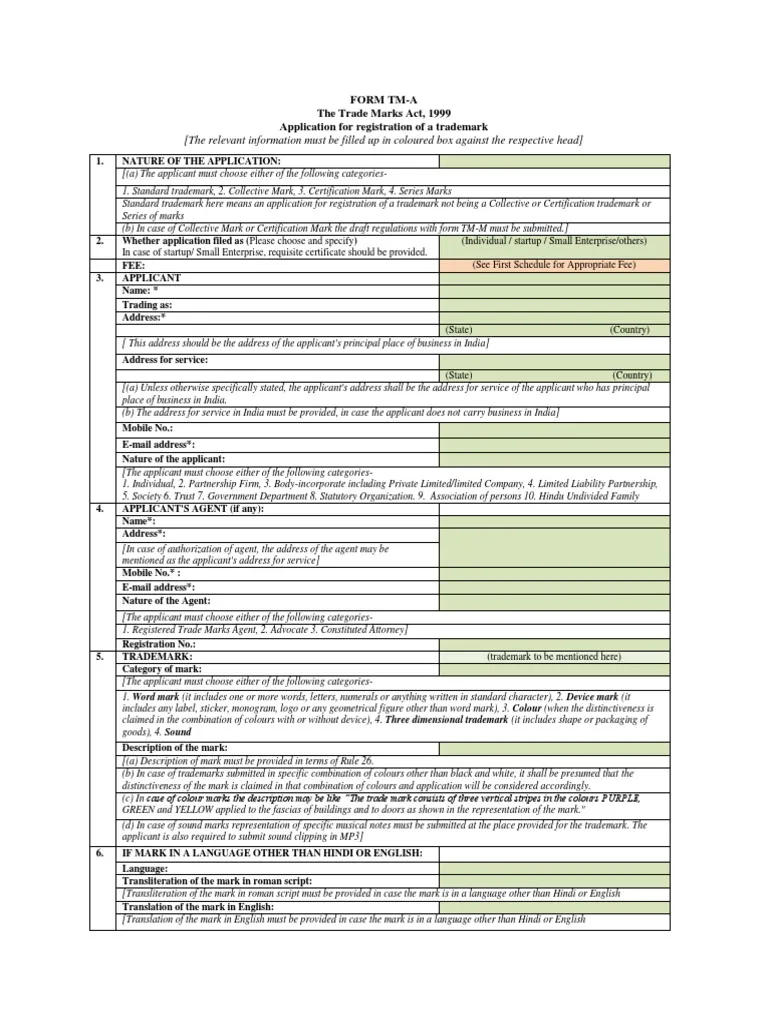
- File Form TM-A: Apply online through the IP India Trademark Portal. Choose a single-class or multi-class application based on your services.
- Pay the government fee: ₹4,500 per class for individuals, startups, and MSMEs. The fee is ₹9,000 per class for companies and other entities.
- Examination: The Trademark Office checks classification, distinctiveness, and conflicts with existing marks.
- Respond to objections: If a Trademark Objection is raised, reply within 30 days.
- Publication and opposition: Approved marks are published in the Trademark Journal for 4 months. Third parties can file a trademark opposition during this period.
- Registration and renewal: Registration is valid for 10 years from the application date under Section 25 of the Trade Marks Act, 1999. Renew the trademark every 10 years.
Timeline: Filing is immediate, while examination usually takes 1–3 months. Uncontested applications typically take 12–18 months for registration.
