

In India, companies make key decisions through formal approvals called resolutions. Companies use various types of resolution depending on the matter or decision at hand. According to the Companies Act, 2013, a resolution is a formal decision made by the shareholders or directors, either in a meeting or by circulation.
The Companies Act, 2013, governs the process of passing resolutions. Key sections include 114, 117, 118, 173, and 175. Resolutions are classified into different types based on decision-making authority, required majority, and legal impact. Each type of resolution serves a specific purpose. It also carries distinct legal implications for the company and its members.
This classification ensures that companies approve both routine matters and critical corporate actions using the correct legal process. This guide explains all types of resolutions under Indian company law with practical examples.
Key Takeaways
- Companies use different types of resolutions depending on the decision, authority involved, and majority required.
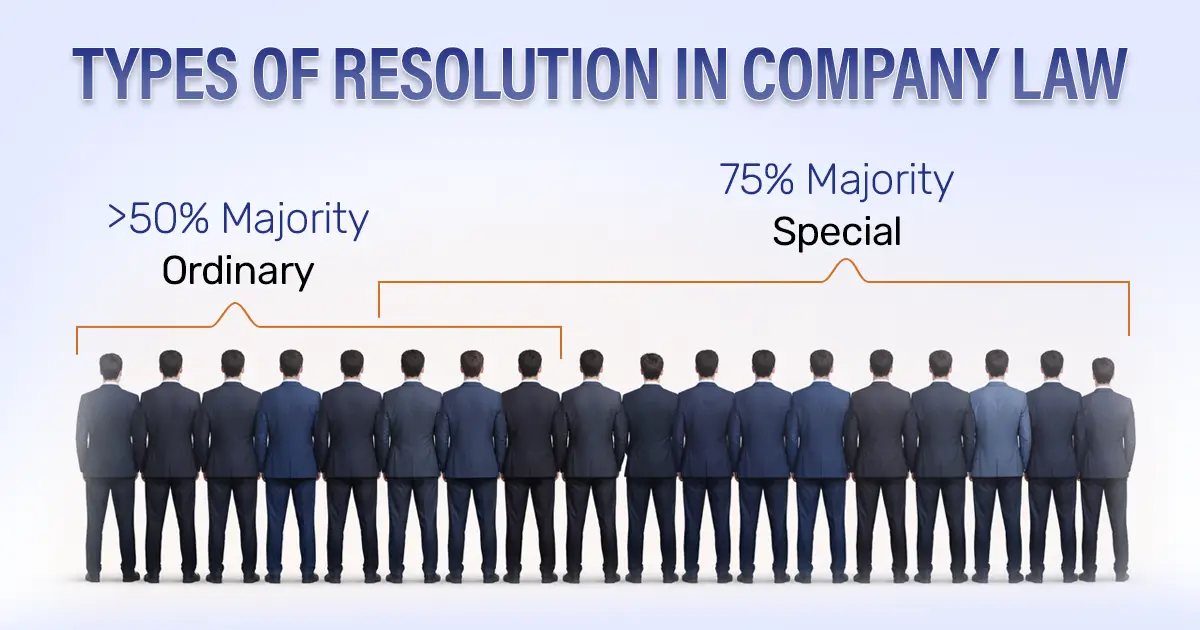
- Ordinary resolutions require more than 50% approval, while special resolutions require at least 75% approval of members present and voting.
- Board resolutions are passed by directors for management and operational decisions under Sections 173 and 175 of the Companies Act, 2013.
- Certain resolutions require special notice, particularly those relating to the removal of directors or changes involving auditors.
- Resolutions by circulation allow directors to approve certain matters without holding a formal board meeting.
- Certain special and board resolutions must be filed with the ROC through Form MGT-14 within the prescribed timeline.
- Companies must maintain proper minutes of meetings and resolutions under Section 118.
- Incorrect majority calculations, improper notices, missed ROC filings, and incomplete minutes can create compliance risks.
Key Features of Resolution Under Companies Act, 2013
Before understanding the different types of resolution, it is important to know the core features that apply to all resolutions under Indian company law:
- Formal Approval: A resolution represents a formal decision of the company. It must be passed either in a meeting or by circulation, depending on the type.
- Binding Nature: Once the company approves a resolution, it legally binds the company, directors, and shareholders. Non-compliance can attract penalties under the Companies Act, 2013.
- Decision-Making Authority: Resolutions empower the company to act collectively. Shareholders approve matters affecting ownership or governance, while directors approve operational or managerial decisions.
- Voting Requirement: Every resolution requires voting. Ordinary resolutions need a simple majority (>50%), while special resolutions need at least 75% approval. Board resolutions follow procedures under Sections 173 and 175 of the Companies Act, 2013.
- Record Keeping: Companies must maintain minutes of all resolutions under Section 118. Proper record-keeping provides legal proof and maintains transparency.
- Filing With ROC: Companies must file certain resolutions, especially special and key board resolutions, with the ROC using Form MGT-14 under Section 117.
- Compliance and Governance: Resolutions uphold good corporate governance, making decisions lawful, transparent, and aligned with shareholder or board authority.
These features make all resolutions legally valid, properly documented, and easily enforceable. They ensure companies make structured, transparent, and accountable decisions.
Types of Resolutions Under Companies Act, 2013
Companies in India pass different types of resolutions to formalize decisions. These resolutions ensure compliance with the law and maintain corporate governance standards.
The main types are explained below with legal references and practical examples:
1. Ordinary Resolution
Ordinary resolutions are passed by a simple majority (>50%) of members present and voting in a general meeting. They are used for routine corporate matters that do not require extraordinary approval.
- Legal Reference: Section 114(1) of the Companies Act, 2013
- When Used:
- Appointment or reappointment of directors
- Approval of annual financial statements
- Declaration of dividends
- Ratification of auditor appointments
Example: At a company’s Annual General Meeting (AGM), shareholders adopt the audited financial statements and declare a final dividend. Since these are routine matters, the company passes them as ordinary resolutions, which require only a simple majority of members present and voting.
2. Special Resolution
Special resolutions require at least 75% majority of members present and voting. They are used for major corporate decisions that significantly affect the company.
- Legal Reference: Section 114(2) of the Companies Act, 2013
- When Required:
- Alteration of the Memorandum or Articles of Association
- Change of company name
- Reduction of share capital
- Approval of significant asset sales
- Corporate restructuring
Shareholders’ resolutions, such as approving mergers, increasing authorized share capital, or changing dividend policy, fall under the special resolution category when they require a special majority. These resolutions are only passed if at least 75% of members present and voting approve them.
Example: A company decides to change its registered name. To do so, it convenes a general meeting and passes a special resolution altering the Memorandum and Articles of Association. The change takes effect only when at least 75% of the members present and voting approve it, after which the company files Form MGT-14 with the ROC.
3. Board Resolution
Board resolutions are passed by the Board of Directors. They manage daily operations and administrative decisions. Resolutions can be passed during meetings or by circulation for urgent matters.
- Legal References: Sections 173 and 175
- Covers:
- Opening or closing bank accounts
- Approval of financial statements
- Authorizing contracts or loans
- Appointment of key managerial personnel
- Delegation of authority
Example: A company’s Board of Directors meets to approve a new banking arrangement. Through a board resolution, the directors authorize a specific officer to operate the company’s bank account and sign the related documents. This lets the company act quickly on an operational matter without shareholder approval.
4. Resolution Requiring Special Notice
Some resolutions require advance notice to be served to shareholders before the meeting. This applies to resolutions affecting directors or auditors.
- When Needed:
- Removal of a director under the Companies Act, 2013
- Changes involving statutory auditors
Example: A shareholder proposes to remove a director before the end of their term. Under Section 115 of the Companies Act, 2013, this resolution needs special notice, which the member must give to the company at least 14 clear days before the meeting. The company then informs all members before it places the resolution for a vote.
5. Resolution by Circulation
Directors pass resolutions by circulation without holding a physical or virtual meeting. Directors approve these in writing. They are usually for urgent matters that cannot wait until the next meeting.
- Legal Reference: Section 175
- When Used:
- Approving emergency contracts
- Quick financing decisions
Example: A mid-sized IT firm circulates a resolution to approve an urgent outsourcing contract. Each director signs and returns the resolution in writing to pass it.
These resolutions allow Indian companies to make flexible decisions, ensure legal compliance, and maintain effective governance.
Difference Between Ordinary Resolution and Special Resolution
The main difference between an ordinary resolution and a special resolution lies in the majority required and the importance of the decision. Ordinary resolutions need a simple majority (50%), while special resolutions require a 75% or higher majority to pass.
To understand the distinctions more clearly, here is a detailed comparison table:
| Basis | Ordinary Resolution | Special Resolution |
| Majority Required | More than 50% of members present and voting | At least 75% of members present and voting |
| Purpose | Routine business matters | Critical corporate decisions |
| Legal Impact | Lower, standard approvals | High, affects the company structure or capital |
| Examples | Appointment of directors, approval of annual financial statements | Alteration of MOA/AOA, company name change, reduction of share capital |
Choosing the correct type of resolution ensures compliance with the Companies Act, 2013, and avoids legal challenges or penalties.
Key Provisions Related to Resolutions Under Companies Act, 2013
The Companies Act, 2013, lays down specific provisions governing how resolutions must be passed, recorded, and filed.
Some of the key sections related to resolutions include:
- Section 114 – Types of Resolutions: Defines ordinary and special resolutions and the required majority for each.
- Section 117 – Filing with ROC (MGT-14): Specifies which resolutions must be filed with the Registrar of Companies and the timelines for submission.
- Section 118 – Maintenance of Minutes: Requires companies to maintain detailed minutes of all meetings where resolutions are passed, ensuring legal and audit compliance.
- Section 173 – Board Meetings: Governs how board resolutions are passed during meetings, including notice, quorum, and decision-making procedures.
- Section 175 – Resolution by Circulation: Allows passing board resolutions in writing for urgent matters without holding a formal meeting.
Adhering to these key provisions helps companies pass resolutions lawfully, maintain proper records, and avoid penalties.
When is the Filing of a Resolution with the ROC Mandatory?
Not all resolutions require filing with the Registrar of Companies (ROC). Filing becomes mandatory when the resolution affects the company’s structure, capital, or statutory compliance.
The main scenarios include:
- Special Resolutions: All special resolutions passed in an AGM or EGM must be filed under Section 117 of the Companies Act, 2013. Examples include:
- Alteration of Memorandum of Association (MOA) or Articles of Association (AOA)
- Change of company name
- Reduction of share capital
- Certain Board Resolutions: Directors file board resolutions that create a charge on assets, issue shares, or approve share buybacks under Section 117(3). Routine decisions like approving financial statements or opening bank accounts do not require ROC filing.
- Filing Timeline: Companies must submit Form MGT-14 to the ROC within 30 days of passing the resolution.
Example: When Infosys Ltd approved a special resolution to alter its MOA for expanding business activities, it filed Form MGT-14 with the ROC within the statutory 30-day period.
Common Mistakes Companies Make While Passing Resolutions
Passing resolutions is key to corporate governance. However, companies often make errors that may cause non-compliance or legal challenges. Some common mistakes include:
- Not Maintaining Minutes: Companies sometimes fail to record detailed minutes of board or shareholder meetings. Under Section 118, minutes are mandatory and act as official proof of resolutions passed.
- Missing ROC Filing: Special resolutions and certain board resolutions must be filed with the ROC under Section 117(3), read with Section 119, using Form MGT-14. Companies often overlook this filing requirement, which can result in penalties and legal complications.
- Incorrect Majority Calculation: Ordinary resolutions require more than 50% votes, and special resolutions need 75% or higher. Miscalculating votes can invalidate the resolution.
- Improper Notice: Companies may fail to send proper notices for meetings or resolutions. Notices must specify the agenda clearly and comply with Section 102 of the Companies Act, 2013, to give shareholders sufficient time to consider decisions.
- Passing Unauthorized Resolutions: Members or directors may legally challenge resolutions that exceed their authority or fall outside the company’s MOA/AOA.
Avoiding these mistakes ensures that resolutions are legally valid, enforceable, and compliant with the Companies Act, 2013.
Conclusion
Resolutions are the formal way a company records and enforces its most important decisions. The type you choose depends on the matter at hand, since routine approvals need only an ordinary resolution, while major decisions demand a special resolution with a 75% majority.
Board resolutions and resolutions by circulation handle operational and urgent matters, each under its own section of the Companies Act, 2013. To stay compliant, a company must calculate the majority correctly, maintain proper minutes under Section 118, and file the required resolutions with the ROC on time. Getting these steps right keeps every decision lawful, well-documented, and free from penalties.
